Wilting on Jade Plant: Causes, Checks & Fixes
Quick answer
Wilting on Jade Plant can mean underwatering or overwatering-lift the pot before you water. Light and dry with firm wrinkled leaves means one deep drink; heavy and wet with a soft stem base means stop watering and inspect roots today.
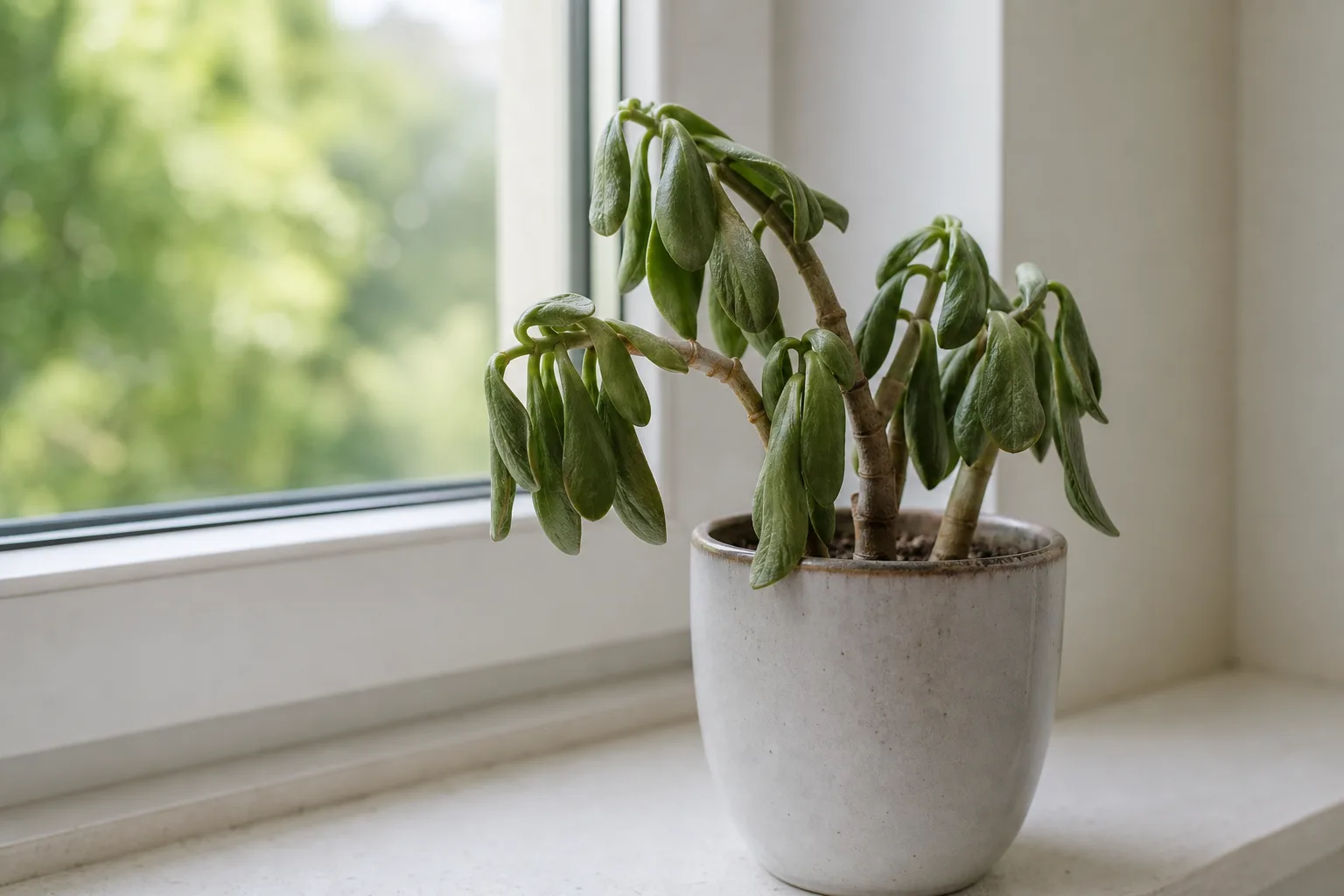
Wilting on Jade Plant: Causes, Checks & Fixes
This guide covers wilting on Jade Plant. See also the general Wilting guide, watering, and light pages for this plant.
Wilting on Jade Plant: Causes, Checks & Fixes
Quick answer
Wilting on Jade Plant (Crassula ovata) is misleading because limp leaves look the same for opposite problems. Thick, glossy leaves store water like a reservoir, so the plant can look fine until turgor drops suddenly-but rotting roots cannot move water even when soil is wet. That is the wilt paradox: the most dangerous pattern is wilt plus soggy mix, not a dry pot.
First step: lift the pot and check deep soil moisture before you water.
- Light pot, dry mix, firm wrinkled leaves → drought wilt. One deep watering, empty the saucer, wait for perk-up.
- Heavy pot, wet mix, soft stem base or sour smell → wet wilt / early root failure. Stop all water and inspect roots today.
Never water a wilting jade on sight alone. Pot weight beats leaf appearance every time.
What wilting looks like on Crassula ovata
Jade wilting shows up as loss of turgor-the springy firmness that keeps thick leaves plump and woody stems upright. Healthy jade leaves feel slightly stiff when you squeeze them gently; wilted ones feel thin, soft, or visibly wrinkled along their length.
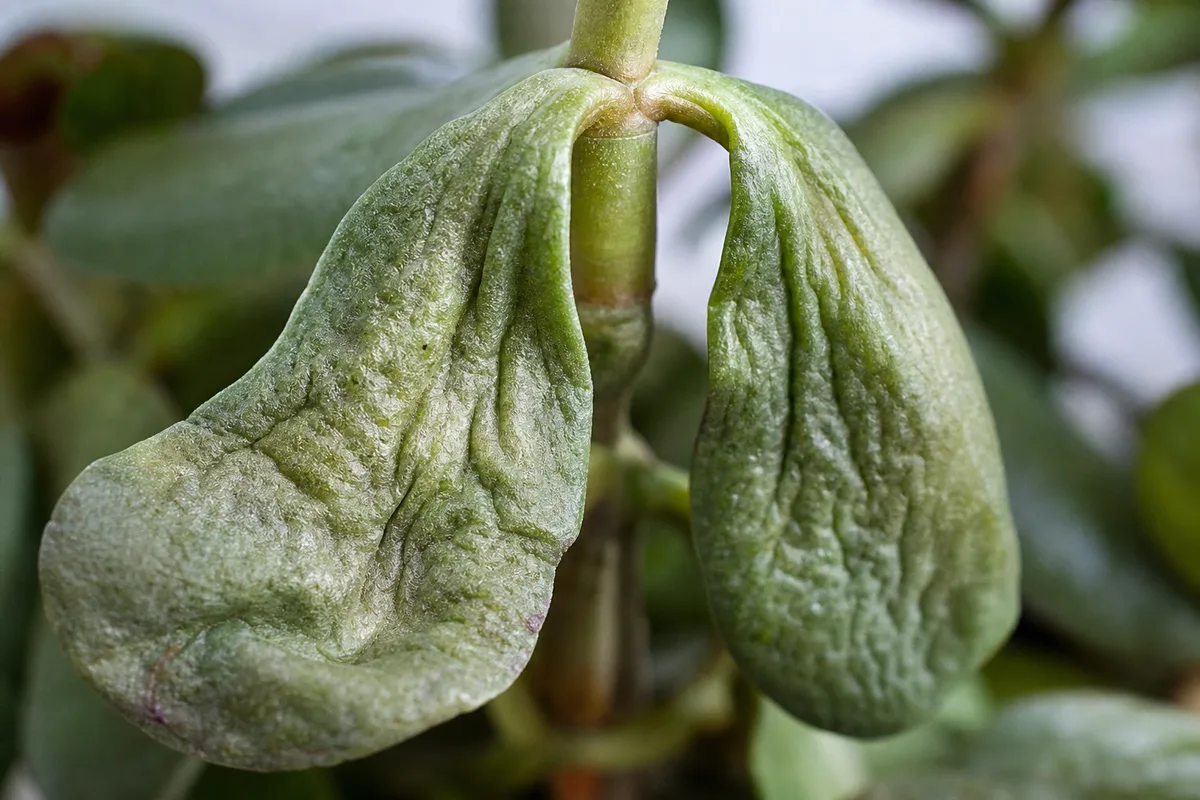
Wilting symptoms on Jade Plant - compare with healthy tissue on the same plant.
Dry wilt, wet wilt, and temporary sun wilt
Dry wilt (underwatering):
- Pot feels noticeably light when lifted
- Mix is dry two or more inches deep-not just dusty on top
- Leaves are wrinkled or slightly deflated but stems stay firm
- Lower leaves may drop after prolonged drought
- Perk-up within hours to a day after one thorough watering confirms this pattern
Wet wilt (overwatering / root failure):
- Pot stays heavy days after the last watering
- Mix is soggy or smells sour at depth
- Leaves yellow or droop despite wet soil-the classic wilt paradox
- Stem base feels soft, squishy, or discolored while mix is moist
- Wilt worsens or spreads to branches over several days without intervention
Temporary sun wilt (heat / acclimation stress):
- Occurs after a sudden move to much stronger direct sun
- Often appears as afternoon limpness on an otherwise healthy plant
- Stems remain firm; pot weight and deep moisture are normal
- Leaves formed in low light burn or wilt first; recovery by evening or within days after gradual acclimation
Mature jade develops a thick woody trunk that stores reserves longer than thin-stemmed succulents-so dry wilt can look mild until leaves wrinkle deeply. Once the trunk base softens on wet soil, rot moves faster than on vine-type succulents because the stored stem tissue is continuous from roots to branches.
Why Jade Plant wilts
Crassula ovata evolved on dry rocky hillsides in South Africa, where it stores water in leaves, green stems, and eventually a stout woody trunk. Like other Crassulaceae succulents, it uses CAM metabolism-opening stomata mainly at night to cut water loss-so it tolerates drought far better than saturated roots.
That physiology drives two common indoor failure modes:
Underwatering wilt. Hot sun, small pots, or long neglect pull water from thick leaves faster than roots replace it. The plant dips into leaf reserves until leaves wrinkle. Because jade survives dry spells well, owners sometimes miss the window until several leaf pairs look deflated.
Overwatering wilt. Plants are intolerant of moist, poorly drained soils. Saturated mix displaces oxygen; roots decay. Damaged roots cannot transport water, so stems and leaves wilt while the pot still holds moisture. Adding more water is the worst response.
Winter dormancy and the calendar-watering trap
Jade slows growth sharply in short, cool days and enters semi-dormancy indoors. During winter, let the soil dry between waterings and keep the soil on the dry side-continuing a summer weekly rhythm in a dim room is one of the top wilt triggers. Cool air plus reduced light means the mix stays wet at depth while the plant uses almost no water.
Other jade-specific wilt triggers include root-bound mature plants in undersized pots that dry unevenly (hydrophobic dry pockets on top, stale wet zones below), mealybug or scale weakening stems over weeks, and cold damage after chilled wet roots sit near a drafty window.
Wilting vs. drooping leaves vs. yellow leaves
These symptoms overlap on jade but point to different urgency and fixes:
| Pattern | Speed | Stem base | Soil | Best next page |
|---|---|---|---|---|
| Wilting | Hours to days; acute collapse | Firm (dry) or soft (wet) | Light/dry or heavy/wet | This guide |
| Drooping leaves | Days to weeks; chronic hang | Often firm early | Usually mismatched moisture | Drooping leaves |
| Yellow leaves | Gradual; lower leaves first | May stay firm until late rot | Often wet if overwatering | Yellow leaves |
| Root rot | Progressive after chronic wet | Soft, discolored base | Wet, sour | Root rot |
Wilting is the emergency triage moment-pot weight decides water vs. dry-down today. Drooping describes a sustained downward leaf hang that may have built slowly. Yellowing often precedes wet wilt but can also mean natural aging on lower leaves when soil moisture is normal.
How to confirm the cause
Work through these checks in order before you change anything:
- Pot weight - Lift the container. Compare to how it felt right after your last watering. Heavy days later suggests saturation; very light suggests drought.
- Deep moisture - Probe two inches down with a finger or wooden skewer. Surface dust-dry does not count-jade pots often dry on top while staying wet below, or the reverse in root-bound plants.
- Leaf squeeze - Gently press a mid-stem leaf. Firm but wrinkled fits dry wilt. Soft, translucent, or mushy fits overwatering stress.
- Stem-base firmness - Pinch the woody trunk where it meets the soil. Healthy jade feels solid. Soft, squishy, or discolored tissue on wet mix confirms rot spreading from roots.
- Smell check - Sour or rotten odor from the drainage hole supports wet wilt. Neutral dry scent fits drought.
- Time pattern - Did wilt follow a missed watering in hot sun, a winter overwatering spell, or a sudden window move? Context narrows the branch.
- Root spot-check - If soil stays wet, stems soften, or wilt worsens over a week, slide the plant out. Healthy roots are firm and pale; rot is brown, black, mushy, or hollow.
Decision rule: Wet soil plus soft stem base means do not water-inspect roots. Dry soil throughout plus firm stems means one deep watering is appropriate.
First fix for Jade Plant
Lift the pot. If it is heavy and soil is wet at depth, stop watering and inspect roots before you do anything else.
This single decision prevents the costliest mistake: drowning a jade whose roots are already failing. Slide the plant out, brush away wet mix, and squeeze roots and the stem base. Trim mushy roots with clean scissors, air-dry cut surfaces for 24 hours, and repot firm tissue into dry gritty mix in terracotta. Full trim-and-repot detail lives on the root rot guide.
If-and only if-the pot is light, mix is dry deep down, and stems feel firm, water thoroughly until excess drains from the bottom, empty the saucer, and do not water again until the top two inches dry and the pot feels lighter. See the underwatering guide if leaves were shriveled for weeks.
Do not water on a calendar because leaves look limp. Do not mist wilted jade hoping to revive leaves-misting does not rehydrate rotting roots.
Step-by-step recovery
After the first fix, follow the path that matches your confirmed cause.
Dry-wilt path
- Water deeply once until excess runs from drainage holes; empty the saucer immediately.
- Place the plant in bright indirect to partial direct sun-light helps the plant use water without scorching unacclimated leaves.
- Wait 12 to 48 hours before judging. Leaves should plump and stems stiffen as reserves refill.
- Resume dry-down watering only when the top two inches of mix are dry and the pot feels noticeably lighter-not on a fixed weekly schedule.
- Remove only leaves that shrivel completely and detach; firm wrinkled leaves often recover in place.
Wet-wilt / root-rot path
- Stop all watering. Unpot and rinse roots gently to see firm versus mushy tissue.
- Trim all soft, brown, or hollow roots back to healthy white or tan tissue. Sterilize scissors between cuts.
- If the main trunk is still mostly firm, let the plant and trimmed roots air-dry in Jade Plant light guide for 24 to 48 hours.
- Repot into a smaller terracotta pot with fast-draining succulent mix-mineral grit, not dense peat. The soil guide covers mix ratios.
- Withhold water for at least two weeks, then give only a light drink if stems stay firm and new growth appears.
- If the trunk is soft throughout but branch tips remain firm, propagate those tips after callusing-salvage before rot climbs.
Sun-stress path
- Move the plant out of harsh midday sun to bright indirect light or filtered east exposure.
- Acclimate back toward stronger light over 10 to 14 days-an hour more direct sun every few days.
- Do not withhold water if soil is genuinely dry; do not overcorrect with extra water if moisture is already normal.
- Trim only leaves that sunburn to crisp brown; firm wilted leaves from heat often recover overnight.
Recovery timeline
| Cause | First sign of improvement | Realistic full recovery |
|---|---|---|
| Dry wilt | Leaves plump within 12 to 48 hours | Days; old wrinkled leaves may stay cosmetically marked |
| Early wet wilt (firm trunk, partial root trim) | Wilt stops spreading; stem base stays firm | Two to four weeks before new leaf pairs emerge |
| Advanced trunk rot | Not whole-plant recovery | Propagate firm branches; main trunk rarely re-firms |
| Sun-stress wilt | Evening perk-up or next-day firmness | Days once light is adjusted |
Judge success by firm stems, stable pot weight, and new growth-not by old wilted leaves becoming perfect again. Lower leaves that yellowed during rot may drop; that is normal shedding, not failure, if the trunk stays hard.
Lookalike symptoms to rule out
Chronic drooping without acute collapse - stems hang for weeks, often in dim rooms with slowly mismatched water. Soil may read borderline. See drooping leaves when the issue is sustained hang rather than sudden wilt.
Yellow lower leaves without full wilt - can mean early overwatering, natural aging, or salt buildup. Yellowing alone warrants a moisture check even if stems still feel stiff. See yellow leaves.
Leggy etiolation in low light - long pale stems with small spaced leaves; plant looks weak but stems stay firm and soil dries slowly. Fix light before assuming root failure. See not enough light.
Mealybugs or scale - cottony axil clusters or hard brown bumps weaken branches over weeks; wilt may appear without obvious soil mismatch. Inspect stem joints before unpotting.
Root-bound dry pockets - a heavy old plant in a too-small pot may wilt from dry interior roots while the surface looks slightly moist. Tap the pot sides and check drainage flow; consider Jade Plant repotting guide if roots circle densely.
Mistakes to avoid
Do not water a wilting jade without checking deep soil moisture and stem-base firmness.
Do not keep a wet-wilt plant on its old watering schedule “to help it recover.”
Do not repot into fresh wet mix on day one if roots are mushy-trim, air-dry, repot dry.
Do not move a rotting jade to harsh sun to “dry it out.” Bright indirect light during recovery; direct sun after acclimation only.
Do not fertilize a wilted plant. Stressed roots cannot use feed, and salts worsen damage.
Do not assume afternoon wilt on moist soil is always heat-check stem base firmness every time.
Wear gloves when trimming rot; jade sap irritates skin and the plant is toxic to cats and dogs. Contact your veterinarian if a pet ingests any trimmed tissue.
How to prevent wilting next time
Allow soils to dry between waterings during active spring and summer growth. In fall and winter, restrict watering and keep the soil on the dry side when growth slows-calendar schedules from summer cause winter wet-wilt.
Use terracotta or unglazed clay with drainage holes and a gritty succulent mix so water exits quickly. Size the pot to the root mass, not the canopy; oversized pots stay wet for weeks.
Give four or more hours of direct sun daily or strong supplemental light so the plant transpires normally and mix dries predictably between drinks. In dim corners, water less-not more.
Inspect the stem base when you water; it should stay firm year-round. Recheck after repotting, heat waves, or moving the plant indoors for winter.
When to worry
Treat as urgent today when wilt pairs with wet heavy soil, sour smell, or a soft woody stem base. Unpot and trim the same day-overwatering can lead to root rot that climbs the trunk on stored-water succulents.
Worry less about slow wilt on a very dry light pot with firm stems; one corrected watering usually resolves it.
Consider propagation-not waiting-when the main trunk softens throughout but firm branch tips remain. Total trunk collapse with no firm tissue left after trimming is rarely reversible whole-plant.
Conclusion
Wilting on jade is a pot-weight decision, not a thirst reflex. Light and dry with firm stems means one deep drink; heavy and wet with a soft base means stop water and inspect roots today. Run the numbered checks, match the recovery path, and cross-check overwatering or underwatering if moisture history is unclear. That order saves drought-stressed plants from unnecessary surgery and stops rotting ones from another drowning.
Related jade plant problems
- Jade plant overview - light, water, soil, and winter rhythm baseline
- Jade watering guide - dry-down checks and seasonal adjustment
- Root rot - full unpot, trim, and repot protocol for wet wilt
- Overwatering - chronic wet-soil patterns before collapse
- Underwatering - deep shrivel and soak recovery
- Drooping leaves - chronic hang vs. acute wilt
When to use this page vs other Jade Plant guides
- Jade Plant watering guide - Use for routine moisture checks before assuming wilting is the main issue.
- Jade Plant problems hub - Browse all 49 common issues on this species.
- Overwatering on Jade Plant - Different entry point when symptoms overlap with wilting.
- Yellow Leaves on Jade Plant - Different entry point when symptoms overlap with wilting.