Yellow Leaves on Jade Plant: Causes, Checks & Fixes
Quick answer
Yellow leaves on jade plant usually mean wet roots, low light with damp soil, or normal lower-leaf aging-not a fertilizer shortage. First step: lift the pot and press the stem base; heavy wet mix with soft wood points to overwatering, while one firm lower leaf fading on dry mix is often senescence.
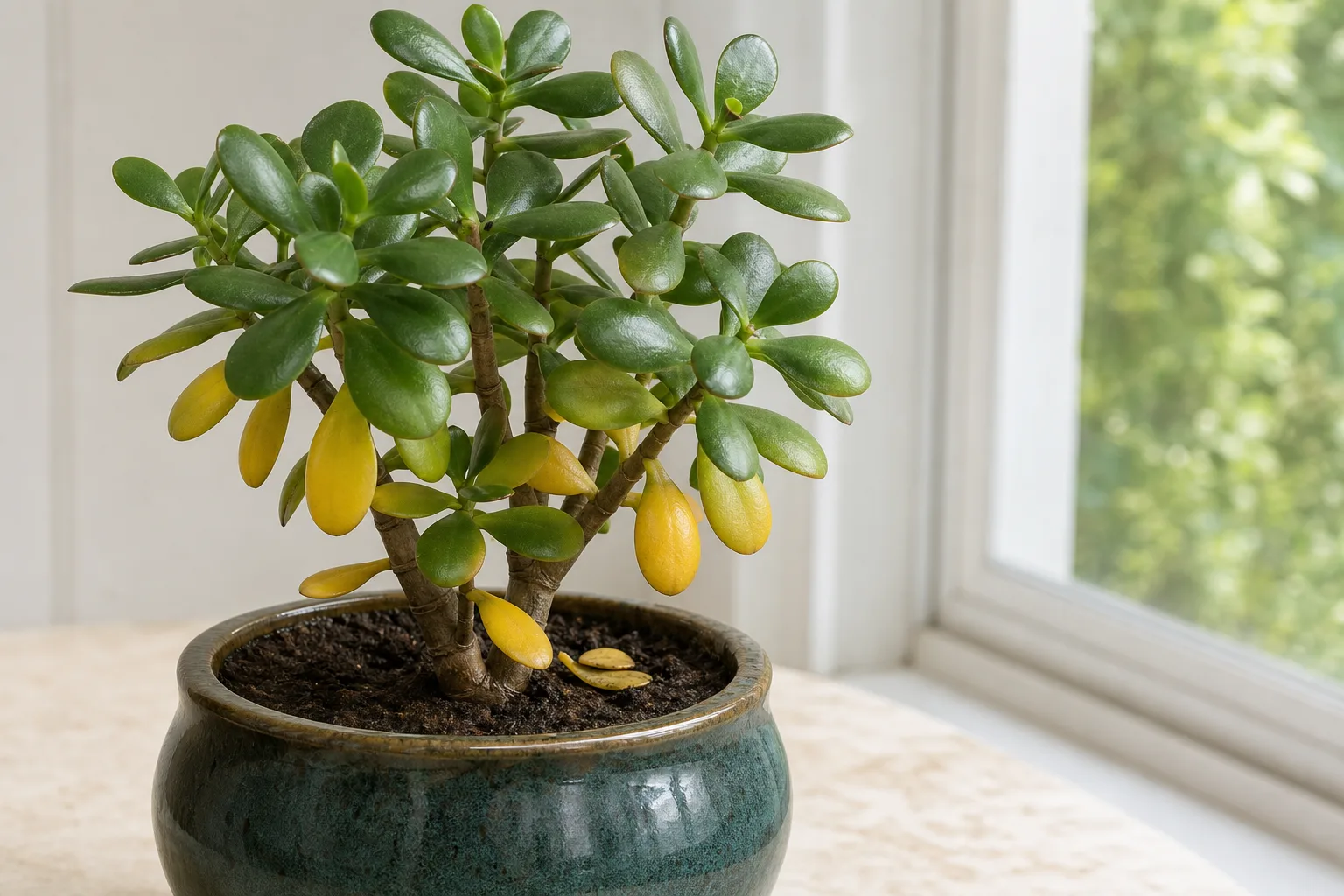
Yellow Leaves on Jade Plant: Causes, Checks & Fixes
This guide covers yellow leaves on Jade Plant. See also the general Yellow Leaves guide, watering, and light pages for this plant.
Yellow Leaves on Jade Plant: Causes, Checks & Fixes
Quick answer
Your jade’s thick leaves still look plump, but yellow patches are spreading-or one lower leaf faded while the rest of the plant looks fine. On Crassula ovata, yellow foliage is almost always a root-zone or light problem, not a missing nutrient. Jade stores water in leaves and woody stems evolved for dry rocky slopes in South Africa; when roots sit in damp mix-especially in dim winter rooms-the plant cannot use stored water fast enough and leaves yellow and drop while the stem rots.
First step: lift the pot and pinch the stem base before you add water or fertilizer.
| What you find | Likely cause | First action |
|---|---|---|
| Heavy wet pot, soft yellow leaves, firm stem still woody | Early overwatering | Pause water; brighter window-overwatering guide |
| Heavy wet pot, soft stem base, sour smell | Advancing root failure | Same-day root inspection-root rot protocol |
| Light dry pot, firm wrinkled leaves | Underwatering stress | One deep soak once fully dry-underwatering guide |
| One lower leaf yellowing, firm stems, healthy tips | Normal aging | Twist off if papery; no emergency water change |
| Pale stretchy growth, long gaps between leaves | Low light + slow drying | Move to brighter sun-jade light guide and leggy growth |
| White soil crust, recent heavy feeding | Salt or fertilizer buildup | Flush with clear water; pause feed |
| Speckled yellow dots, cottony or armored bumps | Mealybugs or scale | Inspect joints-mealybugs on jade |
| Yellowing 1–2 weeks after repot on wet mix | Transplant shock | Dry-down only-transplant shock |
Nitrogen deficiency can pale leaves on any houseplant, but it is rare on slow-growing indoor jade compared with overwatering and weak light. Fix environment before reaching for fertilizer.
What yellow leaves look like on Jade Plant
Yellowing on jade follows recognizable patterns once you separate texture, pot weight, and which leaves fade first.
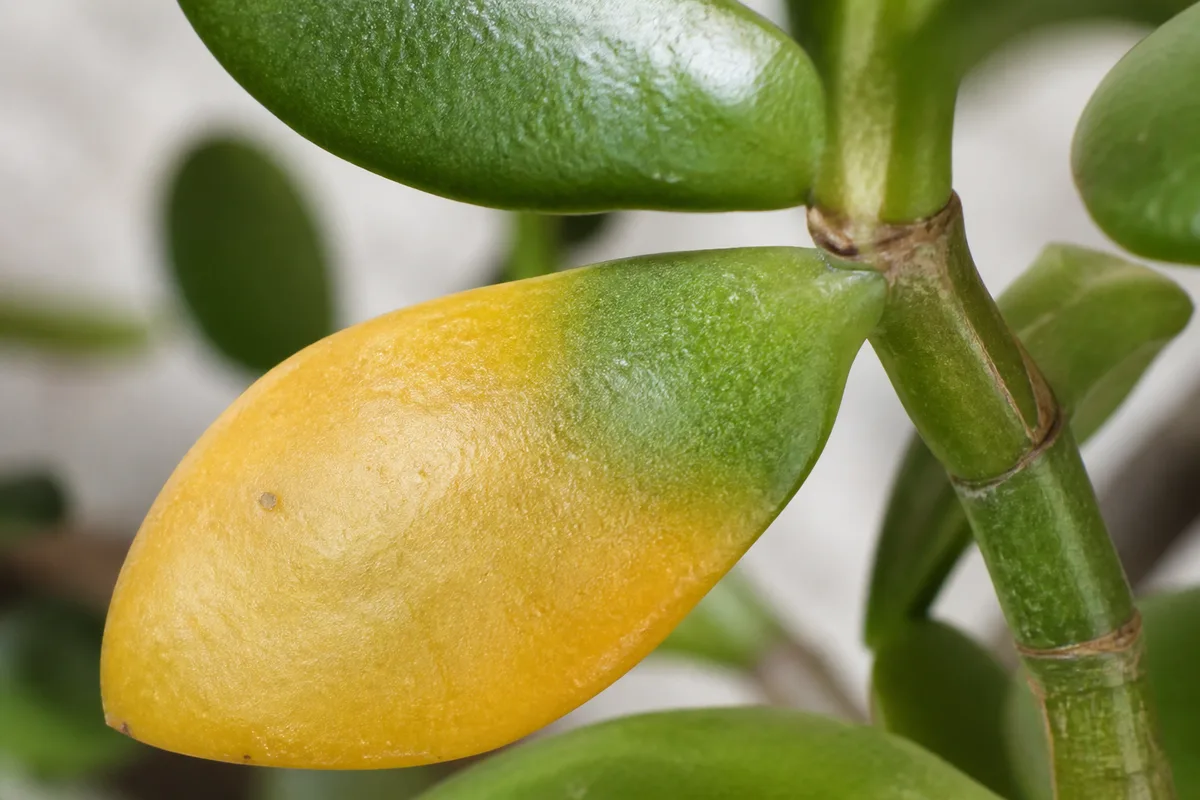
Yellow Leaves symptoms on Jade Plant - compare with healthy tissue on the same plant.
Overwatering cluster: Several leaves turn soft yellow at once-often lowers first, then spreading-while the pot stays heavy days after watering. Leaves may feel mushy or drop with light touch. Stem bases stay firm in early cases; advanced rot softens the woody trunk near soil level. This matches yellowing and defoliation as early root-rot symptoms on chronically wet mix.
Normal lower-leaf aging: One older leaf at the bottom yellows, dries papery, and drops while stems remain firm, new tips stay plump, and soil cycles normally. Mature jade naturally sheds shaded lower foliage as stems woody. No sour smell, no canopy-wide rush.
Underwatering (lookalike): Leaves may yellow after prolonged drought, but they feel firm and slightly wrinkled, not mushy. Pot is light, mix is dry throughout-not heavy and damp. Upper leaves often stay plump longer because jade’s leaf tanks mask drought until lower tissue sacrifices first.
Low-light fade: Older leaves pale yellow-green while new growth stretches toward the window with long gaps between leaf pairs. Soil dries slowly because the plant transpires less in dim corners-pairing pale yellow with hidden overwatering risk. See leggy growth on jade when stretch is the main clue.
Salt and fertilizer stress: Uniform pale yellow or brown-tipped leaves with white crystalline crust on soil surface or pot rim. Often follows monthly full-strength feeding or hard tap water without flushing. Roots may still be firm if rot has not started-different urgency than mushy stems.
Pest speckling: Uneven yellow stippling on upper leaf surfaces, sticky residue, or cottony mealybug clusters and armored scale on stem joints. Not a smooth wash of pale green from base up. Clemson HGIC lists mealybugs and scale as common jade pests that weaken growth and cause chlorosis-like fading.
Post-repot yellowing: A few leaves yellow one to two weeks after repotting into wet mix or an oversized pot. Roots were disturbed and soil holds more moisture than the plant can use-usually resolves with strict dry-down, not immediate re-repot.
Why Jade Plant gets yellow leaves
Overwatering and root stress - the primary indoor cause
Jade is intolerant of moist, poorly drained soils. Calendar watering, oversized plastic pots, and heavy peat mix keep roots oxygen-starved. Damaged roots cannot move water or nutrients upward, so leaves yellow even though the pot feels wet-the same wilt paradox described in the overwatering guide.
Thick leaves mask drought until lowers sacrifice
Crassula ovata stores water in fleshy leaves and stems using CAM metabolism-stomata open at night to reduce water loss, which slows transpiration compared with tropical foliage plants. That storage lets jade survive missed waterings, but it also means lower leaves yellow first when roots cannot supply new growth while upper leaves still look plump. Do not assume plump tips rule out root stress; check soil at depth.
Low light plus damp soil - compound failure
In a dim corner, jade uses less water while you maintain a summer soak rhythm. Soil stays damp for weeks. Weak light also produces pale, stretched growth that cannot photosynthesize strongly enough to pull water through the system. The fix is brighter placement and longer dry-down-not more water. Full light targets live in the jade light guide.
Winter dormancy and slow metabolism
Wisconsin Horticulture Extension notes jade enters semi-dormancy in winter-watering should be restricted and soil should remain on the dry side. Cool short days slow metabolism further, so even modest watering can overwhelm the root zone. November yellowing on wet mix with slowing growth is almost always excess moisture, not hunger.
Natural aging on maturing stems
Lower leaves on woody jade branches naturally senesce as new growth shades them. One-at-a-time yellowing on firm wood is normal turnover on a healthy plant-especially on specimens you have not pruned in years.
Salt buildup from fertilizer or hard water
University of Maryland Extension documents that high soluble salts from excessive or frequent fertilizing cause yellowing, stunting, lower leaf drop, and root dieback. White crust on soil surface is a visual clue. Jade’s slow winter growth cannot use heavy feeding; salts accumulate while roots are inactive.
Pests - mealybugs and scale
Sap-feeding insects drain chlorophyll unevenly. Mealybugs look like cottony clusters in leaf axils; scale forms brown armored disks on stems. Both weaken jade slowly until yellow stippling spreads-often misdiagnosed as underwatering because leaves look dull overall.
Repot shock and cold stress
Fresh wet mix around disturbed roots plus reduced winter light commonly yellows a few leaves. Unheated rooms below about 50°F (10°C) with damp soil increase rot risk and can yellow foliage even when watering frequency seemed modest.
Yellow leaves vs. pale leaves vs. red leaves
These sibling symptoms overlap but point to different fixes:
| Symptom | Typical pattern | Main suspect | Read next |
|---|---|---|---|
| Yellow (this page) | Soft mushy or uniform pale; often with wet heavy pot or aging lowers | Overwatering, salt, pests, aging | Stay here |
| Pale washed-out green | Whole plant light green; stretch toward window | Low light | Leggy growth · Light guide |
| Red margins or blush | Sun-stressed or cultivar color; firm leaves | Adequate light or sun acclimation | Red leaves on jade |
| Brown crispy patches | Sunburn or salt burn on edges | Too much direct sun or salt crust | Brown leaves · Brown tips |
When multiple colors appear, prioritize pot weight and stem firmness before cosmetic leaf trimming.
How to confirm the cause
Work through this numbered checklist before you repot, feed, or prune heavily:
- Lift the pot. Heavy days after watering means trapped moisture-not thirst. Light pot with firm wrinkled leaves points to drought instead.
- Check moisture at depth. Push a finger or dry skewer two inches (5 cm) into mix-not just the surface. Damp core with yellowing leaves favors overwatering; dusty dry throughout favors underwatering.
- Pinch the stem base. Healthy jade wood feels firm. Soft, squishy tissue at the crown on wet mix means escalate to root rot the same day.
- Read the leaf pattern. Cluster soft yellow on wet mix vs. one papery lower on firm wood vs. speckled stippling with pests.
- Evaluate new growth. Compact plump tips in bright light suggest aging only on lowers. Long pale gaps between leaves mean light is limiting.
- Review season and watering history. Winter + recent soak on cool windowsill strongly favors rot over nitrogen deficiency.
- Scan for salt crust and feed history. White rim deposits plus monthly full-strength fertilizer suggest flush, not more feed.
- Inspect stem joints for mealybugs and scale before assuming environmental stress.
Lookalike comparison table
| Signal | Pot / soil | Stem / roots | New growth | Likely cause | First move |
|---|---|---|---|---|---|
| Soft yellow cluster | Heavy, wet at depth | Firm (early) or soft base (late) | May stall | Overwatering | Stop water; brighter light |
| One lower yellow leaf | Normal dry-down | Firm woody stems | Plump green tips | Normal aging | Remove papery leaf; monitor |
| Firm wrinkled yellow-tinged leaves | Very light, dry throughout | Firm roots | Slow but compact | Underwatering | Deep soak once fully dry |
| Pale yellow + long stems | Often stays wet in dim spot | Firm | Small pale tips, lean | Low light + wet soil | Brighten; dry longer |
| Speckled yellow, sticky residue | Any moisture | Firm unless secondary rot | Stippled dull leaves | Mealybugs / scale | Pest protocol |
| White crust, recent feed | Any | Firm white roots | Stunted pale growth | Salt buildup | Flush; pause fertilizer |
| Yellow 1–2 weeks post-repot | Wetter than usual | Disturbed but firm | Slow | Transplant shock | Dry-down; no second repot |
First fix for Jade Plant
Choose one branch from your checklist-not all interventions at once.
If soil is wet and stems are still firm - dry-down pause
Stop watering immediately. Move the plant to the brightest spot you have with good airflow-never a dark corner while mix is wet. Do not fertilize. Wait until the entire root zone dries throughout the pot, confirmed by skewer and pot weight. Expect two to four weeks before yellowing stops spreading and new firm leaves appear at tips. Soak-and-dry rhythm details live in the jade watering guide.
If stem base is soft or roots are mushy - root rescue
Follow the same-day workflow in root rot on jade: unpot, trim mushy roots, air-dry 24 hours, repot into dry gritty mix in appropriately sized terracotta. Yellow leaves will not re-green; judge recovery by firm wood and new growth.
If pot is light and leaves are firm-wrinkled - controlled soak
Water once deeply until drainage runs, then empty the saucer. Do not repeat until fully dry throughout-see underwatering on jade for the dry-wilt vs. rot-wilt split.
If light is dim and soil dries slowly - brighten first
Move to east or south exposure with gradual acclimation, or add a grow light 12–18 inches above the canopy for 10–12 hours daily. Then adjust watering to slower winter dry-down. Fertilizing shade-stretched jade often worsens soft weak growth.
If salt crust is visible - flush, do not feed
Slowly pour clear water through the pot equal to at least three times the pot volume, letting it drain freely-UMD Extension recommends repeated leaching for salt-heavy media. Pause fertilizer until new growth proves the root zone is stable. Do not flush a plant with mushy roots; fix rot first.
If pests are confirmed - treat insects, not yellow leaves
Isolate, dab visible mealybugs with alcohol on a cotton swab, and follow the full inspection loop in mealybugs on jade. Feeding a pest-stressed plant wastes time and salts.
If only one lower leaf aged out - no rescue needed
Twist off the papery yellow leaf if it releases cleanly. Continue normal dry-down watering and bright light. No repot required.
Documented recovery note (winter 2026): A 20 cm Crassula ovata in glazed ceramic on a north windowsill developed three soft yellow lower leaves in January while the pot stayed heavy ten days after watering. Water was withheld, the plant moved to an east sill, and yellowing stopped spreading within 18 days; new firm leaves appeared at branch tips by week four. Old yellow tissue was not expected to re-green.
Recovery timeline
Damaged yellow leaves rarely turn green again. Measure success by stopped spread, firmer stems, and new tip growth.
| Milestone | What to expect |
|---|---|
| Days 1–3 | Correct stressor removed; no new yellow leaves |
| Weeks 2–4 | Mild wet-root stress stabilizes; firm new leaves at tips |
| Weeks 4–8 | Root-pruned plants resume modest growth after repot |
| Beyond 8 weeks | Persistent yellow new growth after corrected care warrants extension help or division |
Hold heavy pruning during root recovery-let the plant rebuild leaf surface before you shape hard.
What not to do
Do not increase watering because leaves are yellow-especially on a heavy pot. Do not fertilize stressed roots or wet soggy mix to “green up” foliage; jade is a light feeder and excess salts worsen yellowing. Do not repot and heavily prune roots the same day unless active rot forces it. Do not mist leaves to fix yellowing-it does not help roots and can encourage fungal spotting. Do not assume every lower yellow leaf means rot-aging on firm wood is normal.
Keep jade away from pets when trimming dropped leaves-jade plant is toxic to cats and dogs. Contact your veterinarian or the ASPCA Animal Poison Control Center at (888) 426-4435 if a pet ingests any part of the plant.
How to prevent yellow leaves next time
Allow soil to dry between waterings during active growth, then restrict watering in winter when jade is semi-dormant. Give four or more hours of strong light daily, including some direct sun once acclimated-NC State Extension recommends bright light for healthy indoor culture. Use fast-draining succulent mix in terracotta sized to the root mass, not an oversized cachepot. Flush salts every four to six months if you feed regularly or use hard tap water. Inspect stem joints monthly for mealybugs. Full seasonal rhythm lives in the jade overview.
When to use this page vs. sibling guides
| Your main question | Start here | Or use sibling page |
|---|---|---|
| ”Yellow leaves-is it water, light, age, or pests?” | This page - decision table and lookalike matrix | |
| ”Soil stays wet, pot heavy, stems softening” | Skim checklist here, then | Overwatering |
| ”Mushy roots, sour odor, collapsing trunk” | Root rot | |
| ”Firm wrinkled leaves on very dry soil” | Rule out rot here, then | Underwatering |
| ”Stretchy pale plant leaning to window” | Leggy growth | |
| ”Cottony clusters on stems” | Mealybugs |
This URL is the yellow-leaf differential hub for Crassula ovata. Sibling pages go deeper on one cause; start here when foliage is yellow and you need to split wet roots, drought, aging, salt, light, and pests.
When to worry
Treat yellowing as same-day urgent when:
- Rapid multi-leaf yellowing spreads across the canopy while mix stays wet-especially in winter dormancy
- The woody stem base feels soft or squishy
- Soil smells sour or rotten
- Black mushy roots dominate on inspection
- Yellowing accelerates after you already withheld water for two weeks on firm stems-hidden rot may be advancing
Mild soft yellow on firm woody stems often recovers after dry-down and brighter light. A collapsed main trunk means propagate firm cuttings from healthy branches-the trunk will not firm up again. If yellowing persists three weeks after corrected care on firm roots, contact your local cooperative extension office with photos of leaves, roots, and pot setup.
Related tool
Use the Yellow Leaves Diagnosis Tool to narrow causes for yellow leaves on this plant before changing multiple variables at once.