Red Leaves on Jade Plant: Causes, Checks & Fixes
Quick answer
Red leaves on jade are usually normal anthocyanin from bright direct sun, cool nights, or slight dry-down-not a watering crisis. First step: squeeze a leaf and check the stem base. Firm leaves with thin red margins mean adequate light; soft stems with wet soil mean rot, not color.
Red Leaves on Jade Plant: Causes, Checks & Fixes
This guide covers red leaves on Jade Plant. See also the general Red Leaves guide, watering, and light pages for this plant.
Red Leaves on Jade Plant: Causes, Checks & Fixes
Quick answer
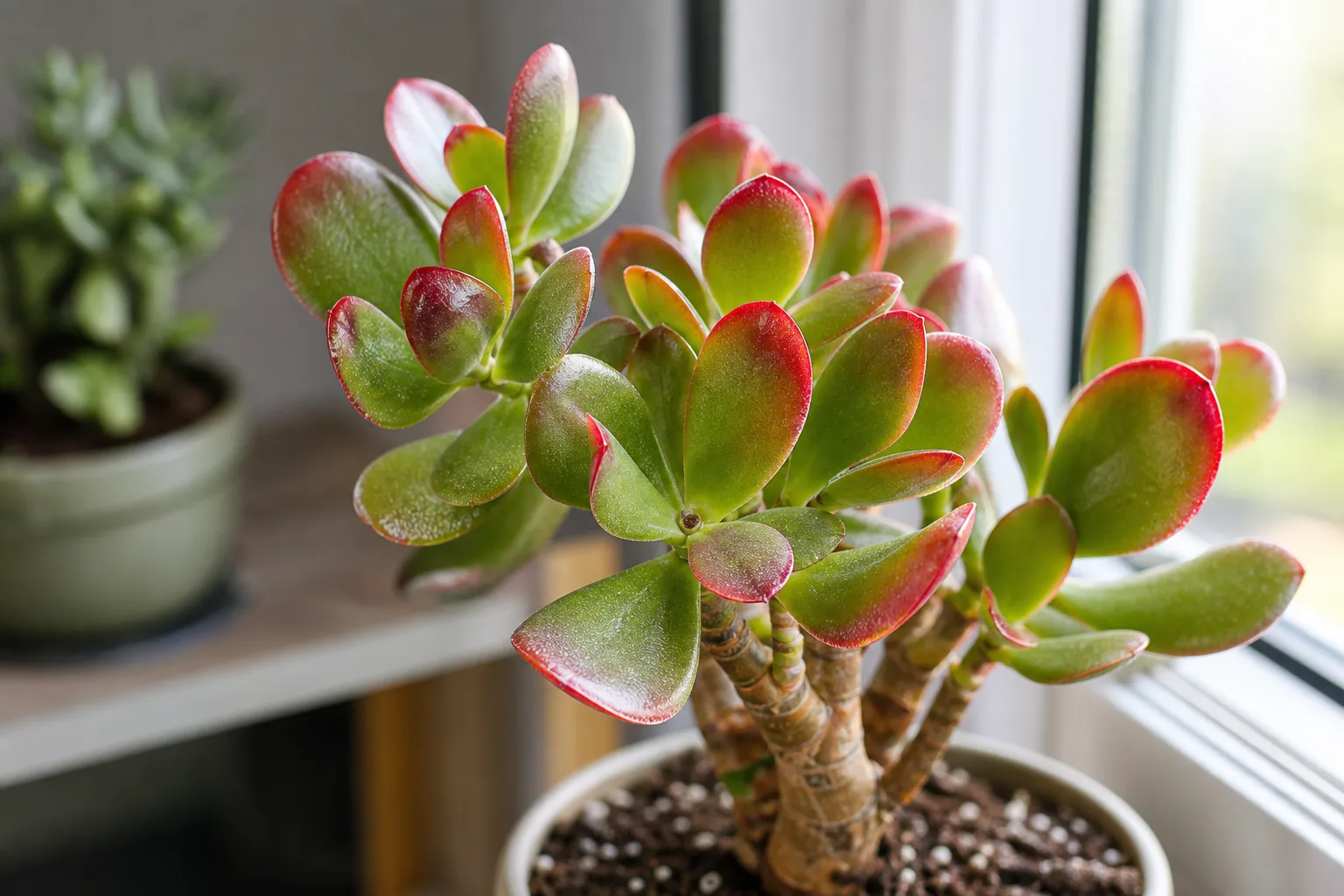
Red leaves on Jade Plant (Crassula ovata) are usually normal-not a crisis. On this succulent, thin red or burgundy margins on otherwise firm, plump leaves mean the plant is building anthocyanin, a protective pigment triggered by bright direct sun, cool nights near a window, or a slight dry-down between waterings. Many growers prize that flush as proof the plant receives enough light.
Red becomes a problem signal only when it pairs with soft mushy stem bases, sour wet soil, bleached patches turning brown, sudden leaf drop, or watery translucent spots from cold exposure. Those patterns point to root rot, sunburn, or cold damage-not healthy anthocyanin.
First step: squeeze a leaf and press the stem base. Firm leaves with dry-to-touch wood-colored stems mean enjoy the color or adjust light if you want more or less red. Soft stems with heavy wet pots mean stop watering and inspect roots-do not assume all redness is harmless without this two-second check.
Are red leaves on jade bad?
For most indoor jade keepers searching “red leaves jade plant,” the honest answer is no action needed. Wisconsin Horticulture Extension notes that green jade leaves should be edged or tinged with red when grown with sufficient light-red margins are an expected sign of adequate energy, not deficiency.
The exceptions matter. Red that arrives suddenly with wilting, spreads as mottled brown patches, or appears while soil stays wet for weeks is not the same biology. Treat those as stress or disease triage, not celebration. This page separates healthy anthocyanin flush from harmful discoloration so you know which bucket your plant is in before changing water, light, or pot.
What red leaves look like on Crassula ovata
Jade leaves are thick, glossy ovals clustered at branch tips. Red coloration shows up in distinct patterns depending on cause.
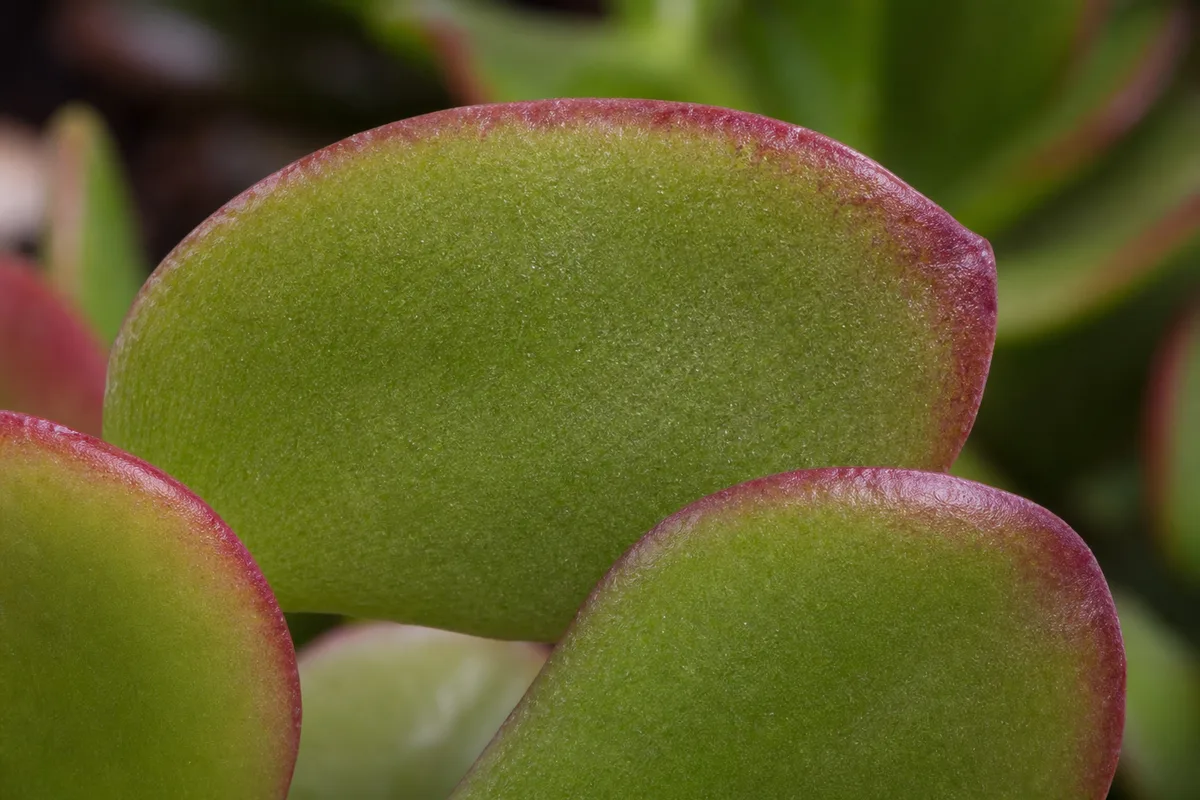
Red Leaves symptoms on Jade Plant - compare with healthy tissue on the same plant.
Healthy anthocyanin margins vs. full-leaf flush vs. harmful patterns
Healthy red margins (most common):
- Thin even red or burgundy band along the outer leaf edge only
- Leaf center stays glossy green; tissue feels firm and plump when squeezed
- Often appears after a window move, summer outdoor stint, or autumn cool nights
- Stems stay woody and dry at the base; no sour smell from soil
- Older leaves may keep red edges while new pairs emerge green-tipped then redden
Full-leaf red or orange flush:
- Entire leaf shifts toward red, orange, or bronze while staying firm
- Common on cultivars such as ‘Hummel’s Sunset’, ‘Crosby’s Compact’, and ‘Red Coral’ under strong light
- Green varieties can flush more fully after prolonged direct sun plus cool nights
- Still healthy if leaves are not shriveling and stems are firm
Harmful patterns (not anthocyanin):
- Bleached white or tan patches on the sun-facing side that later turn brown and papery - sun scorch; see brown leaves on jade and crispy leaves
- Soft black or brown stem bases with sour wet mix - advancing rot; see root rot
- Watery translucent spots and sudden leaf drop after a cold draft or frost touch - cold injury, not pigment
- Overall pale wash without firm texture - often low light, not red stress; see pale leaves
| Pattern | Leaf feel | Soil / stem | Likely meaning |
|---|---|---|---|
| Thin red edge, green center | Firm, plump | Dry between drinks; firm stem | Healthy anthocyanin |
| Full red-orange leaf | Firm | Bright light; may be a red cultivar | Healthy stress color or cultivar baseline |
| Bleached patch → brown | Dry, papery on patch | Dry; recent harsh sun move | Sunburn |
| Red-brown with yellowing | Softening | Wet, heavy pot; sour smell | Root rot |
| Watery spots, drop | Mushy spots | Cold exposure | Cold damage |
Why Jade Plant gets red leaves
Jade evolved on sunny rocky slopes in South Africa, where intense light and cool dry winters favor compact growth with protective pigments. Indoors, the same triggers produce red margins on thick succulent leaves.
Anthocyanin, bright light, cool nights, and slight drought
Anthocyanin is a water-soluble pigment that accumulates in leaf margins when the plant receives more light than its baseline green chlorophyll alone can safely manage. It acts as natural photoprotection-absorbing excess light energy before it damages photosynthetic tissue. Penn State Extension describes jade leaves as mid to dark green with red margins when they receive sufficient sunlight, and notes that insufficient light produces pale green leaves without attractive red edges.
The primary indoor triggers are:
- Four or more hours of direct sun daily - south- or west-facing windows, or summer outdoor placement after acclimation. Wisconsin Horticulture Extension states jade does best with four or more hours of direct sun and that inadequate light fails to produce normal compact growth and reddish coloration.
- Cool nighttime temperatures - a drop of roughly 10–15°F (5–8°C) between day and night, common on autumn window sills, deepens anthocyanin even when daytime light is moderate.
- Slight drought stress - allowing soil to dry fully between thorough soakings concentrates pigments without harming firm leaves. Chronic underwatering that causes wrinkling is past the ornamental zone; firm leaves with red edges after a normal dry-down are not.
Red is not primarily a nitrogen deficiency or pest signal on jade. Reaching for fertilizer when margins redden in a bright window usually misses the actual biology.
Red cultivars vs. stressed green varieties
Some jade selections show red-orange foliage as their baseline in moderate light. NC State Extension lists cultivars including ‘Hummel’s Sunset’ (yellowish-orange to red leaves), ‘Crosby’s Compact’ (small rounded leaves in red, yellow, and orange shades), and ‘Red Coral’ (bright reddish-orange tubular foliage). Wisconsin Horticulture also notes ‘California Red Tip’ with purplish red edges in bright light. If you bought a plant tagged with one of these names, substantial red color is expected-not a stress alarm.
Standard green Crassula ovata reddens mainly at margins under the light and temperature cues above. A plant that was solid green on a shop shelf and developed red edges after you moved it to a brighter sill is almost always healthy acclimation, not disease.
Red leaves vs. sunburn, rot, and cold damage
Sunburn follows an abrupt jump to harsh midday sun-especially on leaves formed in dim light. Sun-facing tissue turns bleached white or tan, then brown and crispy. The damage is localized to the exposed side, not a neat red margin around the whole leaf. Fix by filtering afternoon sun or acclimating gradually to higher light over seven to fourteen days. Burnt leaves die and fall off, but new leaves sprout under gentler conditions.
Root rot can coincide with reddish-brown discoloration, but the distinguishing clues are wet heavy soil, soft stem bases, and sour smell-not firm plump leaves on dry mix. Jade stores water in leaves and stems; overwatering will cause leaves to drop and the stem to rot. If the pot has been wet for weeks, treat as rot triage regardless of leaf hue.
Cold damage shows water-soaked translucent patches and sudden leaf drop after exposure below about 50°F (10°C) or contact with a freezing window pane. Jade may tolerate light frost but is killed by freezing conditions-that is cellular collapse, not anthocyanin. Move the plant away from the cold source and let soil stay dry until firmness returns.
How to confirm the cause
Work through these checks before changing care:
- Leaf firmness - Squeeze the thickest leaf. Firm and plump supports healthy pigment. Soft, wrinkled, or squishy tissue points to water stress or rot.
- Margin pattern - Thin even red edge with green center = anthocyanin. Bleached or brown patch on one side = likely sunburn.
- Direct sun hours - Count hours of sun hitting leaves on a clear day. Four or more hours correlates with red margins on green varieties; fewer hours with sudden redness suggests another cause.
- Nighttime temperature - Is the pot on a windowsill that drops cool at night? Autumn and winter window seats often trigger a color flush without any problem.
- Pot weight and soil moisture - Lift the pot. Heavy wet mix plus soft stems = rot check, not color appreciation. Light dry pot with firm stems = normal dry-down deepening color.
- Stem base - Press the woody tissue at soil line. Firm and dry = continue diagnosis for light or temperature. Soft, discolored, or blackening = root rot protocol.
- Recent moves - New south window within two weeks with only edge reddening and firm leaves = successful light increase. Same move with white patches = sunburn from too-fast acclimation.
- Cultivar identity - Check the nursery tag. Named red cultivars may show full-leaf color as their normal look.
Confirmation decision guide
| If you find… | Likely cause | First direction |
|---|---|---|
| Firm leaves, thin red edges, dry soil, 4+ hrs sun | Healthy anthocyanin | No fix needed-or adjust light to taste |
| Firm leaves, red flush, cool window nights | Temperature-triggered pigment | Enjoy; avoid cold drafts below 50°F |
| Bleached patches → brown, firm stem, dry soil | Sunburn | Reduce direct sun; acclimate slowly |
| Soft stem, sour wet soil, yellowing leaves | Root rot | Stop water; inspect roots |
| Watery spots, leaf drop after cold snap | Cold damage | Warm stable spot; dry soil |
First fix for Jade Plant (by likely cause)
Change one variable at a time. Do not stack repotting, pruning, fertilizer, and pesticide on the same day.
If leaves are firm with healthy red margins and you like the color: No fix required. Maintain dry-down watering and current light placement.
If you want deeper red on a green variety: Gradually increase direct sun-move closer to a south or west window over seven to fourteen days, or add summer outdoor hours after acclimation. Allow soil to dry between thorough soakings. Cooler night placement near glass (above 50°F / 10°C) can intensify color. Consider a red cultivar if you want full-leaf color without extreme light.
If you want less red and greener leaves: Move to bright indirect light with fewer direct sun hours. Red margins often fade within a few weeks on new growth. Do not compensate with extra water.
If bleached patches appeared after a window move: Shift to bright indirect light or filter harsh afternoon sun with a sheer curtain. Acclimate back to stronger rays slowly. Remove only fully dead leaves; do not mass-prune healthy firm tissue.
If soft stems pair with wet sour soil: Stop watering immediately. Unpot and inspect for mushy roots-follow the root rot guide. Overwatering-first triage is correct here, but it applies to soft tissue and wet mix, not firm red-margined leaves on dry soil.
How to deepen or reduce red coloration
To deepen red safely: Target four to six hours of direct sun after acclimation, cool nights when room temperature allows, and consistent dry-down watering that stops before leaves wrinkle. Red cultivars respond faster than standard green jade. Full protocol for placement and grow lights lives in the jade light guide.
To return toward solid green: Reduce direct sun hours while keeping bright indirect light so the plant does not etiolate. New leaf pairs often emerge greener within two to four weeks. Pale stretch from too little light is worse than red margins-avoid swapping color for a dim corner.
Recovery timeline
Healthy anthocyanin: No recovery needed. Red margins may intensify within one to two weeks after a light increase or cool spell, then stabilize. Old leaves keep their color; new pairs may show red edges as they mature.
After sunburn: Damaged patches are permanent on affected leaves. New growth under gentler light emerges clean in two to four weeks if stems stayed firm.
After rot-related discoloration: Recovery depends on root surgery success-often four to eight weeks for new firm tips if the main stem is solid. Collapsed trunks rarely recover.
After fading red (moved to lower light): New green growth appears at tips within two to three weeks; older red-edged leaves remain until they naturally drop.
Judge success by firm new leaf pairs and stable woody stems, not by re-greening old pigmented tissue.
What not to do
- Do not water more because leaves look “stressed” red when they are firm and soil is dry-red margins are not a thirst signal on jade.
- Do not fertilize to intensify or remove red color. Nutrient shifts rarely control anthocyanin; excess salts on dormant or dry soil stress roots.
- Do not assume all red means healthy without checking stem firmness and soil moisture-rot and sunburn also change leaf color.
- Do not move abruptly from dim shop light to harsh afternoon sun hoping for instant red-acclimate over one to two weeks to avoid bleached sunburn patches.
- Do not prune red margins thinking they are damaged tissue-they are living pigment, not dead edge.
- Wear gloves when handling cut jade tissue-sap can irritate skin, and the plant is toxic to cats and dogs.
How to prevent harmful red-stress patterns
Healthy red from light is desirable; harmful red-brown from rot or scorch is preventable:
- Acclimate before harsh sun moves - increase direct exposure over seven to fourteen days; see jade light guide
- Use fast-draining succulent mix in terracotta with drainage holes - wet roots are not an anthocyanin trigger
- Water on dry-down, not a calendar - especially in winter when growth slows
- Keep pots above 50°F (10°C) and away from freezing window contact in winter
- Inspect stem bases weekly during routine care - firm wood catches rot before color misleads you
Practical checks
Urgency check
Low urgency: Firm leaves, thin red margins, dry soil, recent brightening-normal anthocyanin.
Medium urgency: Bleached patches spreading after a window move-adjust sun within a few days.
Urgent: Stem bases soften, soil smells sour, pests spread across branches, or leaves drop while mix stays wet-treat as root rot or pest escalation, not color appreciation.
Best inspection order
Leaf firmness → margin pattern (edge vs. patch) → direct sun hours → nighttime temperature at the pot → pot weight and soil moisture → stem base firmness → cultivar tag → recent location changes.
Jade care cross-check
Also sold as money tree or lucky plant, jade is often confused with Pachira aquatica, which has different water needs. Thick oval succulent leaves on woody stems confirm Crassula ovata. If the pot stays wet for weeks in a dim room, red-brown discoloration with soft tissue is rot-not the red margins you see in a bright window. Cross-check watering rhythm and light placement from the jade plant overview.
Related Jade Plant guides
- Jade plant overview - light, watering, seasonal rhythm
- Jade light requirements - direct sun hours and acclimation
- Jade watering guide - dry-down rhythm without drought stress
- Brown leaves on jade - scorch and aging vs. red margins
- Crispy leaves on jade - papery sunburn and drought texture
- Pale leaves on jade - low light when color washes out
- Root rot on jade - when red pairs with soft wet stems