Crispy Leaves on Jade Plant: Causes, Checks & Fixes
Quick answer
Crispy jade leaves usually mean drought stress, sun scorch after a light move, fertilizer salt burn, or root damage from wet mix-not generic overwatering. Lift the pot and pinch a leaf: a light dry pot with thin papery firm leaves points to underwatering; bleached patches after a sunny move point to scorch.
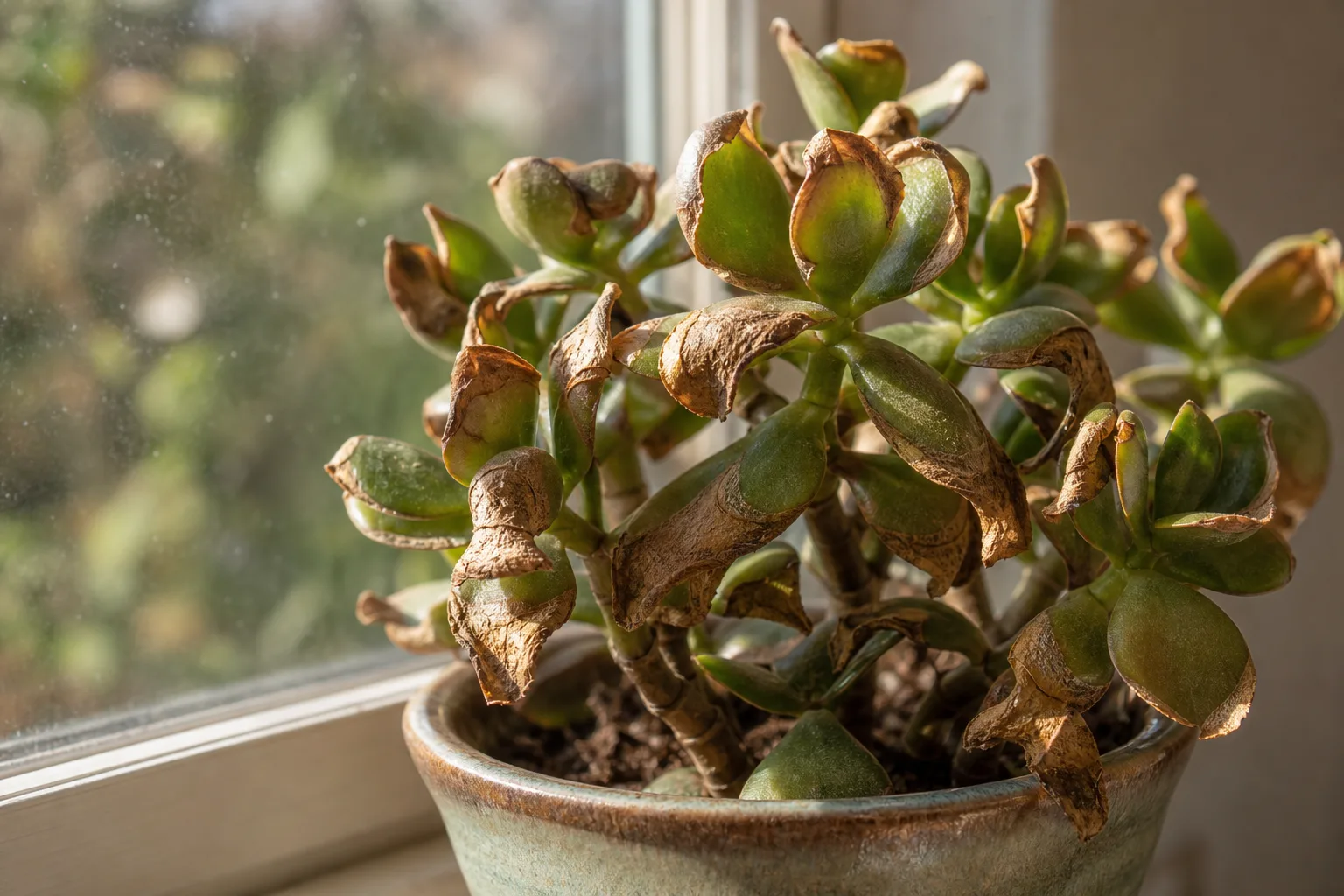
Crispy Leaves on Jade Plant: Causes, Checks & Fixes
This guide covers crispy leaves on Jade Plant. See also the general Crispy Leaves guide, watering, and light pages for this plant.
Crispy Leaves on Jade Plant: Causes, Checks & Fixes
Quick answer
Crispy leaves on jade plant mean the leaf tissue has dried past plump storage-not a disease by itself. On Crassula ovata, the usual causes are drought stress, sun scorch after a sudden light move, fertilizer salt burn, or root stress from chronic overwatering. Rarely, spider mite stippling crisps patches on drought-weakened plants.
First check: lift the pot and pinch a leaf. A light, dry pot with thin, papery but still firm leaves points to underwatering. Bleached or tan crispy patches on the sun-facing side after a window or outdoor move point to sun scorch. Crispy tips after heavy winter feeding on otherwise firm leaves suggest salt burn-see brown tips. Wet heavy pot with crisp lower leaves and hard upper growth may mean roots are failing-check overwatering and root rot.
Make one targeted correction first so you can read the plant’s response over the next one to two weeks.
What crispy leaves look like on Jade Plant
Healthy jade leaves feel thick, smooth, and slightly glossy-like firm coins. Crispy leaves feel dry, papery, or brittle when you rub them between your fingers. The pattern tells you which cause to pursue.
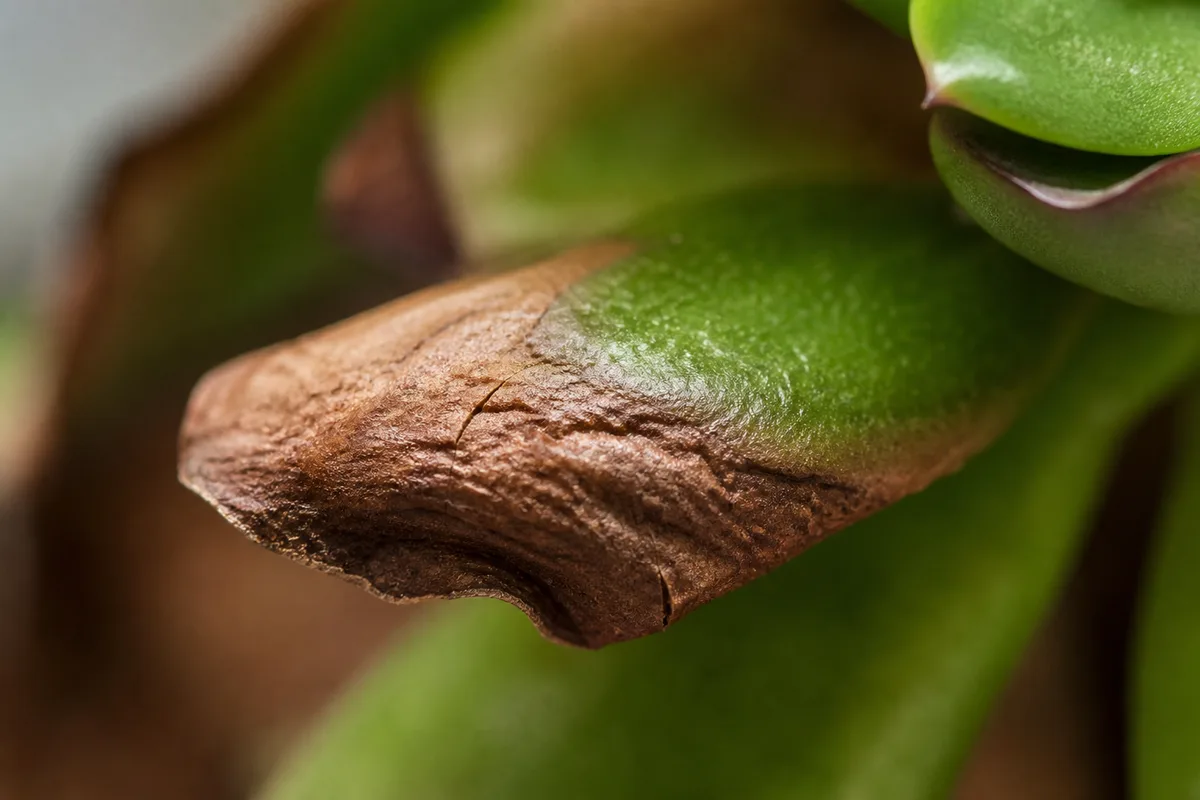
Crispy Leaves symptoms on Jade Plant - compare with healthy tissue on the same plant.
Drought crisping shows as slightly shrunken or wrinkled leaves that still feel firm, not mushy. Edges may curl inward. The whole plant often looks affected evenly. The pot feels noticeably light and mix is dry deep in the pot.
Sun scorch creates bleached white patches, tan crispy spots, or brown-black dry areas on the most sun-exposed leaves-often after moving from a dim shelf to a south window or outdoors without acclimation. Unaffected leaves on the shaded side stay plump. Red leaf margins from normal direct sun are not scorch; scorch looks like burned tissue.
Salt burn usually starts at leaf tips and margins, turning dry and brown while the rest of the leaf stays firm. It often follows heavy fertilizer in winter or salt buildup in a small terracotta pot.
Root-stress crisping is the paradox case: mix stays wet, stems may soften at the base, yet lower or older leaves turn thin and crisp because damaged roots cannot deliver water. This overlaps with overwatering-do not add more water.
Spider mite damage shows as fine yellow stippling that later bronzes and crisps on patchy leaves, often with webbing at branch tips. See spider mites if stippling precedes the crisp texture.
Why Jade Plant gets crispy leaves
Jade evolved on dry rocky slopes in South Africa, storing water in thick leaves and woody stems. Crisping happens when that internal reserve is depleted faster than roots can refill it-or when tissue is burned faster than the plant can replace it.
Drought and underwatering
In bright windows, a small terracotta pot can dry in days during active summer growth. Long travel, forgotten watering, or hydrophobic old mix that repels water all drain leaf reserves. Jade leaves go papery when stored moisture hits zero-often before obvious wilting. Wrinkled or less plump leaves with dry soil confirm thirst. Full drought detail lives on the underwatering page.
Sun scorch after light moves
Jade tolerates four or more hours of direct sun once acclimated, but leaves formed in low light lack protective pigment. Moving abruptly to harsh midday sun-especially south or west windows in summer-can bleach and crisp tissue in days. Outdoor moves in spring need gradual acclimation over one to two weeks. The light guide covers placement.
Fertilizer salt burn
Slow-growing jade in small pots concentrates salts when fed heavily or on a winter schedule. Tips and margins dry first while stems stay hard. This symptom vocabulary overlaps brown tips-crispy often describes whole-leaf drought texture; brown tips describe margin burn after feeding.
Root stress from chronic overwatering
Overwatering is jade’s biggest long-term threat, but it usually presents as soft yellow mushy leaves, not papery crisp ones. Chronic wet mix damages roots until the plant cannot hydrate leaves evenly-lower leaves may crisp while upper growth still looks okay briefly. Sour soil smell and soft stem bases confirm rot risk. See root rot before watering again.
Pest stress
Spider mites thrive in hot dry air near sunny jade windows. Stippling weakens leaves that then crisp at damaged spots. Mites are listed pests on jade along with mealybugs.
How to confirm the cause
Use pot weight and leaf texture before changing multiple variables.
| What you find | Likely cause | First direction |
|---|---|---|
| Light pot, dry mix throughout, firm papery leaves | Drought | Deep water once; see underwatering |
| Bleached or tan crispy patches on sun-facing leaves after a move | Sun scorch | Shade lightly; re-acclimate over 1–2 weeks |
| Crispy tips after heavy feed; firm stems; wet or salty crust on pot rim | Salt burn | Flush with plain water in spring; hold fertilizer |
| Heavy wet pot, soft stem base, sour smell, crisp lower leaves | Root stress | Stop watering; inspect roots per root rot |
| Stippling, webbing, patchy crisping | Spider mites | Rinse and treat per spider mites |
Push a finger or skewer to the bottom of the pot. Water once deeply if bone dry and recheck in 24 hours-perked plump leaves confirm drought. If soil is wet and stems soft, do not add water.
First fix for Jade Plant
Match the fix to the confirmed cause-one change at a time.
If drought: water until excess runs from the drainage hole, then discard saucer water. If mix repels water, bottom-water 30 minutes or poke holes to rewet evenly. Resume dry-between-waterings rhythm-do not keep soil moist constantly as a reaction to one dry spell.
If sun scorch: move to bright indirect light or filter harsh midday rays with a sheer curtain. Reintroduce direct sun gradually over one to two weeks. Do not prune burned patches immediately unless tissue is fully dead and brittle.
If salt burn: flush the pot in spring with plain water until excess runs clear several times, letting mix dry between flushes. Hold fertilizer until new growth looks clean. Light spring feeding only during active growth per the fertilizer guide.
If root stress: stop watering. Unpot only if stems soften or soil smells sour. Trim black mushy roots, repot into dry fast-draining mix, and wait several days before a cautious first drink. Follow root rot escalation steps.
If spider mites: rinse foliage thoroughly without waterlogging soil, improve airflow, and apply a miticide labeled for spider mites. Stippled leaves stay marked; watch for clean new pairs.
Recovery timeline
Mild drought crisping often improves within 24 to 48 hours after one deep watering if roots are healthy-leaves plump before old crisp edges smooth visually (they may never fully re-green).
Sun scorch stabilizes once light is corrected; new leaves should emerge clean over two to four weeks. Old bleached patches remain visible.
Salt burn recovery takes one to two growing cycles after flushing and holding feed. Tip tissue does not regenerate.
Root damage recovery spans several weeks to months depending on how much root mass was lost. Firm new growth and stable hard stems are positive markers-not old crisp leaves rehydrating.
Spider mite recovery follows treatment cycles; expect two to three weeks for clean new growth if infestation was caught early.
Lookalike symptoms
Crispy vs. brown tips: whole-leaf papery texture with a light dry pot is drought; dry margins only after feeding is salt or water rhythm stress-see brown tips.
Crispy vs. mushy overwatering: crisp firm leaves mean dry stress or scorch; soft yellow mushy leaves with wet soil mean too much water-not the same fix.
Crispy vs. red leaf tint: red margins from direct sun on jade are normal stress coloration; bleached white or black scorched patches are damage.
Crispy vs. low light: etiolated stretched stems with small pale leaves in dim corners suggest not enough light-soil dries slowly and watering mistakes follow, but leaves are soft and thin, not papery-crisp from drought.
What not to do
Do not water on a calendar when the pot is already wet-wet roots plus crisp lower leaves mean rot risk, not thirst. Do not mist leaves to fix crisping; jade can thrive in relatively low humidity and surface moisture does not rehydrate internal leaf reserves.
Do not fertilize stressed jade before confirming moisture and roots. Do not move a scorched plant into deeper shade forever-jade needs strong light once acclimated.
Wear gloves when trimming dead tissue; jade is toxic to cats and dogs.
How to prevent crispy leaves next time
Learn how fast your terracotta dries in the brightest window-pot weight beats a calendar. Water moderately when soils dry between waterings in bright light with some afternoon shade until acclimated.
Acclimate to stronger sun over one to two weeks when moving from shop dim light to a south sill. Feed lightly in spring only. Flush salts if you overfed in winter. Inspect leaf undersides weekly during summer window season.
For full care context, see the jade plant overview, watering guide, and light guide.
When to worry
Crispy leaves alone are rarely fatal if stems stay hard and roots are sound. Worry when stem bases soften, soil smells sour, or pests web across multiple branches-those patterns need root or pest escalation, not another deep watering.
Prolonged crown desiccation during a heat wave with neglected dry mix can stress flowering branches, but established jade usually recovers after one corrected drink if rot has not started.
When to use this page vs other Jade Plant guides
- Jade Plant watering guide - Use for routine moisture checks before assuming crispy leaves is the main issue.
- Jade Plant problems hub - Browse all 49 common issues on this species.
- Brown Leaves on Jade Plant - Different entry point when symptoms overlap with crispy leaves.