Overwatering on Jade Plant: Causes, Checks & Fixes
Quick answer
Overwatering on jade plant is the primary indoor killer-leaves look thirsty on wet soil because damaged roots cannot move water. Stop watering, confirm with pot weight and a skewer to the pot bottom, and inspect roots before woody stems soften at the base.
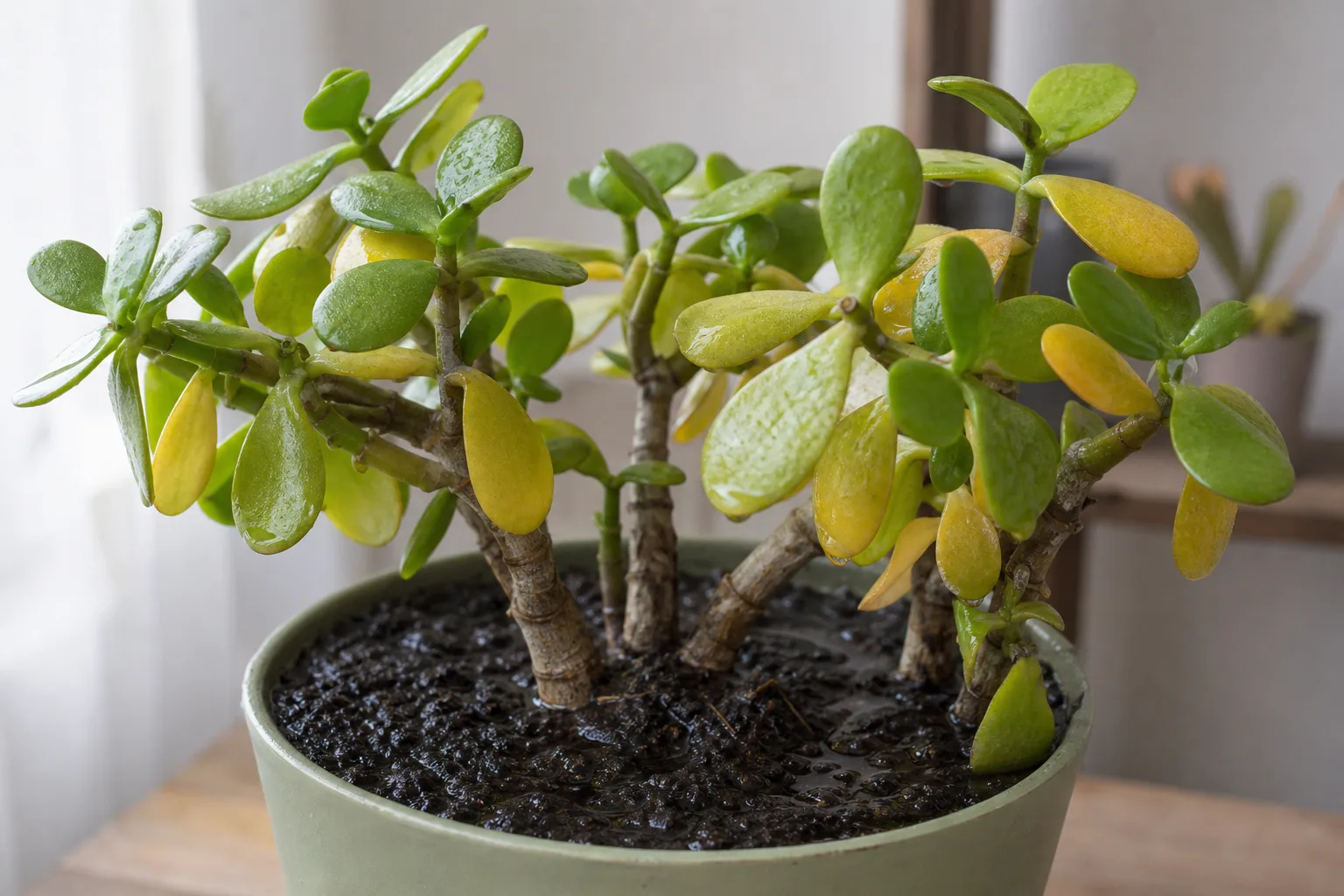
Overwatering on Jade Plant: Causes, Checks & Fixes
This guide covers overwatering on Jade Plant. See also the general Overwatering guide, watering, and light pages for this plant.
Overwatering on Jade Plant: Causes, Checks & Fixes
Quick answer
Overwatering on jade plant is the number one cause of death indoors-and the signature trap is leaves that look thirsty on wet soil. Crassula ovata stores water in thick leaves and woody stems, evolved for dry, rocky hillsides in South Africa where rain drains fast. When roots sit in damp mix, they lose oxygen; overwatering will cause the leaves to drop and the stem to rot. Damaged roots cannot move water upward, so the plant wilts even though the pot feels heavy.
First step: stop all watering immediately. Then run the confirmation checklist below-pot weight, skewer to the pot bottom, leaf firmness, stem-base firmness-before you add water, fertilizer, or repot. For long-term soak-and-dry prevention, see the jade watering guide. If stems are already soft at the base, escalate to the root rot protocol the same day.
Why Jade Plant is sensitive to overwatering
Jade is intolerant of moist, poorly-drained soils. Three setup mistakes cause most chronic overwatering:
Calendar watering. Watering every Sunday regardless of soil moisture ignores how fast your specific pot dries. A jade in a sunny terracotta pot may need water every two weeks in summer; the same plant in a dim room with an oversized plastic pot may stay wet for a month.
Winter rest mismatch. Wisconsin Horticulture Extension notes jade enters semi-dormancy in winter-watering should be restricted and the soil should remain on the dry side. A summer rhythm in a cool November room is how healthy roots turn to mush while growth has already slowed.
Oversized pots and heavy peat mix. Extra soil volume around a small root ball holds moisture for days. Dense peaty indoor mix in glazed ceramic stays damp far longer than the gritty, fast-draining blend Crassula ovata needs-see the jade soil guide for mix ratios.
Crassula ovata biology: leaf and stem water storage
Jade is a stem-and-leaf succulent native to South Africa. Firm, plump leaves and a woody trunk are living water tanks-why a healthy plant feels heavy for its size. That storage lets jade survive dry spells between deep soakings, but it also means watering wrinkled leaves on already-wet mix pushes more moisture into a root zone that cannot breathe. The failure loop: wet soil → root damage → wilt despite moisture → owner adds more water → faster decline.
What overwatering looks like on Jade Plant
Overwatering on jade shows a pattern across leaves, stems, and soil-not one random yellow leaf.
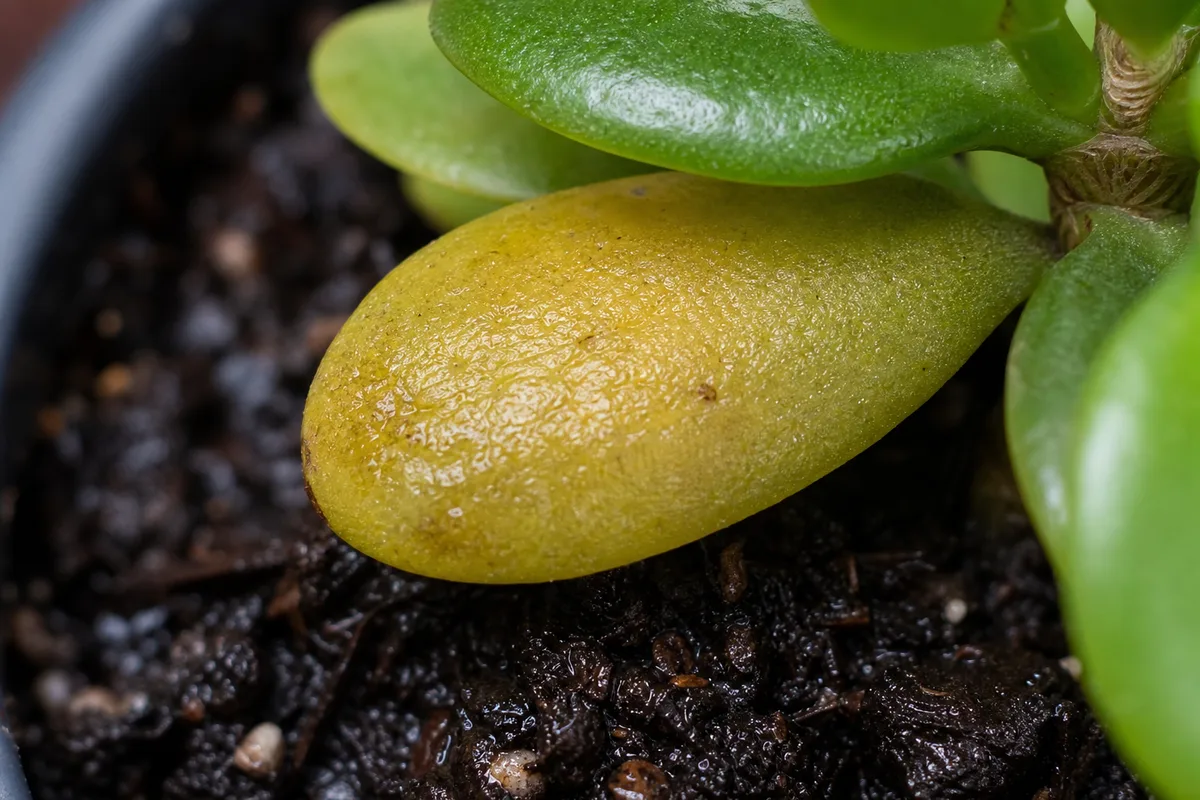
Overwatering symptoms on Jade Plant - compare with healthy tissue on the same plant.
Early signs
- Soft, mushy, or translucent leaves that feel waterlogged rather than firm
- Yellowing lower leaves that drop easily while the pot still feels heavy
- Edema - small brown or corky raised spots on fleshy leaves when roots absorb water faster than leaves transpire it, often in cool, dim rooms with damp mix (Illinois Extension on edema)
- Fungus gnats hovering near the soil surface-chronically wet mix is their breeding ground; see fungus gnats on jade if adults appear in clusters
- No new growth for months while soil stays damp
Advanced signs
- Black or brown mushy tissue at the woody stem base while mix is moist-a rot red flag
- Sour or rotten smell from the pot
- Wilt paradox - leaves droop or look wrinkled despite wet soil, because rotting roots cannot take up water
- Black patches climbing the trunk - stem rot advancing above the soil line
Unlike underwatering, overwatered jade usually has a heavy pot, soft leaves, and damp mix at depth-not a light pot with firm wrinkled leaves on dusty dry soil.
How to confirm the cause
Work through this checklist in order. Two or more wet-soil matches confirm overwatering before you repot.
- Lift the pot. Heavy days or weeks after the last watering means moisture is trapped-not a thirsty plant.
- Skewer to the bottom. Push a dry chopstick or skewer through the drainage hole or down the pot wall to the drainage area. Wet, cool, or soil-stained means wait-do not water.
- Squeeze a leaf. Mushy or translucent = overwatering stress. Firm with slight wrinkling on dry mix points to underwatering instead.
- Press the stem base. A healthy jade trunk feels woody and firm. Soft, squishy tissue at the crown while mix is moist confirms advancing damage.
- Sniff the soil. Sour or rotten odor means treat as confirmed rot-unpot now.
- Note the season. Cool winter rooms plus recent watering strongly favor overwatering over simple thirst.
- Spot-check roots. If steps 1–4 worry you, gently slide the plant out: firm pale roots are healthy; brown, slimy roots confirm damage.
Lookalike comparison
| Signal | Likely cause | Pot / soil | First move |
|---|---|---|---|
| Soft mushy leaves, heavy wet pot | Overwatering | Damp throughout | Stop water; dry-down or root trim |
| Firm wrinkled leaves, very light pot | Underwatering | Dry throughout | One deep soak once dry |
| Yellow leaves, firm stem, slowing growth in short winter days | Normal winter rest | Dry to lightly dry | Reduce watering; do not repot |
| Sour smell, mushy roots, soft stem base | Advancing root rot | Chronically wet | Same-day unpot and trim protocol |
First fix for Jade Plant
Stop all watering. Move the plant to bright light with good airflow-never a dark corner while soil is wet. Do not fertilize, mist, or run a humidity tray; those do not fix a wet root problem.
Then choose a severity branch:
Mild - firm stems, slight leaf softness, mostly healthy roots
Pause watering until the entire root zone dries throughout the pot-not just the surface. Confirm with skewer and pot weight. Expect two to four weeks before new firm leaves appear at branch tips. Resume soak-and-dry only when checks pass; details in the jade watering guide.
Moderate - soft leaves, some mushy roots, firm main stem
- Unpot and rinse roots gently to see firm versus mushy tissue.
- Trim all brown, slimy roots with sterile shears; sterilize between cuts.
- Let cut surfaces air-dry in bright indirect light for 24 hours.
- Repot into dry gritty succulent mix in a smaller terracotta pot sized to the remaining root mass-see jade repotting.
- Wait two weeks before the first light watering; judge recovery by new growth, not old damaged leaves.
Severe - soft stem base, black patches climbing trunk, or collapsed main stem
The whole plant rarely saves once the trunk is mushy throughout. Take firm stem or leaf cuttings from healthy tissue above the rot and root them in dry propagation mix-see jade propagation. Discard rotted tissue; wear gloves because jade plant is toxic to cats and dogs and contact your vet if a pet ingests trimmings.
When to escalate to root-rot protocol
If the stem base softens, soil smells sour, or most roots are mush on inspection, follow the numbered rescue workflow in root rot on jade the same day-do not wait for spring.
What not to do
Do not water because leaves look wrinkled when soil is already wet at depth-that deepens the wilt paradox. Do not use standard potting soil without added perlite and coarse grit. Do not mist leaves or add humidity trays to fix wet roots. Do not fertilize until new growth proves the root zone has stabilized. Do not repot into a larger container while mix is still soggy.
How to prevent overwatering next time
Allow soils to dry between waterings during active growth, then reduce sharply in fall and winter when jade is semi-dormant. Use terracotta and fast-draining succulent mix matched to the root mass. Empty saucers after every drink. Water on pot dry-down, not a weekly habit-the entire root zone must dry throughout before the next soak, as described in the jade watering guide.
Clemson HGIC emphasizes that jade is highly susceptible to rot when overwatered; pairing grit-heavy mix with strict dryness confirmation beats any calendar schedule.
When to worry
Treat overwatering as same-day urgent when:
- The woody stem base feels soft or squishy
- Black or brown patches climb the trunk
- Soil smells sour or rotten
- Most roots are brown mush on inspection
Mild soft leaves on a firm woody stem have a fair recovery chance after dry-down or moderate root trim. A collapsed main trunk means propagate firm branches instead of waiting for the trunk to firm up-it will not. Persistent yellow leaves or wilting on wet soil with several stacked symptoms also warrant immediate root inspection.
Related Jade Plant guides
- Jade plant overview - culture, seasonal rhythm, troubleshooting hub
- Jade plant watering guide - soak-and-dry method, winter reduction, dryness checks
- Underwatering on jade - firm wrinkled leaves on dry mix lookalike
- Root rot on jade - advanced rescue when stems soften
- Jade plant soil guide - gritty mix and drainage
- Jade repotting guide - when and how to repot after root trim
- Jade propagation guide - salvage cuttings from a collapsed trunk
- Fungus gnats on jade - wet-mix co-occurrence