Not Enough Light on Jade Plant: Causes, Checks & Fixes
Quick answer
Not enough light makes Jade Plant stretch, lose compact form, and use water slowly-raising rot risk. First step: move the pot to the brightest spot you have and acclimate to stronger sun over one to two weeks before changing anything else.
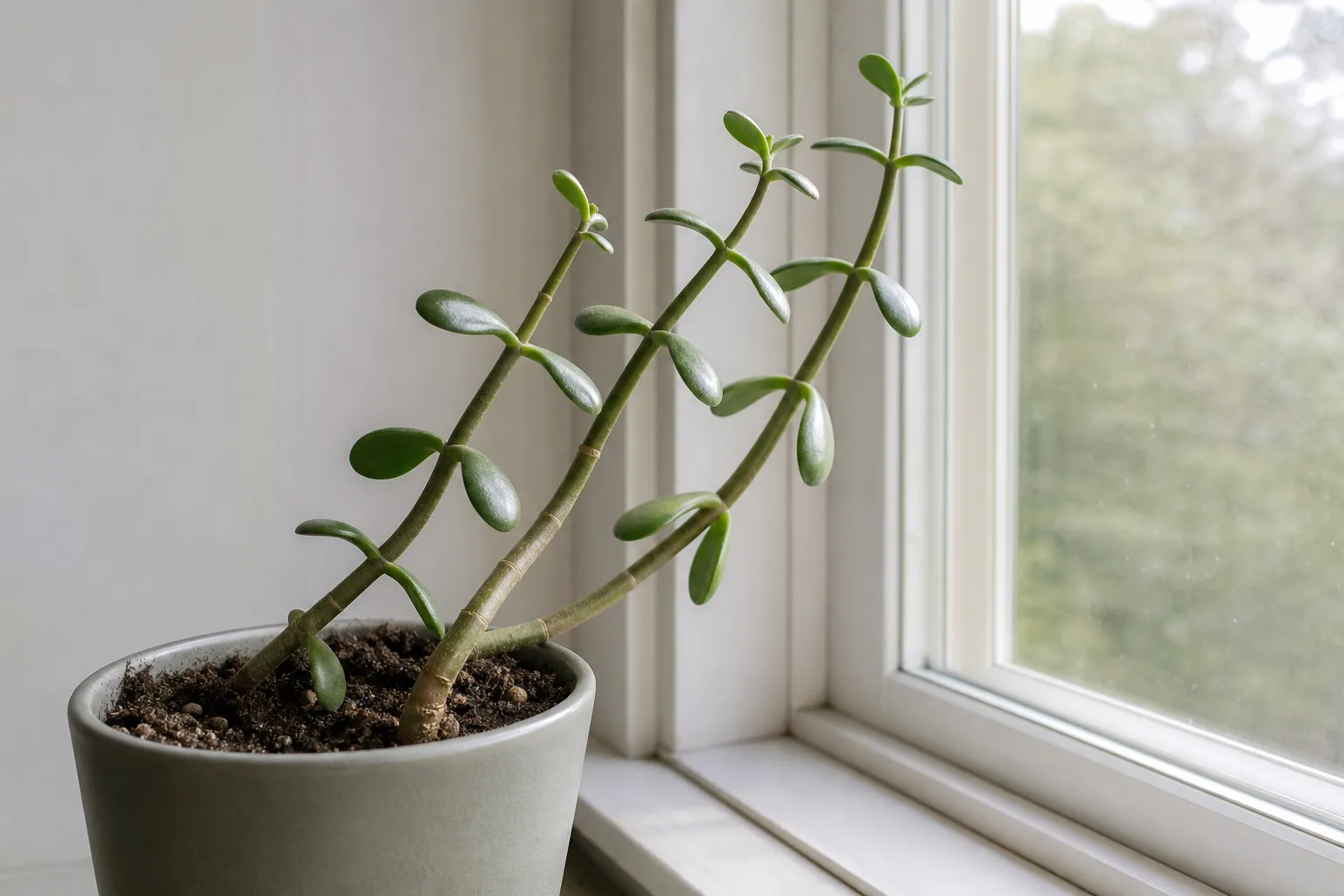
Not Enough Light on Jade Plant: Causes, Checks & Fixes
This guide covers not enough light on Jade Plant. See also the general Not Enough Light guide, watering, and light pages for this plant.
Not Enough Light on Jade Plant: Causes, Checks & Fixes
Quick answer
Jade Plant (Crassula ovata) is sold as an easy houseplant, which leads many owners to park it in a dim hallway or far from glass. That placement backfires quickly. Jade is a sun-loving succulent that needs four or more hours of direct sun daily for compact, tree-like growth-not the low-light tolerance of a snake plant or ZZ plant.
When light is too weak, stems stretch toward the window, leaves space apart, and the plant photosynthesizes slowly. Slow growth means slow water use, so the same Jade Plant watering guide that worked in bright sun leaves soil wet too long. That combination-dim light plus damp mix-is how an otherwise hardy jade develops soft stems and root problems.
First step: move the pot to your brightest location and acclimate it to stronger light over one to two weeks. Do not repot, fertilize, or water more on day one. Better light is the fix that makes every other care decision clearer.
What not enough light looks like on Jade Plant
Insufficient light on jade shows up as a pattern, not one random yellow leaf.
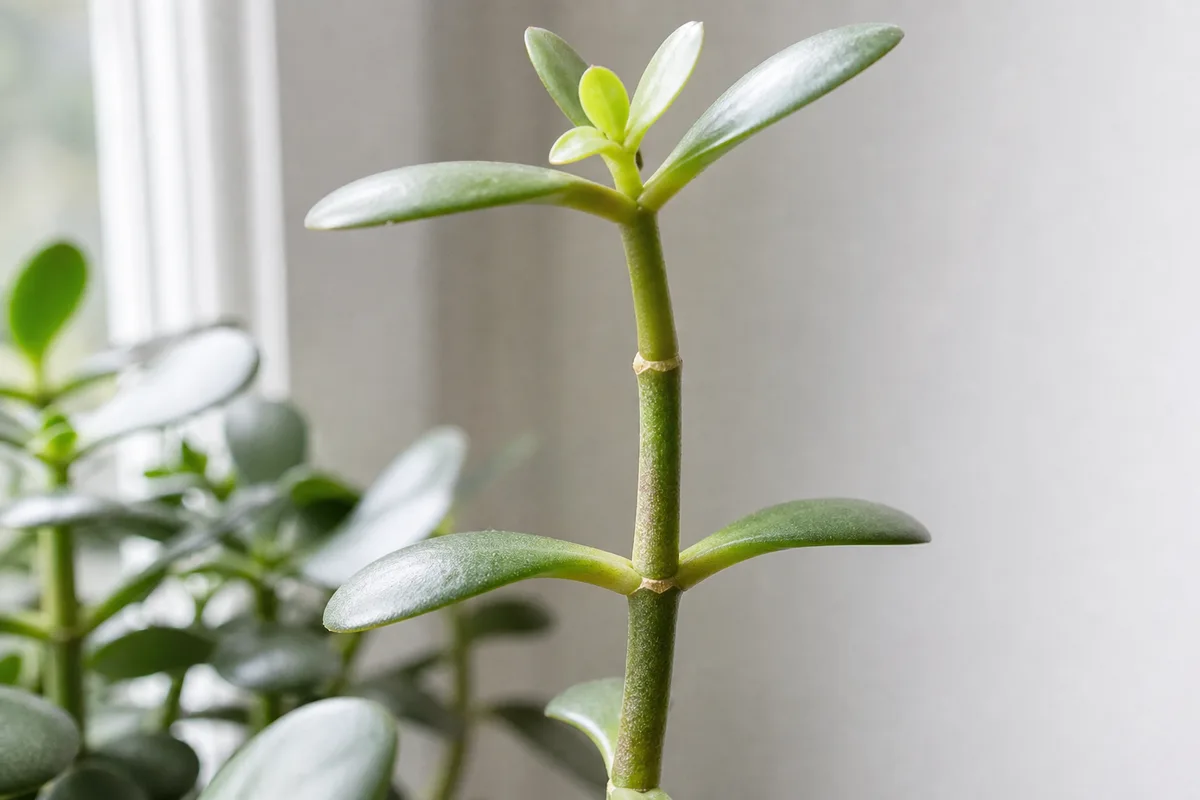
Not Enough Light symptoms on Jade Plant - compare with healthy tissue on the same plant.
Above the soil, watch for:
- Etiolation - stems elongate with unusually long gaps between opposite leaf pairs; new leaves look smaller than older ones lower on the branch
- Lean or one-sided growth - the plant bends sharply toward the brightest window; rotate the pot and new tips still track the light source within days
- Loss of the “mini tree” shape - thin green stems instead of thick woody branches; the trunk never develops the gnarled, aged look jade is known for
- Color changes - leaves stay a flat deep green without the red or bronze margins that appear under strong light; overall growth looks dull rather than glossy
- Slow or stalled growth - no new leaf pairs for months, especially through winter indoors
- Few or no flowers - mature plants need bright light, cool nights, and short days to bloom; chronically dim jade rarely flowers indoors
- Leaf drop on lower stems on Jade Plant - older leaves shed while the plant stretches upward, leaving bare woody sections
Below the soil line, the clue is timing: mix that stays damp 10–14 days after a normal watering in a dim corner. Inadequate light reduces transpiration, so the pot dries far slower than it would in a sunny window.
Stretched tissue is permanent. Once a stem section has elongated, it will not shrink back-even after light improves. Judge recovery by new growth at the tips: tighter spacing, firmer leaves, and stems that stop leaning within a few weeks of better placement.
Why Jade Plant struggles in low light
Jade evolved on dry, rocky hillsides in southern Africa, where it receives intense sun for much of the year. Indoors, it belongs in the high-light group-roughly 500–1,000 foot-candles at a south or west window-not the 25–100 foot-candle range where low-light foliage plants survive.
Photosynthesis drives water use. In bright light, jade opens stomata, transpires, and pulls water through roots at a steady rate. In shade, that engine idles. Owners who keep the same weekly watering calendar without noticing the pot stays heavy are effectively overwatering on Jade Plant a plant that is not using moisture.
Clemson Extension notes that jades prefer Jade Plant light guide or bright filtered light from a south-facing window and need four or more hours of direct sun. Wisconsin Extension adds that inadequate light produces deep green leaves and drooping stems rather than the normal compact habit and reddish leaf edges-there is nothing wrong with the genetics; the environment is wrong.
Common situations that cause chronic under-lighting on jade:
- Placement more than 4–6 feet from the window, where light intensity drops sharply with distance
- North-facing rooms or windows blocked by buildings, trees, or heavy curtains
- Winter daylight shrink - same shelf all year, but October through February delivers far fewer usable hours
- Competition - taller furniture or other plants shading the pot
- Dirty or tinted glass cutting intensity more than owners expect
- Outdoor summer indoors year-round - jade moved outside grows vigorously, then collapses in structure when brought back to a dim room without acclimation or supplemental light
Low light also weakens stem tissue. Etiolated branches are soft and brittle compared with woody mature growth, so top-heavy jade trees in shade snap more easily when moved or bumped.
How to confirm the cause
Work through these checks before Jade Plant repotting guide or cutting anything:
- Window direction and distance - Is the pot within 2–3 feet of a south or west window? North glass alone rarely supports compact jade without grow lights.
- Direct sun hours - On a clear day, watch whether direct sun actually hits the leaves for at least four hours. Reflected room brightness is not the same as sun on the foliage.
- Internode spacing - Measure the gap between two recent leaf pairs on a stretching stem. More than 1–2 inches on a young branch strongly suggests etiolation.
- Asymmetry test - Rotate the pot 180°. Within one week, new growth should turn back toward the window if light is directional and insufficient.
- Soil dry-down speed - After watering, note how many days until the top inch is fully dry. If the calendar says “water every two weeks” but the mix is still wet at day 10 in a dim spot, light and watering both need adjustment.
- Stem firmness at the base - Firm wood-colored stems with long gaps above point to light stress alone. Soft, discolored tissue at the soil line with sour-smelling mix suggests rot layered on top of slow water use-inspect roots before assuming light is the only issue.
- Season context - Did stretching start after days shortened or after a move away from a brighter window? Seasonal light drop is a common trigger.
If leaves are wrinkled and the pot is very light while stems are firm, underwatering may explain the stress better than low light. If leaves are yellow and mushy with wet soil in a bright window, look at overwatering first. Light deficiency fits best when growth is weak, spacing is wide, and the plant still leans toward glass.
First fix for Jade Plant
Move the pot to the brightest location available and increase light gradually.
Jade coming from months in shade cannot jump straight into harsh midday sun without scorching. Wisconsin Extension recommends acclimating houseplants gradually to higher outdoor light to prevent sunburn-indoors, use the same principle when upgrading window exposure.
Over 7–14 days:
- Shift the pot closer to the glass by a few inches every two or three days, or
- Move from an interior shelf to an east window first, then to south or west once leaves show no scorch, or
- For outdoor summer placement, start with morning sun only and expand exposure after one week
Target end placement:
- Indoors: within 2 feet of a south or west window where leaves receive four to six hours of direct sun or very bright filtered light daily
- Outdoors (warm months only): morning sun or dappled bright shade; bring inside before frost-jade is killed by freezing temperatures
Pair the move with a watering reset, not extra water. In stronger light, the pot will dry faster. Check moisture with a finger or dry skewer at the bottom of the pot before every drink-do not keep the old calendar from the dim corner.
Hold fertilizer until you see stable new growth for two weeks. Feeding a stressed jade in low light does not fix stretch and can burn roots on a plant that is not actively using nutrients.
Step-by-step recovery
Once light improves, follow this order:
- Acclimate as above - complete the gradual move before pruning or repotting.
- Adjust watering - water only when the top inch of mix is completely dry; in winter dormancy, let soil stay drier longer. Never leave the pot in a full saucer.
- Rotate weekly - a quarter turn prevents permanent one-sided lean while stems stiffen.
- Prune after new compact growth appears - cut leggy stems back to just above a leaf pair using clean scissors. New branches sprout within weeks during active growth. Avoid heavy pruning right before winter rest.
- Add supplemental light if windows are insufficient - full-spectrum LED grow lights 6–12 inches above the canopy for 12–14 hours daily can support jade through dark months; most plants need a dark period too, so do not run lights 24 hours.
- Inspect roots only if stems soften - if the base stays firm and soil dries at a normal pace after the light move, skip unpotting. If mix stayed wet for weeks, unpot once to confirm roots are firm and white, not brown and mushy.
Recovery timeline
First two weeks: the plant should stop leaning aggressively within days of better light; existing leaves will not regain red margins or shrink elongated sections.
Three to six weeks: look for new leaf pairs spaced closer together at branch tips-this is the clearest sign light is adequate. Soil should dry noticeably faster than it did in the dim spot.
Two to three months: woody thickening on pruned branches and side shoots after tip cuts. Full restoration of a tree-like silhouette on a badly stretched plant can take a full growing season or longer.
Worsening signs during recovery: new stretch despite brighter placement (light still insufficient or blocked), softening stem bases, persistent sour soil smell, or leaf drop continuing while mix stays wet-those warrant a root inspection and watering halt, not another light move alone.
Lookalike symptoms
- Leggy growth on Jade Plant - essentially the stem-stretch phase of chronic low light; fixing light is the same, but “not enough light” also covers pale color, slow dry-down, and failure to bloom without extreme internode length yet.
- Overwatering / root rot - soft leaves, black stem bases, sour soil; often triggered or worsened by low light slowing water uptake. Fix light and dry the mix together.
- Underwatering - wrinkled, thin leaves with very light pot and fully dry soil throughout; stems may still be firm. Deep soak once, then resume dry-down checks-do not confuse with etiolation.
- Normal lower leaf drop - jade naturally sheds older lower leaves on mature wood even in good light; harmless if the crown is compact and new tips are healthy.
- Nutrient deficiency - uniform pale yellowing on old and new leaves alike in bright sun with proper watering; uncommon as the first explanation on a dim windowsill jade.
- Mealybugs - white cottony patches in leaf axils; unrelated to stretch unless pests appeared while the plant was weak in shade. Treat pests separately after confirming light is corrected.
What not to do
Do not water more because growth looks sluggish in a dim corner-that keeps roots wet while the plant cannot use moisture. Avoid high-nitrogen fertilizer to force bushiness; it produces soft, rot-prone growth when light is still inadequate.
Do not repot on day one unless roots are visibly failing. A light-stressed jade in the wrong pot size is still better left stable while it acclimates to brighter placement.
Do not move instantly from a dark room to full afternoon sun-leaves can scorch, especially on young or variegated cultivars. South Dakota Extension notes too much light scorches young leaves; too little makes the plant leggy. Gradual change prevents swapping one stress for another.
Do not assume any indoor spot is fine because jade is “easy.” Easy means forgiving of missed water-not tolerant of north-facing shade long term.
Keep jade out of reach of pets when relocating to brighter shelves-jade is toxic to cats and dogs if chewed.
How to prevent light problems next time
Place new jade where it will receive direct sun on the leaves for most of the growing season, not where the pot looks decorative. University of Maryland Extension classifies jade among high-light houseplants suited to south-facing windows.
Rotate the pot weekly for even exposure. Clean window glass seasonally. In autumn, plan for shorter days-either move the pot to the brightest glass or start a grow-light schedule before stretch begins, not after stems are already thin.
For outdoor summers, acclimate gradually and bring plants in before frost. Resume the brightest indoor spot immediately; do not leave jade on a distant bookshelf all winter after a sunny patio season.
Match watering to the season and light level: more frequent checks when summer sun dries the pot quickly; longer dry periods during cool winter rest when growth slows even in good light.
When to worry
Low light alone is a slow decline, but low light plus wet soil is dangerous. Escalate if stem tissue softens at the base, the pot smells sour, or leaves drop while the mix remains damp for weeks-unpot and inspect roots rather than waiting for spring.
If the plant is entirely etiolated with pencil-thin stems supporting a heavy crown, stake or prune to prevent snapping, then improve light before the branch breaks at a weak joint.
A jade that shows no tighter new growth after four to six weeks in your brightest window likely needs supplemental lighting or outdoor morning sun-you have reached the limit of that room’s natural light.
Conclusion
Not enough light on Jade Plant is a placement problem that masquerades as slow growth, pale foliage, or watering trouble. Confirm it with wide leaf spacing, window lean, and soil that stays wet too long. Move to brighter sun gradually, reset watering to match faster dry-down, and prune only after new compact growth proves the fix worked. Stretched stems stay stretched, but a firm, woody jade with tight leaf pairs is absolutely reachable once the plant gets the light it evolved for.
When to use this page vs other Jade Plant guides
- Jade Plant watering guide - Use for routine moisture checks before assuming not enough light is the main issue.
- Jade Plant problems hub - Browse all 49 common issues on this species.
- Leggy Growth on Jade Plant - Different entry point when symptoms overlap with not enough light.
- Yellow Leaves on Jade Plant - Different entry point when symptoms overlap with not enough light.
- Leaf Drop on Jade Plant - Different entry point when symptoms overlap with not enough light.