Leaf Drop on Jade Plant: Causes, Checks & Fixes
Quick answer
One or two lower leaves dropping from firm woody stems on dry soil is often normal aging on mature jade. Problematic drop is multiple leaves falling while the pot stays wet, leaves detach at a touch, or tips shrivel on soggy mix-usually overwatering, winter overwatering in low light, drought, relocation shock, or pests. First step: lift the pot for weight and push a finger two inches into the mix before changing anything else.
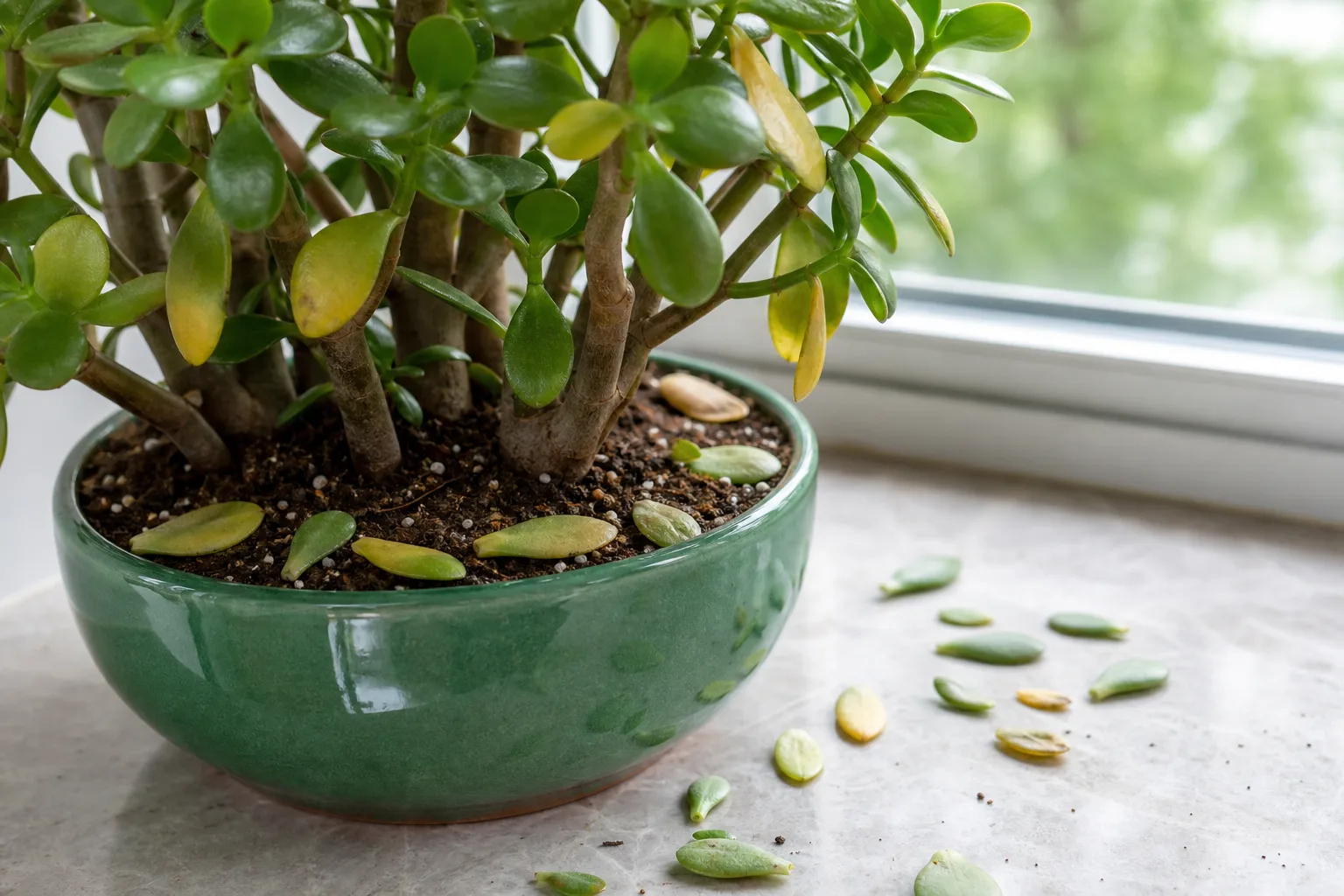
Leaf Drop on Jade Plant: Causes, Checks & Fixes
This guide covers leaf drop on Jade Plant. See also the general Leaf Drop guide, watering, and light pages for this plant.
Leaf Drop on Jade Plant: Causes, Checks & Fixes
Quick answer
Leaf drop on jade plant (Crassula ovata) splits into two very different stories. Normal aging shows one or two paired leaves yellowing and falling from the oldest woody sections of a mature plant while branch tips stay plump and the pot feels light on dry soil. Stress drop is multiple leaves detaching across the canopy-often still green-while soil stays wet, leaves fall at a light touch, or branch tips shrivel on soggy mix.
On this slow-growing South African succulent, overwatering is the most common killer indoors-especially in winter when short days slow metabolism and the same watering calendar keeps roots wet for weeks. Drought can also cause leaf drop and death if you treat jade like a cactus that never needs water. Other triggers include insufficient light, transplant or store-purchase shock, cold drafts, and mealybugs or scale weakening sap flow.
First step: lift the pot and check moisture two inches deep before Jade Plant repotting guide, pruning, or fertilizing. Heavy wet mix means pause watering; dusty dry mix with wrinkled but firm stems means a deep soak may be the fix-not more of the same calendar schedule.
Full species context: jade plant overview.
Why jade plant drops leaves
Jade stores water in thick fleshy leaves and woody stems evolved for dry rocky slopes in South Africa. That anatomy explains why both too much and too little water end in dropped leaves-the plant sheds foliage it can no longer support when roots fail or internal reserves run out.
Overwatering and root rot. When mix stays wet, roots lose oxygen and rot. NC State notes leaf fall and root rot result from overwatering. Damaged roots cannot move water, so leaves drop even while soil feels damp-a confusing pattern that sends many growers to water again. Winter makes this worse: lower light means slower water use, so November and December watering mistakes show up as tip drop in January.
Underwatering and drought stress. Clemson HGIC warns drought causes dwarfing, spotting, leaf drop, and death on jade. Extended dry periods force the plant to consume leaf tissue; leaves shrivel, feel papery, and detach. Unlike rot, stems stay hard and woody.
Insufficient light. Jade in dim corners stretches and weakens. Slow transpiration plus wet soil invites rot; the plant may also shed inner leaves it cannot support. See the light guide for placement targets-four to six hours of strong light including some direct sun once acclimated.
Relocation and transplant shock. A jade moved from a bright greenhouse to a dim shelf, or repotted during active growth, often drops leaves for one to three weeks while adjusting. Sudden mass drop within days of a move differs from gradual lower-leaf aging. See transplant shock if drop followed repotting.
Pests. Mealybugs, scale, spider mites, and aphids drain sap from stems and leaf axils. Weak growth sheds leaves before you notice cottony clusters or waxy bumps. Check mealybugs and scale insects if drop is unexplained on otherwise dry, well-lit soil.
Normal senescence. Mature jades develop thick brown trunks and shed the oldest paired leaves at the base of woody branches-a slow turnover, not a crisis. Wisconsin Horticulture Extension describes leaves clustered at branch tips with older sections below gradually bare.
What leaf drop looks like on jade plant
Pattern-matching matters because overwatering and underwatering both drop leaves but feel different in your hands.
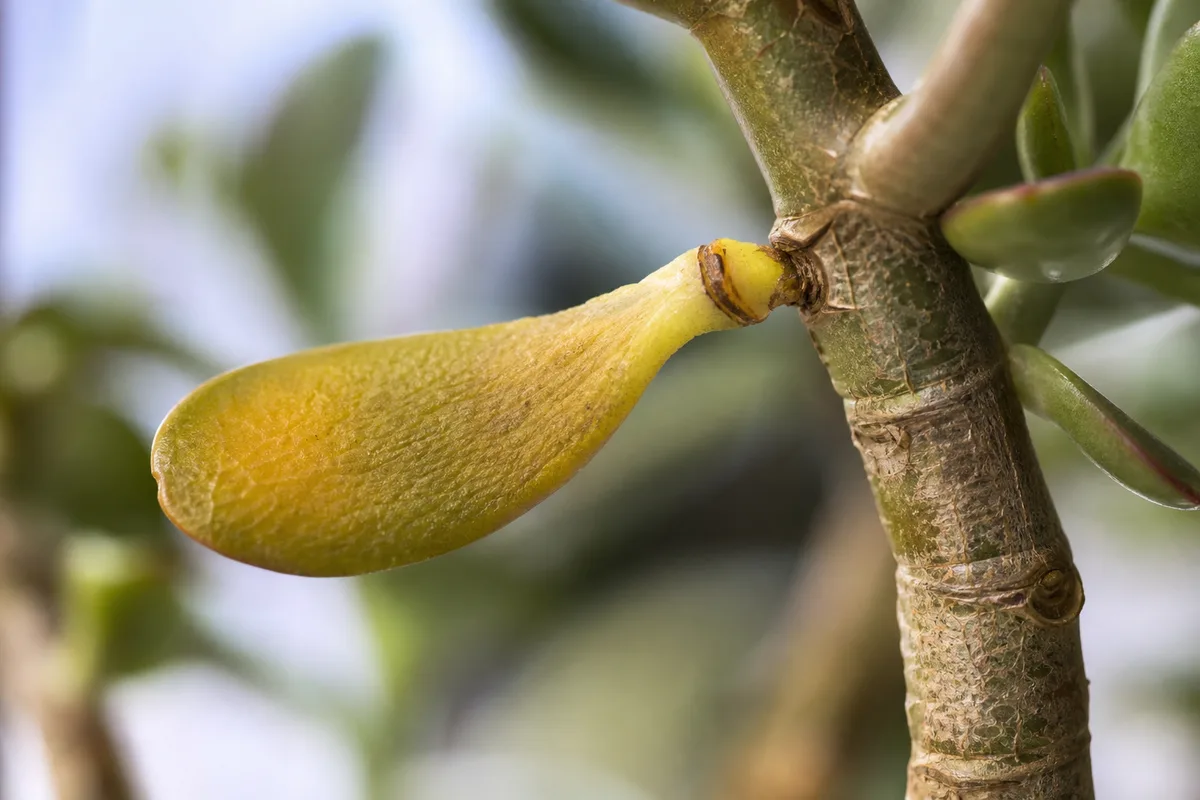
Leaf Drop symptoms on Jade Plant - compare with healthy tissue on the same plant.
| Pattern | Leaf texture | Where leaves fall | Soil and pot | Stem base |
|---|---|---|---|---|
| Normal aging | Firm until yellow, then dry | One or two lower pairs on old woody stem | Dry, light pot | Hard, brown, woody |
| Overwatering / rot | Soft, mushy, may stay green | Lower leaves first, then tips; detach at touch | Heavy, wet days after watering | Soft, discolored, may smell sour |
| Underwatering | Wrinkled, thin, papery | Any position; often with red-tinted stress color | Dusty dry, very light pot | Firm and woody |
| Low light | Pale, small new leaves; inner drop | Inner or lower canopy on leggy stems | Stays wet longer than expected | Firm unless rot set in |
| Shock after move/repot | Firm green leaves pop off suddenly | Scattered across plant within two weeks of change | Variable | Firm if rot not involved |
| Pest-weakened | May look healthy until drop | Scattered; sticky residue or webbing possible | Usually dry to moderate | Firm unless secondary rot |
Overwatered leaves often yellow from the base upward, feel swollen or translucent, and fall when brushed. Underwatered leaves deflate first-you can see dimples when you gently press a still-attached leaf. Rot-advancing plants may drop firm-looking green leaves while the stem base turns mushy; that urgency crosses into root rot.
On a ten-year specimen in terracotta, lower stem bareness with full tip clusters is usually cosmetic aging. Simultaneous tip drop on wet soil is not.
How to confirm the cause
Work through these checks in order. Stop when one cause fits clearly-do not stack repotting, pruning, fertilizer, and pesticide on the same day.
-
Recall recent changes. Did you move the pot, repot, buy it from a store, turn on heat, or shift watering in the last two weeks? Recent change plus scattered firm leaf drop points to shock-hold steady before intervening.
-
Lift the pot for weight. Heavy and wet means pause all watering and inspect stem bases. Light and dusty dry means drought is plausible.
-
Probe moisture two inches deep. The watering guide uses this depth as the dry-down signal. Wet at depth with soft leaves confirms overwatering; bone dry with wrinkled leaves confirms drought.
-
Squeeze a leaf and check the stem base. Plump firm leaf plus firm woody stem on dry soil may be normal aging if only one lower pair is involved. Soft leaf plus soft stem on wet soil is rot risk-treat as urgent.
-
Inspect where leaves detach. Lower-only slow yellowing on woody sections suggests senescence. Tips and mid-stem losses on wet mix suggest root failure. Whole-plant scatter after a move suggests shock.
-
Look at newest growth. Compact plump tips mean roots are likely functioning. Pale stretched tips on wet soil mean light or root stress-check light and overwatering guides.
-
Scan stems and leaf axils for pests. Cottony white clusters (mealybugs), raised brown bumps (scale), fine webbing (mites), or sticky shine (aphids) mean isolate and treat pests before adjusting water again.
If soil is wet and stem bases soften, follow the root rot path. If soil is dry and leaves are shriveled, one thorough soak is the test. If the plant is leggy in a dim corner, brighter light is the fix-not more water.
First fix for jade plant
Change one variable based on what you confirmed:
Wet soil, heavy pot, soft leaves. Stop watering immediately. Move to the brightest spot with airflow-never a dark corner while roots recover. If stem bases are still firm, wait until the top two inches of mix are dry before the next light watering. If bases are soft, unpot, trim mushy roots, air-dry cuts 24 hours, and repot into dry gritty mix per the overwatering guide.
Dry soil, light pot, wrinkled leaves. Water once thoroughly until excess runs from the drainage hole, then empty the saucer. Wait for the top two inches to dry before the next drink-do not keep soil constantly moist during recovery.
Recent move or repot, firm stems, moderate soil. Hold light and watering steady in a stable bright location for two to three weeks. No repot, no fertilizer, no heavy pruning until drop slows.
Leggy plant in dim light, soil staying wet too long. Move gradually to stronger light over one to two weeks and reduce watering frequency to match slower transpiration. See light for acclimation.
Active mealybugs or scale found. Isolate the plant, dab visible pests with alcohol on a cotton swab, and inspect weekly. Do not fertilize a pest-weakened jade until new growth returns firm.
Only one lower leaf on an old woody branch, dry firm soil. No action needed if the pattern stays slow- that is normal turnover on mature jade.
Recovery timeline and signs of improvement
Jade grows slowly compared with tropical foliage plants, so leaf drop takes longer to stabilize than on a pothos vine. Expect shedding to slow within two to four weeks once the correct cause is corrected-one dry-down cycle for mild overwatering, slightly longer if roots were trimmed.
Judge recovery by firm new leaves at branch tips, hard woody stem bases, and no spread of yellowing up the stem-not by whether old bare sections on lower trunks refill. Jade rarely re-leafs ancient woody bark quickly; a bare lower trunk on an otherwise healthy tree-form plant is normal.
Severe root damage can take six to ten weeks before confident new growth. Old dropped leaves never reattach. If the main trunk is soft above the soil line, recovery is unlikely-take firm upper cuttings instead of waiting for the base to resprout.
What not to do
Do not increase watering because leaves look tired when the pot is already heavy-jade roots rot quickly in soggy mix. Do not assume every fallen leaf signals disaster; slow lower-leaf turnover on woody stems is expected. Do not fertilize a shedding plant to force growth-that adds salt stress while roots are compromised. Do not repot during active drop unless stem bases are softening and you must inspect roots. Do not propagate from a plant dropping leaves due to rot-cuttings from stressed tissue often fail.
Wear gloves when handling dropped or pruned tissue. Jade is toxic to cats and dogs; keep fallen leaves off floors pets can reach.
How to prevent leaf drop next time
Match care to jade biology: bright light, dry-down watering, and fast drainage.
- Watering: Check the top two inches (5 cm) of mix; water only when dry at that depth per the watering guide. Reduce frequency sharply in winter semi-dormancy-Wisconsin Extension restricts winter watering so soil stays on the dry side.
- Light: Provide four to six hours of strong light including some direct sun on acclimated plants so the jade uses water predictably per Missouri Botanical Garden culture notes. Low light plus frequent watering is the common indoor failure mode.
- Soil and pot: Use terracotta or unglazed ceramic with a drainage hole and gritty succulent mix-see soil if mix stays wet for weeks.
- Stability: Acclimate gradually after purchase or relocation; avoid repotting in winter unless urgent.
- Inspection: Check leaf axils and stem joints monthly for mealybugs and scale before pests weaken the canopy.
If leaves yellow without detaching yet, read yellow leaves for overlapping causes.
Practical checks
Urgency check
Treat as urgent if stem bases soften, soil smells sour, multiple green leaves detach within days on wet mix, or pests spread across several branches. Jade can look plump at the tips while the caudex rots below-do not wait for the whole plant to collapse.
Best inspection order
Recent changes → pot weight → moisture at two inches → stem base firmness → newest tip growth → leaf axils for pests.
Jade care cross-check
Also sold as lucky plant or money plant, jade is Crassula ovata-not Pachira aquatica, which shares the money-plant nickname but needs entirely different care. If your plant has thick coin-shaped leaves on woody stems, this guide applies. Cross-check baseline culture on the overview and watering pages if drop keeps returning after each correction.
Related jade plant problems
- Jade plant overview - baseline light, water, and soil
- Overwatering - soft leaves and wet mix
- Root rot - soft stem bases and sour soil
- Yellow leaves - color change before drop
- Transplant shock - drop after repot or purchase
- Mealybugs and scale insects - sap-loss weakening
- Light requirements - leggy growth and slow dry-down
When to use this page vs other Jade Plant guides
- Jade Plant watering guide - Use for routine moisture checks before assuming leaf drop is the main issue.
- Jade Plant problems hub - Browse all 49 common issues on this species.
- Yellow Leaves on Jade Plant - Different entry point when symptoms overlap with leaf drop.
- Not Enough Light on Jade Plant - Different entry point when symptoms overlap with leaf drop.