Transplant Shock on Jade Plant: Causes, Checks & Fixes
Quick answer
Transplant shock on jade plant shows as drooping or dropping leaves, stalled growth, or a dull look within one to two weeks of repotting while roots heal. First step: hold the plant in bright indirect light, wait 3–7 days before the first watering on trimmed roots, and change nothing else-no fertilizer, no second repot, no room-hopping.
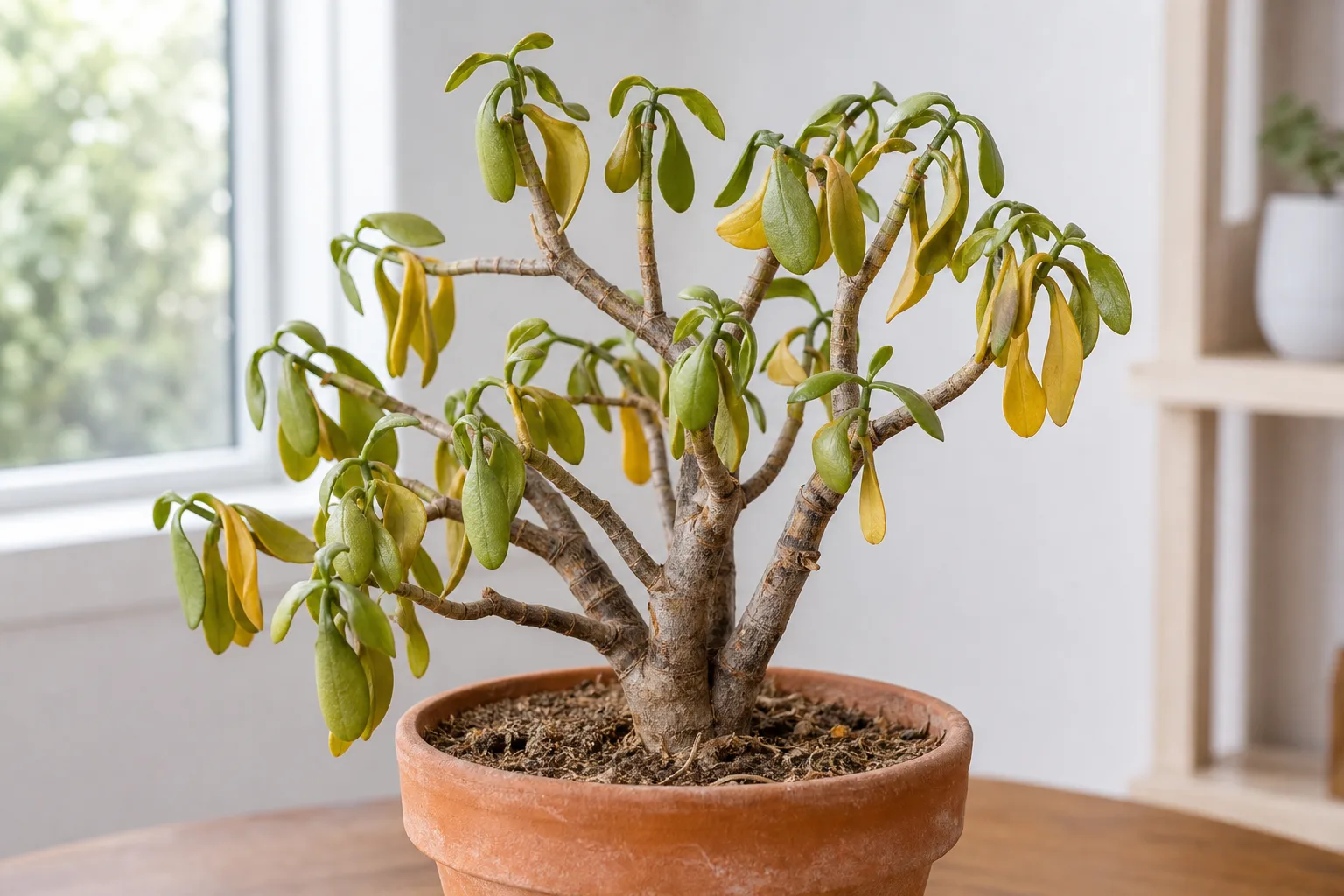
Transplant Shock on Jade Plant: Causes, Checks & Fixes
This guide covers transplant shock on Jade Plant. See also the general Transplant Shock guide, watering, and light pages for this plant.
Transplant Shock on Jade Plant: Causes, Checks & Fixes
Quick answer
Transplant shock on jade plant (Crassula ovata) shows up as drooping leaves, yellowing lower foliage, or stalled growth within one to two weeks of repotting, division, or a major room change-not random stress months later. This slow-growing South African succulent stores water in thick fleshy leaves and woody stems, so it can look limp even when mix feels dry because damaged feeder roots cannot replace what leaves lose to transpiration.
First step: hold the plant in one stable spot with bright indirect light and wait 3–7 days before the first watering if roots were trimmed or the root ball was disturbed. Do not repot again, do not fertilize, and do not bounce the pot between rooms while roots rebuild.
Recovery markers are firm woody stem bases, plump new leaf pairs at branch tips, and stopped spread of wilt-not perfect old leaves re-greening. Full repot protocol: jade plant repotting guide.
What transplant shock looks like on Crassula ovata
Shock is easiest to read when timing is clear-you repotted, moved from nursery to home, or shifted the pot to a much brighter or drier spot within the past two weeks.
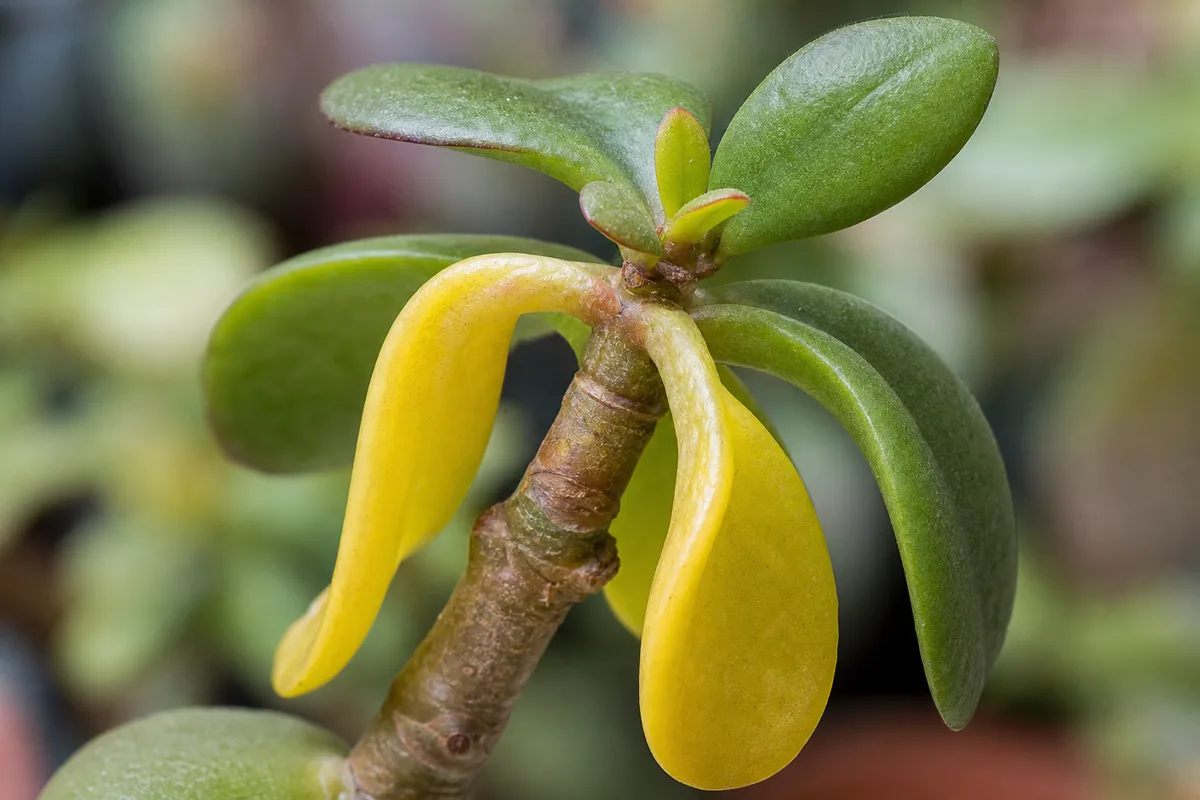
Transplant Shock symptoms on Jade Plant - compare with healthy tissue on the same plant.
Typical signs:
- Paired leaves droop, yellow, or drop across several branches-not one isolated old leaf at the base of a woody trunk.
- New growth stalls; emerging leaf pairs stay small or look dull instead of glossy green with red margins in strong light.
- Stems feel firm and woody, but the canopy looks collapsed or sparse.
- Mix at two inches depth reads dry or appropriately dry, yet foliage still wilts-the root-loss paradox after repot.
- A few lower leaves detach while upper tips stay plump on dry soil.
What damaged tissue will not do: Yellow or dropped leaves rarely return to their pre-repot posture. Wisconsin Horticulture Extension notes that lower leaves slowly drop naturally on mature specimens; post-repot drop is faster and wider across the canopy.
Because jade grows slowly and tolerates being root-bound for years, shock can look dramatic even when the plant is saveable. Do not assume collapse means death until stem bases and root moisture are checked.
Why jade plant gets transplant shock after repotting
Jade evolved on dry rocky hillsides in South Africa with a shallow, fibrous root system that spreads outward rather than diving deep. Repotting tears fine feeder roots and exposes cut surfaces to air. Until new white tips form, uptake lags-even in moist mix-while leaf reserves drain.
Root disturbance. Bare-rooting, aggressive washing, or scoring a tight ball strips the fine hairs that absorb water. Clemson HGIC advises repotting as new growth starts in spring when roots heal faster; winter repots in cool, low-light homes extend recovery because metabolism slows.
Oversized pots and heavy mix. Moving into a pot more than 1–2 inches wider, as Clemson Extension recommends against for houseplants generally, leaves outer soil wet while the old root ball dries-or keeps the entire mass soggy in dim light. Jade’s leaf storage masks drought signals but cannot compensate when feeder roots rot in unused wet soil. See pot too large if you suspect this pattern.
Store mix transition. Nursery jade often sits in peat-heavy soil. Repotting into another moisture-retentive mix without perlite or grit keeps roots oxygen-starved while leaves wilt from poor uptake-a double hit that looks like ongoing shock. Fast-draining succulent mix is non-negotiable.
Wrong timing. Repot only during spring and summer active growth, not when the plant is ailing or dormant. Winter repots with wet outer soil and cool rooms are the most common path to rot mislabeled as shock.
Stacked interventions. Fertilizing, heavy pruning, pest sprays, and repotting the same week multiply stress. Jade recovers from one stable change at a time more reliably than from a care overhaul.
Environmental flip. Repotting plus a move to harsh direct sun, a heating vent, or a cold window stacks two stresses. Bright indirect light for the first one to two weeks beats a sudden sun upgrade on disturbed roots.
Transplant shock vs. root rot vs. overwatering after repot
| Pattern | Days since repot | Stem base | Soil and pot | Leaf texture | Next step |
|---|---|---|---|---|---|
| Transplant shock | 3–14 | Firm woody brown | Dry or drying normally; light pot between drinks | Dropped leaves may still feel firm; tips may stay plump | Stable light, dry-down hold, wait before first soak |
| Overwatering after repot | Any | Firm at first, may soften later | Heavy wet pot days after watering; top inch stays damp | Soft swollen leaves, yellow then mushy | Stop watering; see overwatering |
| Root rot | Often 7–21+ | Soft dark base, may wrinkle above | Sour smell, wet mix that never dries in oversized pot | Mushy lower leaves, blackened stem at soil line | Unpot same day; see root rot |
Overwatering will cause leaves to drop and the stem to rot on jade-especially when a generous first soak hits trimmed roots in a pot that is too large. Shock and rot can overlap; stem firmness and soil smell separate them faster than leaf color alone.
How to confirm the cause
Link symptoms to a recent transplant, then rule out lookalikes:
- Timeline - Did droop, yellowing, or leaf drop begin within three to fourteen days of repotting or a major move? Shock fits that window.
- Stem base - Press the lowest inch of each trunk. Firm brown woody tissue supports shock; soft, dark, or wrinkled tissue at soil level suggests rot.
- Soil moisture at two inches - Dry or drying mix with firm stems points to shock. Bone-dry dusty mix with wrinkled but firm stems suggests underwatering may dominate. Wet for days with spreading yellow lower leaves suggests rot.
- Pot weight and drainage - Water should exit drainage holes after a soak. A pot that stays heavy and smells sour needs root inspection, not more light alone.
- Pot size check - Did you move more than 2 inches up in diameter? Oversized pots are the leading post-repot rot trigger on succulents.
- Root history - Aggressive bare-rooting or heavy trim increases shock severity. Minimal disturbance on a spring repot usually means faster recovery.
- Pests - Check leaf axils and stem joints for cottony mealybugs or scale. Pests alone rarely cause same-day whole-canopy collapse right after repotting, but stressed jades attract them-scout weekly.
If the plant was not repotted and mix was not changed, look elsewhere-transplant shock does not appear without root disturbance or a major relocation. See leaf drop for drop without a recent repot.
First fix for jade plant
Hold the plant in one stable spot with bright indirect light-and change nothing else for two to three weeks.
Choose the brightest indirect location the jade had before repotting, or slightly gentler if it came from a shaded nursery bench. Jade does best with four or more hours of direct sun once acclimated, but introduce stronger light only after the first recovery week on disturbed roots.
Wait 3–7 days before the first watering after a routine repot with trimmed roots. This dry window lets cut surfaces callous. Clemson HGIC advises allowing soil to become dry after repotting before resuming normal drinks. When you do water, soak until excess drains, empty the saucer, then let the top two inches dry.
Hold all fertilizer, pest oils except plain water rinses, pruning beyond fully dead leaves, and second repots until you see firm new leaf pairs for several days. One boring environment beats a stack of rescue tactics.
Step-by-step recovery
After stable placement above, work through these steps in order:
- Respect the dry window - If you repotted within the past week and roots were cut, do not water because leaves look tired. Leaf plumpness and pot weight matter more than color during this phase.
- Water deeply, infrequently - After the wait, one thorough soak beats daily sprinkles. Shallow watering on a shallow root system leaves the core dry while surface mix looks wet.
- Protect from drafts and scorching sun - Keep away from AC vents, radiators, and cold window glass. Do not move to a south window the same day as repot.
- Remove fully yellow or mushy leaves only - Snip dead tissue with clean scissors. Leave partially green paired leaves unless they are soft.
- Scout for pests weekly - Shock weakens plants. Wipe mealybugs with alcohol on a cotton swab; avoid insecticidal soap on jade, which Clemson HGIC notes can damage leaves.
- Resume light feeding after stability - Wait four to six weeks after repot before feeding; Clemson recommends waiting four months before feeding repotted jade because fresh mix supplies nutrients and burned roots cannot handle salts.
- Inspect roots only if rot signs appear - Firm stems and gradual perk-up mean waiting. Soft bases on wet mix mean unpot and trim-see damaged roots for the surgery branch.
Wear gloves when handling cut tissue-jade is toxic to cats and dogs if ingested, and sap can irritate sensitive skin.
Recovery timeline
Days 1–7: Expect limp or dropping leaves and stalled new tips. Firm woody stems and dry or appropriately dry mix are positive signs. Hold off on watering if you are still inside the post-repot wait window.
Days 5–14: Many jades show partial perk-up as white root tips form. One or two old bottom leaves may yellow and drop-normal shedding during stress, distinct from rot-related mush.
Weeks 2–4: New paired leaves should emerge plump and glossy at branch tips. Old damaged foliage stays imperfect. Jade’s slow growth rate means one healthy new leaf pair is a meaningful win.
Weeks 4–6: Roots colonize fresh mix and watering rhythm stabilizes. Root rot from overwatering is the main reason recovery fails-watch pot weight, not calendar dates.
Beyond 4 weeks with continued decline on firm stems: Shock is unlikely the main issue-inspect for chronic underwatering, hidden rot in an oversized pot, or pest sap drain.
Success means firm woody stems, plump new leaf pairs, and stopped wilt spread-not every old leaf greening again.
Lookalike symptoms
- Overwatering after repot - Wet heavy mix for days, sour smell, mushy roots when inspected. Wilt worsens after each deep soak on already saturated soil in an oversized pot.
- Underwatering - Light pot, dusty dry top two inches, wrinkled but firm leaves. Recovery within days of one thorough drink; no root disturbance required.
- Normal lower-leaf aging - One or two paired leaves yellowing slowly from the oldest woody sections on dry soil without recent repot. See leaf drop.
- Cold drafts - Leaf drop near cold window glass in winter without repot history. Move plant; do not increase watering.
- Root rot from pre-existing issues - Repotting reveals mushy roots; plant was declining before the move. Requires trim-and-repot into fresh dry mix, not passive waiting.
What not to do
Do not water immediately after repot on trimmed roots-the biggest post-repot mistake on jade. Do not fertilize during the first four to six weeks; salts stress roots that cannot absorb evenly.
Avoid repotting again unless mix is clearly wrong-pure peat with no grit, no drainage holes, or visible rot requiring surgery. Do not move the plant daily between rooms, bare-root healthy plants, or bury trunks deeper than before.
Skip major pruning and hard division in the same session as a routine repot unless rot forces it. Do not place fresh repots in direct afternoon sun to “help growth”-sunburn and wilt follow on stressed foliage.
Clean fallen leaves from the floor after repot-jade is toxic to pets, and curious cats or dogs may chew dropped tissue. Contact your veterinarian if ingestion occurs.
How to prevent transplant shock next time
Repot only when needed-roots circling the pot, water running straight through, top-heaviness, or depleted mix-during spring as new growth starts. Do not repot ailing plants until pests or rot are treated.
Size up one step. Choose a pot only 1–2 inches wider with drainage holes. Pre-moisten gritty succulent mix-cactus blend plus extra perlite or coarse sand per Wisconsin Extension.
Handle the root ball gently. Loosen circling outer roots without washing away all old soil. Keep trunks at the same depth; never bury woody stem tissue.
Wait 3–7 days before the first soak after repot. Match pre-move light before experimenting with brighter spots. Full step-by-step: jade repotting guide.
Avoid winter repotting when possible. If you must, use dry gritty mix, wait a full week before watering, and skip fertilizer for six weeks.
When to worry
Escalate if wilt does not improve after three to four weeks of stable dry-down care, stem bases soften, or yellowing spreads while soil stays wet. Unpot and inspect-trim mushy roots, repot into fresh dry mix one size up at most, and discard if the main trunk is hollow.
A plant that perks overnight but collapses daily may sit in a draft or dry microclimate; fix placement once, then wait. Complete canopy loss with blackened stem bases after repot in an oversized pot is rot, not shock-act the same day.
Practical checks
Urgency check
Treat as urgent today if stem bases soften, soil smells sour while the pot stays heavy, or wilt worsens after two weeks of correct dry-down care with firm trunks. Those patterns need root inspection, not more waiting.
Treat as monitor if stems are firm, mix dries normally between soaks, and only lower leaves drop within two weeks of a spring repot.
Best inspection order
Days since repot → stem base firmness → pot weight → soil moisture two inches deep → root inspection if wet and soft → leaf axils for pests.
Jade care cross-check
Also sold as money tree or lucky plant, jade should be judged by plump new leaf pairs, not old blemished foliage. If the pot stays wet for weeks after repot, improve light and pot size before the next drink-not more water because leaves look tired.
Related jade plant guides
- Jade plant repotting - timing, one-size-up rule, wait-before-water protocol
- Overwatering on jade - wet mix patterns after repot
- Root rot on jade - soft stems and sour soil escalation
- Damaged roots on jade - trim-and-repot surgery branch
- Leaf drop on jade - normal aging vs. stress drop without repot
Conclusion
Transplant shock on jade plant is a temporary root–environment mismatch, not a death sentence. Confirm it with recent repotting, firm woody stems, and dry-down mix. Fix it by holding one stable bright spot, waiting 3–7 days before the first soak on trimmed roots, and keeping fertilizer away until new leaf pairs look plump again. Repot in spring, size up modestly, handle the shallow root ball gently, and let calloused roots heal before you interpret limp leaves as thirst.