Pot Too Large on Jade Plant: Causes, Checks & Fixes
Quick answer
A pot too large on jade surrounds a shallow root ball with wet, unused mix that roots never colonize. First step: stop watering on schedule, unpot to compare root mass to pot width, and repot into a container only 1–2 in. wider with fresh gritty mix.
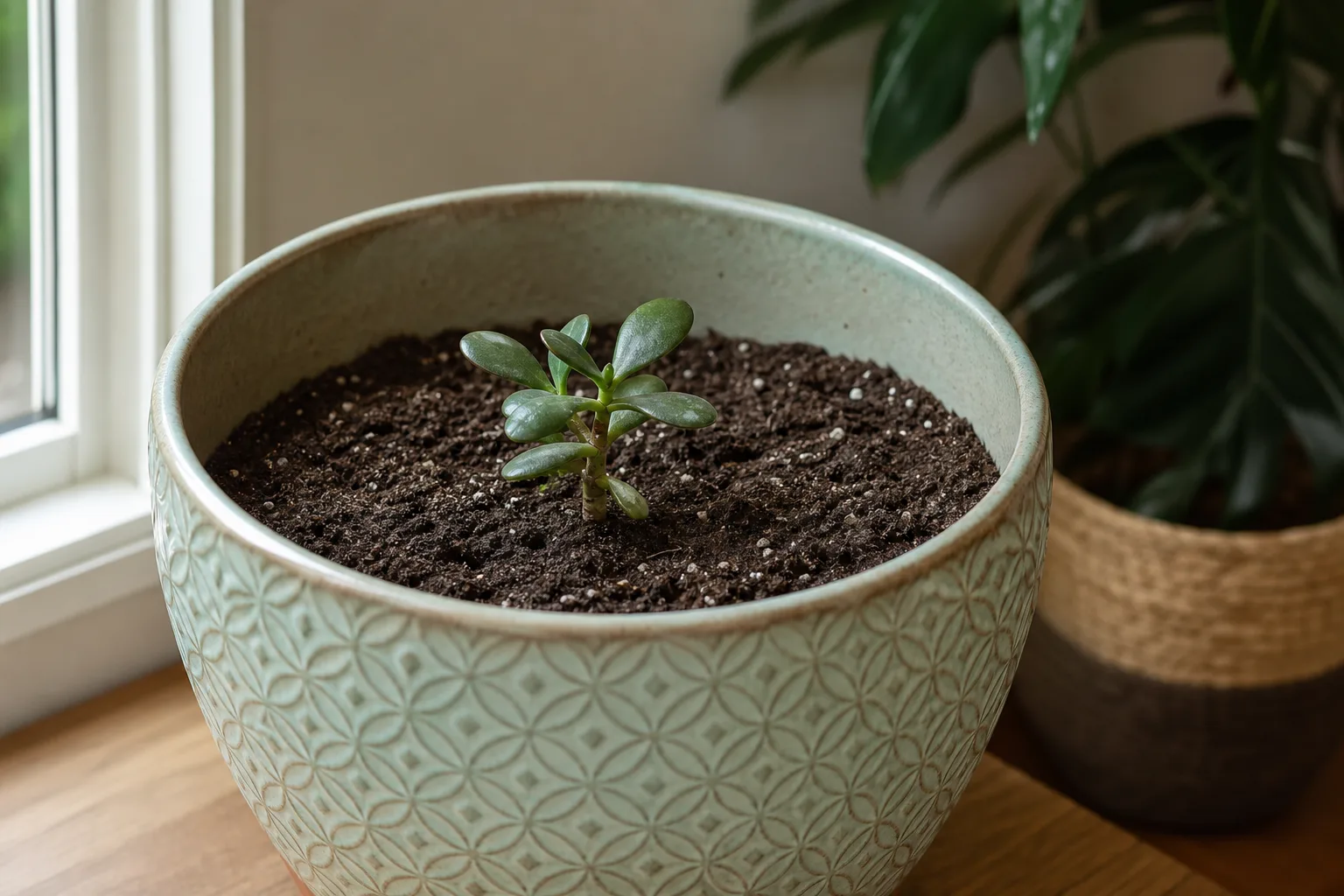
Pot Too Large on Jade Plant: Causes, Checks & Fixes
This guide covers pot too large on Jade Plant. See also the general Pot Too Large guide, watering, and light pages for this plant.
Pot Too Large on Jade Plant: Causes, Checks & Fixes
Quick answer
A pot too large on jade (Crassula ovata) surrounds a modest shallow root ball with wet, unused mix that roots never colonize. The soggy outer ring reduces oxygen and mimics chronic overwatering-even when you water carefully.
First step: stop watering on a calendar. Unpot the plant, compare root mass to pot width, and repot into a container only 1–2 in. wider with fresh gritty succulent mix. Wait until the new mix is dry before the first drink.
Jade is a slow-growing South African succulent that stores water in thick leaves and woody stems. It can live quite happily for years while slightly root-bound, which makes oversized pots easy to miss: the canopy looks full while roots occupy only the center of a generous container. Full repotting protocol lives in the jade repotting guide.
What an oversized pot looks like on Jade Plant
Overpotting on jade mimics overwatering because the mechanism is the same: roots sit in wet mix too long.
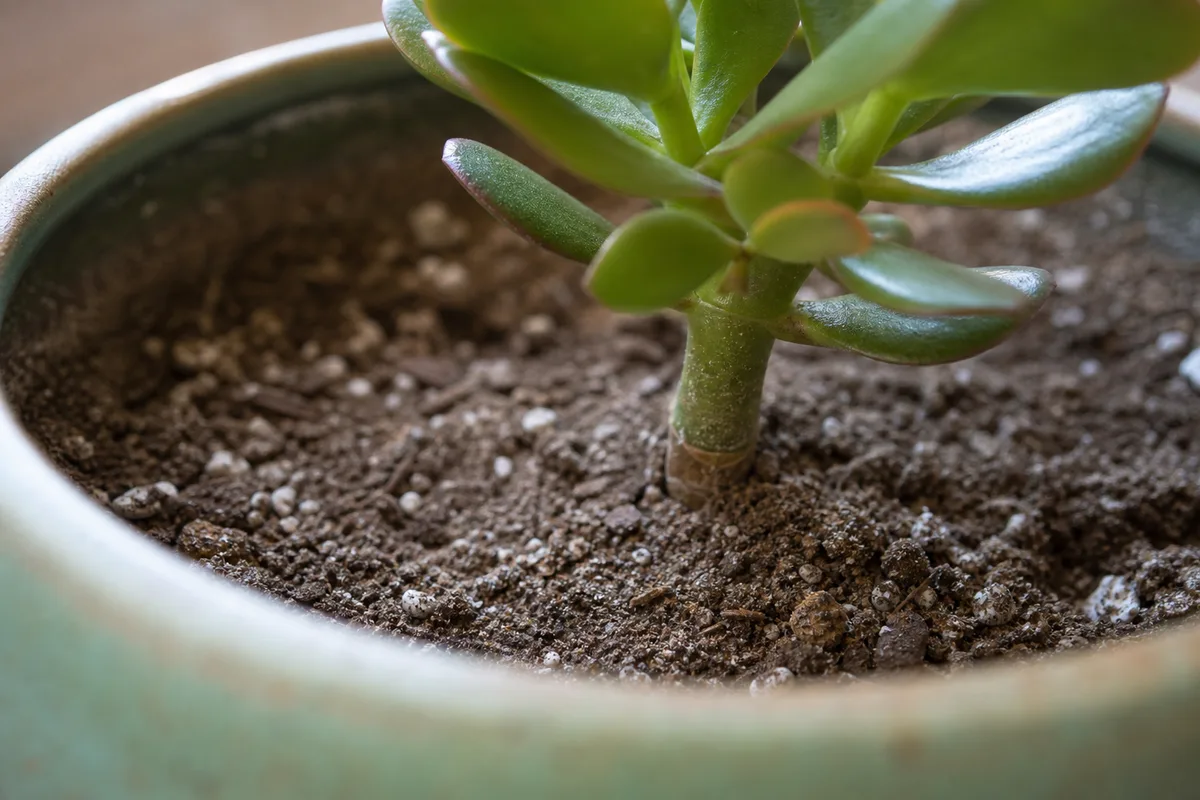
Pot Too Large symptoms on Jade Plant - compare with healthy tissue on the same plant.
Typical patterns:
- Root ball sits low in a wide pot with inches of unused mix below and around it
- Outer soil stays dark and cool while the surface looks merely dry
- Pot stays heavy for 10+ days between waterings; fungus gnats hover over the wide wet surface
- New leaf pairs stall or emerge smaller despite otherwise adequate light
- Lower leaves yellow or drop while upper branches still look firm-jade stores water in stems, so wilting can lag behind root damage
- No roots visible near drainage holes seasons after a dramatic upsize from a 4-in. nursery pot to an 8-in. decorative planter
- Musty or sour smell when lifting the pot
- Leaf drop one to two weeks after a well-meaning repot into a much larger container
Normal, not oversized: A jade in an appropriately sized pot dries when the top inch of mix is completely dry-roughly every two to three weeks in summer and every four to six weeks in winter for most homes. Slow winter rest with firm stems and predictable dry-down is dormancy, not an oversized container.
Not pot-too-large: Water runs straight through in seconds, the pot feels light soon after watering, and roots circle the walls-that pattern points to a pot too small or root-bound container, not excess volume.
Why Jade gets potted too large
Well-meaning repotting is the usual trigger. Owners jump from a 4-in. nursery pot to a 10-in. decorative planter so the woody jade has “room to grow.” Unused soil volume holds moisture the slow-spreading root system cannot quickly absorb. Jade roots explore new space slowly indoors; the outer ring never dries at the same pace as a properly sized pot.
Day-one upsizing reinforces the mistake. Many new jade plants arrive in a cache pot or sealed decorative container with no drainage. Moving a small plant into a tall glazed planter hides inches of idle wet mix below the root zone. Oversized containers make every watering riskier because the wet outer ring persists long after the center would have dried in a right-sized pot.
Fast canopy growth misleads timing in the opposite direction. Because jade stems thicken and branch above soil level, owners assume roots have caught up. Clemson HGIC notes jade can live happily root-bound for years-repotting is needed when the plant becomes top-heavy or mix degrades, not preemptively into the largest pot on the shelf.
Shallow roots and slow colonization. Jade roots spread outward and fibrously rather than diving deep, matching rocky South African slopes. In an oversized pot, the outer ring of soil stays wet long after you water, while the inner root zone may dry normally-a deceptive pattern that tricks growers into watering again too soon. That persistent moisture around underpopulated soil is the most common post-repot root rot scenario for succulents.
Root-bound tolerance versus oversizing risk. Jade tolerates being slightly root-bound far better than sitting in excess wet soil. Because the plant carries water reserves in leaves and stems, it tolerates brief dry periods in new mix far better than chronic dampness in an oversized pot. The one-size-up rule exists because unused soil volume holds moisture roots cannot use quickly.
Winter and low light compound the issue. In cooler, dimmer rooms, evaporation drops. A pot that barely dried in summer may stay saturated for weeks in winter, softening roots at the edges where wet outer soil meets live tissue.
How to confirm the cause
Work through these checks before repotting again:
- Pot-to-root ratio - Slide the plant out gently (water lightly the day before if mix is bone dry). If root width is less than half the pot diameter, the container is likely too large.
- Moisture profile - After one thorough watering, probe outer edge soil versus center over the next week. A persistent wet outer ring with a small root mass confirms oversizing.
- Repot history - Did the last repot jump more than 1–2 in. in diameter? Did you repot on day one into a decorative planter?
- Root health - Mushy brown outer roots with firm white or tan center roots suggest rot in the wet perimeter soil.
- Growth rate - Zero new leaf pairs for months in a large pot with damp outer mix points to environment, not necessarily disease-but rot may follow if wetness continues.
- Smell and stem firmness - Sour odor or soft stem bases at the soil line mean escalate to root rot protocol, not a simple downsize.
Lookalike symptoms to rule out
| Pattern | Likely cause | Key check |
|---|---|---|
| Wet outer ring, heavy pot for weeks, yellow lower leaves | Pot too large | Root ball < half pot width |
| Water channels through in seconds, light pot soon after watering | Root-bound / pot too small | Roots at drainage holes |
| Soft leaves, sour smell, mushy roots on any pot size | Overwatering | Soil wet throughout |
| Mild leaf drop 1–2 weeks after right-sized spring repot | Transplant shock | Pot diameter matched root ball |
Poor drainage from dense peat mix alone can occur even in a correctly sized pot-fix the soil mix, not only the diameter. Calendar overwatering affects any pot size. Low light causes leggy growth and pale leaves without necessarily leaving outer soil permanently wet. Confirm whether the problem is excess volume, excess retention, or both before repotting.
First fix for Jade Plant
Downsize or right-size the pot the same week you confirm oversizing. Choose a container only 1–2 in. wider than the root ball with open drainage holes. Use dry, gritty succulent mix with added perlite or pumice.
Steps:
- Stop watering and let the outer wet mix begin drying-do not add more moisture while planning the move.
- Unpot and shake or brush away wet outer soil from the unused volume.
- Trim any mushy roots back to firm white or tan tissue with sterilized scissors.
- Repot at the same depth with fresh mix snug around the root ball-not loose fill in a cavernous pot.
- Do not water for three to seven days unless leaves visibly wrinkle and the new mix is fully dry at depth.
- Place in bright indirect light so the smaller soil mass dries predictably.
Do not add fertilizer, hard-prune every branch, and move the plant to a new room on the same day. One correction-right-sized container and dry-down watering-comes first.
Spring and early summer are the safest windows for downsizing when new growth is starting. If you must intervene in winter for sour-smelling soil or soft stems, use dry gritty mix, extend the post-repot watering wait, and skip fertilizer for six weeks.
Step-by-step recovery
After the downsizing repot:
- Water on dry-down only - Check the top inch of mix, not the calendar. See watering guide for seasonal rhythm.
- Bright indirect light - Avoid dark recovery corners; moderate light helps the plant use water at a steady pace.
- Empty saucers - Never let runoff sit beneath the pot or inside a cachepot.
- Hold fertilizer - Wait until new firm leaf pairs appear, usually two to four weeks after the root zone stabilizes.
- Trim damaged foliage - Remove yellow or soft leaves once growth resumes; they rarely recover in place.
Recovery timeline
Most jade with mostly firm roots show new root tips within two to three weeks. Expect one to two months before the plant looks full again above the pot. Old yellow leaves may drop; judge success by firm stems, no sour smell, and fresh leaf pairs at branch tips-not by restoring every blemished leaf.
Mild cases often stabilize within one to two dry-down cycles after downsizing. Severe root damage from months in a wet oversized pot can take several weeks longer. Damaged leaves will not regenerate in place, but new leaves emerging at branch tips in normal size and color mean the plant is back on track.
Mistakes to avoid
- Watering more when leaves yellow - Yellowing on wet outer soil often means too much moisture, not drought. Adding water makes oversizing worse.
- Adding gravel at the bottom instead of downsizing - A false drainage layer does not fix excess soil volume.
- Fertilizing a stressed plant - Nutrients cannot compensate for anaerobic roots.
- Repotting into an even larger pot - Hoping fresh soil in a bigger container solves stagnation usually accelerates rot.
- Bare-rooting healthy plants - Unless rot is severe, keep the central root mass intact to limit transplant shock.
- Upsizing because the plant looks top-heavy above soil - Woody jade can stand tall in a modest pot when roots are healthy. Match pot width to root mass, not canopy spread.
Wear gloves when handling cut tissue-jade is toxic to cats and dogs and sap can irritate sensitive skin.
Jade care cross-check
Right-sized pots work only with the rest of this plant’s routine:
- Mix - Gritty cactus or succulent blend; avoid heavy peat that holds moisture in plastic pots.
- Light - Bright indirect to several hours of direct sun; weak light slows evaporation from any pot size.
- Water - Top inch dry before the next drink; lift the pot to learn its weight when properly dry.
- Repot cadence - Every two to five years when roots demand it, not when the woody canopy looks impressive.
Also sold as money tree or lucky plant, jade should be judged by firm new growth. If the pot stays wet for weeks, improve light and mix before the next drink.
How to prevent an oversized pot on Jade
Follow the 1–2 in. sizing rule at every repot. Repot in spring or early summer when growth is active. Use nursery pots inside decorative cache pots-and empty runoff after watering. Size for the root ball you see at unpotting, not the woody spread you want next season. When in doubt, choose the smaller of two reasonable options.
When to worry
Treat as urgent when stem bases soften, soil smells sour, or pests spread across multiple branches-jade rots fast once roots fail. Those signs suggest root rot has started in the wet outer compost-act within days, not weeks. If roots are mostly mushy after trimming, take healthy stem cuttings above firm tissue and treat the base as a rot rescue.
If leaves are firm, smell is neutral, and growth is merely slow, you have time to downsize before rot spreads.
Practical checks
Urgency check
Treat as urgent if stem bases soften, soil smells sour, or the pot stays heavy and wet for more than two weeks after your last watering. Firm stems with damp outer mix only are medium urgency-downsize during the next active growth window.
Best inspection order
Newest growth → stem bases → pot weight → unpot for root ball vs. pot width → moisture at outer edge vs. center → leaf undersides for pests.
Related Jade Plant guides
- Repotting - canonical pot-sizing protocol and spring timing
- Overwatering - wet outer soil lookalike
- Root rot - escalation when stem bases soften
- Root-bound - contrast when upsizing is correct
- Pot too small - opposite container mistake
- Soil - gritty mix targets
- Watering - dry-down rhythm after downsize
Conclusion
An oversized pot is one of the most common hidden causes of leaf drop and stalled growth on jade. The fix is not less light or more patience with wet soil-it is matching container volume to the shallow root mass, using gritty mix, and watering only when the top inch is dry. Downsize once, let the plant stabilize through a dry recovery window, and size up gradually from there.