Root Bound on Jade Plant: Causes, Checks & Fixes
Quick answer
A root-bound jade has dense circling roots that displaced most of the mix-water runs through in seconds and new leaves stall despite good care. First step: slide the plant out and inspect whether white roots wrap the pot walls or exit drainage holes; if confirmed, repot one size up in spring with gritty mix and wait 5–7 days before the first water.
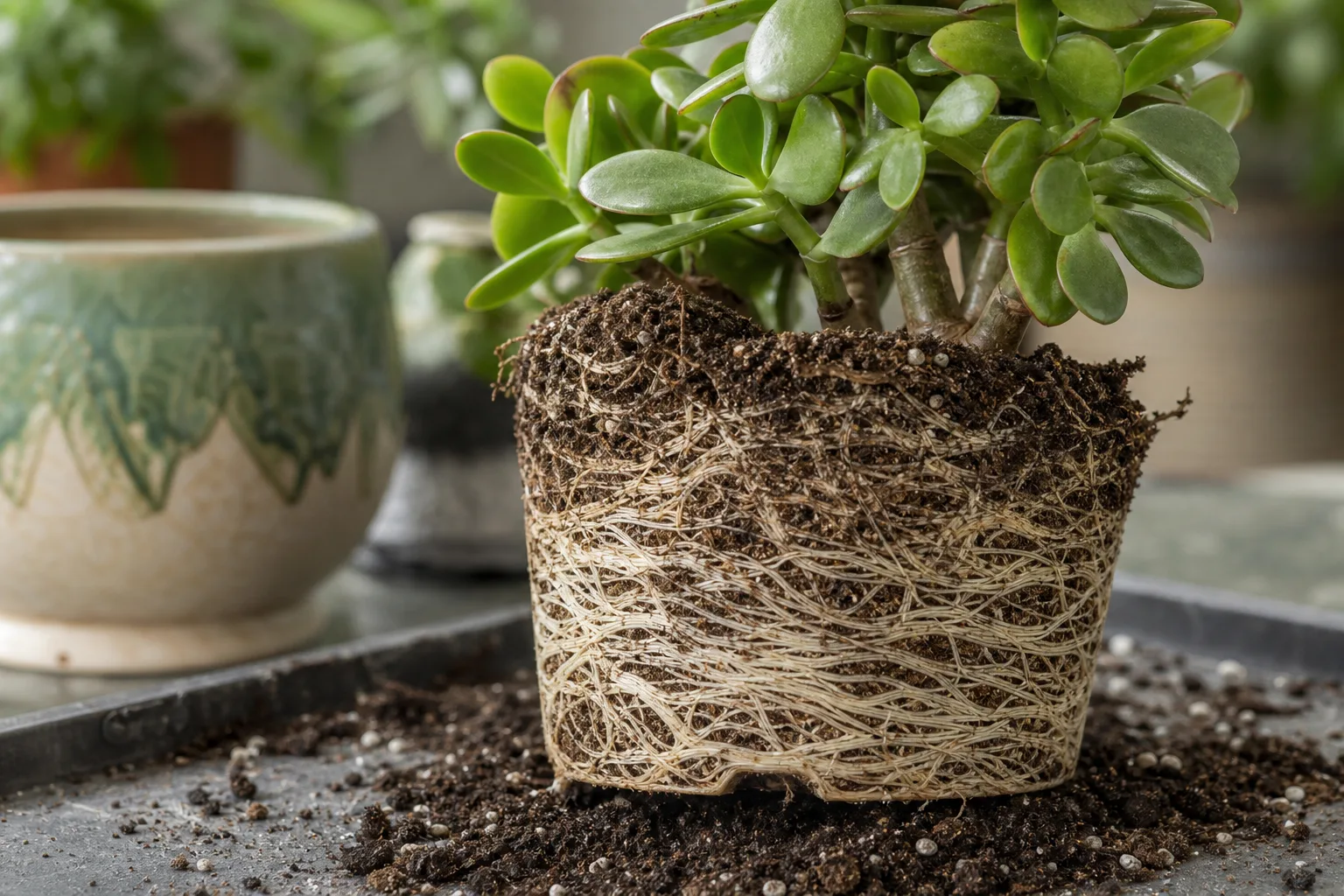
Root Bound on Jade Plant: Causes, Checks & Fixes
This guide covers root bound on Jade Plant. See also the general Root Bound guide, watering, and light pages for this plant.
Root Bound on Jade Plant: Causes, Checks & Fixes
Quick answer
A root-bound jade has dense circling roots that displaced most of the mix-water runs through in seconds and new leaves stall despite good care. First step: slide the plant out and inspect whether white roots wrap the pot walls or exit drainage holes; if confirmed, repot one size up in spring with gritty mix and wait 5–7 days before the first water.
Jade (Crassula ovata) is a slow-growing South African succulent with shallow fibrous roots. Unlike fast tropicals, it can live quite happily for years while root-bound-until the root mass consumes so much soil volume that watering rhythm breaks. Binding becomes a problem when roots circle the pot interior and water behavior changes, not merely because roots touch the walls. Full repot procedure lives in the jade repotting guide.
Why Jade Plant becomes root bound
Years without repot fill pots gradually. Jade adds woody stem girth and shallow roots steadily indoors. Young plants in bright light may need repotting every two to three years; mature specimens can go four to five years or longer between full upgrades. Owners interpret drought tolerance as “never needs repotting,” then wonder why no new leaf pairs appear for a season.
Shallow root architecture displaces mix volume. Jade roots spread outward and fibrously rather than diving deep-matching its rocky arid native range. When the root mat replaces soil, the pot behaves like a hollow shell: water exits through channels without hydrating the center, nutrients deplete faster, and the plant dehydrates between your normal watering intervals.
Slight snugness can encourage bushy growth. Clemson HGIC and Wisconsin Horticulture Extension both note that jade grows well root-bound until top-heaviness or tipping becomes a problem-similar to succulents trained in shallow bonsai trays. The line crosses when water behavior changes, drainage holes clog with roots, or the woody canopy overmatches the base.
Terracotta hides binding longer than plastic. Unglazed clay breathes through walls, so roots may circle inside for years before visible escape. Thin plastic pots crack or deform when pressure builds-often the first obvious sign that binding has passed from tolerated to structural stress.
What root bound looks like on Jade Plant
Root-bound jade often mimics thirst even when you water on schedule. Watch for this pattern together-not any single sign alone:
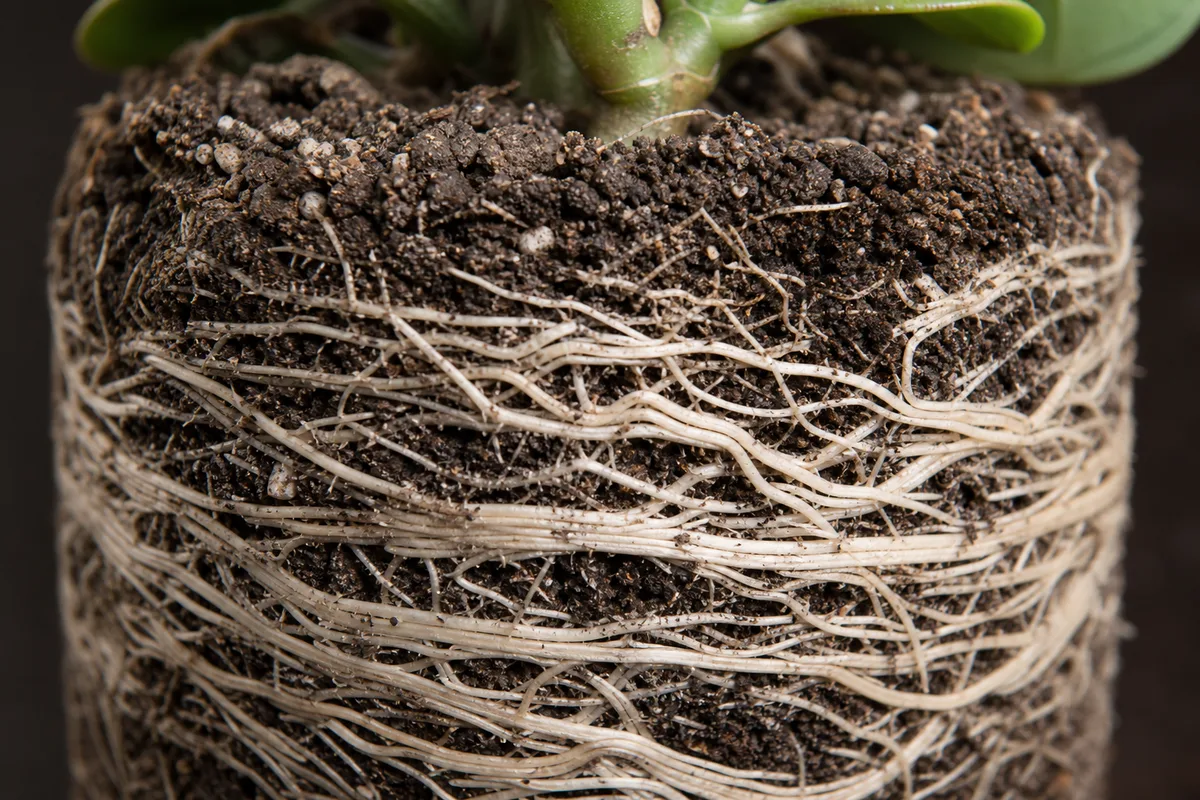
Root Bound symptoms on Jade Plant - compare with healthy tissue on the same plant.
- Roots circling the pot wall or visible at drainage holes when you lift the plant
- Water runs straight through within seconds without soaking the root mass center
- Pot feels light one to two days after a thorough soak because little mix remains
- Root ball holds the pot shape on unpot with less than a finger-width of loose mix visible
- Stalled new leaf pairs for an entire spring or summer despite adequate light
- Slightly wrinkled lower leaves that perk briefly after water but return thin within days
- Top-heavy woody jade tips despite firm stems-the base no longer anchors the canopy
- Pot cracks from internal root pressure on terracotta or thin nursery plastic
- Mix pulls away from pot walls, leaving a gap between soil and container
Healthy slight crowding shows slow but steady new growth, firm upright stems, and soil that dries on a normal two-to-four-week indoor rhythm in summer. Severe binding adds rapid dry-down, zero new leaves through a warm season, and roots forming a solid white mat.
Root bound vs. overwatering vs. underwatering vs. compacted mix
| Pattern | Root bound | More likely cause |
|---|---|---|
| Dry-down speed | Fast after thorough soak | Underwatering - sparse roots, dusty shrunken mix |
| Soil moisture | Channels through; center stays dry | Overwatering or pot too large - wet mix for weeks |
| Root appearance on unpot | Dense white circling mat | Root rot - mushy black tissue, sour smell |
| Stem base | Firm and woody | Rot - soft, blackened base on wet soil |
| Growth stall | Warm season, good light, dense roots | Low light - etiolated stretch, pale tips |
Water channeling is the tell. A root-bound jade goes from predictable “water when the top inch is dry” to “water runs through without soaking in” because the dense root mat leaves little room for mix to hold moisture. Overwatering shows the opposite-soil stays wet for days. Unpot inspection separates binding from lookalikes in one step.
How to confirm the cause
Work through these checks before repotting:
- Gentle unpot - Support the main stem; never yank by branches. If the rootball holds the pot shape and white roots wrap the outside, binding is confirmed.
- Drainage hole check - Roots poking through are a clear repot signal per Clemson transplanting guidance for houseplants that wilt shortly after watering despite adequate drinks.
- Dry-down speed test - Water thoroughly and track days until the pot feels light. Mix that dries within one to two days on a mild indoor day-when you previously waited a week-strongly suggests root-bound displacement.
- Growth history - Mark a branch tip in spring. No new firm leaf pairs through an entire warm season with adequate light supports repot need.
- Root health - Firm white or cream roots mean crowding alone; mushy black tissue means rot-a different fix. See root rot before upsizing a rotting plant.
- Stability test - A woody jade that tips despite firm stems often needs a wider, heavier pot even before roots circle severely.
If roots circle densely and water channels through, root binding is confirmed. If roots are healthy but sparse, fix watering and light before repotting.
First fix for Jade Plant
Repot in spring (March through May) into a pot only one to two inches wider with drainage holes and fresh gritty succulent mix. Gently tease outer circling roots, plant at the same depth, and wait 5–7 days before the first water.
Do not compensate for binding by watering more often without repotting-chronic wet-dry swings stress roots and do not replace lost soil volume. Do not jump to a large decorative pot; jade roots explore new space slowly and excess soil stays wet, inviting root rot. Do not fertilize a crowded jade before repotting-fresh mix and root room matter first.
For step-by-step timing, mix ratios, and aftercare detail, follow the repotting guide.
Step-by-step spring repot recovery
After confirming root-bound status, repot when new growth starts-Wisconsin Extension’s recommended window for Crassula ovata.
- Dry the mix slightly beforehand - If soil is already dry, stop watering five to seven days before handling so the rootball releases cleanly. If severely dehydrated with wrinkled leaves, bottom-water lightly one to two days prior.
- Choose the next pot - One to two inches wider in diameter only. Prefer a wide, stable base for top-heavy woody jade.
- Prepare gritty mix - Use commercial cactus mix amended with perlite per the soil guide. Never reuse degraded soil from the old pot.
- Loosen circling roots - Tease the outer root mat gently so tips can grow outward. Trim only dark, mushy roots with sterilized shears.
- Plant at the same depth - Do not bury woody stem tissue deeper than before.
- Wait three to seven days before the first water - Let trimmed roots callous. Then soak until excess drains.
- Place in bright indirect light - Avoid stacking a window move and fertilizer on the same day as repot.
Wear gloves when handling cut tissue-jade is toxic to cats and dogs if ingested. Clean fallen leaves from the floor after repotting.
Recovery timeline
Immediately after repot: Mild leaf drop or slight wilt for a few days is normal transplant shock if stems stay firm.
Weeks 1 to 3: Root establishment phase. New growth may pause. Keep bright indirect light and resist daily watering.
Weeks 4 to 8: First new leaf pairs on branch tips if repot was timed in spring. Jade grows slowly-weeks between visible progress is normal.
Full recovery: A previously stalled jade in good light often pushes modest new growth through summer after a well-timed repot. Old wrinkled or yellow leaves from crowding stress do not plump up again. Judge success by firm new tips and a stable watering rhythm-not by reversing old damage.
Winter repots recover slower-prefer spring timing unless the pot is cracking or roots are rotting.
What not to do
- Do not repot into a much larger pot-spare wet compost raises rot risk after binding correction.
- Do not water immediately after repot-disturbed roots need dry-back.
- Do not assume binding requires heavy root pruning-tease circling roots; cut only mushy tissue.
- Do not fertilize until new growth is active-hold feed for four to six weeks after repot per Clemson guidance for repotted plants.
- Do not repot in winter unless roots are rotting or the plant cannot absorb water-jade heals slowly in cool dormancy.
- Do not aggressively bare-root wash unless rescuing rot-stripping all mix damages fine root hairs.
How to prevent root bound next time
Schedule a spring root check every two to three years for young jade, or every four to five years for slow mature specimens-intervals from Clemson and Penn State Extension, adjusted to your plant’s growth rate.
Size up gradually-one to two inches per repot. Refresh mix even when trimming roots to stay in the same decorative container. Wisconsin Extension recommends root pruning when repotting into the same size pot for intentionally compact specimens.
Use pots with open drainage. When dry-down shrinks from weeks to days without seasonal explanation, unpot before the root mat blocks all mix.
When to worry
Root bound alone is low to medium severity when stems stay firm and roots are white. Escalate when:
- Stem bases soften or soil smells sour-suspect rot, not crowding alone
- Mushy black roots appear on unpot-switch to rot salvage before assuming binding was the only issue
- Yellow leaves spread while soil stays wet after you sized up too aggressively
- Pot cracks or roots air-dry at exposed splits-repot before desiccation spreads
- No new growth through an entire warm season after spring repot into appropriate size and light
A top-heavy jade with roots at drainage holes is uncomfortable, not dying-repot within the next active growth window and recovery is usually straightforward.
Practical checks
Urgency check
Low urgency: Slight root circling with steady slow growth and normal dry-down-monitor until spring.
Medium urgency: Water channels through within days, zero new growth twelve-plus months, roots exit holes, or plant tips easily-repot in the next spring window.
High urgency: Stem bases soften, sour smell, mushy roots on unpot, or pot cracking with exposed desiccating roots-act within days regardless of season.
Best inspection order
Drainage holes → dry-down speed after soak → spring growth history → gentle unpot → root firmness and smell → stem base check.
Related jade plant guides
- Jade plant repotting - comprehensive timing, mix, and aftercare walkthrough
- Pot too small - undersized container checks and sizing mistakes
- Best soil for jade - gritty mix for post-repot recovery
- Jade watering - dry-down rhythm after repot
- Overwatering - lookalike wet-soil symptoms
- Root rot - escalation when softness or odor appears
- Pot too large - wrong upsize after binding correction
- Jade plant overview - baseline care hub