Damaged Roots on Jade Plant: Causes, Checks & Fixes
Quick answer
Damaged jade roots show as broken white tips, torn circling roots, or temporary wilt after repot-not always mushy rot. First step: unpot gently, rinse roots, and check whether tissue is firm and pale (mechanical or shock) versus brown and mushy (rot); trim only soft tissue, air-dry cuts 24–48 hours, then repot dry.
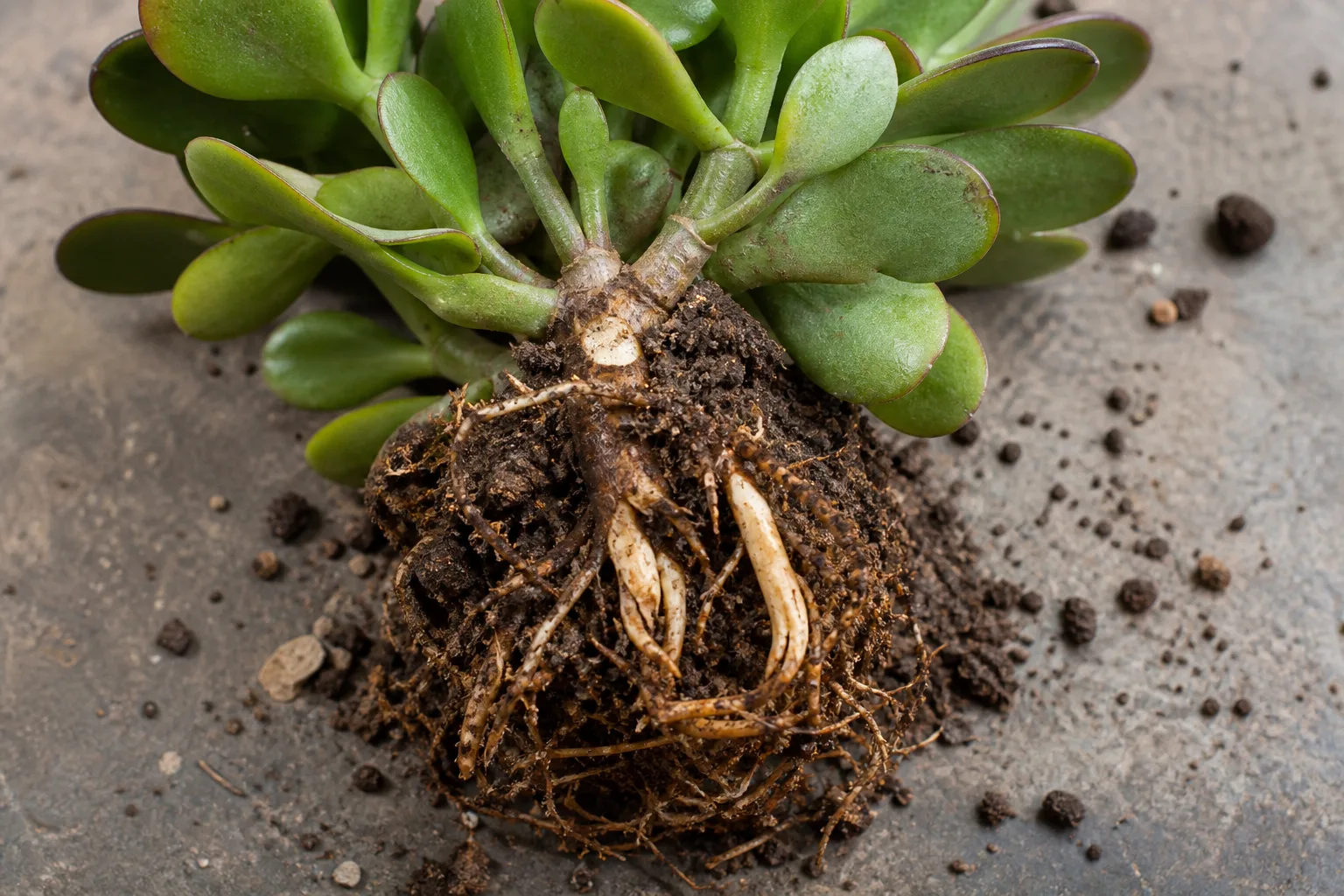
Damaged Roots on Jade Plant: Causes, Checks & Fixes
This guide covers damaged roots on Jade Plant. See also the general Damaged Roots guide, watering, and light pages for this plant.
Damaged Roots on Jade Plant: Causes, Checks & Fixes
Quick answer
Damaged jade roots show as broken white tips, torn circling roots, or temporary wilt after repot-not always mushy rot. First step: unpot gently, rinse roots, and check whether tissue is firm and pale (mechanical or shock) versus brown and mushy (rot); trim only soft tissue, air-dry cuts 24–48 hours, then repot dry.
Jade (Crassula ovata) is a slow-growing South African succulent that stores water in leaves, stems, and shallow fibrous roots. That storage buys time after root injury-but it also hides trouble: leaves can stay plump while roots fail underneath. This page covers mechanical breakage, root-bound tearing, and transplant shock; progressive mushy rot has its own workflow in the root rot guide.
What damaged roots look like on Jade Plant
Healthy jade roots on unpot are firm, pale white to cream, and attached to a woody stem base that feels solid. Damaged roots fall into distinct patterns-check roots directly; leaf color alone misleads on this species.
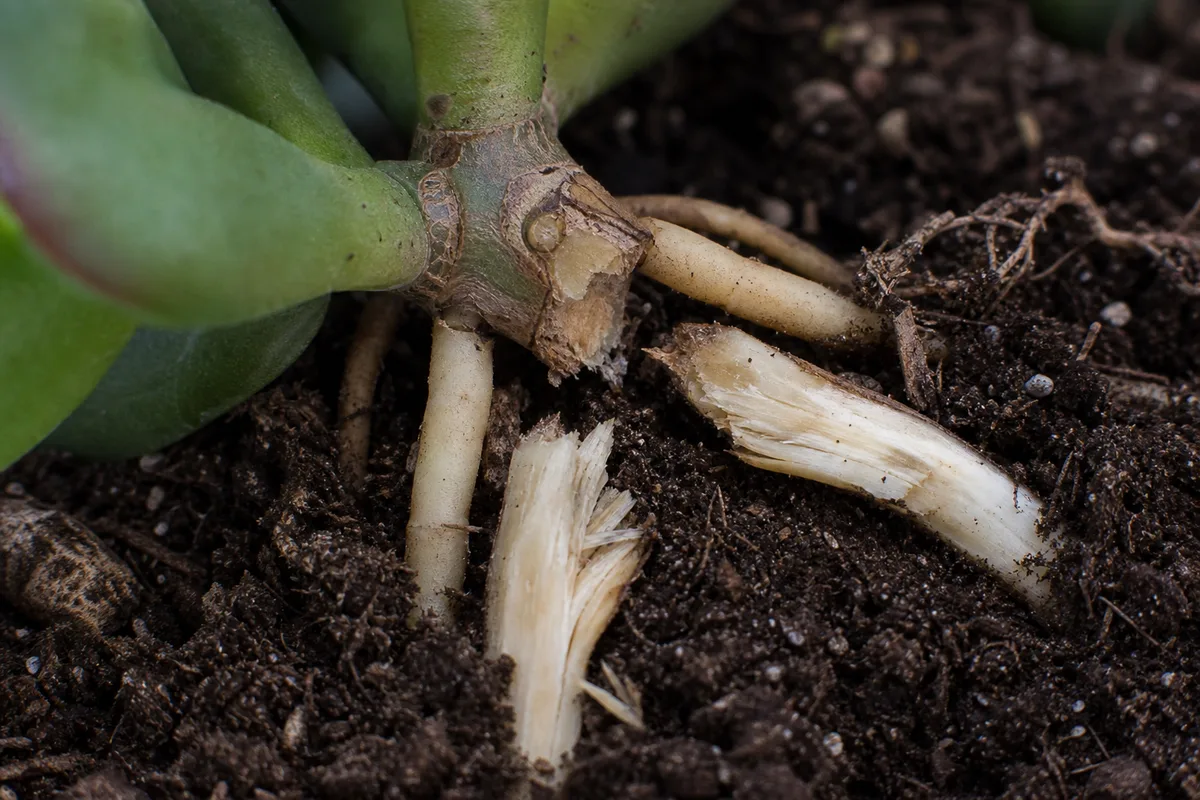
Damaged Roots symptoms on Jade Plant - compare with healthy tissue on the same plant.
Healthy roots versus mechanical breakage
- Healthy: Evenly pale roots, no sour smell, mix dries on a normal rhythm, stem base woody and firm
- Mechanical breakage: Clean snaps or frayed white tips after rough handling, yanking by branches, or scoring a tight rootball too aggressively-often right after repot
- Root-bound tearing: Dense circling roots with torn outer strands when the rootball was pulled from a pot it had outgrown-see root bound for crowding signals
- Transplant shock: Roots look intact but the plant wilts or drops a few lower leaves within days of repot-disturbed fine roots, not necessarily dead tissue
When damage is actually rot
Brown, translucent, or mushy roots with wet heavy mix and a softening stem base are rot, not mechanical injury alone. Leaf fall and root rot can result from overwatering on jade. Switch to root rot salvage-do not treat advancing mush as simple repot shock.
Why Jade Plant gets damaged roots
Rough repot technique breaks shallow roots. Jade roots spread outward in a shallow fibrous mat rather than diving deep. Pulling the plant by woody branches, knocking a dry rootball out without support, or bare-root washing when you only needed a gentle upgrade snaps fine feeder roots that absorb water.
Root-bound plants tear on extraction. When roots circle the pot wall in a solid mass, Clemson transplanting guidance notes you may need to score the rootball with a knife to loosen it-done carelessly, that scoring removes living outer roots. Water running straight through a crowded pot is a warning sign before you force a stuck plant out.
Transplant shock follows disturbance, not always visible breaks. Wisconsin Horticulture Extension recommends repotting as new growth starts and watering sparingly until established-jade pauses uptake while roots heal. Repotting in winter dormancy, jumping to an oversized pot, or watering immediately after handling stacks stress on already disturbed roots.
Overwatering after injury mimics and worsens damage. Wet mix on open root wounds invites decay. This overlaps with rot but starts as repairable mechanical injury if you dry out, trim only mush, and wait before the first drink-see overwatering if soil stays wet for weeks.
Damaged roots vs. root rot vs. root-bound vs. transplant shock
| Pattern | Damaged / mechanical roots | More likely cause |
|---|---|---|
| Root texture on unpot | Firm pale tissue; clean breaks or frayed white tips | Root rot - brown mush, translucent strands |
| Soil smell / moisture | Dry or normal dry-down; no sour odor | Rot - sour wet mix, pot stays heavy |
| Stem base | Firm and woody | Rot - soft, blackened base climbing the trunk |
| Timing | Starts within days of repot or rough handling | Rot - chronic wet soil, often winter overwatering |
| Root appearance | Circling mat with torn outer strands | Root bound alone - dense white mat, firm roots |
| Above-ground signs | Mild wilt, few lower leaf drops, firm stem | Transplant shock - recent repot, intact roots |
The unpot check settles most debates in one step. If roots are firm and pale with a firm stem, treat as damage or shock. If any tissue is mushy or the mix smells rotten, rot protocols take priority regardless of recent repot history.
How to confirm the cause
Work through these checks before adding water or fertilizer:
- Timeline - Did symptoms appear within one to seven days of repot, pot drop, or aggressive root teasing? Mechanical damage and shock are likely. Slow decline over weeks on wet soil suggests rot.
- Gentle unpot - Support the main stem; never yank branches. Rinse outer mix to see firm versus mushy tissue clearly.
- Root color and texture - Firm white or cream roots with dry or evenly drying mix support a damage-or-shock diagnosis. Mushy brown roots with sour smell confirm rot.
- Stem base firmness - Pinch the lowest woody inch. Firm wood with damaged roots can recover; soft squishy tissue while mix is wet is rot until proven otherwise.
- Pot weight - A heavy pot days after you thought you watered lightly suggests trapped moisture on wounded roots-stop watering and inspect.
- Recent repot history - Oversized pot, immediate post-repot watering, or winter repot without growth increase shock risk per the repotting guide.
If roots are mostly firm with localized breaks and the stem is solid, mechanical damage or transplant shock is confirmed. If more than a small fraction of roots are mushy, follow root rot before repotting into a larger container.
First fix for Jade Plant
Stop watering. Unpot, rinse roots gently, trim only soft or dangling tissue with sterilized scissors, let cut surfaces air-dry in bright indirect light for 24–48 hours, then repot into a appropriately sized terracotta pot with fresh gritty succulent mix-wait five to seven days before the first soak.
Do not fertilize stressed roots. Do not assume wilting leaves need water when mix is already moist-overwatering will cause leaves to drop and the stem to rot on jade. Do not repot again the same week unless soil is actively sour; one calm repair pass beats stacked interventions.
For full repot timing, mix ratios, and pot sizing, use the jade repotting guide.
Step-by-step trim, air-dry, and repot recovery
When mechanical damage or shock is confirmed and the main stem is firm:
- Knock out or slide the plant out - Hold the stem base and tip the pot; avoid pulling woody branches that snap easily on mature jade.
- Rinse lightly - Remove loose old mix so you can see breaks; skip aggressive bare-root scrub unless rescuing rot.
- Trim judiciously - Cut mushy roots back to firm tissue. Trim ragged broken ends cleanly; leave firm roots with minor abrasions to callous.
- Air-dry 24–48 hours - Place the plant out of soil in bright indirect light with good airflow so cuts callous-skipping this on wounded roots is a common re-infection trigger.
- Repot dry - Use a pot only one to two inches wider with drainage holes and fresh gritty mix per the soil guide. Plant at the same stem depth as before.
- Wait five to seven days - Water sparingly until established in the new container; then soak until excess drains and return to dry-down rhythm from the watering guide.
- Bright stable light - Four or more hours of direct sun suits established jade, but avoid stacking a harsh window move with root repair.
If the trunk is soft throughout after trim, take firm stem cuttings for propagation-partial mechanical damage on a firm main stem recovers; collapsed crown tissue does not.
Wear gloves when handling cut tissue-jade is toxic to cats and dogs if ingested.
Recovery timeline
Days 1 to 3 after unpot: Callous phase. Mild leaf wilt or one to three lower leaf drops is normal transplant stress if the stem stays firm.
Days 5 to 14 after dry repot: Root healing window. Do not interpret slight shrivel as automatic thirst-check stem firmness and mix moisture at depth before watering.
Weeks 3 to 6: First firm new leaf pairs on branch tips in spring repots signal success. Jade grows slowly; weeks between visible progress is normal.
Full recovery: Old wrinkled or yellow leaves from stress rarely plump again. Judge by stable pot weight rhythm, firm new growth, and roots that stay pale on the next gentle check-not by reversing every blemished leaf.
Winter repairs take longer-prefer spring timing from the repotting guide unless soil is sour or the plant cannot stand upright.
What not to do
- Do not water immediately after root trim or repot-open wounds in wet mix invite root and stem rot.
- Do not fertilize for four to six weeks after root work-stressed roots cannot process salts.
- Do not yank a stuck root-bound plant by the canopy-loosen or score the rootball per Clemson repot guidance, then support the stem base.
- Do not upsize to a large decorative pot after damage-extra wet unused soil slows healing.
- Do not confuse plump leaves with healthy roots-jade’s leaf storage masks root failure for days.
- Do not stack repot, heavy prune, pesticide, and fertilizer on the same day.
How to prevent damaged roots next time
Repot in spring as new growth starts-Wisconsin Extension’s recommended window for Crassula ovata. Size up only one to two inches, use open drainage, and tease circling roots gently rather than ripping the mat.
Water on dry-down, not a calendar-plant in well-drained potting soil and water in moderation when soil is dry. Inspect the stem base during weekly care; firm wood year-round is the baseline.
When a rootball is solid around the pot wall, plan the extraction-dry the mix slightly beforehand, support the stem, and follow the repotting guide instead of forcing a tear.
When to worry
Mechanical damage on a firm stem is medium urgency-act within days, but the plant is saveable with dry repot protocol.
Escalate immediately when:
- Stem bases soften or blacken while mix is wet
- Soil smells sour or roots turn mushy on re-inspection
- Wilting worsens after a full dry week on firm stems-re-check for hidden rot
- More than half the root mass is mushy-switch to propagation salvage in the root rot guide
A few snapped white tips on an otherwise firm rootball after spring repot is uncomfortable, not fatal-trim, dry, repot, wait to water.
Practical checks
Urgency check
Low urgency: Slight wilt and one to two leaf drops within a week of gentle spring repot; firm stem; roots mostly pale on unpot.
Medium urgency: Multiple torn outer roots, plant tips easily, or repot during cool months-trim and dry-repot within days.
High urgency: Soft stem base, sour soil, mushy roots, or rapid leaf drop spreading up branches-treat as rot overlap, not shock alone.
Best inspection order
Repot timeline → gentle unpot → root color and firmness → stem base → pot weight and smell → newest growth tips.
Jade care cross-check
Also sold as money tree or lucky plant-confirm you have Crassula ovata, not a true Pachira money tree, before applying succulent dry-down rules. If the pot stays wet for weeks after root repair, improve light and mix before the next drink.
Related jade plant guides
- Jade plant repotting - timing, pot sizing, and gentle extraction technique
- Root rot - mushy roots, sour soil, and salvage when rot overlaps damage
- Root bound - circling roots that tear on extraction
- Transplant shock - temporary wilt after disturbance with intact roots
- Overwatering - wet mix that turns mechanical wounds into rot
- Jade watering - dry-down rhythm after root repair
- Best soil for jade - gritty mix for post-trim repots
- Jade plant overview - baseline care hub
Related tool
Use the Plant Problem Diagnosis Tool to narrow causes for damaged roots on this plant before changing multiple variables at once.