Aphids on Jade Plant: Causes, Checks & Fixes
Quick answer
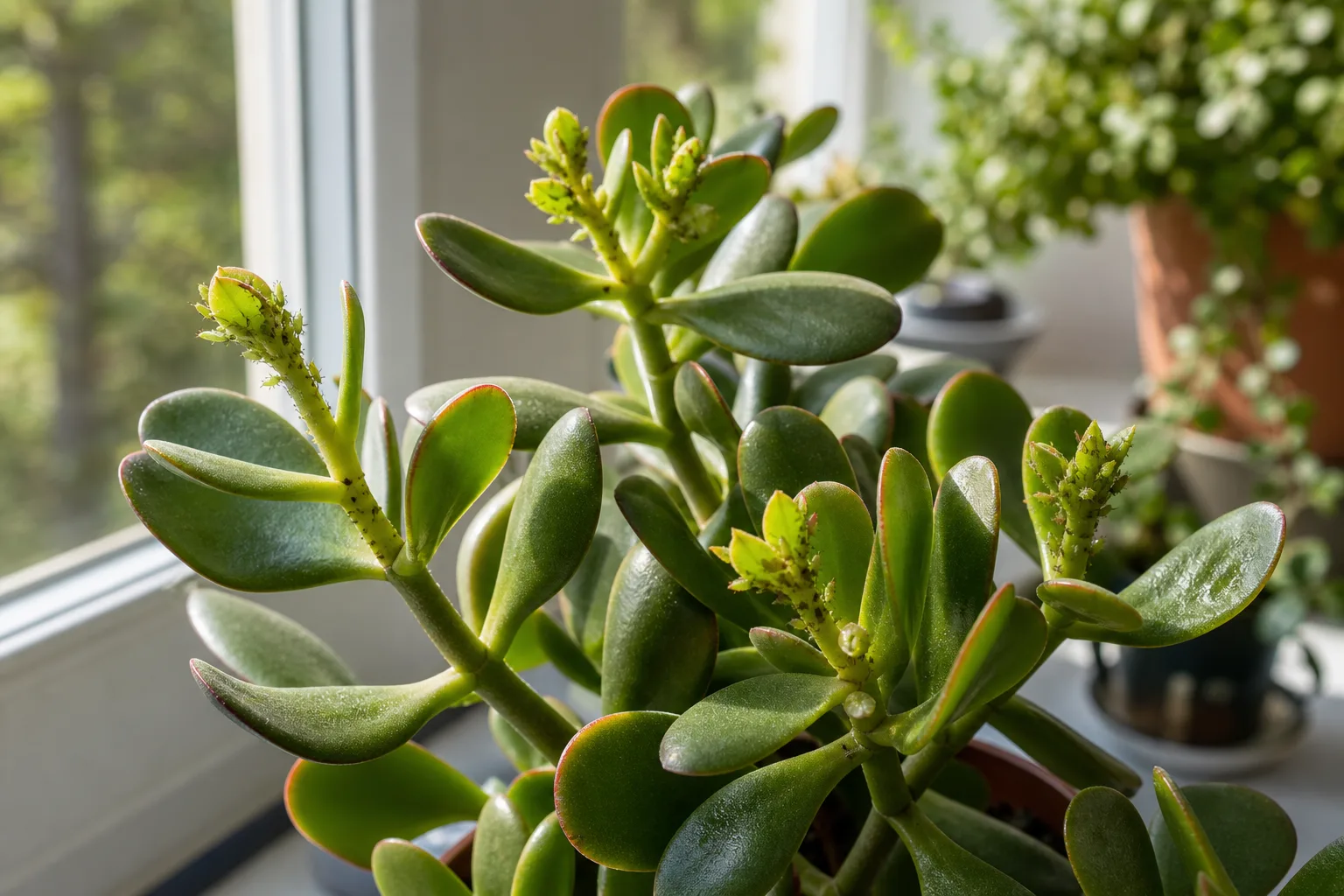
Aphids on Jade Plant cluster on soft new leaves and stem tips, sucking sap and leaving sticky honeydew. First step: isolate the plant and rinse colonies off tender growth with a firm water spray before applying any soap.
Aphids on Jade Plant: Causes, Checks & Fixes
This guide covers aphids on Jade Plant. See also the general Aphids guide, watering, and light pages for this plant.
Aphids on Jade Plant: Causes, Checks & Fixes
Quick answer
Aphids on Jade Plant (Crassula ovata) show up as pinhead-sized insects on the softest new growth-fresh leaf pairs, stem tips, and leaf axils where spring flush is most tender. They pierce tissue, drain sap, and leave sticky honeydew that can turn into black sooty mold on glossy succulent leaves.
First step: isolate the plant and rinse visible colonies off with a firm stream of water. Aim at stem tips and leaf undersides while keeping the pot from sitting in runoff water. Some pests can be removed using a forceful spray of water, and isolating the plant from others limits spread while you treat. Jade stores water in thick leaves and woody stems; a one-time rinse is safe, but you do not want the mix staying soggy for days afterward.
After rinsing, confirm live aphids remain before reaching for sprays. On slow-growing jade, early isolation and repeated inspection beat a single heavy chemical application that can burn succulent foliage.
What aphids look like on Jade Plant
Above soil, aphids are easiest to spot on new growth, not on older firm leaves. On a mature jade tree, look at the crown and branch tips first.
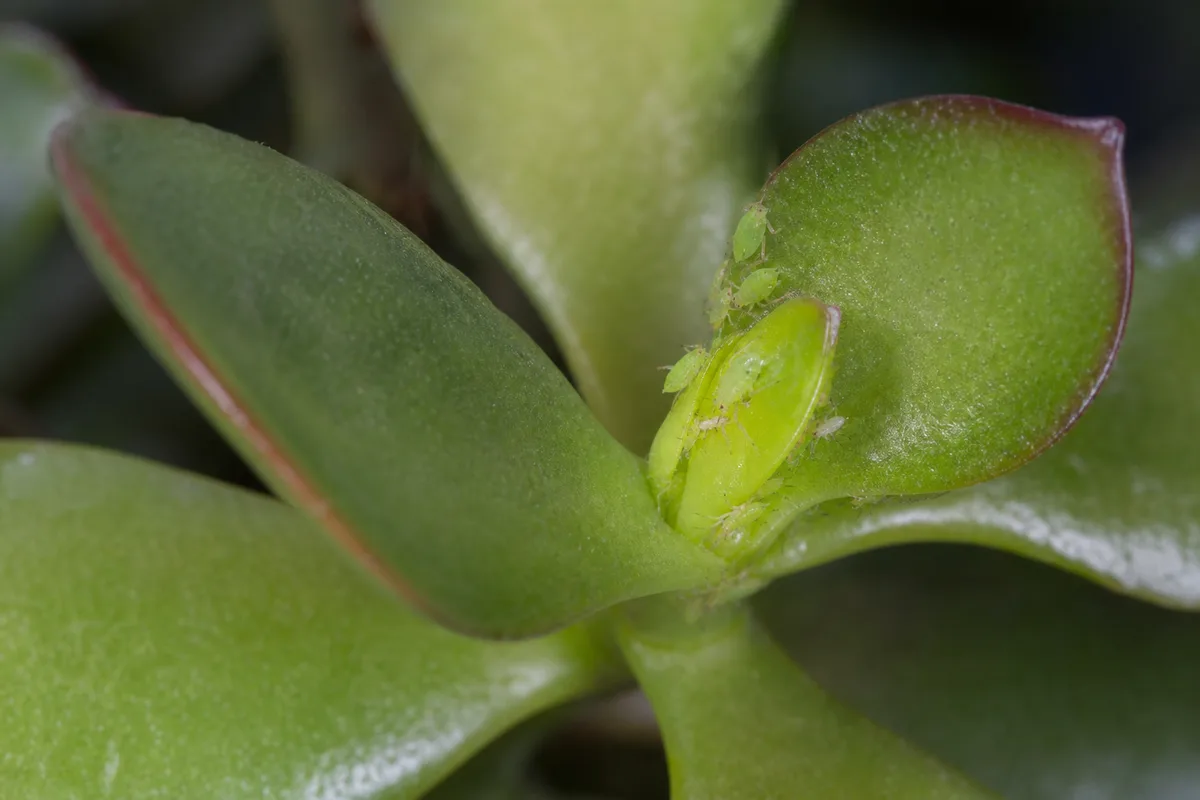
Aphids symptoms on Jade Plant - compare with healthy tissue on the same plant.
Typical signs include:
- Clusters of small pear-shaped insects in green, black, pink, or yellow-often lined up along tender stems
- Curled, puckered, or stunted newest leaf pairs while older leaves still look plump
- Shiny, sticky residue (honeydew) on leaves or the pot rim
- Black sooty mold growing on honeydew-coated foliage
- Ants traveling up the trunk or pot-many species farm aphids for honeydew
Jade leaves are thick and slow to show drought stress, so aphid damage can look like “something is wrong with new growth” before the whole plant wilts. Unlike mealybugs, aphids are naked and usually move when disturbed. Unlike scale, they do not form hard brown shells on stems.
Heavy feeding can leave permanently distorted young leaves. Those leaves will not flatten out again, but the plant can still recover through clean new growth above the damage.
Why Jade Plant gets aphids
Aphids are not a jade-specific disease-they are sap-feeding insects that colonize many houseplants. What makes jade vulnerable is when and where they feed, combined with indoor conditions that lack natural predators.
Spring and summer tender growth is the main target. When jade pushes new leaf pairs after winter rest, stem tips stay soft longer than on fast-growing foliage plants. Aphids reproduce quickly on that tissue, especially when plants get extra nitrogen and push lush, soft shoots.
Stressed or dusty plants attract pests. Jade kept in low light with wet soil grows weak and leggy; tender etiolated tips are easy feeding sites. Dust on glossy leaves blocks light and is associated with more pest problems on indoor collections.
New plants without quarantine are the most common introduction route. Aphids hitchhike on nursery stock, cuttings, or plants briefly set outdoors in warm weather. Because jade is often a long-lived specimen plant, one infested newcomer can spread pests to an entire shelf of succulents.
Warm, stable indoor temperatures let aphid populations build year-round. Outdoors, cold snaps and rain knock numbers down; inside, colonies can double in days on unchecked new growth.
Missouri Botanical Garden lists aphids among potential pests on Crassula ovata, alongside mealybugs, scale, and spider mites. Mealybugs may be more common on jade, but aphids still appear often enough on tender tips to warrant quick action.
How to confirm the cause
Work through these checks before treating:
- Location on the plant - Aphids cluster on newest tips and leaf axils. Nutrient issues or edema usually affect a pattern across older leaves, not just soft shoots.
- Movement and shape - Use a hand lens. Soft-bodied insects that shift when touched are aphids. White cottony clumps point to mealybugs; immobile brown bumps suggest scale.
- Honeydew and ants - Sticky shine plus ant trails strongly supports aphids (or other honeydew producers). Dry crusty spots without stickiness may be mineral deposits from hard water.
- Leaf curl type - Aphid curl wraps around colonies on young tissue. Thrips or virus distortion often scars or streaks leaves differently and may not cluster visibly on stem tips.
- Soil and stem base - Press the lower stem. Firm wood with dry mix suggests a pest-only problem. Soft, mushy base with sour soil is rot-treat drainage, not just insects.
- Nearby plants - Check all succulents on the same shelf. Aphids spread to other houseplants even when only jade looks bad at first.
If you see insects but no stickiness, still treat as aphids until you identify otherwise. If leaves are sticky but you find no insects, look for scale or mealybugs hidden in branch forks jade’s dense crown protects.
First fix for Jade Plant
Isolate the plant and rinse aphids off tender growth with water.
Move jade away from other plants to a sink, shower, or outdoor hose (shade, mild weather). Spray stem tips, leaf undersides, and leaf axils with enough force to knock insects loose, but avoid blasting soil out of the pot. Let the plant drain fully; empty the saucer. Do not water again just because you rinsed foliage.
Repeat the rinse two or three times over a week if you still see live aphids. Physical removal works well on soft-bodied pests and avoids chemical stress on succulent leaves.
Only after rinsing, if colonies persist:
- Wipe dense clusters with a cotton swab dipped in 70% isopropyl alcohol on stem tips and axils
- Apply commercial insecticidal soap labeled for houseplants, covering insects directly-soap has no residual effect and must contact pests
Before a full soap spray on jade, test one branch and wait 24 hours. Succulent leaves-including jade-can show phytotoxicity (spotting or burn) from soaps and oils; use caution with insecticides on succulent leaves, especially in hot sun, high humidity, or on drought-stressed plants. Treat in early morning or evening, not midday on a windowsill.
Repeat soap applications at four- to seven-day intervals for at least two to three cycles to catch newly hatched nymphs. Eggs survive the first spray.
Do not repot, fertilize, or prune heavily on day one unless soil pests are also present. Focus on foliage treatment first.
Step-by-step recovery
Once aphids are confirmed, work in this order:
- Isolate - Keep jade separate until you see no live aphids for two weeks after the last treatment.
- Rinse - Knock off adults and nymphs with water; protect drainage so the root zone does not stay wet.
- Manual cleanup - Swab remaining clusters in tight branch forks where spray misses.
- Insecticidal soap - Apply to labeled directions after a patch test; coat undersides and stem joints.
- Monitor weekly - Inspect tips with a lens; one missed cluster restarts the cycle indoors.
- Treat honeydew - Wipe sticky leaves with a damp cloth. Sooty mold clears once honeydew stops and leaves are cleaned.
- Check neighbors - Treat or monitor every plant that shared the shelf.
- Resume normal care - Return jade to bright light and dry-down watering only after pests are gone. Hold fertilizer until new growth looks firm for two weeks.
If ants are present, controlling aphids removes their food source. Sticky ant barriers on pot feet can help while you treat the plant above.
Recovery timeline
First week: Live aphid counts should drop sharply after isolation and rinsing. Expect some distorted young leaves to remain-that damage is cosmetic.
Two to three weeks: With repeated soap cycles, you should find no new colonies on tips. Honeydew stops; sooty mold stops spreading.
Four to eight weeks: Clean new leaf pairs emerging firm and glossy are the best success sign on slow-growing jade. Old curled leaves can be trimmed for appearance once the plant is pest-free.
Long term: Woody stems rebuild slowly. A heavily stripped branch may look sparse for a season before filling in. That is normal on Crassula ovata-patience matters more than forcing growth with fertilizer.
Worsening signs: Colonies spread to older woody stems despite treatment, stems soften at the base, or leaves yellow and drop with wet soil-re-check for rot or a second pest, not aphids alone.
Lookalike symptoms
- Mealybugs on Jade Plant - White cottony masses in leaf axils and branch forks; slower-moving, waxy coating. Alcohol swab turns bodies gray-orange when dead.
- Scale insects - Brown or tan immobile bumps on stems and leaf undersides; no visible legs. Scraping reveals soft tissue underneath.
- Spider mites - Fine stippling and webbing, often in dry heat; insects are tiny dots, not plump pear shapes on tips.
- Thrips - Silvery scars and distorted leaves; insects are slender and fast, harder to see without a lens.
- Edema - Bumpy or corky patches on leaves from overwatering on Jade Plant in cool weather; no insects or honeydew.
- Nutrient excess - Soft pale growth from too much fertilizer can curl slightly but lacks insect clusters and stickiness.
What not to do
Do not use harsh dish soap mixes as a default on jade. Homemade detergents burn succulent leaves more often than commercial insecticidal soap. University of Minnesota Extension advises against mixing homemade soap products for indoor plants because of phytotoxicity risk.
Do not apply horticultural oil or soap in Jade Plant light guide or above 90°F-high temperatures increase phytotoxicity risk. Heat-stressed jade is more likely to spot or drop leaves.
Do not stop after one spray. Aphid eggs hatch within days; a single application rarely clears an indoor infestation.
Do not return an isolated plant to the collection early. Two pest-free weeks is a minimum after the last live insect.
Do not overwater while treating. Rinsing plus wet soil from extra watering invites root rot on jade, which kills faster than aphids.
Do not fertilize to “help recovery” while pests are active. Nitrogen pushes soft growth aphids prefer.
Wear gloves when handling sap-heavy stems; jade plant is toxic to cats and dogs. Wash hands and tools after pruning infested tissue.
How to prevent aphids next time
Quarantine every new plant for at least two weeks before it joins your jade or succulent shelf. Inspect tips and axils on day one and again before merging collections.
Inspect weekly during spring growth. A five-minute check of newest leaves catches colonies before honeydew spreads.
Keep jade in strong light with fast-draining succulent mix in terracotta. Firm, slow growth is less attractive than weak etiolated shoots.
Water only when the top inch of mix is dry, and cut back sharply in winter dormancy. Overwatered jade stresses roots and produces soft tissue pests colonize faster.
Avoid excess nitrogen fertilizer during active growth. If you feed, use a diluted balanced product at modest intervals-not every watering.
Improve airflow between pots so leaves dry after rinsing and honeydew does not linger.
Monitor the whole collection when one plant shows pests. Aphids on jade often mean unchecked neighbors nearby.
When to worry
Escalate treatment when colonies cover multiple branch tips, ants farm the entire crown, or sooty mold blocks light on most new leaves. Sap loss on a slow-growing woody jade adds up over weeks, even if the plant does not wilt immediately.
Seek a different diagnosis if stems soften at the base, soil smells sour, or leaves turn mushy while mix stays wet-that is rot or overwatering, not aphids alone.
If repeated labeled treatments fail and insects persist on older woody stems, consider professional identification or discarding severely infested small cuttings before they spread to a large specimen tree.
Conclusion
Aphids on Jade Plant are manageable when you catch them on tender spring growth before colonies spread through the crown. Isolate, rinse, confirm live pests, then treat with caution on succulent leaves-patch-test soap, repeat on schedule, and judge success by clean new leaf pairs, not by old distorted tissue. Prevention comes from quarantine, weekly tip checks, strong light, and firm growth-not from spraying once and assuming indoor aphids disappear on their own.
When to use this page vs other Jade Plant guides
- Jade Plant watering guide - Use for routine moisture checks before assuming aphids is the main issue.
- Jade Plant problems hub - Browse all 49 common issues on this species.
- Ants on Plant on Jade Plant - Different entry point when symptoms overlap with aphids.
- Mealybugs on Jade Plant - Different entry point when symptoms overlap with aphids.
- Yellow Leaves on Jade Plant - Different entry point when symptoms overlap with aphids.