Compacted Soil on Jade Plant: Causes, Checks & Fixes
Quick answer
Compacted soil on jade traps moisture in a dense peat plug while thick leaves still look plump. First step: stop watering, probe the mix with a finger or skewer, and unpot if you meet a hard wet core-do not add more water to soften it.
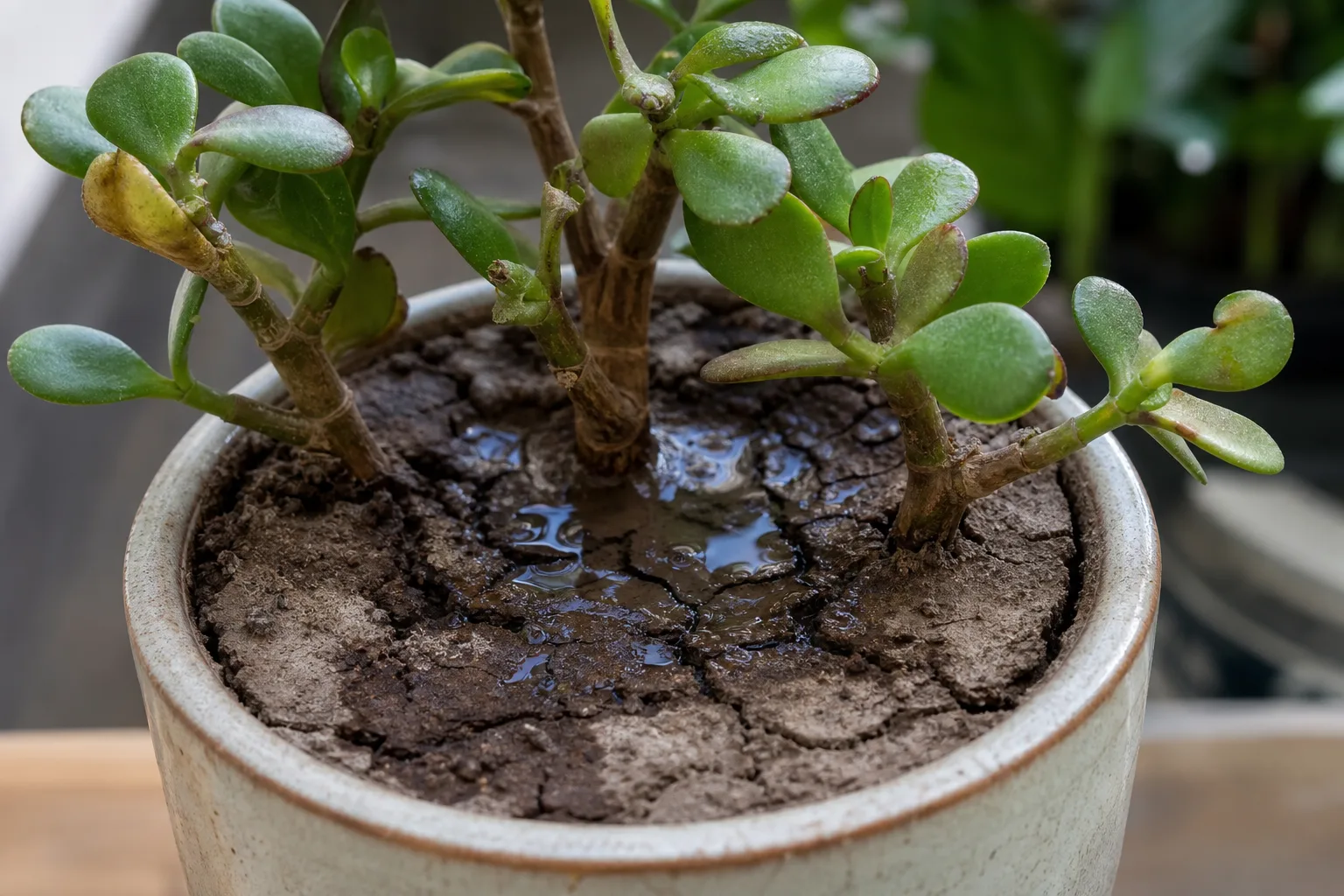
Compacted Soil on Jade Plant: Causes, Checks & Fixes
This guide covers compacted soil on Jade Plant. See also the general Compacted Soil guide, watering, and light pages for this plant.
Compacted Soil on Jade Plant: Causes, Checks & Fixes
Quick answer
Compacted soil on jade (Crassula ovata) traps moisture in a dense peat plug while thick leaves and woody stems still look plump. Water may bead on the surface or run down the pot sides without soaking the center. Roots lose oxygen in the hard wet core even when you water lightly.
First step: stop watering and probe the mix. Push a finger or dry wooden skewer to mid-depth. A hard, dark, clinging plug that resists entry confirms compaction-not a cue to water more. If the probe meets resistance and the pot has stayed heavy for weeks, plan to unpot and repot into fresh gritty mix rather than trying to soften the brick from above.
Jade is a succulent native to rocky South African slopes that stores water in leaves, stems, and roots. That storage masks root trouble longer than thin-leaved houseplants. Missouri Botanical Garden notes jade is intolerant of moist, poorly-drained soils indoors-compacted mix mimics chronic overwatering even when your calendar says otherwise. For mix recipes and pot pairing, see the jade soil guide; for mushy roots after unpotting, see root rot.
What compacted soil looks like on Jade Plant
Compaction shows in the substrate and pot behavior first-not always in the leaves.
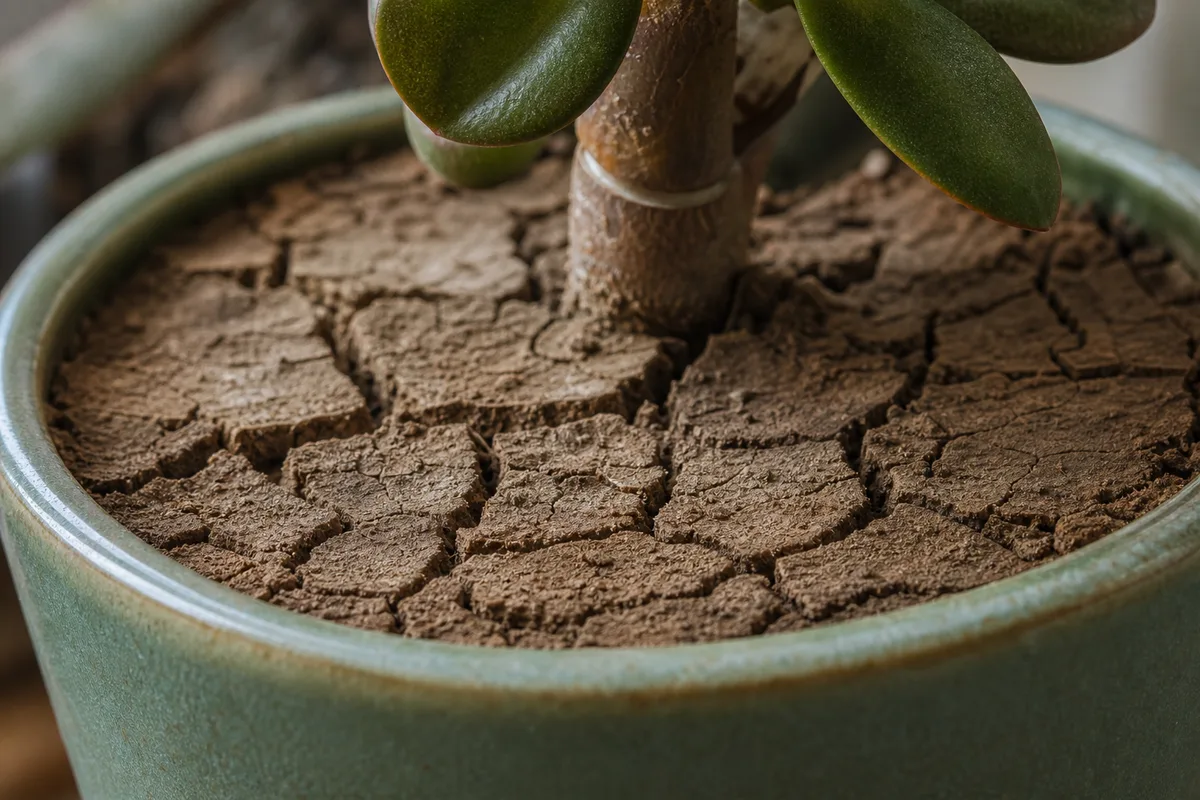
Compacted Soil symptoms on Jade Plant - compare with healthy tissue on the same plant.
Surface and watering clues:
- Water beads on dry crust or channels down the inside wall without wetting the center
- White mineral rings on the pot rim from repeated top watering without flushing
- Mix surface looks dusty and repels the first splash when you do water
- Pot feels heavy for two or more weeks after a single thorough drink
Probe and smell clues:
- Finger or skewer meets a hard wet plug at mid-depth-not loose crumbly mix
- Skewer pulls out dark and clinging when you expected dry grit
- Musty or sour odor from drainage holes after the mix should have aired out
Plant clues (often delayed on jade):
- New leaf pairs stall while lower leaves may yellow and drop easily
- Leaves stay plump for weeks-internal water storage hides root suffocation
- Lower stem may stay firm until advanced rot; softness at the base is late-stage
- Fertilizer salts crust on soil while roots stay in anaerobic peat below
On unpotting: a solid root mat pressed against dark, dense mix with few white tips. Old peat may smell sour at the bottom while the top inch looked merely dry. This differs from root-bound circling in loose depleted mix-compaction means the substrate itself has collapsed.
Why Jade Plant suffers in compacted soil
Jade evolved shallow fibrous roots in rocky pockets where rain drains in minutes. Indoors, fine peat and compost in standard potting mixes compress under repeated watering and root pressure, eliminating the air pockets roots need between drinks.
Peat and organic breakdown over time. Even a good succulent blend loses structure as organic matter decomposes-typically within two to three years in a warm indoor pot. What started as open mix becomes a dense water-holding plug. The jade soil guide recommends refreshing when mix compacts, repels water, or smells sour.
Oversized pots extend wet time. Extra soil volume around a small root ball stays saturated longer. Compacted outer mix plus unused wet inner ring is a common stall pattern-overlap with pot too large.
Top watering without flushing leaves mineral crust on the surface while salts and collapsed peat pack the root zone. Channeling worsens: water runs around the brick, not through it.
Winter dormancy slows dry-down. Jade uses less water from fall through late winter when growth is semi-dormant and watering should be restricted. The same compacted mix that barely worked in summer can stay anaerobic for weeks in cool dim conditions-see jade watering for seasonal rhythm.
Garden soil or heavy all-purpose mix in containers compacts faster than gritty succulent blends. Clemson HGIC warns that root rot results from soil that does not drain quickly-compaction creates exactly that failure mode without you overwatering on purpose.
How to confirm the cause
Work through these checks in order. One skewer probe beats guessing from leaf color alone.
- Drainage speed - Pour water slowly. In healthy jade mix it should soak in within seconds and exit drainage holes promptly. Pooling on top for minutes signals surface crust or compaction.
- Probe resistance - Dry skewer to mid-depth. Hard wet core that resists and pulls out dark confirms dense mix, not drought.
- Pot weight vs. dry-down - Heavy pot many days after watering with firm plump leaves suggests water trapped in substrate, not stored in foliage alone.
- Smell at drainage holes - Sour anaerobic odor means discard mix; do not fluff in place.
- Unpot inspection - Gently remove the plant. Dark solid peat plug, few white root tips, or mushy brown roots each change the next step.
- Mix age and history - Same peat-heavy substrate for three or more years without refresh; or water always poured on top without occasional deep flush.
Cross-check lookalikes before repotting:
| Pattern | More likely compaction | More likely something else |
|---|---|---|
| Probe | Hard wet plug, dark clinging skewer | Loose dry mix throughout → underwatering |
| Drainage hole | Open, water still pools on top | Blocked or absent hole → poor drainage |
| Watering habit | Light drinks on calendar, pot still heavy | Heavy drinks on wet mix → overwatering |
| Roots on unpot | Dense peat brick, firm roots | Solid circling mat in loose mix → root bound |
| Stem base | Firm until late | Soft black base, mushy roots → root rot |
First fix for Jade Plant
Stop watering. Compacted mix will not open up with more moisture-it deepens anaerobic conditions around roots.
Unpot, discard dense or sour substrate, and repot into fresh gritty succulent mix sized to the root mass-not the same soil stirred loosely on top. Jade needs very well-drained soil to prevent root rot. Reusing a collapsed peat plug, even amended with a handful of perlite, leaves the problem intact.
Blend roughly 40% cactus or succulent base, 30% perlite or pumice, and 30% coarse grit by volume-or follow the soil guide squeeze test until the mix crumbles when squeezed. Clemson also suggests one part sterilized organic soil, one part sphagnum peat, and three parts coarse sand by volume for DIY blends.
Choose a pot only 1 to 2 inches wider than the root ball with a drainage hole. Terracotta dries compacted recovery faster than glazed ceramic. Place in four or more hours of direct sun daily so the plant uses water and the mix airs between drinks.
Step-by-step repot and recovery
- Stop water for several days unless stems are actively softening-slightly dry roots are easier to inspect than a muddy brick.
- Unpot gently - Support the woody stem; tap the rim. Never pull from branches. Note sour smell and root color.
- Discard all dense or sour mix - Do not reuse. Anaerobic peat harbors pathogens that caused root and stem rot on jade.
- Assess roots - Trim mushy brown tissue with clean shears. Tease or score a tight circling mat so new tips can reach fresh grit. Let cut roots air-dry 24 hours if you removed rot tissue.
- Select right-sized pot - Match volume to roots, not canopy spread. Jade is top-heavy but does not need a large wet reservoir.
- Fill with fresh gritty mix - One homogeneous blend top to bottom; skip bottom gravel layers that create perched wet zones (see soil guide).
- Plant at the same depth - Do not bury the stem. Settle mix lightly without packing it tight.
- Water once lightly until a small amount drains; empty the saucer. Wait 5 to 7 days before the next drink so roots callus-full repotting workflow covers seasonal timing.
- Hold fertilizer until firm new leaf pairs appear-usually four to six weeks after spring repot.
Wear gloves when handling cut roots or moldy mix. Jade is toxic to cats and dogs; wash hands before touching pets or food surfaces.
Recovery timeline and warning signs
Mild compaction caught before rot: new firm leaf pairs often appear within three to six weeks after spring repot into open mix and correct dry-down watering. Judge progress by new growth and stable stem bases, not old yellow leaves re-greening.
Moderate binding plus compaction: one to two full dry-down cycles in terracotta with strong light before steady extension resumes.
Advanced anaerobic damage: stem softness, spreading black at the base, or mostly mushy roots on unpotting may take months to salvage-or fail despite repot. Escalate to the root rot protocol if tissue softens after repot.
Signs recovery is working: probe meets loose mix at depth; pot lightens within days after watering; white root tips visible at drainage holes; new leaf pairs firm and glossy.
Signs the problem is worsening: stem base indents under gentle pressure; sour smell returns within a week of repot; leaves drop in clusters on wet heavy pot; new growth shrivels despite wet mix.
Lookalike symptoms
Overwatering in still-open mix - Mix is crumbly at depth but you water on a calendar while growth is slow in winter. Fix watering rhythm first; substrate may not need replacement yet. See overwatering.
Poor drainage from the start - New plant in straight all-purpose soil or a pot with no hole. Water exits slowly from day one. Compaction is a time-based collapse of mix that once worked. See poor drainage when the issue is mix choice or hardware, not aged peat.
Root-bound without compaction - Circling roots in loose depleted mix; water runs through in seconds. Refresh and size up one step-roots, not peat density, are the limiter.
Normal winter rest - Firm stems, minimal new leaves, slow dry-down November through February on appropriate grit. Do not force a December repot for compaction that only shows as heavy pot in summer.
What not to do
Do not water more to “soften” compacted mix-that deepens anaerobic conditions. Do not add a layer of perlite on top while leaving the dense plug below. Do not repot into a larger peat-heavy bag without coarse amendment. Do not fluff sour-smelling mix in place-discard it. Do not fertilize stressed jade to “push growth” through dead roots. Do not yank the plant by branches when unpotting a top-heavy specimen.
How to prevent compacted soil next time
Refresh mix every two to three years, or sooner when water channels, crust builds, or probe resistance returns. Organic components break down and lose air pockets jade requires.
Use gritty succulent mix from the start-at least 30 to 50 percent perlite, pumice, or coarse sand by volume if you amend bagged soil. Run the squeeze test in the soil guide.
Match pot size to roots, not future canopy dreams. Oversized containers hold excess wet mix jade roots never colonize.
Water deeply when dry, then let dry-down complete-top inch dry within roughly three to seven days in a typical indoor room signals healthy structure. Flush occasionally in growing season if mineral crust appears.
Prefer terracotta in humid homes; it breathes and shortens wet time after thorough watering.
Inspect with a monthly skewer probe during routine care-resistance creeping back is an early refresh cue before stems soften.
When to worry
Escalate immediately if the stem base softens, blackening climbs from soil line, or unpotting shows mostly mushy roots-follow root rot rescue after repotting into dry gritty mix. Contact your local cooperative extension office if decline continues after a correct repot in spring.
Jade care cross-check
Compaction turns a drought-adapted jade into a bog plant by accident. Thick leaves can look healthy while roots suffocate below-probe the mix, not only the foliage. Gritty open substrate, right-sized terracotta, strong light, and seasonal dry-down are baseline culture, not optional extras. Baseline hub: jade plant overview.
Related Jade Plant Guides
- Best soil for jade plant - gritty mix ratios, squeeze test, pot pairing
- Repotting jade plant - timing, step-by-step, aftercare
- Root rot on jade - salvage when stems soften after compaction
- Poor drainage - wrong mix or blocked holes from day one
- Overwatering - calendar watering on mix that still drains
- Jade watering - dry-down rhythm and winter dormancy
Conclusion
Compacted soil suffocates jade roots in a dense peat plug while stored leaf water masks the damage. Confirm with probe resistance and pot weight, stop watering, discard sour or brick-like mix, and repot into fresh gritty succulent substrate in a right-sized terracotta pot. Instant soak-in after watering-and a light pot within days-is the simple test that compaction is actually fixed.