Edema on Watermelon Peperomia: Causes, Checks & Fixes
Quick answer
Edema on Watermelon Peperomia is a water-uptake imbalance-not a fungus. Inconsistent watering plus high humidity causes blister-like bumps on leaf undersides that scar brown. First step: water only when the top inch of soil dries and stop misting the crown.
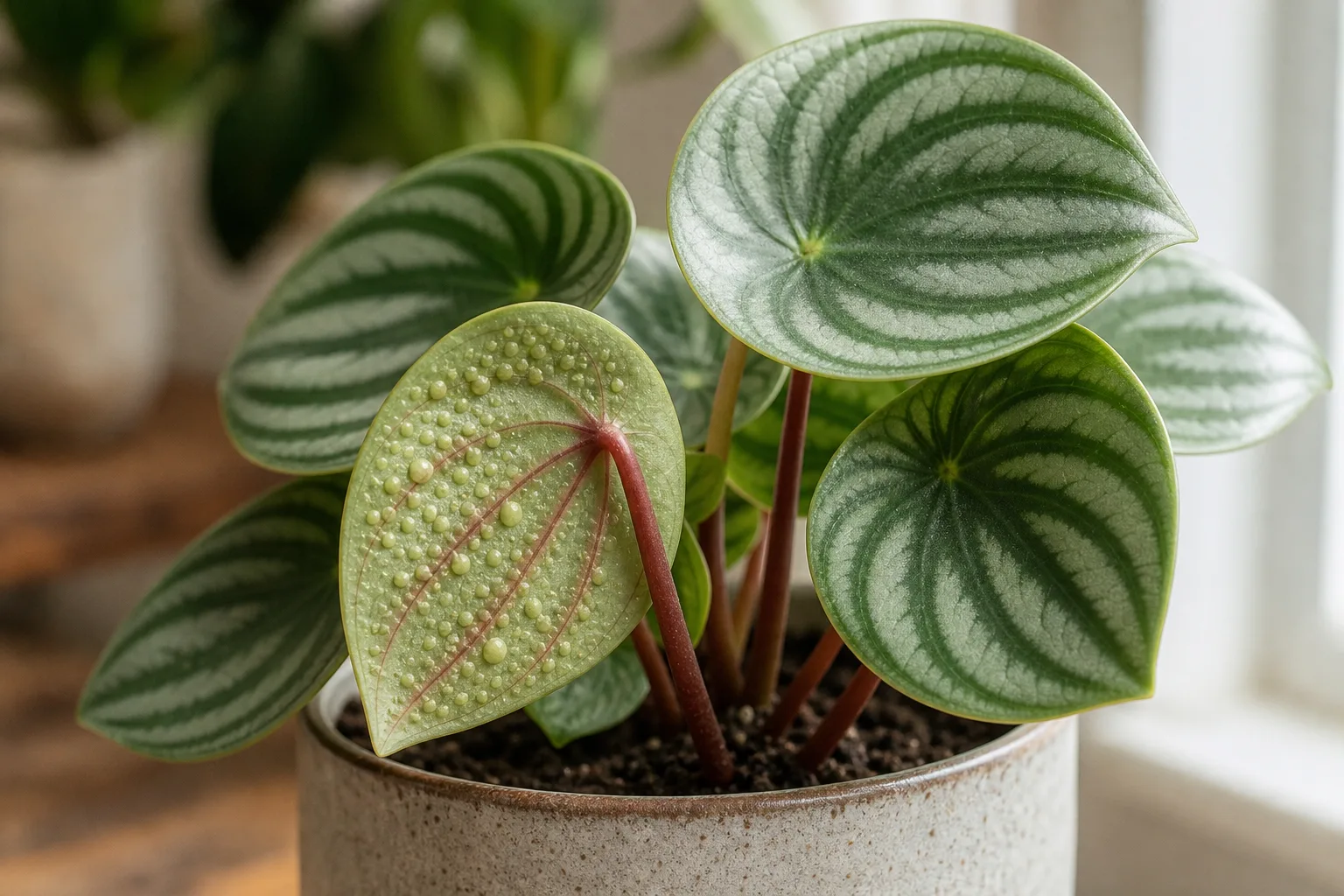
Edema on Watermelon Peperomia: Causes, Checks & Fixes
This guide covers edema on Watermelon Peperomia. See also the general Edema guide, watering, and light pages for this plant.
Edema on Watermelon Peperomia: Causes, Checks & Fixes
Quick answer
Edema on Watermelon Peperomia (Peperomia argyreia) is a physiological water imbalance, not a fungus or pest. Roots take up water faster than the fleshy, waxy leaves can release it through transpiration. That internal pressure creates small blister-like bumps on leaf undersides that burst and scar into brown, corky spots-often on the silver-striped foliage that makes Watermelon Peperomia overview distinctive.
First step: water only when the top inch of soil is dry, and stop misting the crown. Edema on peperomias almost always traces to inconsistent watering combined with high humidity around leaves while the root zone stays warm and moist. Stabilize one dry-down rhythm before Watermelon Peperomia repotting guide, fertilizing, or pruning heavily spotted leaves.
What edema looks like on Watermelon Peperomia
On this species, edema usually shows on older or lower round leaves first-the ones with dark green bands and silver stripes. Typical signs include:
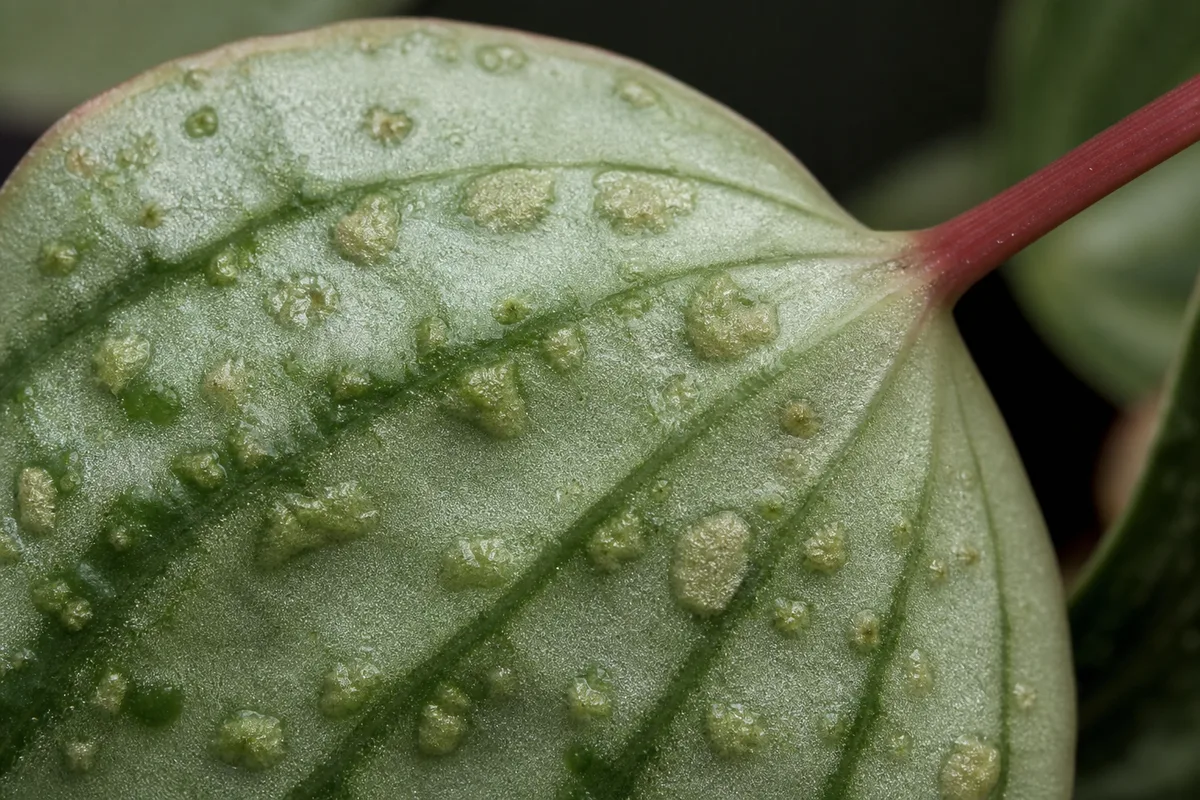
Edema symptoms on Watermelon Peperomia - compare with healthy tissue on the same plant.
- Small translucent or water-filled bumps on leaf undersides, often clustered along veins
- Bumps that feel slightly raised and blister-like when you run a finger across them
- Lesions that turn tan, then brown and corky, like tiny scabs on the striped surface
- Spots that stay on one leaf without spreading leaf-to-leaf like a fungus would
UW-Madison Extension describes edema blisters as lighter than surrounding tissue when backlit, eventually scarring into a corky texture. On Watermelon Peperomia, those scars disrupt the clean watermelon pattern but rarely kill the plant unless the underlying watering problem also triggers rot.
What edema does not look like:
- Mealybugs leave cottony white wax in leaf axils and sticky honeydew-not isolated fluid blisters
- Fungal leaf spot spreads with yellow halos or concentric rings and often follows water sitting on leaves in low light
- Sunburn creates flat bleached or tan patches on upper surfaces exposed to direct sun, not raised undersurface blisters
- root rot on Watermelon Peperomia yellows whole leaves and softens the crown; edema alone keeps stems firm while only the leaf surface scars
Why Watermelon Peperomia gets edema
Peperomia argyreia evolved as a compact tropical understory plant with succulent-like leaves on delicate red petioles and a relatively small root system. That anatomy makes it sensitive to the classic edema trigger: roots absorbing water faster than leaves release it.
Missouri Botanical Garden notes that overwatering can produce water-soaked spots and blisters (oedema) when soil stays wet while the plant cannot transpire effectively. On Watermelon Peperomia, several home-care patterns create that mismatch:
Inconsistent watering. Alternating heavy soaks with long droughts confuses uptake. A sudden soak after dry soil pushes roots to absorb quickly while humid air or poor light limits leaf water loss. NC State Extension lists this species as intolerant of very wet soil-yet many growers water on a calendar rather than checking dryness.
High humidity at the leaf surface. Watermelon Peperomia appreciates moderate humidity, but misting the rosette while soil is already moist traps moisture on fleshy leaves without helping roots. Enclosed terrariums, glass cabinets, and crowded plant shelves raise relative humidity around foliage while the pot stays damp below.
Low light and poor airflow. Wisconsin Horticulture Extension links edema to high relative humidity, low light intensity, cool air, and poor ventilation-all conditions that reduce transpiration. A peperomia in a dim bathroom or interior corner may stay wet at the roots while leaves cannot shed excess water.
Oversized pots and heavy mix. This species thrives slightly pot-bound with good drainage. An oversized container or peat-heavy mix holds moisture around small roots for days, keeping uptake high even when you think you watered lightly.
Seasonal shifts. Cooler cloudy weeks reduce water use, but many growers maintain summer watering frequency into winter-warm moist soil plus slower transpiration is a common edema window indoors.
How to confirm the cause
Work through these checks before treating edema as a disease:
- Bump texture and location - Edema sits on leaf undersides as raised blisters along veins. Mealybugs cluster in axils with wax; scale looks like flat brown disks on petioles.
- Soil moisture pattern - Insert a finger 2–3 cm deep. Has the top inch stayed wet for several days, or does the pot swing from soggy to completely dry? Both patterns support edema when humidity is high.
- Recent watering history - Note whether a heavy soak followed a dry spell in the past week. That surge-and-stall cycle is a classic trigger on peperomias.
- Humidity and airflow - Is the plant in a closed display, misted daily, or grouped tightly with other plants? Poor air movement around the rosette increases risk.
- Light level - Dim rooms slow transpiration. Confirm Watermelon Peperomia light guide-not deep shade where soil also dries slowly.
- Crown and root check - Press the base of red petioles where they meet soil. Firm tissue with corky leaf spots points to edema alone. Soft mushy crowns or sour-smelling mix suggest overlapping root rot-inspect roots before assuming cosmetic edema.
- Spread pattern - Edema scars stay on leaves that formed during stress; they do not spread with fuzzy margins week to week. Spreading spots with halos suggest fungus instead.
If bumps are blister-like, soil moisture has been uneven, humidity is high, and the crown is firm, edema is the likely diagnosis.
First fix for Watermelon Peperomia
Let the top inch of soil dry completely, then water thoroughly once-and stop misting the crown.
This single adjustment reduces root uptake pressure while you improve conditions for transpiration. Empty the saucer within 30 minutes so the pot is not sitting in stale water. Move the plant to bright indirect light with gentle airflow if it has been in deep shade or a stagnant corner.
Do not add water because leaves look spotted-extra moisture worsens edema. Do not reach for fungicide; this is not an infection. Do not repot on day one unless soil stays wet for a week despite skipped watering or roots smell sour.
Hold fertilizer until new growth looks healthy for two weeks. Salt stress on already-stressed tissue does not help recovery.
Step-by-step recovery
After the initial dry-down and watering reset:
- Maintain a check-when-dry rhythm - Water only when the top 2–3 cm of mix feels dry. In winter or dim rooms, that may mean less frequent drinks than in bright summer growth.
- Improve airflow - Space the pot away from walls and crowded shelves. A small fan on low across the room helps leaf surfaces dry without blasting the delicate petioles.
- Switch humidity methods - Use a pebble tray or humidifier for moderate ambient humidity instead of spraying water directly onto leaves when soil is moist.
- Confirm drainage - Verify drainage holes are open and mix contains perlite or coarse sand. NC State recommends allowing soil to dry to the touch at the top before watering and reducing winter frequency.
- Trim only for aesthetics - Remove leaves that are mostly corky if they bother you. Leave partially spotted leaves that still photosynthesize until new growth replaces them.
- Monitor new leaves for two weeks - Clean emerging striped foliage means the fix is working. Fresh blisters on new leaves mean soil is still too wet or humidity too high at the leaf surface.
- Repot only if soil never dries - If the top inch stays wet for seven or more days despite reduced watering, unpot and inspect roots. Repot into a slightly smaller container with airy mix-but only after confirming chronic sogginess, not as a first response to cosmetic spots.
Recovery timeline
Edema stops forming on new growth within one to two weeks once watering and airflow stabilize. Existing corky brown scars on older leaves do not heal-those cells are permanently damaged. Expect the plant to look partly blemished for months until older leaves are replaced naturally.
Judge success by:
- No new blisters on emerging leaves at the crown
- Firm red petioles and upright striped foliage
- Soil drying predictably between waterings
Signs the problem is worsening:
- New blisters appearing weekly on fresh growth
- Yellowing lower leaves with soft crown tissue
- Soil that smells sour or stays waterlogged despite reduced watering
Lookalike symptoms to rule out
Mealybugs coat axils in white wax and leave sticky honeydew. Alcohol dab tests remove insects; edema bumps stay fixed in the leaf tissue.
Fungal leaf spot shows dark spots with yellow halos that enlarge over time, often after overhead watering in low light. Edema scars are corky and stable once formed.
Oedema vs. sunburn: Direct sun bleaches or tans upper leaf surfaces and fades striping. Edema concentrates on undersides as raised blisters.
Root rot and crown rot cause whole-leaf yellowing, wilting, and mushy stems at the soil line. NC State warns that overwatering causes root rot quickly on this species. Edema alone leaves the base firm while only leaf surfaces scar.
Spider mite stippling creates fine pale dots and webbing on undersides in dry air-the opposite humidity pattern from edema, though both can stress striped leaves.
Mistakes to avoid
Do not mist the rosette daily while soil stays moist-that combines two edema triggers on fleshy peperomia leaves.
Do not increase watering to “push through” spotted foliage. More root uptake without matching transpiration adds blisters.
Do not assume every brown spot is fungal and spray fungicide. Misdiagnosis wastes time and adds unnecessary chemicals to a pet-safe plant.
Do not repot into a larger pot to “fix” watering. Extra soil volume stays wet longer around this small root system.
Do not place the plant in direct south window sun to “dry leaves faster.” Watermelon Peperomia scorches in direct light; bright indirect exposure supports healthy transpiration without sunburn.
Watermelon Peperomia care cross-check
Edema is a symptom of culture mismatch, not bad luck. Align these basics while recovering:
- Light: Bright indirect light-east or north window, or filtered south light. Dim rooms slow transpiration and keep pots wet longer.
- Water: Allow the top inch to dry; reduce frequency in cool months. The pot should feel noticeably lighter before the next soak.
- Soil: Well-draining mix with perlite or coarse sand. Heavy peat alone holds water this species cannot use quickly enough.
- Pot size: Slightly snug containers dry more predictably than oversized pots.
- Humidity: Moderate ambient humidity (roughly 40–60%) without wetting leaves on already-moist soil.
When these align, edema rarely returns.
How to prevent edema next time
Prevention is about keeping water uptake and leaf water loss in balance:
- Check soil dryness before every watering instead of following a fixed calendar
- Water in the morning so mix drains before cool evening hours raise humidity around leaves
- Empty saucers within 30 minutes after watering
- Use pebble trays or humidifiers rather than crown misting when soil is wet
- Keep the plant in bright indirect light with gentle air movement
- Reduce watering during cloudy winter weeks when growth slows
- Avoid oversized pots and dense moisture-retentive mix
Existing corky scars remind you what stressed leaves looked like; clean new striped growth confirms you have the rhythm right.
When to worry
Edema by itself is usually cosmetic-Wisconsin Extension notes it is typically not fatal though it reduces appearance. Worry and escalate when:
- The crown feels soft or petioles collapse at the base
- Soil smells sour or roots are brown and mushy on inspection
- Yellowing spreads beyond a few lower leaves while soil stays wet
- New blisters keep forming after two weeks of corrected watering
Those signs point toward root or crown rot, which can kill Watermelon Peperomia quickly. Trim decay, repot into dry airy mix, and withhold water until tissue firms-treat rot, not edema alone.
Conclusion
Edema on Watermelon Peperomia looks alarming on striped leaves but tells a simple story: the plant drank faster than it could breathe out water. Confirm blister-like undersurface bumps with uneven watering and high humidity, then fix the rhythm-dry top inch, no crown misting, better light and airflow. Old corky scars stay, but new foliage can emerge clean within weeks once culture matches this compact peperomia’s needs.
When to use this page vs other Watermelon Peperomia guides
- Watermelon Peperomia watering guide - Use for routine moisture checks before assuming edema is the main issue.
- Watermelon Peperomia problems hub - Browse all 28 common issues on this species.
- Yellow Leaves on Watermelon Peperomia - Different entry point when symptoms overlap with edema.
- Brown Tips on Watermelon Peperomia - Different entry point when symptoms overlap with edema.