Watermelon Peperomia Propagation: 3 Methods Guide
Watermelon Peperomia Propagation: 3 Methods Guide
Watermelon Peperomia Propagation: 3 Methods Guide
Watermelon peperomia propagation is one of the most satisfying projects in compact houseplant care because the plant cooperates with methods that would fail on many other species. Peperomia argyreia - the botanical name behind the striped “watermelon” leaves and distinctive red petioles - can restart from a leaf stalk buried in moist mix, from a leaf blade sliced horizontally across its veins, from a short stem section with nodes, or from natural offshoots separated during repot. You are working with a slow-growing Piperaceae understory plant from South American tropical forests, not a finicky orchid or a succulent that demands surgical precision. The challenge is moisture discipline, not magic.
The Missouri Botanical Garden lists tip, stem, and leaf cuttings as reliable propagation methods for watermelon peperomia. Leaf propagation produces the most plants from the least material and is the classic watermelon peperomia technique. Stem cuttings give you a small upright plant sooner when you have branching growth to spare. Division delivers instant, rooted individuals when a mature clump has developed side crowns - often discovered only when you slide the root ball out of the pot. This guide walks through each method with the timing, humidity, and aftercare details that separate rooted plantlets from mushy compost.
Why Watermelon Peperomia Is Worth Propagating
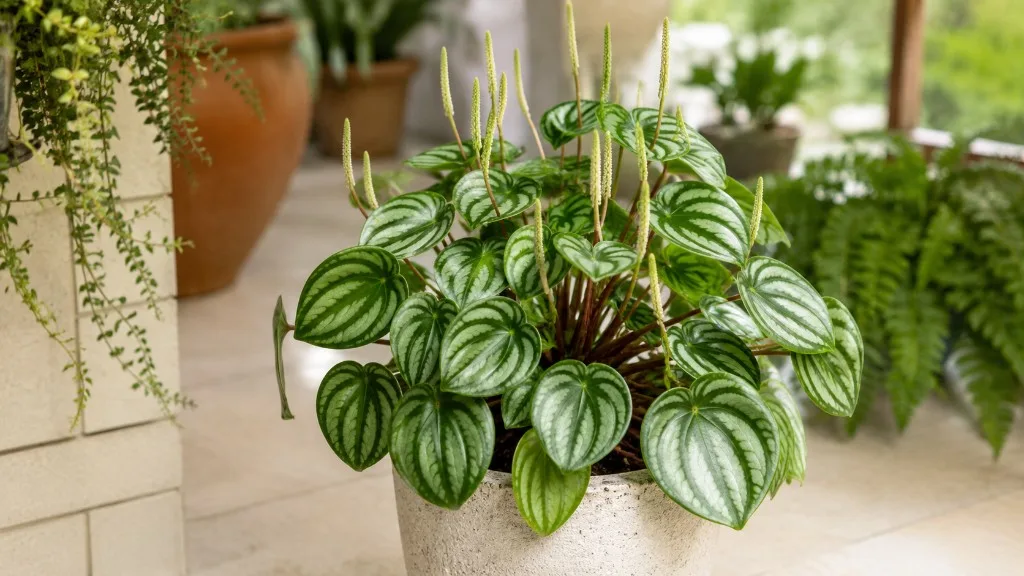
Watermelon peperomia earns its place on windowsills because the foliage carries clear patterning - silver-green stripes on rounded leaves held on pink-red petioles - without demanding greenhouse conditions. Propagation lets you multiply that display for gifts, fill a trailing cluster pot, or replace a plant that lost lower leaves to age or rough handling. Retail specimens are widely available, but home propagation preserves a cultivar you already know thrives in your light and Watermelon Peperomia watering guide, and it costs little beyond a few small pots and fresh mix.
The species is also compact and pet-friendly in most households. Peperomias are widely listed as non-toxic to cats and dogs by the ASPCA, which matters when you are rooting cuttings on a kitchen counter or passing divisions to friends with curious pets. That does not make leaves edible, but it removes one common barrier to keeping propagations in shared living spaces. Slow growth after rooting is normal - mature height is often around 20 cm (8 inches) in cultivation - so patience during the first two months is part of the deal, not a sign of failure.
How Peperomia argyreia Roots From Small Tissue
Unlike vining pothos that demands a node on every cutting, watermelon peperomia exploits adventitious buds along leaf veins and at the petiole base where it meets the stem. When you bury a cut leaf edge or insert a petiole into moist, airy soil, those dormant cells can differentiate into roots and tiny plantlets under warm, humid, bright indirect conditions. The BBC Gardeners’ World guidance for Peperomia argyreia notes that leaf cuttings are cut in half and inserted cut-side down into compost until rooted - a method rooted in how the plant regenerates in nature when leaf fragments contact damp forest litter.
The flip side of that biology is rot sensitivity. Leaves store water; stems are semi-succulent. Saturated, airless mix around tissue that has no roots yet invites fungal collapse, especially on the petiole base where water pools. Propagation success is less about rooting hormone or exotic substrates and more about lightly moist, well-drained mix, stable warmth, and humidity high enough to limit transpiration but not so high that condensation breeds mold. Understand that trade-off and every method below becomes easier to execute.
Matching the Method to Your Goal
Choose your method by timeline and starting material, not by what looked easiest on social media. Division at repot is fastest when you already have a multi-crown plant - you leave repot day with separate potted individuals that have functioning roots. Stem cuttings suit you when the parent has leggy or branching growth you want to trim anyway; a 8–10 cm (3–4 inch) section with leaves and nodes can become a small plant in four to six weeks under good conditions. Leaf cuttings with petiole - whole or halved - maximize plant count from a single leaf and work when the only spare material is one perfect blade plus its stalk.
If you need one new plant quickly and the parent is a single rosette with no offsets, stem cuttings beat halved leaves. If you want five or more babies from one leaf and can wait eight to twelve weeks for respectable plantlets, the halved-leaf method wins on efficiency. If Watermelon Peperomia repotting guide is overdue and the root ball shows two or more distinct crowns, combine maintenance with propagation and divide rather than taking cuttings at all. None of these choices is wrong; they simply optimize for different outcomes.
When to Propagate Watermelon Peperomia
Timing for watermelon peperomia propagation is about active metabolism, not a rigid calendar date. The plant roots fastest when daylight is lengthening, temperatures sit in the indoor comfort band, and the parent is pushing firm new leaves from the crown. Taking cuttings from a plant in transit shock, active root rot on Watermelon Peperomia recovery, or pest infestation stacks unnecessary stress onto tissue that already lacks reserves. Stabilize the parent first, then propagate from clean, vigorous growth.
That said, indoor growers with consistent warmth and supplemental light can root cuttings outside the classic spring window - just expect slower progress and tighter moisture control in cool, dim months. Match watering to the slower pace; a leaf cutting that needs barely moist mix in April can rot in the same mix left unchanged in January because evaporation drops sharply.
Best Season for Rooting Success
Spring through early summer is the best window for watermelon peperomia propagation in most homes. Warmth in the 18–26°C (65–78°F) range supports cell division at wound sites, and Watermelon Peperomia light guide fuels leaf cuttings without the desiccation risk of midsummer direct sun on exposed blades. BBC Gardeners’ World recommends stem and leaf cuttings in spring or summer for Watermelon Peperomia overview, aligned with when greenhouse-grown stock also flushes new growth.
Late autumn and winter slow everything. Leaf cuttings may sit unchanged for weeks before the first root initials appear, and divisions taken from a semi-dormant plant can sulk longer after repot. If you must propagate in winter, use the smallest containers possible, maximize bright indirect light, and resist the urge to keep mix wet “because nothing is happening.” Idle wet mix is the primary rot vector when roots are absent. Resume aggressive propagation scheduling when you see consistent new petioles emerging from the parent crown.
Signs Your Parent Plant Is Ready
Before any cut, inspect the donor plant the way you would before surgery. Firm, striped leaves on upright petioles, no widespread yellowing, and no sticky residue suggesting mealybugs or scale indicate strong material. Slide a finger into the top of the mix: if it dries on a predictable rhythm and the pot is not chronically soggy, roots are likely healthy enough to spare tissue. Weak, floppy stems and dull patterning often mean underwatering on Watermelon Peperomia, root loss, or low light - propagation from that state produces cuttings with low energy reserves.
For division, readiness shows at repot. Watermelon peperomia often benefits from being slightly pot-bound and may only need repotting every two to three years per BBC Gardeners’ World, but when you see multiple crowns at the soil surface or roots circling the drainage hole, the plant is telling you it has colonized its space. That is the moment to tease apart offshoots rather than forcing division on a single-stem youngster. If the parent recently moved windows or was shipped bare-root, wait three to four weeks before cutting so it exits acclimation stress.
Propagating With Leaf Cuttings and Petioles
Leaf cuttings are the signature watermelon peperomia propagation method and the reason a single ornamental leaf can become several independent plants. Two variants dominate home practice: the whole leaf with petiole intact, and the horizontal half-leaf cut across the veins. Both rely on burying living tissue in lightly moist, airy mix while humidity stays elevated and light remains bright but filtered. Water propagation works for whole leaves with petioles but is less reliable for halved blades, which tend to rot when submerged.
Gather sterilized scissors or a sharp knife, a small pot or shallow tray with drainage, pre-moistened mix, optional rooting hormone (indole-3-butyric acid powder), and a clear bag or propagation dome. Work on a clean surface; bacterial load at the cut edge is a real, if invisible, cause of petiole mush.
Taking the Petiole Leaf Cutting
Select a mature, unblemished leaf from the outer ring of the rosette - not the tiny new central leaves still expanding. Cut through the petiole (the red leaf stalk) where it meets the main stem, leaving 2.5–5 cm (1–2 inches) of stalk attached to the blade. That petiole segment is vascular tissue; roots and the first baby shoots often emerge from its base, not from the leaf tip.
For soil propagation, insert the petiole into pre-moistened mix so the base of the leaf blade sits just above the soil line and the stalk is buried 2–3 cm (about 1 inch) deep. Orientation matters: the side that faced the parent stem goes down. Firm the mix lightly around the petiole without compacting it. Optional rooting hormone on the buried petiole end can shave a week or two off rooting time but is not required for success on healthy material.
For water propagation, suspend the petiole in a clear jar so only the stalk base contacts room-temperature water - keep the leaf blade dry above the rim. Change water every three to five days to limit bacteria. Roots typically appear in three to six weeks in warm bright conditions; transplant to mix when roots reach 2.5–5 cm (1–2 inches). One critical detail many guides omit: the bare stem stub left on the parent plant after you remove a leaf will not sprout a replacement leaf on watermelon peperomia the way some plants refoliate. That stub may yellow and die back; trim it cleanly later if it looks unsightly.
Halving Leaves Across the Veins
The halved-leaf method exploits adventitious buds along the major veins. Lay the detached leaf flat and cut horizontally across the width with a sterile blade, dividing the blade into top and bottom halves. Each piece should expose a fresh cut edge crossed by visible veins. You now have two propagules from one leaf - plus the petiole-bearing half often produces both a rooted petiole plantlet and vein-based babies along the cut edge.
Prepare shallow slits in moist mix with a dibber or flat tool. Insert each half cut-side down, burying the cut edge 1–2 cm (0.5–0.75 inch) so veins contact soil. The half that still carries the petiole should be planted slightly deeper at the petiole end, because the primary new plant often emerges from that junction. The petiole-free upper half relies entirely on vein buds along its cut edge; multiple small plantlets can appear along one half, which is why growers sometimes get several babies from a single slice.
Both halves need the same humidity and light regime as whole petiole cuttings. Label your tray if you are comparing hormone versus no hormone batches. Expect the first visible plantlets in four to eight weeks, with separable small plants often ready in two to three months depending on warmth and light. Do not rush to detach plantlets until each has its own small leaves and a tug test shows anchoring - premature separation slows overall development.
Setting Up Humidity for Leaf Propagation
Leaf cuttings lose water through stomata but cannot replace it without roots, so elevated humidity during the first weeks is non-negotiable. After planting, cover the pot or tray with a clear plastic bag or propagation dome vented slightly at one edge, or place the container inside a closed clear box with a few air holes. Bright indirect light - an east window or several feet from south glass - prevents overheating under plastic.
Keep mix ** evenly lightly moist**, not wet. Water from the bottom by setting the pot in a shallow tray for ten minutes if the surface dries, rather than pouring over the leaf face. Condensation on the dome is normal; fuzzy mold on the leaf surface is not - increase airflow slightly and wipe excess water from the plastic. Remove the cover once you see plantlets or stable rooting - usually when the first tiny round leaves unfurl above the soil. Gradual acclimation over seven to ten days by opening the dome longer each day prevents crisping when humidity drops to normal room levels.
Stem Cuttings for Faster Whole Plants
Stem cuttings produce a recognizable mini watermelon peperomia sooner than halved leaves because you start with existing stem architecture, nodes, and often one or two attached leaves. This method fits plants that have developed a visible central stem with multiple leaf pairs - sometimes after a year or two of growth - or when you want to reduce height while preserving the removed top as a new plant. Stem propagation is less famous than leaf multiplication for this species but more intuitive if you have propagated peperomia cousins or other soft-stemmed houseplants.
The same rot rules apply: sterile cuts, airy mix, and moisture restraint until roots activate. Stem sections without nodes will not root; a bare petiole stuck in soil is not a stem cutting.
Choosing and Planting Stem Sections
Take a healthy stem section 8–12 cm (3–5 inches) long with at least one node - the slightly swollen point where a petiole attaches - and preferably two to three leaves remaining at the top. Remove the lowest leaf if its petiole would sit underground, exposing a clean node for burial. Cut just below a node with sterilized shears at a slight angle.
Plant the stem 2–3 cm (1 inch) deep in the same airy mix described later, or stand it in water with the node submerged and leaves above the waterline. Firm mix gently around the buried node without pressing the whole pot flat. Place in bright indirect light under a humidity dome for the first two weeks if your air is dry; stem cuttings transpire more aggressively than halved leaves because they carry more leaf area. Rooting time is commonly four to six weeks in active growth, sometimes faster in water where you can see progress.
When roots are active and new petioles begin to extend, treat the cutting as a young plant: water when the top centimeter of mix dries, avoid fertilizer until growth is clearly self-sustaining, and do not upsize the pot until roots reach the drainage hole. One stem cutting yields one plant - efficient for balance, less so if your goal is maximum multiplication from minimal donor damage.
Water Versus Soil for Stem Cuttings
Water propagation offers visual confirmation - white roots emerging from the node - and satisfies beginners who need feedback. Submerge only the node and cut base; leaves must stay dry. Change water regularly; cloudy water means bacterial buildup that can transfer to mushy stems. Transplant to mix when roots are 2.5–5 cm (1–2 inches) long, water once thoroughly, then let the top dry slightly before the next drink. The first fortnight after transfer is the fragile window.
Soil propagation skips the water-to-soil shock and often produces hardier root systems long term, which aligns with recommendations from experienced peperomia growers who prioritize soil rooting for leaf material as well. Pre-moisten mix, plant, cover with a dome, and resist watering again until the top begins to dry - typically five to seven days if mix was properly damp at planting. A gentle tug test after week four can indicate anchoring, but repeated tugging breaks fragile roots; look instead for new leaf unfurling or firmness at the base.
For watermelon peperomia specifically, either medium works on stem cuttings if humidity and warmth cooperate. Choose water for observation and teaching; choose soil if you want one less transition step and slightly lower rot risk on the node.
Division During Repotting
Division is the lowest-effort, highest-immediate-reward method when your plant has formed natural offshoots with their own stems, leaves, and roots. NC State Extension lists division and leaf cutting as recommended propagation strategies for Peperomia argyreia. Rather than cutting leaves off a healthy plant, you separate existing individuals during a scheduled repot - turning one pot into two or three without a rooting wait.
This approach pairs naturally with repotting every two to three years in spring, when the plant has outgrown its container but is not so root-bound that teasing apart crowns risks massive tearing. Division is poorly suited to a single-stem young plant with no side growth; in that case, leaf or stem cuttings are the appropriate path.
How to Separate Offshoots Safely
Water the parent one day before repot so the root ball holds together. Slide the plant out and brush away loose old mix to reveal where crowns connect. Identify sections that each have roots, stems, and several leaves - offshoots smaller than a few centimeters across often fail if separated too early; leave tiny satellites attached to the main division until the next repot cycle.
Gently tease roots apart with fingers, working from the outside inward. If two crowns share a dense knot, a clean knife or shears sterilized with alcohol can separate them along a natural fault line - minimize shredding. Each division gets its own pot one size appropriate to its root mass, typically 9–12 cm (3.5–5 inches) for a modest offshoot, filled with fresh well-draining mix. Plant at the same depth the crown sat previously; burying the stem base too deep invites rot on peperomias.
Water each division thoroughly once, then keep lightly moist for the first ten to fourteen days while roots settle. Bright indirect light without direct sun prevents wilting. Mild droop for two to three days is normal; sustained collapse suggests root damage or overwatering on Watermelon Peperomia in an oversized pot. Hold fertilizer for four to six weeks. Division plants skip the fragile leaf-cutting phase entirely - you already have a small watermelon peperomia on day one.
Rooting Medium and Container Setup
The right rooting medium for watermelon peperomia propagation mimics its native forest floor: organic matter for moisture retention, coarse particles for air, and enough structure that cuttings stay upright without compaction. A reliable home blend:
- 50% quality indoor potting compost or coir
- 30% perlite or pumice
- 20% orchid bark or coarse sand
Some growers add a small fraction of sphagnum moss for leaf trays because it holds moisture evenly at the surface; others propagate purely in moist perlite for stem cuttings and transplant later. Any mix must drain within seconds when you water and not stay saturated for days in a small pot.
Use shallow trays or small pots with drainage holes - 7–10 cm (3–4 inches) for individual stem or petiole cuttings, wider trays for multiple halved leaves laid in rows. Oversized pots stay wet around idle cuttings and cause rot. Sterilize reused pots with hot water or dilute bleach rinse if prior occupants had root rot. Pre-moisten mix before planting so you are not chasing dry pockets with overhead water that dislodges leaf halves.
Rooting hormone is optional across all methods. Dip the buried petiole end, cut leaf edge, or stem node lightly in powder, tap off excess, and plant immediately. Liquid concentrates work at label dilution. Hormone can help on slow winter batches or older leaves but will not rescue weak material or correct soggy mix.
Aftercare for Newly Propagated Plants
New watermelon peperomia propagations - whether rooted leaves, stem cuttings, or fresh divisions - need stable, moderate conditions for the first four to eight weeks after you confirm roots or separate crowns. Light stays bright indirect; acclimate gradually to slightly brighter spots only after new growth hardens. Temperature in the 18–26°C (65–78°F) band matches what mature plants prefer and supports continued root elongation.
Water when the top 1–2 cm (0.5–1 inch) of mix approaches dry - frequency varies by pot size, dome removal, and season, but the principle is consistent: roots before flood. Semi-succulent leaves shrivel slightly when underwatered during rooting; they collapse and blacken when overwatered. If in doubt, wait an extra day. Fertilizer is unnecessary until each propagation supports visible new petioles and leaves without wilting; then a quarter-strength balanced liquid feed once monthly in active growth is sufficient.
When leaf-derived plantlets share one pot, pot up individually once each has several leaves and its own root mass - often two to four months after the first plantlet appears. Tease apart gently with mix clinging to roots rather than bare-rooting fragile threads. Upsize one pot size at a time; watermelon peperomia tolerates snug roots and suffers in cold, wet oceans of fresh mix. Quarantine new propagations two weeks from your main collection if the parent ever had mealybugs; they hide in petiole axils and transfer silently on cuttings.
Common Propagation Mistakes and Fixes
Most watermelon peperomia propagation failures trace to too much water too soon, not to missing a secret technique. Diagnose honestly and restart with clean material rather than nursing rotting tissue indefinitely.
Mushy petiole base or black leaf edge means mix stayed wet, humidity was sealed too tight without airflow, or the cutting was taken from stressed tissue. Remove the propagule, trim back to firm tissue if any remains, discard if fully collapsed, and replant in fresh dry-then-moist mix with a vented dome. Reduce watering frequency.
Leaf half lifted easily after six weeks with no roots often indicates insufficient vein contact with soil or a cutting taken in cool dim conditions. Re-seat the half so the cut edge is buried, warm the location slightly, and confirm veins were not planted upside down. Patience through one more month is reasonable in winter; eight weeks without any anchoring in spring warrants restart.
Stem cutting yellowing with wet mix suggests rot at the buried node. Pull, inspect, trim to green stem, optionally re-root in fresh perlite-heavy mix with less initial water. Stem cuttings with all leaves yellowing simultaneously may also be too dim - increase indirect light.
Division collapse after repot usually means roots were torn excessively, the pot is too large, or waterlogged mix surrounded a reduced root system. Trim only obviously dead roots, repot into a smaller container if needed, and withhold water until mix begins to dry. Do not fertilize until recovery.
Propagating during parent pest outbreak spreads mealybugs to every new pot. Treat the parent, then take cuttings from clean upper growth only. Expecting the parent stem stub to regrow after leaf removal leads to unnecessary worry - trim dead stubs and focus on your propagations.
Conclusion
Watermelon peperomia propagation rewards careful moisture handling more than expensive gear. Leaf cuttings with petiole attached - whole or halved across the veins - multiply one striped blade into several plantlets when buried cut-side down in airy, lightly moist mix under bright indirect light and humid cover. Stem cuttings with nodes give you a small upright plant on a faster track when branching material is available. Division at repot delivers rooted individuals immediately when offshoots have formed at the crown. Spring through early summer accelerates all three, but firm parent tissue and disciplined watering matter more than the calendar.
If you remember three rules, make them these: never let idle cuttings sit in wet, airless mix, bury petioles and vein cut edges rather than floating leaves on the surface, and choose division over leaf cuts when the plant already offers separate crowns. Get those right and Peperomia argyreia becomes one of the most generous compact houseplants to share - striped leaves and red petioles included, rooted by method rather than luck.
When to use this page vs other Watermelon Peperomia guides
- Watermelon Peperomia overview - Start here for whole-plant context before deep-diving this topic.
- Watermelon Peperomia problems hub - Jump to symptom-specific fix guides when this care topic does not resolve the issue.
- Stem Rot on Watermelon Peperomia - Escalate here when propagation adjustments are not enough.
Related Watermelon Peperomia guides
- Watermelon Peperomia overview
- Watermelon Peperomia watering
- Watermelon Peperomia light
- Watermelon Peperomia soil
- Watermelon Peperomia fertilizer
- Watermelon Peperomia repotting
- Stem Rot on Watermelon Peperomia
- Watermelon Peperomia problems
Related tool
Try the Propagation Success Calculator with watermelon-peperomia pre-selected to estimate needs for your setup.