Overwatering on Watermelon Peperomia: Causes, Checks & Fixes
Quick answer
Overwatering on Watermelon Peperomia shows as yellow lower leaves, limp red petioles, and a pot that stays heavy for days. Stop watering immediately, let the soil dry completely, and empty any standing water in the saucer before the next drink.
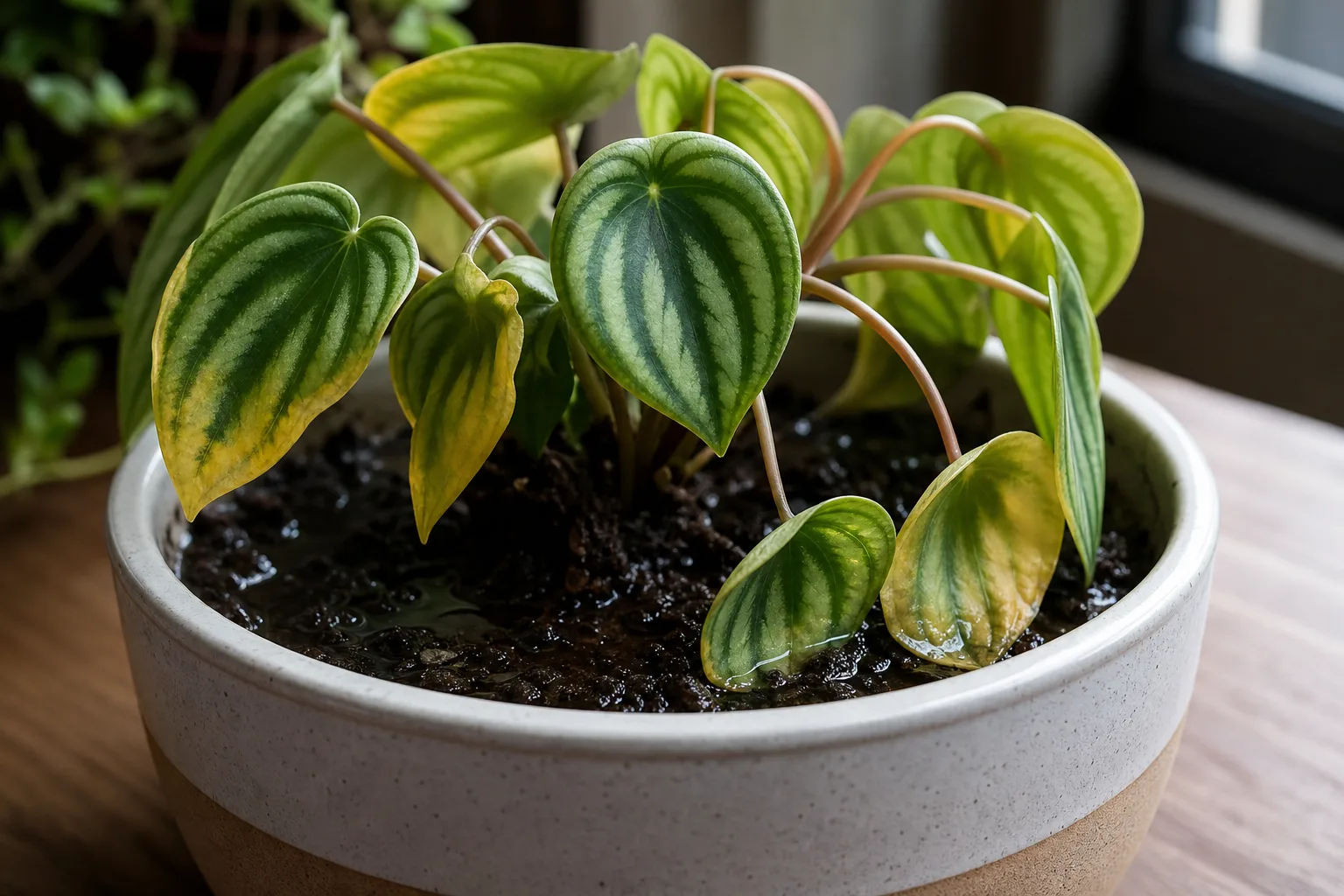
Overwatering on Watermelon Peperomia: Causes, Checks & Fixes
This guide covers overwatering on Watermelon Peperomia. See also the general Overwatering guide, watering, and light pages for this plant.
Overwatering on Watermelon Peperomia: Causes, Checks & Fixes
Quick answer
Overwatering is the most common way to kill Watermelon Peperomia (Peperomia argyreia). This compact rosette has fleshy, water-storing leaves on delicate red petioles, but its small root system suffocates quickly in soggy mix. Chronic wetness leads to yellow leaves, limp stems, and root rot on Watermelon Peperomia long before the plant looks obviously “too wet.”
First step: stop watering and empty the saucer. Do not add more water because leaves look sad-that deepens the problem when roots are already oxygen-starved. Let the top inch of soil dry completely before you consider the next drink.
What overwatering looks like on Watermelon Peperomia
On Watermelon Peperomia overview, overwatering rarely announces itself with standing water on the soil surface. Watch for a pattern instead:
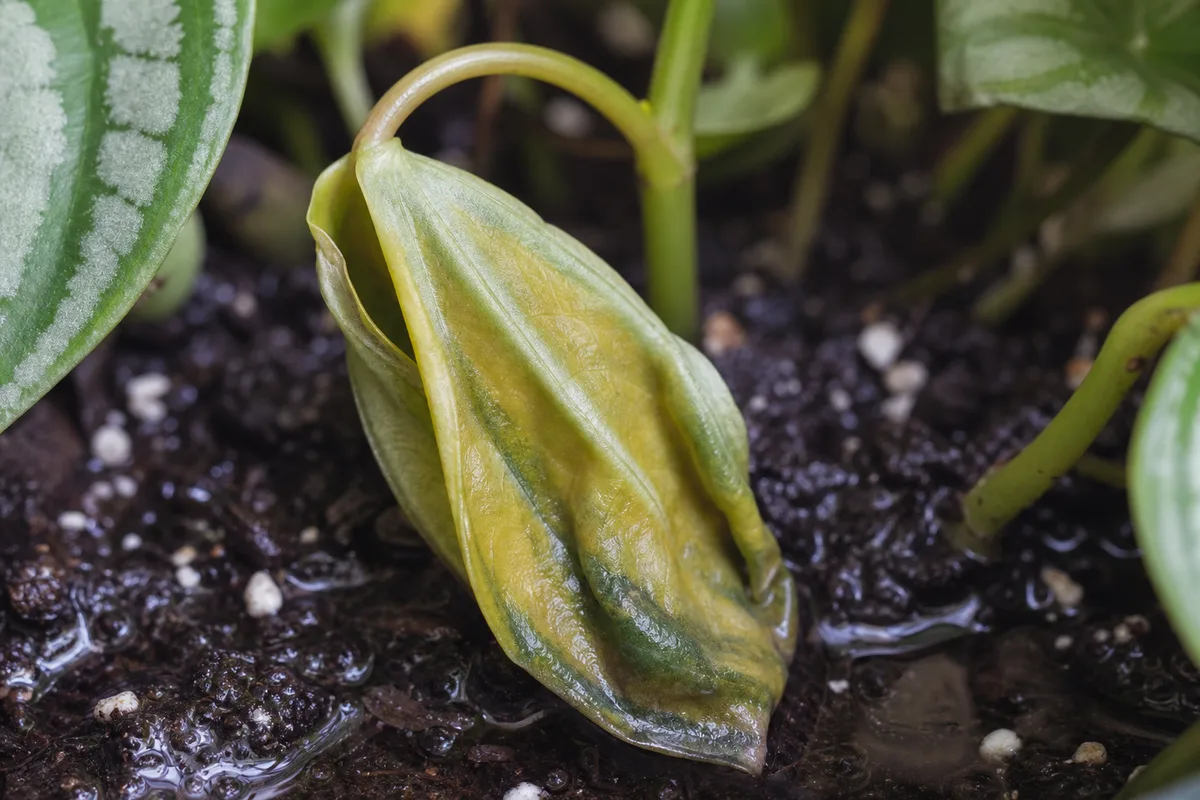
Overwatering symptoms on Watermelon Peperomia - compare with healthy tissue on the same plant.
- Yellow lower leaves that drop while the pot still feels heavy
- Limp, floppy red petioles-the stems that hold the round striped leaves sag before the leaves themselves crisp
- Dull silver-green striping on foliage that once looked crisp and glossy
- Pot weight stays high for many days after you last watered
- Fungus gnats on Watermelon Peperomia hovering near the soil surface in low light
- Soft crown where petioles meet soil-a classic sign wetness has reached the rosette center
- Sour or swampy smell from the mix when you lift the plant
Because damaged roots cannot take up water properly, overwatered peperomias often wilt while soil is wet-the same droop you might blame on thirst. That confusion causes many owners to water again and accelerate rot.
Early overwatering may show only one or two yellow bottom leaves. Advanced cases bring crown collapse, stem softness at the base, and roots that turn brown and mushy when you unpot.
Why Watermelon Peperomia gets overwatered
Peperomia argyreia evolved as an understory plant with good drainage needs and intolerance of wet soil. Indoors, several habits push it past that tolerance:
Calendar watering. Many caregivers water weekly regardless of season. In short winter days or dim rooms, a Watermelon Peperomia uses far less moisture-yet the same schedule keeps the root zone saturated.
Oversized pots. This species thrives slightly pot-bound with a compact root ball. A large decorative cache pot holds a wet zone the small roots never reach, so mix stays soggy for weeks while you think you watered “normally.”
Heavy, peat-rich mix. Dense potting soil without perlite or coarse sand holds water like a sponge. Peperomia roots need air as much as moisture; waterlogged peat excludes oxygen.
Low light plus frequent water. In deep shade, the plant grows slowly and evaporates less from its fleshy leaves. The same watering that works in Watermelon Peperomia light guide becomes excessive in a dark corner.
Standing saucer water. Clemson Extension notes that root rot is the most common peperomia disease and warns against letting pots sit in drained water. Watermelon Peperomia’s shallow roots sit in that reservoir first.
Overhead watering into the rosette. Water pooling in the compact crown keeps petiole bases wet-the first place crown rot starts on this plant.
Seasonal mismatch. Missouri Botanical Garden recommends reducing watering from fall to late winter when growth slows. Continuing a summer schedule through winter is a reliable trigger.
How to confirm the cause
Work through these checks before Watermelon Peperomia repotting guide or cutting anything:
- Pot weight - Lift the container. A heavy pot days after watering confirms slow dry-down; a light pot with limp leaves points toward underwatering on Watermelon Peperomia instead.
- Moisture at depth - Stick your finger 2–3 cm into the mix. Wet at that depth with drooping foliage supports overwatering. Bone dry throughout suggests the opposite problem.
- Crown firmness - Gently press where red petioles emerge from soil. Firm tissue means you may still be in early stress; soft, squishy tissue means wetness has reached the stem base.
- Drainage check - Confirm holes are open, no inner pot is sealed inside a decorative outer shell, and the saucer was emptied after the last watering.
- Pot-to-root ratio - Slide the plant partway out. If roots occupy less than half the pot volume, excess wet soil is likely the issue.
- Smell and roots - If the crown is soft or the mix smells sour, unpot fully. Healthy peperomia roots are firm and pale; rotted roots are brown, translucent, and collapse between your fingers.
- Light context - Is the plant in bright indirect light or a dim room? Slow drying in shade makes the same watering volume excessive.
If the pot is light, mix is dry 2–3 cm down, and leaves are slightly soft but the crown is firm, underwatering may explain the droop better-do not soak a plant you have not checked.
First fix for Watermelon Peperomia
Stop all watering and empty standing water from the saucer immediately.
Move the plant to a spot with bright indirect light and gentle airflow so the mix can dry-not direct sun, which can scorch striped leaves, but enough light that the pot loses weight over the next week. This single pause breaks the wet cycle and lets you assess whether the crown is firm or failing.
Do not fertilize, mist heavily, or repot on day one unless the crown is already soft and smells sour. Stacking fixes before the root zone dries often worsens stress on oxygen-starved roots.
Step-by-step recovery
Once you have stopped watering, follow severity:
Mild stress - firm crown, yellow lower leaves only
- Wait until the top inch of soil is dry throughout-often one to two weeks depending on pot size and light.
- Water once until a little runs from drainage holes, then empty the saucer within 30 minutes.
- Resume a check-when-dry rhythm rather than a calendar schedule.
- Remove fully yellow leaves at the base for hygiene; they will not green up again.
Moderate stress - heavy pot, limp petioles, some root discoloration
- After initial dry-down, unpot and inspect roots in bright light.
- Trim mushy brown roots with clean scissors sterilized between cuts.
- Discard soggy old mix; repot into the same size or slightly smaller container with well-draining mix amended with perlite or coarse sand.
- Wait five to seven days after repotting before the first light watering so cut surfaces callus.
- Hold fertilizer until new growth looks healthy for two weeks.
Advanced stress - soft crown, sour smell, widespread collapse
- Unpot and trim all mushy roots and soft crown tissue back to firm white or green stem.
- Let the plant sit unpotted in bright indirect light with good airflow for one to two days so cuts dry.
- Repot into fresh airy mix in a small pot matched to remaining roots-not a larger one “to help it recover.”
- If the rosette crown is fully lost but firm leaf cuttings with petioles remain, set those aside as backup propagation while the main plant stabilizes.
Recovery timeline
Stabilization often takes two to three weeks after you stop watering and the crown stops softening. During that window the pot should feel noticeably lighter and petioles should regain slight firmness.
New striped leaves from the crown are the best success signal-expect them in four to eight weeks during spring and summer active growth, sometimes longer if recovery started in winter. Old yellow foliage will not revert; it can be trimmed once the plant is stable.
Full root recovery on a small peperomia takes several months, not days. A plant that lost many roots may stay compact for a season before pushing normal growth again.
Worsening signs: crown softens further after dry treatment, multiple leaves collapse within days, or new growth appears stunted and pale while soil stays wet-those point toward rot that may not be salvageable.
Lookalike symptoms
- Underwatering - Light pot, dry mix 2–3 cm down, slightly soft but firm leaves; a thorough soak once usually perks petioles up within hours.
- Low light alone - Elongated petioles and faded striping without a heavy wet pot; move to brighter indirect light before changing water habits.
- Crown rot from overhead watering - Soft center with outer leaves still firm; fix watering direction and airflow, not just frequency.
- Edema - Corky brown bumps on leaves from inconsistent watering plus high humidity; reduce water and improve ventilation rather than repotting immediately.
- Normal old-leaf drop - One or two bottom leaves yellow and fall on an otherwise firm plant in a drying pot-often age, not crisis.
What not to do
Do not water because leaves wilt while soil is still wet-wilting can follow root damage from overwatering, and extra water makes it worse. Avoid repotting into a much larger pot; extra wet soil volume slows drying for small roots. Do not mist the rosette as a fix; surface moisture does not reoxygenate soggy roots.
Skip fertilizer on a stressed plant-it cannot use nutrients until roots recover. Do not leave the pot in a full saucer. Avoid dense peat-only mix without perlite when repotting.
When handling trimmed tissue, note that Watermelon Peperomia is non-toxic to cats and dogs-still wash hands after contact with rotted material.
How to prevent overwatering next time
Match watering to soil dryness, not the calendar. Allow the top of the soil to dry to the touch before rewatering, then water thoroughly and empty the saucer. Reduce frequency from fall through late winter when growth slows.
Use a small pot with drainage and airy mix-NC State recommends good drainage as essential for this species. Keep the plant in bright indirect light so the pot dries predictably; dim rooms need longer intervals between drinks.
Water around the edge of the pot, not into the rosette crown. Lift the pot weekly during the first month after recovery-you will learn its dry weight and spot trouble before leaves yellow.
When to worry
Escalate immediately if the crown dents under light pressure, soil smells sour, or inspection shows mostly mushy roots. Slow yellowing of one or two lower leaves on a firm plant can wait for a dry-down period first.
If more than half the root mass is mushy after trimming, or the crown collapses entirely, survival odds drop sharply-take healthy leaf cuttings with petioles as backup while firm tissue remains.
Conclusion
Overwatering on Watermelon Peperomia is a drainage and timing problem shaped by small roots, fleshy leaves, and rosette form-not bad luck. Confirm it with pot weight, crown firmness, and root inspection; stop watering first; then dry, trim, and repot only if tissue is failing. This plant forgives dry spells far more willingly than it forgives a wet week in the wrong pot.
When to use this page vs other Watermelon Peperomia guides
- Watermelon Peperomia watering guide - Use for routine moisture checks before assuming overwatering is the main issue.
- Watermelon Peperomia problems hub - Browse all 28 common issues on this species.
- Root Rot on Watermelon Peperomia - Different entry point when symptoms overlap with overwatering.
- Yellow Leaves on Watermelon Peperomia - Different entry point when symptoms overlap with overwatering.
- Wilting on Watermelon Peperomia - Different entry point when symptoms overlap with overwatering.
Related Watermelon Peperomia guides
- Watermelon Peperomia overview
- Watermelon Peperomia watering
- Watermelon Peperomia light
- Watermelon Peperomia soil
- Root Rot on Watermelon Peperomia
- Yellow Leaves on Watermelon Peperomia
- Wilting on Watermelon Peperomia
- Fungus Gnats on Watermelon Peperomia
- Mold on Soil on Watermelon Peperomia
- Drooping Leaves on Watermelon Peperomia
- Watermelon Peperomia problems