Mold on Soil on Watermelon Peperomia: Causes, Checks & Fixes
Quick answer
White or gray fuzz on Watermelon Peperomia soil is almost always harmless surface mold feeding on damp organic mix. The real problem is moisture: stop watering until the top dries, scrape the mold, and check the rosette crown before striped leaves droop.
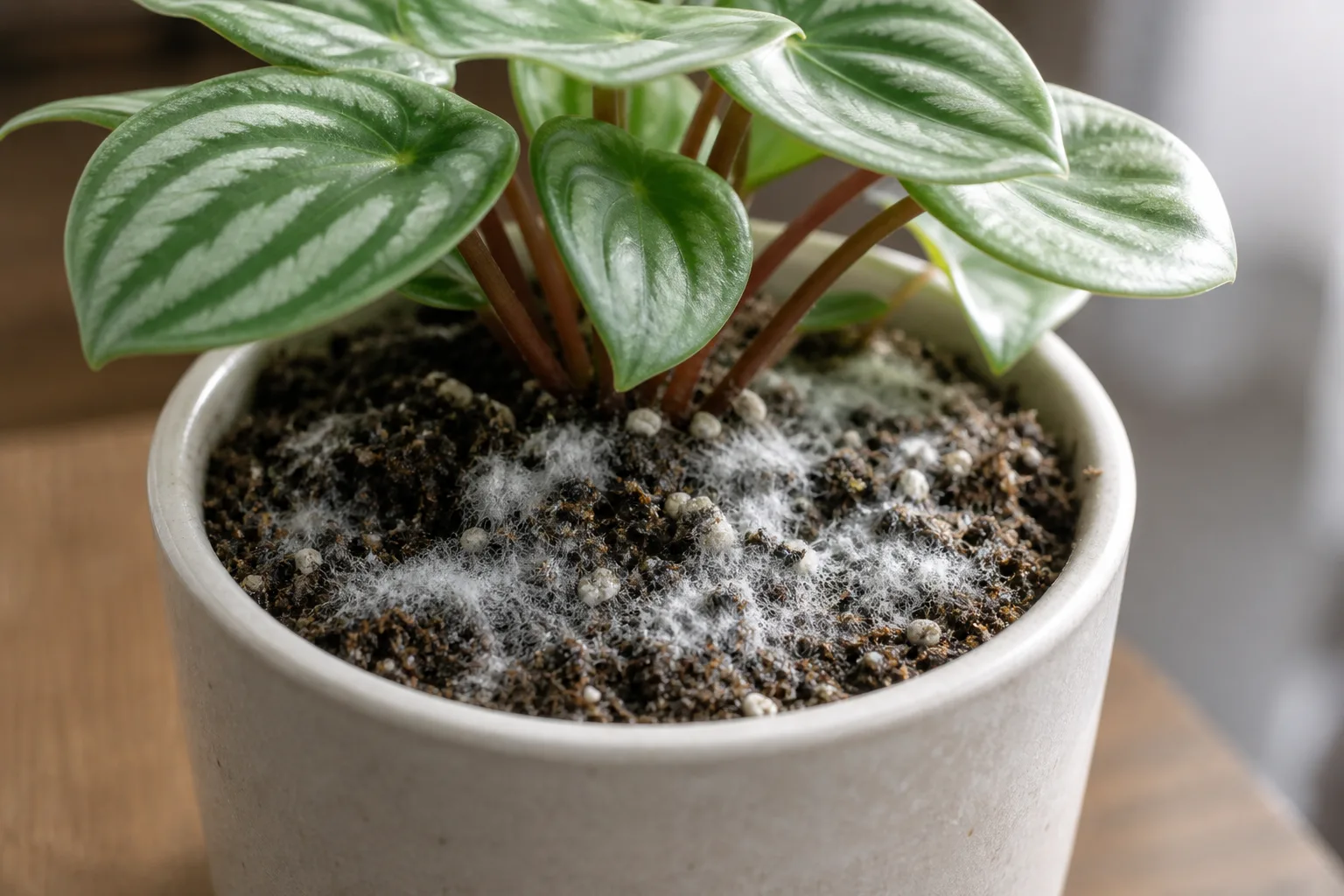
Mold on Soil on Watermelon Peperomia: Causes, Checks & Fixes
This guide covers mold on soil on Watermelon Peperomia. See also the general Mold on Soil guide, watering, and light pages for this plant.
Mold on Soil on Watermelon Peperomia: Causes, Checks & Fixes
Quick answer
White or gray fuzz on Watermelon Peperomia (Peperomia argyreia) potting mix is usually saprophytic surface mold-a fungus breaking down dead organic matter in soil that stays damp too long. It is not the same as leaf spot on the plant’s round, silver-striped leaves, and it does not harm living plants directly.
The danger on this rosette-forming peperomia is the moisture that feeds the mold. Watermelon Peperomia carries compact, nearly stemless rosettes of fleshy striped leaves on red petioles but has a relatively small root system that is intolerant of wet soil and needs the mix to dry on top before rewatering. When the surface never dries-common in oversized pots, dense peaty mix, or winter rooms with low light-mold is the visible clue that conditions favor crown rot and root rot before the rosette collapses.
First step: stop watering and let the top 2–3 cm of mix dry completely. Hold all water until a finger test shows dry soil near the surface and the pot feels noticeably lighter. Only after dry-down should you scrape off visible mold and adjust light or pot size if the surface wetness returns quickly.
What mold on soil looks like on Watermelon Peperomia
On a healthy plant on a windowsill or desk, mold appears only on the soil surface, not on the glossy watermelon-patterned leaf blades. Typical signs:
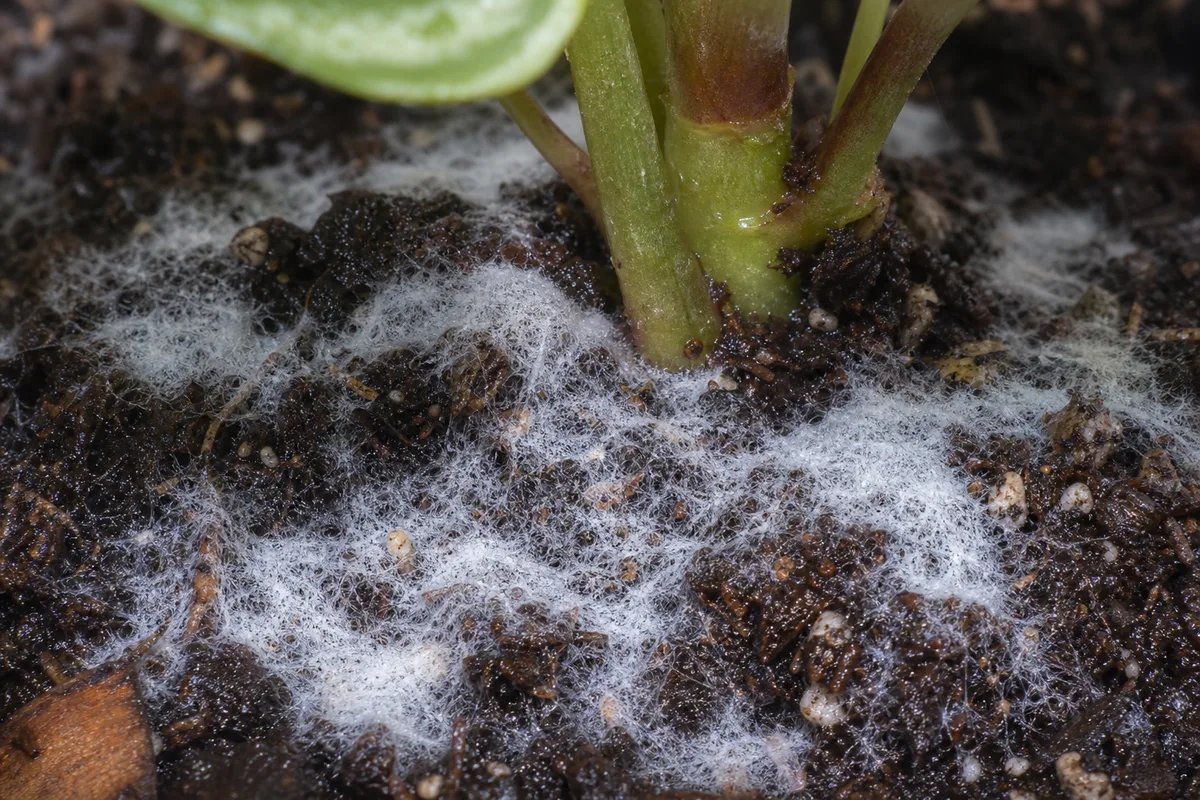
Mold on Soil symptoms on Watermelon Peperomia - compare with healthy tissue on the same plant.
- White, gray, or occasionally yellow-tan fuzzy film spread across the top of the mix, sometimes thickest near the crown where red petioles emerge from the rosette
- Soil that looks dark and wet for days after the last watering, even when striped leaves still feel firm
- Musty smell when you lift the pot or disturb the surface
- Tiny fungus gnats on Watermelon Peperomia hovering when you water-often in pots with chronically moist soil
- Fallen leaves or organic debris sitting on the mix, giving mold a food source
The plant itself may look fine at first. Round leaves stay plump and the silver striping stays sharp while the crown sits in stale moisture. That is why mold on Watermelon Peperomia is easy to dismiss as cosmetic until petiole bases soften or lower leaves yellow.
Not mold: Mealybugs leave white, cottony clumps in the compact rosette and leaf axils that do not disappear when you scrape soil. Powdery mildew coats leaf surfaces in dry-looking white dust-it does not start as a mat on potting mix alone. Mineral crust from hard tap water looks flat and chalky, not fuzzy.
Why Watermelon Peperomia gets mold on soil
Surface mold needs organic matter plus persistent surface moisture. Standard peat-based potting mixes provide the food; your Watermelon Peperomia watering guide and environment decide whether the top layer stays wet long enough for spores to grow.
Several factors stack easily on Watermelon Peperomia:
overwatering on Watermelon Peperomia before the mix dries. This species stores water in its fleshy leaves and needs the mix to dry on top before each soak, with reduced watering from fall to late winter. Watering on a calendar-especially every few days because the leaves still look fine-keeps the surface damp without giving roots the oxygen they need.
Oversized pots. Watermelon Peperomia thrives slightly pot-bound with a small root ball, yet decorative pots far larger than the rosette stay soggy at the crown for weeks. A big wet zone around small roots dries slowly and breeds mold.
Low light slowing dry-down. In dim corners, transpiration drops. The same watering that worked in brighter summer light leaves the top layer wet through cloudy winter weeks. Mold often shows up seasonally for this reason-especially when low light and wet soil overlap.
Heavy, water-retentive mix. Pure peat or moisture-control potting soil without enough perlite holds water at the surface. Watermelon Peperomia does best in well-draining mix with perlite or coarse sand and open drainage holes.
Water pooling in the rosette crown. Overhead watering or misting that soaks the center of the low rosette keeps both leaves and nearby soil surface wet-inviting mold on the mix and rot at the crown at the same time.
Organic debris on the surface. Fallen striped leaves or old moss top-dressing give saprophytic fungi extra material to colonize while trapping humidity.
The mold is a symptom of culture, not a random infection. Fixing the fuzz without fixing wet soil only buys a few days.
How to confirm the cause
Work through these checks in order before Watermelon Peperomia repotting guide or spraying anything:
- Surface moisture - Press a finger 2–3 cm deep. If it comes out cool and clings, the mix is still wet. Surface mold on constantly damp soil confirms excess moisture; mold on mix that is dry throughout may be leftover spores after a recent fix.
- Pot weight - Lift the pot. Heavy weight many days after watering means poor drainage, oversized pot, or too-frequent watering.
- Crown and petiole bases - Gently wiggle red petioles where they meet soil. Firm stems support a moisture-only diagnosis. Soft, dark, or collapsing bases mean rot may already be starting-mold was the early warning.
- Leaf pattern - Yellowing or limp leaves near the crown with wet soil point to root stress. Firm outer leaves with only soil fuzz suggest you caught the issue early.
- Smell - Sour or swampy odor from the mix suggests anaerobic conditions and possible root decline, not harmless surface film alone.
- Gnats and timing - Small flies when you water, plus mold that returns within a week of scraping, mean the habitat is still too wet.
- Light and season - Short days, north-facing windows, or plants moved away from grow lights in fall often coincide with first mold outbreaks while watering stayed on a summer schedule.
If the pot is light, soil is dry 5–7 cm down, petioles are firm, and striping looks normal, a small patch of mold after repotting may fade once you resume proper dry-down watering-no emergency repot needed.
First fix to try
Stop watering and let the top 2–3 cm of mix dry completely.
Do not scrape, cinnamon-dust, or repot on day one unless petiole bases are already soft. The first job is breaking the wet cycle that grows mold and invites gnats. On Watermelon Peperomia that usually means waiting until the finger test reads dry near the surface and the pot feels lighter-often one to two weeks in winter, sometimes less in bright active growth.
While you wait:
- Empty saucers and drip trays so no standing water wicks back up
- Move the plant to bright indirect light if it has been in a dim spot-better light helps the plant use water and speeds surface drying
- Remove fallen leaves from the soil surface so fungi lose easy food
- Water around the pot edge, not over the rosette crown, when you resume
Once the surface is dry, scrape off the visible mold with a spoon and discard it. Do not blow spores toward other pots. If the scraped area stays clean and dry for two weeks after you resume watering, the first fix worked.
Step-by-step recovery
After dry-down and surface scraping, rebuild habits so mold does not return:
Adjust watering. Water thoroughly only when the top 2–3 cm is dry and the pot feels light. Soak until a little water runs from drainage holes, then empty the saucer within 30 minutes. In winter, stretch intervals when growth slows-let the top soil dry before watering again.
Improve airflow at the crown. The compact rosette traps humidity when leaves overlap. Occasional rotation and open placement-not sealed inside a terrarium-help the soil surface dry between waterings.
Refresh the top layer if needed. Replace the top 2–3 cm of moldy mix with dry, airy potting mix with added perlite. This is faster than full repotting when roots are still healthy.
Repot only when chronic wetness persists. If the surface never dries within ten days after correct watering, or petiole bases soften, unpot gently. Trim mushy roots, use a smaller pot with fresh fast-draining mix, and wait a week before the first cautious soak.
Address fungus gnats together. Sticky traps catch adults; drying soil breaks the larval cycle. Do not rely on sprays while the mix stays wet.
Avoid misting the crown or watering on a fixed schedule “because the leaves look thirsty.” Watermelon Peperomia’s fleshy leaves store water; wilt with wet soil usually means damaged roots, not thirst.
Recovery timeline and signs of improvement
Surface mold can disappear within days once the top layer dries and you scrape spores away. Fixing the underlying habit takes longer.
Within 1–2 weeks: Soil surface stays matte and dry between waterings; no new fuzzy growth; fewer gnats if they were present.
Within 2–4 weeks: Firm petiole bases; no new yellow leaves at the crown; new striped leaves unfurling from the rosette if the plant is in active growth.
If nothing improves after four weeks of proper dry-down: Reinspect roots. Chronic mold with sour smell often means compacted or exhausted mix-repot into fresh perlite-heavy soil in a tighter pot.
Yellow leaves that already formed will not re-green; judge recovery by new firm growth, stable crowns, and a pot that dries predictably after each soak.
Lookalike symptoms
| What you see | Likely cause | What to do first |
|---|---|---|
| White fuzz only on wet soil surface | Saprophytic mold | Dry top layer; scrape; fix watering |
| White cotton in leaf axils or rosette center | Mealybugs | Isolate; inspect with alcohol swab on one cluster |
| White dust on leaf tops, not soil | Powdery mildew or mineral deposit | Check leaves under light; adjust humidity or water quality |
| Green slimy film on soil and pot rim | Algae from constant surface moisture | Same as mold-dry surface, more light, less water |
| Yellow mushrooms on soil | Saprophytic fungus fruiting body | Harmless to plant; remove if pets may ingest |
On Watermelon Peperomia, soil-surface mold with firm leaves and sharp striping is the benign end of the spectrum. Soft crowns with wet mix is the urgent end-even if you already removed the visible mold.
Mistakes to avoid
Scraping mold daily without drying soil. You remove spores while leaving the habitat intact; mold returns within days.
Upgrading to a bigger pot. More mix holds more water around small peperomia roots-the opposite of what this pot-bound species needs.
Watering because leaves look slightly soft while soil is wet. Wrinkled or drooping leaves with soggy mix often signal root rot from overwatering, not underwatering on Watermelon Peperomia.
Misting the rosette crown. Overhead moisture keeps both leaves and soil surface wet where rot starts first on this low-growing plant.
Covering soil with decorative moss or rocks that trap moisture. Top dressings slow evaporation at the crown.
Reaching for fungicide first. Surface fungal growth on growing media is usually managed by culture change-allowing the surface to dry between waterings-not chemicals.
Ignoring gnats. They share the same wet-soil cause and confirm the mix is too damp for this moisture-sensitive species.
How to prevent mold next time
Match pot size to the root ball, not the spread of striped leaves-oversized pots stay wet longer and can interfere with water absorption if a thick fungal mat forms on the surface.
Use fast-draining mix and open drainage holes. After every watering, confirm saucers are empty.
Place Watermelon Peperomia where it gets bright indirect light most of the day so water use stays steady through seasons. Reduce watering frequency when growth slows in cooler months.
Remove fallen leaves from the soil surface during routine care. Wipe dust from leaves so you can spot pests early-but do not leave the crown soaking wet after cleaning.
If mold appears once after buying a plant from a humid greenhouse, a single dry-down cycle often clears it. Recurring mold every month means the home setup-not the plant-is the problem.
When to worry
Treat mold as urgent when it comes with:
- Soft, dark petiole bases where stems meet soil at the rosette
- Sour-smelling mix or roots that look brown and mushy on inspection
- Rapid yellowing at the crown while soil stays wet
- Mold returning within three to five days of scraping despite dry surface attempts
- Large fungus gnat clouds every time you water
Those patterns suggest root rot or crown decline may already be underway. Stop watering, unpot carefully, and trim decay before repotting dry into a smaller container. If the crown is fully mushy but firm petioles remain on outer leaves, leaf-cuttings with petioles attached can serve as backup propagation.
Pure surface mold on dry-down-responsive soil, with firm stems and healthy new striped leaves, is low urgency. Fix the moisture rhythm and the fuzz usually stops being a recurring issue within one care cycle.
When to use this page vs other Watermelon Peperomia guides
- Watermelon Peperomia watering guide - Use for routine moisture checks before assuming mold on soil is the main issue.
- Watermelon Peperomia problems hub - Browse all 28 common issues on this species.
- Fungus Gnats on Watermelon Peperomia - Different entry point when symptoms overlap with mold on soil.
- Overwatering on Watermelon Peperomia - Different entry point when symptoms overlap with mold on soil.
- Root Rot on Watermelon Peperomia - Different entry point when symptoms overlap with mold on soil.
Related Watermelon Peperomia guides
- Watermelon Peperomia overview
- Watermelon Peperomia watering
- Watermelon Peperomia light
- Watermelon Peperomia soil
- Fungus Gnats on Watermelon Peperomia
- Overwatering on Watermelon Peperomia
- Root Rot on Watermelon Peperomia
- Slow Growth on Watermelon Peperomia
- Poor Drainage on Watermelon Peperomia
- Watermelon Peperomia problems