Underwatering on Watermelon Peperomia: Causes, Checks &
Quick answer
Underwatering on Watermelon Peperomia shows as a very light pot, dry mix throughout, and limp striped leaves on still-firm red petioles. Water thoroughly once, let excess drain, then resume letting the top inch of soil dry before the next soak.
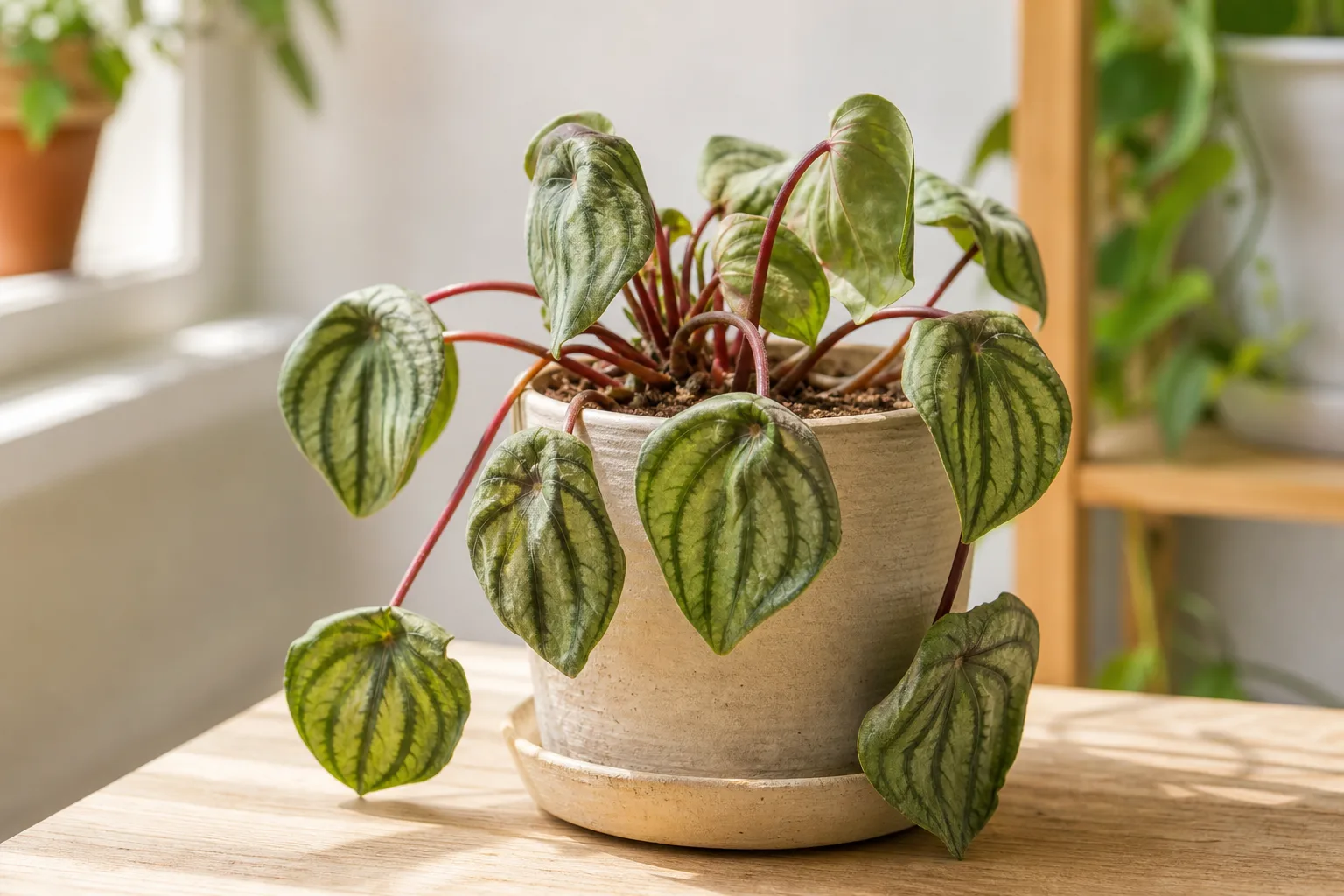
Underwatering on Watermelon Peperomia: Causes, Checks & Fixes
This guide covers underwatering on Watermelon Peperomia. See also the general Underwatering guide, watering, and light pages for this plant.
Underwatering on Watermelon Peperomia: Causes, Checks & Fixes
Quick answer
Watermelon Peperomia stores some moisture in its round, fleshy leaves, so it survives brief dry spells better than constant wetness-but letting the pot go bone dry too long still pulls water from thin leaf tissue faster than the compact roots can replace it. You will see floppy striped leaves on red petioles that stay firm at the base, a pot that feels almost weightless, and mix dry several centimeters down.
First step: water thoroughly once until excess runs from the drainage hole, discard saucer water, and wait 24 hours to see if leaves perk. Do not keep soil constantly moist as overcorrection-that triggers root rot on Watermelon Peperomia on a plant intolerant of wet soil. After recovery, resume letting the top inch of mix dry before the next deep soak.
Why Watermelon Peperomia gets underwatered
Most owners swing toward underwatering after losing a peperomia to overwatering on Watermelon Peperomia-and that fear is understandable. NC State notes that over-watering causes root rot while under-watering causes the plant to wilt, and many growers overcorrect toward drought once they see yellow leaves from soggy soil.
Several habits push Watermelon Peperomia overview into chronic dryness:
Calendar neglect instead of soil checks. Watermelon Peperomia in a small pot near a south window or heating vent can dry in three to five days during active growth. The same plant in a dim office might need water every two weeks. Watering on a fixed weekly schedule misses both extremes.
Hydrophobic old mix. Peat-heavy compost that has gone completely dry repels water. You pour from the top, water runs straight through the sides, and the center of the root ball stays dry while the surface looks briefly damp. The plant droops even though you “just watered.”
Fear of crown rot from overhead watering. Avoiding the crown is wise, but some growers give only a few tablespoons around the edge. The shallow root system never gets a full soak, and drought stress builds quietly.
Seasonal light changes without schedule changes. Short winter days slow growth and reduce water use-but radiant heat from radiators and dry forced air increase evaporation from small pots. BBC Gardeners’ World warns that drafts and radiators dry the air and cause temperature swings; a plant that needed water every ten days in October may need it every six days in January if it sits above a heat register.
Travel and forgotten windowsills. The silver-green striping dulls before leaves fully crisp. By the time petioles fold dramatically, the mix has often been dry for a week or more.
What underwatering looks like on Watermelon Peperomia
Healthy plants hold round, waxy leaves horizontally on stiff red petioles. Underwatering changes texture and posture before color:
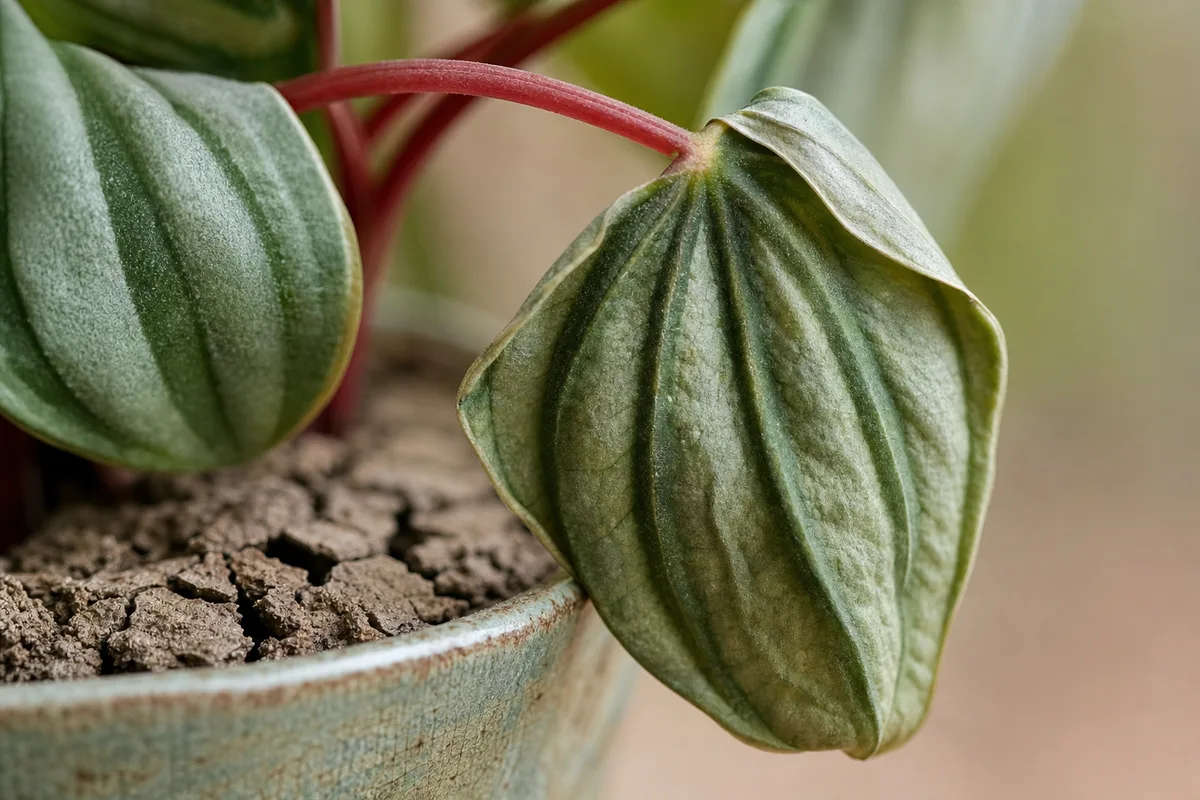
Underwatering symptoms on Watermelon Peperomia - compare with healthy tissue on the same plant.
Pot and soil signals:
- Pot feels very light when lifted
- Mix is dry 5–7 cm (2–3 inches) deep-not just at the surface
- Soil may pull slightly away from the pot wall in extreme drought
- Water poured on the surface runs through quickly without soaking the center
Leaf and petiole signals:
- Leaves lose turgor and hang down, but petioles usually stay firm where they meet the soil (unlike mushy crown rot from overwatering)
- Round leaves feel thinner or slightly soft when pinched-not papery yet
- Silver striping looks faded or dull compared with firm new growth
- Leaf edges may curl inward before turning crispy brown
- Lower leaves may yellow and drop after repeated dry cycles as the plant sheds tissue to conserve moisture
What underwatering does not look like:
- Wet heavy soil with limp petioles that feel soft at the crown-that is overwatering or rot
- Uniform yellow lower leaves on damp mix-more typical of root decline from too much water
- Black mushy stems-rot, not drought
Missouri Botanical Garden describes each leaf as glossy and fleshy with attractive red leaf stems. When those fleshy leaves thin out and red petioles go limp while staying firm at the base, drought is the leading explanation if soil confirms dryness.
How to confirm underwatering (and rule out overwatering)
Work through these checks in order before you pour water:
- Pot weight - Lift the nursery pot. A very light feel strongly suggests dry mix throughout.
- Deep moisture test - Push a finger or wooden skewer 5–7 cm into the mix. Dry, crumbly soil at depth confirms drought. Cool damp soil means wait-even if leaves droop.
- Petiole firmness - Pinch the red stem where it meets the soil. Firm tissue with dry soil means underwatering. Soft, mushy tissue with wet soil means stop watering and inspect for rot.
- Leaf texture - Underwatered leaves feel thinner; overwatered leaves may feel limp but soil stays heavy for days.
- Perk test (after watering) - If you water thoroughly and leaves stand back up within 24 hours, roots were healthy and drought was the problem. No improvement with wet soil suggests root damage from the opposite mistake.
- Hydrophobic check - If water runs straight through and the pot still feels light an hour later, the mix may be repelling water rather than absorbing it.
NC State lists wilting from under-watering as distinct from root rot caused by over-watering. The moisture-and-firmness combo at the crown is the fastest way to tell them apart on this species.
First fix for underwatered Watermelon Peperomia
Water thoroughly once until excess runs from the drainage hole, then empty the saucer within 30 minutes.
Use room-temperature water and soak the entire root zone-not a few splashes around the edge. For a standard six-inch pot, that often means one-quarter to one-third liter poured slowly in two passes so the mix absorbs rather than channels out the sides.
If the mix is hydrophobic and water runs through immediately:
- Bottom-water the nursery pot in a basin for 20–30 minutes until the surface glistens, then lift and drain fully, or
- Poke several shallow holes in the dry surface with a chopstick, then water slowly in two rounds ten minutes apart
Do not fertilize a drought-stressed plant. Do not repot on day one unless the mix is completely collapsed and cannot be re-wetted. Do not mist leaves instead of soaking roots-surface humidity does not replace soil moisture for a wilting peperomia.
After this single thorough soak, wait for perk-up before making any other changes.
Step-by-step recovery
Once the first deep watering is done:
- Wait 24 hours and check posture. Most drought droop improves within a day if roots are intact.
- Trim fully crispy leaves with clean scissors if brown edges cover more than half the blade-they will not revert, and removing them lets you judge new growth clearly.
- Move off radiators or heat vents if the pot dried out unusually fast. Stable humidity reduces edge crisping on the next dry cycle.
- Re-wet hydrophobic mix fully using bottom-watering once if the first top-water did not increase pot weight.
- Resume the dry-down rhythm - allow the top inch of mix to dry before the next thorough soak. Missouri Botanical Garden recommends allowing soils to almost dry on top before rewatering.
- Track pot weight weekly until you learn how fast your specific window dries the pot in each season.
Hold fertilizer until new growth looks normal for at least two weeks. Stressed roots absorb nutrients poorly, and salts on dry roots can burn tissue.
Recovery timeline
Mild underwatering often shows visible perk within 12–24 hours of a proper soak. Leaves that only lost turgor usually regain firmness; edges that turned crispy brown stay brown permanently.
Moderate drought-where many leaves curled and lower foliage yellowed-may take one to three weeks for new striped leaves to emerge from the center. Judge recovery by fresh growth and firm petioles, not by old damaged blades.
Severe prolonged drought that killed fine roots recovers slowly or not at all. If leaves stay limp after two thorough waterings separated by a week, with soil staying damp mid-pot, inspect roots for desiccation damage before assuming more water will help.
Lookalike symptoms to rule out
Overwatering and root rot - Heavy wet pot, soft mushy petioles at the crown, sour smell, yellow lower leaves on damp mix. Wilting with wet soil means roots cannot take up water even though you watered-opposite fix required.
Low humidity alone - Dry air browns leaf edges while soil moisture stays adequate. Check mix depth before watering; a pebble tray addresses humidity without drowning roots.
Spider mites in dry air - Fine stippling and webbing on leaf undersides, not general limpness. Spider mites thrive when humidity drops; confirm with a white-paper shake test.
Leggy growth from low light - Long thin stems with small dull leaves, but soil moisture is normal and petioles stay stiff. Move to brighter indirect light rather than adding water.
Cold draft stress - Sudden droop after a window was left open in winter. Soil may be appropriately moist; warmth and stable temperature matter more than another soak.
Mistakes to avoid
Do not assume every drooping Watermelon Peperomia needs water-wet-soil wilt from rot is common on this species and worsens with another drink.
Do not give tiny sips daily. Peperomias prefer a full soak followed by a dry-down, not constant shallow moisture that keeps the crown damp.
Do not overcorrect into constant wetness after one dry spell. Intolerant of wet soil, this plant rots quickly when the root zone stays saturated.
Do not mist instead of watering dry roots. BBC Gardeners’ World recommends misting for humidity, but misting does not rehydrate a root ball that has gone dry throughout.
Do not fertilize before the plant perks. Rehydrate first.
Do not ignore hydrophobic mix. Repeated top-waters that run through without weight gain leave roots stranded in dry pockets.
How to prevent underwatering next time
Learn your pot’s dry-down time in its actual window-not a generic online schedule. Lift the pot every few days until weight change becomes predictable.
Pair Watermelon Peperomia light guide with an appropriate Watermelon Peperomia watering guide. Plants in better light use water faster and dry out quicker; dim rooms need longer intervals but still require deep soaks when dry.
Use well-draining mix with perlite so water penetrates evenly when you do soak. Dense peat that dries into a brick is harder to re-wet than airy compost.
Refresh or top-dress peat-heavy mix that has gone hydrophobic after long drought. Breaking up the surface and bottom-watering once resets absorption.
Keep the plant slightly pot-bound rather than in an oversized container-but not so root-bound that water runs straight through without retention. NC State notes Watermelon Peperomia thrives being pot-bound and rarely needs frequent Watermelon Peperomia repotting guide.
Reduce watering in winter per seasonal guidance, but still check soil near heat sources where pots dry faster than expected.
When to worry
Underwatering is rarely an emergency on Watermelon Peperomia because fleshy leaves buffer short drought. Act promptly when:
- Most leaves go papery and brown at once during a heat wave
- The plant has been bone dry for three weeks or more and perk tests fail after two thorough soaks
- Lower leaves yellow and drop in large numbers while soil stays dry-repeated drought cycles may have damaged fine roots
Replace or propagate from healthy leaf cuttings if the crown collapses or roots are fully desiccated and brown. This species roots easily from leaf cuttings when tissue is still firm-but a mushy crown from later overcorrection is a different problem entirely.
Normal brief droop on a light dry pot is not urgent. One thorough watering usually fixes it.
Conclusion
Underwatering on Watermelon Peperomia is a moisture-deficit problem you can confirm with a light pot, dry soil deep down, and firm petioles at the crown. Water thoroughly once, drain fully, and wait for perk-up before changing anything else. The long-term fix is not watering more often on autopilot-it is learning when your specific pot dries in its window and soaking deeply only then, while staying alert for hydrophobic mix that sheds water without reaching the roots.
When to use this page vs other Watermelon Peperomia guides
- Watermelon Peperomia watering guide - Use for routine moisture checks before assuming underwatering is the main issue.
- Watermelon Peperomia problems hub - Browse all 28 common issues on this species.
- Wilting on Watermelon Peperomia - Different entry point when symptoms overlap with underwatering.
- Brown Tips on Watermelon Peperomia - Different entry point when symptoms overlap with underwatering.
- Yellow Leaves on Watermelon Peperomia - Different entry point when symptoms overlap with underwatering.
Related Watermelon Peperomia guides
- Watermelon Peperomia overview
- Watermelon Peperomia watering
- Watermelon Peperomia light
- Watermelon Peperomia soil
- Wilting on Watermelon Peperomia
- Brown Tips on Watermelon Peperomia
- Yellow Leaves on Watermelon Peperomia
- Overwatering on Watermelon Peperomia
- Drooping Leaves on Watermelon Peperomia
- Watermelon Peperomia problems