Brown Tips on Watermelon Peperomia: Causes, Checks & Fixes
Quick answer
Brown tips on Watermelon Peperomia are usually environmental-fluoride or salts in tap water, low humidity, or inconsistent watering crisp the edges of round striped leaves. First step: switch to room-temperature filtered or rainwater and water only after the top inch of soil dries.
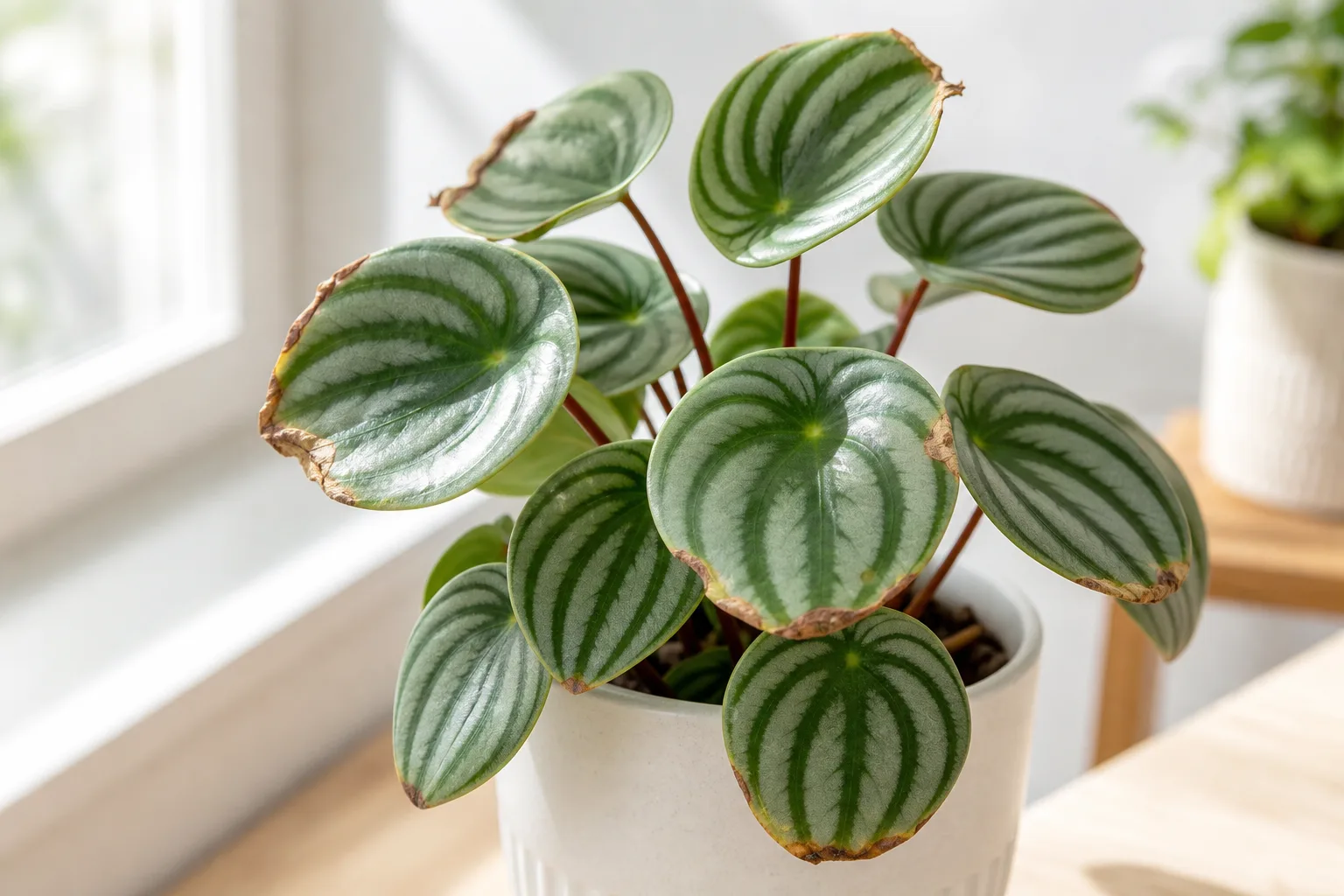
Brown Tips on Watermelon Peperomia: Causes, Checks & Fixes
This guide covers brown tips on Watermelon Peperomia. See also the general Brown Tips guide, watering, and light pages for this plant.
Brown Tips on Watermelon Peperomia: Causes, Checks & Fixes
Quick answer
Brown tips on Watermelon Peperomia are almost always a water-balance problem on the fleshy, waxy striped leaves-not a fungal leaf spot. The round leaf margin is the farthest point from the roots, so it dries first when moisture delivery is uneven or water quality stresses the plant. Peperomias are sensitive to fluoride in tap water, which can cause leaf tips to turn brown, and dry winter air or missed watering episodes crisp edges on thin fleshy tissue.
First step: switch to room-temperature filtered or rainwater, then water only after the top inch of soil is completely dry. Do not increase watering to “fix” brown edges-that pattern keeps soil wet too long on a species intolerant of wet soil and invites crown rot.
What brown tips look like on Watermelon Peperomia
Healthy Watermelon Peperomia holds round, silver-and-green striped leaves horizontally on stiff red petioles. Tip burn shows up differently depending on cause:
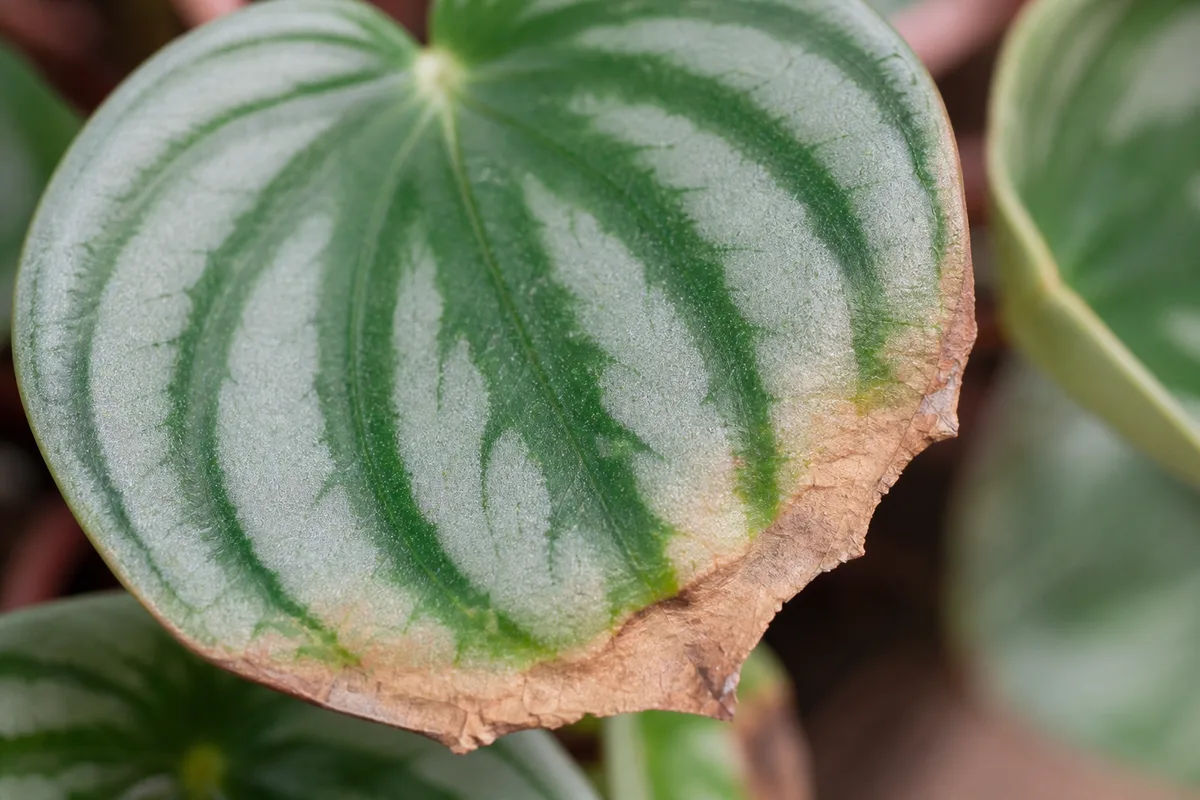
Brown Tips symptoms on Watermelon Peperomia - compare with healthy tissue on the same plant.
Typical environmental tip burn:
- Dry, tan-to-dark brown at the very leaf edge or tip only
- Tissue feels crispy and papery, not soft or wet
- Red petioles stay firm where they meet the leaf
- Rest of the leaf remains green with normal striping
- Damage may appear on several leaves at once after a dry spell or after weeks of tap-water use
Patterns that are not simple tip burn:
- Soft brown at the petiole base with limp red stems and heavy wet soil - overwatering on Watermelon Peperomia or crown rot
- Bleached or tan patches across the leaf face after a window move - sun scorch, not margin dryness
- Corky raised brown spots scattered on the blade - edema from humidity swings and wet soil
- Fine stippling on leaf undersides with webbing - spider mites in dry air
Because the leaves are peltate with an entire margin, tip damage stands out clearly against the glossy surface. Old leaves at the base may show minor edge wear from age; focus on whether new leaves open with clean margins.
Why Watermelon Peperomia gets brown tips
This species stores some moisture in fleshy leaves but still depends on a small root system that dries the pot quickly. Several stressors converge at the leaf margin:
Tap-water fluoride and mineral salts
Fluoride toxicity in sensitive plants causes necrosis at tips and along leaf margins. Peperomias are among the houseplants that react to treated tap water. Minerals and fertilizer salts also accumulate in potting mix over time, drawing moisture away from root tips and scorching edges. Letting tap water sit overnight reduces chlorine but does not remove fluoride.
Inconsistent watering
Watermelon Peperomia is intolerant of very dry soil as well as wet soil. Long dry intervals followed by a heavy soak stress feeder roots. Damaged roots cannot hydrate leaf margins reliably, so tips brown even though you eventually watered. Alternating drought and flood is more damaging than a steady check-when-dry rhythm.
Low humidity and heating-season dry air
The plant likes high humidity in summer and adapts to average home levels, but very dry air near radiators or AC vents increases transpiration faster than roots replace moisture. Winter heating often coincides with reduced watering caution-tips brown from combined dryness and mineral concentration in soil.
Direct sun scorch
Watermelon Peperomia light guide suits Watermelon Peperomia overview indoors. Direct sun through south-facing glass heats the round leaves and can tan or crisp margins, especially on the side facing the window. The damage may look like tip burn but follows light exposure, not water chemistry.
Impaired roots from overwatering
Overwatering does not always yellow leaves first. When roots rot in soggy mix, water delivery to leaf tips fails and margins dry out-a pattern that mimics underwatering on Watermelon Peperomia. Check petiole firmness and soil moisture before assuming the plant needs more water.
How to confirm the cause
Work through these checks in order before changing multiple variables at once:
- Water source - Have you used straight tap water for months? Did tips worsen after Watermelon Peperomia repotting guide with fresh fertilizer-heavy mix? Fluoride and salt stress fit a gradual edge-creep pattern on otherwise firm leaves.
- Soil moisture rhythm - Insert a finger to the first knuckle. Does the pot go very light between waterings, or stay damp for a week? Bone-dry cycles plus heavy soaking point to water stress; constant dampness points to root impairment.
- Petiole and crown feel - Squeeze red petioles at the soil line. Firm tissue with crispy tips confirms environmental burn. Soft, mushy bases with wet soil mean stop watering and inspect roots.
- Humidity and placement - Is the pot above a heat register or in a drafty winter window? Dry air plus minerals accelerates margin damage.
- Light history - Did tips appear within days of moving closer to a sunny window? Sun scorch often shows bleaching on the exposed leaf face, not just the tip.
- Salt crust - White mineral film on the soil surface or pot rim suggests buildup worth flushing once other fixes are in place.
- Pest check - Examine leaf undersides with a hand lens. Stippling and webbing mean spider mites, not fluoride-rinse and treat pests instead of changing water alone.
If tips are dry and crispy with firm petioles and no sour smell from soil, you are dealing with environmental tip burn-not an infectious disease. NC State notes no serious disease problems on this species; root rot on Watermelon Peperomia from overwatering is the main serious threat to distinguish.
First fix to try
Switch to room-temperature filtered or rainwater, and water only after the top inch of soil dries completely.
Pour until water runs from the drainage hole, then empty the saucer. Do not water again until the top layer is dry to the touch-not on a fixed weekly schedule. This single change addresses the two most common drivers on Watermelon Peperomia: mineral-laden tap water and uneven moisture.
If you have been using tap water for a long time, run clean water through the pot two to three times its volume once to leach surface salts-then continue with filtered water going forward. Let the compost partially dry out between waterings rather than keeping the mix constantly moist.
Do not trim heavily, repot, or fertilize on day one. Stressed peperomias recover faster when care stabilizes before you add more interventions.
Step-by-step recovery
After the first fix, address secondary factors based on what your inspection showed:
If dry air is a factor
Group the plant with others, use a pebble tray, or run a humidifier nearby. Target moderate humidity around 40–60% without misting the crown-wet foliage in the rosette center encourages rot on this compact growth habit.
If the plant sits in direct sun
Move it back to bright indirect light. An east window or a few feet from south glass with a sheer curtain works well. Partial shade indoors matches how this species is grown as a houseplant.
If soil stayed wet too long
Stop watering until the mix dries throughout. If petioles soften at the base, unpot and inspect roots-trim mushy tissue and repot in airy mix with perlite. Tip burn from root failure will not stop until roots recover.
Cosmetic trimming
Once new growth looks stable, snip fully dead tip tissue with clean scissors, following the natural curve of the round leaf. Leave a thin brown edge rather than cutting into green tissue, which can create a new wound.
What not to do
- Do not increase watering frequency to “hydrate” brown tips-that worsens rot risk.
- Do not apply fertilizer to fix browning; salts add stress.
- Do not reach for fungicides-this is not a leaf spot disease on peperomias.
Recovery timeline and what improvement looks like
Existing brown tip tissue will not turn green again. Judge success by new leaves:
- Within one to two weeks of stable water and humidity, new leaves should open with cleaner margins
- Firm red petioles and horizontal leaf posture return once turgor normalizes
- Old damaged leaves can stay on the plant until you trim them for appearance
If tips keep appearing on new growth after four to six weeks of filtered water and proper dry-down, look again at light scorch, hidden overwatering in an oversized pot, or spider mites. Worsening signs-soft crown, yellowing lower leaves, sour soil-mean escalate to root inspection rather than more humidity tweaks.
Lookalike symptoms to rule out
| What you see | Likely cause | Key difference from tip burn |
|---|---|---|
| Crispy tips only, firm petioles | Fluoride, salts, dry air, uneven watering | Dry edge tissue; soil and crown otherwise normal |
| Soft brown at petiole base, wet soil | Crown or root rot | Mushy tissue at base, not just the leaf tip |
| Bleached patches on leaf face | Direct sun scorch | Follows light exposure; not limited to margins |
| Corky raised brown spots | Edema | Blisters that burst; linked to wet soil plus humidity swings |
| Stippling + fine webbing | Spider mites | Underside damage; common in dry winter rooms |
Mistakes to avoid
Watering on a calendar instead of checking soil dryness is the most common error-especially in winter when growth slows and watering should be reduced. Misting alone rarely fixes low humidity and can wet the crown. Cutting deep into green leaf tissue while trimming creates fresh wounds. Repotting into a much larger container “to help hydration” keeps soil wet too long for this small-rooted species. Stacking filtered water, repotting, fertilizer, and pruning the same week makes it impossible to know what helped.
How to prevent brown tips next time
Use filtered or rainwater at room temperature for routine watering. Learn how many days your pot takes to dry in summer versus winter, and adjust rather than following the same schedule year-round. Keep bright indirect light without direct midday sun on the leaves. Maintain moderate humidity in heated rooms. Flush accumulated salts occasionally during active growth if you feed regularly-at half strength only when the plant is actively growing and unstressed. Match pot size to the root ball; Watermelon Peperomia thrives slightly pot-bound and does not need frequent repotting.
When to worry
Brown tips alone on a few older leaves are cosmetic and common. Worry when brown spreads with limp petioles, the crown feels soft, soil stays wet and smells sour, or multiple leaves yellow and collapse within days. Those patterns point to root or crown rot-not tip burn-and need dry-down, root inspection, and possible repotting rather than more water or humidity alone.
Conclusion
Brown tips on Watermelon Peperomia look alarming on such graphic striped foliage, but they rarely signal a disease. They usually mean the leaf margin dried out from tap-water minerals, uneven watering, dry air, or-less often-too much direct sun. Switch water source and stabilize your dry-down rhythm first. Damaged tips will not heal, yet new round leaves can emerge clean once the environment matches what this small-rooted, fluoride-sensitive peperomia needs.
When to use this page vs other Watermelon Peperomia guides
- Watermelon Peperomia watering guide - Use for routine moisture checks before assuming brown tips is the main issue.
- Watermelon Peperomia problems hub - Browse all 28 common issues on this species.
- Low Humidity on Watermelon Peperomia - Different entry point when symptoms overlap with brown tips.
- Underwatering on Watermelon Peperomia - Different entry point when symptoms overlap with brown tips.
- Overwatering on Watermelon Peperomia - Different entry point when symptoms overlap with brown tips.