Watermelon Peperomia Problems: Causes & Quick Fixes
Quick answer
Watermelon Peperomia is prone to 28 common issues - each link below is a plant-specific fix guide.
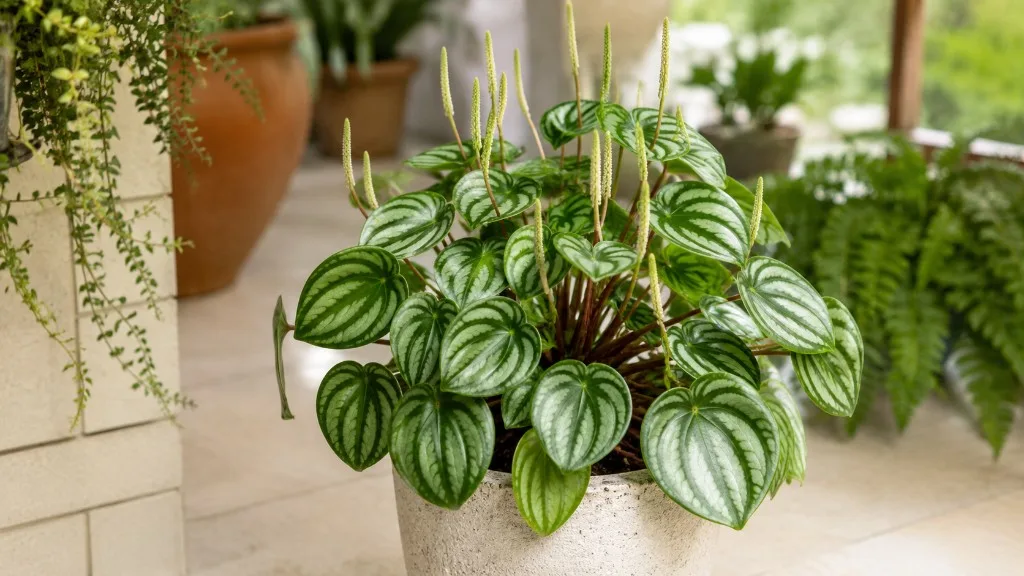
Watermelon Peperomia problems
Use the guides below to diagnose and fix common issues on Watermelon Peperomia. Each problem page explains why it happens on this species and what to do first.
Or use our problem diagnosis tool to narrow down symptoms.
Common problems on Watermelon Peperomia
Aphids
MediumLikely cause: Sap-sucking aphids colonize new peperomia growth, causing curled leaves and sticky honeydew on striped foliage.
Quick fix: Rinse colonies with lukewarm water or spray insecticidal soap on leaf undersides every 4–5 days.
Full fix guide →Brown Tips
MediumLikely cause: Dry air, salt buildup from tap water, or inconsistent watering crisp the edges of watermelon-striped leaves.
Quick fix: Switch to filtered or rainwater; let the top inch of soil dry before watering again.
Full fix guide →Crispy Leaves
MediumLikely cause: Underwatering or low humidity dries peperomia petioles and leaves to a papery texture before full collapse.
Quick fix: Water when the top inch of soil is dry; group with other plants or use a pebble tray for moderate humidity.
Full fix guide →Crown Rot
HighLikely cause: Water pooling in the compact rosette crown causes soft petioles and rapid decline in Watermelon Peperomia.
Quick fix: Stop overhead watering; water around the crown edge and improve airflow until the base firms up.
Full fix guide →Damaged Roots
HighLikely cause: Overwatering in an oversized pot damages the small root system, leaving mushy roots unable to support striped leaves.
Quick fix: Unpot, trim soft roots, and repot into a smaller container with perlite-heavy mix; withhold water one week.
Full fix guide →Drooping Leaves
MediumLikely cause: Both overwatered mushy crowns and underwatered dry soil cause floppy stems on delicate petioles.
Quick fix: Check soil moisture 2 cm deep; water if dry, or repot with fresh mix if the crown feels soft.
Full fix guide →Edema
MediumLikely cause: Inconsistent watering with high humidity causes water blisters that burst into brown corky spots on peperomia leaves.
Quick fix: Water only when the top inch dries; reduce misting and improve airflow around the rosette.
Full fix guide →Fungus Gnats
LowLikely cause: Constantly moist peperomia soil in low light supports fungus gnat larvae that feed on fine roots.
Quick fix: Let the top 2 cm of soil dry between waterings; use yellow sticky traps and Bti drenches if adults persist.
Full fix guide →Leggy Growth
MediumLikely cause: Insufficient light stretches petioles and produces small, dull-striped leaves on Watermelon Peperomia.
Quick fix: Move to bright indirect light near an east or north window; rotate the pot weekly.
Full fix guide →Low Humidity
LowLikely cause: Dry indoor air browns leaf edges on peperomias adapted to moderate 40–60% humidity.
Quick fix: Use a pebble tray or group plants together; avoid placing near heating vents.
Full fix guide →Mealybugs
MediumLikely cause: Mealybugs hide in the compact rosette and leaf axils, coating peperomia foliage with cottony wax and honeydew.
Quick fix: Dab colonies with 70% isopropyl alcohol on a cotton swab; follow with neem oil spray weekly.
Full fix guide →Mold on Soil
LowLikely cause: Surface mold grows on constantly wet peperomia soil in poorly ventilated rooms.
Quick fix: Scrape off mold, let the top soil dry, and reduce watering frequency.
Full fix guide →Not Enough Light
MediumLikely cause: Low light fades the silver striping and produces elongated weak stems on Watermelon Peperomia.
Quick fix: Relocate to bright indirect light; avoid deep shade where the pot stays wet too long.
Full fix guide →Overwatering
HighLikely cause: Peperomia argyreia's small roots suffocate in soggy mix, causing yellow leaves and a mushy crown.
Quick fix: Allow the top inch of soil to dry completely; empty saucers and reduce winter watering.
Full fix guide →Poor Drainage
HighLikely cause: Dense potting mix without perlite holds water around peperomia roots, triggering rapid rot.
Quick fix: Repot in mix with 30% perlite or coarse sand and confirm drainage holes are open.
Full fix guide →Pot Too Large
MediumLikely cause: Oversized pots stay wet too long for the small peperomia root system, causing quiet root decline.
Quick fix: Repot into a container only 2–3 cm wider than the root ball with airy mix.
Full fix guide →Root Rot
HighLikely cause: Overwatering in poorly drained mix causes mushy brown roots that cannot support striped leaves.
Quick fix: Unpot, trim rotten roots, air-dry one day, then repot in fresh perlite-heavy mix.
Full fix guide →Scale Insects
MediumLikely cause: Scale insects attach along peperomia petioles and stems, causing yellow stippling and sticky honeydew.
Quick fix: Scrape scales with a fingernail or cotton swab dipped in alcohol; spray neem oil weekly.
Full fix guide →Slow Growth
LowLikely cause: Peperomia argyreia is naturally slow-growing; cold wet soil or low light further reduces new striped leaves.
Quick fix: Ensure bright indirect light and warm room temperatures; fertilize at half strength monthly in summer.
Full fix guide →Spider Mites
MediumLikely cause: Spider mites stipple peperomia leaf undersides in dry indoor air, dulling the silver striping.
Quick fix: Rinse leaves weekly and apply insecticidal soap; increase humidity to deter reinfestation.
Full fix guide →Stem Rot
HighLikely cause: Wet crown conditions soften reddish petioles at the base, progressing to stem collapse.
Quick fix: Cut away mushy tissue with sterile scissors; repot in dry airy mix and water sparingly.
Full fix guide →Likely cause: Direct sun bleaches or tans the watermelon striping on leaves adapted to bright indirect light.
Quick fix: Move back from south-facing glass or add a sheer curtain; remove severely scorched leaves.
Full fix guide →Thrips
MediumLikely cause: Thrips scar peperomia leaf surfaces and petioles, leaving silvery streaks on striped foliage.
Quick fix: Prune heavily infested leaves; spray spinosad or insecticidal soap on all leaf surfaces.
Full fix guide →Underwatering
MediumLikely cause: Letting peperomia soil go bone dry too long causes droop and slightly soft leaves before crisping.
Quick fix: Water thoroughly when the top inch is dry; avoid letting the pot go completely desiccated in summer.
Full fix guide →Water Stress
MediumLikely cause: Alternating over- and under-watering disrupts turgor in peperomia petioles, causing edema and droop.
Quick fix: Establish a consistent check-when-dry rhythm rather than a fixed calendar schedule.
Full fix guide →Wilting
MediumLikely cause: Peperomia wilts from both drought stress and root rot when damaged roots cannot take up water.
Quick fix: Check soil moisture and root firmness before watering; adjust drainage if soil smells sour.
Full fix guide →Wrong Soil Mix
MediumLikely cause: Heavy peat or moisture-retentive mix suffocates peperomia roots that need perlite or sand for drainage.
Quick fix: Repot in well-draining mix with 30% perlite or coarse sand added.
Full fix guide →Yellow Leaves
MediumLikely cause: Yellowing lower leaves on Watermelon Peperomia usually signal overwatering and early root decline.
Quick fix: Let soil dry fully; inspect roots and repot in fresh airy mix if any are mushy.
Full fix guide →