Water Stress on Watermelon Peperomia: Causes, Checks & Fixes
Quick answer
Water stress on Watermelon Peperomia is the swing between too wet and too dry, which shows up as drooping red petioles, edema spots, and yellow or crispy leaves on the same plant. Lift the pot, probe moisture 2–3 cm deep, and press the crown before you water or withhold again.
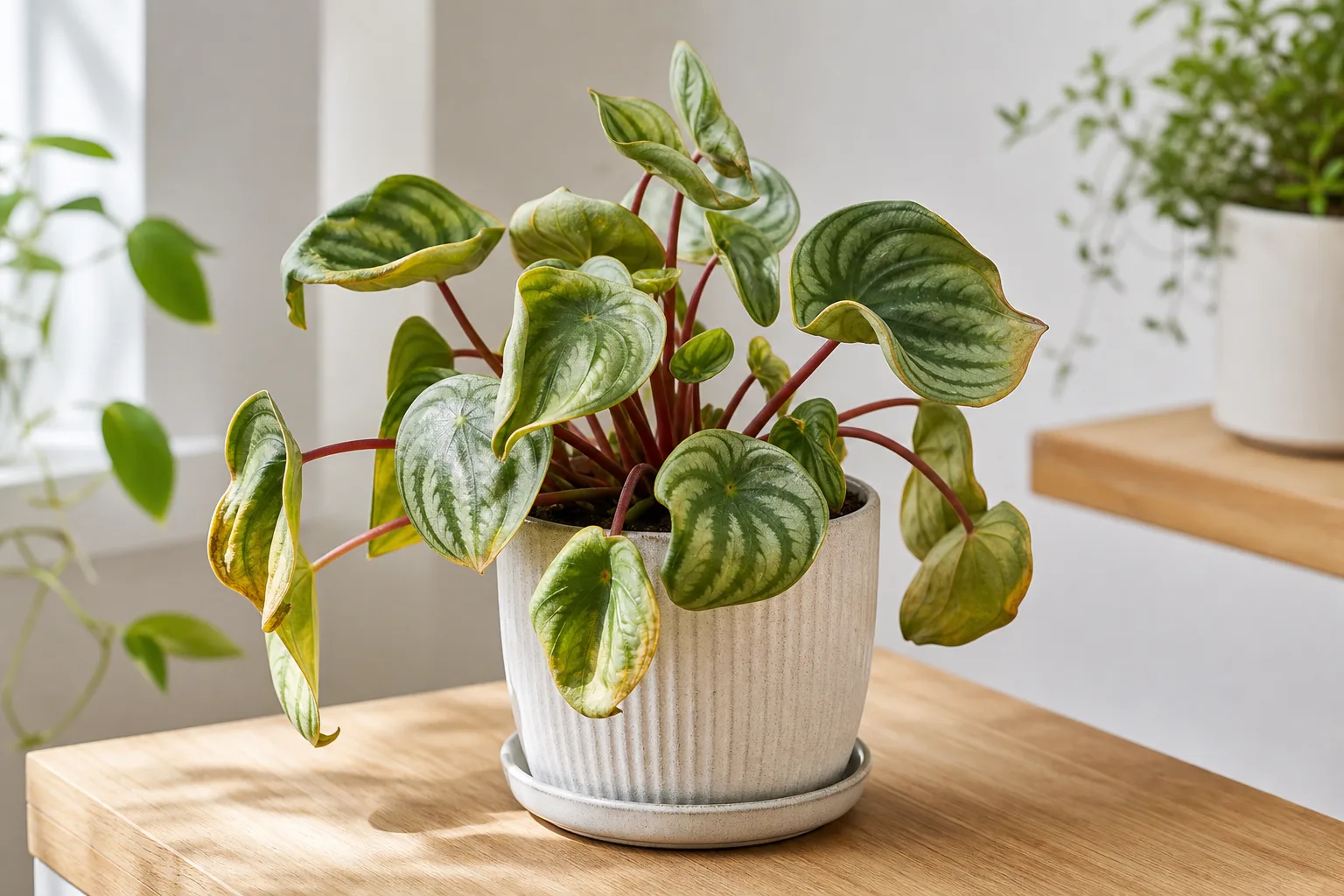
Water Stress on Watermelon Peperomia: Causes, Checks & Fixes
This guide covers water stress on Watermelon Peperomia. See also the general Water Stress guide, watering, and light pages for this plant.
Water Stress on Watermelon Peperomia: Causes, Checks & Fixes
When to use this page
Water stress on Watermelon Peperomia (Peperomia argyreia) describes alternating swings between too wet and too dry-the guilt-soak after neglect, the calendar habit that ignores season, or the oversized pot that stays wet while the surface looks dry. Mixed symptoms on one plant (edema cork, crispy tips, yellow lower leaves, and droop together) belong here.
| Your situation | Start here instead |
|---|---|
| Pot light, soil dry throughout, firm crown, crispy edges only | Underwatering |
| Pot heavy, soil soggy, soft crown, yellow lower leaves | Overwatering |
| Raised blister-like bumps scarring brown on striped leaves | Edema |
| Multi-day petiole hang without mixed wet-dry damage | Drooping leaves |
| Whole rosette collapsed within hours | Wilting |
| Ongoing watering rhythm after recovery | Watermelon Peperomia watering guide |
Quick answer
On this rosette species, water stress is rarely one bad watering-it is the rhythm failure that leaves different damage from each extreme on the same plant. Round, peltate leaves on red petioles wilt when roots cannot supply steady moisture, yet the compact crown also rots fast when the center stays wet.
First step: lift the pot, stick your finger 2–3 cm into the mix, and press red petioles where they meet the soil. That trio tells you whether to water once, withhold, or inspect roots-not another calendar guess.
Wet vs. dry decision table
| Signal | Dry side of stress | Wet side of stress | Alternating stress |
|---|---|---|---|
| Pot weight | Light | Heavy days after watering | Swings between both |
| Soil 2–3 cm deep | Dry throughout | Damp or soggy | Dry surface, wet deep-or vice versa after overcorrection |
| Red petioles at crown | Firm | Soft, collapsing | Firm now but edema scars from prior wet phase |
| Leaf pattern | Crispy edges, dull striping | Yellow lower leaves | Edema cork on one leaf, crispy tips on another |
| First action | Water once thoroughly | Stop watering; inspect if soft | Stabilize dry-top rhythm; see branches below |
What to look for - mixed signature: Edema corky patches on lower striped leaves plus papery crispy tips on outer leaves after a dry spell followed by a heavy soak. Original symptom photos will be added to this guide in a future update.
What water stress looks like on Watermelon Peperomia
Watermelon Peperomia stores little water compared with true succulents. Its shallow root system in a compact rosette cannot buffer long droughts or constant sogginess-the species is intolerant of wet soil and very dry soil alike.
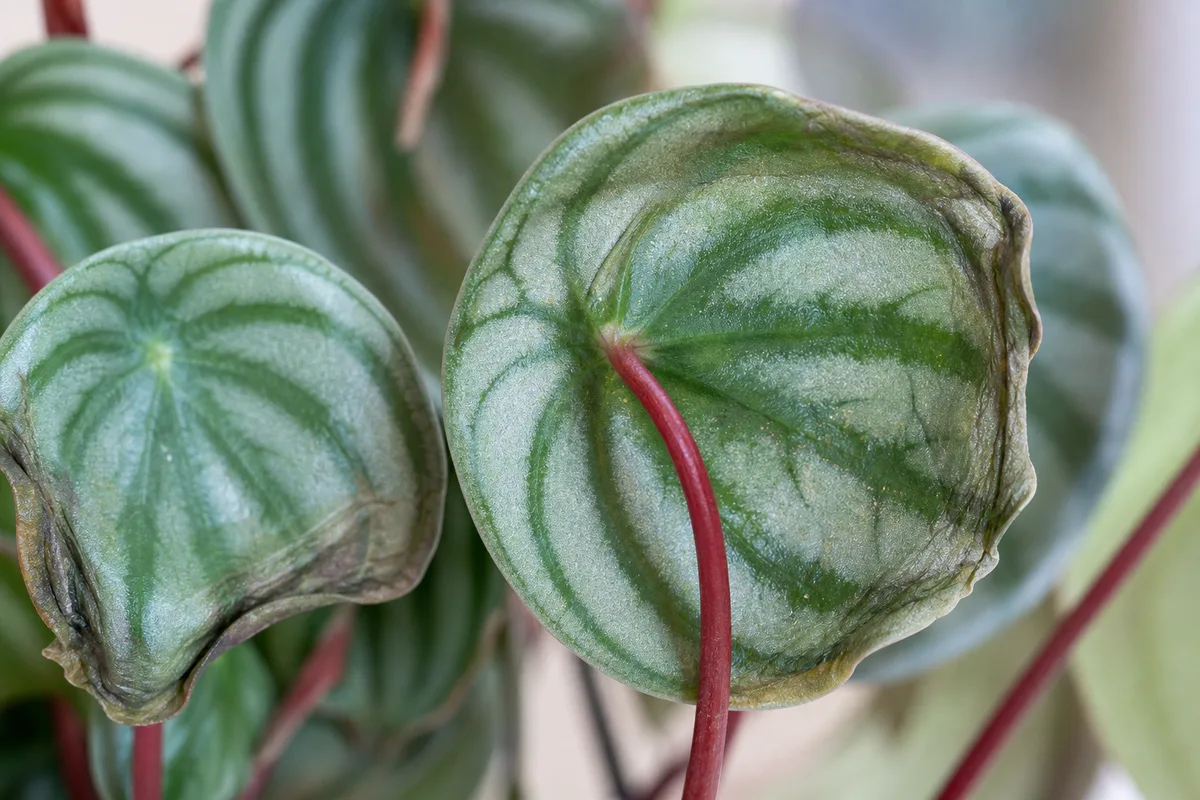
Water Stress symptoms on Watermelon Peperomia - compare with healthy tissue on the same plant.
After a dry spell
- Floppy stems and drooping striped leaves that feel lighter and slightly soft
- Leaf edges turning papery or crispy before full collapse
- Pot that feels noticeably light when lifted
- Duller silver striping as turgor drops
- Red petioles still firm where they meet the soil
After a wet spell or overcorrection
- Yellowing lower leaves, often starting at the base of red petioles
- Soft or unstable feel at the rosette crown
- Corky brown edema spots where cells burst from uneven uptake-see the edema guide for blister-only depth
- Fungus gnats hovering after soil stayed damp for days
- Sour or musty smell from the pot
The water-stress signature
Mixed damage on one plant: edema cork on a lower leaf, crispy tips on an outer leaf, and droop throughout-because you soaked after a drought, or let it dry hard after keeping it too wet. Pure underwatering rarely causes yellow lower leaves and edema together. Pure overwatering rarely causes a feather-light pot and papery edges without wet soil deep down.
What to look for - crown firmness: Press red petiole bases at the soil line. Firm tissue on dry soil supports drought correction. Mushy tissue on wet soil suggests crown or root decay-see crown rot if the rosette center is involved.
Why Watermelon Peperomia gets water stress
This species evolved on tropical forest floors with brief dry windows and sharp drainage, not constant moisture or long droughts. Several home-care patterns reset the wet-dry cycle on repeat.
Calendar watering
Watering every Sunday ignores that cooler rooms, shorter winter days, and dense mix keep pots wet longer while summer brightness dries them faster. University of Maryland Extension warns that watering on a schedule leads to too much or too little water-plants should be watered when they need it, not when the calendar says so.
Guilt-soaking after neglect
Peperomia petioles droop when dry, which prompts a heavy soak-then the compact rosette and shallow roots sit in wet mix while the owner waits another week. Over-watering causes root rot while under-watering causes the plant to wilt on this species; the fixes pull in opposite directions if you do not check soil first.
Oversized pots
Watermelon Peperomia thrives slightly pot-bound with a small root system. A large pot holds a wet outer ring long after the surface looks dry, so you water again while inner roots suffocate-then the visible top dries and you withhold until the whole plant wilts.
Seasonal light shifts
Lower light in winter slows uptake; continuing summer frequency keeps soil cold and wet. Missouri Botanical Garden recommends reducing watering from fall to late winter while still allowing the top to dry between drinks.
Crown watering
Pouring into the rosette center wets foliage and stem bases where airflow is poorest-exactly where rot starts after a wet phase of the stress cycle. Water at the pot rim instead; see poor drainage if saucers or cache pots trap moisture.
How to confirm the cause
Work through these checks in order before changing anything else:
- Pot weight - Lift the container. A dramatic weight drop since last week confirms dry-down; persistent heaviness confirms wet mix.
- Soil moisture at 2–3 cm - Dry throughout the top inch with a light pot points to drought stress. Damp or cold mix 5 cm down with a heavy pot points to excess moisture-even if the surface looks dry.
- Crown firmness - Gently press where red petioles meet the soil. Firm and upright supports drought diagnosis; soft, mushy, or wobbly supports rot from the wet phase-do not water until you inspect roots.
- Symptom pattern - Crispy edges plus light pot = dry side of stress. Yellow lower leaves plus edema plus damp soil = wet side. Both sets together = alternating stress.
- Recent history - Did you skip two weeks then soak heavily? Water on schedule through a dim winter? Repot into a much larger container? Each pattern fits water stress on this species.
- Drainage check - Saucer water sitting more than 30 minutes, closed cache pots, or mix without perlite keeps the wet phase going and resets the cycle.
If soil is wet and the crown is soft, treat as possible crown or root rot-not simple drought. If soil is dry, the crown is firm, and the pot is light, a thorough watering is appropriate.
First fix for Watermelon Peperomia
Stop calendar watering. Lift the pot, probe moisture 2–3 cm deep, and check crown firmness-then act on what you find. Nothing else today.
- Dry mix, firm crown, light pot: Water thoroughly until a little runs from the drainage hole, then empty the saucer. Do not mist, fertilize, or repot.
- Wet mix, firm crown: Withhold water until the top inch is dry throughout. Improve airflow around the rosette. Empty any saucer water.
- Wet mix, soft crown: Do not water. Unpot and inspect roots and stem base before any soak-rot from the wet phase needs trimming and dry repotting, not another drink.
This one pause prevents the classic mistake: wilting triggers a soak when roots are already drowning, or dry soil triggers neglect when the plant only needs a single even watering.
Step-by-step recovery
Once you know which side of the cycle you are on, work in this order:
- Stabilize the rhythm - Allow the top of the soil to dry to the touch before rewatering. In practice that is often when the top 2–3 cm is dry, then water until a small amount drains out.
- Empty saucers every time - Never let the pot sit in standing water; that extends the wet phase and invites fungus gnats on peperomia soil.
- Water around the crown edge - Direct moisture into the soil at the pot rim rather than flooding the rosette center.
- Match season to frequency - Reduce drinks in late fall and winter when growth slows; increase checks-not volume-in bright warm months per the watering guide.
- Address chronic wetness - If mix stays damp more than a week, repot into well-draining soil with perlite in a pot only slightly larger than the root ball-after the plant is stable and the crown is firm.
- Trim only dead tissue - Remove fully yellow or collapsed leaves for hygiene. Keep blemished but firm leaves; they still photosynthesize while new growth returns.
- Hold fertilizer - Skip feed until new striped leaves look firm for two weeks. Salt stress on stressed roots worsens edge burn.
If inspection shows mushy roots or a rotting crown, trim back to firm tissue, let cuts air-dry, and repot into fresh airy mix before resuming the dry-top rhythm.
Recovery timeline
First one to two weeks: Drooping from drought often corrects within hours to one day after a proper soak if the crown stayed firm. Overwatered plants stop yellowing spread once soil dries and stays on the dry side of the target range.
Two to four weeks: New leaves with crisp watermelon striping are the best success sign. Peperomia argyreia is slow-growing, so do not expect a full flush overnight.
One to three months: Old edema cork and crispy tips remain on damaged leaves-they do not heal. The plant should look fuller at the center as replacement foliage opens.
Worsening signs: Crown softens further after you dry the soil, yellowing climbs new growth, or the plant collapses despite stable watering-those point to advanced rot, not recoverable water stress alone.
Indoor example: desk rosette, guilt-soak cycle
Editorial composite - typical home-grower pattern, not a single photographed specimen.
A grower kept a 10 cm (4 inch) rosette in a 12 cm plastic pot on a north-facing desk through autumn. They skipped watering for 12 days while traveling; outer striped leaves drooped and edges turned papery. Back home, they guilt-soaked until water ran from the drainage holes and left the saucer full overnight.
Within 10 days, two lower leaves showed corky edema patches and yellowing at red petiole bases while outer tips stayed crispy. The pot felt heavy, but the grower almost watered again because leaves still looked limp. A finger probe found damp mix 3 cm deep; crown tissue was still firm.
They stopped watering, emptied the saucer, and switched to rim watering only when the top 2 cm dried-roughly every 10–12 days in dim light. New upright striped leaves appeared on day 21. Old edema scars remained on the lower pair.
Takeaway: alternating dry-then-soak produced mixed damage on one plant; firm crown plus heavy pot meant withhold and stabilize-not another drink.
Lookalike symptoms to rule out
- Pure underwatering - Light pot, dry mix throughout, firm crown, crispy edges-but no yellow lower leaves or edema blisters. Fix with one soak and steady dry-top checks on the underwatering page.
- Pure overwatering / root rot - Wet mix, soft crown, sour smell, mushy roots. Needs unpotting and surgery on the overwatering or root rot guides-not rhythm adjustment alone.
- Low light - Long red stems with small dull leaves; pot may stay wet too long in shade. Brighter indirect light makes dry-down predictable. See not enough light.
- Low humidity - Brown tips without dramatic droop or yellowing cycle; often near heating vents. Low humidity may contribute, but fix soil rhythm first.
- Spider mites - Fine stippling and webbing on leaf undersides in dry air; stickiness and uniform wilt pattern differ from water stress. See spider mites.
Mistakes to avoid
Do not water because leaves droop without checking soil-wilting can follow both under-watering and over-watering on Peperomia. Do not repot into a much larger pot to “fix” watering; extra wet soil volume prolongs the stress cycle.
Avoid misting the rosette instead of fixing soil moisture-wet foliage plus poor airflow worsens crown problems. Do not fertilize a stressed plant hoping for recovery. Skip bottom-watering exclusively if it keeps the crown zone constantly moist without ever drying.
Do not assume a fixed interval (every seven or fourteen days) year-round-test soil with your finger to about two inches instead.
How to prevent water stress next time
Build a check-when-dry habit: finger or skewer into the top 2–3 cm, lift the pot, note crown firmness-then water or wait. Allow compost to dry on top between waterings and reduce watering in winter.
Empty saucers within 30 minutes, use pots with open drainage, and water at the soil edge rather than over the crown. When you travel, ask someone to check dryness-not to pour on a schedule. After repotting, wait until the plant settles before changing light, pot, and watering all at once. For full species context, see the Watermelon Peperomia overview.
When to worry
Escalate immediately if the crown feels soft while soil is wet, stems blacken at the base, or roots are mushy on inspection-water stress has likely progressed to rot. Slow cosmetic tip browning on a firm plant can wait for rhythm correction.
If more than half the crown collapses or roots are mostly decayed after trimming, survival odds drop-take healthy leaf or stem cuttings while tissue is still firm per the propagation guide.
Conclusion
Stabilize one rhythm: lift, probe 2–3 cm deep, feel the crown, then water or wait. Mixed edema, yellow lower leaves, and crispy tips on the same rosette mean you are correcting a swing-not picking one cause. When the crown stays firm, new striped leaves tell you the plant is winning; when it softens on wet soil, switch to the crown rot or root rot guides. For ongoing schedule after recovery, use the watering guide.