Low Humidity on Watermelon Peperomia: Causes, Checks & Fixes
Quick answer
Watermelon Peperomia tolerates average home humidity but shows stress below about 40%-especially near heating vents in winter. First step: move the pot off the vent and set up a pebble tray before misting or buying a humidifier.
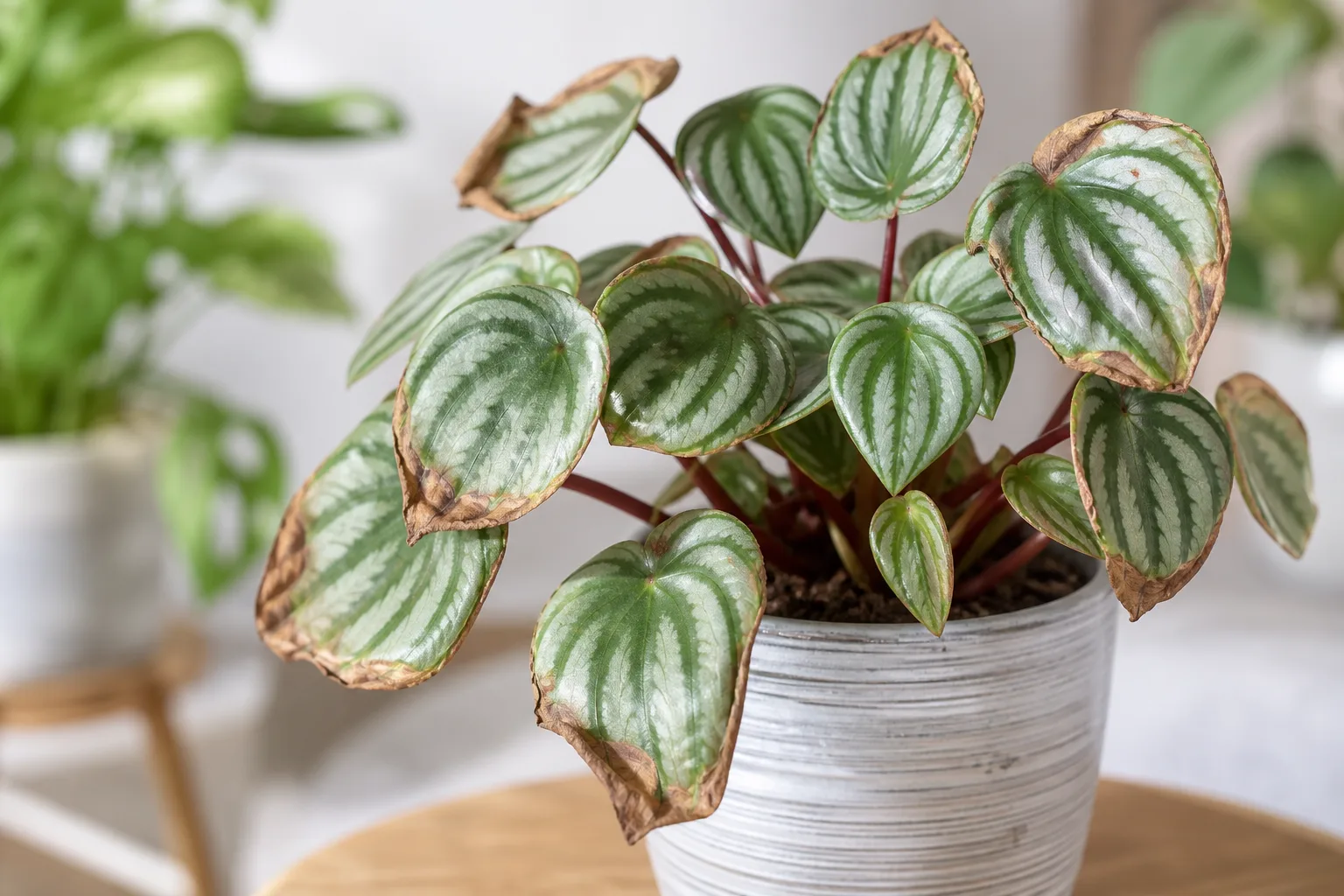
Low Humidity on Watermelon Peperomia: Causes, Checks & Fixes
This guide covers low humidity on Watermelon Peperomia. See also the general Low Humidity guide, watering, and light pages for this plant.
Low Humidity on Watermelon Peperomia: Causes, Checks & Fixes
Quick answer
Watermelon Peperomia (Peperomia argyreia) comes from humid tropical forests, but it adapts to typical indoor air better than ferns or calatheas. Very dry winter heating-often 20–30% relative humidity-can still brown the edges of its round, watermelon-striped leaves and make spider mites more likely on the fleshy foliage.
First step: move the pot away from heating vents, radiators, and cold drafty windows, then set up a pebble tray beneath it. That raises humidity near the plant without wetting the rosette crown, which Watermelon Peperomia cannot tolerate. Do not compensate for dry air by watering more often-that invites root rot on this small-rooted species.
What low humidity looks like on Watermelon Peperomia
Dry air stress on Watermelon Peperomia overview is subtle at first. The silver-green stripes stay visible, but you may notice:
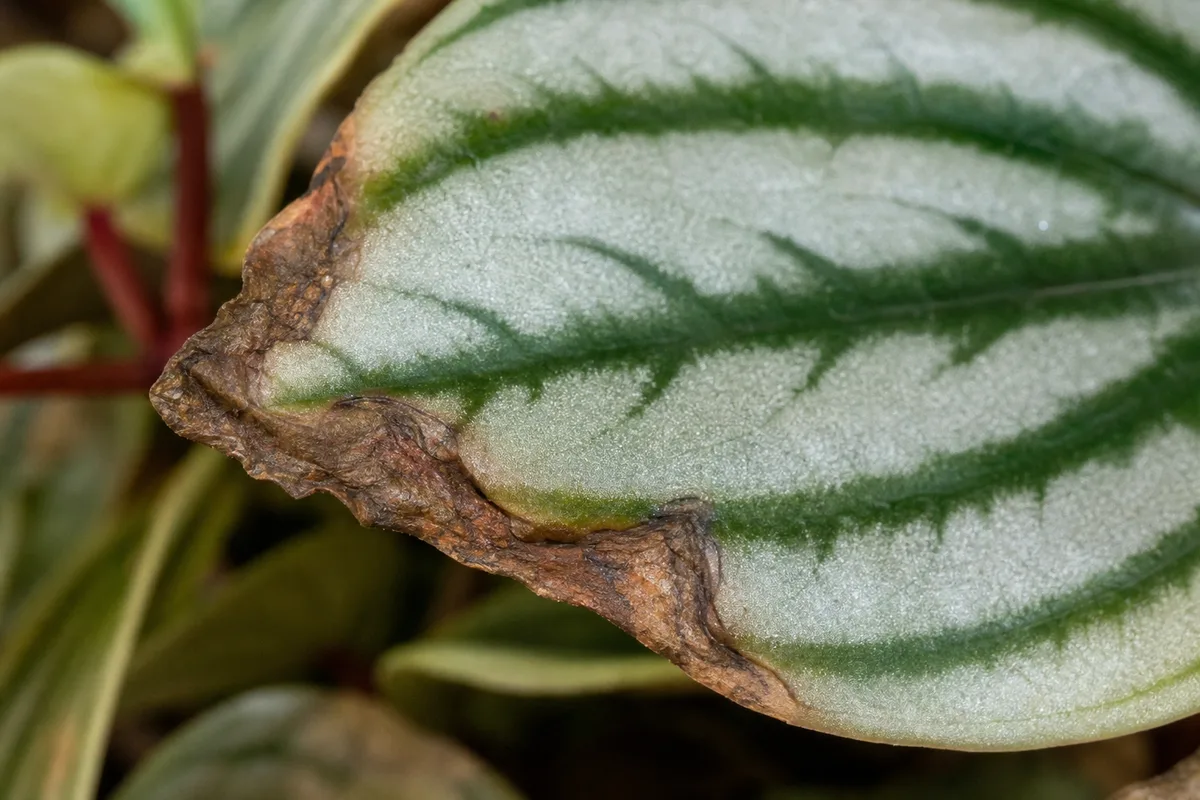
Low Humidity symptoms on Watermelon Peperomia - compare with healthy tissue on the same plant.
- Dry brown or tan margins on otherwise firm, waxy leaves-often on the oldest leaves closest to a heat source
- Slightly curled or cupped leaf edges when air is very dry, especially if soil is also going too long between drinks
- Crispy petiole tips on delicate red stems before the whole leaf collapses
- Dull striping that looks faded rather than sharply contrasted-sometimes from combined dry air and irregular watering
- Fine stippling on leaf undersides with optional webbing-spider mites thrive in the same dry conditions that stress peperomias
What low humidity does not look like on Watermelon Peperomia:
- Soft, mushy petioles at the crown - that pattern fits overwatering on Watermelon Peperomia or crown rot, not dry air alone
- Yellow lower leaves with wet soil - overwatering is the more common killer on this species
- Bleached patches on leaves facing a window - direct sun scorch, not humidity
- [Uniform brown tips on every leaf after Watermelon Peperomia repotting guide on Watermelon Peperomia](/plants/watermelon-peperomia/brown-tips/) - often transplant stress or salt shock, not winter dryness
Damaged leaf margins are permanent. New growth tells you whether conditions have improved.
Why Watermelon Peperomia gets low humidity stress
Peperomia argyreia evolved in the filtered light and moist air of South American rainforest understories. Its leaves are fleshy and store some water, but the plant still performs best when ambient humidity stays in a moderate range-roughly 40–60% in most homes.
Winter is the trouble season. Central heating drops indoor humidity sharply while the plant sits closer to radiators and forced-air vents. Heat rising past the pot pulls moisture from leaf edges faster than the small root system can replace it, especially when you are correctly letting the top of the mix dry between waterings.
Placement matters on this compact rosette. Watermelon Peperomia looks good on windowsills and desks, but:
- Radiators and heat registers create a dry microclimate within a few feet
- Cold winter glass chills leaves at night while the room air stays dry by day
- Air-conditioning vents in summer blow dry, cold air across delicate petioles
- Single-plant isolation in a large dry room offers no shared transpiration buffer
Low humidity rarely kills Watermelon Peperomia on its own. It becomes serious when dry air pairs with spider mites, which colonize peperomia leaf undersides in hot, dry indoor conditions, or when you overwater trying to “help” a plant that looks thirsty.
How to confirm the cause
Work through these checks before changing your whole care routine:
- Location scan - Is the pot within 1 m (3 ft) of a radiator, heat vent, fireplace, or frequently opened exterior door? Dry-air damage often affects only the side facing the heat source first.
- Hygrometer reading - Place a small meter near the plant at leaf height. Readings below 35% support low humidity; readings above 45% suggest another cause.
- Soil moisture - Stick a finger into the top 2–3 cm (1 in). Bone-dry mix with limp leaves may be underwatering on Watermelon Peperomia. Wet mix with yellow leaves points away from humidity as the main issue.
- Crown firmness - Press the base of red petioles where they meet the soil. Firm tissue with crisp edges means dry air or salts; soft tissue means rot until proven otherwise.
- Leaf underside inspection - Use a hand lens or phone macro mode. Speckling, webbing, or moving dots mean spider mites-treat pests even if you also raise humidity.
- Water source - Peperomias are sensitive to fluoride in tap water, which browns tips independently of humidity. If you recently switched to hard tap water, tip burn may not be dry air at all.
- Season timing - Symptoms that appear when heating starts, then stabilize in spring, strongly fit low humidity rather than sudden disease.
If the plant is grouped with other houseplants in a bright room, soil dries on schedule, and edges still crisp with no pests, dry air is the likely answer.
First fix for Watermelon Peperomia
Move the pot off the heat source and set up a pebble tray immediately.
Choose a wide saucer, fill it with pebbles, add water to just below the top of the stones, and set the pot on the pebbles so the base never sits in standing water. Move the plant to Watermelon Peperomia light guide at least 60 cm (2 ft) from radiators and AC vents. Grouping with one or two other plants adds a modest humidity boost through shared transpiration.
Do not mist the rosette center on day one. Watermelon Peperomia’s compact crown holds moisture against stems and invites fungal problems when foliage stays wet. If you mist at all, aim at the air around the plant in the morning so leaves dry within an hour.
Do not increase watering frequency to fix dry air. This species is intolerant of wet soil; soggy mix will rot the small root system faster than low humidity will crisp a leaf edge.
Step-by-step recovery
After the first fix, work through these steps based on what you find:
- Stabilize placement - Keep the plant in one spot for two to three weeks. Bouncing between rooms resets acclimation and makes symptoms harder to read.
- Hold repotting and fertilizer - Stressed peperomias recover faster when care stays boring. Repot only if mix is failing or roots are rotting.
- Adjust watering to the pot, not the calendar - Water when the top inch of mix is dry. Dry air makes soil surface out faster; check with your finger rather than a fixed weekly schedule.
- Switch to rain or filtered water if tips keep browning despite better humidity-fluoride and salt burn mimic dry-air damage on peperomia leaves.
- Treat spider mites if present - Rinse leaf undersides with lukewarm water weekly, then apply insecticidal soap if stippling continues. Raising humidity helps deter reinfestation but does not replace pest control.
- Add a humidifier if needed - For persistently dry rooms below 35%, a small humidifier 1–2 m from the plant is more reliable than misting. Target 40–60% at leaf height, not saturated air that keeps the crown damp overnight.
- Trim only fully dead tissue - Snip leaves that are mostly brown with sterile scissors. Partial tip damage can stay until new growth replaces the leaf.
Recovery timeline
Low humidity recovery on Watermelon Peperomia is gradual because the plant grows slowly.
- Days 1–7: After moving off heat and adding a pebble tray, further crisping should stop. Existing brown edges remain.
- Weeks 2–4: New leaves should open with cleaner margins if humidity and watering are stable. Petioles feel firm; drooping from dry air eases after a proper drink.
- Weeks 4–8: A small flush of striped foliage confirms the environment suits the plant. Old damaged leaves can be removed once replacements mature.
- If symptoms worsen: Spreading softness at the crown, sour soil smell, or heavy webbing means pivot to overwatering or pest treatment-not more humidity.
Crisped tissue does not heal. Judge success by new striped leaves, not old ones greening up.
Lookalike symptoms
Several common Watermelon Peperomia problems mimic dry air:
| What you see | More likely cause | Quick check |
|---|---|---|
| Brown tips, firm crown, dry room | Low humidity / fluoride | Hygrometer near vent; water source |
| Yellow leaves, wet soil | Overwatering / root rot | Mushy roots; sour smell |
| Limp leaves, light pot | Underwatering | Dry mix throughout |
| Bleached patches on sun-facing leaves | Sunburn | Direct afternoon sun on glass |
| Stippling + webbing | Spider mites | Underside inspection in dry heat |
| Brown corky spots on leaf surface | Edema from uneven watering | Blisters that burst; humidity swings |
Underwatering and low humidity often overlap-both show droop and crisp edges. The difference is soil: underwatering comes with desiccated mix; humidity stress can happen even when you water correctly.
Mistakes to avoid
- Misting the rosette daily - Brief surface wetting does little for ambient humidity and can keep the crown too damp.
- Watering more because leaves look dry - Wet soil on a peperomia rots roots; fix air moisture instead.
- Placing the pot inside a pebble tray of standing water - Roots must stay above the waterline; only pebbles contact liquid.
- Running a humidifier directly onto leaves all night - Constant film on foliage encourages fungal spotting in the compact center.
- Ignoring spider mites because you raised humidity - Mites need treatment; humidity alone rarely clears an active infestation.
- Expecting old leaves to recover - Trim or wait for replacement growth; brown margins do not revert.
How to prevent low humidity next time
Place Watermelon Peperomia in bright indirect light with stable temperatures between 18–26°C (65–78°F). Keep it away from radiators, heat vents, and cold window glass in winter.
Maintain moderate humidity year-round:
- Use a pebble tray or small humidifier when heating runs
- Group with other plants on a shared tray
- Run a hygrometer near the pot in November–March
Water when the top inch of mix dries, reduce winter watering frequency, and prefer rain or filtered water to limit fluoride tip burn. Scout leaf undersides monthly in dry seasons so spider mites do not gain a foothold while you focus on humidity.
Watermelon Peperomia is not a high-humidity bathroom plant like a fern, but it is also not a desert succulent. Steady, moderate air moisture plus sharp drainage keeps the striped leaves firm and the red petioles upright through dry heating seasons.
When to use this page vs other Watermelon Peperomia guides
- Watermelon Peperomia watering guide - Use for routine moisture checks before assuming low humidity is the main issue.
- Watermelon Peperomia problems hub - Browse all 28 common issues on this species.
- Brown Tips on Watermelon Peperomia - Different entry point when symptoms overlap with low humidity.