Watermelon Peperomia Care: Light, Water & Tips
Peperomia argyreia
Watermelon Peperomia is pet-safe and easy to grow. It needs bright indirect light and very infrequent watering - let the soil dry completely between waterings.
Watermelon Peperomia Care: Light, Water & Tips
Start with wateringThe most common care mistake for Watermelon PeperomiaWatering guide →Watermelon Peperomia care essentials
Light
bright indirect light, medium indirect light
Water
Allow soil to dry completely between waterings; water sparingly.
Soil
Well-draining potting mix with perlite or coarse sand.
Humidity
Average to moderate humidity (40–60%)
Temperature
18°C to 26°C (65–78°F)
Fertilizer
Feed lightly during active growth. Use monthly during spring and summer at half strength..
About Watermelon Peperomia
Watermelon Peperomia has a upright growth habit.
| Detail | Information |
|---|---|
| Growth habit | Upright |
| Scientific name | Peperomia argyreia |
Watermelon Peperomia Care: Light, Water & Tips
What Is Watermelon Peperomia?
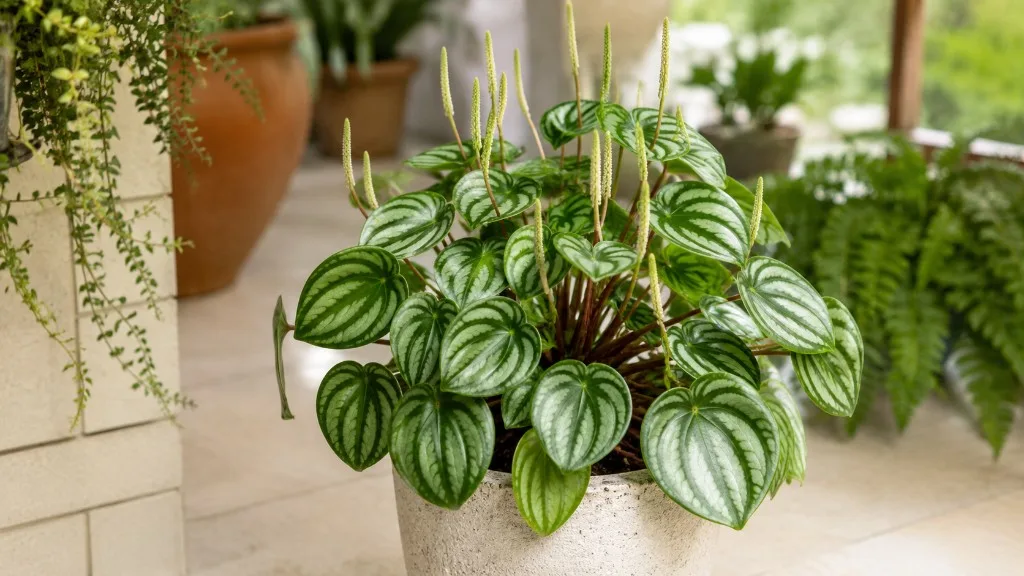
Watermelon peperomia is a compact indoor foliage plant grown for round leaves patterned with silver and dark green stripes that resemble a watermelon rind. The accepted scientific name is Peperomia argyreia, a member of the Piperaceae family - the same family as black pepper, though Watermelon Peperomia overview is ornamental rather than culinary. You will also see it sold as watermelon begonia, watermelon pepper, or rugby football plant on tags and in catalogs. None of those common names change the care: they are marketing labels for the same species in most retail pots.
Indoors, watermelon peperomia typically reaches about 8 inches (20 cm) tall and spreads in a low, bushy rosette on reddish, semi-succulent stems, according to the Missouri Botanical Garden Plant Finder. Growth is moderate in bright, stable conditions and slows when light drops or temperatures cool. The plant produces slender green flower spikes that many growers barely notice - the foliage, not the blooms, is the entire reason to keep it on a shelf or desk.
If you are deciding whether this plant fits your home, the honest summary is this: watermelon peperomia rewards Watermelon Peperomia light guide, well-draining soil, and patient watering - and it punishes soggy roots and dark corners. It is easier than a calathea and more interesting than a snake plant, with a footprint small enough for apartments, offices, and grouped plant displays. One standout advantage for pet owners: the ASPCA lists watermelon peperomia as non-toxic to dogs and cats, making it one of the safer colorful foliage choices for homes with curious animals.
Botanical Background and Native Range
Watermelon peperomia belongs to Piperaceae, a family of mostly tropical and subtropical plants that share a few baseline indoor-care patterns: roots need air as much as moisture, sudden cold drafts are risky, and most failures start underground before they show clearly on the leaves. Peperomias in general are epiphytic or semi-epiphytic in nature - they often grow on trees or rocky surfaces with shallow root systems and excellent drainage - which explains why they rot quickly in heavy, waterlogged potting mix.
The species is native to Brazil and other parts of South America, according to the Missouri Botanical Garden Plant Finder. In that warm, humid climate, the plant experiences periods of dryness followed by rain, a rhythm that matters more for your watering hand than any fixed weekly schedule. Outdoors it is winter hardy only in USDA Zones 10 through 12; everywhere else it is grown as a year-round houseplant or a seasonal patio accent brought indoors before cold weather.
The nickname watermelon begonia causes endless confusion because this plant is not a begonia and shares no close relationship with Begoniaceae. If you are comparing care guides, ignore begonia advice entirely. Peperomia obtusifolia (baby rubber plant) is a closer relative with thicker, solid-green leaves and slightly different drought tolerance, while Pilea peperomioides (Chinese money plant) is an unrelated species that happens to share round-leaf aesthetics. When troubleshooting, confirm Peperomia argyreia on the tag so you are not applying the wrong plant’s rules.
Why the Silver-Striped Leaves Need the Right Setup
The leaves are the whole show, and they are semi-succulent - thick enough to store some water, which is why the plant tolerates brief dry spells better than true tropical foliage plants like ferns or fittonias. That same leaf structure creates a common misunderstanding: owners see “drought tolerant” and underwater until leaves crisp, or they overcompensate with frequent shallow watering until roots suffocate. The pattern on each leaf develops best when light is bright but filtered; too little light fades the silver striping and stretches stems, while too much direct sun bleaches or scorches the round surface.
New leaves emerge on short petioles from a central crown, giving mature plants a tidy, stacked appearance that photographs well and fits windowsills, bookshelves, and desk corners without dominating the space. Because the plant stays small, it also works in terrariums and mixed dish gardens with other compact species - provided drainage remains sharp and you resist the urge to keep the soil constantly wet for humidity-loving neighbors.
Best Growing Conditions for Watermelon Peperomia
Watermelon peperomia does best when your room approximates the warm, bright, periodically dry rhythm of its native range. The four variables that decide almost every outcome are light, water, soil, and temperature. Align those and feeding, Watermelon Peperomia repotting guide, and propagation become straightforward maintenance. Misalign one - especially water or light - and the plant declines with symptoms that look interchangeable until you inspect the root zone and the window placement together.
Light Requirements
Watermelon peperomia needs bright, indirect light for most of the day. The Clemson HGIC Peperomia factsheet recommends placing peperomias where they receive indirect light from east- or south-facing windows, and notes they can tolerate somewhat lower light near a large north window if the room is genuinely bright. East-facing sills are often ideal: gentle morning sun, then bright ambient exposure. North windows work for many homes if you are not placing the plant deep in a dim corner. West- and south-facing exposures can work too, but pull the pot back from the glass or filter afternoon sun with a sheer curtain - direct midday rays scorch the round leaves and fade the silver pattern before obvious brown patches appear.
The fastest diagnostic for incorrect light is new growth, not old leaves. Compact new leaves with crisp silver striping mean the plant is probably happy. Long petioles, smaller pale leaves, and sparse new growth mean it wants more light. Bleached patches, brown scorch on the sun-facing side, or leaves that curl inward at midday mean it wants less direct exposure or a slower acclimation to a brighter spot. Move gradually over one to two weeks when shifting from a dim shop shelf to a bright sill - leaves formed in low light burn easily if you jump straight into unfiltered afternoon sun.
Watermelon peperomia also performs under fluorescent or LED grow lights in offices and rooms without useful windows, where Clemson Extension notes peperomias can tolerate somewhat lower light near a bright north-facing window but benefit from added brightness when natural light is scarce. Position a full-spectrum fixture 12 to 18 inches above the canopy on a 10–12 hour timer. Rotate the pot weekly so the rosette stays even rather than leaning toward the light source.
Temperature and Humidity
Watermelon peperomia prefers stable room temperatures between 65 and 75°F (18 and 24°C) during active growth, matching the guidance in most current care references for this species. It tolerates brief excursions above that range when soil moisture keeps pace, but it dislikes cold drafts and sustained temperatures below about 55°F (13°C), which can stall growth and encourage leaf drop. Watch problem spots: directly under an air-conditioning vent, on a winter window ledge touching cold glass, and above a radiator that dries the air within hours.
Humidity is helpful but secondary compared with light and watering for this plant. Average home humidity in the 40–50% range is usually adequate. The Missouri Botanical Garden notes that watermelon peperomia likes higher humidity in summer and suggests a humidified room as one option. Very dry winter air - below about 30% - can stress leaves and encourage spider mites, especially if the plant sits near a heating vent. Grouping plants, using a pebble tray with the pot elevated above the water line, or running a small humidifier near the plant all help more reliably than misting, which raises humidity briefly and can leave wet foliage that invites fungal spotting when air circulation is poor.
Soil and Drainage
Use a well-draining houseplant or cactus potting mix with added perlite or coarse sand. Clemson Extension recommends a well-drained houseplant or cactus mix for peperomias generally; amending with perlite or coarse sand improves drainage further for watermelon peperomia. The principle matters more than a single branded recipe: the mix should drain freely, hold some moisture in the middle zone, and never stay soggy for days. A workable home blend is roughly two parts quality peat-free or peat-based houseplant mix and one part perlite or pumice - add extra perlite if your home runs hot and bright, or if you tend to water generously.
Always plant in a container with a drainage hole. Decorative cachepots are fine only if you empty runoff after every watering. Because peperomia roots are relatively small and shallow, an oversized pot is one of the fastest paths to root rot on Watermelon Peperomia: the extra mix holds water the root ball cannot use. Target a pot only slightly wider than the root mass, and size up one increment at a time when repotting.
How to Water Watermelon Peperomia
The general rule for watermelon peperomia is let the top of the mix dry before watering again, then soak thoroughly. The Missouri Botanical Garden advises watering moderately but consistently, allowing the soil to almost dry on top before rewatering, and reducing frequency from fall through late winter. NC State Extension recommends allowing the soil to dry to the touch at the top before watering again. In practice, check the top 1 to 2 inches (2.5 to 5 cm) with a finger or wooden skewer; if that zone is dry and the pot feels noticeably lighter, water until a small amount runs from the drainage hole, then empty the saucer so the plant is not standing in stale water.
This soak-and-dry rhythm matches the semi-succulent leaf physiology and the plant’s native pattern of dry intervals followed by heavy rain. Calendar schedules mislead because pot size, soil composition, light intensity, and season all change drying speed. A 4-inch pot in a bright east window may need water every 7 to 10 days in summer and every 2 to 3 weeks in winter, while a larger grouped terrarium planting may differ entirely. Your job is to read the pot, not the date.
Watermelon Peperomia watering guide During Active Growth
During active growth - usually the warm, bright months - watermelon peperomia uses water steadily but never constantly. Water thoroughly when the top layer is dry, not when the surface still feels cool and damp. Shallow sips every day keep the upper layer wet while the center stays unpredictably dry or wet, which is worse than an occasional deep drink. After watering, lift the pot briefly to learn its weight at saturation; over time, a very light pot combined with dry skewer readings tells you the plant is ready without guesswork.
If leaves look slightly soft but the soil is still moist deep down, do not water - that softness often signals overwatering on Watermelon Peperomia or root stress, not drought. Confirm with moisture depth before reacting to leaf texture alone.
Seasonal Adjustments
In cooler, dimmer months, the plant slows and the same summer rhythm will overwater it. Stretch the interval, verify moisture more carefully, and pause fertilizer until new growth resumes in spring. Missouri Botanical Garden explicitly recommends reducing watering from fall to late winter, which aligns with slower evaporation and lower light in most homes. Resume your active-season checks only when you see fresh leaves forming and the pot drying on a predictable rhythm again.
Heating systems that dry the air can increase evaporation from small pots even in winter, so do not switch to autopilot - a bright plant near a sunny winter window may still dry faster than one in a dim back room. Adjust per pot, not per season label.
Common Watering Mistakes
The single most common cause of failure with watermelon peperomia is watering on a schedule instead of on the plant’s actual state. Other frequent mistakes include watering a little every day instead of deeply when needed, leaving the pot sitting in runoff, and upsizing to a huge decorative pot that stays wet for weeks. Symptoms of chronic overwatering include yellow lower leaves, mushy stems at the soil line, persistent drooping despite wet mix, and fungus gnats on the surface. underwatering on Watermelon Peperomia is less common but shows up as crisp leaf edges, very dry mix edge-to-edge, and slow or stalled new growth.
If you suspect overwatering, check roots before watering again. Healthy roots are pale and firm; rotting roots are dark, soft, and smell sour. Trim affected tissue, repot into fresh mix, and adjust the rhythm - the plant may shed leaves while recovering, which is normal if the crown remains firm.
How to Feed Watermelon Peperomia
Watermelon peperomia does not need heavy feeding. A modest, balanced fertilizer applied only during active growth is enough. Strong doses, year-round feeding, and fertilizer applied to dry or stressed soil are how hobbyists burn roots and accumulate salt on the soil surface. Think of feeding as a supplement to good light and correct watering, not a substitute for either.
Use a balanced water-soluble houseplant fertilizer at one-quarter to one-half of the label rate, applied every two to four weeks from spring through early fall, which aligns with Clemson Extension guidance to use a low-strength liquid fertilizer occasionally during active growth. Apply to already-moist soil so the solution distributes through the root zone without concentrating at dry root tips. If your potting mix contains a starter fertilizer charge, hold supplemental feeding for the first four to six weeks after purchase or repotting.
Pause feeding during winter slowdown, immediately after repotting, while the plant recovers from root rot or pest damage, and any time leaves are dropping from environmental stress. Resume only when new growth is visible and the watering rhythm has stabilized. Flush the pot with plain water every few months in hard-water areas to reduce salt crust on the soil surface and brown leaf margins.
Repotting and Root Health
Repot watermelon peperomia roughly every two to three years, or whenever roots circle the drainage holes, water runs straight through without soaking in, or the plant dries out unusually fast despite regular watering. Clemson Extension notes that peperomias do not need annual repotting and can remain in the same container for several years when growth is stable. The best time is early spring as active growth resumes, giving the plant a full bright season to settle.
Go up only one pot size at a time - typically 1 to 2 inches wider in diameter. A pot that is too large holds too much wet mix relative to the small root system, which is the most common post-repotting trigger for rot. Use fresh, well-draining mix, handle the brittle stems gently, and water lightly for the first week after repotting so damaged root tips can callus. Avoid fertilizing until you see new leaves.
Signs It Is Time to Repot
The clearest signs are physical: roots visible at the surface or through drainage holes, water racing through dry channels along the pot wall, or a plant that wilts shortly after watering because the root ball no longer holds moisture well. A sour smell from the mix or persistent fungus gnats despite corrected watering also warrants inspection, even if the calendar says you repotted recently. If the plant is healthy but simply slow, it may prefer staying slightly root-bound - peperomias often look best when not swimming in empty soil.
Propagation Methods for Watermelon Peperomia
Watermelon peperomia is one of the easier peperomias to propagate at home, which is part of its appeal once you have a healthy parent plant. The Missouri Botanical Garden lists tip, stem, and leaf cuttings as reliable methods. For most indoor growers, leaf petiole cuttings and stem cuttings succeed most often; division works when the plant has multiple crowns.
For leaf petiole cuttings, choose a healthy mature leaf and cut the petiole 1 to 2 inches below the blade with clean scissors. Insert the petiole into moist, well-draining mix or place it in a propagation box with high humidity, leaving the leaf blade above the surface. Keep the medium lightly moist - not wet - and provide bright, indirect light. Small plantlets typically emerge from the petiole base in four to eight weeks at warm room temperatures.
For stem tip cuttings, take 2 to 3 inches of stem with at least one node, remove lower leaves, and root in the same mix or in water changed weekly. Once roots are 1 to 2 inches long, pot into small containers with sharp drainage. Do not propagate stressed, pest-infested, or recently overwatered plants - cuttings inherit the parent’s problems and rot faster than established specimens.
Common Watermelon Peperomia Problems
Most problems with watermelon peperomia are environmental rather than mysterious, and they map to specific causes once you check moisture, light, and roots in that order. The hardest part is patience: chronic overwatering damage takes weeks to show and weeks to reverse. Avoid stacking fixes - repotting, moving windows, and fertilizing simultaneously makes it impossible to know which change helped.
Yellow Leaves, Drooping, and Pests
Yellow leaves most often mean overwatering or poor drainage, especially if lower leaves yellow first while the crown still looks green. Underwatering yellows leaves too, but the mix is usually dry throughout and leaf edges may feel crisp. Low light produces pale, soft yellowing on new growth with elongated petioles. Natural aging sheds an occasional older leaf at the base - remove it and move on if everything else looks healthy.
Drooping confuses owners because it appears with both too much and too little water. If the mix is wet and the base feels soft, suspect overwatering or root rot. If the mix is dry and the pot is light, water thoroughly and the plant often recovers within hours thanks to its semi-succulent leaves. If soil moisture is correct but leaves still droop, check for cold drafts, recent repot shock, or pest damage on stems.
Brown spots or scorch usually mean direct sun or mineral buildup from hard tap water. Move the plant out of harsh rays and flush the pot with plain water periodically. Edema - small corky bumps on the leaf underside - can appear when the plant takes up water faster than it transpires in cool, wet conditions; ease off watering and improve air circulation.
Watch for mealybugs in leaf axils, spider mites in dry air, scale along stems, and whitefly when plants crowd together without airflow. Inspect weekly with a phone flashlight under leaves. Early infestations respond to manual removal, a gentle shower, and insecticidal soap applied to labeled directions; isolate affected plants until populations clear.
Is Watermelon Peperomia Safe for Pets?
Yes - with the usual caveats that apply to any houseplant. The ASPCA lists Peperomia argyreia as non-toxic to dogs and cats under both “watermelon peperomia” and “watermelon begonia.” That makes it a strong choice for homes with animals compared with popular toxic foliage plants such as pothos, philodendrons, and many true begonias.
Non-toxic does not mean problem-free if eaten in quantity. The ASPCA notes that consumption of any plant material may cause vomiting or gastrointestinal upset in pets even when the plant is classified non-toxic. A nibble is usually not an emergency; repeated destruction of the plant is a training and placement issue as much as a toxicity issue. Elevate pots on shelves, use hanging planters, or offer pet-safe grass distractions if your cat treats every new leaf as a snack.
If you believe your pet ate a large amount of any plant or shows persistent symptoms, contact your veterinarian or the ASPCA Animal Poison Control Center at (888) 426-4435. Keep the botanical name Peperomia argyreia handy when you call so there is no confusion with unrelated “watermelon” plants.
Conclusion
The most useful thing to know about watermelon peperomia is that it is a compact, semi-succulent Piperaceae plant from South America that stays small, shows its best silver striping in bright indirect light, and survives missed waterings more gracefully than it survives soggy soil. Match light, water, soil, and temperature to that profile and the plant becomes a low-drama, pet-friendly accent for desks and shelves. When something looks wrong, check moisture depth and root health first, then light, then pests - in that order - before changing everything at once.
When to use this page vs other Watermelon Peperomia guides
- Watermelon Peperomia overview - Canonical hub for this species - care topics and problems branch from here.
- Watermelon Peperomia problems - Symptom-first path when you already know something is wrong.
Related Watermelon Peperomia guides
- Watermelon Peperomia watering
- Watermelon Peperomia light
- Watermelon Peperomia soil
- Watermelon Peperomia propagation
- Watermelon Peperomia fertilizer
- Watermelon Peperomia repotting
- Watermelon Peperomia pruning
- Aphids on Watermelon Peperomia
- Brown Tips on Watermelon Peperomia
- Crispy Leaves on Watermelon Peperomia
- Crown Rot on Watermelon Peperomia
- Damaged Roots on Watermelon Peperomia
How to care for Watermelon Peperomia?
How much light does Watermelon Peperomia need?
bright indirect light, medium indirect light
- bright indirect light, medium indirect light - bright indirect light, medium indirect light.
When should you water Watermelon Peperomia?
Allow soil to dry completely between waterings; water sparingly.
- Check top 2 inches - Stick a finger or knuckle into the soil; water only when the top layer feels dry.
- Drain excess water - Allow soil to dry completely between waterings; water sparingly.
What soil works best for Watermelon Peperomia?
Well-draining potting mix with perlite or coarse sand.
- Well-draining mix - Well-draining potting mix with perlite or coarse sand.
Grower notes for Watermelon Peperomia
What makes Watermelon Peperomia different
Watermelon Peperomia is grown for round striped leaves on delicate petioles. It shows stress as floppy stems and dull striping before full collapse. Keep the root zone airy and avoid burying the crown when repotting.
What matters most with Watermelon Peperomia
Watermelon Peperomia has smaller root systems than many houseplants, so oversized pots are a common hidden problem. Firm leaves and a drying pot matter more than frequent watering. In practice, the care checkpoint is simple: bright indirect light, medium indirect light. Pair that with well-draining potting mix with perlite or coarse sand, and avoid changing water, pot size, and placement all at once.
Best placement in a real home
Watermelon Peperomia belongs where bright indirect light, medium indirect light is realistic for most of the day, not only where the pot looks good. Allow soil to dry completely between waterings; water sparingly. If the pot stays wet longer than expected, move the plant into better light or reassess the mix before watering again. Humidity target: Average to moderate humidity (40–60%).. Temperature comfort zone: 18°C to 26°C (65–78°F).
Before you buy this plant
Choose Watermelon Peperomia with firm new growth, clean leaf undersides, and soil that does not smell sour or feel compacted. Be cautious if you see yellow-leaves, sticky residue, collapsed crowns, or a pot that is wet in poor light. Cosmetic old-leaf damage is less worrying than weak roots or active pests.
First month after bringing it home
Do not repot Watermelon Peperomia on day one unless the mix is failing or pests are obvious. Quarantine it, learn how fast the pot dries, and keep care boring while it adjusts. Watch especially for yellow-leaves and drooping-leaves. If problems appear, correct the condition first rather than stacking fertilizer, repotting, and pruning together.
Safety note for Watermelon Peperomia
Watermelon Peperomia is not a plant to keep within reach of pets or children. Treat it as an inaccessible display plant. Use gloves if sap or plant tissue is irritating, and pick a pet-safe alternative for floor pots or low shelves.
How to tell Watermelon Peperomia is settling in
If you plan to multiply it later, common methods include Leaf cuttings and Stem cuttings. If drooping-leaves shows up early, inspect light, watering, and roots before assuming the plant is permanently weak.
Is it pet safe?
Watermelon Peperomia is generally considered pet safe.
Watering Watermelon Peperomia
Allow soil to dry completely between waterings; water sparingly.
Soil & potting for Watermelon Peperomia
Well-draining potting mix with perlite or coarse sand.
Humidity & temperature for Watermelon Peperomia
Watermelon Peperomia prefers average to moderate humidity (40–60%), though normal home humidity is usually fine. Keep temperatures around 18°C to 26°C (65–78°F).
| Detail | Information |
|---|---|
| Humidity | Average to moderate humidity (40–60%) - normal home humidity is fine. |
| Ideal temperature | 18°C to 26°C (65–78°F) |
Fertilizer & pruning for Watermelon Peperomia
Use feed lightly during active growth. Use monthly during spring and summer at half strength.. for Watermelon Peperomia.
| Detail | Information |
|---|---|
| Fertilizer type | Feed lightly during active growth. Use monthly during spring and summer at half strength.. |
Common problems on Watermelon Peperomia
Aphids
MediumLikely cause: Sap-sucking aphids colonize new peperomia growth, causing curled leaves and sticky honeydew on striped foliage.
Quick fix: Rinse colonies with lukewarm water or spray insecticidal soap on leaf undersides every 4–5 days.
Full fix guide →Brown Tips
MediumLikely cause: Dry air, salt buildup from tap water, or inconsistent watering crisp the edges of watermelon-striped leaves.
Quick fix: Switch to filtered or rainwater; let the top inch of soil dry before watering again.
Full fix guide →Crispy Leaves
MediumLikely cause: Underwatering or low humidity dries peperomia petioles and leaves to a papery texture before full collapse.
Quick fix: Water when the top inch of soil is dry; group with other plants or use a pebble tray for moderate humidity.
Full fix guide →Crown Rot
HighLikely cause: Water pooling in the compact rosette crown causes soft petioles and rapid decline in Watermelon Peperomia.
Quick fix: Stop overhead watering; water around the crown edge and improve airflow until the base firms up.
Full fix guide →Damaged Roots
HighLikely cause: Overwatering in an oversized pot damages the small root system, leaving mushy roots unable to support striped leaves.
Quick fix: Unpot, trim soft roots, and repot into a smaller container with perlite-heavy mix; withhold water one week.
Full fix guide →Drooping Leaves
MediumLikely cause: Both overwatered mushy crowns and underwatered dry soil cause floppy stems on delicate petioles.
Quick fix: Check soil moisture 2 cm deep; water if dry, or repot with fresh mix if the crown feels soft.
Full fix guide →Edema
MediumLikely cause: Inconsistent watering with high humidity causes water blisters that burst into brown corky spots on peperomia leaves.
Quick fix: Water only when the top inch dries; reduce misting and improve airflow around the rosette.
Full fix guide →Fungus Gnats
LowLikely cause: Constantly moist peperomia soil in low light supports fungus gnat larvae that feed on fine roots.
Quick fix: Let the top 2 cm of soil dry between waterings; use yellow sticky traps and Bti drenches if adults persist.
Full fix guide →Leggy Growth
MediumLikely cause: Insufficient light stretches petioles and produces small, dull-striped leaves on Watermelon Peperomia.
Quick fix: Move to bright indirect light near an east or north window; rotate the pot weekly.
Full fix guide →Low Humidity
LowLikely cause: Dry indoor air browns leaf edges on peperomias adapted to moderate 40–60% humidity.
Quick fix: Use a pebble tray or group plants together; avoid placing near heating vents.
Full fix guide →Mealybugs
MediumLikely cause: Mealybugs hide in the compact rosette and leaf axils, coating peperomia foliage with cottony wax and honeydew.
Quick fix: Dab colonies with 70% isopropyl alcohol on a cotton swab; follow with neem oil spray weekly.
Full fix guide →Mold on Soil
LowLikely cause: Surface mold grows on constantly wet peperomia soil in poorly ventilated rooms.
Quick fix: Scrape off mold, let the top soil dry, and reduce watering frequency.
Full fix guide →Not Enough Light
MediumLikely cause: Low light fades the silver striping and produces elongated weak stems on Watermelon Peperomia.
Quick fix: Relocate to bright indirect light; avoid deep shade where the pot stays wet too long.
Full fix guide →Overwatering
HighLikely cause: Peperomia argyreia's small roots suffocate in soggy mix, causing yellow leaves and a mushy crown.
Quick fix: Allow the top inch of soil to dry completely; empty saucers and reduce winter watering.
Full fix guide →Poor Drainage
HighLikely cause: Dense potting mix without perlite holds water around peperomia roots, triggering rapid rot.
Quick fix: Repot in mix with 30% perlite or coarse sand and confirm drainage holes are open.
Full fix guide →Pot Too Large
MediumLikely cause: Oversized pots stay wet too long for the small peperomia root system, causing quiet root decline.
Quick fix: Repot into a container only 2–3 cm wider than the root ball with airy mix.
Full fix guide →Root Rot
HighLikely cause: Overwatering in poorly drained mix causes mushy brown roots that cannot support striped leaves.
Quick fix: Unpot, trim rotten roots, air-dry one day, then repot in fresh perlite-heavy mix.
Full fix guide →Scale Insects
MediumLikely cause: Scale insects attach along peperomia petioles and stems, causing yellow stippling and sticky honeydew.
Quick fix: Scrape scales with a fingernail or cotton swab dipped in alcohol; spray neem oil weekly.
Full fix guide →Slow Growth
LowLikely cause: Peperomia argyreia is naturally slow-growing; cold wet soil or low light further reduces new striped leaves.
Quick fix: Ensure bright indirect light and warm room temperatures; fertilize at half strength monthly in summer.
Full fix guide →Spider Mites
MediumLikely cause: Spider mites stipple peperomia leaf undersides in dry indoor air, dulling the silver striping.
Quick fix: Rinse leaves weekly and apply insecticidal soap; increase humidity to deter reinfestation.
Full fix guide →Stem Rot
HighLikely cause: Wet crown conditions soften reddish petioles at the base, progressing to stem collapse.
Quick fix: Cut away mushy tissue with sterile scissors; repot in dry airy mix and water sparingly.
Full fix guide →Likely cause: Direct sun bleaches or tans the watermelon striping on leaves adapted to bright indirect light.
Quick fix: Move back from south-facing glass or add a sheer curtain; remove severely scorched leaves.
Full fix guide →Thrips
MediumLikely cause: Thrips scar peperomia leaf surfaces and petioles, leaving silvery streaks on striped foliage.
Quick fix: Prune heavily infested leaves; spray spinosad or insecticidal soap on all leaf surfaces.
Full fix guide →Underwatering
MediumLikely cause: Letting peperomia soil go bone dry too long causes droop and slightly soft leaves before crisping.
Quick fix: Water thoroughly when the top inch is dry; avoid letting the pot go completely desiccated in summer.
Full fix guide →Water Stress
MediumLikely cause: Alternating over- and under-watering disrupts turgor in peperomia petioles, causing edema and droop.
Quick fix: Establish a consistent check-when-dry rhythm rather than a fixed calendar schedule.
Full fix guide →Wilting
MediumLikely cause: Peperomia wilts from both drought stress and root rot when damaged roots cannot take up water.
Quick fix: Check soil moisture and root firmness before watering; adjust drainage if soil smells sour.
Full fix guide →Wrong Soil Mix
MediumLikely cause: Heavy peat or moisture-retentive mix suffocates peperomia roots that need perlite or sand for drainage.
Quick fix: Repot in well-draining mix with 30% perlite or coarse sand added.
Full fix guide →Yellow Leaves
MediumLikely cause: Yellowing lower leaves on Watermelon Peperomia usually signal overwatering and early root decline.
Quick fix: Let soil dry fully; inspect roots and repot in fresh airy mix if any are mushy.
Full fix guide →