Crown Rot on Watermelon Peperomia: Causes, Checks & Fixes
Quick answer
Crown rot on Watermelon Peperomia usually starts when water sits in the compact rosette center and softens red petioles at the soil line. First step: stop overhead watering and water around the pot edge until you confirm whether the crown tissue is firm or mushy.
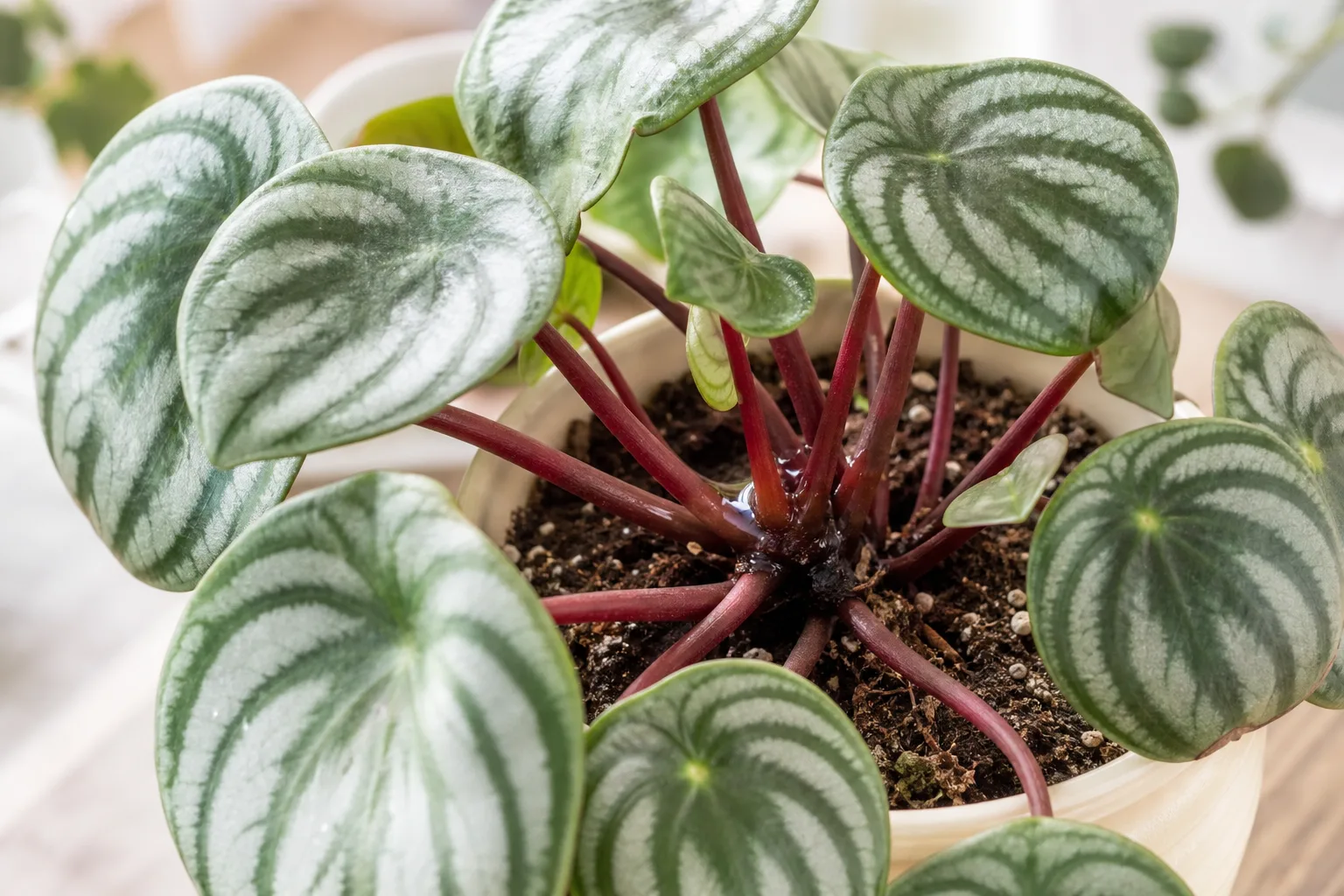
Crown Rot on Watermelon Peperomia: Causes, Checks & Fixes
This guide covers crown rot on Watermelon Peperomia. See also the general Crown Rot guide, watering, and light pages for this plant.
Crown Rot on Watermelon Peperomia: Causes, Checks & Fixes
Quick answer
Crown rot is a special risk on Watermelon Peperomia (Peperomia argyreia) because the plant grows as a compact, nearly stemless rosette. Water that pools in the center softens the red petiole bases where every leaf attaches, and decay can spread before outer leaves look damaged. The species is susceptible to rot if soils are kept too moist, and NC State notes root rot can quickly occur from overwatering.
First step: stop overhead watering and water around the pot edge only. Do not pour water into the rosette center or mist the crown until you have checked whether the base tissue is firm or mushy. Adding more moisture to a wet crown makes decay spread faster.
What crown rot looks like on Watermelon Peperomia
Above soil, crown rot on Watermelon Peperomia overview has a recognizable pattern tied to its low growth habit.
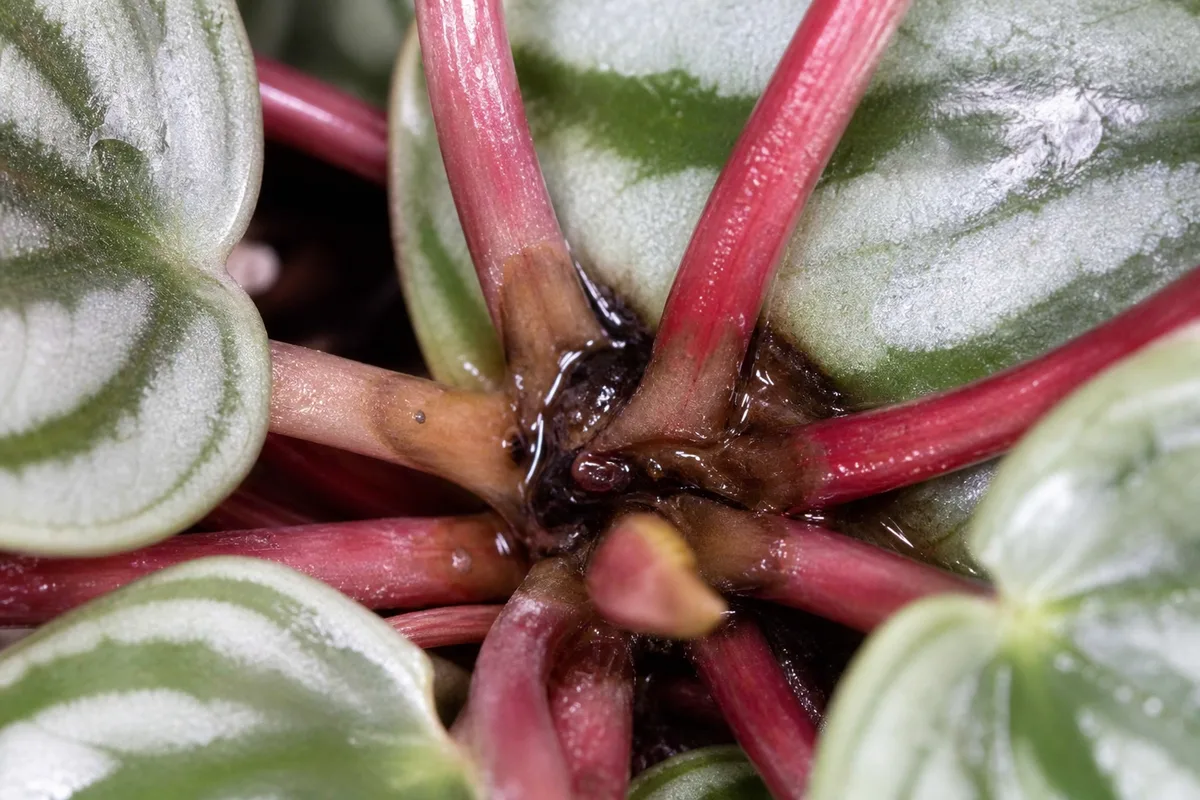
Crown Rot symptoms on Watermelon Peperomia - compare with healthy tissue on the same plant.
Early signs:
- Red petioles go limp and feel soft right where they meet the soil line
- Inner striped leaves yellow and collapse while outer leaves may still look normal briefly
- The rosette center stays damp hours after watering
- Soil smells sour or swampy when you lift the pot
Advanced signs:
- Multiple petioles pull away from the crown with a gentle tug
- Striped leaves wilt and fall inward even though the pot feels heavy
- Brown or black mush at the base where petioles cluster
- No new leaves emerge from the center for several weeks
Unlike underwatering on Watermelon Peperomia, the pot stays heavy and wet. Peperomia wilts from drought when soil dries, but crown rot combines soft base tissue plus constantly damp mix. Dry soil with slightly floppy-but firm-petioles usually means thirst, not rot.
Why Watermelon Peperomia gets crown rot
Watermelon Peperomia evolved for Watermelon Peperomia light guide and sharp drainage, not a permanently wet crown pocket. Several traits make this species vulnerable:
The rosette traps water. MOBOT describes a compact rosette with leaf stems attached close to soil level. Overhead watering, misting the center for humidity, or splashing from a saucer keeps leaf bases wet for hours-the exact zone where rot starts.
Small roots in oversized pots. NC State notes this plant thrives being pot-bound with a small root system. An oversized container holds excess wet mix around a tiny root ball, keeping the crown interface damp long after you think the plant has dried out.
Dense, moisture-retentive mix. Heavy peat without perlite or coarse sand stays soggy. The RHS warns that peperomia roots rot easily when kept too wet, causing yellowing leaves and eventual collapse.
Low light slows drying. In deep shade, the rosette surface and top inch of mix stay wet longer. NC State recommends bright indirect light and intolerance of wet soil-shade plus frequent watering is a common indoor trigger.
Buried crowns at Watermelon Peperomia repotting guide. Setting the rosette too deep during repotting puts petiole bases below the soil line where moisture lingers.
Fungi such as Phytophthora and Pythium often finish the job once tissue is oxygen-starved, but the root cause is almost always culture-water sitting on the crown-not random infection.
How to confirm the cause
Work through these checks in order before you repot or prune:
- Crown firmness - Press the center where petioles meet soil with one finger. Firm tissue resists pressure; mush that dents or leaks fluid confirms rot.
- Soil moisture at depth - Stick a finger 2–3 cm into the mix. Wet deep soil with a soft crown confirms trouble. Dry soil with a firm crown points to underwatering instead.
- Pot weight and smell - A heavy pot days after watering plus a sour smell suggests anaerobic conditions. Waterlogged roots die from lack of oxygen, weakening the crown from below.
- Watering history - Have you poured directly into the rosette, misted the center, or left the pot in a full saucer? That pattern fits crown rot on this species.
- Root check if unsure - Unpot gently if the base is soft. Healthy peperomia roots are pale and firm; rot shows brown, translucent roots that collapse between fingers.
- New growth test - No emerging leaves from the center for three or more weeks while outer leaves decline suggests the growing point is damaged.
If the crown is firm, soil is dry, and leaves are slightly limp, water once thoroughly at the pot edge and recheck in 24 hours before assuming rot.
First fix for Watermelon Peperomia
Stop overhead watering and water around the pot edge only.
Tilt the pot and pour water between the leaves and pot wall so none pools in the rosette center. Empty the saucer within 30 minutes. Move the plant to brighter indirect light and improve airflow around the pot so the crown surface can dry.
Do not mist the center. Do not fertilize. Do not repot on day one if tissue is only slightly soft-many mild cases firm up once the crown dries for several days.
If the center is already mushy, skip waiting and proceed to the recovery steps below.
Step-by-step recovery
After you have stopped wetting the crown:
- Unpot carefully if tissue is soft or roots smell sour. Knock away wet mix without pulling healthy petioles.
- Trim decay with sterile scissors - Cut away mushy petioles and any blackened crown tissue back to firm, pale tissue. Disinfect blades between cuts.
- Air-dry 24–48 hours - Lay the plant on paper towels in bright indirect light so cut surfaces callus. Do not water during this window.
- Repot into fresh airy mix - Use well-draining potting mix with perlite or coarse sand. Choose a pot only slightly larger than the root ball with open drainage holes. Set the crown at or slightly above the soil line-never bury petiole bases.
- Wait one week before cautious watering - Let the top of the compost partially dry between waterings, always at the pot edge.
- Propagate backup cuttings - Take leaf or petiole cuttings from any firm leaves while you still can. Root them in moist perlite or water separately so you do not lose the plant entirely if the crown fails.
Isolate the plant from other peperomias until active decay stops and new growth appears.
Recovery timeline
Mild crown softening with firm outer leaves may firm up within one to two weeks once watering changes and airflow improve. After repotting and trimming, expect three to six weeks before new striped leaves emerge from the center-peperomias are slow growers.
Judge recovery by new firm petioles and fresh center leaves, not by old damaged foliage. Yellow collapsed leaves will not green up again; remove them once new growth is visible.
If the center keeps softening after a dry-down period and repot, the growing point is likely lost. Shift focus to leaf-cuttings propagation rather than repeated soaking.
Lookalike symptoms to rule out
Underwatering - Soil is light and dry throughout. Petioles droop but feel firm when pinched, not mushy. A thorough edge-water usually perks the plant within 24 hours.
Root rot without crown involvement - Roots are mushy but the crown still feels firm. Fix drainage and trim roots; the crown may survive if caught early.
Edema - Corky brown bumps on leaf surfaces from inconsistent watering and high humidity. Tissue stays firm at the base; no sour smell or petiole mush.
Mealybugs in the rosette - Cottony white clusters in leaf axils with sticky honeydew. Tissue beneath bugs may weaken but does not smell sour unless secondary rot has started.
Normal old-leaf drop - Lower outer leaves yellow and drop occasionally on a firm crown with healthy new center growth. That is senescence, not rot.
Mistakes to avoid
Do not pour water directly into the rosette center-even if the plant looks wilted. Confirm moisture and crown firmness first.
Do not mist the crown for humidity. Use a pebble tray or group plants instead, keeping leaf bases dry.
Do not repot into a much larger pot “to give it room.” Excess wet mix around small roots prolongs crown dampness.
Do not bury the crown at repotting. Petiole bases should sit at or just above the soil line.
Do not fertilize a rotting plant hoping to push growth. Stressed peperomias need dry stable conditions, not nitrogen.
Do not compost mushy tissue indoors-it can spread pathogens to other houseplants.
How to prevent crown rot next time
Water around the pot edge and allow soil to dry to the touch on top before rewatering. Reduce frequency in fall and winter when growth slows.
Use well-draining mix with perlite and a pot with drainage holes only slightly larger than the root ball. Empty saucers promptly.
Keep the plant in bright indirect light so the rosette surface dries between drinks. Avoid deep shade where mix stays wet for days.
Skip crown misting entirely. If humidity is low, raise ambient humidity without wetting leaf bases.
When repotting, set the rosette at the same depth or slightly higher-never deeper. Quarantine new plants and inspect crowns before mixing collections.
When to worry
Treat as urgent the moment the rosette center feels soft, petioles pull away easily, or the pot smells sour while soil stays wet. On this nearly stemless plant, there is no woody trunk to buffer decay-crown collapse can progress within days.
Start propagation from firm leaves immediately if the center is mushy, even while you attempt rescue. A fully collapsed crown rarely regenerates.
Mild outer-leaf yellowing with a firm center and drying soil is not an emergency-adjust watering first.
Conclusion
Crown rot on Watermelon Peperomia is almost always a watering and airflow problem centered on the low rosette, not a mystery disease. Stop wetting the crown, confirm whether tissue is firm or mushy, and dry or trim before you repot. Outer leaves can mislead you-the center tells the truth. Catch softening early, change how you water, and keep leaf cuttings as insurance when decay has already reached the heart of the plant.
When to use this page vs other Watermelon Peperomia guides
- Watermelon Peperomia watering guide - Use for routine moisture checks before assuming crown rot is the main issue.
- Watermelon Peperomia problems hub - Browse all 28 common issues on this species.