Aphids on Watermelon Peperomia: Causes, Checks & Fixes
Quick answer
Aphids on Watermelon Peperomia cluster on tender new leaves and summer flower spikes, leaving sticky honeydew on striped foliage. First step: isolate the plant and rinse colonies from leaf undersides and petiole tips before applying any spray.
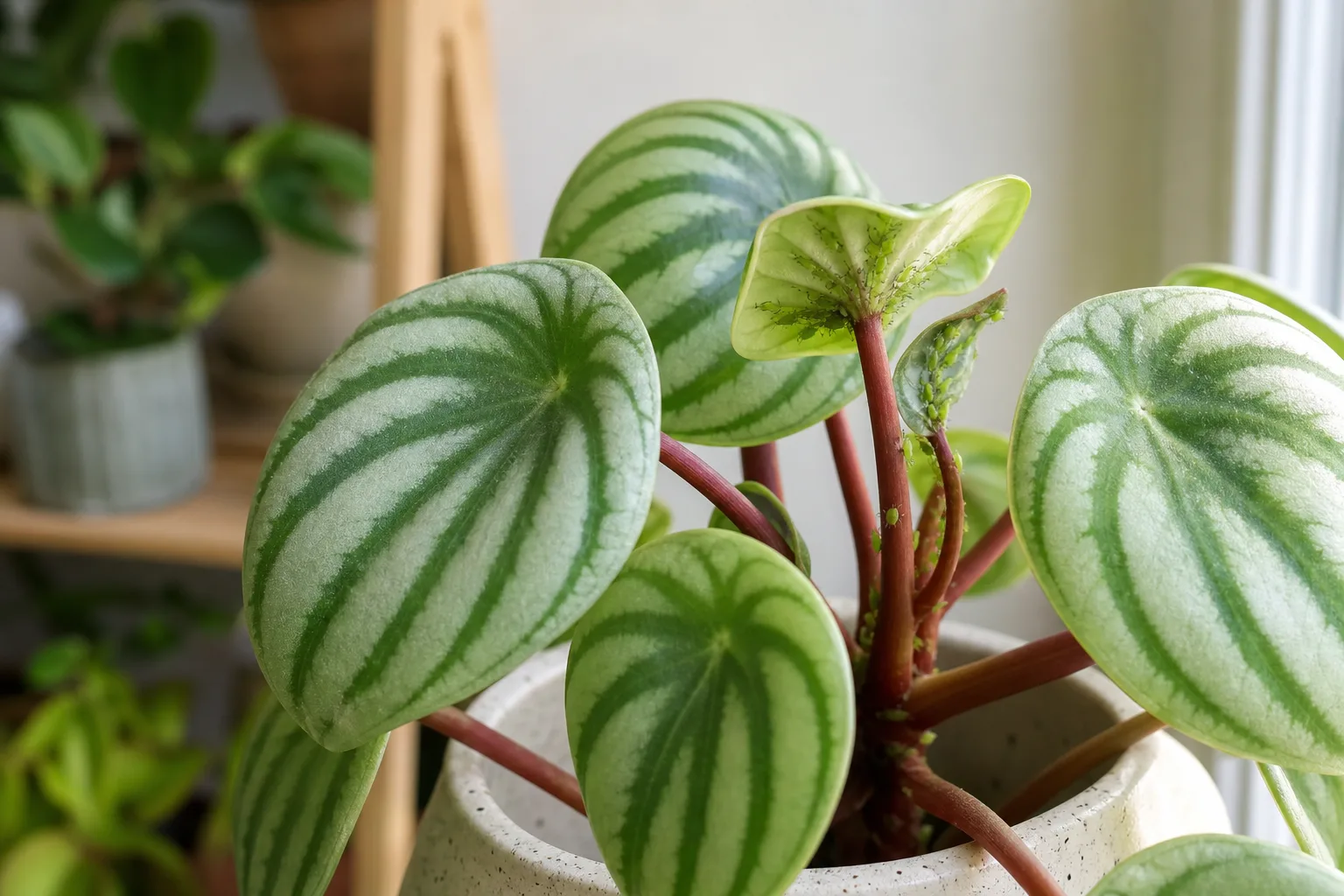
Aphids on Watermelon Peperomia: Causes, Checks & Fixes
This guide covers aphids on Watermelon Peperomia. See also the general Aphids guide, watering, and light pages for this plant.
Aphids on Watermelon Peperomia: Causes, Checks & Fixes
Quick answer
Aphids are typical houseplant pests on Peperomia argyreia alongside mealybugs and scale. On Watermelon Peperomia they almost always show up on the softest tissue-the unfolding striped leaves at the rosette center, red petiole tips, and the small greenish flower spikes that rise on red stalks in summer. Their feeding leaves shiny honeydew on the glossy foliage, which can turn into black sooty mold and attract ants.
First step: isolate the plant and rinse colonies off leaf undersides and petiole tips with lukewarm water. You need to confirm live aphids and stop spread before reaching for soap or oil. This species is slow-growing and intolerant of wet crowns, so work carefully-do not soak the rosette center while knocking pests loose.
What aphids look like on Watermelon Peperomia
Aphids are small, pear-shaped, soft-bodied insects-often green but sometimes black, brown, or pink. Most stay wingless and cluster in dense groups rather than scattering when disturbed. On Watermelon Peperomia overview, check these spots first:
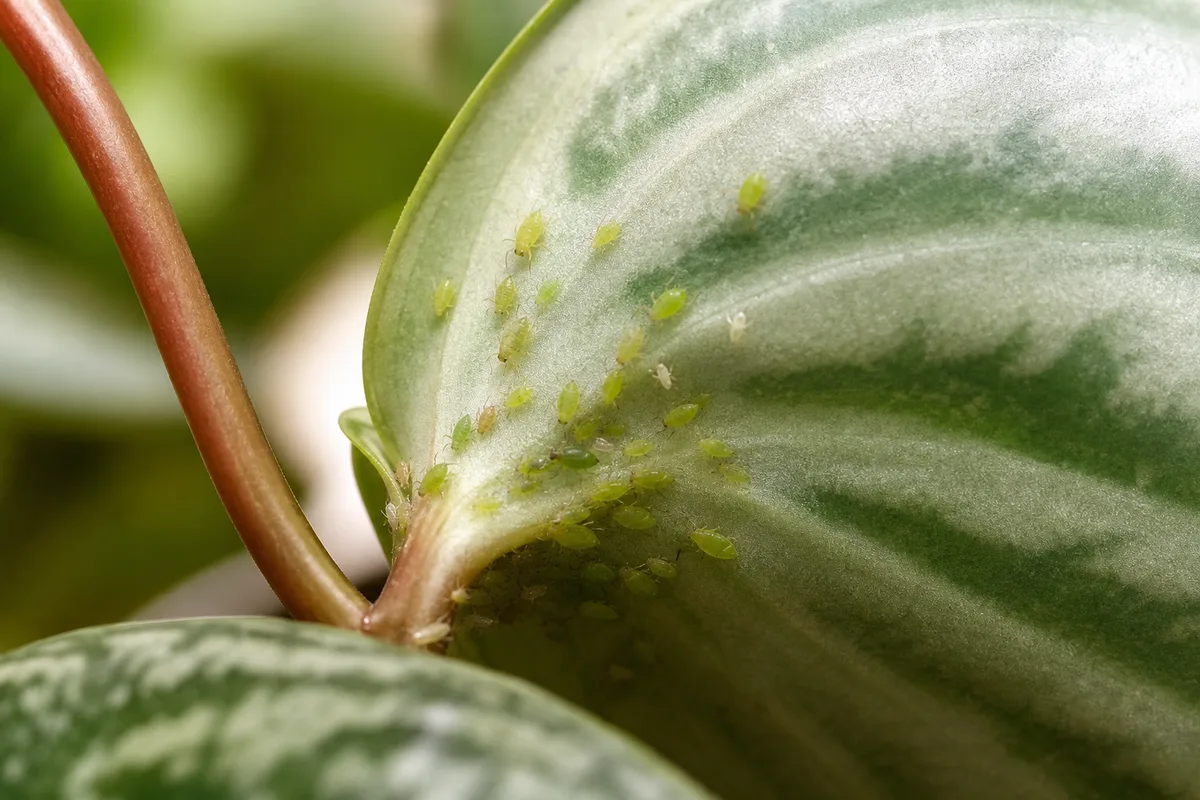
Aphids symptoms on Watermelon Peperomia - compare with healthy tissue on the same plant.
- Newest striped leaves - colonies tuck along veins and edges as leaves unfurl from the crown
- Red petiole joints - the nearly stemless rosette gives aphids tight crevices at each leaf base
- Summer flower spikes - cream-green inflorescences on red stalks draw aphids away from older foliage
- Leaf undersides - especially near tips where tissue is still tender
Damage shows up before you spot every insect. Young leaves may curl, pucker, or grow smaller than older siblings. Striping can look dull where sap loss stresses the leaf. Honeydew-a clear, sticky coating-collects on upper leaf surfaces below feeding sites. Ants on the pot rim or saucer often arrive to harvest that honeydew.
Whitish cast skins shed by growing aphids sometimes litter leaves and look like dust until you touch them. Heavy feeding can yellow or stunt new growth on a plant that already grows slowly.
Why Watermelon Peperomia gets aphids
Aphids are not a sign that you failed at peperomia care-they hitchhike on new purchases, open windows, or plants moved outdoors for summer. What makes Watermelon Peperomia vulnerable is where and how it grows.
The rosette pushes tender new leaves from a compact crown with red, fleshy petioles. Aphids prefer tender new growth near shoot tips, and this species produces a steady supply during warm months. Summer flower spikes add another soft target that sits slightly above the foliage band where you might not glance during casual watering.
Indoor conditions favor buildup when:
- New plants skip quarantine and introduce aphids to a windowsill collection
- Over-fertilizing pushes lush, nitrogen-rich shoots aphids prefer
- Low airflow around grouped pots lets colonies expand on sheltered undersides
- Ants protect colonies by driving off lady beetles and other natural enemies
- Stress from wet soil or low light slows the plant while pests keep feeding on sap
Watermelon Peperomia is not toxic to cats or dogs, but that does not stop aphids-it only means you can treat with standard houseplant products without the emergency toxicity concerns you would face on poisonous species.
How to confirm the cause
Work through these checks in order:
- Cluster location - Soft-bodied groups on new tips or spikes point to aphids. Uniform stickiness with no insects suggests another issue.
- Underside inspection - Lift leaves on red petioles and check veins with a hand lens. Aphids stay put when disturbed; whiteflies fly.
- Honeydew test - Rub a sticky patch between fingers. Honeydew feels tacky and may smear; mineral dust or normal waxy leaf texture does not.
- Ant trails - Ants marching up petioles strongly suggest aphids or other honeydew producers above.
- Cast skins and mold - White shed skins confirm aphid activity. Black sooty film on honeydew-coated leaves supports the diagnosis.
- Neighbor plants - Aphids spread by crawling or flying. Check plants on the same shelf.
If you find cottony white wax in axils instead of soft moving insects, switch to mealybug management. Fine stippling and webbing on dry undersides suggest spider mites, not aphids.
First fix for Watermelon Peperomia
Move the plant away from others and rinse aphids off with a firm lukewarm water stream, targeting leaf undersides, petiole bases, and flower spikes.
Wrap the pot in plastic to keep soil from splashing, tilt the rosette, and spray from below so undersides get direct contact. A strong water stream knocks aphids off sturdy plants-effective on peperomia if you repeat before survivors climb back.
Critical for this species: avoid flooding the crown. Watermelon Peperomia is intolerant of wet soil and crowns; pooling water in the rosette center invites crown rot that kills faster than aphids will. Rinse, then let foliage dry in Watermelon Peperomia light guide the same day.
Do not spray insecticide on day one if you have not confirmed insects. Do not fertilize a pest-hit plant hoping to push new growth-that produces more aphid-friendly tissue.
Step-by-step recovery
After the initial rinse:
- Repeat water sprays every two to three days until live aphids are gone on inspection. Survivors hide in curled young leaves-peel those back when rinsing.
- Apply insecticidal soap if colonies persist after several rinses. Cover undersides and petiole joints thoroughly; repeat every four to five days through one full pest generation.
- Wipe honeydew from striped upper leaves with a damp cloth once feeding stops. Sooty mold clears as honeydew dries up.
- Manage ants if they protect colonies. Sticky barriers on pot rims or moving the plant briefly can help natural enemies reach aphids outdoors in shade.
- Prune only heavily distorted new leaves if they harbor colonies you cannot rinse out. Mature damaged leaves can stay if clean new growth is emerging.
- Hold fertilizer until new striping looks normal for two weeks. Resume at half strength monthly in summer only after pests are gone.
Keep the plant isolated until you see no live aphids for at least two weeks. Check quarantined neighbors at the same time.
Recovery timeline
Water knockdown shows results within two to three days when colonies are moderate. A full soap course may take one to two weeks with label-interval repeats. Because Watermelon Peperomia grows slowly, expect one to three weeks before you can judge recovery by fresh leaves rather than old damaged ones.
Curled tips from light feeding often flatten as the next leaf opens. Leaves that already yellowed or hardened with distortion will not revert-track progress on new red petioles and clean striping, not older blemished foliage.
Lookalike symptoms to rule out
Mealybugs leave cottony white wax in crown crevices and petiole axils, not smooth pear-shaped clusters. Alcohol dab tests smear mealybugs; aphids crush differently.
Scale insects attach as immobile brown or tan bumps along petioles. They do not move when nudged and are harder to rinse away than aphids.
Spider mites cause fine stippling and webbing on leaf undersides in dry air. Mites rarely produce heavy sticky honeydew.
Thrips leave silvery scars on striped leaves and run quickly when disturbed. Their damage is scratch-like, not clustered soft insects.
Edema or water stress can pucker peperomia leaves without insects or stickiness. Confirm soil moisture and crown firmness if pests are absent.
Mistakes to avoid
Do not drench the rosette center while treating-crown rot from wet crowns kills Watermelon Peperomia faster than aphid damage.
Do not use homemade dish soap sprays; commercial insecticidal soap is formulated to avoid leaf burn.
Do not treat once and stop. Aphids reproduce quickly in warm rooms; missing one generation restarts the colony.
Do not return an isolated plant too soon. Two aphid-free weeks is a safer threshold than a single clean glance.
Do not ignore ants. Controlling aphids alone is harder while ants farm honeydew and block predators.
Do not over-fertilize after recovery. Lush nitrogen-rich growth attracts aphids back to tender shoots.
Watermelon Peperomia care cross-check
While treating pests, keep baseline care stable:
- Light - Bright indirect light supports steady-not weak-new growth
- Watering - Let the top inch of soil dry before watering; empty saucers so the crown zone stays airy
- Humidity - Moderate humidity (40–60%) suits the fleshy leaves without trapping moisture in the crown
- Pot size - Slightly pot-bound is fine; oversized wet pots stress roots and slow recovery
Changing light, pot, and watering all at once makes it hard to tell whether improvement comes from pest control or care shifts.
How to prevent aphids next time
Quarantine new plants for about two weeks and inspect undersides weekly before mixing them into a collection. Scout Watermelon Peperomia most closely during warm months when new leaves and flower spikes appear.
Avoid excess nitrogen fertilizer that pushes soft shoots. Dust leaves occasionally so you notice early clusters. If plants summer outdoors in shade, rinse and inspect before bringing them back indoors.
Encourage natural enemies where practical-lady beetles and lacewings feed on aphids when ants are kept off plants. Avoid broad-spectrum sprays unless colonies persist after repeated rinsing and soap.
When to worry
Escalate if colonies rebound after three full treatment cycles, if new growth stops entirely for a month, or if sooty mold coats most striped leaves and blocks light. Heavy sap loss on a slow-growing rosette can leave the plant floppy even when the crown still feels firm.
Aphids alone rarely kill a healthy Watermelon Peperomia, but they can ruin the season’s new leaves and invite secondary stress if you respond with extra water or fertilizer instead of pest removal. If the crown goes soft while soil stays wet, pivot to crown-rot checks- that is a separate emergency.
Conclusion
Aphids on Watermelon Peperomia target tender new striping and summer flower spikes, not the tough older leaves lower on red petioles. Confirm soft clusters, honeydew, or ants; isolate and rinse undersides first; follow with insecticidal soap only if needed. Judge recovery by clean new growth on firm petioles, protect the dry crown while treating, and scout weekly so slow-growing rosettes never sit long under a sap-sucking colony.
When to use this page vs other Watermelon Peperomia guides
- Watermelon Peperomia watering guide - Use for routine moisture checks before assuming aphids is the main issue.
- Watermelon Peperomia problems hub - Browse all 28 common issues on this species.
- Mealybugs on Watermelon Peperomia - Different entry point when symptoms overlap with aphids.
- Spider Mites on Watermelon Peperomia - Different entry point when symptoms overlap with aphids.
- Yellow Leaves on Watermelon Peperomia - Different entry point when symptoms overlap with aphids.