Spider Mites on Watermelon Peperomia: Causes, Checks & Fixes
Quick answer
Spider mites on Watermelon Peperomia cause pale stippling that dulls the watermelon striping and fine webbing near red petioles-especially in dry winter air. First step: isolate the plant and rinse leaf undersides thoroughly before applying any spray.
Spider Mites on Watermelon Peperomia: Causes, Checks & Fixes
This guide covers spider mites on Watermelon Peperomia. See also the general Spider Mites guide, watering, and light pages for this plant.
Spider Mites on Watermelon Peperomia: Causes, Checks & Fixes
Quick answer
Spider mites on Watermelon Peperomia (Peperomia argyreia) pierce the fleshy, round leaves and drain sap from individual cells. The damage shows up as pale stippling that breaks the silver-green watermelon bands-not the even dulling you see from too little light. Fine silk webbing at red petiole bases and between leaf stems confirms an active colony, especially when indoor air turns hot and dry.
First step: isolate the plant and rinse every leaf underside with lukewarm water. Hold the pot tilted so runoff does not pool in the compact rosette crown, where Watermelon Peperomia is vulnerable to rot. Only after you knock down live mites should you consider insecticidal soap or horticultural oil-and repeat on a label schedule, because one rinse rarely clears eggs.
What spider mites look like on Watermelon Peperomia
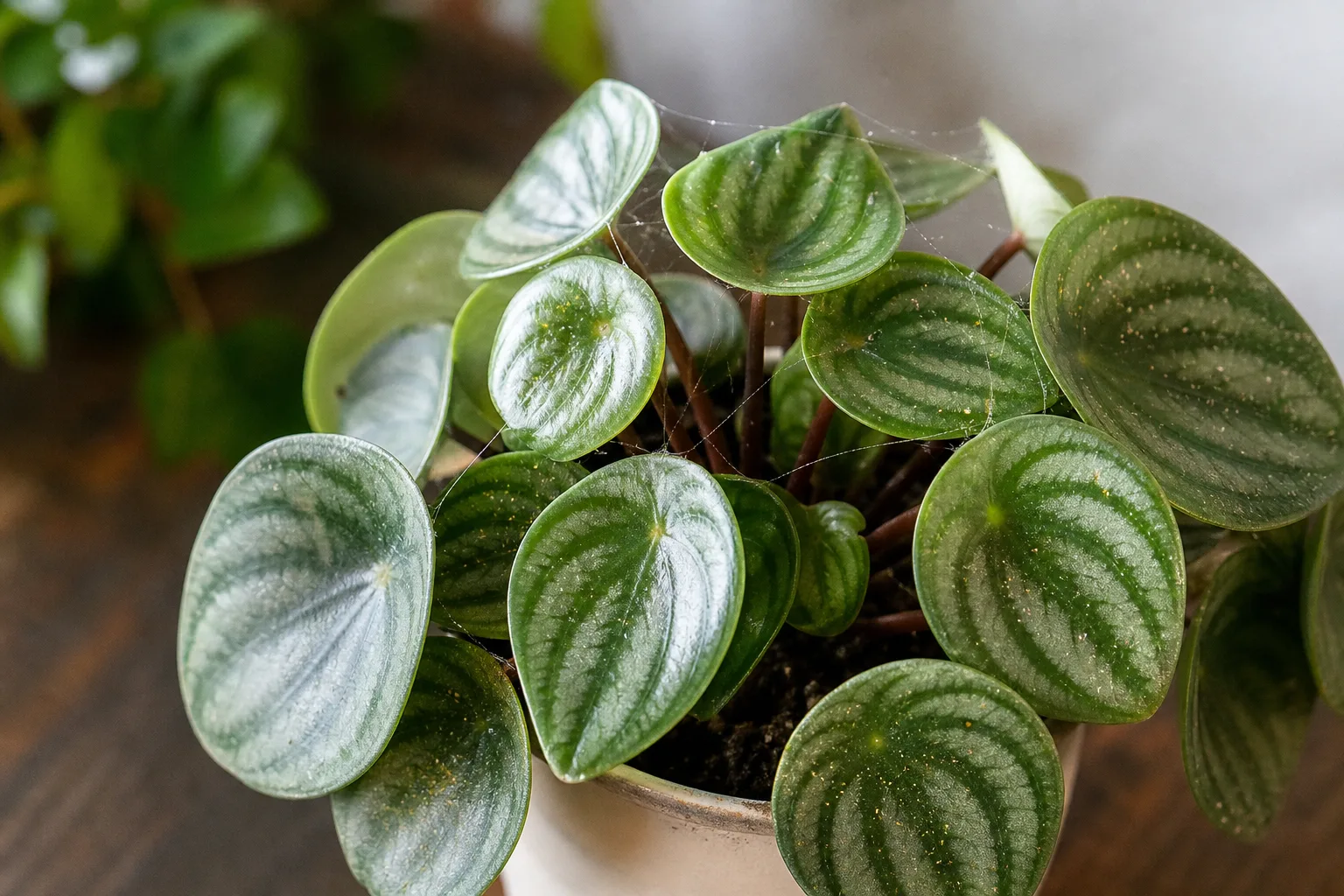
Healthy Watermelon Peperomia leaves are broadly round with crisp dark-green and silver stripes, waxy to the touch, on red petioles. Mite feeding changes that pattern in specific ways:
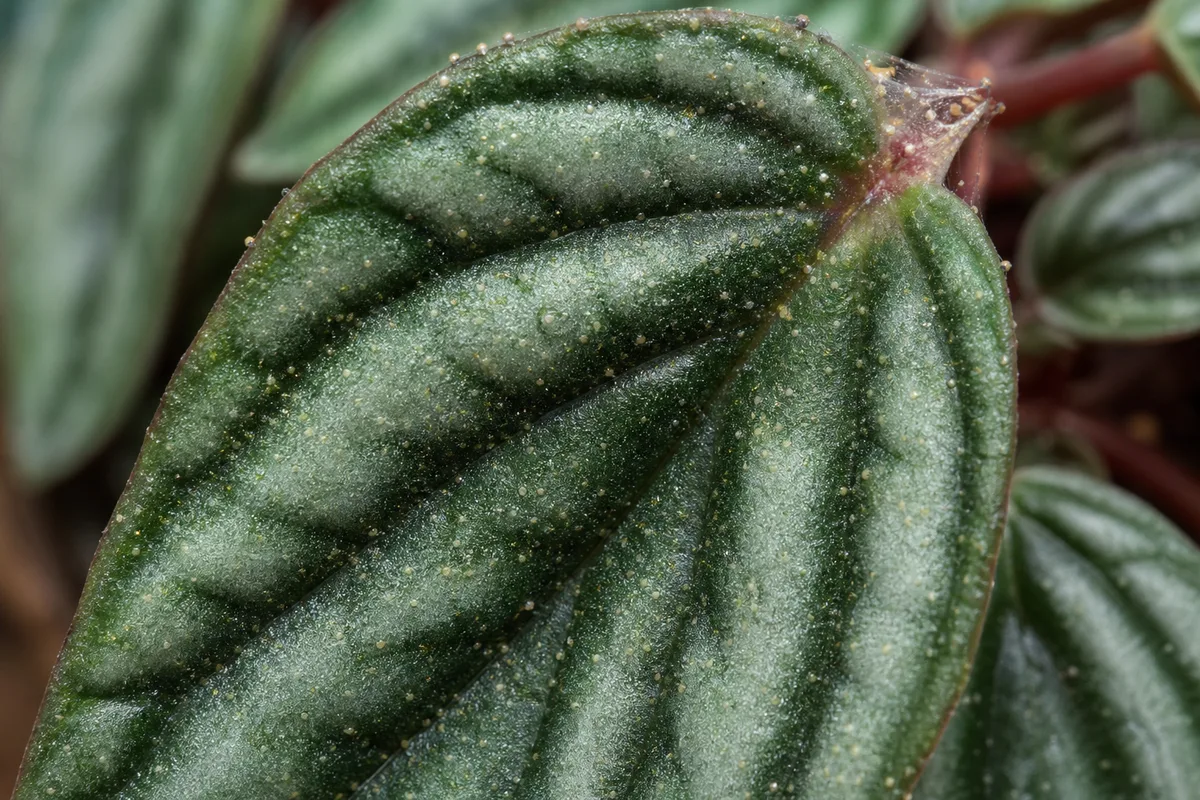
Spider Mites symptoms on Watermelon Peperomia - compare with healthy tissue on the same plant.
- Stippling - Thousands of tiny yellow, white, or tan dots where sap was removed; the silver bands look grainy or washed out
- Bronzing or fading - Heavily fed leaves lose contrast between stripes and may feel slightly papery
- Fine webbing - Silk threads bridging petioles, leaf edges, or the gap between leaves and soil
- Slight curling or droop - Delicate petioles weaken before leaves drop; this can mimic underwatering on Watermelon Peperomia
- No stickiness - Unlike aphids or scale, spider mites do not produce honeydew
The mites themselves are barely visible-about 1/50 inch long, often greenish or amber. You usually confirm them with a white paper tap test or a 10× hand lens on undersides, not by spotting individuals from arm’s length.
Damage often starts on the warmest leaves near a south or west window, where dry air and bright light speed mite reproduction. Lower, shaded leaves may look fine while the top of the rosette is already stippled.
Why Watermelon Peperomia gets spider mites
Watermelon Peperomia is not unusually mite-prone, but its care profile creates a common trap. The plant wants moderate humidity and Watermelon Peperomia light guide, yet many homes run dry heat in winter exactly when the pot sits on a sunny sill. Spider mites thrive in dry, warm conditions and reproduce quickly when humidity drops.
Several traits make Watermelon Peperomia overview a good mite host once conditions favor pests:
- Fleshy, thin leaves offer plenty of sap relative to surface area
- Compact rosette form lets mites hide in crowded leaf axils and undersides
- Slow growth on Watermelon Peperomia means stippling stays visible on the same leaves for weeks, so damage looks severe before you notice movement
- Red petioles and tight spacing collect webbing that is easy to miss until it bridges between leaves
Stress from the wrong care does not cause mites, but it slows recovery. An overwatered peperomia with a soft crown fights pests poorly. An underwatered one may already look dull and curled-exactly the confusion that delays mite diagnosis. Dry air browns leaf edges too, but edge crisping alone without stippling or webbing usually points to humidity stress, not mites.
Crowded shelves, dusty leaves, and skipped inspections after buying a new plant are the usual entry points. Mites walk from leaf to leaf and drift on air currents; they rarely live in potting soil.
How to confirm the cause
Work through these checks before you change watering or buy spray:
- Stippling pattern - Mite damage is speckled and patchy across the leaf face, breaking stripe clarity. Low light fades the whole plant evenly. overwatering on Watermelon Peperomia yellows lower leaves and softens the crown.
- Underside inspection - Lift each round leaf and check the back with a lens. Mites, eggs, cast skins, and early webbing concentrate there.
- Paper tap test - Hold white paper under a suspect leaf and tap sharply. Moving specks smaller than a pinhead confirm mites.
- Webbing check - Fine silk at petiole bases or between leaves is strong mite evidence. Absence of webbing does not rule out an early infestation.
- Stickiness test - Sticky residue with ants or sooty mold suggests aphids or scale, not mites.
- Crown and soil check - Press the base of petioles. Firm tissue and dry-to-touch top soil fit mite stress on an otherwise healthy plant. Mushy crowns and sour-smelling mix mean rot-you still may have mites, but fix waterlogged soil before heavy rinsing.
- Neighbor plants - Scan other houseplants on the same sill. Matching stippling means quarantine the whole group.
If stippling is absent and only leaf tips are crisp, suspect low humidity or salt buildup first. If whole leaves are yellow and the pot stays wet, inspect roots before treating for mites.
First fix for Watermelon Peperomia
Move the plant away from others and rinse all foliage-especially undersides-with lukewarm water.
Tilt the pot or wrap the soil surface so water runs off leaves without flooding the rosette center. Watermelon Peperomia rots quickly when the crown stays wet. Use a sink sprayer or shower setting; aim from below so undersides get direct pressure. Let leaves air-dry in bright indirect light the same day.
This single step physically removes mites, webbing, and dust that shelters colonies. Do not reach for neem oil or soap on day one if you have not confirmed pests- and do not soak the soil trying to “humidify” the plant. Do not prune heavily before rinsing; you want maximum leaf area rinsed in the first pass.
Step-by-step recovery
After the initial isolation and rinse:
- Repeat water rinses every three to five days until tap tests show no moving specks for two consecutive checks.
- Apply insecticidal soap or refined horticultural oil if colonies persist after several rinses. Coat undersides until runoff; follow label intervals-typically every seven to ten days for at least three cycles to catch newly hatched mites.
- Raise ambient humidity moderately with a pebble tray or grouping plants, but keep the peperomia crown dry and soil on its normal dry-down schedule. Extra misting on leaves overnight can encourage fungal issues in the rosette.
- Move off the hottest glass if leaves scorch while wet spray dries-fleshy peperomia foliage can burn when oil or soap sits on leaves in direct sun.
- Prune only heavily webbed or collapsed leaves after sprays begin, using clean scissors. Do not strip the plant bare; it needs leaves for recovery.
- Inspect neighboring plants weekly with the same tap test. Treat any positive plant before webbing spreads across a collection.
Avoid systemic insecticides unless label allows indoor peperomia use and you have no beneficial insects nearby. For a pet-safe plant in a home with cats or dogs, store sprays out of reach and let treated foliage dry before pets access the area.
Recovery timeline
Expect to see fewer live mites within a few days of consistent rinsing. Stippling stops spreading once feeding pressure drops. Because Watermelon Peperomia grows slowly, new clean leaves may take two to four weeks to emerge after pests are controlled.
Old stippled leaves will not regain perfect striping-judge success by firm new growth with sharp silver bands, no fresh webbing, and clear tap tests. If stippling spreads despite three spray cycles, switch product class (soap to oil or vice versa) per label directions and recheck that undersides receive full coverage.
Lookalike symptoms to rule out
Low light fades striping evenly and stretches petioles; no webbing, no moving specks on paper.
Thrips leave silvery scrape marks and black specks of excrement; damage often runs in streaks rather than uniform stippling.
Mealybugs show white cottony patches in leaf axils and sticky honeydew-not fine evenly spaced dots.
Edema from overwatering causes blister-like bumps that turn brown and corky; pattern is raised spots, not flat speckling.
Sun scorch bleaches or tans patches on leaves facing direct glass; margins look cooked, not peppered with pinprick dots.
Underwatering makes petioles floppy and leaves slightly soft before crisping; soil is very dry and there is no webbing.
Mistakes to avoid
Do not mist heavily into the rosette to fight mites-that raises rot risk on a plant already sensitive to wet crowns.
Do not stop after one good rinse; mite eggs hatch on a cycle and will restart the infestation.
Do not spray only the tops of round leaves; colonies live underneath.
Do not use dish soap mixes on peperomia foliage; improper soap burns thin leaves. Use products labeled for plants and spider mites.
Do not increase watering because leaves look dull-check whether stippling and mites are the real issue first.
Do not place an oily plant in direct afternoon sun; leaf burn is common on fleshy peperomia leaves.
Do not ignore adjacent plants; mites spread faster than Watermelon Peperomia recovers.
Watermelon Peperomia care cross-check
While treating mites, keep the basics stable. Allow the top inch of soil to dry before watering-soggy mix weakens roots and invites crown rot. Use bright indirect light so new growth is strong, but pull back from hot glass if leaves scorch. Aim for moderate room humidity without keeping the pot constantly damp.
Because this species has a small root system and is not toxic to cats or dogs, avoid Watermelon Peperomia repotting guide mid-infestation unless soil is failing. Rinsing and spraying are lower risk than disturbing roots during pest stress. Resume normal feeding only after new growth looks healthy; fertilizer does not fix mite damage.
How to prevent spider mites next time
Quarantine new plants for at least two weeks and tap-test leaves before placing them near your peperomia. During dry winter months, run a humidifier or pebble tray in the room-not constant leaf misting. Rinse foliage lightly every few weeks in the shower to knock down early colonies.
Space plants so leaves do not touch on a shared sill. Dust blocks inspection and stresses leaves. When you water, flip one leaf per plant and glance at the underside-it takes seconds and catches mites before webbing appears.
Inspect immediately after moving plants closer to heating vents or after a stretch of hot, dry weather.
When to worry
Treat promptly when webbing spans multiple leaves, tap tests stay positive after two rinse cycles, or new center leaves emerge stippled and distorted. Escalate if several plants in one room show the same pattern-mites may be throughout the collection.
A plant with a soft, mushy crown and sour soil needs rot intervention first; mites are secondary until drainage is fixed. If more than half the foliage is bronzed and the plant keeps dropping leaves despite three weeks of labeled treatment, consider discarding it to protect others-Watermelon Peperomia is easy to propagate from healthy leaf cuttings once your space is mite-free.
Conclusion
Spider mites on Watermelon Peperomia announce themselves through stippled stripes, undersurface colonies, and fine webbing on red petioles-not through the even fade of low light or the yellow mush of overwatering. Isolate, rinse undersides thoroughly without soaking the crown, then repeat contact treatments until tap tests stay clear. Old leaves keep their scars; recovery shows up in new firm, striped growth. Keep humidity moderate and inspect undersides during dry seasons, and this slow-growing peperomia usually stays ahead of the next outbreak.
When to use this page vs other Watermelon Peperomia guides
- Watermelon Peperomia watering guide - Use for routine moisture checks before assuming spider mites is the main issue.
- Watermelon Peperomia problems hub - Browse all 28 common issues on this species.
- Low Humidity on Watermelon Peperomia - Different entry point when symptoms overlap with spider mites.
- Slow Growth on Watermelon Peperomia - Different entry point when symptoms overlap with spider mites.
- Thrips on Watermelon Peperomia - Different entry point when symptoms overlap with spider mites.