Thrips on Watermelon Peperomia: Causes, Checks & Fixes
Quick answer
Thrips on Watermelon Peperomia scar fleshy striped leaves and red petioles with silvery streaks and black frass specks. First step: isolate the plant and shake a leaf over white paper to confirm slender moving insects before spraying.
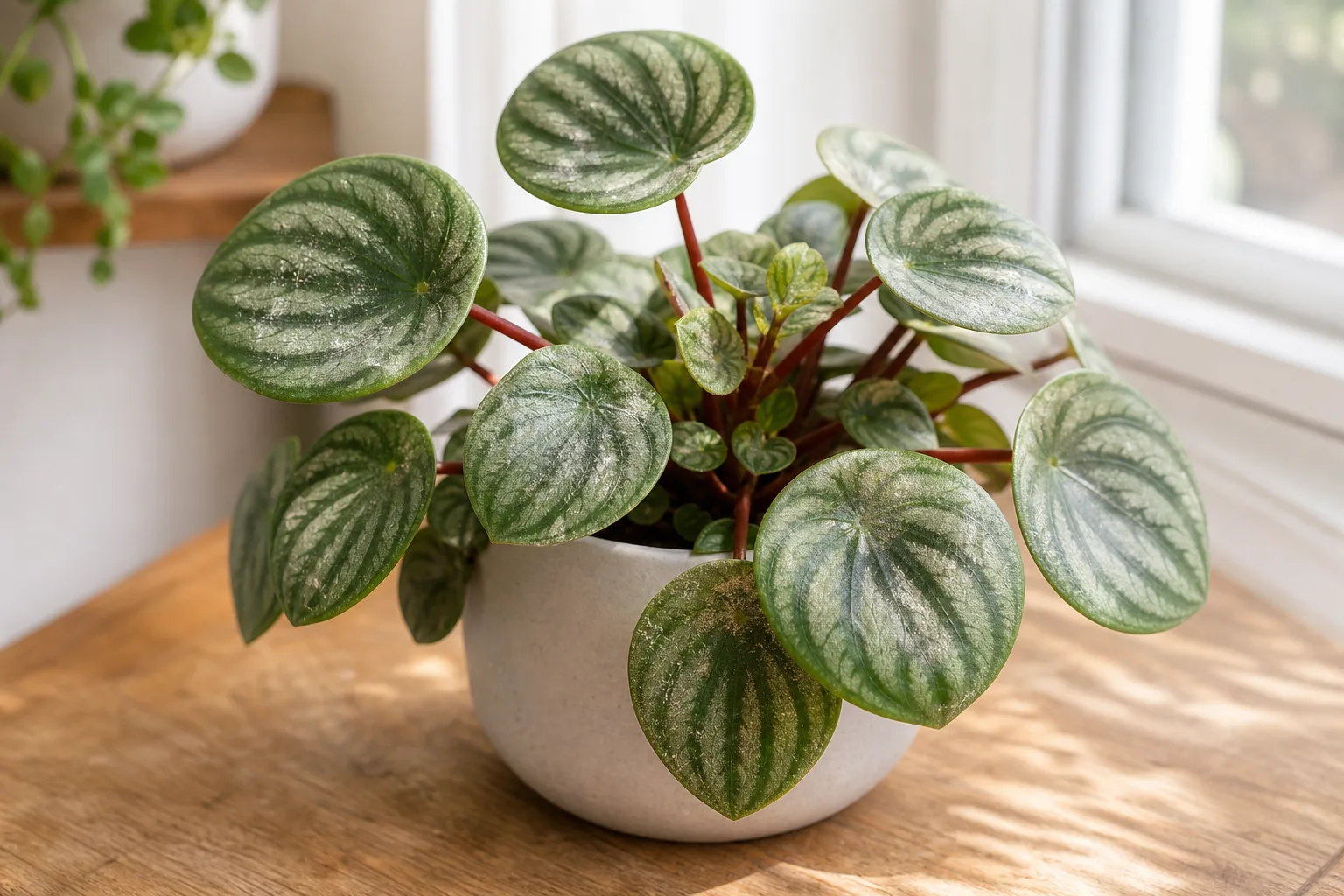
Thrips on Watermelon Peperomia: Causes, Checks & Fixes
This guide covers thrips on Watermelon Peperomia. See also the general Thrips guide, watering, and light pages for this plant.
Thrips on Watermelon Peperomia: Causes, Checks & Fixes
Quick answer
Thrips are slender sap feeders that scrape fleshy leaf tissue with rasping mouthparts before sucking the released fluids. On Watermelon Peperomia (Peperomia argyreia), that feeding leaves irregular silvery streaks and scars across the glossy striped leaves and can mark the red petioles where the compact rosette hides pests from casual glance. Heavy feeding adds tiny black frass specks and may twist the newest leaves before they fully open.
First step: isolate the plant and shake a suspect leaf over white paper to confirm slender moving insects. Thrips run quickly when disturbed and adults can fly-unlike scale or mealybugs that stay put. Do not spray until you see pests or their fresh scarring; silver flecking from old damage alone does not need chemical treatment.
What thrips look like on Watermelon Peperomia
Thrips are very small-about 1/16 inch long and slender, usually tan, brown, or black. Their elongated bodies look more like grains of rice than the round soft bodies of aphids. On Watermelon Peperomia overview, damage shows up on the tissue thrips prefer:
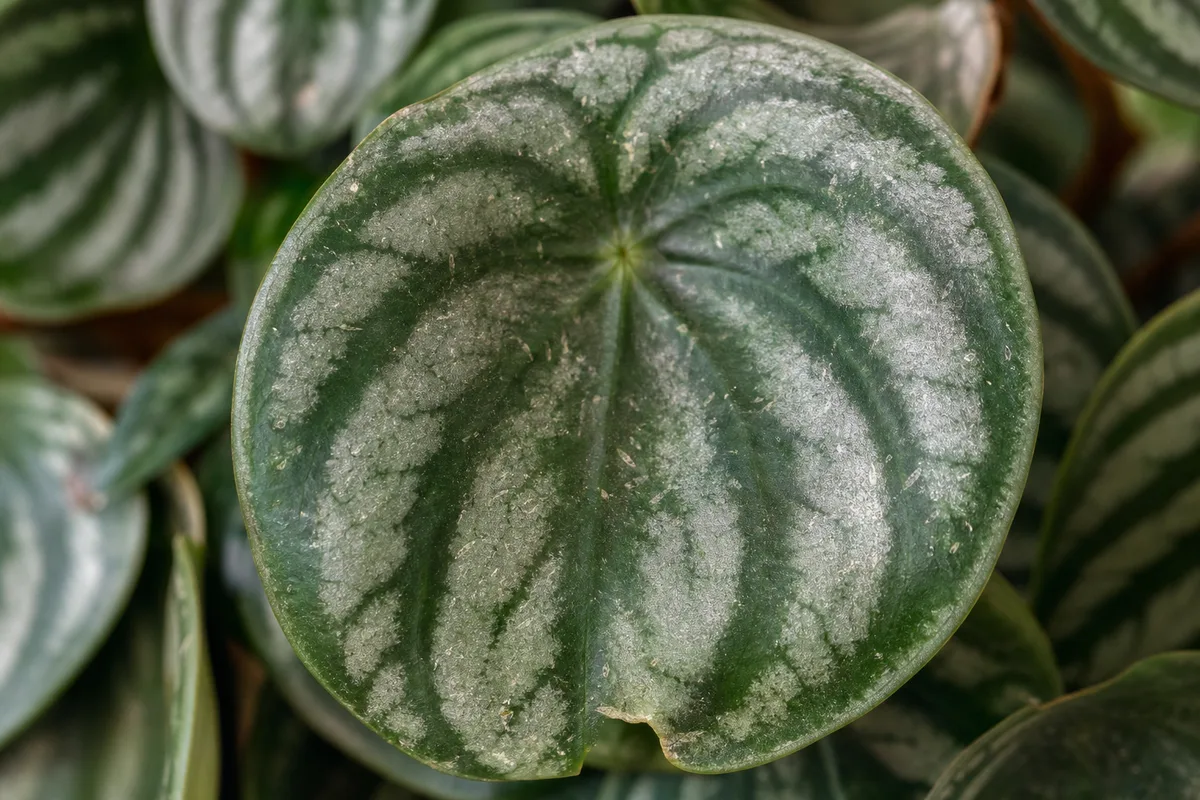
Thrips symptoms on Watermelon Peperomia - compare with healthy tissue on the same plant.
- Newest striped leaves - silvery-white scars and streaks break the watermelon pattern on still-soft foliage at the crown
- Red petioles and leaf bases - rasping marks along the fleshy stalks where the nearly stemless rosette packs leaves tight
- Leaf undersides - black or brown varnish-like frass specks where feeding is heavy
- Distorted young growth - slightly cupped, twisted, or smaller new leaves if feeding started early
Unlike spider mites, thrips do not produce fine silk webbing. Unlike aphids, they rarely leave heavy sticky honeydew-though you may see small shiny drops of excrement on leaves where populations are dense. Unlike scale, thrips move when you brush a leaf or tap it over paper.
The waxy, peltate striped leaves make scars easy to spot once you know the pattern: healthy striping is crisp silver-green; thrips damage looks scratched, dull, or silvery in irregular patches.
Why Watermelon Peperomia gets thrips
Thrips are common indoor plant pests that hitchhike on new nursery plants, cut flowers, open windows, or plants summered outdoors. They are not caused by overwatering on Watermelon Peperomia-but stressed plants show damage faster on slow new growth.
Watermelon Peperomia is vulnerable because of where it grows:
- Tender crown tissue - new leaves unfold from a compact rosette with red fleshy petioles. Thrips feed on young leaves, buds, and flowers-exactly the tissue this species pushes from the center.
- Slow growth rate - the species grows slowly. A thrips generation can scar several new leaves before you see a full round leaf with clean striping.
- Grouped displays - collectors often cluster small peperomias. Flying adults spread between pots on the same shelf before silver scarring is obvious on every plant.
- Spray coverage gaps - the rosette crown and petiole axils are hard to coat completely; missed crevices let thrips survive one treatment cycle.
Dry indoor air does not attract thrips the way it favors spider mites, but recovery between treatments is slower if the plant is also underwatering on Watermelon Peperomia or sitting in wet soil. Keep baseline care steady while you treat.
Watermelon Peperomia is not toxic to cats or dogs, which matters when you isolate treated plants until sprays dry on reachable surfaces.
How to confirm the cause
Work through these checks in order:
- Scar pattern - Irregular silvery streaks on striped leaves point to thrips rasping. Uniform dull striping without scars suggests low light, not pests.
- Frass specks - Tiny black or brown shiny dots on leaf surfaces or petioles support thrips; wipe tests leave a smear unlike mineral dust.
- Tap test - Hold white paper under a leaf and shake or brush the surface. Slender insects running quickly confirm thrips. Slow oval mites suggest spider mites.
- Sticky cards - Yellow or blue sticky traps near the rosette catch flying adults and help you monitor whether populations are still active during treatment.
- New growth check - Twist or cupping on the newest leaf only, with older lower leaves still clean, strongly suggests active feeding at the crown-not old healed scars.
- Neighbor scan - Adults fly. Inspect every plant on the same windowsill or shelf, not just the one with obvious silver marks.
If you find cottony wax in axils, switch to mealybug management. Fine stippling with webbing on dry undersides suggests spider mites. Soft pear-shaped clusters on tips suggest aphids.
First fix for Watermelon Peperomia
Move the plant away from others and rinse all leaf surfaces-including undersides and red petioles-with lukewarm water, then confirm live thrips on a tap test before applying any spray.
Wrap the pot to limit splashing, tilt the rosette, and spray from below so undersides and petiole bases get direct contact. Washing dislodges many soft-bodied pests when you repeat before survivors resettle on tender crown leaves.
Critical for this species: do not flood the rosette center. Watermelon Peperomia is intolerant of wet soil and crowns. Pooling rinse water in the compact crown invites crown rot-a faster killer than thrips. Rinse, then let foliage dry in Watermelon Peperomia light guide the same day.
Do not reach for insecticide on day one if the tap test shows no insects and scars look old and unchanged. Do not fertilize a pest-hit plant to push growth-that produces more tender tissue thrips prefer.
Step-by-step recovery
After isolation and the first rinse:
- Repeat water rinses every two to three days until tap tests show no moving thrips for several checks. Peel back curling young leaves so inner surfaces get wet.
- Prune heavily infested leaves you can spare-especially cupped new growth harboring colonies you cannot rinse out. This lowers population before sprays.
- Apply insecticidal soap if thrips persist after repeated rinses. Cover tops, undersides, petioles, and crown crevices; soap kills only insects it contacts directly and has no residual effect. Repeat every five to ten days per label until sticky cards and tap tests stay clean.
- Consider spinosad only if soap cycles fail after thorough coverage. Spinosad controls thrips among other pests but read labels for indoor use and keep treated plants isolated until dry.
- Hold fertilizer until new striping looks normal for two weeks. Resume at half strength monthly in summer only after pests are gone.
- Monitor neighbors on the same shelf weekly with sticky cards while the main plant stays isolated.
Keep the plant quarantined until tap tests and sticky cards show no new thrips for at least two weeks.
Recovery timeline
Rinse knockdown can reduce visible activity within a few days when populations are moderate. A full soap course often takes two to four weeks with label-interval repeats because thrips lay eggs that hatch in cycles.
Because Watermelon Peperomia grows slowly, judge recovery by new red petioles and clean round leaves emerging from the crown-not by old silver-scarred foliage. Scarred tissue does not revert; the next one to three new leaves tell you whether feeding has stopped.
If new growth stays twisted or silver-streaked for a month despite treatment, escalate-populations may be entrenched in crown crevices or spreading from untreated neighbor plants.
Lookalike symptoms to rule out
Spider mites cause fine yellow stippling and silk webbing on undersides in hot dry air. Mites are oval and slow compared to fast-running thrips on a tap test.
Aphids form soft clusters on new tips and leave sticky honeydew. They do not produce silvery scrape marks across striped leaves.
Mealybugs leave cottony white wax in petiole axils. They do not run quickly when disturbed.
Scale insects attach as immobile bumps along petioles. They do not leave irregular silver streaking on leaf surfaces.
Edema from inconsistent watering can blister or cork peperomia leaves without insects or frass. Confirm soil moisture and crown firmness if pests are absent.
Low light fades striping and stretches petioles but does not add black frass specks or moving insects on paper.
Mistakes to avoid
Do not drench the rosette center while rinsing or spraying-crown rot from wet crowns kills Watermelon Peperomia faster than thrips scarring.
Do not use homemade dish soap; commercial insecticidal soap is formulated to reduce leaf burn on tender foliage.
Do not treat once and stop. Thrips reproduce quickly; one missed generation restarts scarring on the next new leaf.
Do not return an isolated plant too soon. Two thrips-free weeks on sticky cards and tap tests beats a single clean glance.
Do not ignore neighbor plants. Flying adults reinfest from adjacent pots you never inspected.
Do not spray in direct sun on wet leaves-test a portion first and keep the plant out of harsh light until foliage dries after treatment.
Watermelon Peperomia care cross-check
While treating pests, keep baseline care stable:
- Light - Bright indirect light supports steady new growth without weak shade shoots
- Watering - Let the top inch of soil dry before watering; empty saucers so the crown zone stays airy
- Humidity - Moderate humidity (40–60%) suits fleshy leaves without trapping moisture in the crown
- Pot size - Slightly pot-bound is fine; oversized wet pots stress roots and slow recovery
Changing light, pot, and watering all at once makes it hard to tell whether improvement comes from pest control or care shifts.
How to prevent thrips next time
Quarantine new plants for about two weeks and inspect undersides weekly before mixing them into a collection. Place yellow or blue sticky cards near rosette plants to catch flying adults early.
Scout Watermelon Peperomia most closely during warm months when new crown leaves unfold frequently. If plants summer outdoors in shade, rinse and inspect before bringing them back indoors-open windows and outdoor air also admit thrips.
Avoid bringing infested cut flowers near houseplant shelves. When rinsing foliage for dust, include a quick underside check on red petioles where the rosette hides pests.
Integrated pest management starts with scouting and mechanical removal before chemicals. Consistent rinsing and soap cycles work when coverage is thorough and repeated through hatch cycles.
When to worry
Escalate if silvery scarring spreads to most striped leaves within days, if new growth stops entirely for a month despite treatment, or if tap tests still show thrips after three full soap cycles with thorough coverage.
Thrips rarely kill a healthy Watermelon Peperomia outright, but they can ruin every new leaf for a season on a slow-growing rosette. Heavy scarring on most foliage blocks the decorative striping this plant is grown for.
If the crown goes soft while soil stays wet during aggressive rinsing, pivot to crown-rot checks-that is a separate emergency. Discard only if the crown collapses, most petioles are mushy, and no firm new growth appears after root assessment.
Conclusion
Thrips on Watermelon Peperomia scar the fleshy striped leaves and red petioles that make this species distinctive. Confirm fast-running insects or fresh silver streaks with frass; isolate and rinse undersides and petioles before spraying; repeat soap through hatch cycles while protecting the dry crown. Judge recovery by clean new striping on firm red petioles, scout neighbors and sticky cards weekly, and quarantine newcomers so slow-growing rosettes never sit long under rasping feeders.
When to use this page vs other Watermelon Peperomia guides
- Watermelon Peperomia watering guide - Use for routine moisture checks before assuming thrips is the main issue.
- Watermelon Peperomia problems hub - Browse all 28 common issues on this species.
- Brown Tips on Watermelon Peperomia - Different entry point when symptoms overlap with thrips.
- Yellow Leaves on Watermelon Peperomia - Different entry point when symptoms overlap with thrips.