Watermelon Peperomia Watering: Schedule, Checks & Mistakes
Watermelon Peperomia Watering: Schedule, Checks & Mistakes
Watermelon Peperomia Watering: Schedule, Checks & Mistakes
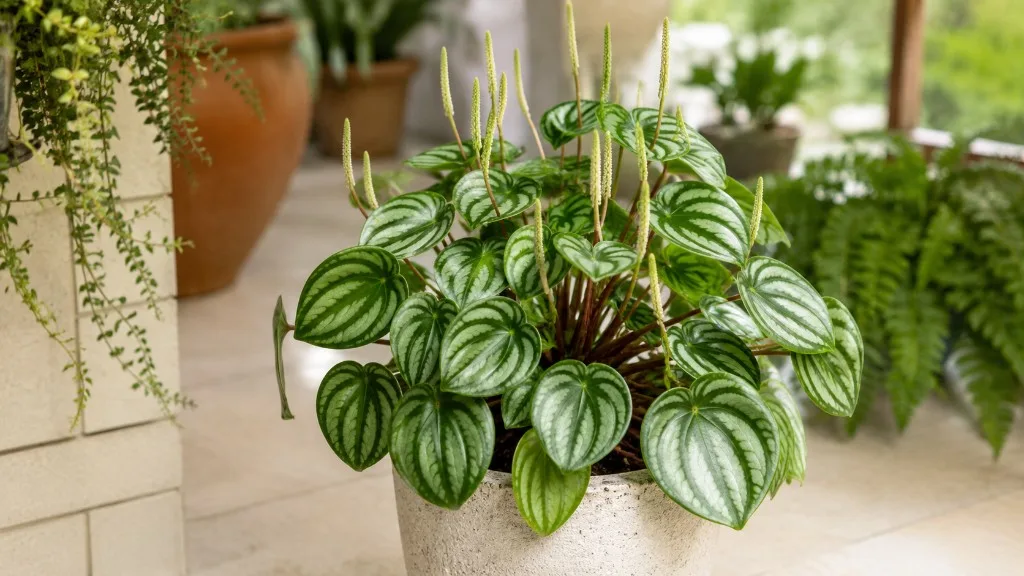
Watermelon Peperomia (Peperomia argyreia) looks like it should be easy to water. The round, striped leaves feel thick and firm, almost succulent. That texture tricks a lot of growers into treating it like a cactus cousin - or worse, like a moisture-loving tropical that wants constant damp soil. Both instincts fail. The plant stores some water in its leaves, but its shallow root system still needs oxygen between drinks. Water too often and you get the cruelest symptom in houseplant care: wilting leaves on wet soil. By the time that happens, roots are already damaged.
The fix is not a calendar. It is a semi-succulent drought protocol: let the top half of the potting mix dry before you water again, then soak thoroughly and drain completely. That single rule, adjusted for your light, pot size, and season, prevents most yellowing, dull striping, floppy petioles, and the root rot on Watermelon Peperomia that follows chronic overwatering on Watermelon Peperomia.
Why Watering Rules Matter for Watermelon Peperomia
Watermelon Peperomia evolved in the understory of South American forests, where roots spread shallow and wide in loose, fast-draining leaf litter. Rain comes and goes. The mix around the roots breathes. Indoors, we trap those same roots in a small pot of peat-heavy compost, set the plant on a dim shelf or a bright windowsill, and then water on whatever day we remember. The plant cannot adapt to a rigid schedule - only to whether the root zone has air or is drowning.
What makes Watermelon Peperomia overview especially sensitive is the combination of compact roots and semi-succulent leaves. The leaves hold reserves that mask early drought stress, so underwatering on Watermelon Peperomia is slower to show than on a thin-leafed fern. But the roots are small and fragile. They cannot survive days of saturated, oxygen-poor soil the way a true succulent’s deeper root system sometimes can. Overwatering is the dominant indoor failure mode, and it kills plants quietly before the grower realizes the soil has never actually dried.
The visual payoff of getting watering right is obvious: crisp silver-and-green striping, upright petioles, and steady new leaves. Get it wrong and the pattern dulls first - a subtle signal most people miss - then stems go soft, leaves yellow from the base, and the whole plant collapses. Watering is not one task on a care checklist. It is the variable that determines whether light, soil, and humidity work at all.
The Semi-Succulent Drought Protocol Explained
Should you let Watermelon Peperomia soil dry out? Yes - but with nuance. The reliable rule for indoor growing is to let roughly the top half of the potting mix dry before the next watering. In a typical six-inch pot, that often means the top two to three inches feel dry to the touch while the lowest inch may still hold slight moisture. You are not aiming for bone-dry desert conditions root to crown, and you are not keeping the surface damp either. You are running a dry-down cycle: wet thoroughly, drain fully, wait until the upper half of the mix has released most of its moisture, then repeat.
This is the semi-succulent drought protocol in practice. The leaves store water and buffer short dry spells, which is why the plant tolerates waiting better than it tolerates sitting wet. But it is not a cactus. If you let the entire pot go dust-dry for weeks, fine roots die and the plant rebounds poorly when water finally returns. The sweet spot is consistent dry-down in the upper and middle zones, with enough residual moisture at the bottom that roots do not desiccate.
What Semi-Succulent Means for Your Watermelon Peperomia
Is Watermelon Peperomia a succulent? No - not in the horticultural sense. It has semi-succulent foliage: thickened leaf tissue that reduces water loss and stores a modest reserve. That adaptation comes from episodic rainfall in its native range, not from life in arid deserts. Think of it as a plant that prefers to dry out between rains but still expects those rains to soak the root zone when they arrive.
The practical consequence is that your watering rhythm should resemble a light tropical, not a desert succulent and not a bog plant. A true succulent might want the entire pot dry for days. A fern might want evenly moist upper soil. Watermelon Peperomia sits between: upper half dry, lower zone approaching dry, then a full soak. Leaves will feel slightly less turgid right before watering - a gentle softness, not a dramatic wilt - and the pot will feel noticeably lighter. If you wait until leaves pancake and petioles fold, you have gone past the ideal window. One dry episode usually recovers fine. Repeated drought stresses the root system and invites damage when water returns too fast.
How to Check When the Top Half Is Dry
Calendar watering fails because no two homes dry a pot at the same rate. A plant under a grow light in a warm room may need water every seven days in summer. The same specimen in a north-facing office might go three weeks between drinks in winter. The only reliable approach is to check the pot, not the date.
How do you know when Watermelon Peperomia needs water? Use three checks in order: soil moisture at depth, pot weight, and leaf feel. When the top half of the mix is dry, the pot feels light for its size, and leaves have lost a fraction of their firmness without wilting dramatically, it is time to water. If any one check says “still moist,” wait two to three days and test again.
Finger Test, Skewer Test, and Pot Weight
The finger test is the fastest method. Push your index finger into the mix to the second knuckle - roughly two to three inches in a standard pot. If the soil feels cool and clings to your skin, the root zone is still holding moisture. If it feels dry and crumbly, move to the next check. In very small pots, a single knuckle depth may represent half the container; scale the depth to pot size, not a fixed inch count.
A wooden skewer or chopstick gives a cleaner read on deeper moisture without compacting the mix. Insert it to the bottom of the pot, leave it thirty seconds, withdraw it, and feel the wood. Damp streaks mean wait. Dry wood with only faint coolness at the tip suggests the upper and middle zones have dried enough for most homes.
Pot weight is the skill experienced growers rely on most. Lift the pot right after a thorough watering and notice the heft. Lift it every few days. When it feels substantially lighter - often half the saturated weight in a plastic nursery pot - the dry-down is advanced. Combine weight with the finger or skewer test until you learn how your specific container behaves. Terracotta pots feel lighter faster because the walls breathe; glazed ceramic holds moisture longer.
A moisture meter can help if you tend to overwater, but treat it as a backup, not gospel. Cheap meters often read inaccurately in chunky, perlite-heavy mixes. If the meter says dry while the skewer shows damp mid-zone, trust the skewer.
Why Surface Color Misleads You
Peat-based mixes lighten in color as the surface dries. That visual cue is useful - but dangerous on its own. The top quarter-inch can look pale and dusty while the soil two inches down is still wet, especially in dim rooms where evaporation slows. Conversely, a dark surface after a light mist or humid day does not mean the deeper mix is saturated. Surface color is a hint, not a decision.
This is why Watermelon Peperomia growers who water whenever the top looks dry often overwater. They are responding to cosmetics, not root-zone physics. Always verify below the surface. If you use a cachepot or decorative outer sleeve, pull the nursery pot out and check the bottom drainage holes too. A dry top with a soggy bottom - common when outer pots trap runoff - is a root-rot setup.
How Often to Water Watermelon Peperomia
How often should you water Watermelon Peperomia? There is no fixed interval that works in every home. The Missouri Botanical Garden advises watering moderately but consistently, allowing the soil to almost dry on top before rewatering, and reducing frequency from fall through late winter. In bright, warm, active growth conditions, many indoor plants need water roughly every 7 to 12 days during spring and summer. In low light and cool winter rooms, 14 to 21 days is common, and some plants go longer. Those ranges are starting points. Your actual schedule emerges from consistent soil checks over a month, not from copying someone else’s calendar.
What matters more than frequency is the quality of each dry-down. Every cycle should reach the point where the top half of the mix is dry, followed by a thorough watering that flushes the root zone and drains completely. Short, frequent sips that keep the upper soil slightly damp are the fastest route to fungus gnats, dull striping, and crown rot.
Growing Season Rhythm (Spring and Summer)
From late spring through early fall, Watermelon Peperomia pushes new leaves and uses water steadily. Longer days and warmer temperatures increase transpiration even when the plant is not in direct sun. Expect the pot to dry faster, especially if the plant sits within a few feet of an east or west window or under supplemental light.
During active growth, check moisture every four to seven days as a reminder - not as an automatic watering trigger. When the top half is dry and the pot is light, water until excess runs from the drainage holes, then empty the saucer within thirty minutes. If the plant is growing well and striping stays crisp, your interval is correct even if it differs from a blog post that says “every ten days.” Increase frequency only when checks confirm dry soil, not when the calendar says so.
Heat waves deserve a mention. A plant near a sunny window in July may dry in five days. Move it back from hot glass if leaves bleach, but do not compensate for heat stress by keeping soil wet. Heat plus soggy roots is worse than heat plus a slightly early dry spell.
Winter Dry-Down Protocol
How often should you water Watermelon Peperomia in winter? Less often - typically every two to three weeks in many temperate-climate homes, sometimes longer in cool, dim conditions. Shorter days slow growth. The plant draws less water. Soil evaporation drops. The same watering rhythm that kept the plant happy in August will overwater it in January.
Winter protocol: extend the dry-down. Let the top half go dry, then wait an extra two to three days if the pot still feels cool and heavy at the base. Use room-temperature water to avoid shocking roots in cold mix. Reduce checks to every seven to ten days rather than every four. If new growth has stopped entirely, that is normal; do not interpret dormancy as a thirst signal.
Heated dry air does not change the root-zone rule. Leaves may lose moisture faster in forced-air homes, but that rarely justifies keeping soil wet. If leaf tips crisp in winter, address humidity or placement - not daily watering.
The Right Way to Water Watermelon Peperomia
Technique matters as much as timing. A correct dry-down followed by a shallow sprinkle does not reach the roots. A thorough soak followed by a saucer full of standing water negates drainage.
How should you water Watermelon Peperomia? Water slowly and evenly across the soil surface until water flows freely from the bottom holes. Let the pot drain for fifteen to thirty minutes. Empty any saucer, cachepot, or decorative outer pot so the root ball is never sitting in runoff. Avoid pouring directly into the crown - the point where stems meet soil - because Watermelon Peperomia is prone to crown rot when that junction stays wet and cool.
Deep Watering and Full Drainage
Deep watering means wetting the entire root ball, not just the top inch. Dry pockets in the middle of the pot cause uneven root death and make future moisture checks unreliable. Use a narrow-spout watering can and move it around the plant in a slow circle. Pause when water appears at the bottom, then add a little more to ensure the middle zones saturate.
Full drainage is non-negotiable. Every pot needs at least one open drainage hole. If your decorative pot has no hole, grow the plant in a nursery pot inside it and lift that inner pot out to water at the sink. Never let the outer pot become a reservoir. Peperomia roots drown in an inch of stale water as surely as in flooded garden soil.
Bottom watering - setting the pot in a tray of water and letting the mix wick upward - works for Watermelon Peperomia if used occasionally. It encourages even moisture and keeps the crown dry. But it is not a license to water more often. Remove the pot from the tray once the surface glistens, drain excess, and still wait for the top half to dry before the next session. Bottom watering every cycle without dry-down still causes rot.
Use plain tap water unless your supply is extremely hard or heavily chlorinated. Let suspicious water sit overnight if needed. Fertilizer belongs in the water only during active growth and at diluted strength; feeding a plant in wet, cold winter soil compounds stress.
Overwatering: Why Wet Soil Causes Wilting
The most confusing symptom in Watermelon Peperomia care is wilting on wet soil. Instinct says wilt equals thirst. You water again. The plant wilts more. Within weeks, leaves yellow, stems mush at the base, and striping fades to a flat green-gray.
Why does Watermelon Peperomia wilt when soil is damp? Because roots need oxygen as much as water. Clemson Extension identifies root rot from overwatering as the most common disease of peperomia. Saturated mix pushes air out of pore spaces. Fine roots suffocate and die. Dead roots cannot take up water. The leaves lose turgor pressure - the internal firmness that keeps them upright - even though the surrounding soil is wet. This is not underwatering. It is root dysfunction from overwatering, and extra water makes it worse.
Understanding turgor helps. Healthy leaves are inflated by water flowing through intact roots. Damaged roots break that pipeline. The soil can be soggy while the plant starves. That is the paradox that sends thousands of Peperomias to an early grave.
Early Signs Before Root Rot
Catch overwatering before roots turn to mush and recovery stays realistic. Watch for these early signals:
- Dull striping. The silver bands lose contrast before leaves yellow. Pattern crispness is a watering barometer unique to this species.
- Soft, floppy petioles. Leaf stems lose stiffness while blades still look green.
- Lower leaf yellowing. Oldest leaves at the base turn yellow and drop while soil stays moist.
- Persistent slight wilt that does not resolve within a day after watering.
- Fungus gnats hovering near the surface - a sign the upper mix rarely dries.
- Sour or musty smell from the pot, indicating anaerobic conditions.
- Cool, heavy pot days after you thought you watered lightly.
If two or more appear together, stop watering. Check drainage, pull the plant from the pot if you are comfortable doing so, and inspect roots. Healthy Peperomia roots are pale, firm, and sparse. Brown, black, or mushy roots confirm the diagnosis.
When Root Rot Has Set In
Advanced root rot shows as widespread yellowing, collapsed stems, and a plant that detaches from the soil with a gentle tug. Roots may smell foul and slough off in your fingers. Crown rot at the stem base - blackened, wet tissue where leaves meet soil - often follows prolonged overwatering into the center of the plant.
At this stage, salvage is partial at best. Trim all mushy roots with clean scissors, rinse remaining healthy tissue, and repot into fresh, airy mix in a smaller pot if root mass is reduced. Water once lightly, then treat the plant like a cutting: Watermelon Peperomia light guide, no fertilizer, and a conservative dry-down. Some plants regrow from remaining roots and stem nodes. Others do not. Honest assessment early beats heroic rescue late.
Underwatering vs Overwatering: How to Tell
Both extremes stress Watermelon Peperomia, but the fixes are opposite. Misdiagnosis wastes time and often kills the plant.
Overwatering presents as wilt with wet or cool, heavy soil, dull striping, soft stems at the base, yellow lower leaves, and fungus gnats. The pot does not lighten between supposed dry periods. Leaves may feel thin eventually, but soil moisture is the tell.
Underwatering presents as wilt with dry, light soil pulled away from the pot walls, crispy leaf edges, and leaves that feel papery thin. Petioles droop dramatically. A single thorough watering usually restores turgor within hours to a day if roots are still healthy.
When unsure, default to checking soil before adding water. If soil is wet and the plant wilts, do not water. Improve airflow, confirm drainage, and consider Watermelon Peperomia repotting guide into chunkier mix. If soil is dry throughout and the pot is light, water thoroughly. The drought protocol prevents underwatering in most homes; overwatering from kindness and schedules is the bigger threat.
Repeated underwatering compacts mix and kills fine roots, making the plant react badly to the flood after drought - leaves drop, stems blacken. If you have let a pot go completely dry for weeks, rehydrate slowly: water once, let drain, wait a week, then resume normal dry-down. Do not flood daily to “make up” for neglect.
Seasonal and Environmental Factors That Change Your Schedule
Beyond spring and winter baselines, several variables shift drying speed without the plant changing species.
Light intensity is the largest factor after pot size. A Watermelon Peperomia one foot from an east window transpires faster than one ten feet into a room. Grow lights at twelve to sixteen hours per day mimic summer and shorten intervals. Low light slows everything - including the plant’s ability to recover from minor overwatering, which makes conservative dry-down even more important in dim spots.
Temperature works in tandem with light. Warm rooms above 24°C (75°F) accelerate drying. Cool rooms below 18°C (65°F) slow root activity and evaporation. Avoid placing pots on cold window sills in winter where soil temperature drops overnight; cold wet soil is especially hostile to Peperomia roots.
Humidity matters less for watering frequency than folklore suggests. Average indoor humidity of 40–60% suits this plant. Very dry air below 30% may crisp edges but rarely requires keeping soil moist. Address humidity with grouping, trays, or humidifiers rather than extra watering.
Airflow helps the dry-down cycle. Stagnant air in a crowded shelf or closed terrarium slows surface evaporation. Gentle circulation speeds safe drying without desiccating leaves.
Recent repotting temporarily slows drying. Fresh, loose mix with disturbed roots holds moisture differently until roots reestablish. After repotting, wait an extra few days beyond your usual check and verify with a skewer before assuming the old schedule still applies.
Pot Size, Soil Mix, and Drainage
Watermelon Peperomia has a small root system relative to its leaf display. Oversized pots are one of the hidden causes of chronic overwatering. A six-inch plant in a ten-inch pot means a large ring of soil that stays wet for weeks while roots occupy only the center. The upper half may dry while the outer mass rots - or the entire volume stays damp too long. Match pot size to root ball with roughly one inch of fresh mix around the sides. Upsize only when roots circle the pot exterior.
Soil mix should drain fast and hold air. NC State Extension notes that watermelon peperomia is intolerant of wet soil and requires good drainage. A well-draining potting mix amended with perlite or coarse sand - often a 60/40 or 50/50 ratio of peat-free compost to perlite for indoor use - mimics the loose litter of its native floor. Heavy, straight bagged indoor soil compacts in months, reducing oxygen at the roots. If your mix stays wet more than ten days after watering in moderate light, the mix is too dense, the pot too large, or drainage is blocked - not that the plant needs less water in principle.
Pot material changes timing. Unglazed terracotta breathes through walls and dries faster. Plastic and glazed ceramic retain moisture longer. Adjust checks accordingly rather than copying a schedule written for a different container.
Drainage holes must stay open. Perlite, roots, and mineral crust can clog holes over time. Clear them during repotting. A layer of gravel at the bottom does not fix poor drainage in deep pots; it reduces root zone volume without reliably preventing saturation.
Recovering an Overwatered Watermelon Peperomia
If you have been watering on a calendar and the plant shows early stress - dull striping, slight wilt on moist soil - recovery is straightforward. Pause watering until the top half of the mix is genuinely dry. Confirm the pot drains. Move the plant to bright indirect light if it has been in dim conditions; light supports root recovery but avoid harsh direct sun on a stressed specimen. Remove yellowed leaves at the base to reduce demand on damaged roots. Do not fertilize until new growth looks healthy for several weeks.
For moderate root damage, unpot the plant, rinse soil from roots, and trim brown or mushy sections back to firm white tissue. Dust cuts with cinnamon or let them air-dry an hour. Repot into fresh, perlite-heavy mix in a pot sized to the remaining root mass. Water once until a little drains, then follow the semi-succulent drought protocol strictly. Expect some leaf drop. New growth from the crown or along stems is the success signal.
Severe crown rot - black, wet tissue at the stem base - limits options. If rot has not climbed the stem, you may propagate healthy leaf cuttings or stem sections with nodes while discarding the base. If the crown is gone, the original plant is finished. Prevention through dry-down is far easier than propagation under stress.
Going forward, treat pot weight and top-half dryness as non-negotiable checks. A weekly reminder on your phone to check the plant beats a weekly reminder to water it.
Conclusion
Watermelon Peperomia watering comes down to one disciplined rhythm: let the top half of the potting mix dry, then water deeply and drain completely. The plant’s semi-succulent leaves forgive short dry windows but its shallow roots cannot survive chronic wet soil. That mismatch explains the most common failure - wilting leaves on damp mix - and the root rot that follows.
Throw away the calendar. Learn your pot’s weight, trust moisture checks below the surface, and read the striping on the leaves. Water less in winter, more in bright active growth, and always match pot size and mix to a small root system. When early signs of overwatering appear, stop watering before you reach for the can again. A crisp watermelon pattern on firm, upright petioles is proof the protocol is working - and that is the whole point of getting this right.
When to use this page vs other Watermelon Peperomia guides
- Watermelon Peperomia overview - Start here for whole-plant context before deep-diving this topic.
- Watermelon Peperomia problems hub - Jump to symptom-specific fix guides when this care topic does not resolve the issue.
- Overwatering on Watermelon Peperomia - Escalate here when watering adjustments are not enough.
- Underwatering on Watermelon Peperomia - Escalate here when watering adjustments are not enough.
- Root Rot on Watermelon Peperomia - Escalate here when watering adjustments are not enough.
Related Watermelon Peperomia guides
- Watermelon Peperomia overview
- Watermelon Peperomia light
- Watermelon Peperomia soil
- Watermelon Peperomia propagation
- Watermelon Peperomia fertilizer
- Watermelon Peperomia repotting
- Overwatering on Watermelon Peperomia
- Underwatering on Watermelon Peperomia
- Root Rot on Watermelon Peperomia
- Wilting on Watermelon Peperomia
- Drooping Leaves on Watermelon Peperomia
- Mold on Soil on Watermelon Peperomia