Drooping Leaves on Watermelon Peperomia: Causes, Checks &
Quick answer
Gradual drooping on Watermelon Peperomia usually means red petioles are losing stiffness at the roots-either from dry soil (light pot, firm crown) or wet roots (heavy pot, soft crown). Lift the pot and probe moisture before you water. If the whole rosette collapsed overnight, start at the wilting guide instead.
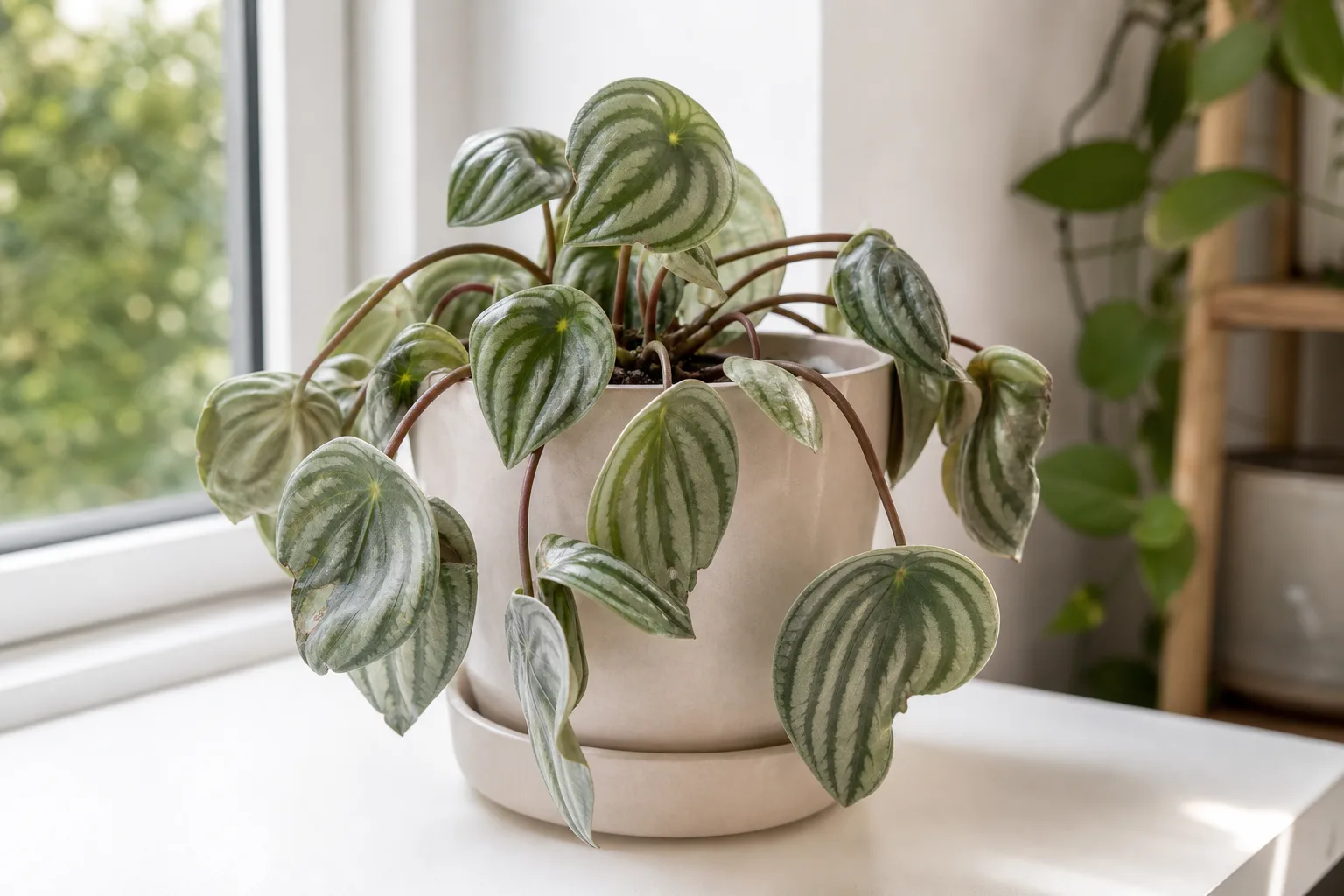
Drooping Leaves on Watermelon Peperomia: Causes, Checks & Fixes
This guide covers drooping leaves on Watermelon Peperomia. See also the general Drooping Leaves guide, watering, and light pages for this plant.
Drooping Leaves on Watermelon Peperomia: Causes, Checks & Fixes
Quick answer
Drooping on Watermelon Peperomia (Peperomia argyreia) is a gradual hang-round, silver-striped leaves bow on red petioles that lose stiffness at the roots over days, not hours. That slow posture change almost always traces to water movement failure at the root zone, not a leaf disease. The species is intolerant of wet soil and very dry soil; over-watering causes root rot while under-watering causes the plant to wilt-and both can look like drooping from across the room.
If your plant collapsed overnight or went limp within a single afternoon, start at the wilting guide-that page covers acute turgor loss. This page covers multi-day petiole hang, normal light lean, and the wet-vs-dry branches that develop slowly. Ongoing watering rhythm lives on the Watermelon Peperomia watering guide.
First step: lift the pot, probe moisture 2–3 cm deep, and press red petioles where they meet the soil. A light dry pot with firm petiole bases usually means drought-water once thoroughly and discard saucer water. A heavy wet pot with soft petiole bases means stop watering and plan root inspection if decline continues. Do not add water until you know which branch you are on.
What drooping looks like on Watermelon Peperomia
Healthy plants hold watermelon-striped, waxy leaves horizontally on stiff red petioles. Stress droop changes posture before it changes color-the hang builds over several days as petioles soften and blades angle downward under their own weight.
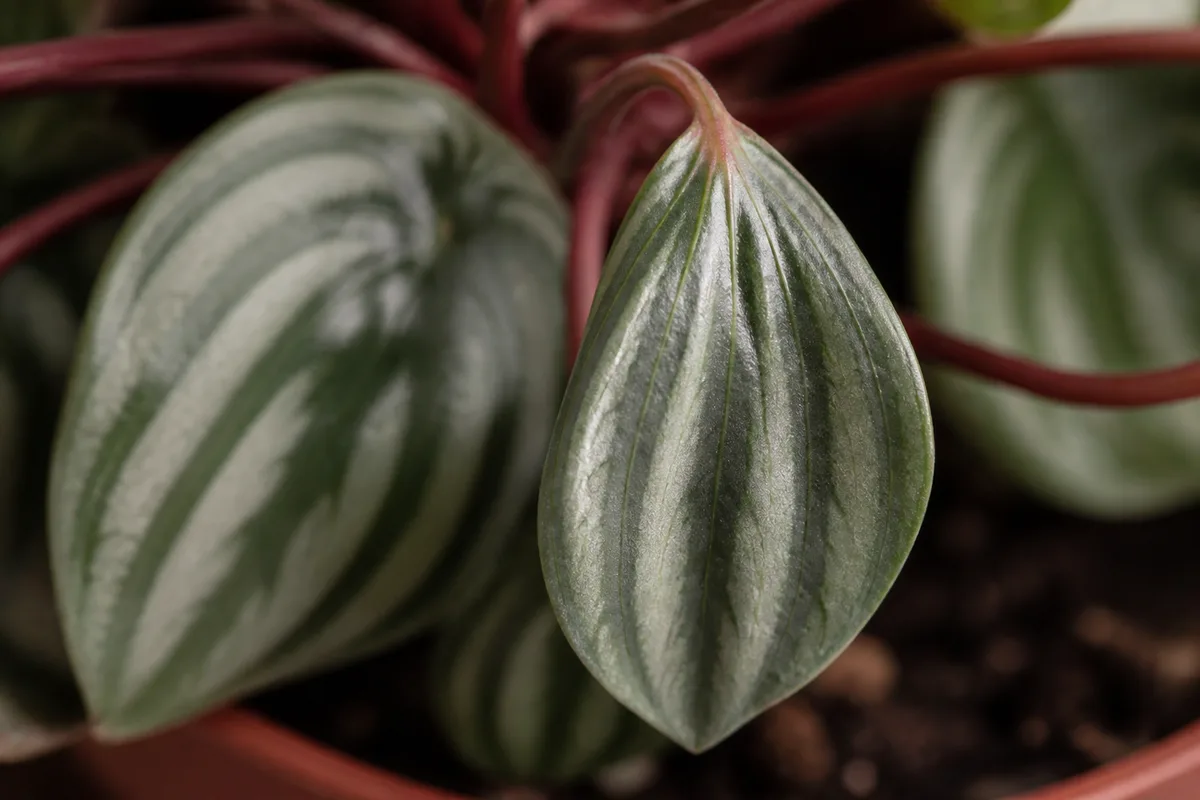
Drooping Leaves symptoms on Watermelon Peperomia - compare with healthy tissue on the same plant.
What to look for - dry droop: A noticeably light pot; mix dry 2–3 cm deep; round leaves hanging but red petioles firm where they meet soil; silver striping slightly dull. Original symptom photos will be added to this guide in a future update.
Dry droop (underwatering)
- Pot feels very light when lifted
- Mix is dry 2–3 cm deep and often throughout the root ball
- Round leaves hang downward but red petioles stay firm at the crown
- Silver striping looks dull or slightly faded
- Leaf tissue may feel thinner when pinched
- Hang often worsens over three to five dry days before you notice
- One thorough soak often perks leaves within hours
Wet droop (overwatering or root failure)
What to look for - wet droop: Pot stays heavy days after watering; mix damp deep down despite limp foliage; lower striped leaves yellowing; red petioles soft at the soil line; sour smell possible from drainage holes.
- Pot stays heavy for days after the last watering
- Mix feels damp or soggy deep down despite limp foliage
- Lower striped leaves may yellow while outer leaves still hang
- Red petioles feel soft where they meet the soil line
- Soil or drainage holes may smell sour
- Watering again makes decline worse, not better
Normal lean toward light
Outer leaves may angle toward a window while petioles stay firm and soil moisture is appropriate. Rotate the pot weekly-this is not systemic droop. See not enough light if leaves stay small and dull over time.
What to look for - light lean vs. droop: Only the window-facing side angles down; petioles firm on all sides; pot weight and moisture appropriate; rotating the pot redistributes posture within a week without watering.
Do not assume every hanging leaf means thirst. On this rosette species, limp foliage with saturated mix is one of the most common and dangerous misreads-rotting roots cannot take up water even when the mix feels wet.
What to look for - crown firmness: Press red petiole bases at the soil line with a fingertip. Firm, springy tissue on dry soil suggests drought. Mushy, collapsing tissue on wet soil suggests crown or root decay-see crown rot if the rosette center is involved.
Why Watermelon Peperomia gets drooping leaves
Drooping on this compact rosette is rarely a mystery pest-it is a slow failure of petiole stiffness as roots stop delivering water at the rate leaves lose it. The causes below fit P. argyreia morphology: small root ball, fleshy striped leaves on thin red petioles, and intolerance of extremes at the crown.
Dry-down outpaces root supply
The fleshy leaves store some moisture, but a compact root system in a small pot cannot keep up when mix dries faster than you check it. Warm east or south windows, winter heating, and skipped watering cycles let turgor fade leaf by leaf over several days rather than collapsing the whole rosette at once. Hydrophobic old mix can shed surface water while the center stays dry-leaves hang even after you think you watered. See underwatering for drought-only recovery.
Saturated mix and declining uptake
Watermelon Peperomia is intolerant of wet soil. When lower roots sit in stale moisture, fine roots suffocate and decay. Root rot can quickly occur from overwatering. Petioles then lose stiffness while the pot stays heavy-the gradual wet droop that looks like thirst from across the room.
Culture traps that keep roots wrong
Watermelon Peperomia overview thrives being pot-bound with a small root ball, so an oversized container holds excess wet mix that never dries between waterings. Dim corners slow transpiration while calendar watering keeps mix wet. Full saucers, blocked holes, and heavy peat without perlite extend the slow hang phase before collapse. Cold drafts below about 10°C (50°F) or hot dry radiator air can accelerate petiole softening without changing your watering schedule-check placement if droop builds over a week on otherwise even moisture.
How to confirm the cause
Work through these checks in order before you treat:
- Pot weight - Lift the container. Light and dry strongly suggests underwatering. Heavy and wet points to uptake failure from saturated roots.
- Soil moisture at depth - Stick a finger or wooden skewer 2–3 cm into the mix. Dry throughout fits drought droop. Constantly damp deep soil with limp leaves fits rot or overwatering.
- Petiole firmness - Press where red petioles meet the soil. Firm bases with dry soil mean thirst. Soft, collapsing bases with wet soil mean crown or root decay-see crown rot if the rosette center is involved.
- Smell test - Sour or rotten odor from drainage holes or the soil surface suggests anaerobic conditions in the root zone.
- Leaf pattern - Yellowing lower leaves with wet soil and soft petioles fit root decline. Thin, slightly curled leaves on dry soil fit drought.
- Onset speed - Hang building over three to seven days fits this drooping page. Same-day collapse fits wilting.
- Recovery test (dry soil only) - If soil is dry and petioles are firm, water once thoroughly. If leaves do not perk within 24 hours, roots-not thirst-are the problem.
If soil is wet and petioles are soft, do not water again hoping for recovery. Proceed to the wet-soil recovery path below or the overwatering guide.
First fix for Watermelon Peperomia
Weigh the pot and probe soil moisture before you touch the watering can.
On gradual droop, the costly error is treating wet roots like drought because limp striped leaves look thirsty. Hold the container in both hands, note weight, check moisture 2–3 cm deep, and press petiole bases at the crown-only then choose a branch.
- Dry and light: Water until excess runs from drainage holes, discard saucer water, and wait for perk-up within 24 hours.
- Wet and heavy: Stop watering immediately. Move to Watermelon Peperomia light guide, empty any standing saucer water, and plan a gentle root inspection if decline continues beyond 48 hours.
Do not fertilize, mist heavily into the rosette crown, or repot on day one unless you confirm mushy roots or a failing crown during inspection.
Step-by-step recovery
Recovering from dry droop
- Water thoroughly once - Soak until water runs freely from drainage holes. If dry mix repels water and runs straight through, bottom-water 20–30 minutes or poke shallow holes to rewet evenly.
- Discard saucer water - Never leave the pot standing in runoff.
- Wait 12–24 hours - Judge recovery by leaf firmness and petiole stiffness, not by watering again.
- Resume dry-down rhythm - Water next only when the top of the mix dries per the watering guide. Do not keep soil constantly moist as overcorrection-that triggers rot on this species.
Recovering from wet droop
- Stop all watering - Allow the mix to begin drying from the top. Do not mist the crown or pour water around the base.
- Improve light and airflow - Move to bright indirect light so the plant uses water more predictably. Avoid cold drafts and hot radiator blasts during recovery.
- Empty saucers and confirm drainage - Ensure holes are open and no decorative pot is trapping water.
- Inspect roots if decline continues - After 48–72 hours with no improvement, gently unpot. Trim brown mushy roots with sterile scissors, air-dry cut surfaces briefly, and repot into fresh perlite-heavy mix in a pot matched to the trimmed root ball.
- Trim irreversible tissue - Leaves that stay collapsed and necrotic after the root zone is corrected will not rehydrate. Remove them to reduce stress on remaining healthy tissue.
If the crown fails
If petiole bases are fully mushy but outer leaves still feel firm, take leaf or petiole cuttings as backup per the propagation guide. A collapsed rosette center rarely revives once decay spreads through every petiole attachment point.
Recovery timeline
Dry droop: Mild dehydration often shows improvement within a few hours and full perk-up within 12–24 hours after one thorough watering. Crispy brown edges that formed during drought will not revert, but new growth should look normal once the rhythm stabilizes.
Wet droop with early root damage: After stopping water and improving conditions, expect 1–3 weeks before new center leaves emerge and petioles firm at the base. Judge success by new growth and root firmness, not by old collapsed leaves standing back up.
Advanced crown rot: If the crown is fully soft or most roots are mushy, recovery is unlikely. Save healthy cuttings while tissue is still firm rather than waiting for a collapsed rosette to revive.
Indoor example: east window, winter dry-down
Editorial composite - typical home-grower pattern, not a single photographed specimen.
A grower kept a nursery-fresh Watermelon Peperomia in a 6-inch (15 cm) plastic pot on an east-facing sill through winter. By late January the outer striped leaves began angling down over five days-not overnight. The pot lifted easily, a skewer came out dry 3 cm deep, and red petioles stayed firm at the crown. One thorough soak at the sink with saucer water discarded produced visible perk-up by the next morning.
The same plant sagged again in March after the grower watered every Tuesday without checking weight. Soil stayed damp deep down, the pot felt heavy, lower leaves yellowed, and petiole bases turned soft over another week. Watering stopped; on day 3 the plant was unpotted. Outer roots were brown and stringy; roughly one-third was trimmed and the plant repotted into fresh perlite-heavy mix in the same 6-inch pot. New upright center leaves appeared on day 12.
Takeaway: identical gradual hang, opposite first fixes-light pot with firm crown recovered in hours; heavy pot with soft crown needed root rescue, not another drink.
Lookalike symptoms to rule out
Drooping vs. wilting on this species
| Signal | Dry droop | Wet droop | Normal light lean | Crown rot |
|---|---|---|---|---|
| Pot weight | Light | Heavy days after watering | Normal | Heavy, wet |
| Soil 2–3 cm deep | Dry throughout | Damp or soggy | Appropriate moisture | Wet, may smell sour |
| Red petioles at crown | Firm | Soft, collapsing | Firm | Mushy at base |
| Onset | Gradual over days | Gradual or after overwatering habit | One-sided toward window | Often follows wet crown |
| After one soak | Perks in 12–24 h | Worsens or no change | Unchanged | No improvement |
Wilting often describes sudden limpness across the whole rosette-especially after a missed drink, heat afternoon, or fast root failure. Drooping emphasizes leaves and petioles hanging under their own weight over several days. The diagnostic path is the same pot-weight and crown-firmness check; use the wilting guide when collapse feels acute or heat-related.
Leggy growth from low light - Long thin petioles and small dull leaves from insufficient light can look weak but soil dries normally and petioles stay firm. Brighten placement rather than watering more.
Crispy leaves from low humidity - Dry air browns edges and can precede droop in very dry rooms, but the primary check is still soil moisture. See low humidity when edges crisp while the pot weight feels normal.
Pest-related weakness - Mealybugs, scale, or fungus gnat larvae can weaken the plant, but drooping still ties back to water movement. Scout leaf axils and soil surface if care checks do not explain decline.
Heat scorch - Direct sun can tan or bleach striping and cause afternoon limpness. Move back from harsh glass; confirm even soil moisture rather than assuming underwatering.
Mistakes to avoid
- Watering immediately because striped leaves look sad without checking whether the pot is already heavy and wet.
- Keeping the pot in a full saucer because the plant looks thirsty-standing water suffocates lower roots quickly on small root systems.
- Watermelon Peperomia repotting guide into a much larger container hoping to fix droop. Oversized pots stay wet longer and often worsen root decline.
- Increasing fertilizer on a drooping plant. Stressed roots cannot use nutrients; salts can burn thin leaf edges.
- Misting heavily into the rosette crown on wet-soil droop. Trapped moisture at the center accelerates petiole decay on this rosette-forming plant.
- Moving a wet, drooping plant into harsh direct sun to dry it out. Bright indirect light is enough; scorch adds a second stress.
- Confusing gradual droop with normal light lean and watering a plant that already has adequate moisture.
How to prevent drooping next time
Learn your pot’s dry-down time in its actual window-not a generic weekly schedule. Lift the pot weekly until you can judge weight by feel.
Allow the top of the mix to dry to the touch before rewatering. Reduce frequency in winter when growth slows. Use perlite-heavy, well-draining mix and a pot only slightly larger than the root ball.
Keep bright indirect light so the plant uses water at a steady rate. Pair good light with stable temperatures away from heating vents and cold drafts.
Empty saucers after every watering. Avoid leaving the pot standing in water. Confirm drainage holes stay open, especially in decorative cache pots.
Scout new growth and petiole firmness during routine care. Early softening at the crown is easier to correct than a fully collapsed rosette. For full species context, see the Watermelon Peperomia overview.
When to worry
Treat as urgent when drooping persists with wet soil, a sour smell, or a soft crown-unpot and inspect roots promptly rather than waiting another week. Escalate to the crown rot guide when multiple petioles collapse at the soil line.
Act quickly if more than one-third of roots are mushy on inspection, or if the entire rosette collapses inward despite wet mix. Save leaf cuttings from firm tissue while you still can.
Dry droop that does not improve 24 hours after one thorough watering suggests root damage or compacted hydrophobic mix-not simple thirst.
Mild dry droop on an otherwise healthy plant with firm petioles is not urgent. One proper watering and a return to dry-down rhythm usually resolves it.
If crown tissue is fully mushy and decline is spreading despite correct dry-down care, contact your local cooperative extension office or a master gardener helpline with photos of the crown and roots-advanced rosette decay can be hard to distinguish from salvageable root stress without a second set of eyes.
Conclusion
Gradual drooping on Watermelon Peperomia traces to water at the roots-too much, too little, or too long in the wrong pot. Lift, probe, and feel red petioles at the crown before you pour. Dry gets one deep drink; wet gets a pause and possibly a root rescue. Firm new striped leaves and stiff petiole bases tell you the plant is winning; spreading collapse at the crown tells you to act fast or propagate while you still can. For sudden collapse, switch to the wilting guide.
When to use this page vs other Watermelon Peperomia guides
- Watermelon Peperomia watering guide - Use for routine moisture checks before assuming drooping leaves is the main issue.
- Watermelon Peperomia problems hub - Browse all 28 common issues on this species.
- Underwatering on Watermelon Peperomia - Different entry point when symptoms overlap with drooping leaves.
- Overwatering on Watermelon Peperomia - Different entry point when symptoms overlap with drooping leaves.
- Root Rot on Watermelon Peperomia - Different entry point when symptoms overlap with drooping leaves.