Not Enough Light on Watermelon Peperomia: Causes, Checks &
Quick answer
Not enough light makes Watermelon Peperomia stretch, fade its watermelon striping, and stop producing new leaves. Move it to bright indirect light-an east- or west-facing window or a few feet from south glass with a sheer curtain-before repotting or fertilizing.
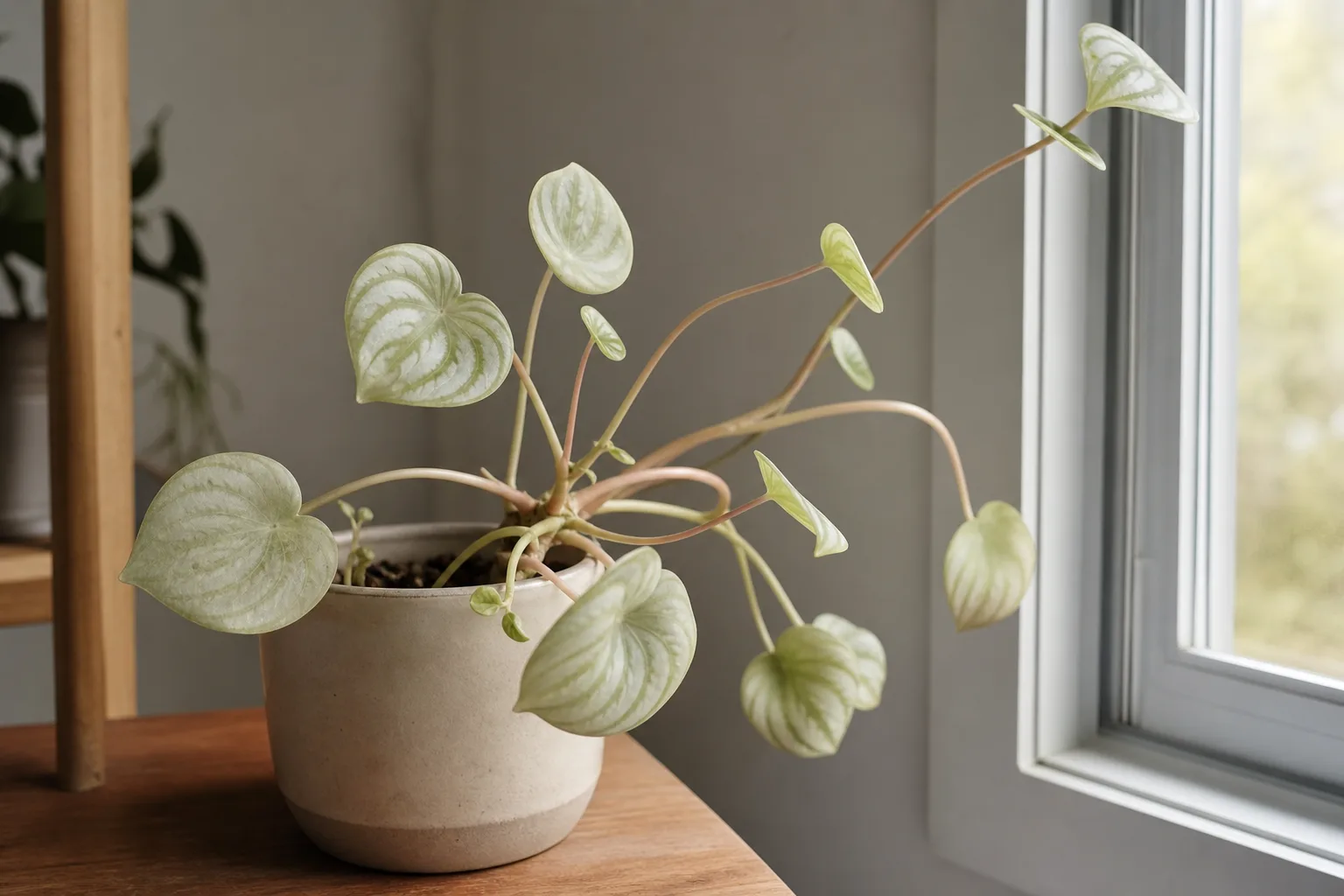
Not Enough Light on Watermelon Peperomia: Causes, Checks & Fixes
This guide covers not enough light on Watermelon Peperomia. See also the general Not Enough Light guide, watering, and light pages for this plant.
Not Enough Light on Watermelon Peperomia: Causes, Checks & Fixes
Quick answer
Watermelon Peperomia is grown for bold silver-and-green striped leaves on a compact, nearly stemless rosette-not for surviving a dim interior shelf. When light is too weak, red petioles stretch, new leaves shrink, and the signature watermelon pattern washes out. The plant may lean toward the window and go months without fresh growth.
First step: move the pot to bright indirect light and watch new leaves for two weeks. An east- or west-facing windowsill, or a spot a few feet back from south-facing glass with a sheer curtain, is the usual target. Do not repot, fertilize, or increase watering until you see whether tighter, brighter new foliage appears.
What insufficient light looks like on Watermelon Peperomia
Low light on Watermelon Peperomia overview has a recognizable pattern tied to its growth habit. Healthy Watermelon Peperomia holds round, waxy leaves on short red petioles in a low, bushy rosette. Under light stress, the look changes in stages:
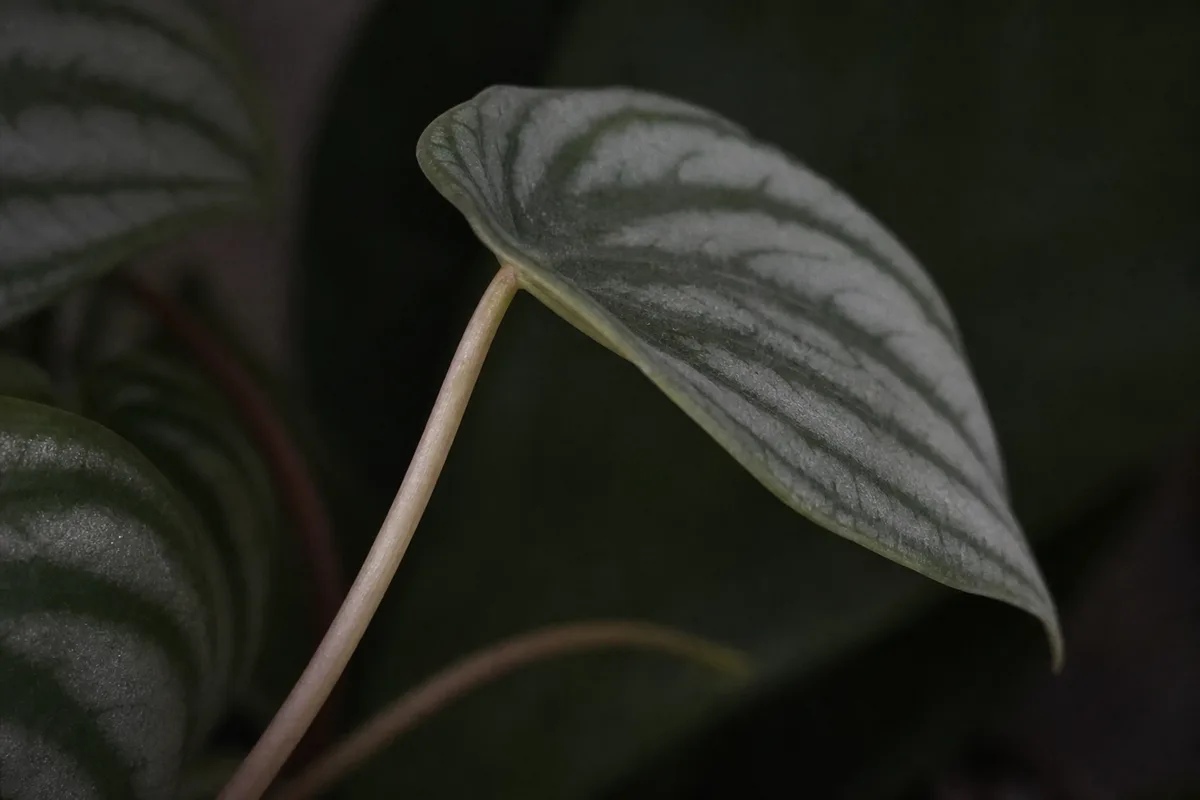
Not Enough Light symptoms on Watermelon Peperomia - compare with healthy tissue on the same plant.
Early signs:
- Silver striping looks dull or gray-green instead of crisp contrast-too little light can cause leaves to lose their vibrant patterns
- New leaves emerge smaller than older ones at the base
- Petioles lengthen slightly and the rosette opens up
- The plant tilts or leans toward the brightest side of the room
Advanced signs:
- Long thin red stems with tiny leaves at the tips-indoor plants can become spindly as they stretch to reach for more light
- No new leaves for several months despite regular watering
- Soil in the top inch stays wet for a week or more because the plant is using little water
- Lower leaves yellow slowly while the crown still feels firm-often from overwatering on Watermelon Peperomia that low light makes worse, not from nutrient lack
The watermelon pattern is the quickest tell. This plant’s value is decorative foliage; when striping fades across the whole rosette rather than on one sun-bleached leaf, suspect light before pests or fertilizer.
Why Watermelon Peperomia struggles in low light
Peperomia argyreia evolved in humid tropical forests where light levels are low-filtered through the canopy, not absent. It tolerates some shade, but it still needs enough photons to maintain compact growth and pigment in those striped leaves. In a home, “shade tolerant” gets misread as “any indoor spot works,” and that is where problems start.
Several factors make this species especially reactive:
Compact rosette form. The plant is meant to stay low and full. When light drops, it stretches petioles to reach brighter zones rather than producing the large round leaves you bought it for.
Slow baseline growth. Even in good conditions, new leaves arrive slowly-NC State lists a slow growth rate for this species. In dim rooms the stall feels permanent, and owners often respond with extra water or fertilizer-both wrong first moves for a plant that simply needs brighter light.
Water use drops in shade. A peperomia in a dark corner drinks far less than one on a bright sill. Caregivers who keep the same Watermelon Peperomia watering guide end up with soggy mix, fungus gnats on the surface, and yellow lower leaves that mimic overwatering while the root cause is still insufficient light.
Seasonal light loss. Winter short days and cloudy stretches can push an otherwise fine plant into etiolation even if it stayed in the same spot all year. Obstructed windows, heavy sheers, or a move away from glass during furniture rearrangement have the same effect.
Marketing vs. reality. Watermelon Peperomia is sold as an easy desk plant and can cope with lower light levels in offices with artificial lighting, but survival is not the same as the tight, striped rosette you want. When light is still too low, long stems and small leaves replace the compact form you bought the plant for. Cope-with-low-light is not thrive-in-low-light.
How to confirm the cause
Work through these checks before you change anything else:
-
Light at the pot - Stand where the plant sits. Can you read comfortably without a lamp at midday? If not, the rosette probably receives low light. Bright indirect light means the plant sees sky or window brightness without direct sunbeams hitting leaves for hours.
-
New growth direction - If stems lean or new leaves only appear on the window-facing side, the plant is actively seeking light. Rotate the pot; if lean returns within a week, the spot is still too dim.
-
Leaf size trend - Compare the newest leaf to one from six months ago. Smaller, paler new leaves with longer petioles confirm etiolation.
-
Soil dry-down speed - Push your finger into the top inch. In low light, mix often stays cool and damp for many days. Note whether saucers hold water because the plant is not pulling moisture.
-
Pest exclusion - Inspect leaf undersides and the crown for mealybugs, spider mites, or scale. Stippling, webbing, or cottony clusters mean pest stress, not light alone. Uniform fade and stretch without insects points to light.
-
Recent moves - A shift from a bright greenhouse to a dim store display, then to a back room, stacks light shock. Recovery needs brighter placement, not more water.
If checks 1–4 align and pests are absent, low light is confirmed. Treat overwatering symptoms in parallel if soil has stayed wet, but fix placement first.
The first fix to try
Move the pot gradually to bright indirect light within one to two weeks.
Start by shifting it closer to the brightest window in the room-an east- or west-facing windowsill is perfect, or set back from south glass. If only a south window is available, set the plant three to five feet back or behind a sheer curtain so leaves never sit in hot direct sun for long stretches. Increase exposure every few days: a foot closer, then another, watching for any pale bleaching on leaf surfaces.
Once in the new spot, rotate the pot a quarter turn every week so the rosette fills evenly instead of leaning.
After the move, change nothing else for ten days except watering rhythm. Brighter light dries soil faster; check the top inch every few days instead of watering on autopilot. Empty saucers after each soak.
Do not fertilize a light-stressed plant immediately. Do not repot unless soil is failing or roots are mushy from chronic wetness in the old dark corner.
Step-by-step recovery
Follow this sequence after the first move:
-
Week 1–2: Acclimate and observe. Watch for any bleached patches that signal too much direct sun-pull back slightly if leaves look washed out or crispy on the sun-facing side. Firm, unchanged old leaves are normal; judge progress by new buds at the crown.
-
Week 3–4: Evaluate new growth. Tighter petioles and larger emerging leaves mean light is adequate. If stems still stretch, move closer to the window or add a full-spectrum grow light six to twelve inches above the rosette for twelve to fourteen hours daily.
-
Trim or propagate optional stretched growth. Old elongated petioles will not shorten. Once new leaves look good, cut the longest weak stems at the base with clean scissors, or take leaf cuttings with petioles attached for propagation. Keep the parent plant in the brighter spot.
-
Adjust watering permanently. Mark how many days the top inch takes to dry in the new location. Use that rhythm going forward-often less frequent than in the dark corner.
-
Winter supplement if needed. When daylight shortens, return growth may pause even in a good window. A modest grow light from November through February prevents renewed stretch.
Recovery timeline and what improvement looks like
Watermelon Peperomia is a slow grower, so patience matters. Realistic expectations:
Two to three weeks: New leaf buds visible; lean stops worsening; soil dry-down matches brighter conditions.
Four to eight weeks: New leaves noticeably larger with sharper silver striping; rosette looks fuller from the center out.
Three months or more: Several rounds of improved foliage replace the worst stretched stems if you trimmed or propagated.
Signs the fix is working: Compact new petioles, vivid striping on fresh leaves, even rosette shape with weekly rotation, faster but still moderate soil drying, no new yellow leaves from chronic wetness.
Signs the problem is worsening: Continued stretch despite a window move-light is still too low or blocked; bleached tan patches-too much direct sun, not too little; soft crown with sour soil-overwatering in shade has progressed toward rot and needs root inspection.
Stretched old leaves and faded old striping do not heal in place. Recovery is judged by new growth, not by old tissue reverting.
Lookalike symptoms and causes to rule out
Leggy growth from low light vs. normal aging. Lower leaves naturally age and drop occasionally. Light stress shows smaller new leaves and longer petioles on current growth, not just yellowing at the base alone.
Overwatering. Yellow lower leaves, limp petioles, and sour wet soil can follow low light because the plant uses little water. If you moved to brighter light and soil still stays wet for ten days, inspect roots and drainage separately.
underwatering on Watermelon Peperomia. Crispy, folded leaves and bone-dry soil that pulls away from the pot rim mean drought-not dim light. Low-light plants more often stay too wet than too dry.
Sunburn. Bleached or tan crispy patches on leaves facing the glass mean too much direct sun, the opposite problem. Pull back from the window or filter the light.
Spider mites in dry bright rooms. Fine stippling and webbing on undersides in a hot south window is mite damage, not light deficiency. Rinse and treat pests; do not move deeper into shade.
Nutrient deficiency. Uniform pale new growth on a plant in bright light with correct watering may need diluted fertilizer in summer. In a dark room, pale stretchy growth is almost always light first.
Mistakes to avoid
-
Moving instantly into harsh south-window sun to “fix” legginess-direct sun in summer can scorch the foliage. Gradual bright indirect light, not midday direct rays.
-
Fertilizing before fixing light-extra nutrients cannot replace photosynthesis. Feed only after new growth looks normal in a brighter spot.
-
Watermelon Peperomia repotting guide on day one-unnecessary unless wet soil and root rot on Watermelon Peperomia already exist. Light correction comes first.
-
Assuming a north window is enough without watching leaf size-many homes need a grow light on north exposures for this species to keep full striping.
-
Keeping the same watering calendar after a move-brighter light changes dry-down speed within days.
-
Decorating with the plant in a hallway or bathroom with no window-survival under brief artificial light is not the same as healthy striped foliage.
Watermelon Peperomia care cross-check
Once light is corrected, align the rest of care so the plant stays compact:
- Watering: Let the top inch of mix dry before soaking; reduce frequency in winter when growth slows.
- Soil and pot: Well-draining mix with perlite; a pot only slightly larger than the root ball so soil does not stay waterlogged.
- Humidity: Average room humidity is fine; avoid misting so much that the crown stays wet.
- Temperature: Stable room temperatures; keep away from cold drafts and hot radiator blasts that stress leaves already weakened by stretch.
Bright light and correct dry-down watering work together. A well-lit peperomia on a proper schedule rarely needs heroic intervention.
How to prevent light problems next time
- Place new plants within a few feet of east- or west-facing glass, or filtered south light, from day one.
- Rotate the pot weekly for even rosette shape.
- Clean windows seasonally-grime and screens cut usable light more than most owners expect.
- Add a full-spectrum LED grow light in offices, north rooms, or winter when stretch or fade reappears.
- Re-check placement after room rearrangements; the spot that worked in summer may be too dim by February.
- Watch the striping, not just leaf count-dull pattern is the earliest warning before stems elongate badly.
Because Watermelon Peperomia is non-toxic to cats and dogs, a bright windowsill or lit shelf is a safe display spot once light and watering are stable-unlike many high-light plants that must stay out of pet reach.
When to worry
Low light alone rarely kills this plant quickly, but combined stress is serious. Unpot and inspect roots if the crown feels soft, soil smells sour despite less watering, or multiple leaves collapse within days after sitting in a dark wet corner. A firm crown and gradual fade mean you have time-move to better light and adjust water, then watch new growth.
If months pass in corrected bright indirect light with proper dry-down and the rosette still produces only tiny pale leaves, verify that nothing blocks the window and consider a dedicated grow light. Persistent failure to produce normal foliage in genuinely bright conditions suggests a separate root or pest issue worth isolating and inspecting.
Conclusion
Not enough light on Watermelon Peperomia shows up as faded watermelon striping, stretched red petioles, lean toward the window, and stalled new growth-often paired with soil that stays wet too long. The first fix is a gradual move to bright indirect light, with weekly rotation and adjusted watering after the move. Old stretched leaves will not shrink back; judge success by tighter, brighter new foliage over the next month. Prevent recurrence by keeping the rosette near real window brightness year-round and supplementing in dark rooms or winter before stretch returns.
When to use this page vs other Watermelon Peperomia guides
- Watermelon Peperomia watering guide - Use for routine moisture checks before assuming not enough light is the main issue.
- Watermelon Peperomia problems hub - Browse all 28 common issues on this species.
- Leggy Growth on Watermelon Peperomia - Different entry point when symptoms overlap with not enough light.
- Slow Growth on Watermelon Peperomia - Different entry point when symptoms overlap with not enough light.
- Yellow Leaves on Watermelon Peperomia - Different entry point when symptoms overlap with not enough light.