Leggy Growth on Watermelon Peperomia: Fix Light, Prune &
Quick answer
Leggy Watermelon Peperomia shows long red petioles, small pale leaves, and a leaning rosette from too little usable light-not fertilizer lack. Move to bright indirect light and rotate weekly before pruning or repotting; old stretched petioles stay long until you cut or propagate.
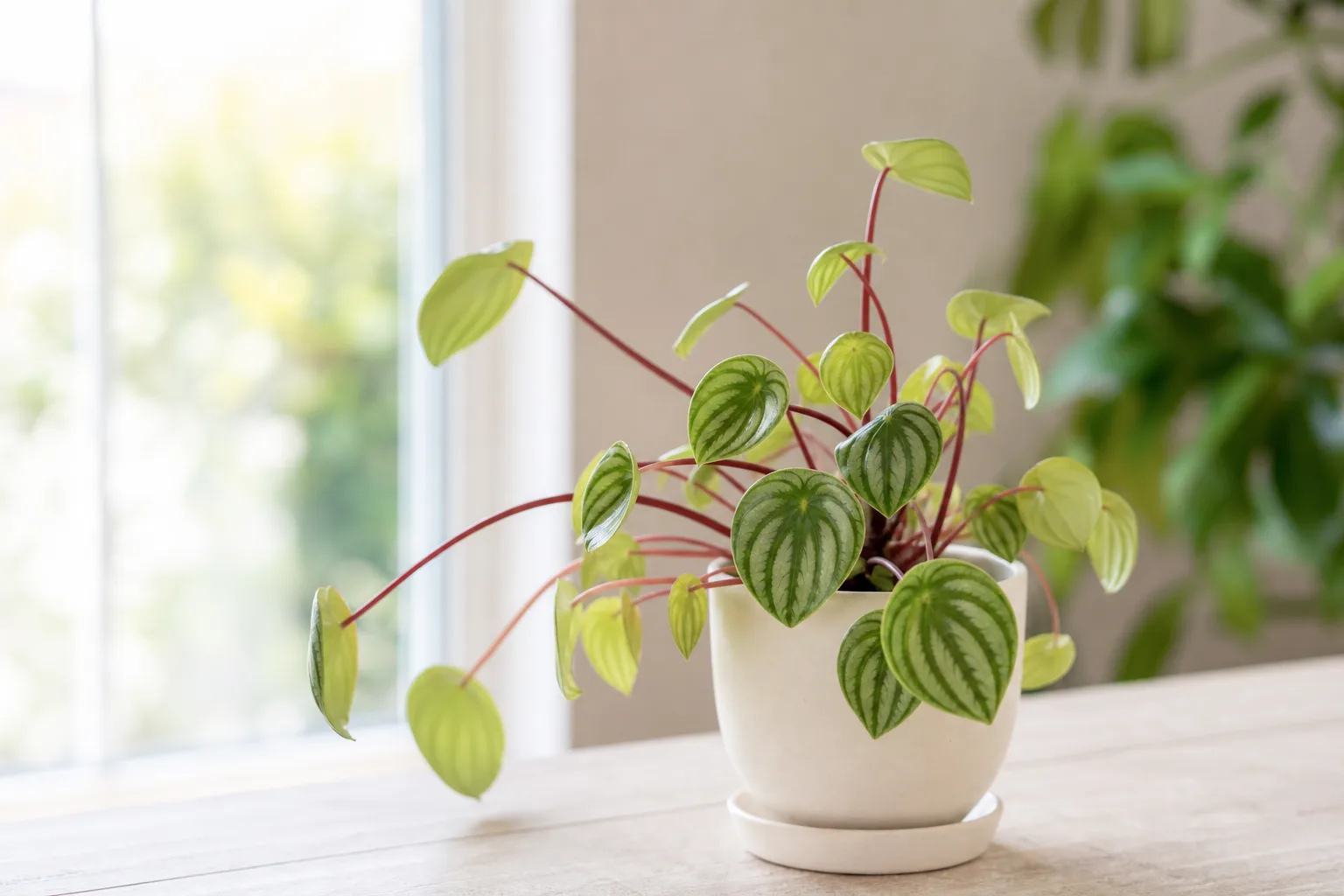
Leggy Growth on Watermelon Peperomia: Fix Light, Prune & Propagate
This guide covers leggy growth on Watermelon Peperomia. See also the general Leggy Growth guide, watering, and light pages for this plant.
Leggy Growth on Watermelon Peperomia: Fix Light, Prune & Propagate
Quick answer
Leggy growth on Watermelon Peperomia (Peperomia argyreia) is etiolation-the rosette stretching toward light when photons are too scarce. A healthy plant reads as a compact, bushy rosette with round silver-striped leaves on short red petioles. In dim corners, petioles lengthen, new leaves shrink, silver striping washes out, and the whole rosette leans toward glass. This is almost always a light problem, not hunger.
Scope note: This page is the canonical guide for stretched rosette shape, pruning timing, and leaf-petiole propagation after you improve brightness. For placement diagnostics, hand-shadow confirmation, and window-distance troubleshooting, see not enough light on Watermelon Peperomia. For lux targets, window orientation, and scorch limits, see the Watermelon Peperomia light guide.
First step: move the pot to bright indirect light before you fertilize, repot, or prune. Rotate weekly. Give the plant two to four weeks in the new spot, then trim the longest stretched petioles if new compact leaves are emerging.
Leggy growth vs. not enough light - which guide to read
| What you see most | Start here | Why |
|---|---|---|
| Already stretched red petioles; want prune and propagate timing | This page (leggy growth) | Post-stretch shape recovery workflow |
| Dim room placement; need grow lights or two-week light test | Not enough light | Proactive light diagnosis |
| Window direction, scorch limits, warning signs before stretch | Watermelon Peperomia light guide | Full placement reference |
| Wet soil, yellow leaves, soft crown in a dark corner | Overwatering or Root rot | Root failure layered on dim light |
| Almost no new tissue for months | Slow growth | Stall, not just stretch |
Both pages often apply to the same plant. Fix placement first when color fade and window lean dominate; return here for petiole comparison and optional pruning once brighter growth proves the rosette has energy to branch.
What leggy growth looks like on Watermelon Peperomia
Watermelon Peperomia should hold round, waxy leaves on short red petioles in a low, bushy rosette. Leggy plants break that silhouette in predictable ways.
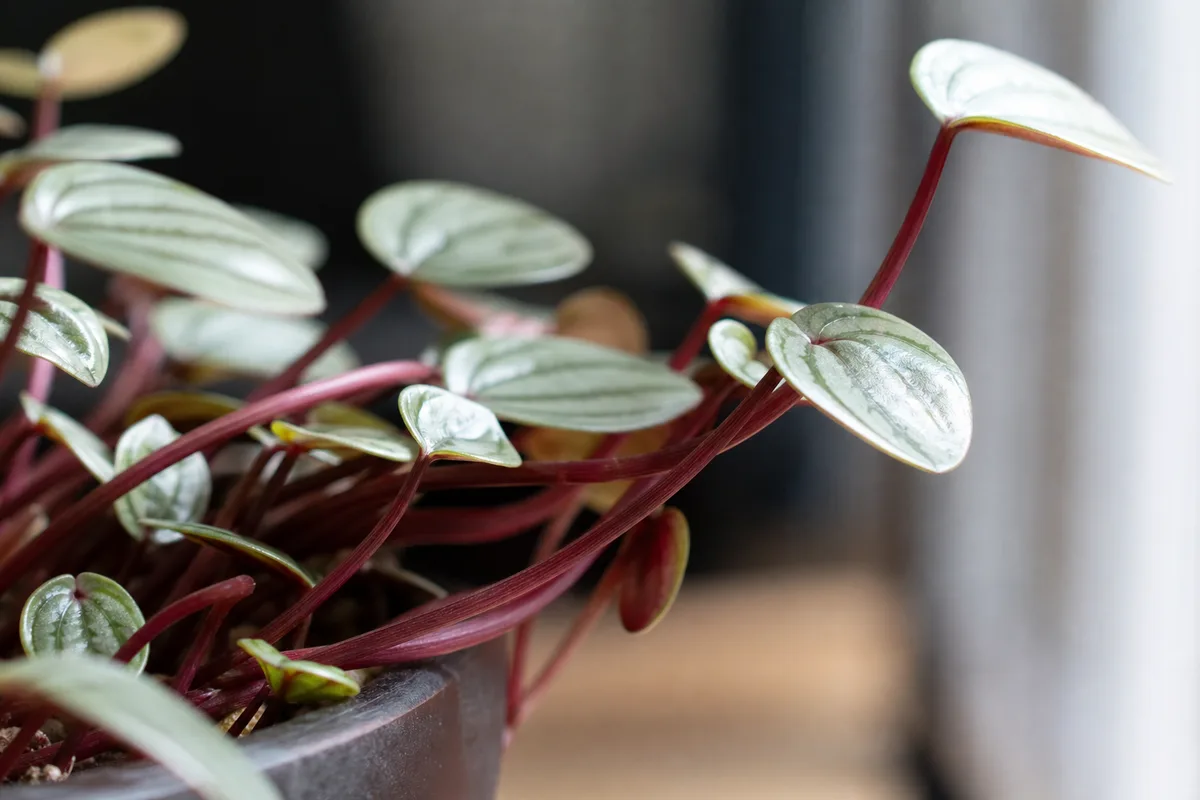
Leggy Growth symptoms on Watermelon Peperomia - compare with healthy tissue on the same plant.
Typical etiolation signs:
- Red petioles noticeably longer than earlier growth near the rosette center
- New leaves smaller than mature leaves, with dull or faded watermelon striping
- Rosette leaning or facing one direction toward the brightest window
- Wide gaps between leaf nodes along petioles-sparse rather than full
- Little or no new growth for weeks while old stretched tissue remains visible
Healthy contrast:
- Short petioles holding round, silver-striped leaves close to the crown
- Even rosette shape when the pot is rotated regularly
- Firm leaves with crisp patterning, not pale and papery
Compare your plant against the Watermelon Peperomia overview for the compact striped silhouette this species is sold to achieve. Winter often worsens existing stretch as daylight shortens, even if watering has not changed.
Why Watermelon Peperomia gets leggy
Insufficient light is the main cause
Watermelon Peperomia evolved under partial shade in tropical forests, not in the deep interior of a dim room. It tolerates lower light better than many tropicals, but tolerance is not thriving. When photons are scarce, the rosette elongates petioles and produces smaller leaves to reach brighter zones-classic etiolation from insufficient light.
Several home placements trigger this pattern:
- Interior shelves and bookcases more than a few feet from windows, where leaves never catch usable light even though the room feels bright to your eyes
- North-facing windows blocked by buildings or trees, especially in winter when daylight hours shrink
- Overhead-only office lighting without a desk lamp or grow light aimed at the canopy
- Crowded plant stands where neighboring foliage shades the peperomia rosette on one side, producing one-sided stretch
Watermelon Peperomia also has a slow growth rate. In low light, new striped leaves appear rarely, so stretched petioles from last season remain visible for months-making the plant look progressively sparser even if it is not dying.
Low light pairs with slow water use
Dim corners slow water use through leaves and roots. Soil that stays damp too long in a weak plant invites root rot-so legginess is often a warning to audit light and moisture together, not just aesthetics. Leggy plus chronically damp mix is a rot setup; cross-check overwatering and crown rot when the rosette center softens.
How to confirm the cause
Work through these checks before you change anything else:
- Light on the rosette, not the room - Hold your hand at leaf height beside the pot at midday. A faint soft shadow means moderate light; a sharp dark shadow suggests bright indirect; no shadow at leaf level during daylight hours confirms the problem. Full hand-shadow protocol: not enough light guide.
- Growth direction - If every petiole points toward one window or lamp, uneven or insufficient light is the primary driver.
- New vs. old leaf size - Smaller, paler new leaves on longer petioles confirm etiolation. Uniform small leaves from purchase may mean the plant was grown in shade at the nursery.
- Soil moisture rhythm - Press the top inch of mix. Chronic dampness in a dim spot supports the low-light diagnosis and flags overwatering risk; bone-dry soil points more toward underwatering stress, not legginess alone.
- Pest check - Inspect leaf axils and the rosette center for mealybugs or scale. Pests can weaken growth, but they do not typically produce the long red petioles and directional lean of true etiolation.
- Season context - Leggy stretch that worsens each winter often reflects shorter days; confirm whether summer growth was tighter when the plant sat closer to glass.
If long petioles, small pale leaves, and leaning align with low light at the rosette, you have a confirmed etiolation diagnosis. Fertilizer will not shorten existing petioles.
The first fix to try
Move the pot to bright indirect light and rotate it a quarter turn every week.
Choose an east- or west-facing windowsill, or set the plant a few feet back from a south window with sheer curtain-bright but indirect or filtered light is the target. Acclimate gradually if the plant lived in deep shade for months. Shift it closer to the window over a week rather than jumping from a dark hallway to hot south glass. Sudden harsh sun causes scorch; see sunburn and scorched leaves if striped tissue bleaches after a big move.
Rotation is part of the first fix, not a later chore. Watermelon Peperomia grows toward the brightest source; weekly turns keep the rosette symmetrical as new compact leaves emerge.
Do not fertilize, repot, or prune heavily on the same day you move the plant. Let it settle in better light first.
Step-by-step shape recovery
After the light upgrade:
- Monitor new growth for three to four weeks - The first new leaves should show shorter petioles and stronger striping. That is your proof the fix is working.
- Adjust watering - Brighter light dries soil faster. Allow the soil to dry to the touch at the top before watering and empty saucers so the crown does not sit wet. Full rhythm: Watermelon Peperomia watering guide.
- Prune the worst stretched petioles - Once you see tighter new leaves, snip the longest weak stems at the base with clean scissors. Removing more than about one quarter of foliage at once can shock a small rosette; stagger if the plant is already stressed. Technique detail: pruning guide.
- Propagate trimmed leaves - Watermelon Peperomia roots readily from leaf cuttings with petiole attached. Use healthy leaves from leggy stems to start a compact backup while the parent regrows. Full setup: propagation guide.
- Add supplemental light if windows fail - A full-spectrum grow lamp 12 to 18 inches above the rosette, 12 to 14 hours daily on a timer, compensates for dark winters or obstructed windows. Indoor plants need adequate light for photosynthesis; peperomias benefit the same way other foliage houseplants do.
- Hold fertilizer until growth looks stable - If new leaves are compact and striped, a half-strength balanced feed monthly during active growth is enough. Feeding a still-stressed rosette in marginal light produced weak stretch before; do not repeat that pattern.
Recovery example
A Watermelon Peperomia on an interior shelf roughly five feet from a north window showed red petioles over 8 cm long, pale new leaves with washed-out striping, and a sharp lean toward the glass (November 2025). After moving to an east sill 25 cm from the pane with weekly quarter-turns and a 12-hour LED 15 cm above the crown through winter, the first round leaf on a noticeably shorter petiole with crisp silver banding appeared in three weeks (December 2025). Soil dry-down dropped from about ten days to five-confirming faster transpiration in better light. The longest old petioles stayed elongated; two were snipped at the crown in January 2026 once a second compact leaf had opened. A leaf-petiole cutting from one trimmed stem rooted by February 2026 per the propagation guide.
Recovery timeline
Expect visible improvement in new growth within two to four weeks after a meaningful light increase. Petioles on old stretched leaves will not shorten-only new tissue can be compact. A noticeably fuller rosette often takes one full growing season if you prune lagging stems as tighter leaves appear.
| Phase | What to expect |
|---|---|
| Weeks 1–2 | Plant may look unchanged; watch for firmer new tip growth and faster soil dry-down |
| Weeks 3–4 | New leaves emerge rounder, on shorter red petioles, with stronger silver striping |
| Weeks 5–8 | Optional prune of worst stretched petioles; leaf cuttings root as backup |
| Winter | Slower rebound; supplement with grow light rather than accepting repeat stretch |
Judge success by new leaf size, petiole length, and striping-not by whether old elongated petioles disappear.
Worsening signs: Continued yellowing with sour wet soil, soft crown tissue, or new leaves that stay tiny and pale after six weeks in bright indirect light-recheck distance from glass, review root rot, or add a grow light.
Lookalike symptoms to rule out
| Pattern | Petioles / rosette | Leaves | Soil / pot | Likely cause | Next step |
|---|---|---|---|---|---|
| Leggy etiolation | Long red petioles, lean toward window | Small pale new leaves, faded striping | May stay damp in dim corner | Insufficient light | Brighten → this guide |
| Overwatering yellowing | May not stretch uniformly | Yellow lower leaves, soft bases | Heavy, wet at depth | Wet roots | Overwatering |
| Sun scorch | Uneven lean toward glass | Bleached or crispy patches on exposed blades | Normal dry-down | Too much direct sun | Sunburn |
| Trailing habit (normal) | Outer petioles arch slightly | Full-size striped leaves on mature tissue | Normal | Healthy mature form | No fix needed |
| Pot-bound stall | Compact spacing, little stretch | Small but evenly striped | Tight pot, firm crown | Root-bound in good light | Slow growth |
Leggy growth differs from overwatering yellowing, which usually hits lower leaves first with soft stems and sour-smelling soil. It differs from sun scorch, where direct sun can scorch leaves and bleach striping on tissue already exposed to harsh rays. Leggy plants lean toward light; scorched plants often sit in too much direct sun.
Mistakes to avoid
- Pruning without fixing light - Cut stems regrow in the same weak conditions and stretch again.
- Assuming legginess means the plant needs fertilizer - Nutrient deficiency is uncommon when etiolation signs-lean, long petioles, pale small leaves-are present. Light comes first.
- Repotting into a larger container to “help growth” - Oversized pots stay wet around small root systems and worsen decline in dim corners. Peperomias thrive being pot-bound in well-draining mix.
- Moving directly from deep shade to unfiltered south sun - Scorch damages striped leaves that will not recover; gradual brightening prevents that swap.
- Ignoring wet soil in a low-light spot - Leggy plus chronically damp mix is a rot setup-dry the rhythm before crown tissue softens.
- Watering on the old calendar after a big light increase - Brighter exposure dries mix faster-check soil depth before each drink.
How to prevent leggy growth next time
Place Watermelon Peperomia where bright indirect light locations are realistic all day-not where the pot looks best in the room layout. An east window, filtered west exposure, or a spot a few feet from south glass with sheer curtain supports the tight rosette this species is grown for.
Rotate the pot weekly year-round. One-sided windows always pull new growth toward glass. Supplement in winter if stretch appeared last December-a timer on a grow light 12 to 18 inches above the crown beats repeating seasonal etiolation.
Keep the plant slightly pot-bound in well-draining mix rather than upsizing “for growth.” Compact roots plus good light produce the tight rosette. Match watering to how fast the pot dries in that light level.
Avoid decorating-only placement on interior furniture. If you must keep it away from windows, commit to a grow light rather than accepting slow stretch.
When to worry
Leggy growth alone is rarely urgent-the plant is adapting, not collapsing. Treat as higher priority when:
- Stretched rosette sits in soil that has not dried for weeks, with yellowing leaves or a soft crown-see crown rot and root rot
- New growth continues pale and tiny after four to six weeks in a clearly brighter spot-verify the lamp or window actually reaches leaf level
- Leggy stems flop and break because petioles are too weak to support leaves-support is temporary; light and selective pruning are the real fixes
Replace the plant only if crown rot or root rot has advanced after prolonged wet soil in low light. Many leggy peperomias recover fully once light and watering align.
When to use this page vs. other Watermelon Peperomia guides
- This page - You see stretched red petioles, faded striping, or rosette lean and need prune timing, propagation backup, and lookalike triage.
- Not enough light - You need placement diagnostics, hand-shadow confirmation, and window-distance checks before stretch is severe.
- Light guide - You want window-by-window placement, grow-light distance, acclimation detail, and scorch prevention.
- Propagation - You are ready to root leaf-petiole cuttings after light is fixed.
- Slow growth - The rosette is firm but adding few leaves across seasons, including winter rest stalls.
FAQs
Is leggy growth the same as not enough light on Watermelon Peperomia?
The symptoms overlap-both mean etiolation from insufficient brightness-but this guide focuses on stretched rosette shape, pruning timing, and leaf-petiole propagation after you fix light. For placement diagnostics, hand-shadow confirmation, and window-distance checks, use the not enough light guide.
Should I prune stretched petioles before or after moving to brighter light?
Fix light first, then prune once you see tighter new leaves with stronger silver striping-usually within two to four weeks. Cutting long petioles while the rosette still sits in a dim corner produces another stretch. Remove no more than about one quarter of foliage per session on a small rosette.
Will old long petioles shorten after more light?
No. Stretched red petioles on existing leaves stay long permanently; only new tissue emerges compact. Judge recovery by the next leaves-shorter petioles, rounder blades, and crisper watermelon striping-not by whether old elongated stems shrink back.
When is leggy growth urgent on Watermelon Peperomia?
Stretch alone is cosmetic, but leggy plants in dim corners use water slowly and pair dangerously with chronically wet soil-yellow lower leaves, fungus gnats, or a soft crown need the overwatering, crown rot, or root rot guides in the same week you brighten placement.
How do I prevent leggy growth on Watermelon Peperomia?
Keep bright indirect light on the rosette year-round-roughly 100 to 500 foot-candles at leaf height per extension guidance-rotate the pot weekly, and add a grow light 12 to 18 inches above the crown in dark rooms or winter. Re-check distance from glass each autumn when daylight shortens.
Related Watermelon Peperomia guides
- Watermelon Peperomia overview - species baseline and compact striped rosette
- Not enough light - placement diagnostics and hand-shadow confirmation
- Watermelon Peperomia light - window placement, grow lights, and scorch prevention
- Watermelon Peperomia propagation - leaf-petiole cuttings after light fix
- Watermelon Peperomia pruning - selective petiole removal timing
- Watermelon Peperomia watering - dry-down rhythm when light changes
- Overwatering - dim-corner wet soil overlap
- Crown rot - soft rosette center escalation
- Root rot - mushy roots when legginess pairs with chronic wetness
- Slow growth - seasonal stalls vs. etiolation stretch
Next steps
Leggy Watermelon Peperomia is a light problem dressed as a shape problem. Confirm stretch with long red petioles, small faded leaves, and rosette lean; move to bright indirect light as the first fix; then prune and propagate only after new compact growth proves the placement works. Old elongated petioles never shorten-judge recovery by crisp striping on new round leaves, not by whether stretched stems fill in on their own. If wet soil and sour smell overlap with stretch, address overwatering in the same week you brighten the window.