Slow Growth on Watermelon Peperomia: Causes, Checks & Fixes
Quick answer
Watermelon Peperomia is naturally slow-growing. Worry when no new striped leaves appear through a warm spring and summer. First step: confirm bright indirect light on the rosette and that the top inch of soil dries between waterings before feeding or repotting.
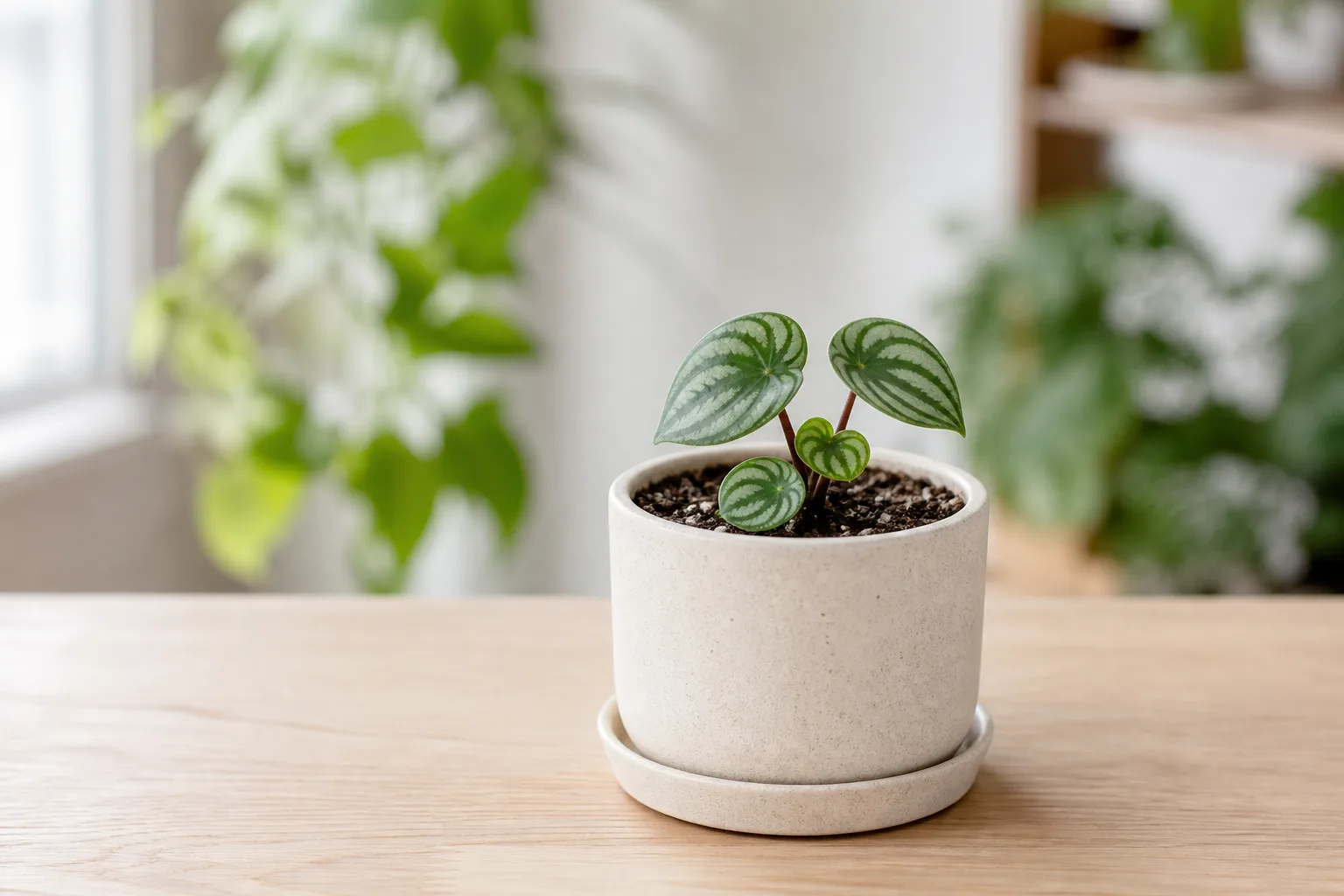
Slow Growth on Watermelon Peperomia: Causes, Checks & Fixes
This guide covers slow growth on Watermelon Peperomia. See also the general Slow Growth guide, watering, and light pages for this plant.
Slow Growth on Watermelon Peperomia: Causes, Checks & Fixes
Quick answer
Watermelon Peperomia (Peperomia argyreia) is a compact, slow-growing houseplant that typically tops out around 6–8 inches tall. It will never push leaves like a pothos-and that is normal. Slow growth becomes a problem when the rosette produces no new round, striped leaves through an entire warm season while other care looks stable.
First step: confirm Watermelon Peperomia light guide reaches the rosette and the top inch of soil dries between waterings. Low light and chronically wet mix are the two most common fixable brakes on Watermelon Peperomia overview. Do not repot, fertilize, or move the plant to a bigger pot until you have checked those two factors.
What slow growth looks like on Watermelon Peperomia
Healthy slow growth on this plant means a steady trickle of new leaves-not a standstill. You might see one or two fresh round leaves with crisp green-and-silver striping every few weeks during spring and summer. Red petioles stay relatively short, and the rosette stays low and full.
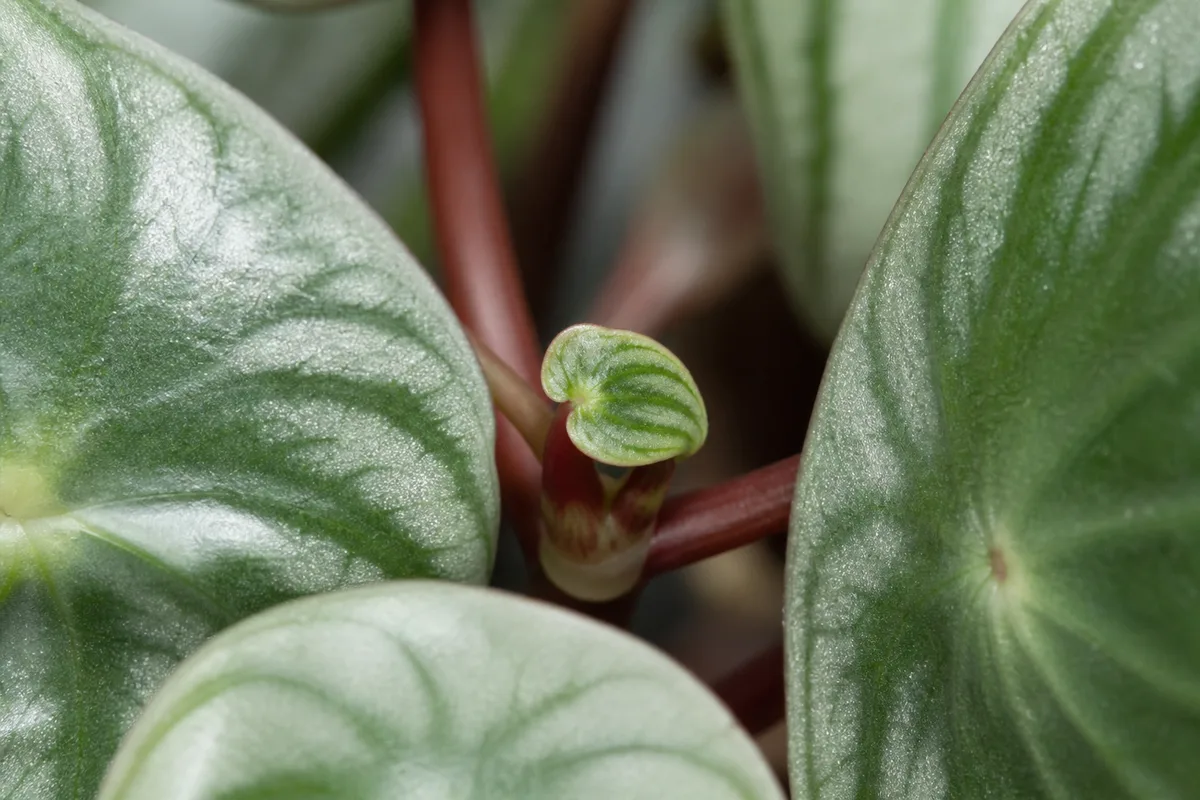
Slow Growth symptoms on Watermelon Peperomia - compare with healthy tissue on the same plant.
Problem slow growth looks different:
- No new leaves for months through late spring and summer despite warm room temperatures
- Smaller new leaves than older baseline foliage, with washed-out striping
- Long thin red petioles reaching toward the brightest window-early etiolation before full legginess
- Soil that stays damp for a week or more after one watering
- A light pot that never seems to need water paired with limp stems-possible root damage
- Winter pause only-little or no growth from fall through late winter while older leaves stay firm; reduce watering in that window and growth often resumes in spring
Watermelon Peperomia stores some moisture in its waxy leaves, so it can look unchanged for weeks even when conditions are off. Judge growth by new leaf count and size, not day-to-day pot weight alone.
Why Watermelon Peperomia gets slow growth
Normal slow pace and seasonal rest
NC State lists a slow growth rate for Peperomia argyreia. BBC Gardeners’ World describes it as a compact, slow-growing house plant. Expect modest gains, especially in winter when light drops and you should reduce watering from fall to late winter. A firm rosette with no new leaves in January is often rest-not failure.
Insufficient light
This species is a houseplant for bright indirect light locations. Without enough photosynthetic energy, growth stalls before the plant fully stretches. Long stems and small leaves indicate light levels are too low on peperomias. Dim corners also keep soil wet longer because the plant uses less water-creating a second growth brake from soggy roots.
Wet soil and damaged roots
Watermelon Peperomia is intolerant of wet soil. Its small root system suffocates in an oversized pot or dense peat mix that holds moisture for days. root rot on Watermelon Peperomia does not always yellow leaves immediately; sometimes the first sign is quiet stagnation-the plant survives but cannot push new striped foliage. Susceptible to rot if soils are kept too moist, this species declines fast once roots turn mushy.
Oversized containers
NC State notes the plant thrives being pot-bound. BBC Gardeners’ World adds it benefits from being pot-bound but needs Watermelon Peperomia repotting guide every two to three years. A pot far larger than the root ball holds excess wet soil around fine roots, slowing growth even when you water carefully.
Cool temperatures and drafts
BBC Gardeners’ World recommends temperatures of 18–24°C for good growth, though the plant can cope down to about 10°C. Cold windowsills, air-conditioning vents, and winter drafts slow metabolism. Growth may pause even when light and watering look acceptable.
Low-level pests and chronic stress
Mealybugs, scale, and spider mites listed on NC State’s pest profile drain energy without obvious collapse. Repeated watering swings, low humidity browning leaf edges, and recent repotting can also stall new leaves for several weeks while the plant stabilizes.
How to confirm the cause
Work through these checks in order:
- Season check - Is it fall or winter with firm existing leaves? Reduced growth may be normal rest. Resume judging in spring.
- Light on the rosette - Can you read a book comfortably next to the plant without a lamp at midday? If not, light is likely limiting. Note leaning toward windows or faded striping.
- Soil dry-down speed - Stick a finger 2–3 cm into the mix. If it stays wet more than seven days after watering in a warm room, drainage or pot size is suspect.
- Pot size versus roots - Lift the plant from the pot. A small root ball swimming in a large wet zone confirms oversized-container stress. Moderately snug roots in a well-draining mix are fine-this species does not need frequent upsizing.
- Root firmness - White or tan firm roots support growth. Brown mushy roots with a sour smell mean rot, not benign slowness.
- New leaf quality - Smaller, paler new leaves with long petioles point to light. Uniformly tiny leaves on an otherwise stable plant in good light may suggest nutrient depletion after years in the same mix.
- Pest scan - Inspect leaf axils, the compact crown, and undersides for mealybug cotton, scale bumps, or fine stippling from spider mites.
If light is adequate, soil dries appropriately, roots are firm, and the plant still opens no leaves through a warm season, consider a light feeding trial only after the basics are stable-never as a first response to stress.
First fix for Watermelon Peperomia
Move the plant to bright indirect light and confirm the top inch of soil dries before the next watering.
Place it on an east- or west-facing windowsill or a few feet from a south window with a sheer curtain-bright indirect light without harsh direct sun. Rotate the pot weekly. Then adjust watering to match faster dry-down: water when the top inch is dry, empty saucers, and skip drinks if the mix still feels cool and damp deep down.
Do not fertilize, repot, or upsize the container on day one. Stacking changes makes it impossible to know what helped-and fertilizer on stressed roots can burn fine peperomia tissue.
Step-by-step recovery
After the first light-and-water correction:
- Wait four weeks in warm months before deciding the plant is still stalled. Track new leaf count weekly.
- If soil stays wet too long, unpot and inspect roots. Trim mushy tissue, repot into a smaller container with perlite-heavy mix, and withhold water one week. NC State recommends good drainage for this species.
- If petioles stretch while growth remains weak, add a grow light for 10–12 hours daily rather than moving into direct summer sun, which can scorch striped leaves.
- Feed only when new growth is active - BBC Gardeners’ World suggests half-strength balanced liquid fertiliser once a month during the growing season. Skip feed in winter rest.
- Treat pests if found - isolate, rinse leaf undersides, and use insecticidal soap on confirmed colonies before expecting vigor to return.
- Repot only when roots clearly fill the pot or rot forced fresh mix-every two to three years is typical per BBC guidance, not annually.
Remove the oldest fully yellow leaves after stability returns; they will not green up again. Keep firm striped leaves even if growth was slow-they still photosynthesize.
Recovery timeline
With improved light and healthy roots, expect the first new striped leaf within four to eight weeks during spring or summer. Winter corrections may show little until day length increases.
Judge success by new leaf size and striping, not instant height gain-this plant stays compact by design. Two to three healthy new leaves over a warm season mark real improvement.
Worsening signs: soft crown, spreading yellow lower leaves, sour soil smell, or shrinking rosette despite corrected light. Those mean root decline, not slow growth you can wait out.
Lookalike symptoms to rule out
Leggy growth - Long stretched petioles with small leaves is primarily a light problem; see the leggy growth guide if stretching is the main issue.
Dormancy in winter - Firm leaves, dry-down watering, no new growth in cold months. Hold water; do not force feed.
Root rot - Yellowing, wilting, mushy base, sour smell. Requires root surgery, not just brighter light.
underwatering on Watermelon Peperomia stall - Very light pot, crispy leaf edges, dry mix throughout. A thorough soak once roots are dry restores turgor within days-different from months-long stagnation in wet mix.
Recent repotting pause - Normal two-to-four-week stall after disturbance. Keep conditions stable.
Mistakes to avoid
Do not upsize the pot hoping for faster growth-excess wet soil around small roots is a common cause of stagnation on this species.
Do not overfertilize to force speed-half-strength monthly feed in active growth is enough; salts stress fine roots.
Do not confuse natural slow pace with failure-compare to warm-season leaf count, not faster houseplants.
Do not keep watering on a calendar when light is low and the pot stays wet-check dryness every time.
Do not place in direct south-window sun to fix slow growth-striped leaves scorch; use filtered light or a grow lamp.
Watermelon Peperomia care cross-check
Slow growth often means one pillar of the normal routine is off:
- Light: Bright indirect; avoid deep shade and direct scorch
- Water: Allow top inch to dry; reduce from fall to late winter
- Soil: Well-draining mix with perlite; good drainage essential
- Pot: Slightly snug is better than oversized
- Temperature: Warm room, minimal cold drafts
- Feed: Light and seasonal, not year-round heavy doses
Fix the condition that fails this checklist before chasing exotic causes.
How to prevent slow growth next time
Place new plants where bright indirect light is realistic all year-not just where the pot looks decorative. Learn your pot’s dry-down rhythm before setting a Watermelon Peperomia watering guide. Use containers only slightly larger than the root ball with open drainage holes. Top-dress or repot every two to three years in spring when roots genuinely fill the pot. Reduce watering and feeding when growth naturally slows in cooler months. Scout the crown monthly for pests that sap vigor quietly.
When to worry
Escalate beyond light-and-water tweaks when:
- The crown feels soft or stems collapse at the base
- Yellow leaves spread on Watermelon Peperomia while soil stays wet
- Roots are mushy on inspection
- No new growth appears by mid-summer after eight weeks of corrected bright indirect light and appropriate watering
- Pest colonies persist after two treatment rounds
A firm, striped, stable rosette with one or two new leaves per warm season may simply reflect this plant’s natural pace-especially in a small pot where it is meant to stay compact.
Conclusion
Slow growth on Watermelon Peperomia is often normal-or a signal that light is too low, soil too wet, or roots too damaged to support new striped leaves. Confirm whether the plant is resting, stalled, or declining; fix bright indirect light and dry-down watering first; then address drainage, pests, or light feeding only when new growth is active. Patience matches this species’ natural rhythm, but a warm-season rosette that never opens a new leaf deserves a root-and-light audit, not more fertilizer.
When to use this page vs other Watermelon Peperomia guides
- Watermelon Peperomia watering guide - Use for routine moisture checks before assuming slow growth is the main issue.
- Watermelon Peperomia problems hub - Browse all 28 common issues on this species.
- Not Enough Light on Watermelon Peperomia - Different entry point when symptoms overlap with slow growth.
- Leggy Growth on Watermelon Peperomia - Different entry point when symptoms overlap with slow growth.
- Yellow Leaves on Watermelon Peperomia - Different entry point when symptoms overlap with slow growth.