Sunburn Scorched Leaves on Watermelon Peperomia: Causes
Quick answer
Sunburn on Watermelon Peperomia bleaches or tans the silver-green striping when direct sun hits leaves adapted to bright indirect light. Move the pot back from south-facing glass or add a sheer curtain before trimming damaged leaves.
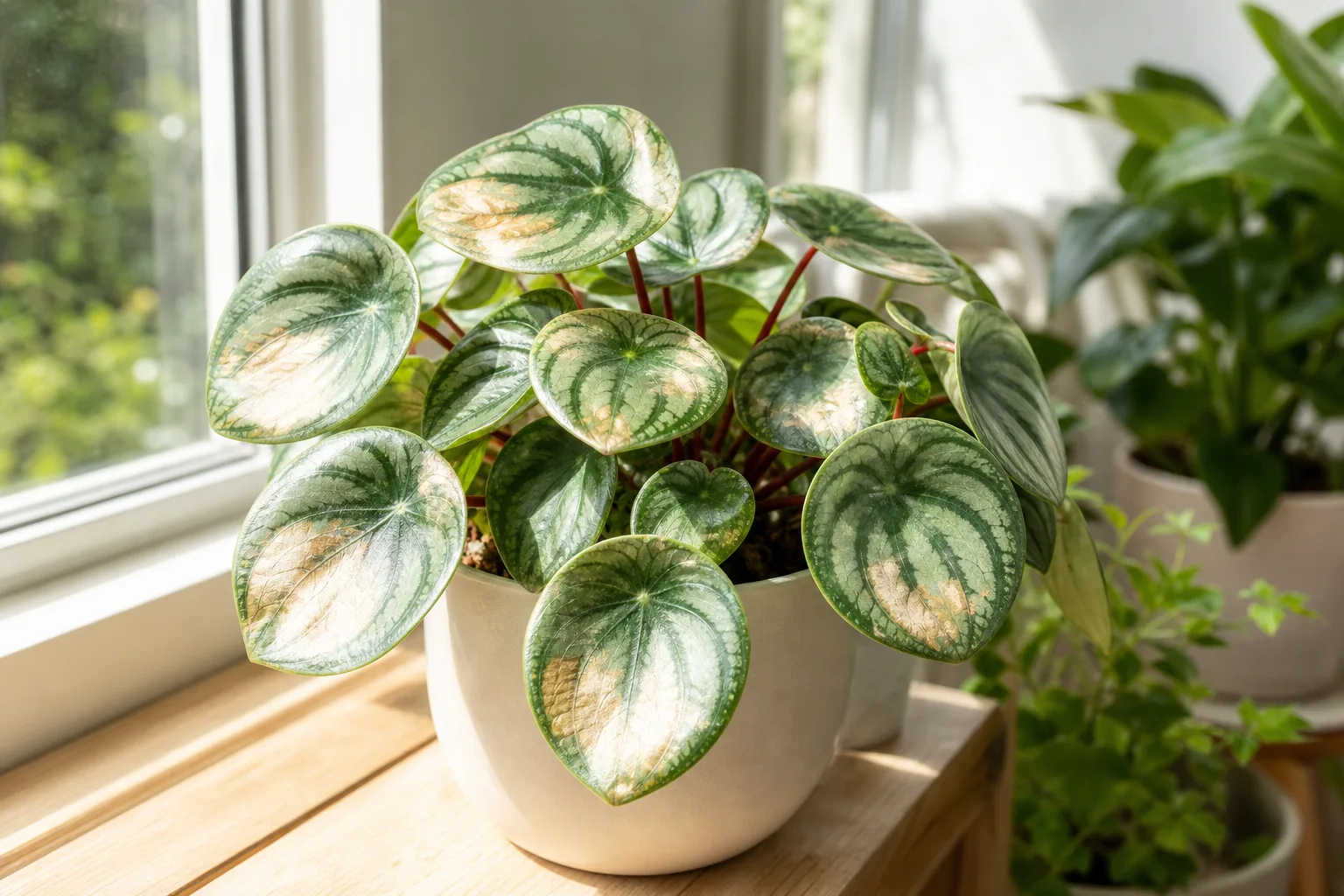
Sunburn Scorched Leaves on Watermelon Peperomia: Causes, Checks & Fixes
This guide covers sunburn / scorched leaves on Watermelon Peperomia. See also the general Sunburn / Scorched Leaves guide, watering, and light pages for this plant.
Sunburn Scorched Leaves on Watermelon Peperomia: Causes, Checks & Fixes
Quick answer
Watermelon Peperomia (Peperomia argyreia) is built for bright indirect sunlight indoors-not midday rays on its round striped leaves. Direct sun in summer can scorch the foliage, bleaching the silver-green pattern into pale white or tan patches that will never re-green.
First step: move the pot out of direct sun-pull it back from south-facing glass or hang a sheer curtain-then leave watering alone until you confirm soil moisture. Sunburn is a light problem, not a thirst problem. Extra water will not heal scorched leaves and can trigger root rot on Watermelon Peperomia in Watermelon Peperomia overview’ small root system.
Why Watermelon Peperomia gets sunburn
Watermelon Peperomia evolved under filtered light in tropical forest understory, where larger trees break up sunlight into dappled brightness. Its fleshy, waxy, peltate leaves store moisture but offer limited protection against intense UV. When direct rays hit the rosette, leaf cells lose water faster than roots can replace it-producing the bleached, crispy patches gardeners call sun scorch.
Several indoor placements push this plant past its tolerance:
- Unfiltered south- or west-facing windows, especially in late spring and summer when sun angle and intensity peak through clear glass.
- Sudden moves from a dim shelf to a bright windowsill without acclimation-the plant had no time to build sun tolerance.
- Outdoor summer placement without shade. Clemson Extension recommends deep shade outdoors where peperomias receive no direct sunlight.
- Reflected light from mirrors, white walls, or glass tables that concentrates rays onto one side of the rosette.
- Confusing “bright light” with “direct sun.” This species needs filtered brightness-an east- or west-facing windowsill or a few feet back from south glass-not hot midday beams on the crown.
Watermelon Peperomia’s decorative striping makes sun damage easy to spot and emotionally frustrating. The pale zones are dead leaf tissue, not a reversible fade. The good news: the plant is rarely killed by a single scorch event if you shade it promptly and let new leaves form under correct light.
What sunburn looks like on Watermelon Peperomia
Sun scorch on this species has a distinct pattern when you compare exposed tissue to healthy leaves:
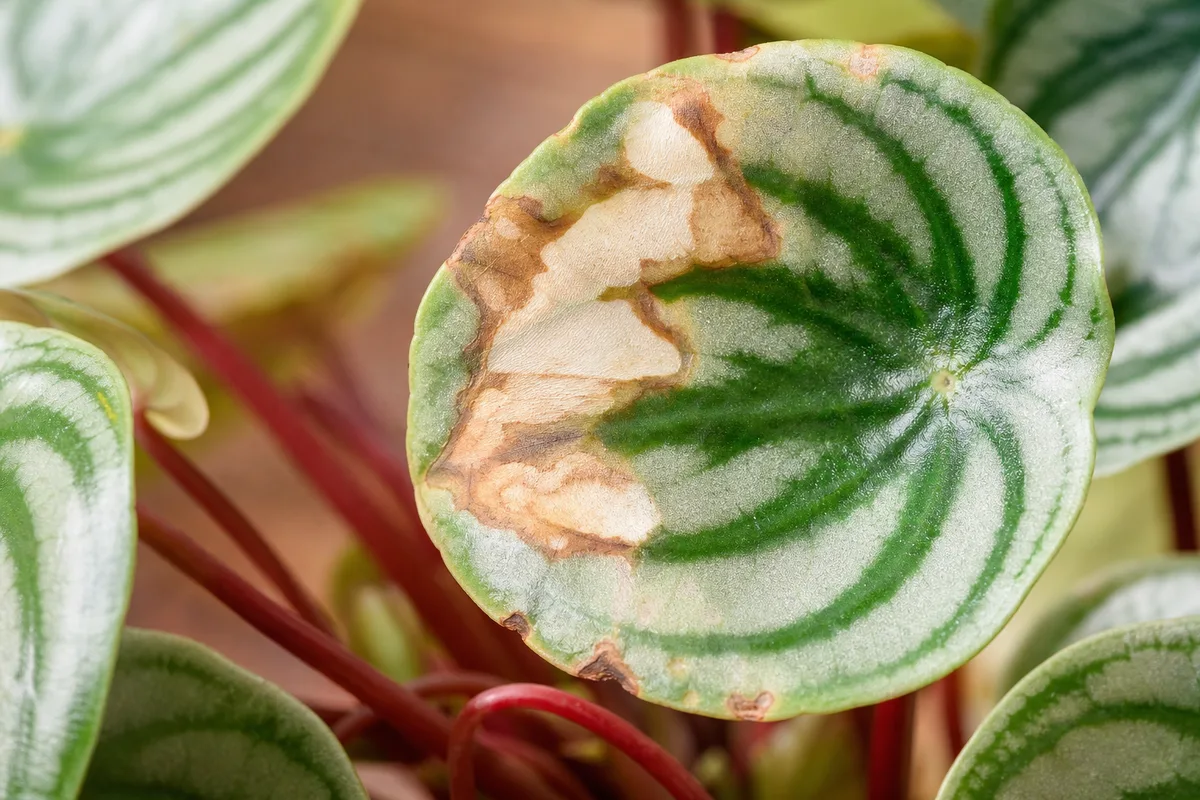
Sunburn / Scorched Leaves symptoms on Watermelon Peperomia - compare with healthy tissue on the same plant.
Typical sunburn signs:
- Bleached white, pale yellow, or tan patches on the sun-facing side of round leaves
- Brown crispy spots on the most exposed leaves, sometimes with papery texture
- Watermelon striping fades or disappears entirely in scorched zones while remaining vivid on shaded portions of the same leaf
- Damage concentrated on upper leaves and outer rosette facing the window-not random across the plant
- Red petioles stay firm; the crown does not feel soft or mushy
Healthy contrast:
- Even silver-gray striping across the leaf surface with dark green bands along main veins
- Leaves feel fleshy and waxy, not papery and brittle except at old natural senescence
- Rosette holds its shape without widespread collapse
Sunburn differs from overwatering on Watermelon Peperomia yellowing, which usually starts on lower leaves with soft stems and sour-smelling soil. It differs from edema, where overwatering plus humidity swings produce corky brown blisters rather than flat bleached patches. It differs from spider mite stippling, which shows fine dots and webbing on leaf undersides rather than large flat bleached zones on the sun-facing surface.
How to confirm the cause
Work through these checks before you change watering, fertilize, or repot:
- Light exposure on the rosette - Note window direction and whether direct sun touches leaves for any part of the day. Midday sun through south glass is the most common trigger.
- Timing - Did bleaching appear within days of moving the pot closer to a window, removing a curtain, or placing the plant outdoors? Sudden onset after a light change strongly confirms scorch.
- Damage pattern - Sunburn hits the side facing the light source. If every leaf shows uniform yellowing from the base up, look at watering instead.
- Soil moisture - Press the top inch of mix. Sunburned plants often have normal or slightly dry soil. Chronic dampness points to overwatering, not light stress.
- Petiole and crown feel - Firm red petioles and a dry crown center support a light diagnosis. Soft, collapsing tissue at the base signals crown rot from wet conditions.
- Pest inspection - Check leaf axils and undersides for mealybugs, scale, or mite webbing. Pests cause stippling and stickiness, not large flat bleached panels.
- Season context - Damage that appeared in June on a plant that looked fine in January often reflects stronger summer sun through the same window.
If bleached or tan patches align with direct sun exposure, firm stems, and normal soil moisture, you have a confirmed sunburn diagnosis. Fertilizer will not restore scorched tissue.
First fix for Watermelon Peperomia
Move the pot out of direct sunlight immediately-set it back from south-facing glass or filter the window with a sheer curtain.
Target bright but indirect or filtered light: an east- or west-facing windowsill, or a few feet from a south window where rays no longer land on the rosette. Watermelon Peperomia prefers bright indirect sunlight and tolerates neither deep shade nor harsh direct rays.
Do not compensate with extra water. Sun-stressed leaves are not wilting from drought-the damaged tissue cannot recover by soaking the roots. Overwatering after scorch is a common mistake on peperomias with small root systems.
Do not fertilize, repot, or mist heavily on the same day you move the plant. Let it settle in filtered light first.
Once the plant is shaded, you may snip fully crispy leaves at the base with clean scissors if they look unsightly. Leave partially scorched leaves that still have green tissue-they can photosynthesize while new growth emerges.
Step-by-step recovery
After moving out of direct sun:
- Monitor light for one week - Confirm no direct rays hit the rosette at midday. Shift the pot or adjust the curtain if hot spots remain.
- Hold your normal Watermelon Peperomia watering guide - Allow the soil to dry to the touch at the top before watering. Empty saucers so the crown does not sit wet.
- Watch for new leaves - The first new round leaves should show crisp watermelon striping. That confirms the light fix is working.
- Trim only fully dead tissue - Remove leaves that are entirely brown and brittle. Partial scorch can stay until replaced naturally.
- Acclimate if you need more brightness later - If the plant was in deep shade before scorch, increase light gradually over one to two weeks rather than jumping between extremes.
- Adjust outdoor habits - If you summer peperomias outside, keep Watermelon Peperomia in bright shade with no direct sun and move it back indoors before intense late-summer heat.
Recovery timeline
Expect the first healthy new leaves within two to four weeks after shading, assuming the crown and roots were not also overwatered. Fully scorched leaves will not re-green-they remain bleached until you remove them or they age off naturally.
A rosette that lost many outer leaves may look sparse for one growing season. Watermelon Peperomia is slow-growing, so replacing a full canopy takes patience. Judge success by new leaf color and striping, not by whether old bleached tissue reverses.
Winter recovery is slower because daylight is shorter. Avoid moving the plant closer to bare south glass to “help” it-weak winter sun is usually fine, but unfiltered spring sun through the same window will scorch again.
Lookalike symptoms to rule out
Sunburn vs. overwatering - Yellow lower leaves, soft red petioles, sour soil, and a mushy crown signal rot. Sunburn shows bleached patches on sun-facing leaves with firm petioles and normal or dry soil.
Sunburn vs. edema - Edema produces raised water blisters that burst into corky brown spots, often after inconsistent watering in humid rooms. Sunburn creates flat bleached or tan zones without blistering.
Sunburn vs. brown tips from dry air - Low humidity browns leaf margins evenly. Sunburn bleaches or tans large patches on the sun-exposed leaf face, often on one side of the rosette.
Sunburn vs. pest damage - Spider mites cause fine stippling and webbing on undersides. Mealybugs leave cottony wax in axils. Neither produces the wide flat bleached panels typical of direct sun on striped peperomia leaves.
Sunburn vs. natural aging - Old lower leaves yellow and drop gradually. Sunburn appears suddenly on exposed tissue after a light change.
Mistakes to avoid
Do not water more because leaves look damaged. Sunburn is not solved by soaking-soggy soil invites root rot on this species.
Do not move directly from deep shade to unfiltered south sun to “fix” pale growth. That swap trades one problem for scorch. Increase light gradually.
Do not apply fertilizer to scorched leaves hoping for recovery. Feed only after new healthy growth appears in filtered light.
Do not leave the plant in the same hot window while trimming leaves. Shading comes first; cosmetic pruning is secondary.
Do not assume all brown spots are sunburn. Check soil moisture and pests before committing to a light-only fix.
How to prevent sunburn next time
Place Watermelon Peperomia where bright indirect light locations stay filtered all day-not where the pot looks best in full sun.
Use sheer curtains on south and west windows during summer. Excessive direct light turns leaves pale, brown, and dead-sheer fabric is an easy buffer.
Acclimate over one to two weeks when moving closer to windows. Shift the pot a foot at a time and watch for early bleaching on the outermost leaves.
Re-check placement each spring. The same windowsill that was safe in winter can scorch leaves when the sun angle rises.
Keep outdoor summer peperomias in full shade. Direct patio sun will bleach striping within days.
Rotate the pot weekly for even growth, but never rotate into a hot sunbeam just to balance the rosette-filter the light instead.
When to worry
Sunburn alone is rarely life-threatening. Watermelon Peperomia usually survives if you shade it promptly. Treat as higher priority when:
- Most leaves are fully crispy and the rosette has no green tissue left to photosynthesize-shade immediately and wait for new growth before giving up
- Scorched plant also sits in wet soil with a soft crown-address rot risk alongside light correction
- Bleaching continues on new leaves after two weeks in a clearly filtered spot-verify that midday sun is truly blocked at leaf height
Replace the plant only if crown rot or advanced root rot developed from overwatering after scorch. Many sunburned peperomias recover fully once light and watering align.
Conclusion
Sunburn on Watermelon Peperomia is a light-intensity problem, not a mystery disease. Bleached or tan patches on sun-facing striped leaves mean direct rays exceeded what this forest-floor species can handle. Move the pot out of direct sun, filter south windows, and let new round leaves tell you the fix worked. Old scorched tissue stays until you trim it, but correct bright indirect light stops the damage and keeps the watermelon pattern sharp on every new leaf.
When to use this page vs other Watermelon Peperomia guides
- Watermelon Peperomia watering guide - Use for routine moisture checks before assuming sunburn / scorched leaves is the main issue.
- Watermelon Peperomia problems hub - Browse all 28 common issues on this species.
- Brown Tips on Watermelon Peperomia - Different entry point when symptoms overlap with sunburn / scorched leaves.