How to Prune Watermelon Peperomia: When, Where, and What
How to Prune Watermelon Peperomia: When, Where, and What to Cut
How to Prune Watermelon Peperomia: When, Where, and What to Cut
Quick Answer - Remove One Failed Leaf at the Petiole Base
First action: in good light, find one fully yellow, brown, mushy, or torn leaf and cut its red petiole flush at the crown junction with fine sterilized scissors - do not pull. Watermelon Peperomia pruning on Peperomia argyreia is light grooming, not vine renovation. This nearly stemless rosette grows round silver-striped leaves on delicate petioles from a compact crown, stores water in fleshy foliage, and replaces leaves slowly. Remove failed leaves at the base, optionally pinch a rare stretched stem tip above a node during active growth, and propagate healthy trimmed leaves rather than shearing the rosette like a hedge.
What Watermelon Peperomia Pruning Can and Cannot Fix
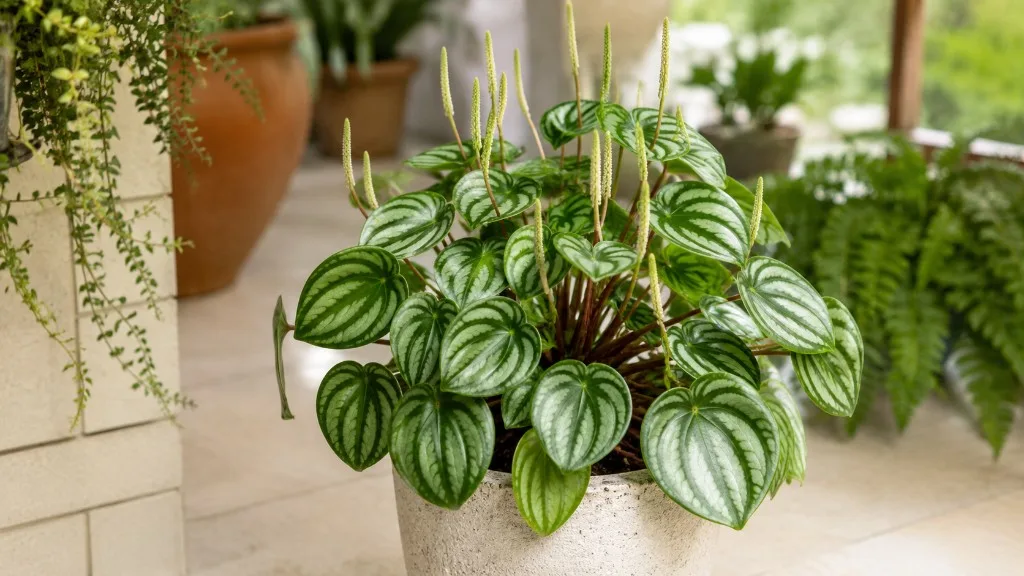
Indoors, watermelon peperomia is grown for peltate round leaves with green-and-silver striping that resembles watermelon rind, carried on red petioles up to several inches long. NC State Extension describes it as an erect, bushy, slow-growing houseplant reaching about 8 inches tall - a tabletop rosette, not a trailing vine.
Pruning can remove yellow or damaged leaves that drain energy and invite rot at the crown, tidy a sparse pot after pest cleanup, supply leaf-with-petiole cuttings for propagation, and shorten an occasional leggy stem that stretched in dim light. Missouri Botanical Garden notes propagation by tip, stem, or leaf cuttings - trimmed healthy leaves need not be discarded.
Pruning cannot fix dull or faded striping caused by low light; new leaves will look the same until you improve placement. It cannot rescue a plant with a soft, wet crown from chronic overwatering on Watermelon Peperomia - fix roots and dryness rhythm before removing live foliage. It also cannot force pothos-style branching from the rosette center; fullness comes from multiple plants in one pot and successful leaf propagation more than aggressive stem stripping.
What to Check Before You Cut
Walk through this inspection before any live-tissue cuts:
- Leaf color and firmness: fully yellow or brown lower leaves are normal senescence; mushy petioles at the base signal crown trouble instead.
- Crown moisture: if the soil surface stays wet and petiole bases feel soft, postpone cosmetic trimming and assess drainage, pot size, and watering first.
- Striping quality: pale, small new leaves on long petioles usually mean insufficient light - moving the pot beats removing healthy striped foliage for symmetry.
- Pests: mealybug and scale hide in the compact rosette; dab or wash infested leaves before pruning spreads wax or honeydew onto fresh cuts.
- Overall leaf count: count roughly how many healthy leaves remain so you stay within a safe removal limit.
Have fine snips or scissors, 70% isopropyl alcohol for sterilizing blades, and a small tray for trimmings. Dull tools crush delicate petioles and tear crown tissue.
Signs the Plant Is Ready for Grooming
A stable watermelon peperomia has firm striped leaves, petioles that snap cleanly when cut (not soggy), and soil that dries on the top inch or more between waterings on your normal schedule. One or two yellow lower leaves on an otherwise healthy plant are routine cleanup candidates.
When to Delay Pruning
Hold off on anything beyond dead-leaf removal when the plant is wilting from overwatering or underwatering on Watermelon Peperomia, was repotted within the last two weeks, shows active crown rot (soft red bases, sour soil smell), or lost many leaves suddenly after a cold draft or direct-sun scorch. Stabilize conditions first; pruning stressed rosettes adds wound surface on a plant with little root reserve.
When to Prune Watermelon Peperomia
Timing matters less for dead-leaf removal than for pinching and propagation harvests, because P. argyreia is naturally slow-growing per NC State Extension.
Dead, damaged, or diseased leaves come off the day you find them - season does not change the cut placement.
Light pinching, leggy stem shortening, and leaf-propagation harvest fit late spring through early summer, when warmth and Watermelon Peperomia light guide support rooting and new crown leaves. Avoid stacking major grooming with Watermelon Peperomia repotting guide, fertilizer, or a big location change in the same week.
Late fall and winter: remove failed leaves if needed, but skip optional pinching unless your room stays warm and well lit; recovery stalls in cool, dim conditions.
Spring Through Early Summer Active Window
During active growth, a trimmed leaf petiole roots more reliably and any pinched stem tip has a better chance of pushing side growth. This is also when new striped leaves unfurl from the crown - the best time to evaluate whether light fixes have improved pattern quality before you remove live foliage.
Dead Leaves Any Time
Fully yellow or brown leaves no longer photosynthesize. Leaving them invites fungus gnats in wet mix and obscures crown problems. Remove them with a clean petiole cut even in winter.
The First Cut to Make
After inspection, your first cut targets one fully failed leaf - not a healthy striped leaf for aesthetics and not a stem chop. Support the round leaf with one hand, trace the red petiole to where it meets the main stem or soil crown, and snip once at that junction.
Once dead or damaged leaves are cleared, pause and reassess. If the plant is leggy, address light placement before pinching. If the pot looks sparse, consider propagating a healthy trimmed leaf rather than removing more live foliage.
Where to Cut: Petiole Junction and Rare Stem Tips
Cut placement on watermelon peperomia differs from node-heavy vines. There are two scenarios - and only two you should use routinely.
Removing Yellow or Damaged Leaves
Position scissors at the petiole base where it attaches to the crown or emerging stem - not mid-petiole, not through the leaf blade. The attachment is peltate (stalk joins the center underside of the round leaf), so the petiole is the only stem you cut for leaf removal. One clean slice beats tugging; pulled petioles tear crown tissue and open rot entry points.
For scorched or pest-damaged blades where the petiole is still firm and green, you may remove the whole leaf rather than trimming the blade in half - partial leaf stubs look untidy and do not regrow on Watermelon Peperomia overview.
Pinching Leggy Stems (Uncommon)
Compact specimens rarely need stem work. If one stem stretched in low light with small dull leaves, pinch or cut the soft tip just above a leaf node on that stem only. RHS peperomia guidance favors minimal handling on delicate peperomias - expect modest side branching at best, not a dense bush from one pinch. Move to bright indirect light afterward; pinching without brighter light produces another weak tip.
What Not to Cut
Avoid these common errors:
- The rosette center or growing crown - never shear all leaves to soil level.
- Healthy striped leaves removed for symmetry when the real issue is light or pot size.
- Every leaf on a sparse plant hoping to force bushiness - slow roots cannot support bare crowns.
- Mid-petiole stubs that brown and rot downward toward the crown.
- Wet, collapsed plants - prune only clearly dead tissue until the base firms up.
Each leaf is the entire visual display on this species. Treat live foliage as inventory you replace slowly.
How Much Foliage Is Safe to Remove
Limit healthy leaf removal to about one-third of foliage in one session. Peperomia argyreia’s small root system in an appropriately sized pot cannot support rapid regrowth after hard stripping. Dead or mushy leaves do not count toward that limit - take them all.
If the plant is sparse already, remove only failed leaves and propagate one or two healthy petiole cuttings to add mass over months instead of denuding the parent.
Tools and Sanitation
Use fine bypass snips, scissors, or micro-tip pruners sharp enough to cut red petioles in one motion. Wipe blades with 70% isopropyl alcohol before cutting and between plants if you handle multiple pots. Iowa State University Extension recommends alcohol for home shear sanitation - sufficient for houseplant grooming.
Watermelon peperomia is non-toxic to cats and dogs per the ASPCA, but delicate petioles still break easily if pets bump the pot - trim with scissors rather than pulling leaves even in pet-safe homes.
Using Trimmed Leaves for Propagation
Healthy leaves removed during spacing adjustments or light grooming make excellent propagation material. NC State Extension lists leaf cutting as a recommended propagation strategy for this species.
Cut a firm leaf with its full petiole attached. Insert the petiole into moist perlite or fast-draining mix, burying roughly half the petiole length. Cover loosely with a clear bag or dome for humidity, keep in bright indirect light, and maintain lightly moist - not soggy - substrate. Roots and tiny plantlets typically form at the petiole base over several weeks to a few months; this is slower than stem-tip propagation on upright peperomias but reliable when the parent leaf was healthy.
Do not propagate leaves from yellow, soft, or pest-infested tissue.
Aftercare and Recovery Timeline
After grooming, hold conditions steady for two weeks:
- Light: bright indirect - east or near north/south window with sheer filter; avoid direct sun on fresh cuts.
- Water: allow the top inch of mix to dry before rewatering; Missouri Botanical Garden advises letting soil almost dry on top between drinks. Overwatering after leaf removal is the main post-prune failure mode - wet crowns rot where petioles were removed.
- Humidity: average to moderate 40–60% is adequate; misting the crown directly is unnecessary and can worsen rot.
- Fertilizer: skip feeding until new growth resumes if you removed more than a couple of leaves; half-strength monthly feeding in summer is optional once the plant is stable.
Signs Pruning Worked
Within two to four weeks in active season, yellowing stops spreading, remaining leaves hold firm turgor, and new striped leaves may begin unfurling from the crown. Propagated petioles show resistance when gently tugged once roots form.
Signs You Cut Too Much or Too Soon
Continued crown softening, multiple new yellow leaves within a week, wilting on previously firm foliage, or no new growth through a full bright summer after removing more than one-third of healthy leaves suggests over-pruning, overwatering, or pruning during root stress. Reduce water, confirm pot size is not oversized, and wait - do not keep cutting.
Common Pruning Mistakes
- Overwatering after leaf removal - the classic crown-rot trigger on peperomias.
- Pulling leaves instead of cutting - tears crown tissue on brittle red petioles.
- Expecting pothos-style branching - wrong growth model for a rosette species.
- Removing leaves for dull striping without improving light - new growth stays pale.
- Pruning a wilted plant instead of diagnosing water stress or root rot on Watermelon Peperomia first.
- Oversized pot plus repeated trimming - hidden overpotting causes chronic flop; downsizing or drying the mix beats another round of leaf removal.
Keeping Shape Without Over-Pruning
Long-term fullness on watermelon peperomia comes from good light (striped leaves stay compact), appropriately small pots with fast-draining mix, and adding propagated rosettes to the same container rather than annual hard cuts. Rotate the pot weekly for even leaf orientation. Remove yellow lower leaves promptly as they appear - one or two at a time - and harvest propagation leaves in spring when the parent has at least six to eight healthy leaves to spare.
When legginess returns after pinching, treat light as the primary fix before the next cut.
Conclusion
Watermelon Peperomia pruning removes failed leaves at the petiole base, pinches rare long stems lightly during active growth, and turns healthy trimmings into leaf cuttings - not vine-style cutbacks to bare nodes. Keep the crown dry after cuts, respect the small root system, and use sharp minimal snips on striped foliage. Restraint preserves the watermelon pattern that makes P. argyreia worth growing; propagation from petiole cuttings adds fullness over time without harsh renovation.
When to use this page vs other Watermelon Peperomia guides
- Watermelon Peperomia overview - Start here for whole-plant context before deep-diving this topic.
- Watermelon Peperomia problems hub - Jump to symptom-specific fix guides when this care topic does not resolve the issue.
- Leggy Growth on Watermelon Peperomia - Escalate here when pruning adjustments are not enough.
- Slow Growth on Watermelon Peperomia - Escalate here when pruning adjustments are not enough.
- Brown Tips on Watermelon Peperomia - Escalate here when pruning adjustments are not enough.
Related Watermelon Peperomia guides
- Watermelon Peperomia overview
- Watermelon Peperomia watering
- Watermelon Peperomia light
- Watermelon Peperomia soil
- Watermelon Peperomia propagation
- Watermelon Peperomia fertilizer
- Leggy Growth on Watermelon Peperomia
- Slow Growth on Watermelon Peperomia
- Brown Tips on Watermelon Peperomia
- Watermelon Peperomia problems