Mealybugs on Watermelon Peperomia: Causes, Checks & Fixes
Quick answer
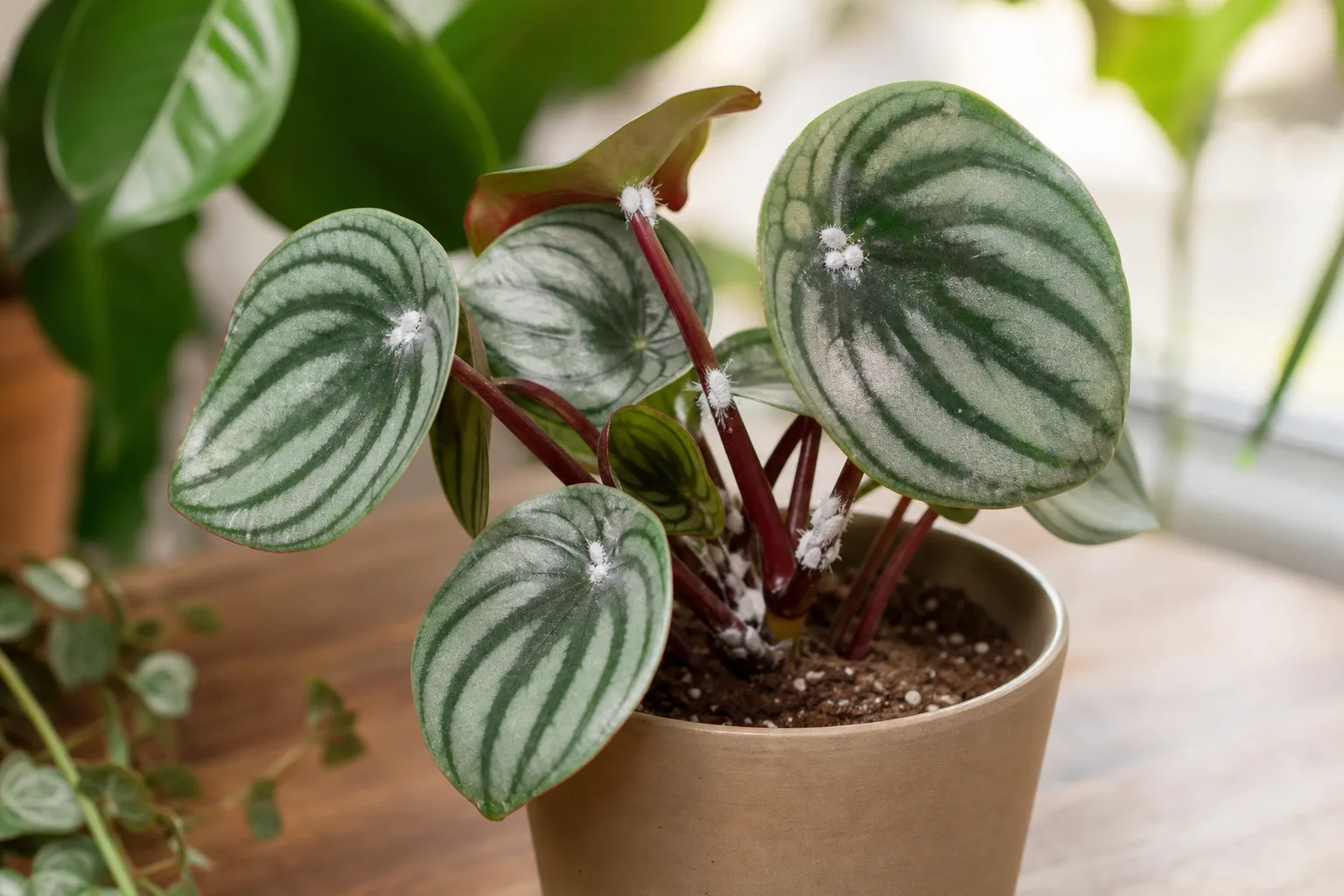
Mealybugs on Watermelon Peperomia show up as cottony white patches tucked into leaf axils and the nearly stemless crown. First step: isolate the plant and dab visible bugs with a cotton swab dipped in 70% isopropyl alcohol before spraying anything.
Mealybugs on Watermelon Peperomia: Causes, Checks & Fixes
This guide covers mealybugs on Watermelon Peperomia. See also the general Mealybugs guide, watering, and light pages for this plant.
Mealybugs on Watermelon Peperomia: Causes, Checks & Fixes
Quick answer
Mealybugs on Watermelon Peperomia (Peperomia argyreia) look like cottony white tufts tucked into the compact rosette-exactly where the nearly stemless crown and red petiole joints create hidden crevices. They pierce fleshy, watermelon-striped leaves and excrete sticky honeydew that dulls the silver banding and can grow sooty mold.
First step: isolate the plant and dab every visible colony with a cotton swab dipped in 70% isopropyl alcohol. Do not shower the crown or soak the soil on day one. Manual removal confirms active pests and knocks down adults before you decide whether insecticidal soap is needed.
What mealybugs look like on Watermelon Peperomia
Healthy Watermelon Peperomia has round, glossy leaves with green-and-silver striping on red petioles that rise from a low, bushy rosette. Mealybugs disrupt that clean pattern in specific ways:
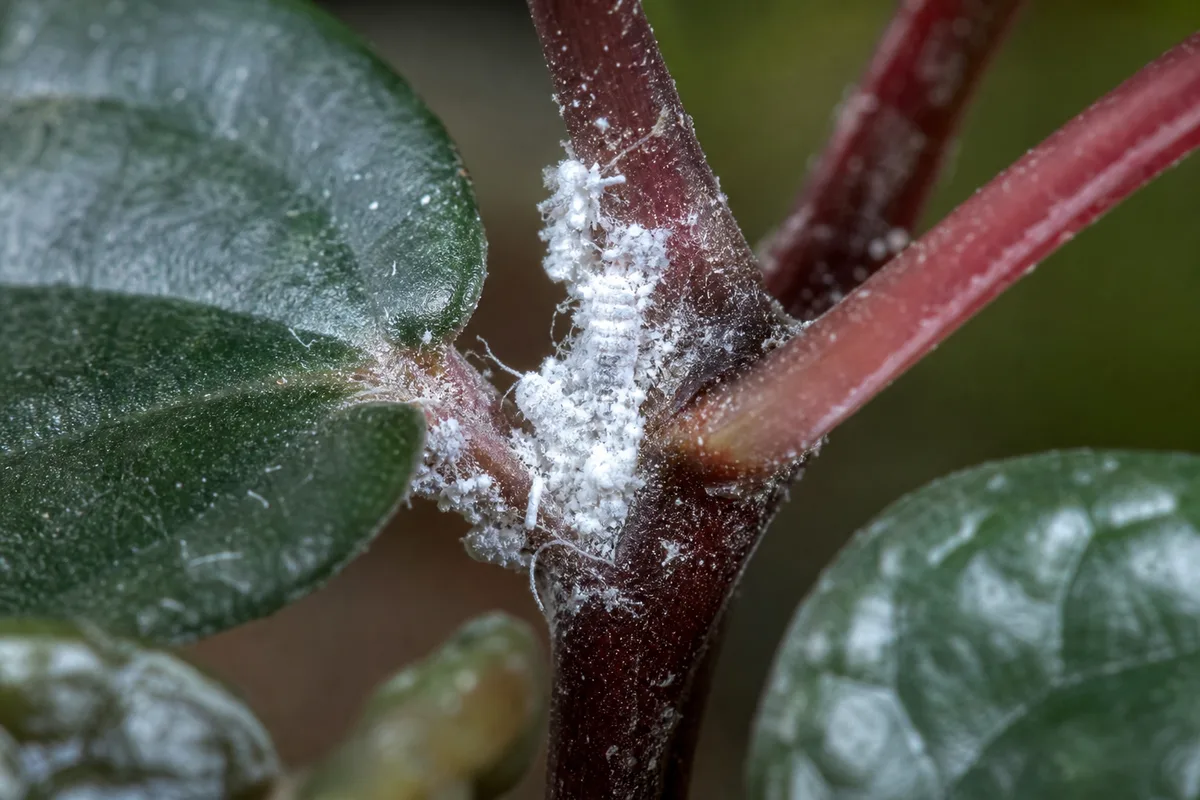
Mealybugs symptoms on Watermelon Peperomia - compare with healthy tissue on the same plant.
- White, fluffy wax clusters at petiole bases, leaf axils, and the crown center where new leaves unfold
- Flat pale crawlers (young nymphs) along leaf undersides and main veins-easier to see with a hand lens
- Sticky, shiny residue on upper leaf surfaces where honeydew dripped from feeding sites above
- Black sooty mold on sticky patches-it wipes off; it is not a leaf disease
- Yellow stippling or dull striping on leaves where sap was drained over weeks
- Ant trails on the pot, saucer, or shelf-ants farm honeydew and protect mealybug colonies
Unlike mineral dust or hard-water spots, mealybug wax looks cottony and three-dimensional. It clusters in joints rather than coating the whole leaf evenly. A quick alcohol swab test helps: mealybugs smear pinkish-brown; dust just wipes clean.
Heavy feeding on this slow-growing species shows up as floppy petioles and stalled new leaves before older foliage drops. Because the plant stores moisture in thick leaves, early pest damage can look like underwatering on Watermelon Peperomia until you inspect the axils.
Why Watermelon Peperomia gets mealybugs
Mealybugs are not a sign that you failed at peperomia care-they are common indoor hitchhikers that colonize stressed or sheltered plants. NC State Extension lists mealybugs among typical houseplant pests on Peperomia argyreia, alongside scale and aphids.
Several traits make Watermelon Peperomia a convenient host:
Compact rosette architecture. Missouri Botanical Garden describes the plant as nearly stemless and rosette-forming. Mealybugs favor protected joints where sprays and rinses miss them. The crown holds humidity and blocks airflow-ideal for wax-protected insects.
Fleshy, sap-rich leaves. Peperomias store water in thick foliage. Mealybugs feed by inserting threadlike mouthparts and draining phloem sap. On a slow-growing plant, even moderate feeding reduces turgor and fades the distinctive striping.
Indoor introduction routes. New nursery plants, open windows in warm weather, and shared pruning tools spread crawlers between collections. Skipping quarantine is the most common entry path-not leaving a window cracked.
Soft growth from excess fertilizer or low light. Nitrogen-heavy feeding pushes tender new leaves that sap feeders prefer. Plants in dim corners also stay wet longer in oversized pots, combining pest-friendly humidity with weakened tissue.
Crowded shelves. Touching leaves between pots lets crawlers walk short distances. Mealybugs do not fly, but they move efficiently through dense plant displays.
How to confirm the cause
Work through these checks before committing to sprays:
- Crown and axil inspection - Gently fan the rosette and lift lower leaves. Mealybugs concentrate where red petioles attach, not on the flat striped blade surface alone.
- Alcohol swab test - Touch suspicious white material. Mealybugs leave a pink smear and sticky film; edema blisters or mineral deposits do not.
- Underside scan with a lens - Look for flat yellow nymphs and waxy ovisacs (egg masses) along veins.
- Honeydew and mold check - Rub a sticky upper leaf. Sooty mold smears black; natural leaf wax on peperomias does not feel tacky across the whole plant.
- Ant activity - Ants on the pot strongly suggest honeydew producers are present even if colonies look small.
- Neighbor plants - Inspect plants within arm’s reach. Mealybugs often appear on one pot first while others are already infested.
- Recent purchases - Trace back two to three weeks. New peperomias, hoyas, and succulents are frequent carriers.
If you find cottony clusters plus sap-feeding signs, mealybugs are confirmed. Powdery white dust evenly distributed without joints clustering points to hard-water deposits or mildew-not mealybugs.
First fix for Watermelon Peperomia
Isolate the plant and dab every visible mealybug with a cotton swab soaked in 70% isopropyl alcohol.
Move the pot away from other plants-across the room, not just to the next shelf. Work methodically through the crown, each petiole base, and leaf undersides. Crush wax clusters against the stem so alcohol reaches the insect beneath. Replace swabs as they load up with wax and bugs.
Why this comes first:
- It immediately reduces sap loss on a slow-growing rosette
- It confirms you are treating mealybugs, not a lookalike
- It avoids flooding the crown with liquid on day one-a real rot risk on Peperomia argyreia
Test alcohol on one leaf for 24 hours if the plant is stressed or recently repotted. Most peperomias tolerate spot dabbing well, but burned patches mean diluting further or switching to soap only.
Do not start with Watermelon Peperomia repotting guide, fertilizer, or heavy overhead rinsing. Wet crowns plus open feeding wounds invite the stem rot this species is prone to when soil stays soggy.
Step-by-step recovery
After the alcohol dab pass, escalate only as needed:
Days 1–3: Manual removal and monitoring
- Dab remaining colonies twice more, 48 hours apart, to catch nymphs that hatched from protected eggs
- Wipe honeydew off striped leaves with a damp cloth so sooty mold does not spread
- Keep the plant in Watermelon Peperomia light guide with normal watering-let the top inch of soil dry before rewatering
- Check isolation area daily for new white tufts
Days 4–14: Insecticidal soap if colonies persist
If cottony patches return after two alcohol rounds, spray insecticidal soap labeled for houseplants. Coat petiole bases, axils, and leaf undersides until runoff. Mealybug wax repels many contact sprays, so coverage matters more than product strength.
Repeat every five to seven days for at least three cycles. Eggs sit inside waxy ovisacs that sprays miss; nymphs hatch over two weeks. One application rarely clears a rosette infestation.
Apply in the morning so leaves dry before evening. Keep the plant out of direct sun for 24 hours after spraying to avoid leaf scorch on fleshy peperomia tissue.
Weeks 2–4: Systemic options only if contact treatment fails
For heavy crown infestations that survive repeated soap, a systemic insecticide labeled for indoor ornamentals may be considered on non-edible houseplants. Use only according to label directions, and keep treated plants away from pets until sprays dry completely. Contact treatments are preferred first-they are safer and sufficient for most home infestations.
When to repot
Repot only if you suspect root mealybugs-white wax at the soil line, declining health despite clean foliage, or pests reappearing after thorough aboveground treatment. Knock off old mix, rinse roots gently, trim mushy tissue, and repot into fresh airy mix with perlite. This is a secondary step, not a day-one fix.
Recovery timeline
Watermelon Peperomia rebounds slowly. Realistic expectations:
- Week 1: Active colonies shrink; honeydew stops accumulating if treatment reached hidden axils
- Weeks 2–3: No new cottony masses after repeated treatments; petioles feel firm again
- Weeks 4–6: New leaves emerge with crisp striping; older stippled leaves remain marked but stable
- Week 6+: Two consecutive pest-free weeks mean you can end quarantine and reduce inspection to monthly
If the crown softens, petioles collapse, or yellowing spreads while soil stays wet, pivot to checking for root rot on Watermelon Peperomia-mealybug stress and overwatering on Watermelon Peperomia damage overlap on this species.
Lookalike symptoms
Hard-water or dust film - Uniform pale spotting across leaf faces without fluffy wax in joints. Wipes clean with water; no stickiness.
Edema blisters - Raised corky bumps from inconsistent watering and high humidity. Brown when burst; not cottony or clustered in axils.
Powdery mildew - Flat white fungal dust on leaf surfaces in humid, stagnant air. Does not hide in petiole crevices and smears differently from wax.
Scale insects - Brown or tan immobile bumps on petioles and stems, not fluffy wax. Also produce honeydew-alcohol dab removes small scale, but the texture is hard and shell-like.
Fungus gnat adults - Tiny flying insects from wet soil, not cottony clusters on foliage. Fix watering; gnats do not cause white wax on leaves.
Mistakes to avoid
- Showering the crown on day one - Water pools in the rosette and invites crown rot on a plant already stressed by sap loss
- One alcohol dab and done - Protected eggs hatch within days; plan for multiple manual passes or soap cycles
- Returning the plant too soon - Two pest-free weeks minimum after the last visible bug
- Over-fertilizing during recovery - Soft new growth attracts reinfestation; hold fertilizer until new leaves look healthy for a month
- Using household dish soap - Not the same as labeled insecticidal soap and can burn peperomia leaves
- Ignoring neighboring pots - Treat or inspect every plant that shared a shelf
- Drenching alcohol over the whole plant - Spot dabbing is safer than foliar alcohol sprays on compact crowns
How to prevent mealybugs next time
- Quarantine new plants three weeks before placing them near your Watermelon Peperomia
- Inspect axils monthly during regular care-wipe striped leaves so white wax stands out against silver banding
- Keep bright indirect light and airy soil - Healthy, moderately dry conditions stress pests more than the plant
- Avoid excess nitrogen - Feed at half strength monthly in summer only when the plant is actively growing
- Space pots for airflow - Mealybugs spread faster when leaves touch between containers
- Clean tools between plants - A quick alcohol wipe on scissors prevents hitchhiking crawlers
When to worry
Treat urgently when:
- Colonies cover most of the crown and new leaves fail to open
- Ants consistently trail to the pot despite dab treatment
- The rosette wilts with wet soil-possible combined pest and root decline
- Mealybugs reappear within days after three full soap cycles
Consider discarding the plant if the crown is mushy, most petioles collapse, and fewer than a third of leaves remain firm-propagation from a clean leaf cutting may be safer than endless pesticide rounds on a dying rosette. Leaf cuttings with intact petioles root readily when taken from pest-free tissue.
Conclusion
Mealybugs on Watermelon Peperomia exploit the same compact rosette that makes the plant attractive-hidden axils and red petiole joints shelter wax-protected insects from casual glances. Catching cottony clusters early, isolating promptly, and repeating alcohol or soap treatments through the egg-hatch window usually saves the plant without repotting or harsh chemicals. Judge recovery by firm petioles and clean new striping, not by old leaf blemishes, and keep quarantine until two full pest-free weeks pass.
When to use this page vs other Watermelon Peperomia guides
- Watermelon Peperomia watering guide - Use for routine moisture checks before assuming mealybugs is the main issue.
- Watermelon Peperomia problems hub - Browse all 28 common issues on this species.
- Yellow Leaves on Watermelon Peperomia - Different entry point when symptoms overlap with mealybugs.
- Slow Growth on Watermelon Peperomia - Different entry point when symptoms overlap with mealybugs.
- Spider Mites on Watermelon Peperomia - Different entry point when symptoms overlap with mealybugs.