Crispy Leaves on Watermelon Peperomia: Causes, Checks &
Quick answer
Crispy leaves on Watermelon Peperomia usually mean the fleshy striped foliage lost moisture from underwatering, low humidity, or harsh tap water-not a leaf disease. First step: stick your finger into the top inch of soil and water thoroughly only if it is dry.
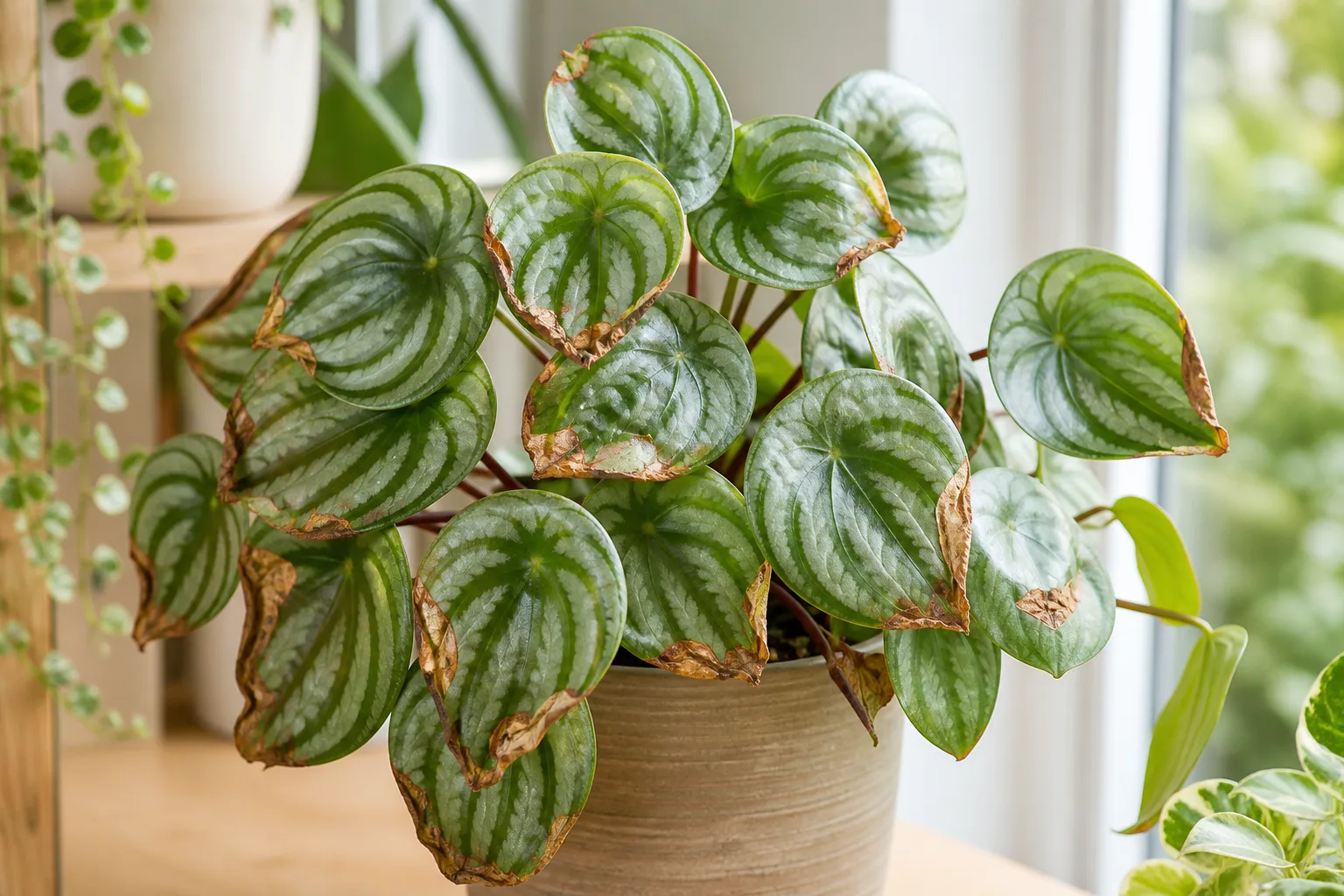
Crispy Leaves on Watermelon Peperomia: Causes, Checks & Fixes
This guide covers crispy leaves on Watermelon Peperomia. See also the general Crispy Leaves guide, watering, and light pages for this plant.
Crispy Leaves on Watermelon Peperomia: Causes, Checks & Fixes
Quick answer
Crispy leaves on Watermelon Peperomia mean the fleshy, glossy striped leaves lost turgor from drought stress, very dry indoor air, mineral-heavy tap water, or-less often-direct sun scorch. This is not a fungal leaf disease. The round watermelon-pattern foliage turns thin and papery at the edges and tips while red petioles usually stay firm.
First step: check whether the top inch of soil is dry before you do anything else. If the mix is bone dry and the pot feels light, give one thorough soak and empty the saucer. If the soil is wet and the crown feels soft, stop watering-that pattern points to rot, not dryness.
Why Watermelon Peperomia gets crispy leaves
Watermelon Peperomia (Peperomia argyreia) stores moisture in its thick leaves, but it still needs regular drinks once the mix dries. NC State Extension notes the plant wilts from under-watering and is intolerant of both very dry and very wet soil. Many owners underwater out of fear of root rot on Watermelon Peperomia-a real risk on Watermelon Peperomia overview-but chronic dryness eventually crispens the foliage.
Low humidity accelerates the problem. BBC Gardeners’ World recommends humid conditions and warns that drooping or curling leaves indicate conditions are too dry. Heating vents, radiators, and winter dry air pull moisture from thin leaf tissue faster than the compact root system replaces it, especially when the pot sits near a heat source.
Tap water minerals add a second layer. RHS guidance states peperomias are sensitive to fluoride in tap water, which can brown and crisp leaf edges even when watering frequency is reasonable. Salt buildup in an old mix produces similar edge burn over time.
Direct sun is a less common but distinct cause. Missouri Botanical Garden recommends bright indirect light and warns against direct sun. A sudden move to a south-facing sill can bleach or tan the silver striping and leave patches feeling dry and papery-not the same as slow edge crisping from drought.
Spider mites thrive in the same dry air that crispens peperomia edges. Fine stippling on leaf undersides with dull, dusty striping can feel crispy to the touch and needs pest treatment, not just more water.
What crispy leaves look like on Watermelon Peperomia
Typical drought or humidity crisping:
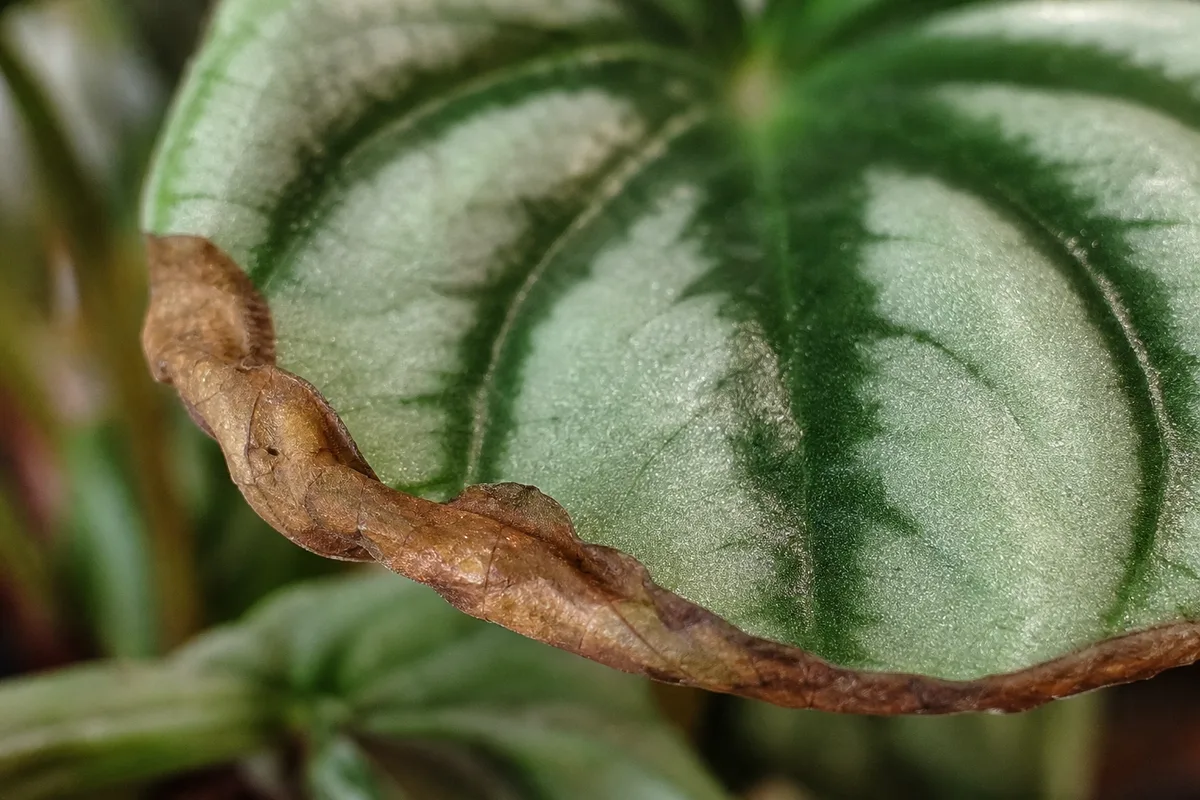
Crispy Leaves symptoms on Watermelon Peperomia - compare with healthy tissue on the same plant.
- Round leaves feel thin and papery instead of plump and waxy
- Brown brittle edges and tips while the silver-green striping may fade
- Red petioles stay firm-not mushy at the base
- Pot feels very light; soil pulls away from the pot rim
- Leaves may curl slightly inward or droop before fully crisping
- Perk-up within 12–24 hours after a thorough soak if drought is the cause
Tap water or salt edge burn:
- Crisping concentrated on tips and margins only
- Center of each leaf still plump and striped
- White crust on soil surface or pot rim
- Pattern worsens gradually over weeks, not overnight
Sun scorch:
- Bleached, tan, or dry patches on the side facing the window
- Damage appears within days of a light move
- Affected tissue feels papery but petioles remain firm
Spider mite stippling (lookalike):
- Fine pale dots on leaf undersides, not uniform edge burn
- Silver striping looks dull or dusty
- Tiny webbing in leaf axils when infestation is advanced
How to confirm the cause
Work through these checks in order:
- Soil moisture at the top inch - Stick your finger in or use a skewer. Dry to the first knuckle strongly suggests drought. Wet, cool soil with a heavy pot points away from dryness.
- Pot weight - Lift the container. A very light pot after a week without water confirms chronic under-watering.
- Petiole firmness - Squeeze the red base of a affected leaf stem. Firm petioles with dry soil mean drought. Soft, collapsing petioles with wet soil mean crown or root rot.
- Humidity and placement - Note proximity to heating vents, radiators, or AC. Dry air crispens edges even when soil moisture is borderline adequate.
- Light history - Did the plant move to direct sun recently? Scorched patches follow light changes within days.
- Leaf underside inspection - Look for stippling, webbing, or flat scale insects. Pests need isolation and treatment, not just watering.
- Water source - If only tips crisp while soil rhythm seems fine, suspect tap water minerals or salt buildup.
If soil is dry, petioles are firm, and no pests appear, drought or low humidity is the most likely diagnosis.
First fix for Watermelon Peperomia
Water thoroughly once-only if the top inch of soil is dry.
Place the pot in a sink or saucer, water until excess runs from the drainage holes, and let it drain fully before returning it to its spot. Allow soils to almost dry on top before rewatering-that rhythm matches how this species uses moisture. Empty the saucer so the roots are not sitting in stale water.
Do not soak a plant whose soil is already wet. Do not repot, fertilize, or mist heavily on day one. If the soil was dry, wait 24 hours and reassess leaf turgor before taking secondary steps.
Step-by-step recovery
After the initial soak (when soil was dry):
- Establish a check-when-dry rhythm - Test the top inch every few days rather than watering on a fixed calendar. Reduce frequency in winter when growth slows.
- Raise humidity moderately - Set the pot on a pebble tray with water below pot level, or group it with other plants. BBC Gardeners’ World suggests pebble trays and misting for the humid conditions this species prefers. Avoid enclosing the rosette in stagnant wet air-that invites crown rot.
- Switch to filtered or rainwater if tips keep crisping despite good watering. Room-temperature water limits shock on sensitive foliage.
- Move back from direct sun if scorch patches appeared after a recent relocation. Bright indirect light is the target.
- Treat spider mites if stippling and webbing are present-isolate the plant, rinse leaf undersides weekly, and apply insecticidal soap if colonies persist.
- Trim fully brown leaves at the petiole base for appearance once the plant stabilizes. Partial crispy edges can stay; they will not re-green.
- Repot only if the mix has gone hydrophobic (water runs straight through dry pockets) or salt crust is heavy. Use airy mix with perlite and a pot only slightly larger than the root ball.
If soil was wet and the crown felt soft at inspection, skip watering entirely. Let the mix dry near the top, improve airflow, and assess for rot before any soak.
Recovery timeline
Perk-up from a single drought episode often shows within 12–24 hours after a thorough soak-leaves feel less papery and petioles stiffen. Fully brown crispy tissue never turns green again; expect two to four weeks for new round striped leaves to emerge once conditions stabilize.
Tip burn from tap water improves slowly after switching water sources-new growth should come in clean within one to two months. Sun-scorched patches remain on old leaves until you trim them or they age out.
If no new growth appears after four weeks of corrected watering and humidity, inspect roots for rot or pest damage on the fine root system.
Lookalike symptoms to rule out
Crown rot causes soft red petioles at the base and a mushy rosette center, usually with wet soil-not papery leaves on firm stems. Over-watering causes root rot quickly on this species.
Yellow lower leaves with wet mix signal overwatering on Watermelon Peperomia, not drought crisping. Yellow tissue is soft and limp, not dry and brittle.
Edema shows as raised water blisters that burst into corky brown spots-often from inconsistent watering with high humidity. Spots are localized bumps, not uniform edge crisping.
Sunburn produces bleached or tan patches on the sun-facing side within days of a light change, not gradual all-over papery texture.
Spider mites cause stippling and webbing on undersides. Dry edges alone without dots usually mean humidity or water stress.
Mistakes to avoid
Do not keep soil constantly wet to “fix” crispy leaves-that triggers rot on a plant susceptible to rot if soils are kept too moist.
Do not water on a calendar without checking soil. Peperomia pots dry at different rates depending on light, pot size, and season.
Do not mist the rosette crown heavily at night. Wet leaf bases in a tight rosette invite crown rot.
Do not fertilize a drought-stressed plant hoping leaves plump up. Feed only after watering stabilizes and new growth appears.
Do not assume all crispiness is underwatering on Watermelon Peperomia when soil is soggy-wilting and crisping can both follow root rot when damaged roots cannot take up water.
Do not place the plant in direct south window sun to “help it recover.” Bright indirect light supports healing without scorching striped foliage.
How to prevent crispy leaves next time
Water when the top inch dries completely, then soak until excess drains. Reduce frequency in fall and winter when growth slows and watering should decrease.
Keep the plant in bright indirect light-east or north windows, or set back from south-facing glass.
Maintain moderate humidity (40–60%) without keeping soil wet. Pebble trays and plant grouping work better than daily heavy misting on the crown.
Use filtered or rainwater to limit fluoride and salt tip burn on sensitive peperomia foliage.
Keep the pot away from heating vents and radiators that desiccate leaves overnight.
Scout leaf undersides monthly in dry winter air for spider mites before stippling spreads.
Choose a pot only slightly larger than the root ball so the mix dries predictably between waterings.
When to worry
Crisping alone on a few leaves is manageable and rarely urgent-the fleshy leaves buffer short dry spells. Treat as urgent when:
- The crown feels soft and mushy with wet soil-possible crown rot spreading fast
- More than a third of leaves yellow and collapse within a week with sour-smelling soil
- Crisping spreads despite correct dry-down watering and firm petioles-inspect for root rot or mites
- New growth emerges already crispy, suggesting chronic root failure or severe pest pressure
If drought was the cause and the plant perks up after one soak with firm petioles and no pest signs, steady care is enough. Replace the plant only when the crown collapses or roots are fully mushy after inspection.
Conclusion
Crispy Watermelon Peperomia leaves almost always trace back to moisture loss-dry soil, dry air, harsh water, or occasionally too much sun-not a mysterious leaf disease. Check the top inch of soil first, soak once if dry, and read petiole firmness to separate drought from rot. Old crispy tissue will not recover, but plump new striped leaves tell you the fix is working.
When to use this page vs other Watermelon Peperomia guides
- Watermelon Peperomia watering guide - Use for routine moisture checks before assuming crispy leaves is the main issue.
- Watermelon Peperomia problems hub - Browse all 28 common issues on this species.
- Brown Tips on Watermelon Peperomia - Different entry point when symptoms overlap with crispy leaves.