Poor Drainage on Watermelon Peperomia: Causes, Checks &
Quick answer
Poor drainage on Watermelon Peperomia means dense mix, blocked holes, or an oversized pot keeps roots wet until they rot. First step: stop watering, test drainage hole flow, and repot into airy mix with 30% perlite in a pot sized to the root ball.
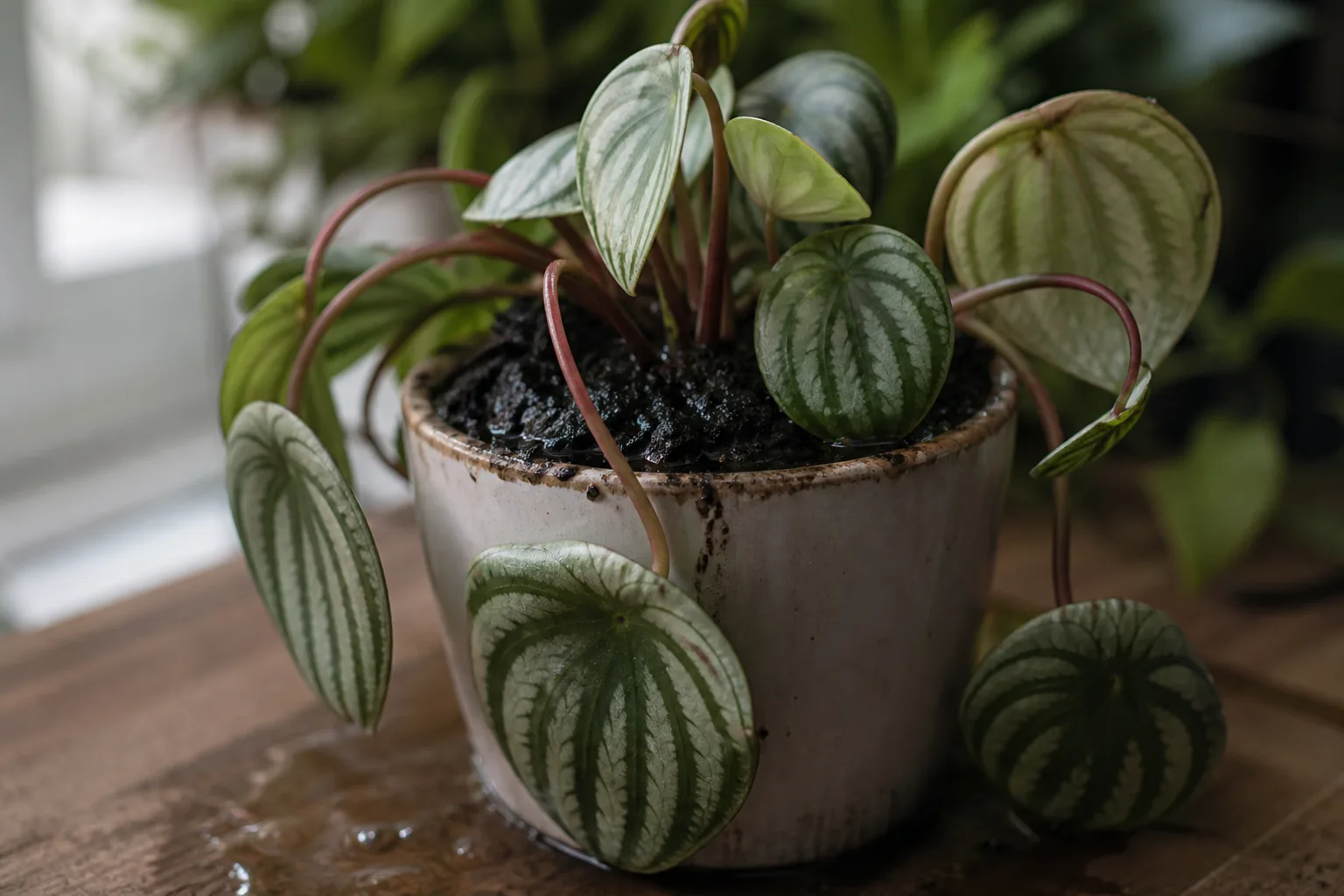
Poor Drainage on Watermelon Peperomia: Causes, Checks & Fixes
This guide covers poor drainage on Watermelon Peperomia. See also the general Poor Drainage guide, watering, and light pages for this plant.
Poor Drainage on Watermelon Peperomia: Causes, Checks & Fixes
Quick answer
Poor drainage on Watermelon Peperomia (Peperomia argyreia) is not a minor soil annoyance-it is one of the fastest routes to root rot on Watermelon Peperomia on a plant with a shallow, oxygen-hungry root system. When mix stays saturated for days, fine roots suffocate long before the signature silver-green striping dulls.
First step: stop watering and test whether water flows freely from the drainage hole. If the pot stays heavy, mix feels dense and mucky, or water pools on the surface, drainage has failed. Repot into airy mix with roughly 30% perlite or coarse sand and choose a container only slightly wider than the root ball-not a decorative upgrade three sizes too large.
Why Watermelon Peperomia is vulnerable to poor drainage
Peperomia argyreia evolved on forest floors where rain drains through loose leaf litter within hours. Indoors, the same shallow roots sit in a closed pot where every watering decision depends on mix structure and hole flow. NC State Extension lists good drainage as a cultural requirement and notes the species is intolerant of wet soil-roots that cannot access air in saturated mix decline within days, not weeks.
Several setup mistakes stack against Watermelon Peperomia overview:
- Dense peat-only mix without perlite, bark, or coarse sand holds water at the root zone while the surface looks merely damp.
- Oversized pots surround a tiny root ball with extra soil volume that stays wet long after the plant could have used the water. Watermelon Peperomia thrives slightly pot-bound; a large decorative cachepot is a common hidden drainage trap.
- Blocked or missing drainage holes from roots, gravel layers, or decorative pot liners trap water at the bottom where shallow roots actually live.
- Standing water in saucers keeps the bottom of the mix anaerobic even when you think you watered lightly.
- Compacted old mix breaks down after 12 to 24 months indoors, collapsing air pockets and turning into a water-retentive mass.
Low light compounds the problem. In dim corners, transpiration slows and the pot dries unevenly-wet at depth, dry on top-so caregivers water again before the root zone re-aerates.
What poor drainage looks like on Watermelon Peperomia
Drainage failure shows up on this species before full collapse if you know the pattern:
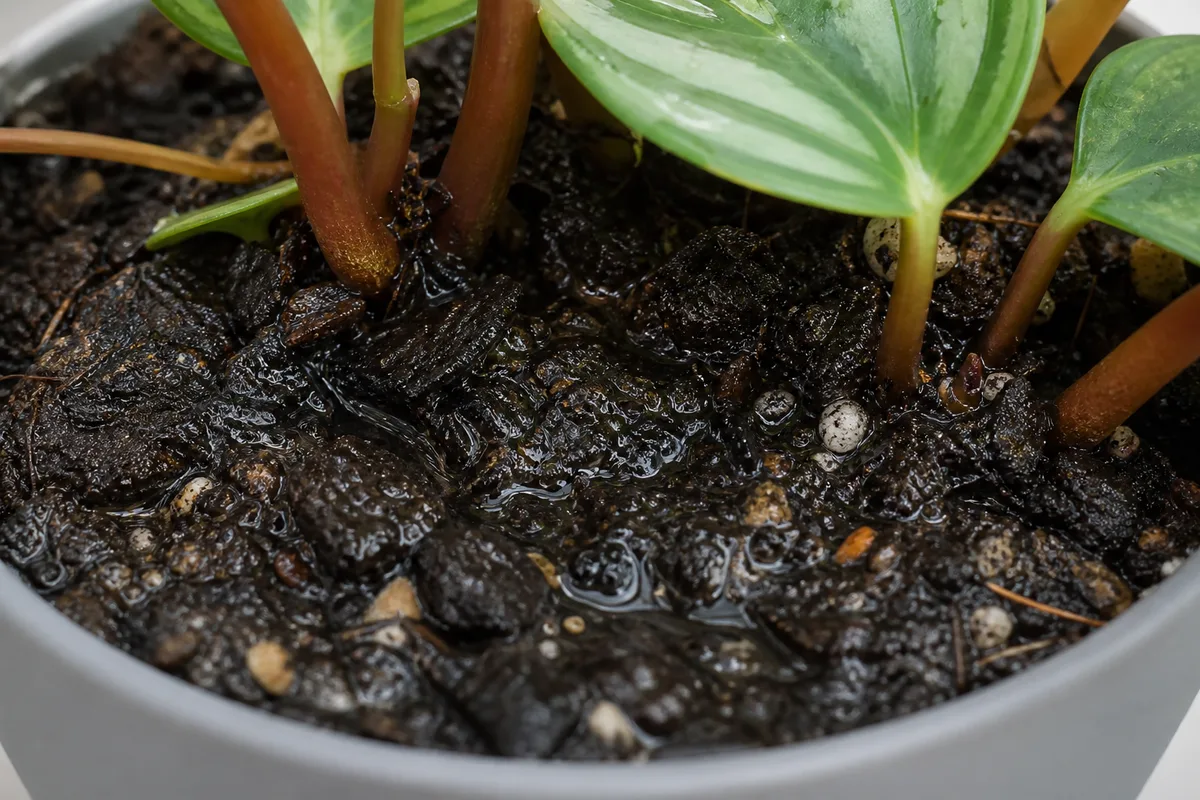
Poor Drainage symptoms on Watermelon Peperomia - compare with healthy tissue on the same plant.
Early signs:
- Pot weight stays high five to seven days after a single thorough watering
- Water sits on the soil surface or runs down the gap between root ball and pot wall
- Red petioles go limp while soil feels cool and wet at depth
- Silver-green striping loses contrast; lower leaves yellow
- Fungus gnats hover above persistently damp surface soil
Advanced signs:
- Sour or stagnant smell from the drainage hole
- White or green mold on the soil surface
- Soft crown tissue where peltate leaves attach to reddish stems
- Brown, mushy roots when you slide the plant out
- Entire rosette collapsing despite wet mix-roots can no longer take up water even though soil is saturated
The compact rosette shape makes crown rot a special risk. Water poured directly into the center of peltate leaves pools at the base of petioles. Poor drainage at the root zone plus moisture trapped in the crown accelerates decline faster than on upright-stemmed houseplants.
How to confirm poor drainage is the problem
Work through these checks before Watermelon Peperomia repotting guide or changing light:
- Drainage hole flow test - Water until excess runs out. It should exit within seconds, not pool inside the pot. Potted plants should always have good drainage; no hole, a plugged hole, or a liner pot inside a cachepot without drainage confirms setup failure.
- Pot weight and moisture depth - Lift the pot two days after watering. Heavy weight plus damp mix 5 cm (2 inches) deep while the top inch feels merely cool means water is trapped below.
- Mix texture check - Slide the plant out gently. Crumbly, airy mix with firm white roots is healthy. Dense, wet muck that clumps in your hand needs replacement. A rock-hard dry root ball with a wet outer ring suggests hydrophobic collapsed peat-still a drainage and aeration problem.
- Pot size versus roots - Shallow roots should occupy most of the pot width. If roots are a small ball in a large volume of soil, the extra mix will stay wet too long regardless of watering care.
- Saucer inspection - Standing water after 30 minutes means the root zone sits in a water table. Empty saucers every time.
- Rule out underwatering on Watermelon Peperomia - Bone-dry mix that pulls away from the pot wall causes wilt too, but petioles stay firm and roots are dry and tan-not brown and mushy. If soil is wet and petioles are soft, drainage or overwatering on Watermelon Peperomia is the issue.
Confirmed poor drainage means fixing the mix and container-not watering on a calendar and hoping the plant adapts.
First fix for Watermelon Peperomia
Stop watering, confirm drainage holes are open, and repot into fresh airy mix sized to the root ball.
This single action addresses the root cause. Do not add fertilizer, mist heavily, or move the plant to a darker corner while soil is still saturated.
If the crown is still firm:
- Gently unpot and shake away wet old mix.
- Inspect roots-trim any brown, mushy sections back to firm white tissue with sterile scissors.
- Blend fresh mix: well-drained houseplant or cactus potting mix amended with perlite-roughly two parts peat- or coir-based potting soil, one part perlite, and optionally one part fine orchid bark for structure.
- Choose a pot only 2 to 3 cm (about 1 inch) wider than the trimmed root ball with a clear drainage hole.
- Repot without burying the crown; water once lightly around the edge, not into the rosette center.
- Empty the saucer and place in Watermelon Peperomia light guide with airflow.
- Wait until the top inch of mix dries completely before the next thorough watering-NC State recommends drying to the touch at the top before rewatering.
If the crown is already soft, treat as advanced root rot from overwatering-remove mushy tissue, air-dry the plant 24 hours, then repot into the driest appropriate mix in the smallest fitting pot.
Step-by-step recovery
After the initial repot:
- Monitor dry-down speed - In the first two weeks, check the top inch daily. Correctly drained mix should dry within five to seven days in average indoor conditions. Still wet after ten days means more perlite or a smaller pot is needed.
- Adjust watering to the new mix - Fresh airy soil dries faster than old compacted mix. Water thoroughly until excess exits the hole, then wait for full top-inch dry-down-not a weekly schedule.
- Improve light and airflow - Bright indirect light helps the plant use water predictably. A small fan or open shelf spacing reduces stagnant humidity around the crown.
- Scrape surface mold if present, let the top layer dry, and avoid overhead watering into the rosette.
- Set yellow sticky traps for fungus gnats while soil stabilizes; persistent gnats often mean mix is still too wet at the surface.
- Hold fertilizer until new firm leaves appear-stressed roots cannot process nutrients and salts worsen the situation.
Do not repot again within six weeks unless mix is clearly wrong. One correct repot plus patience beats repeated disturbance.
Recovery timeline
Drainage correction shows results gradually. Within one week, the pot should feel lighter as mix begins drying on a normal cycle. Limp petioles may firm up if roots were not fully destroyed-often within two to three weeks in bright indirect light.
New striped leaves with vivid silver bands are the best sign roots are functioning again. Expect one to three months before the rosette looks full if several lower leaves were lost. Yellow or dropped leaves do not re-green; judge recovery by new growth and crown firmness.
If the crown softens further or multiple petioles collapse at the base within days of repotting, rot has advanced beyond what drainage correction alone can fix-propagate firm leaf or petiole cuttings as backup.
Lookalike symptoms
Poor drainage overlaps with other Watermelon Peperomia problems. Use these distinctions:
| Symptom pattern | Likely cause | Key difference |
|---|---|---|
| Wet heavy pot, limp petioles, yellow lower leaves | Poor drainage / overwatering | Soil wet for days; mushy roots or sour smell |
| Light pot, crispy leaf edges, soil pulled from pot wall | Underwatering | Dry mix throughout; firm tan roots |
| Long stems, small dull leaves, pot dries slowly | Low light + wet mix | Stretching plus chronic moisture; fix light and drainage together |
| Uniform brown corky spots on leaves | Edema | Often from inconsistent watering in high humidity; roots may still be firm |
| White cottony patches in leaf axils | Mealybugs | Pests visible; soil moisture pattern unrelated |
Wilting with wet soil is the classic drainage or root-decline pattern. Wilting with dry soil is drought-do not repot; water thoroughly once.
Mistakes to avoid
- Adding gravel at the pot bottom - This raises the water table in the container rather than improving drainage. Avoid soil additions that lead to poor drainage; fix the mix itself.
- Repotting into garden soil or unamended bagged mix - Both stay too wet for peperomia roots. Always add perlite or coarse sand.
- Jumping to a much larger pot - More soil volume holds more water than small roots can use.
- Watering on a calendar - Check dryness at the top inch; fresh airy mix may need water less often than before.
- Pouring water into the rosette center - Water around the pot edge to keep the crown dry.
- Leaving the plant in a decorative cachepot - Either drill holes or remove the inner pot after every watering so nothing sits in runoff.
- Fertilizing stressed plants - Salts in dense wet mix burn fine roots. Wait for new growth.
How to prevent poor drainage next time
Build a soil system that matches how Peperomia argyreia actually grows:
- Use well-draining peat- or coir-based mix with 25 to 40% perlite by volume.
- Match pot size to roots; prefer shallow containers over deep ones when options allow.
- Confirm every pot has at least one open drainage hole before planting.
- Empty saucers within 30 minutes of watering-Clemson HGIC advises draining the pot before returning it to the saucer.
- Refresh mix every 12 to 24 months before peat collapses into a waterlogged block.
- Place in bright indirect light so the plant transpires on a predictable rhythm.
- Reduce watering frequency from fall through late winter when growth slows-Missouri Botanical Garden recommends reducing water from fall to late winter.
When buying a new plant, reject pots with sour-smelling mix, visible surface mold, or limp petioles in a wet container-the drainage problem may already be underway.
When to worry
Poor drainage becomes urgent when:
- Soil never dries between waterings despite empty saucers and reduced watering
- Crown tissue softens where leaves attach
- Sour smell intensifies after repotting into new mix-check that holes are truly open
- More than half the roots are brown and mushy on inspection
- Multiple petioles collapse at the base within a week
At that stage, save propagation material from any firm leaves or petioles before the rosette is lost entirely. Watermelon Peperomia can rebound from moderate root trimming but not from a fully rotted crown.
Conclusion
Poor drainage on Watermelon Peperomia is a setup problem, not bad luck. Shallow roots in dense, oversized, or blocked containers lose oxygen fast-and this species does not forgive wet feet. Test hole flow, repot into perlite-amended mix sized to the root ball, and judge success by a drying pot and new firm striped leaves. Fix the soil once, correctly, and watering becomes straightforward again.
When to use this page vs other Watermelon Peperomia guides
- Watermelon Peperomia watering guide - Use for routine moisture checks before assuming poor drainage is the main issue.
- Watermelon Peperomia problems hub - Browse all 28 common issues on this species.