Stem Rot on Watermelon Peperomia: Causes, Checks & Fixes
Quick answer
Stem rot on Watermelon Peperomia softens reddish petioles at the soil line until leaves detach and the rosette collapses-almost always from a wet crown or waterlogged roots. First step: cut away mushy tissue with sterile scissors back to firm tissue, then repot in dry airy mix.
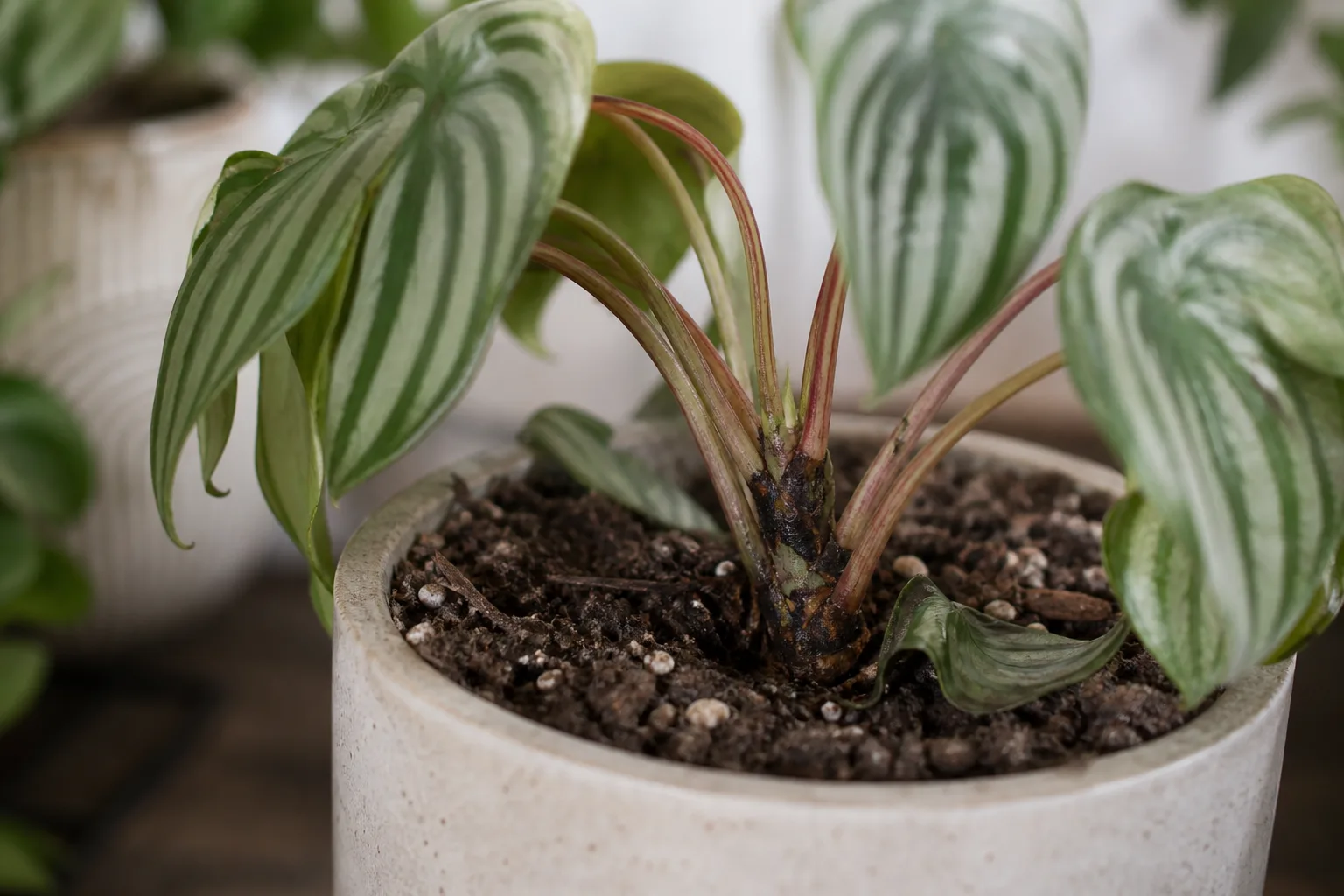
Stem Rot on Watermelon Peperomia: Causes, Checks & Fixes
This guide covers stem rot on Watermelon Peperomia. See also the general Stem Rot guide, watering, and light pages for this plant.
Stem Rot on Watermelon Peperomia: Causes, Checks & Fixes
Quick answer
Stem rot on Watermelon Peperomia (Peperomia argyreia) shows up where the plant is most vulnerable: the red petioles that hold each round striped leaf. Chronic moisture at the soil line softens those stems until they turn dark, mushy, and collapse. On this compact, nearly stemless rosette, what looks like “stem rot” is usually decay at the petiole bases or the short central stem-not a separate disease from crown or root rot on Watermelon Peperomia, but the visible stage once wetness has already damaged tissue below.
First step: cut away all mushy petiole and stem tissue with sterile scissors, trimming back to firm pale tissue. Do not water afterward. Let cut surfaces air-dry before you repot into fresh, airy mix. Adding water to mushy stems accelerates spread through the entire rosette.
What stem rot looks like on Watermelon Peperomia
Watermelon Peperomia grows from a low rosette with red petioles up to several inches long. Rot starts at the base of those petioles, not on the glossy leaf blades themselves.
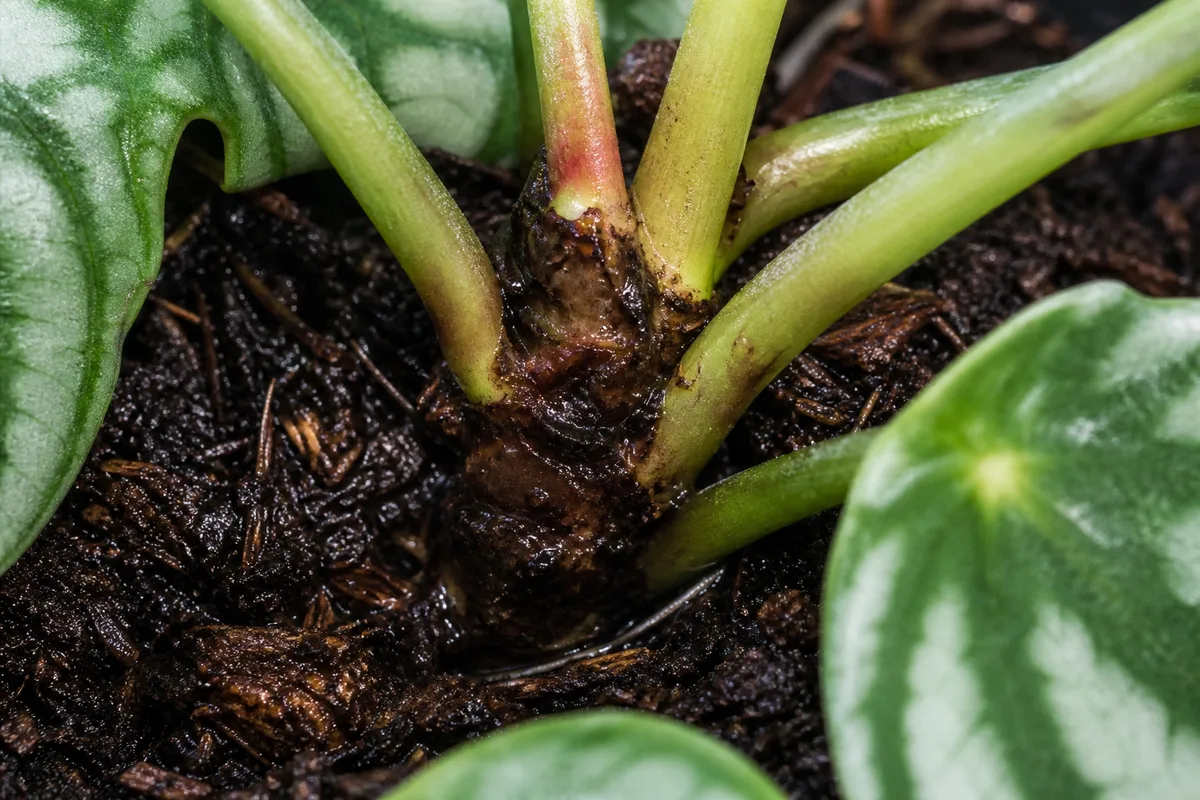
Stem Rot symptoms on Watermelon Peperomia - compare with healthy tissue on the same plant.
Early signs:
- One or more red petioles feel soft or hollow when pinched at the soil line
- Petiole color shifts from bright red to brown or black near the base
- A striped leaf droops while the pot still feels heavy and wet
- Inner leaves yellow before outer ones, suggesting decay is moving from the center outward
Advanced signs:
- Petioles detach with a gentle tug, leaving a mushy stub at soil level
- Brown or black mush visible where multiple petioles cluster at the crown
- Striped foliage wilts and collapses inward despite damp mix
- Sour or swampy odor from soil when you lift the pot
- Entire rosette flattens as every petiole base fails at once
Healthy Watermelon Peperomia petioles are firm and springy. Rot feels like pressing into wet tissue-it dents, may weep fluid, and does not spring back. That texture difference matters because Watermelon Peperomia overview also droops when underwatered; dry soil with firm petioles means thirst, not rot.
Why Watermelon Peperomia gets stem rot
Stem rot on this plant is almost always a culture problem-too much moisture at the wrong place for too long-not a random fungal attack on an otherwise healthy specimen.
Wet crown and petiole bases. The species forms a compact, nearly stemless rosette where every leaf attaches close to soil level. Overhead watering, misting the center, or leaving the pot in a full saucer keeps petiole bases wet for hours. Decay fungi such as Pythium and Phytophthora colonize [waterlogged tissue once oxygen is gone](https://www.missouribotanicalgarden.org/gardens-gardening/your-garden/help-for-the-home-gardener/advice-tips-resources/insects-pests-and-problems/environmental/[overwatering on Watermelon Peperomia](/plants/watermelon-peperomia/overwatering/)).
Root rot moving upward. Peperomia argyreia has a small root system that suffocates quickly in soggy mix. When feeder roots die from overwatering, the damage often appears above soil as soft petioles before you notice root color change. By the time a petiole feels mushy, roots below are usually already compromised.
Oversized pots and heavy mix. An oversized container holds wet soil the tiny root ball never uses. Dense peat without perlite stays saturated around the stem base long after the surface looks dry.
Low light and slow drying. In dim rooms the plant transpires less and the rosette surface stays damp. The same watering volume that works in bright indirect light becomes excessive in shade.
Buried petioles at Watermelon Peperomia repotting guide. Setting the rosette too deep puts red petiole bases below the soil line where moisture lingers-inviting rot on tissue that should stay above mix.
Cold wet soil. Chilly, saturated mix slows metabolism and extends the window for pathogens to attack soft tissue at the base.
Unlike woody houseplants, Watermelon Peperomia has no corky bark to wall off decay. The species is susceptible to rot if soils are kept too moist-once a petiole base turns mushy, rot can travel through adjacent petioles within days.
How to confirm the cause
Work through these checks before you repot or propagate:
- Petiole firmness at the base - Pinch each red stem where it meets soil. Mush that dents or leaks fluid confirms rot. Firm tissue throughout means look elsewhere.
- Soil moisture and weight - Stick a finger 2–3 cm into the mix. Wet deep soil plus soft petioles supports rot. Bone-dry mix with slightly limp but firm petioles suggests underwatering.
- Smell test - Lift the pot and sniff the drainage hole. A sour or swampy odor points to anaerobic conditions and decay-not normal potting mix smell.
- Watering history - Did you pour into the rosette center, mist leaves for humidity, or leave standing water in the saucer? That pattern fits stem rot on this species.
- Root inspection if unsure - Gently unpot when bases are soft. Healthy peperomia roots are pale and firm; rotted roots are brown, translucent, and collapse between fingers.
- Pattern across petioles - Rot often starts on one or two inner petioles before spreading. Uniform droop on every leaf with dry soil is less likely to be stem rot.
- New growth check - No emerging leaves from the center for three or more weeks while outer petioles soften suggests the growing point is failing.
If petioles are firm, soil is dry, and leaves are slightly floppy, water once at the pot edge and recheck in 24 hours before assuming rot.
First fix for Watermelon Peperomia
Cut away all mushy petiole and stem tissue with sterile scissors, trimming back to firm, pale tissue.
Disinfect blades with rubbing alcohol between each cut. Remove any leaf whose petiole is fully mushy-those blades will not recover. If only the base is soft, trim the petiole above the decay and discard the mushy section.
Do not water after trimming. Lay the plant on paper towels in bright indirect light for 24 hours so cut surfaces callus. Empty any saucer water and move the pot away from other peperomias until you know decay has stopped.
Do not mist. Do not fertilize. Do not soak the plant hoping to revive it-wetness is what caused the problem.
If every petiole base is mushy, skip straight to propagation: take leaf or petiole cuttings from any tissue that still feels firm before the last healthy material rots.
Step-by-step recovery
After the initial trim and dry-down:
- Unpot if roots smell sour or multiple bases are soft - Knock away wet mix gently without tearing firm petioles.
- Trim rotted roots - Cut brown, mushy roots back to firm white tissue. Remove any blackened crown material the same way.
- Air-dry 24–48 hours - Keep the plant out of direct sun but in bright indirect light. No water during this window.
- Repot into fresh airy mix - Use well-draining potting mix with perlite or coarse sand. Choose a pot only slightly larger than the trimmed root ball with open drainage holes. Set petiole bases at or slightly above the soil line-never bury red stems.
- Wait one week before the first cautious watering - Pour around the pot edge only, never into the rosette center.
- Propagate backup cuttings - Root healthy leaf or petiole cuttings in moist perlite separately so you retain the plant if the base fails.
Isolate until new firm petioles appear and no further softening occurs.
Recovery timeline
Mild softening on one or two petioles may stop within one to two weeks after trimming and dry repotting, provided firm tissue remains at the crown. Expect three to six weeks before new striped leaves emerge-Watermelon Peperomia is a slow grower even when healthy.
Judge recovery by firm new petioles and fresh center leaves, not by old yellow foliage. Collapsed leaves will not green up; remove them once replacement growth is visible.
If petiole bases keep softening after repotting and a full dry-down period, the growing point is likely lost. Shift focus to leaf-cuttings propagation rather than repeated watering attempts.
Lookalike symptoms to rule out
Underwatering - Soil is light and dry throughout. Petioles droop but feel firm when pinched, not mushy. A thorough edge-water usually perks leaves within 24 hours.
Crown rot without visible petiole mush - Decay is centered in the rosette before outer petioles show damage. Treatment overlaps; both require stopping crown wetness and drying the base.
Root rot only - Mushy roots below soil but firm petioles above. Trim roots and repot; stems may survive if caught before decay moves upward.
Edema - Corky brown bumps on leaf surfaces from inconsistent watering. Petiole bases stay firm; no sour smell.
Mealybugs in leaf axils - Cottony white clusters with sticky honeydew. Weakened tissue may feel soft locally but lacks the widespread mush and sour odor of rot.
Normal old-leaf drop - Lower outer leaves yellow occasionally on a firm crown with healthy new center growth. That is senescence, not stem rot.
Mistakes to avoid
Do not water because stems look wilted-confirm whether tissue is mushy or merely droopy from dry soil first.
Do not mist the crown or petiole bases for humidity. Raise ambient humidity with a pebble tray instead.
Do not repot into a much larger pot. Excess wet mix around small roots keeps stem bases damp for weeks.
Do not bury red petioles at repotting. They should sit at or just above the soil line.
Do not compost mushy tissue indoors-it can spread pathogens to other houseplants.
Do not apply fungicide as a first response without removing decayed tissue and fixing drainage. Sprays cannot restore mushy petioles.
How to prevent stem rot next time
Water around the pot edge and allow soil to dry to the touch on top before rewatering. Reduce watering from fall to late winter when growth slows.
Use well-draining mix with perlite and a pot with drainage holes sized to the root ball, not the foliage spread-the plant thrives being pot-bound with a compact root system. Empty saucers within 30 minutes of every watering.
Keep the plant in bright indirect light so the rosette surface and mix dry predictably between drinks.
Never pour water directly into the rosette center or mist leaf bases. If humidity is low, group plants or use a pebble tray without wetting stems.
When repotting, maintain or slightly raise crown depth-never set petiole bases below the soil line. Inspect new plants for firm petioles before mixing collections.
When to worry
Treat as urgent the moment any petiole base feels squishy, leaves detach easily, or soil smells sour while staying wet. On this nearly stemless plant, stem collapse can progress through every petiole within days once decay starts.
Begin leaf-cuttings propagation immediately if multiple bases are mushy, even while you attempt rescue. A fully collapsed rosette rarely regenerates from the center.
One slightly soft petiole on an otherwise firm plant after you change watering is worth monitoring-but not an excuse to soak the pot.
Conclusion
Stem rot on Watermelon Peperomia is visible decay at the red petiole bases where moisture lingered too long. It is not a mystery disease-it is the late stage of overwatering, poor drainage, or wet-crown habits on a plant intolerant of wet soil with no woody defenses. Trim mushy tissue first, dry the plant, repot into airy mix, and change how you water at the crown. Outer leaves can look fine while bases fail; pinch the petioles, not just the blades. Catch softening early, propagate firm leaves as backup, and treat every red stem at soil level as the critical zone this species cannot keep wet.
When to use this page vs other Watermelon Peperomia guides
- Watermelon Peperomia watering guide - Use for routine moisture checks before assuming stem rot is the main issue.
- Watermelon Peperomia problems hub - Browse all 28 common issues on this species.