Stem Rot on Houseplants: Signs and Treatment
Indoor plant diseases are usually fungal or bacterial infections favored by moisture on leaves and poor ventilation. Stem Rot can weaken growth and spread to nearby plants if ignored. Use Soft, dark, mushy stems near soil line as your starting point, then confirm whether you are dealing with infection, physical damage, or care stress. Track weekly progress after you change care, and note watering, light, and repotting dates so you can tell whether the symptom is improving or returning. Compare upper versus lower leaves, new versus old growth, and soil moisture at root depth before you treat, because the same visible symptom can come from watering, light, pests, or normal aging on different plants.
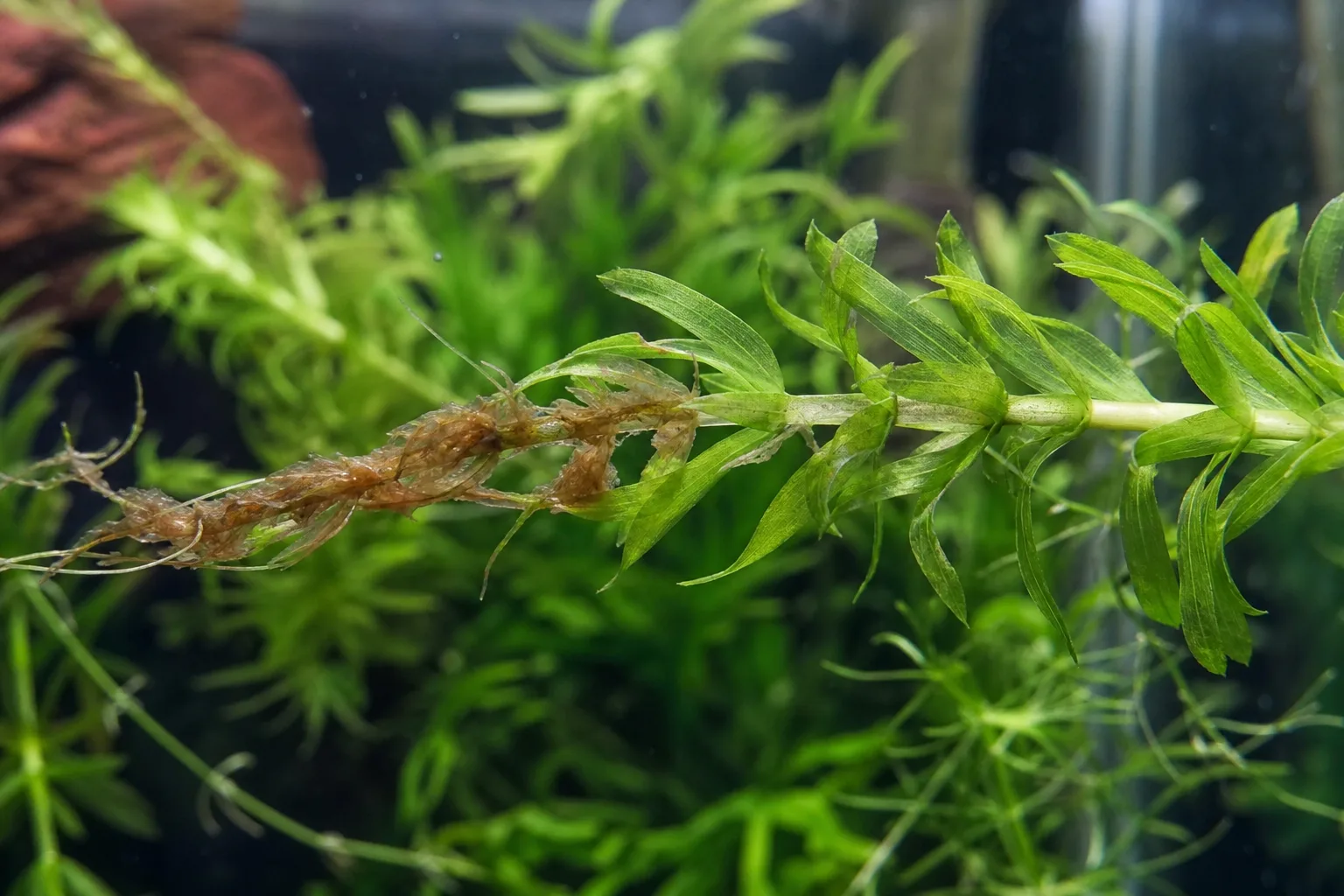
Stem Rot on Houseplants
Still unsure?Match your symptoms to the most likely problems in under a minute.Run diagnosis →Understand and fix stem rot
Indoor plant diseases are usually fungal or bacterial infections favored by moisture on leaves and poor ventilation. Stem Rot can weaken growth and spread to nearby plants if ignored. Use Soft, dark, mushy stems near soil line as your starting point, then confirm whether you are dealing with infection, physical damage, or care stress. Track weekly progress after you change care, and note watering, light, and repotting dates so you can tell whether the symptom is improving or returning. Compare upper versus lower leaves, new versus old growth, and soil moisture at root depth before you treat, because the same visible symptom can come from watering, light, pests, or normal aging on different plants.
Overview
Indoor plant diseases are usually fungal or bacterial infections favored by moisture on leaves and poor ventilation. Stem Rot can weaken growth and spread to nearby plants if ignored. Use Soft, dark, mushy stems near soil line as your starting point, then confirm whether you are dealing with infection, physical damage, or care stress. Track weekly progress after you change care, and note watering, light, and repotting dates so you can tell whether the symptom is improving or returning. Compare upper versus lower leaves, new versus old growth, and soil moisture at root depth before you treat, because the same visible symptom can come from watering, light, pests, or normal aging on different plants.
How to identify it
- Look for spots with halos, powdery coating, or water-soaked margins
- Check if damage spreads over days vs stays static
- Note whether leaves were recently misted or watered overhead
- Inspect multiple plants in the same room for similar patterns
- Smell soil-sour odor suggests rot rather than surface disease alone
When to worry
Rapid defoliation, soft mushy stems, or spots enlarging daily mean isolate immediately and trim affected tissue.
Common causes
Water sitting on leaves overnight
Overhead watering and late-day misting keep foliage wet for hours-the perfect environment for leaf spot and mildew.
Poor airflow between plants
Crowded shelves and closed rooms trap humidity around leaves and speed up Stem Rot.
Infected tools or splashing water
Pruning with dirty shears or reusing drip trays without cleaning spreads pathogens plant to plant.
Weakened or stressed plants
Plants recovering from repotting, low light, or root issues are more susceptible to infection.
Step-by-step fix
Isolate affected plants
Move sick plants away from healthy ones until active spread stops.
Remove infected leaves
Cut off heavily spotted or mushy foliage with clean scissors. Dispose in trash, not compost indoors.
Improve airflow and watering technique
Space plants out, run a fan on low, and water at soil level without wetting leaves.
Apply fungicide if fungal disease is confirmed
For powdery mildew or leaf spot, use a houseplant-safe fungicide per label. Bacterial issues may need removal rather than spray.
Avoid fertilizer until recovery
Let the plant stabilize. New healthy growth confirms your changes are working.
Prevention tips
- Water at the soil line, not over leaves
- Provide spacing and gentle airflow in plant rooms
- Sterilize pruning tools between plants
- Quarantine new plants before mixing collections
Common mistakes
- Misting diseased leaves hoping humidity helps
- Leaving fallen infected leaves on soil surface
- Treating bacterial rot with fungicide only
A brown stem is not automatically rotten. Older stems may harden, cork, or form dry scars as they mature. Active stem rot behaves differently: tissue becomes soft, water-soaked, hollow, collapsing, or easily separated, and the damaged boundary often advances over days.
Act promptly, but inspect before cutting. Isolate the plant, stop adding water, and trace the stem from healthy tissue toward the damaged area. Check the crown and roots because a soft stem at soil level often belongs to a larger root-and-crown problem. If the base is destroyed but upper growth remains firm, clean cuttings may be the most realistic rescue.
Stem rot is an outcome, not a single pathogen. Waterlogged tissue can die from oxygen shortage, then become colonized by fungi or bacteria; pathogens such as Phytophthora, Pythium, Rhizoctonia, Fusarium, or soft-rot bacteria can also drive decay under favorable conditions. The safest plan removes irreversibly damaged tissue, protects healthy material, and corrects the moisture system that allowed the problem to progress.
This guide synthesizes current Extension and plant-health guidance; it is not a report of a laboratory identification or a controlled rescue trial. The two jade images are comparison aids for texture and lesion boundaries, not proof of the causal organism. Propagation details remain species-dependent, so confirm that a retained section contains the structures its species needs to regrow before cutting.
What Stem Rot Means
Stem rot describes decay that compromises a plant’s structural and conducting tissue. It can begin at the soil line, crown, a wound, a cutting node, or a leaf scar. Depending on the cause, the lesion may be dry and sunken, dark and firm at first, or rapidly soft and wet.
The stem carries water, minerals, and sugars between roots and leaves. When decay girdles it, the upper plant may wilt even though the potting mix is wet. That apparent thirst often prompts more watering, which further reduces oxygen and accelerates susceptible root-and-crown problems.
Clemson Cooperative Extension lists root and crown rots among common houseplant diseases and describes affected roots or crowns as brown to black and soft rather than healthy and firm (houseplant diseases and disorders). Stem texture and the transition between healthy and damaged tissue are therefore more useful than darkness alone.
The plant’s architecture changes the stakes. A vining pothos may retain many healthy nodes above a basal lesion, while a single-stemmed specimen can lose its only growing point when the crown collapses. Identify where new growth originates and what propagation methods work for that species before making the first cut. A technically clean cut is not a rescue if the remaining piece lacks a viable node or meristem.
Confirm Active Decay
Support the plant before testing it so a weakened stem does not snap. Press gently with a gloved finger near—not directly into—the margin. Healthy tissue should feel consistent for that species. Rotten tissue may yield, flatten, split, or release fluid under very light pressure.
Follow the lesion’s edge. An active margin may be water-soaked, translucent, reddish-brown, or sharply darker than adjacent tissue. Photograph it with a ruler, then check again in 24 to 48 hours. Expansion provides stronger evidence than one static stain.
Smell can add context but is not definitive. Sour, fermented, or foul odor supports active breakdown, while some fungal rots remain relatively odorless. Do not place decayed material near your face; use ventilation and wash hands after handling it.
Texture, Color, Odor, and Progression
Combine four observations. Texture reveals structural failure. Color maps the lesion but varies with the species. Odor may indicate wet decomposition. Progression tells you whether the damaging process is active.
Dry, callused, stable tissue is often less urgent than a soft lesion that lengthens overnight. Black can be normal on an old pruning scar, while pale tan tissue can be thoroughly dead. Slice only when salvage is already justified, because cutting converts observation into an irreversible intervention.
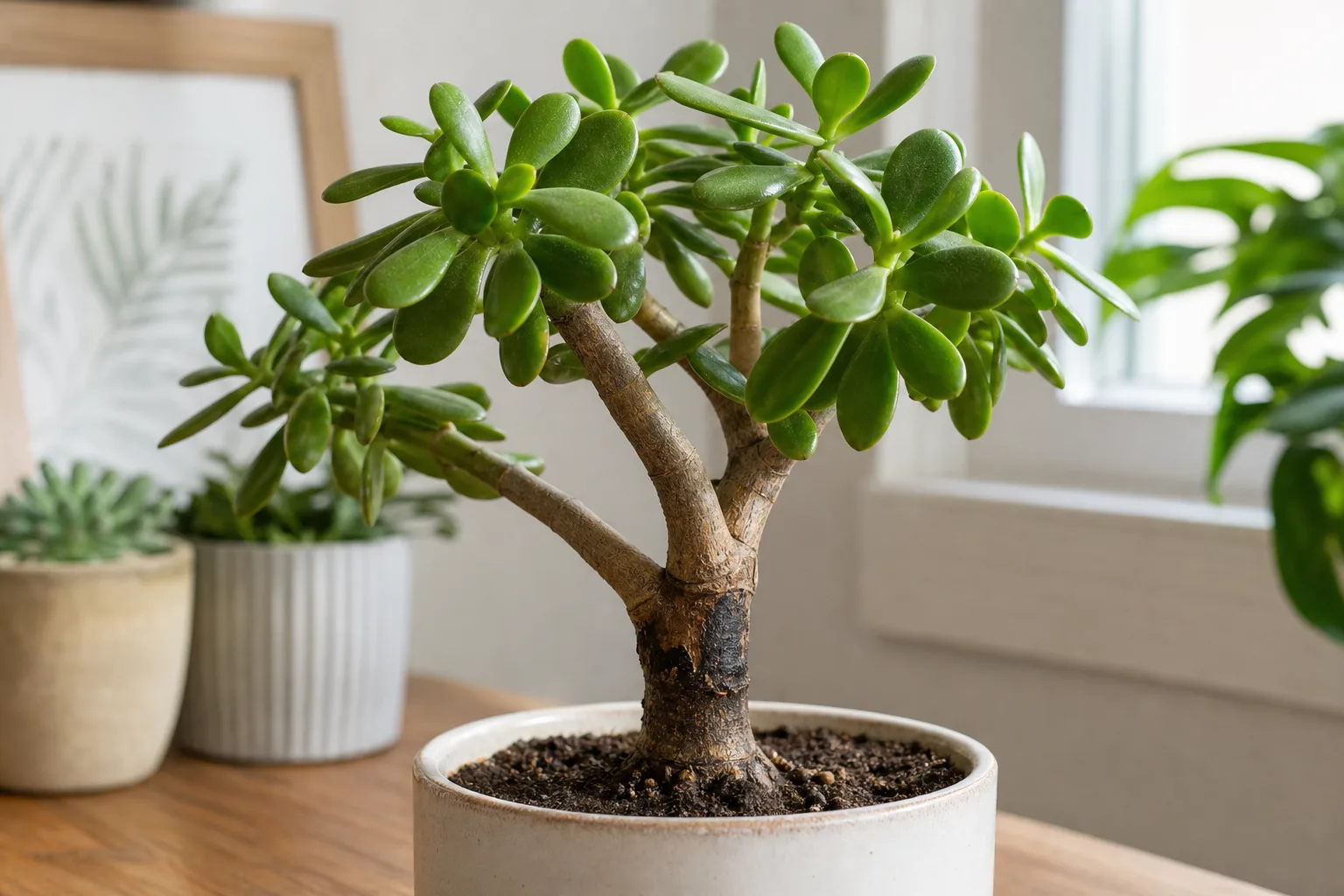
Compare texture, collapse, and lesion boundaries rather than color alone. A picture cannot identify the causal organism.
Check whether leaves above the lesion remain turgid. Sudden wilting above a girdled section suggests transport failure. Yellow lower leaves plus a soft soil-line stem suggests that roots and crown should be examined together.
Check the Crown and Roots
The crown is the transition where roots and shoots meet. Remove the nursery pot gently and support the root ball. Healthy roots vary in color but are generally firm and attached; decayed roots often feel soft, shed their outer layer, or break with little force.
Do not wash away all substrate immediately. The distribution of wetness, odor, root color, and drainage channels is useful evidence. A saturated lower layer beneath a dry surface may explain why routine top checks failed.
University of Connecticut explains that excess water retained in a houseplant container displaces oxygen and can lead to root death, after which water uptake declines and the plant may wilt (watering houseplants). This injury can coexist with pathogen-driven rot. “Overwatering” is therefore a condition to correct, not a complete organism-level diagnosis.
Check for a perched reservoir in the container system. A nursery pot may drain correctly but then stand in water hidden inside a decorative sleeve. Roots growing through the drainage holes can sit in that water even when most of the root ball feels merely moist. Photograph the container arrangement and measure how much drainage remains after ten minutes; this practical detail often explains repeated saturation better than a remembered watering interval.
Problems That Resemble Stem Rot
Normal corking creates firm, dry, stable brown tissue on aging stems, especially succulents. Woody maturation is usually symmetrical or gradual and does not smell, spread rapidly, or collapse. A healed pruning scar should remain dry and bounded.
Dehydrated stems may wrinkle or lose firmness without becoming water-soaked. Cold injury can turn tissue translucent and soft after contact with a chilled window. Sunscald and chemical burn create dry or bleached lesions that may later become colonized by secondary organisms.
Insects such as scale can form raised brown structures on stems. Remove one carefully with a swab or inspect under magnification; a scale insect sits on the surface, while a rot lesion changes the plant tissue itself. Mechanical bruising also darkens, but a simple bruise should stabilize rather than advance.
Normal Corking, Scars, and Dehydration
| Evidence | More consistent with | Next check |
|---|---|---|
| Firm, dry, stable brown surface | Corking or healed scar | Compare over several days |
| Wrinkled but not wet tissue; dry root ball | Dehydration | Rehydrate according to species |
| Soft expanding lesion at soil line | Active crown or stem rot | Inspect roots and crown |
| Translucent collapse after cold exposure | Chilling injury | Review temperature timeline |
| Raised removable bodies | Scale insects | Inspect for honeydew and crawlers |
Mixed problems remain possible. A cold-damaged patch can become infected, and dehydration can follow root rot because damaged roots cannot supply water. Read the sequence of events rather than assuming the newest visible symptom began the problem.
Why Stems Rot
The disease triangle applies: susceptible tissue, a capable pathogen, and favorable conditions must overlap. Constantly wet substrate, limited oxygen, wounds, contaminated tools, infected propagation material, dense planting, and unsuitable temperatures can each contribute. Their importance varies with the organism and host.
Water molds such as Phytophthora and Pythium are not true fungi, even though gardeners often group their diseases with fungal rots. Other stem rots involve true fungi or bacteria. This distinction matters because products that act on one pathogen group may not act on another.
Crop Protection Network describes Phytophthora root and stem rot as a soilborne disease favored by saturated conditions and capable of producing stem lesions and root decay (Phytophthora root and stem rot). The crop context differs from houseplants, but the source illustrates why diagnosis and moisture conditions must be considered together.
Waterlogging, Wounds, and Pathogens
Waterlogging fills air spaces in substrate and restricts oxygen supply to roots. Roots lose function, tissues weaken, and opportunistic organisms gain entry. A pot without an open drainage hole, compacted mix, standing water in a cachepot, or a large pot around a small root system can prolong saturation.
Wounds create another entry route. Dull tools crush tissue; low cuts trap water; buried petioles remain damp; and rough handling damages nodes. Propagation in overly wet media can keep fresh cut surfaces vulnerable before callus or roots develop.
Pathogens can arrive in plants, substrate, water, pots, or debris. Avoid assuming rot spontaneously formed because one watering was excessive. The useful question is what combination of tissue damage, environment, and inoculum allowed the lesion to advance.
Temperature changes the interaction. Cool, low-light conditions slow water use, so a mix that dried acceptably in summer may remain wet much longer in winter. Conversely, excessive heat can injure tissue and accelerate decline. Reassess moisture by touching or sampling the substrate at depth and by comparing pot weight, rather than preserving a schedule after season or location changes.
The Immediate Rescue Assessment
Move the plant to a washable work area away from healthy plants. Wear gloves, prepare clean tools, and have bags ready for discarded tissue. Do not carry a leaking root ball or loose decayed leaves across the collection.
Stop watering while the mix is wet, but do not leave viable cuttings or surviving roots to desiccate indefinitely. The rescue method depends on where sound tissue remains. A plant with firm roots and one localized branch lesion is managed differently from one whose crown has liquefied.
Identify the highest point of decay and the lowest point of clearly healthy tissue. If no continuous healthy stem connects the roots to the canopy, decide whether clean top cuttings are appropriate for that species. Some plants propagate readily from nodes; palms and other single-growing-point plants may not.
Rescue, Propagate, or Discard
| Condition | Most defensible choice |
|---|---|
| Localized lesion on one branch; healthy base and roots | Prune the branch and monitor |
| Rotten roots but firm crown and viable roots remain | Trim and repot cautiously |
| Rotten crown; firm upper nodes remain on a propagable species | Take clean cuttings above decay |
| Decay reaches every node or growing point | Discard |
| Valuable plant or several plants affected | Seek laboratory diagnosis |
Discarding is appropriate when no clean tissue remains, odor and collapse are extensive, or keeping the plant threatens a valuable collection. Seal it before moving it through the home. Follow local waste guidance and do not compost unidentified diseased material in a casual home pile.
Sentimental value may justify expert diagnosis or a cautious cutting attempt, but it does not improve the biological odds. Define success criteria before starting so repeated trimming does not become endless handling of decayed material.
Stop the rescue when each new cross-section remains discolored, when the only remaining tissue is soft, or when the cut would remove every viable growing point. Continuing past that threshold increases tool contamination and emotional cost without creating healthy propagation material. If a plant is irreplaceable, pause before the final cut and ask a diagnostic laboratory whether it wants an untreated sample.
A Step-by-Step Salvage Plan
Prepare a clean surface, sharp blade, fresh pot or propagation container, and unopened or properly stored substrate. Photograph the plant before disassembly. Remove jewelry or sleeves that could brush healthy plants after contact with rot.
Unpot gently and separate obviously dead material. Keep notes on where the lesion begins, root condition, and substrate moisture. If a diagnostic sample may be needed, reserve fresh transition tissue before applying disinfectants or pesticides.
Work from healthy tissue toward diseased tissue when possible. Clean the blade between cuts and plants. UF/IFAS distinguishes removal of soil and plant debris from the subsequent disinfection step in its garden-tool sanitation guidance; follow the chosen disinfectant’s concentration and contact-time directions. Do not return a used tool to clean potting mix, the new container, or a healthy cutting.
Remove Rot Until Tissue Is Clean
Cut above the visible lesion into tissue that is firm and normally colored for the species. Examine the cross-section. Discoloration in the vascular ring, translucency, softness, or odor means the next cut must be farther into healthy tissue.
Use a new or correctly disinfected blade for each diagnostic cut so the tool does not smear decayed material onto the next surface. Keep removed pieces in a bag. Stop if advancing cuts leave no viable node, growing point, or root system.
For succulents, allow an appropriate clean cutting to callus in a dry, shaded, well-ventilated place before rooting; the required time varies with stem thickness and species. For thin tropical vines, prolonged drying can be harmful, so follow species-specific propagation guidance rather than applying succulent rules universally.
Repot Only What Is Worth Saving
Repot when enough firm, functioning roots and a clean crown remain. Remove soft roots with clean tools, but avoid shaving away every discolored root solely for appearance. Healthy root color varies by species and substrate; texture and attachment are better evidence.
Use a clean container with open drainage holes and a fresh mix suited to the plant’s aeration and moisture needs. Do not reuse the wet infected mix. A larger pot is not automatically safer; excess substrate around a reduced root system can stay wet for too long.
Virginia Cooperative Extension explains that prolonged saturation decreases oxygen availability, stops root growth, and can ultimately kill roots (properly watering container houseplants). After repotting, water according to root condition and species rather than on a fixed calendar. Do not fertilize damaged roots until active recovery is evident.
Re-root Healthy Cuttings Safely
Select a firm section well above the last discolored cross-section and include the structures required by that species, usually one or more viable nodes. Remove leaves that would sit in substrate or water. Label the cutting as originating from a rot case and keep it isolated.
Choose a rooting method that balances moisture with oxygen. Saturated media recreate the original risk, while bone-dry conditions prevent many tropical cuttings from rooting. Use a small clean container and check the medium itself rather than watering by date.
Do not apply rooting hormone, fungicide, peroxide, or cinnamon as a universal cure. A rooting product must be labeled for the plant and method, and no additive compensates for contaminated tissue. If the cut end continues to darken or soften, recut with a clean blade or discard it.
Aftercare and Prevention
Place salvaged material in bright, indirect light appropriate for the species and maintain stable temperature. Avoid intense sun while roots are reduced. High humidity may reduce cutting water loss, but sealed stagnant enclosures can favor decay; use species-appropriate humidity with ventilation.
Monitor the former lesion boundary and new cuts daily at first. Firm tissue, callus formation where appropriate, stable color, and eventual root or shoot growth support recovery. Renewed softness, odor, or advancing discoloration means decay remains active.
Prevent recurrence by matching container size to the root system, using a structured mix, keeping drainage holes open, and emptying cachepots. Water based on substrate condition, plant demand, light, season, and temperature—not a rigid weekly schedule.
Recheck the system after roots regrow. A small rescue pot that was appropriate at first may later dry too quickly, but moving up before roots fill it recreates excess wet volume. Let root development, not impatience, determine the next container change.
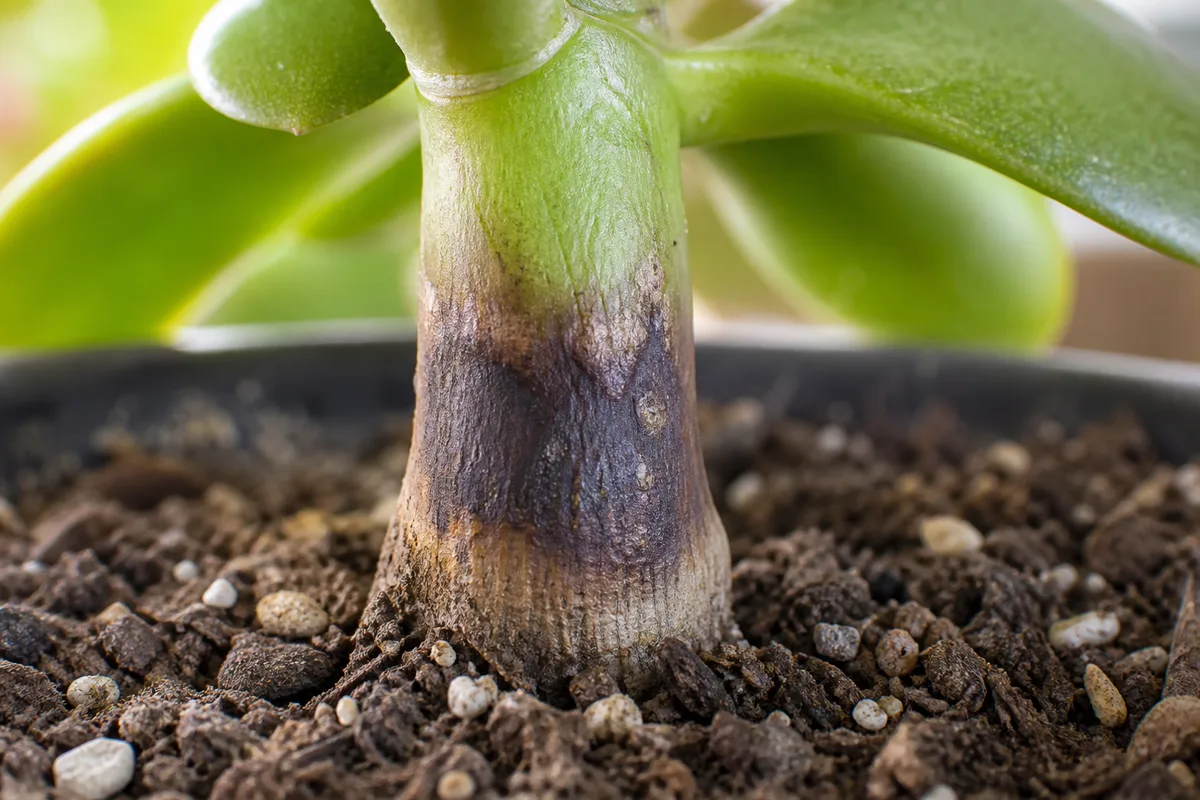
A close view helps locate the lesion margin. Texture and a clean cross-section are more informative than surface color alone.
When Testing or Treatment Is Justified
Seek a diagnostic lab when the plant is valuable, multiple plants develop stem lesions, the rot returns after clean propagation, or pesticide choice depends on the organism. Submit fresh transition tissue, roots, and plant history according to the lab’s instructions.
Penn State Extension advises diagnosing a plant disease before choosing a control because symptoms alone may not reveal the cause (plant disease identification and control). Tell the lab whether the lesion began above or below the soil line, how fast it moved, and what the roots looked and smelled like. Include recent repotting, products, water source, and nearby cases; these details help distinguish infectious disease from environmental injury.
Fungicides and products targeting water molds are preventive or suppressive and pathogen-specific. They cannot rebuild a collapsed crown or reconnect destroyed vascular tissue. Confirm that any product label permits the plant, pathogen or disease, indoor use, rate, and application method.
Avoid pouring concentrated hydrogen peroxide, bleach, alcohol, or household cleaners into potting mix. These can injure living roots and do not provide a validated universal cure. Sanitize tools and hard surfaces with products intended for that purpose, following concentration and contact-time directions.
Conclusion
Stem rot requires a texture-and-progression diagnosis, not a reaction to brown color. Isolate the plant, trace the lesion, inspect crown and roots, and decide whether clean connected tissue still exists. Then choose one clear path: prune a localized lesion, repot a viable root-and-crown system, propagate clean upper growth, or discard tissue that cannot be saved.
Correct the moisture system as carefully as you cut. Open drainage, suitable substrate, right-sized containers, species-appropriate watering, clean tools, and quarantine protect the rescue from repeating the same failure.
No spray can restore collapsed tissue. Recovery is visible in firm stable stems, clean cut surfaces, new roots, and healthy growth. If the evidence is ambiguous or several plants are affected, laboratory diagnosis is safer than progressively stronger home treatments.
Plants commonly affected
These houseplants often struggle with stem rot. Open a care guide or plant-specific troubleshooting page for tailored fixes.
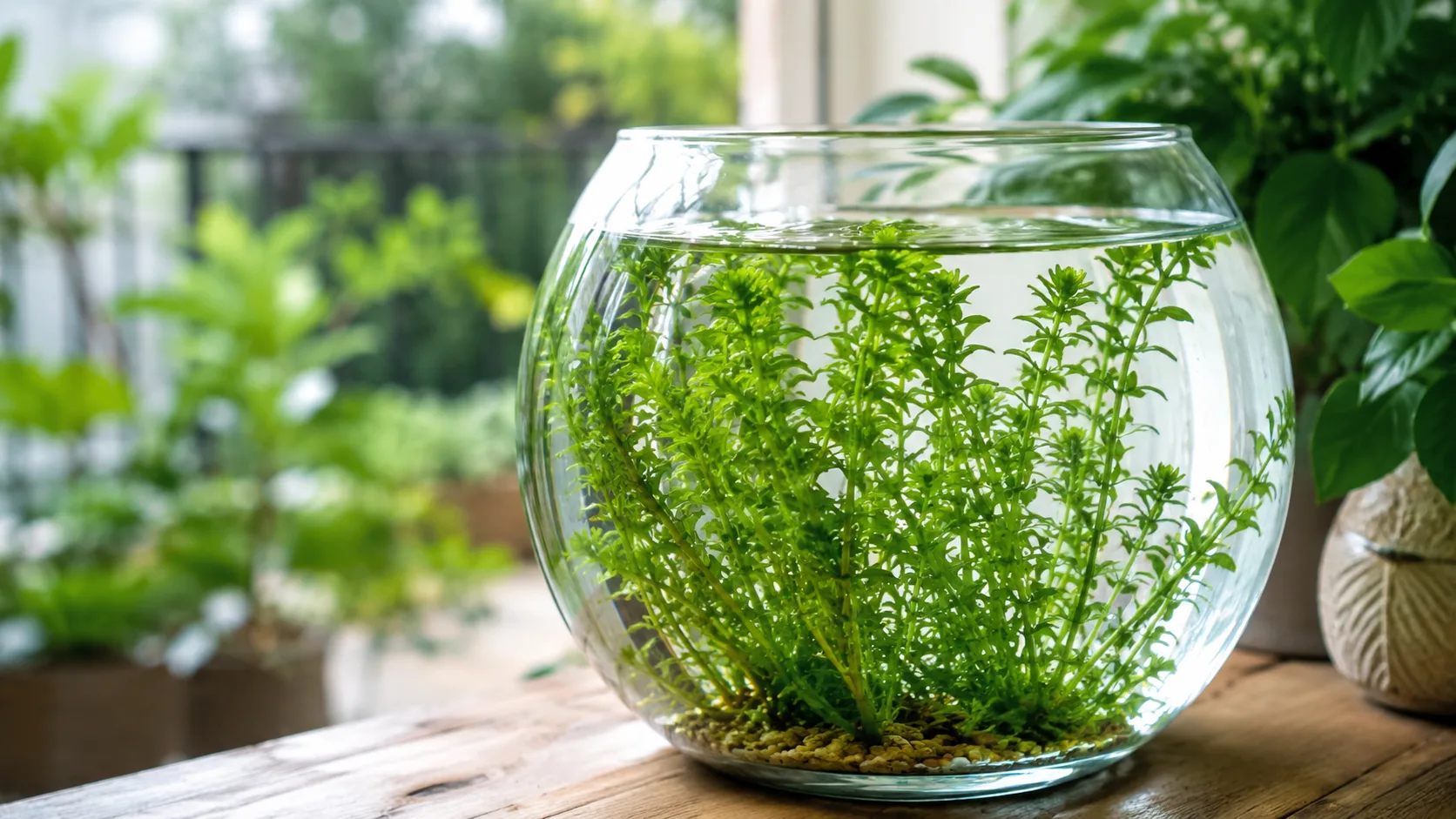 Easy
EasyAnacharis / Elodea
Likely causeDeep planting, leftover stem bands, or thick bunches shading and rotting lower internodes.
Quick fixCut back to firm green tissue, strip lower leaves, float until roots appear, and replant stems shallowly and spaced apart.
 Medium
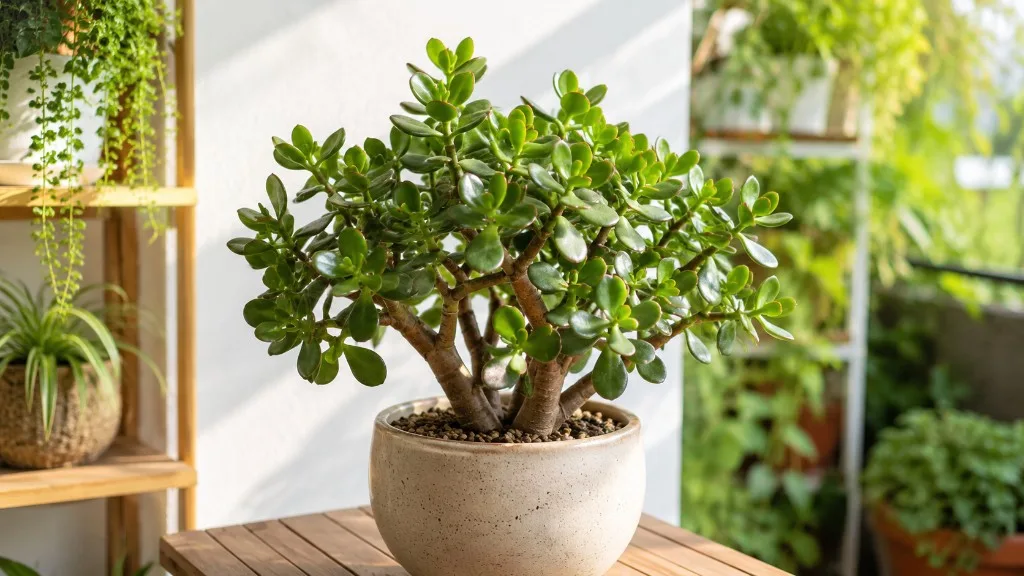
Jade Plant
Likely causeJan 8, 2021 · Jade Plant Root Rot (Signs, Causes and Step by Step Treatment) Jade Plants have thick fleshy roots similar to their fleshy stems and leaves that we see growing above ground. These roots are prone to rotting if you do not follo
Quick fixConfirm diagnosis on your Jade Plant, then address the most likely care or pest factor described in current extension guidance.
 Medium
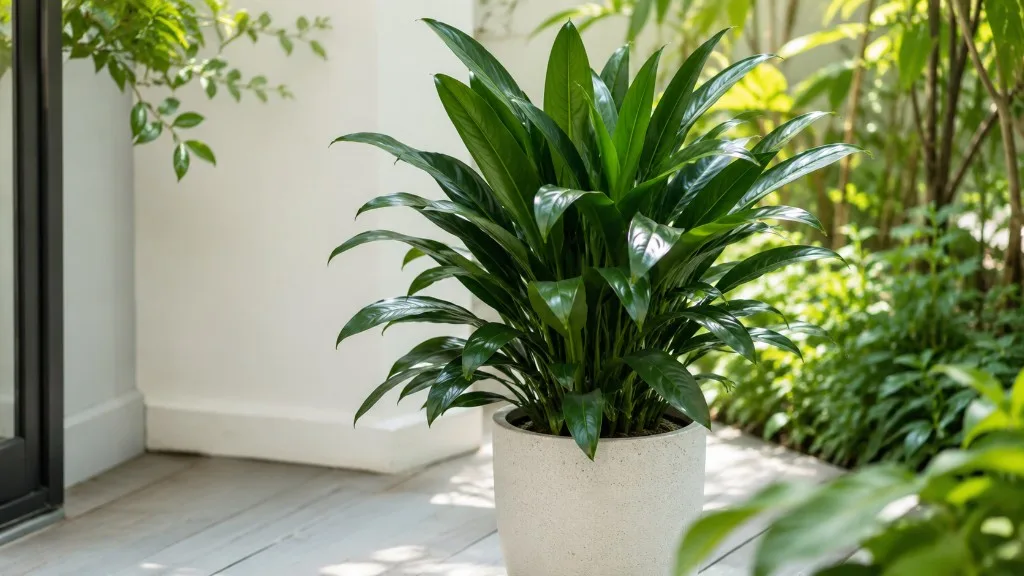
Janet Craig Dracaena
Likely causeJan 16, 2024 · Stem rot in Janet Craig Dracaena can be a tricky issue to tackle, but with early detection and proper care, your plant can bounce back. By understanding the symptoms and adjusting your plant care routine, you can keep your Dr
Quick fixConfirm diagnosis on your Janet Craig Dracaena, then address the most likely care or pest factor described in current extension guidance.
 Medium
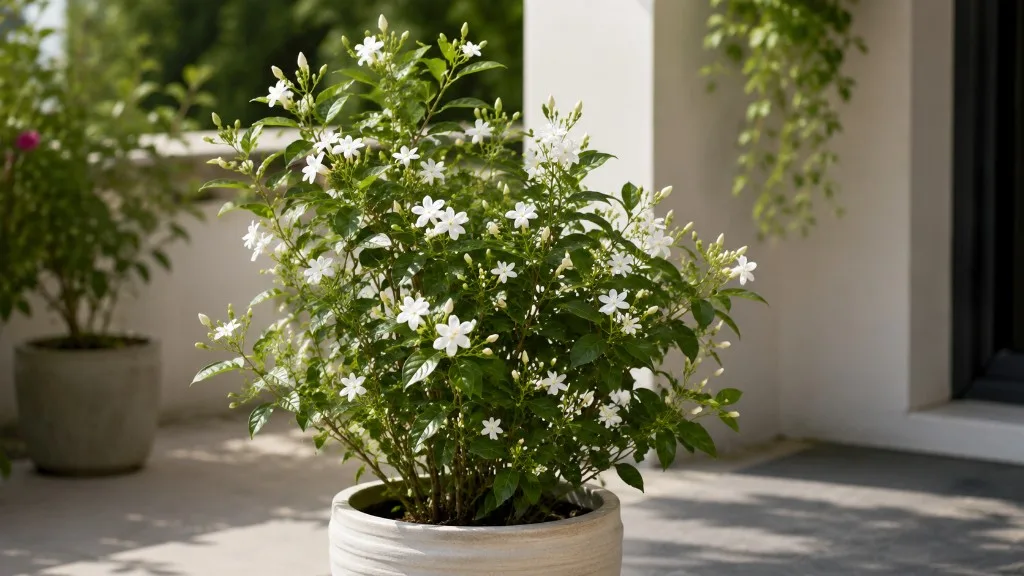
Jasmine
Likely causeJan 17, 2024 · In this article, we'll walk you through everything you need to know about identifying, treating, and preventing stem rot in your Madagascar Jasmine . From understanding the causes to practical tips on nurturing your plant bac
Quick fixConfirm diagnosis on your Jasmine, then address the most likely care or pest factor described in current extension guidance.
 Medium
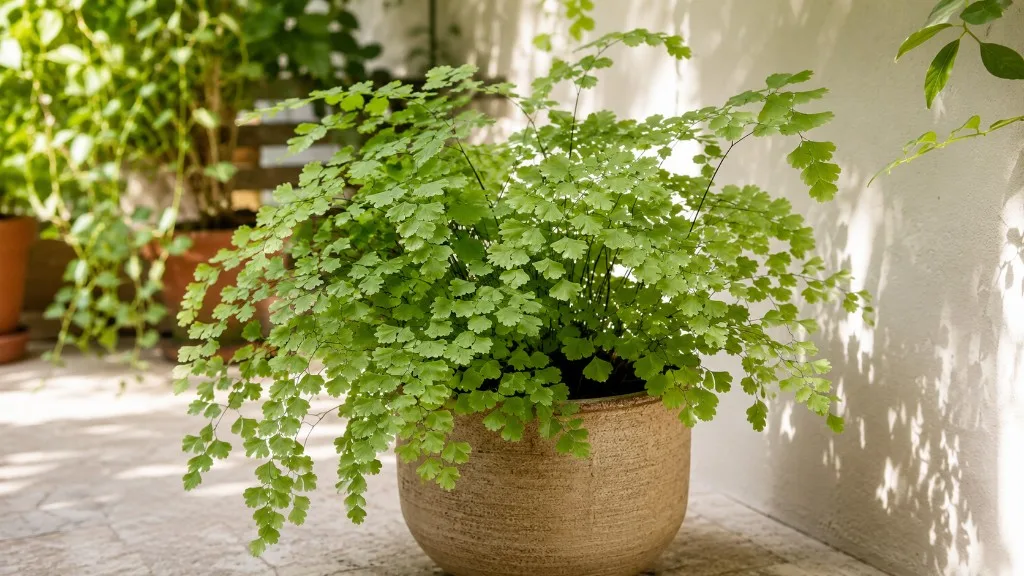
Maidenhair Fern
Likely causeJan 19, 2024 · In this article, we're going to chat about what causes Maidenhair Fern stem rot and, more importantly, what you can do about it. We'll break it down into manageable steps, offer practical tips, and hopefully, help you keep yo
Quick fixConfirm diagnosis on your Maidenhair Fern, then address the most likely care or pest factor described in current extension guidance.
 Medium
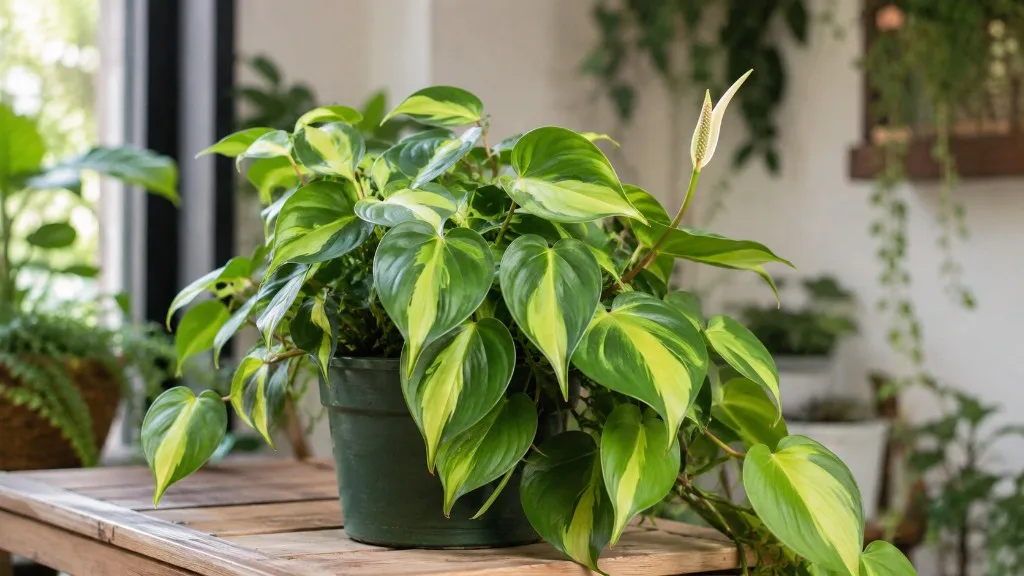
Philodendron Brasil
Likely causeJan 16, 2024 · In summary, stem rot in Philodendron Brasil is often a result of overwatering and poor drainage. By identifying the problem early and taking corrective action, you can save your plant and prevent future issues.
Quick fixConfirm diagnosis on your Philodendron Brasil, then address the most likely care or pest factor described in current extension guidance.
 Medium
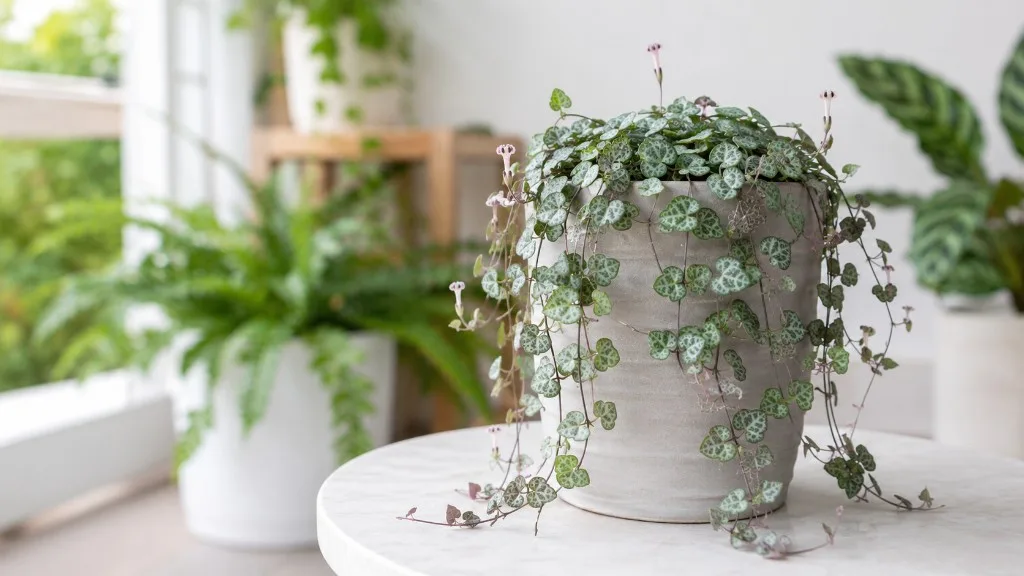
String of Hearts
Likely causeJan 18, 2024 · In this article, we'll walk you through everything you need to know about String of Hearts stem rot . We'll cover the causes, how to identify the problem early, steps to treat it, and preventive measures to keep your plant th
Quick fixConfirm diagnosis on your String of Hearts, then address the most likely care or pest factor described in current extension guidance.
 Medium
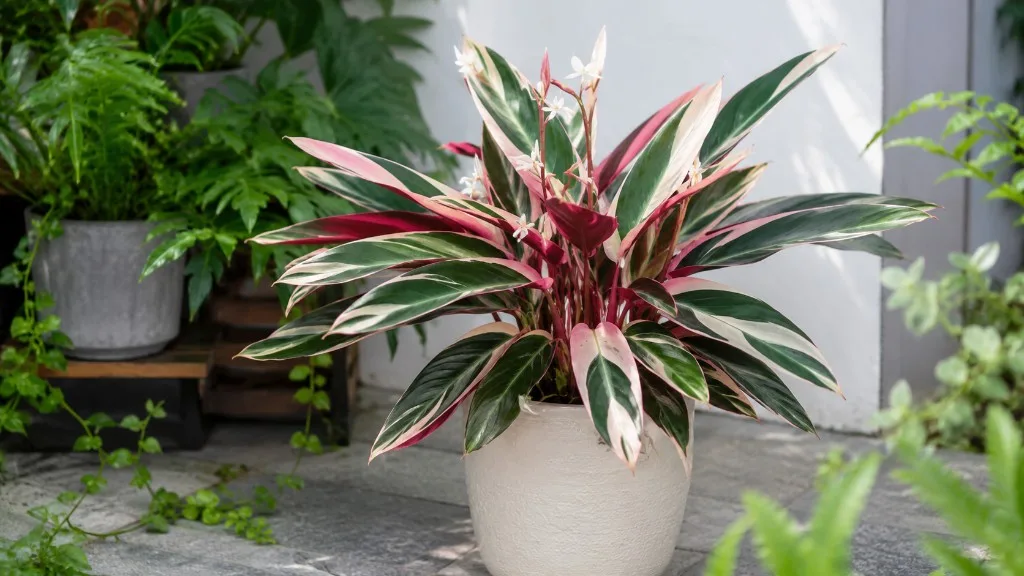
Stromanthe Triostar
Likely causeJan 17, 2024 · In this article, we'll chat about what causes stem rot in Stromanthe Triostar and, more importantly, how to tackle it. We’ll go through what you can do to prevent it, fix it if it’s already happening, and even how to nurse yo
Quick fixConfirm diagnosis on your Stromanthe Triostar, then address the most likely care or pest factor described in current extension guidance.
 Medium
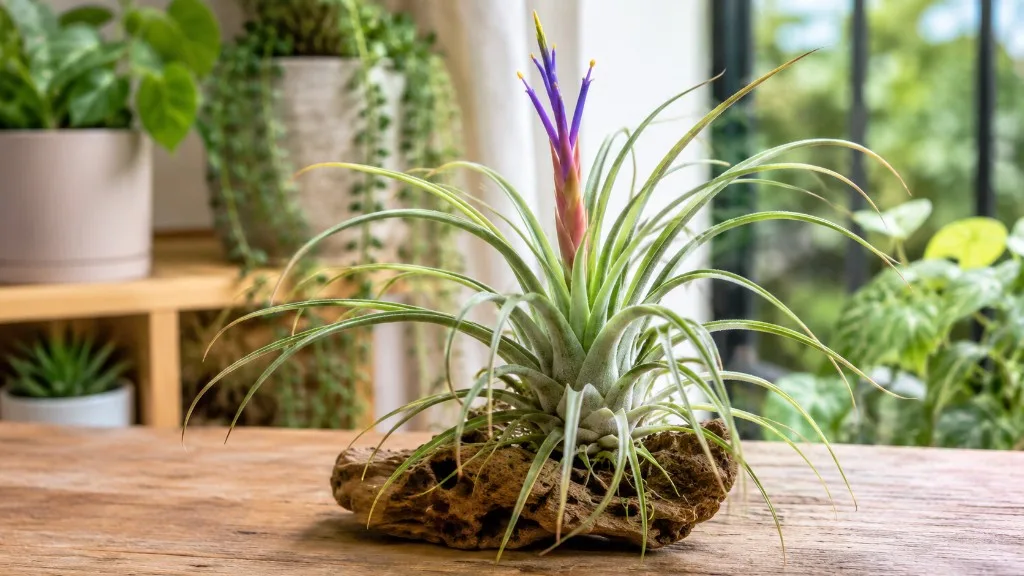
Tillandsia
Likely causeWater trapped at the base without drying-most often from not shaking out water after soaking or placing in an enclosed humid space
Quick fixAlways shake excess water from the base after soaking; ensure the plant is fully dry within 4 hours
 Medium
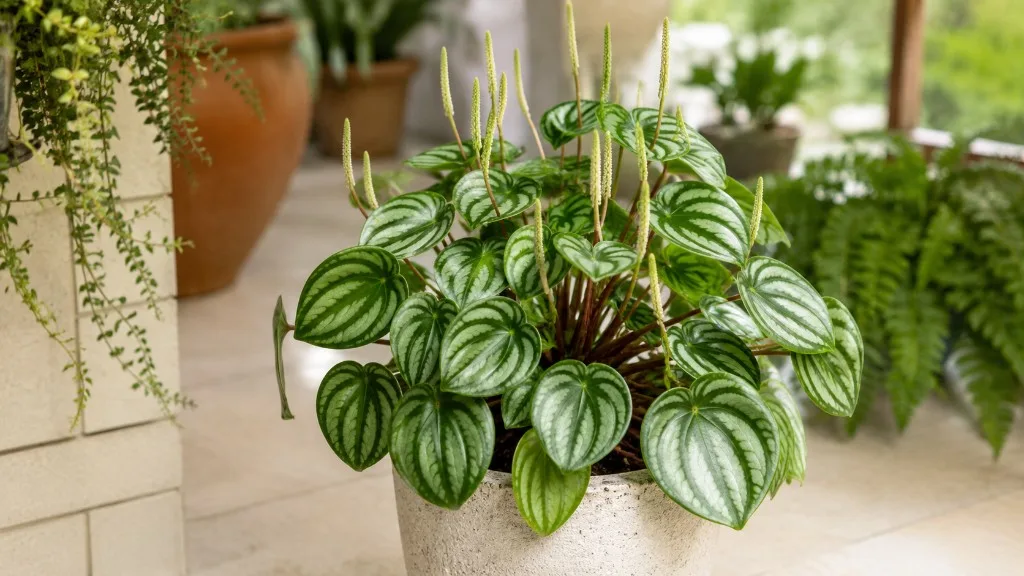
Watermelon Peperomia
Likely causeWet crown conditions soften reddish petioles at the base, progressing to stem collapse.
Quick fixCut away mushy tissue with sterile scissors; repot in dry airy mix and water sparingly.
 Medium
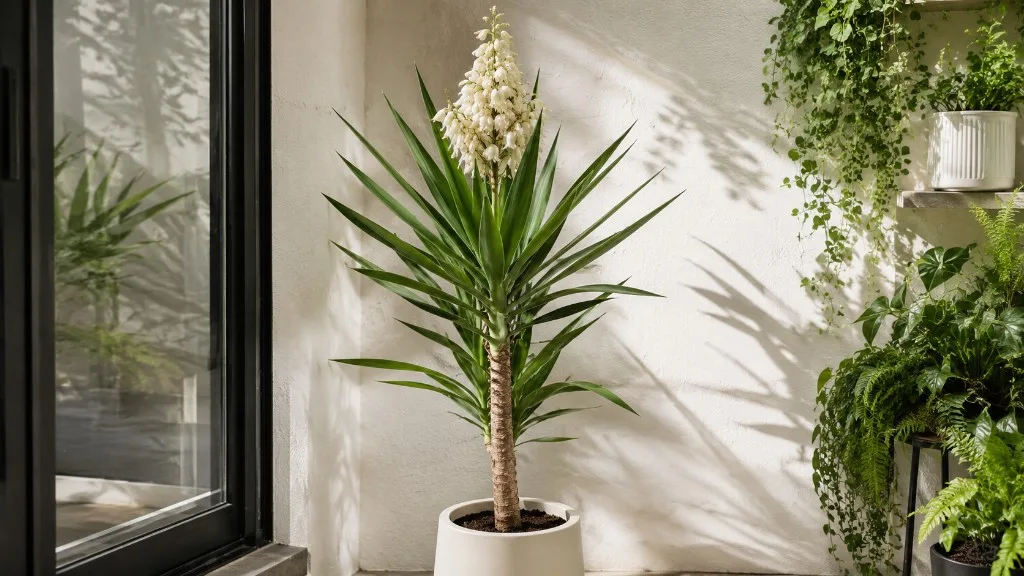
Yucca Plant
Likely causeSoft discolored areas at the yucca cane base indicate rot spreading from wet roots.
Quick fixCut away soft trunk tissue with sterile tools; repot firm sections in dry mix.
 Medium
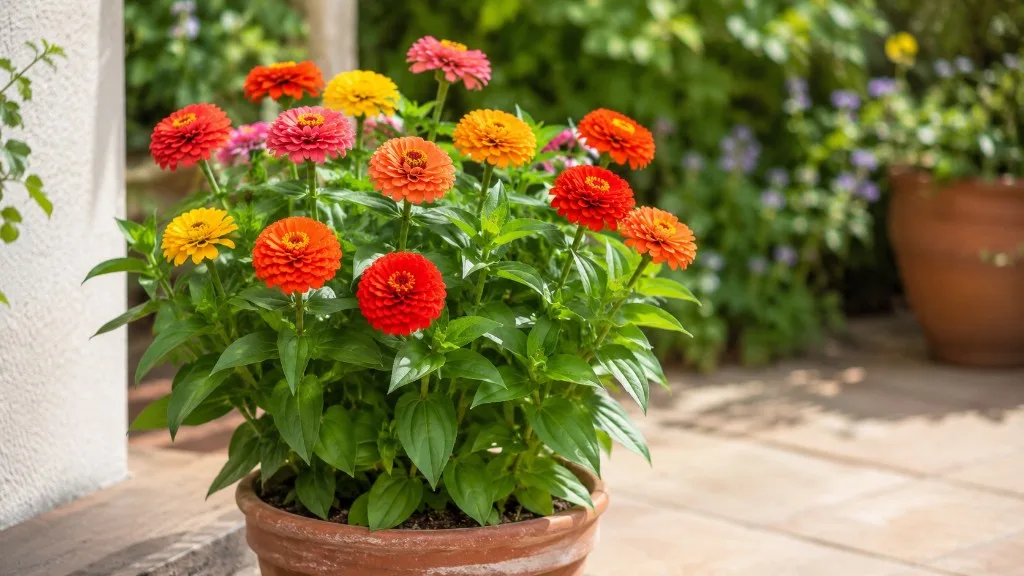
Zinnia
Likely causeOverwatering causes stem rot at the zinnia base in poorly drained containers.
Quick fixImprove drainage; water at base only and remove affected plants.