Stem Rot on Janet Craig Dracaena: Causes, Checks & Fixes
Quick answer
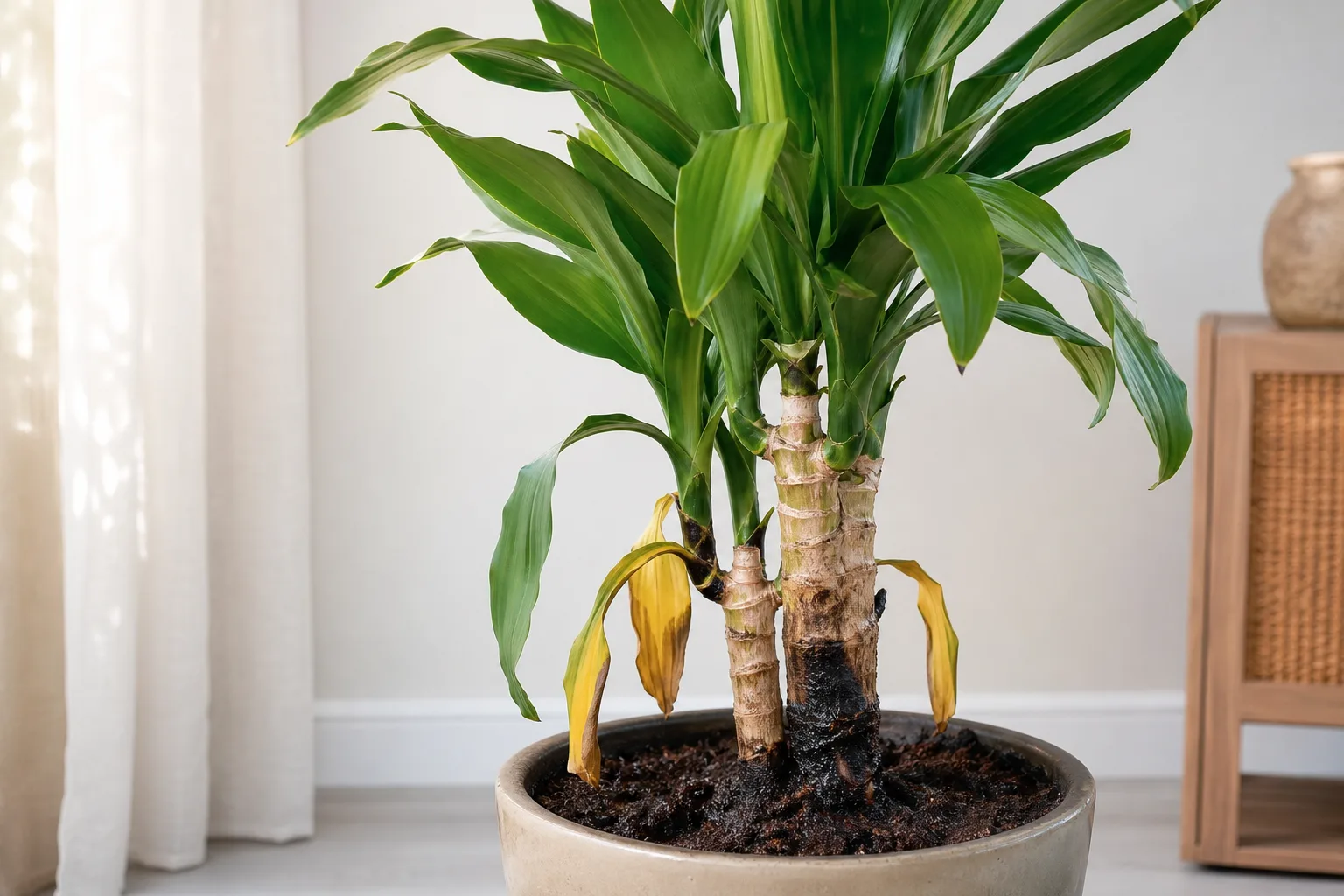
Stem rot on Janet Craig Dracaena means the cane tissue itself has liquefied-usually after weeks of wet mix in low light. Squeeze the cane at the soil line first: soft mushy tissue confirms stem involvement beyond root-only rot. Stop watering, unpot, trim rot back to firm cane, air-dry, then repot or propagate firm sections above the mush.
Stem Rot on Janet Craig Dracaena: Causes, Checks & Fixes
This guide covers stem rot on Janet Craig Dracaena. See also the general Stem Rot guide, watering, and light pages for this plant.
Stem Rot on Janet Craig Dracaena: Causes, Checks & Fixes
Quick answer
Stem rot on Janet Craig Dracaena is what happens when chronic overwatering moves up from the roots into the cane tissue itself-the thick stem that keeps the plant upright. Unlike root rot, where damaged roots may still leave a firm cane, stem rot means the base or crown has turned soft, dark, or hollow while the mix stays wet and often smells sour. Janet Craig in deep shade or office lighting uses so little water that the same weekly watering schedule that works elsewhere can leave mix saturated for weeks.
First step: stop all watering and squeeze the cane at the soil line with a gloved finger. Soft mushy tissue confirms stem rot-not a cosmetic leaf problem. Unpot only after that check; then trim rot back to firm cane, air-dry cuts, and either repot the shortened plant or propagate firm tissue above the rot.
Why Janet Craig gets stem rot
Janet Craig stores water in its cane, which helps it survive dim interiors-but it cannot compensate for soil that never dries. Allow soil to dry between waterings is non-negotiable; in low light, transpiration is slow and roots plus basal cane tissue sit in anaerobic wet mix until decay fungi colonize both. The plant can look structurally fine for weeks because the upper cane stays firm while the bottom liquefies-making a cane squeeze at the soil line the earliest reliable signal, often before widespread leaf yellowing.
Three patterns show up most often on Janet Craig:
Low-light office overwatering trap
Care teams water on a calendar-every Monday, every Friday-while the plant lives under fluorescent-only light. Mix at half depth stays cool and wet for 14–21 days or longer. Root damage begins first; if watering continues, pathogens and anaerobic conditions advance into the basal cane. Overwatering early signs-heavy pot, fungus gnats, stalled crown-should trigger dry-down before stem tissue fails.
Cane-base liquefaction while upper stem stays firm
Janet Craig’s architecture makes this deceptive. A 90 cm (3 ft) specimen may remain vertical while the lowest 2–5 cm of cane turns mushy and black at the soil line. Lower leaves yellow and drop because the vascular connection is failing, not because the plant is thirsty. Do not add water when leaves droop on an already-heavy pot-that accelerates crown involvement.
Crown wet rot on chronically wet mix
When water pools in leaf axils or the crown stays wet from top-watering onto dense foliage, crown rot can develop: new leaves collapse, turn brown at the center, and pull away easily while basal cane may still feel partly firm. This overlaps stem rot and often follows the same chronic wet-mix root failure. Split the diagnosis by checking both soil line and crown tissue.
Stem rot vs. root rot vs. fluoride tip burn
| Pattern | Cane feel | Mix / roots | Leaf signs | First action |
|---|---|---|---|---|
| Stem rot | Soft, mushy, or blackened at soil line or crown | Wet, sour-smelling; roots often mushy too | Lower yellowing, crown collapse on wet mix | Stop water; trim mushy cane; air-dry; repot or propagate |
| Root rot | Firm above soil line | Wet, sour; brown slimy roots | Yellow lower leaves on heavy wet pot | Stop water; trim roots only; repot-see root rot guide |
| Fluoride tip burn | Firm cane throughout | Normal dry-down; roots usually firm | Tan to brown margins/tips only, not basal blackening | Filtered or low-fluoride water; no cane surgery |
| Dry wilt | Firm cane | Light, dry pot | Crisp edges, droop on dusty mix | Soak once; fix schedule-see wilting guide |
Fluorine toxicity on dracaena affects leaf margins on firm plants-it is not stem liquefaction. If the cane squeezes soft, you are past water-quality tweaks alone.
What stem rot looks like on Janet Craig
Basal cane softening and blackening
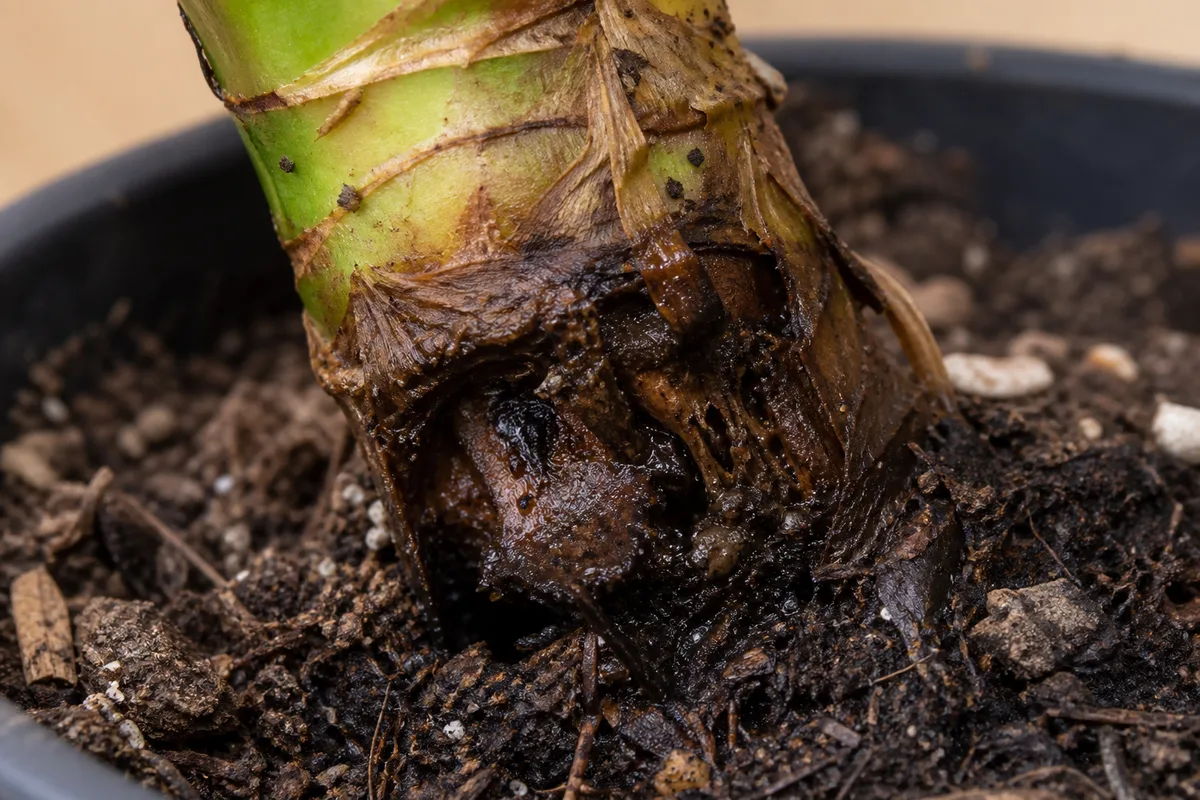
Stem Rot symptoms on Janet Craig Dracaena - compare with healthy tissue on the same plant.
The most common stem-rot picture: dark brown to black tissue at or just above the soil line, sometimes with a wrinkled or sunken band. Gentle pressure collapses the outer cane layer. A skewer pushed into the cane near the base may meet no resistance. Upper cane and existing strap leaves can look normal for days-a key reason stem rot is missed until overwatering damage is advanced.
Crown collapse on wet mix
New crown leaves emerge pale, then brown and wilt while still small. The center of the rosette may smell musty when you lift foliage. Older leaves may still be green lower on the cane. This pattern means waterlogged conditions reached the growing point-not mere low humidity stress.
Sour soil odor and spreading yellow on heavy pot
Lift the pot a week after you think you watered: if it still feels heavy and the mix smells sour or like wet compost, anaerobic rot is active. Yellow leaves often start at the bottom and move up as the cane base fails. Over-watered soil encourages fungus gnats and root problems together-treat gnats as a rot warning, not an isolated pest issue.
How to confirm the cause
Work through this checklist before cutting:
- Cane squeeze at soil line - firm = likely root-only problem; soft or hollow = stem rot confirmed.
- Pot weight and half-depth moisture - heavy pot with wet skewer at 5–8 cm depth on a plant in low light supports overwatering as the driver.
- Crown inspection - pull back leaves; soft brown tissue at the center confirms crown wet rot.
- Root check after unpotting - mushy roots plus mushy cane = full stem-and-root failure; firm upper cane with localized basal mush = salvage possible above the rot line.
- Water and placement history - weekly watering in a dim office without dry-down checks is the classic setup.
If roots are firm, mix is dry, and the cane is solid, look at wilting or underwatering instead.
Severity ladder
Mild: soft basal inch, firm upper cane
Only the lowest 1–2 cm of cane is mushy; upper stem is solid and crown still pushes occasional leaves. First fix: stop watering, unpot, trim the soft basal inch to firm tissue, trim any matching mushy roots, air-dry 24 hours, repot into fresh well-draining mix one pot size appropriate to trimmed roots. Resume dry-down watering matched to light.
Moderate: several inches mushy, firm tissue above salvageable
Basal rot climbs 3–8 cm but several inches of firm cane remain below the leaf crown. First fix: cut off all mushy cane and roots; you may shorten the plant substantially. Air-dry the cut end 24–48 hours in bright indirect light. Repot the stump if enough roots remain, or take the leafy top as a tip cutting per the propagation guide.
Severe: mushy throughout base-propagate only
Cane soft from soil line through most of the visible stem, or crown fully collapsed. Discard mushy tissue. Identify the highest segment of firm cane with healthy leaf attachment-or a firm bare section with nodes-and propagate that alone. Do not repot the rotten base expecting recovery.
First fix for Janet Craig
Stop watering immediately. Stem rot worsens with every additional soak. Before repotting or cutting, photograph the cane base for comparison and gather sterilized scissors, fresh mix, and a clean pot with drainage.
For mild basal softening, unpot, trim mush to firm white-green cane tissue, trim rotten roots, air-dry, repot dry, wait at least 7–10 days before the first light soak if half-depth checks read dry.
For moderate involvement, remove the leafy top above the rot line (minimum 2–4 inches of firm cane below the lowest healthy leaves), air-dry the cut, root in water or perlite. Shorten the remaining stump to firm tissue or discard if entirely mushy.
For crown wet rot, remove all wet collapsed tissue from the crown with sterile tools; if the crown is fully destroyed but lower cane is firm, treat as a cane-segment propagation case.
Step-by-step stem-rot rescue
- Stop irrigation and move the plant out of any cachepot holding standing water.
- Squeeze the cane at the soil line; note where firm tissue begins.
- Unpot onto newspaper; rinse old mix from roots to see the full rot front.
- Cut all mushy cane and roots back to firm tissue; sterilize blades between cuts.
- Air-dry cut surfaces 24–48 hours in bright indirect light-not direct sun.
- Repot or propagate: repot shortened plant in fresh mix or root firm tops in water/perlite per propagation steps.
- Wait before watering repotted plants until mix is genuinely dry at half depth; misting is not a substitute for root recovery.
Dracaena stem cuttings root from firm cane sections-use only tissue with no discoloration or softness.
Propagation salvage when the cane base is lost
When the base is unsalvageable but 10–20 cm or more of firm cane sits below the leaf crown, the top becomes your new plant. Cut at least 2–4 inches above any visible mush. Remove lower leaves so one or two nodes can sit in water or buried in perlite. Keep warm (65–75°F / 18–24°C), bright indirect light, and change water weekly if rooting in a jar.
The old stump may sprout new shoots from dormant buds if a few inches of firm cane remain planted-expect weeks to months for new crowns. Do not propagate from cuttings that include even slightly soft tissue; rot continues in the cutting.
Recovery timeline
Rotten cane and leaf tissue do not re-green. Judge success by:
- Firm cane when squeezed after repotting-no new soft spots spreading over 2–3 weeks.
- Clean new crown leaves on repotted stumps or rooted tip cuttings.
- Stable or slowly improving root mass when you inspect after 4–6 weeks (optional check-not weekly disturbance).
Tip cuttings often show roots in two to eight weeks in warm conditions. Repotted shortened plants may sit visually unchanged for 2–3 weeks before new growth-normal after severe root and cane loss. If softening spreads up the cane despite dry mix, discard remaining tissue and propagate higher or replace the plant.
What not to do
Do not keep watering yellow leaves when the pot is heavy and the cane base is soft. Do not apply fertilizer during active rot-it stresses damaged tissue further. Do not confuse tan tip burn from tap water with basal stem mush; changing water alone will not fix liquefied cane. Do not propagate below the rot line. Do not return to weekly watering in a dim office after rescue.
Dracaena is toxic to cats and dogs-wear gloves when handling rotted tissue and keep trimmed material away from pets. Contact your veterinarian if a pet ingests plant parts.
How to prevent stem rot next time
Match watering to light using the Janet Craig watering guide-often every 3–4 weeks minimum in deep shade, top-half dry in brighter rooms. Empty saucers after every soak. Use pots sized to the root mass, not the desired height. Weekly cane squeeze at the soil line during routine care catches basal softening before crown collapse.
Treat overwatering warnings-gnats, heavy pot, stalled crown-as mandatory dry-down events, not minor nuisances. Refresh compacted peaty mix every two to three years so water does not perch at the cane base.
When to worry
Same-day action is needed when:
- Cane tissue softens over 48 hours while mix stays wet.
- Crown center collapses and smells musty.
- More than half the visible cane is mushy with no firm segment for propagation.
- Yellowing spreads rapidly on a heavy pot after a recent soak.
For early triage before stem involvement, see overwatering. For root-only rescue without mushy cane, see root rot.
Practical checks
Urgency check
Soft cane, sour soil, or spreading yellow on wet mix needs same-day unpotting and rot assessment-not another wait-and-see watering cycle.
Best inspection order
Crown leaves → cane squeeze at soil line → pot weight → half-depth moisture → unpot and roots if wet decline persists → compare with Janet Craig overview baseline care.
Related Janet Craig guides
- Root rot - firm cane, mushy roots; root-trim rescue before stem involvement
- Overwatering - early triage when mix stays wet too long
- Propagation - tip cuttings and cane segments after rot trim
- Watering - dry-down intervals by light level
- Wilting - dry vs. wet wilt fork
- Janet Craig overview - baseline care and office placement