Anacharis Care Guide: What This Plant Really Needs to Thrive
Elodea spp.
Anacharis / Elodea is a cautious turtle and tortoise plant candidate in current tortoise-focused references, but LeafyPixels does not treat that as blanket safety clearance. Use only clean material and keep it as part of varied feeding.
Anacharis Care Guide: What This Plant Really Needs to Thrive
Start with wateringThe most common care mistake for Anacharis / ElodeaCheck pet-safe plants →Anacharis / Elodea care essentials
Light
Moderate to bright aquarium or pond light; avoid sudden harsh outdoor sun without acclimation.
Water
Keep fully aquatic in clean, dechlorinated water; refresh water quality before the plant declines.
Soil
Aquatic setup with no ordinary potting mix in the turtle tank; anchor or float according to the species.
Humidity
Aquatic or constantly humid surface conditions
Temperature
18-28 C (64-82 F)
Fertilizer
Usually unnecessary in turtle tanks with normal nutrients. Aquarium-safe fertilizer only if needed, used outside the turtle tank when possible
About Anacharis / Elodea
Anacharis / Elodea is native to North America and other temperate freshwater habitats, depending on species, typically reaches 30-100 cm trailing submerged stems indoors, with fast in stable water growth. Anacharis / Elodea has a herbaceous growth habit and part of the Hydrocharitaceae family. It is also known as Elodea, Waterweed, and Anacharis.
| Detail | Information |
|---|---|
| Also known as | Elodea, Waterweed, Anacharis |
| Native region | North America and other temperate freshwater habitats, depending on species |
| Mature size | 30-100 cm trailing submerged stems |
| Growth rate | Fast in stable water |
| Growth habit | Herbaceous |
| Scientific name | Elodea spp. |
| Family | Hydrocharitaceae |
Anacharis Care Guide: What This Plant Really Needs to Thrive
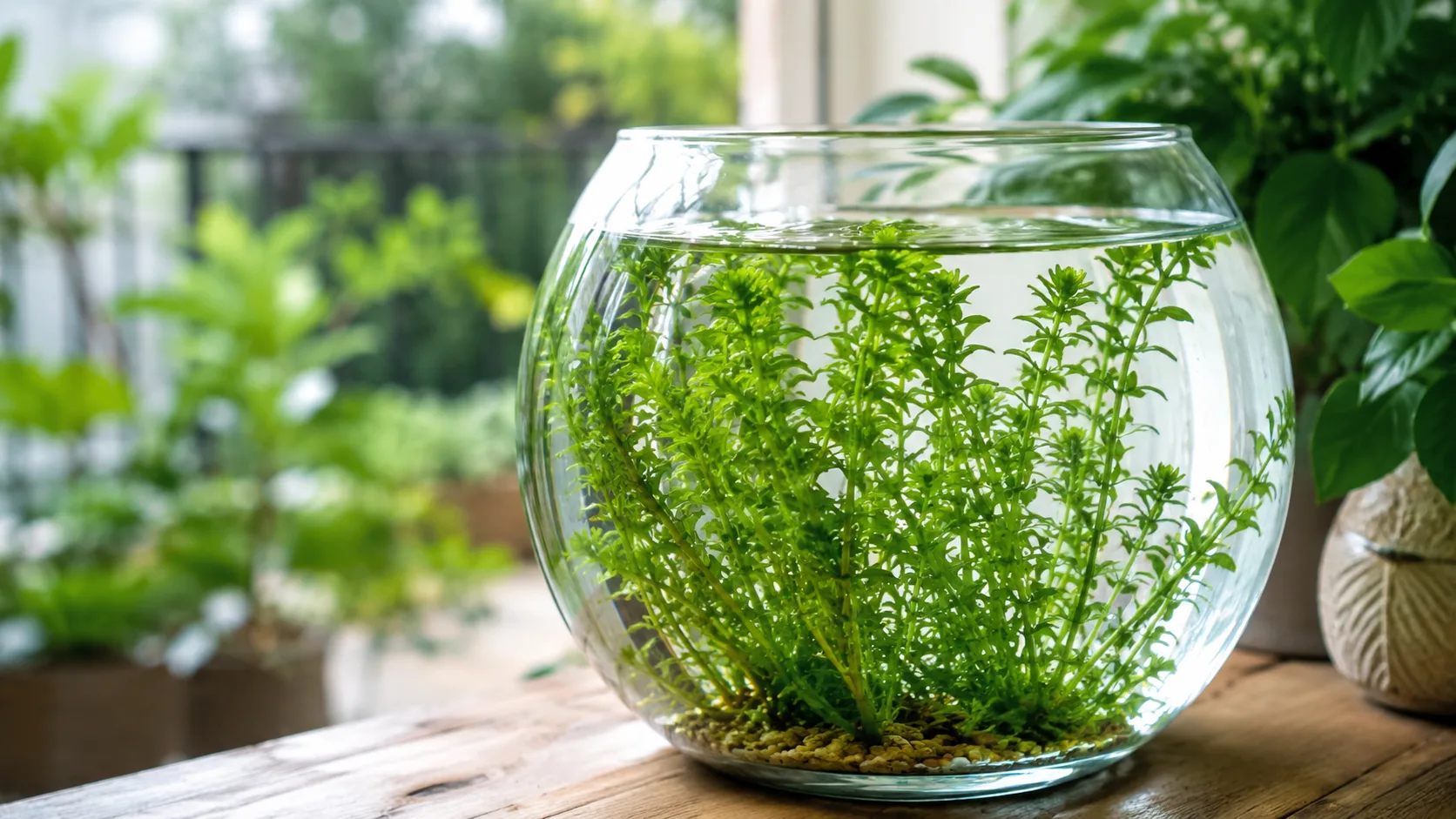
Anacharis is the plant most aquarists add first, lose first, and then quietly add back a second time. It is cheap, it grows visibly within a week, and it will forgive a surprising number of beginner mistakes - until it doesn’t. The difference between a tank full of lush, pearling stems and a tank of brown mush is almost always a handful of specific decisions made in the first 48 hours. This guide walks through what those decisions are, why they matter, and how to adjust if the plant is already struggling.
What Anacharis Actually Is
Botanical background and the Hydrocharitaceae family
Anacharis is the aquarium-trade name for the species Egeria densa, a fully submersed freshwater plant in the Hydrocharitaceae family. The family is a small, well-defined group of monocot aquatic plants that includes frogbit, tape grass, and Hydrilla. Members tend to share three traits that matter in a tank: they lean heavily on the water column for nutrition, they tolerate a wide range of temperatures, and they propagate from fragments as easily as they propagate sexually. Once you know that about the family, most of the species-level care recommendations fall out of it.
Egeria densa is dioecious, meaning individual plants are either male or female. Outside its native range, only staminate (male) plants are known in the United States. Every Anacharis stem sold in a fish store, every cutting shared in a hobbyist club, and every plant escaped into a North American pond is, biologically, a clone of a male. The species survives and spreads in the wild entirely by vegetative fragmentation - broken-off pieces that root and keep going.
The leaves are arranged in whorls of four to six around a slender stem, each leaf a few centimeters long with finely serrated edges visible under a loupe. Leaves are only about two cell layers thick, which is why Anacharis is the classic classroom plant for demonstrating cytoplasmic streaming under a microscope. It also means the plant is mechanically delicate. Handle it gently, and never leave it packed in tight rubber bands for long.
Native range and the global spread
The native range is southeastern South America: from the central Minas Gerais region of Brazil, south through coastal Argentina and Uruguay, with a few inland populations around Córdoba (USDA PLANTS). The genus Egeria itself contains only a couple of species, and “Anacharis” in aquarium literature is essentially always E. densa. Other places use “Elodea” or “Brazilian waterweed” or “dense waterweed” - all referring to the same plant. The botanical name Egeria densa Planch. is the unambiguous one to use.
Outside that range, Egeria densa is now widespread in temperate and subtropical fresh waters worldwide. The USGS Nonindigenous Aquatic Species database tracks established populations across most of the continental United States, and the species is also recorded in Europe, Asia, Africa, Australia, and New Zealand. Most of that spread traces back to the aquarium and water-garden trade.
Why Anacharis Belongs in a Freshwater Tank
Oxygenation, nitrate drawdown, and algae competition
The plant’s main claim to fame is that it does the work of three or four pieces of equipment at once. Through photosynthesis, healthy Anacharis releases visible streams of oxygen bubbles from the leaf whorls - the hobby calls this pearling. In a moderately lit tank, dissolved oxygen rises measurably during the photoperiod, and the gas exchange benefits fish, shrimp, and the aerobic bacteria in your filter.
Anacharis is a column feeder: it absorbs nitrate, ammonia, and phosphate directly from the water column through its leaves and stems. That is genuinely useful in a stocked tank, where those compounds accumulate. A dense stand of Anacharis pulls nutrients out of the water faster than nuisance algae can, which is why planted-tank hobbyists have used it for decades as a soft, biological algae control.
The growth speed is the trick. Under good conditions, mature stems push 2 to 4 inches per week, sometimes more. That is fast enough to outcompete green hair algae, staghorn algae, and most green-water outbreaks in a community tank, without the equipment cost of a UV sterilizer. The whorled leaves also form a dense lattice near the surface when stems are left to grow tall or float, which livebearer fry, baby shrimp, and small schooling fish use as cover. For breeding tanks, a few floating stems provide more usable surface area per dollar than almost anything else in the hobby.
Light Requirements
Anacharis is genuinely low-demand for a stem plant. Tropica’s plant profile lists it in the low-light category; Dennerle lists “high to medium.” Both are right, in the sense that the plant tolerates a huge range, but the target range is moderate light, not deep shade.
In practical terms, that means 2 to 3 watts per gallon of fluorescent (T5 or T8) lighting, or roughly 30 to 50 PAR at the substrate from a full-spectrum LED in the 5000K to 6500K color temperature range. Aim for a photoperiod of 7 to 10 hours per day. Going past 12 hours is rarely an Anacharis problem and almost always a nutrient or CO2 problem in disguise.
A key detail: Anacharis has a low light compensation point of roughly 7 to 16 µmol·m⁻²·s⁻¹ PAR, which is why it survives in shaded tanks. What it does in low light is stretch, not stay compact. Too little light shows up as long internodes (the bare spaces between leaf whorls), pale leaves, and stems that flop over because the plant is putting all its energy into reaching the surface. Too much light shows up as bleached or yellow patches on the uppermost leaves, sometimes combined with an algae bloom on the older leaves.
If the look you want is a thick, bushy background, lean toward moderate light, not low. In deep tanks (over 18 inches), the lower portions of tall stems often get less light than the tops; trim regularly so light reaches the lower leaves. Without that, the bottom of the stem thins and the plant looks top-heavy.
Water Parameters That Keep Anacharis Stable
Temperature, pH, GH, and KH ranges that work
The reason Anacharis is the default first plant is its tolerance. Across multiple sources the comfortable range is consistent: 60–77°F (15–25°C) is ideal, with a tolerated range of roughly 50–82°F (10–28°C). pH 6.5–7.5 is the comfort band and it tolerates anywhere from 5.5 to 9.0 in a pinch. General hardness (GH) of 2–25 dGH and carbonate hardness (KH) of 1–15 dKH both work; Anacharis adapts to soft rainwater and hard well water equally.
A few practical takeaways. It is a cold-water-tolerant plant: it happily grows in unheated indoor tanks and outdoor ponds down into the low 50s°F, and it can survive winter under an ice cap in some climates, though freezing is lethal. Tropical tanks above 80°F slow its growth and accelerate leaf melt. It leans slightly alkaline, with stable pH in the high 6s to mid 7s as its sweet spot.
The biggest mistake is not picking the wrong number; it is changing the number. Anacharis adapts to whatever stable set of parameters you give it, but it hates a parameter that swings.
CO2: optional but a clear growth accelerator
Anacharis does not require CO2 injection. Without added CO2, it uses dissolved CO2 and bicarbonates from the water column and grows at a brisk 1 to 3 inches per week under moderate light. With CO2 injection around 15 to 25 ppm, growth jumps to 3 to 4+ inches per week, with thicker stems and more intense emerald color.
If you do add CO2, ramp it up gradually. A sudden jump from 0 ppm to 30 ppm can shock the plant and trigger rapid nutrient depletion that shows up as yellowing. Start at 1 bubble per second in a 20-gallon tank and adjust based on plant response and pH behavior. Watch your fish too - CO2 above 30 ppm stresses livestock.
A liquid-carbon product (glutaraldehyde-based, sold as “Excel” and similar) is a useful middle ground for low-tech tanks. It will not match pressurized CO2, but it noticeably speeds growth and reduces melt on established stems.
Planting: Substrate, Floating, or Both
Both substrate planting and floating work, and the right method depends on your goal.
For substrate planting, remove any rubber bands, lead strips, or foam anchors from the bunch and separate the stems. Trim the bottom 1 to 2 inches of leaves off each stem - bare stem sections buried in substrate rot quickly, but a leafless stem is exactly what you want underground. Insert the bare stem 1 to 2 inches into fine gravel, sand, or aquasoil using planting tweezers, and space stems 2 to 3 inches apart so light reaches the lower portions. Expect fine white roots to grow from the buried nodes within a week or two. Once anchored, the plant does not depend on the substrate for nutrition; it is still a column feeder, so substrate type is mostly about anchoring, not about plant food.
Planting depth is the single most common beginner mistake. Burying the stem too deep causes the buried portion to rot and then the whole stem lifts. Burying it too shallow lets goldfish and current uproot it.
For floating, drop a few trimmed stems on the surface. They will hang there, develop trailing roots within days, and start pearling. Floating has two real advantages: the leaves sit right under the strongest part of the light, which gives faster growth, and it works in bare-bottom quarantine tanks, breeding boxes, and shrimp tubs where there is no substrate at all. The trade-off is appearance - floating Anacharis looks like a tangle rather than a background, so most display tanks plant it. Quarantine, fry-rearing, and outdoor tubs are usually better with floating stems.
In outdoor ponds, Anacharis often grows as a free-floating mat by midsummer. A single bunch released in spring will fill a 100-gallon tub by August under good light. The same vigor that makes it useful in a pond is what makes it a regulated plant in many U.S. states - more on that in the legality section below.
Propagation: The Easiest Job in the Tank
Stem cuttings that will actually root
Anacharis propagates from stem cuttings only. There are no tubers, no runners, and no plantlets. The plant is essentially a hollow column of nodes, and any node can produce roots and a new shoot.
A reliable sequence: choose a healthy, actively growing stem at least 8 inches long - pale or melting stems will not give you strong cuttings. Use sharp, clean scissors to cut a section 4 to 8 inches long, ideally just above a leaf whorl so the parent plant branches at the cut. Strip the leaves from the bottom 1 to 2 inches of the cutting; those leaves would rot underground or shade the new roots. Either insert the bare stem 1 to 2 inches into the substrate, or let the cutting float until you see 1 to 2 inches of new white roots and then anchor it. New growth appears within a week. Multiple side shoots often emerge from the cut end of the parent stem, which is why topping makes a tank bushier over time.
Cutting length matters. Anything under about 3 inches tends to struggle to establish. Aim for 4 to 8 inches and you will almost never fail.
Topping the plant for bushier growth
A stem that has reached the surface does not have to keep going up. Cut it back to your preferred height, replant the top cutting, and the parent stem will usually branch within a week. Repeat across a stand of Anacharis and the background fills in laterally as well as vertically.
The practical rule: trim when a stem hits the surface or starts to bend over. A bent stem blocks light to the plants below it, sheds lower leaves, and eventually becomes the kind of stem that looks like a telephone pole with a green tuft on top.
Common Problems and How to Read Them
Melting after planting
“Melt” in Anacharis is the most common complaint and the most over-diagnosed. The plant drops leaves, the remaining leaves turn translucent or brown, and the stem looks like it is dissolving. In nearly every case the cause is a transition shock: the plant was grown emersed (out of water) at a farm, and your tank is fully submersed with different temperature, pH, and hardness. The plant is shedding old leaves that were built for air and growing new leaves built for water.
The fix is patience, not panic. Trim away mushy, translucent sections so they do not foul the water. Match temperature within 2 to 3°F between the bag and the tank, especially when moving between an unheated and a heated setup. Float new stems in the tank for 30 minutes to a few hours before planting, slowly adding tank water to the bag so the plant acclimates to your parameters. Healthy stem sections usually send out new growth in 1 to 2 weeks.
Two important cautions. Anacharis is extremely sensitive to copper, which is an ingredient in many ich medications and some algaecides. Always check the label. And never try to “save” a melting stem by burying it deeper - the buried portion is the part that is rotting.
Algae, yellowing, and stunted growth
Algae on Anacharis is almost always a symptom, not a cause. The plant is doing its job (pulling nutrients) but the tank has a surplus of light and nutrients the plant cannot keep up with. The most common drivers are a photoperiod over 10 to 12 hours (especially with high light and no CO2), high iron dosing in a low-tech tank where plants cannot use the dosage, and direct sunlight on the tank for part of the day. To fix it, cut the photoperiod back to 7 to 9 hours, reduce or skip the iron dose for a few weeks, and shade the tank from direct sun. The Anacharis will usually outgrow the algae once conditions rebalance. Manually rubbing the leaves with your fingers during a water change removes the visible algae without harming the plant.
A few other clear patterns are worth knowing. Yellow lower leaves on otherwise green stems usually mean a normal shedding of older leaves that are now shaded by new growth; trim the lower leaves off and let the plant redirect energy to the top. Yellow upper leaves with pale, thin stems usually mean low light; move the plant closer to the light source, or increase intensity. Long internodes and a pale, stretched look are the textbook signature of low light, not a nutrient deficiency - the fix is more light, not more fertilizer. Black or mushy stem tips with stunted new growth usually mean a copper or medication issue, or a severe parameter crash; test the water and review anything that has been dosed in the last two weeks.
Compatibility with Goldfish, Koi, and Turtles
Anacharis is one of the best plants for goldfish and koi tanks, and that is the second most common reason people buy it. Yes, goldfish and koi will eat it. They will pick at the leaves, uproot stems, and graze a healthy stand down to bare stems. The reason it still works is that the plant grows faster than they can eat it. A single bunch in a 30-gallon goldfish tank will keep the fish entertained and the tank oxygenated for months.
For turtles and large amphibians, Anacharis is similarly useful. The Tortoise Table lists Elodea (Anacharis) as safe for clean, pesticide-free feed, and many turtle keepers use floating bunches as a salad bar that the turtle can graze without dismantling.
Three practical tips for plant-and-fish tanks. Plant multiple stems around the perimeter rather than one stem in the middle; fish will graze one corner completely before moving on, and a corner plant has time to regrow in the meantime. Use plant weights or small pots in ponds where koi like to root around in the substrate - a bunch in a small terracotta pot with gravel is harder to uproot than loose stems in a sand bed. Accept that stems will be shorter in a fish tank than in a fishless tank. That is fine; the plant is not failing, it is feeding the fish.
Legality and Invasive Status in the United States
This is the section most plant care guides skip, and it is the one that can save you from a fine. Egeria densa is not on the U.S. federal noxious weed list, but it is heavily regulated at the state level. The species is listed, restricted, or prohibited in many states, including Alabama, Connecticut, Massachusetts, New York, Washington, Oregon, South Carolina, Vermont, and Wisconsin (UC ANR; Oregon Sea Grant).
What this means practically: before buying online, check the seller’s shipping policy - many reputable retailers will not ship to restricted states. Before buying in a local store in a state where the species is regulated, ask if the stock is licensed for sale in your state; stores that do not know the answer are a red flag. Never release aquarium plants, fish, or water into local ponds, lakes, or streams, even if the species is not regulated where you live. The reason Egeria densa is now established on most continents is decades of “it will be fine in the local pond” thinking.
The species is also a regulated invasive in New Zealand, Japan, parts of Australia (Queensland, in particular), and several European countries. If you are moving across an international border, check the destination country’s import rules.
Conclusion
Anacharis rewards a small amount of attention. Get the light into the moderate range, keep your temperature stable, avoid sudden parameter swings, plant or float with the lower stem clear, and the plant handles almost everything else on its own. When it struggles, the cause is almost always one of three things: a transition shock from emersed to submersed growth, a copper exposure from a treatment, or a tank where light and nutrients are out of balance and the plant simply cannot keep up. Read the leaves, not the calendar, and the plant will tell you which of those it is.
For aquarists in regulated U.S. states, the legal layer is a real and underappreciated part of Anacharis care. Buy from sellers who ship to your state, keep the plant contained in the tank or pond, and never release trimmings into a local waterway. A fast-growing oxygenator that outcompetes algae and feeds goldfish is the same plant that, in a natural lake, can shade out native vegetation and clog water intakes. The plant does not change; the responsibility for where it grows is yours.
When to use this page vs other Anacharis / Elodea guides
- Anacharis / Elodea overview - Canonical hub for this species - care topics and problems branch from here.
- Anacharis / Elodea problems - Symptom-first path when you already know something is wrong.
Related Anacharis / Elodea guides
- Anacharis / Elodea watering
- Anacharis / Elodea light
- Anacharis / Elodea soil
- Anacharis / Elodea propagation
- Anacharis / Elodea fertilizer
- Anacharis / Elodea repotting
- Anacharis / Elodea pruning
- Black Spots on Anacharis / Elodea
- Brown Leaves on Anacharis / Elodea
- Brown Tips on Anacharis / Elodea
- Chemical Damage on Anacharis / Elodea
- Cold Damage on Anacharis / Elodea
How to care for Anacharis / Elodea?
How much light does Anacharis / Elodea need?
Moderate to bright aquarium or pond light; avoid sudden harsh outdoor sun without acclimation.. Low-tech aquarium light. Filtered outdoor pond light
- Moderate to bright aquarium or pond light - Moderate to bright aquarium or pond light; avoid sudden harsh outdoor sun without acclimation..
- avoid sudden harsh outdoor sun without acclimation - Moderate to bright aquarium or pond light; avoid sudden harsh outdoor sun without acclimation..
- Low-tech aquarium light - Low-tech aquarium light.
- Filtered outdoor pond light - Filtered outdoor pond light.
When should you water Anacharis / Elodea?
Keep fully aquatic in clean, dechlorinated water; refresh water quality before the plant declines.
- Check water clarity - Keep fully aquatic in clean, dechlorinated water; refresh water quality before the plant declines.
- temperature
- flow
- and leaf color rather than watering by a calendar - Keep fully aquatic in clean, dechlorinated water; refresh water quality before the plant declines.
- Drain excess water - Keep fully aquatic in clean, dechlorinated water; refresh water quality before the plant declines.
What soil works best for Anacharis / Elodea?
Aquatic setup with no ordinary potting mix in the turtle tank; anchor or float according to the species.
- Aquarium-safe sand or gravel if rooted - Aquatic setup with no ordinary potting mix in the turtle tank; anchor or float according to the species.
- No fertilizer-rich potting soil in turtle tanks - Aquatic setup with no ordinary potting mix in the turtle tank; anchor or float according to the species.
- Attach rhizome plants to rock or driftwood - Aquatic setup with no ordinary potting mix in the turtle tank; anchor or float according to the species.
How to propagate Anacharis / Elodea?
Propagate from healthy divisions or cuttings taken from clean, untreated stock.
- Division - Propagate from healthy divisions or cuttings taken from clean, untreated stock.
- Stem cuttings - Propagate from healthy divisions or cuttings taken from clean, untreated stock.
- Runner separation
Anacharis / Elodea pet safety
Anacharis / Elodea is one of the stronger reptile-specific candidates in current references, but LeafyPixels still keeps the classification conservative. Feed or plant only clean, untreated material and keep it as part of a varied diet.
The Tortoise Table treats clean, pesticide-free Elodea/Anacharis as a lower-risk aquatic option for turtles and tortoises, but LeafyPixels keeps the classification conservative because the support is husbandry-led rather than broad veterinary clearance. It is not verified as a general cat, dog, rabbit, bird, or horse food.
Watering Anacharis / Elodea
For Anacharis / Elodea, check water clarity, temperature, flow, and leaf color rather than watering by a calendar. and water always submerged or floating in clean water; maintain tank or pond water changes. Growth slows in cool water or short winter light; thin excess growth and keep filtration steady.
| Detail | Information |
|---|---|
| How often | Always submerged or floating in clean water; maintain tank or pond water changes |
| How to check | Check water clarity, temperature, flow, and leaf color rather than watering by a calendar. |
| Seasonal changes | Growth slows in cool water or short winter light; thin excess growth and keep filtration steady. |
Signs of overwatering
- melting stems
- yellowing leaves
- rotting crowns
- foul water smell
Signs of underwatering
- dry floating mats
- crispy leaves
- shrinking growth
- plant breaking apart
Soil & potting for Anacharis / Elodea
Use a mix of Aquarium-safe sand or gravel if rooted, No fertilizer-rich potting soil in turtle tanks, Attach rhizome plants to rock or driftwood for Anacharis / Elodea. Not applicable for submerged aquatic culture; prioritize clean, oxygenated water. Target soil pH around About 6.5-7.8 for most community turtle aquariums. Repot thin or reposition growth as needed rather than repotting on a schedule, ideally in warm active growth.
| Detail | Information |
|---|---|
| Recommended mix | Aquarium-safe sand or gravel if rooted, No fertilizer-rich potting soil in turtle tanks, Attach rhizome plants to rock or driftwood |
| Drainage | Not applicable for submerged aquatic culture; prioritize clean, oxygenated water. |
| Soil pH | About 6.5-7.8 for most community turtle aquariums |
| Repotting frequency | Thin or reposition growth as needed rather than repotting on a schedule |
| Best season to repot | Warm active growth |
Signs it needs repotting
- overcrowded tank surface
- plants clogging filter intake
- root mats trapping debris
Humidity & temperature for Anacharis / Elodea
Anacharis / Elodea prefers aquatic or constantly humid surface conditions. Keep temperatures around 18-28 C (64-82 F). Avoid letting Anacharis / Elodea sit below Protect from freezing unless grown as an outdoor seasonal pond plant. Match the plant to the turtle species temperature range and quarantine new plants before use.
| Detail | Information |
|---|---|
| Humidity | Aquatic or constantly humid surface conditions |
| Ideal temperature | 18-28 C (64-82 F) |
| Minimum temperature | Protect from freezing unless grown as an outdoor seasonal pond plant |
| Temperature notes | Match the plant to the turtle species temperature range and quarantine new plants before use. |
Humidity tips
- Keep exposed roots and floating leaves from drying out
- Use a covered aquarium only if ventilation remains adequate
Fertilizer & pruning for Anacharis / Elodea
Feed Anacharis / Elodea usually unnecessary in turtle tanks with normal nutrients using aquarium-safe fertilizer only if needed, used outside the turtle tank when possible. The best feeding window is active growth only. Copper, pesticide residues, strong pond chemicals, and terrestrial fertilizers in turtle water.
| Detail | Information |
|---|---|
| Fertilizer schedule | Usually unnecessary in turtle tanks with normal nutrients |
| Best season | Active growth only |
| Fertilizer type | Aquarium-safe fertilizer only if needed, used outside the turtle tank when possible |
| What to avoid | Copper, pesticide residues, strong pond chemicals, and terrestrial fertilizers in turtle water |
Pruning
Thin old, melting, or excess growth before it fouls turtle water. Remove uneaten plant debris promptly.
Common problems on Anacharis / Elodea
Black Spots
MediumLikely cause: Black beard or filamentous algae attaching to fast-growing stems, often where flow or CO₂ is uneven.
Quick fix: Trim heavily coated stems, improve flow, stabilize CO₂ or reduce photoperiod, and spot-treat algae cautiously.
Full fix guide →Brown Leaves
MediumLikely cause: Shaded lower leaves, diatom algae film, nutrient stress, or post-shipping acclimation melt.
Quick fix: Remove mushy brown tissue, increase light reaching lower stems, improve filtration, and dose balanced aquarium fertilizer if needed.
Full fix guide →Brown Tips
MediumLikely cause: Nutrient deficiency (often potassium), shaded lower growth, or early melt on older leaves.
Quick fix: Trim affected tips, thin dense stems for better light, and use a balanced liquid aquarium fertilizer.
Full fix guide →Chemical Damage
HighLikely cause: Copper-based fish meds, algaecides, or glutaraldehyde/Excel overdoses liquefy Anacharis tissue.
Quick fix: Stop copper and liquid-carbon products, remove melted stems, and perform partial water changes before replanting healthy cuttings.
Full fix guide →Cold Damage
MediumLikely cause: Outdoor pond freeze, ice damage, or water held near freezing for extended periods.
Quick fix: Move plants below the ice line in ponds, use a de-icer for gas exchange, or overwinter cuttings indoors in cool aquarium water.
Full fix guide →Crispy Leaves
MediumLikely cause: Floating mats or emergent stems left above water long enough to desiccate.
Quick fix: Re-submerge healthy stems immediately, trim dried tissue, and keep all growth fully underwater.
Full fix guide →Damaged Roots
MediumLikely cause: Shipping bands left on stems, stems planted too deep, or crushed nodes during planting.
Quick fix: Remove bands/weights, float cuttings until white roots form, then replant shallowly with lower leaves stripped.
Full fix guide →Drooping Leaves
MediumLikely cause: Acclimation melt, temperature shock, or decay spreading from mushy lower stems.
Quick fix: Remove limp melting sections, match tank temperature on transfer, and leave firm upper stems to regrow.
Full fix guide →Faded Leaves
MediumLikely cause: Low light, nitrogen deficiency on older leaves, or iron shortage on new tips.
Quick fix: Increase moderate aquarium lighting and dose a balanced liquid fertilizer with iron.
Full fix guide →Fertilizer Burn
MediumLikely cause: Excess liquid fertilizer or dosing before submerged leaves establish, especially in new tanks.
Quick fix: Pause fertilizer 1–2 weeks, change 30–50% water, trim melted stems, then restart at half dose.
Full fix guide →Heat Stress
HighLikely cause: Warm tropical tanks, summer heat spikes, or moving plants from cool to hot water too fast.
Quick fix: Cool the tank with surface agitation or partial changes, remove melted tissue, and acclimate future plants gradually.
Full fix guide →Likely cause: Herbivorous tank mates (goldfish, turtles, apple snails) chewing whorled leaves.
Quick fix: Grow backup stems in a separate tub, float plants out of reach, or accept grazing because fast regrowth often outpaces damage.
Full fix guide →Iron Deficiency
MediumLikely cause: Low iron in lightly stocked or shrimp-only tanks with moderate/high light.
Quick fix: Dose chelated iron or a complete liquid aquarium fertilizer and confirm nitrate is not zero.
Full fix guide →Leaf Drop
LowLikely cause: Normal acclimation melt after shipping or moving tanks; old leaves not adapted to submerged growth.
Quick fix: Siphon fallen leaves during water changes and leave firm stems in place for new submerged growth.
Full fix guide →Leggy Growth
LowLikely cause: Insufficient PAR or short photoperiod in low-tech aquariums and turtle tanks.
Quick fix: Increase to moderate aquarium lighting, trim and replant tops to bush lower stems, or float stems nearer the light.
Full fix guide →Low Humidity
MediumLikely cause: Leaves or roots left above the waterline in open tanks, turtle basking areas, or during shipping.
Quick fix: Keep all tissue underwater or fully floating wet, and trim any air-dried sections before they rot.
Full fix guide →Nitrogen Deficiency
MediumLikely cause: Low nitrate in clean shrimp tanks, new setups, or fast growth outpacing fish waste.
Quick fix: Test nitrates and dose nitrogen or a complete liquid fertilizer until older leaves re-green.
Full fix guide →No New Growth
MediumLikely cause: New tank instability, copper/Excel exposure, heat melt, or removing all healthy nodes during cleanup.
Quick fix: Verify ammonia/nitrite are safe, stop medications and liquid carbon, and leave at least one firm node on each stem.
Full fix guide →Not Enough Light
MediumLikely cause: Low-tech turtle tank lighting, deep tanks, or dense shading from floating mats.
Quick fix: Upgrade to moderate aquarium lighting 8–10 hours, thin overlapping stems, or float cuttings nearer the surface.
Full fix guide →Overfertilization
MediumLikely cause: Full-strength daily dosing in low-tech tanks or combining liquid ferts with heavy fish bioload.
Quick fix: Halve fertilizer dose, increase water-change frequency, and trim algae-coated or mushy stems.
Full fix guide →Overwatering
HighLikely cause: Letting melted stems decay in unfiltered bowls, clogged turtle tanks, or infrequent water changes.
Quick fix: Remove rotting plant debris immediately, increase filtration and water changes, and replant only firm cuttings.
Full fix guide →Pale Leaves
MediumLikely cause: Nutrient-poor water in heavily planted or lightly stocked aquariums combined with moderate lighting.
Quick fix: Dose a complete aquarium fertilizer, confirm nitrate 10–20 ppm, and improve light reaching lower stems.
Full fix guide →Root Rot
HighLikely cause: Buried leaves rotting in gravel, anaerobic substrate pockets, or decay spreading from melting stems.
Quick fix: Trim to healthy green tissue, float cuttings until new white roots form, then replant shallowly.
Full fix guide →Slow Growth
LowLikely cause: Cool unheated tanks, low PAR lighting, or nutrient-poor water in lightly stocked setups.
Quick fix: Warm water into the 64–77°F range, add moderate lighting, then dose a light aquarium fertilizer if growth stays sluggish.
Full fix guide →Likely cause: Snails imported on store-bought stems grazing leaves and reproducing in the tank.
Quick fix: Quarantine and rinse new plants, manually remove snails, or add controlled snail-eating helpers if appropriate for the tank.
Full fix guide →Stem Rot
HighLikely cause: Deep planting, leftover stem bands, or thick bunches shading and rotting lower internodes.
Quick fix: Cut back to firm green tissue, strip lower leaves, float until roots appear, and replant stems shallowly and spaced apart.
Full fix guide →Stunted Growth
MediumLikely cause: Chronic low nutrients, weak light, or repeated parameter swings preventing new submerged leaves.
Quick fix: Stabilize temperature and water quality, improve lighting, and start half-strength comprehensive fertilizer.
Full fix guide →Likely cause: Moving plants to harsh pond sun or jumping from low to high PAR without acclimation.
Quick fix: Shade or float stems, shorten photoperiod, acclimate gradually, and trim bleached tissue.
Full fix guide →Likely cause: Emersed-to-submersed transition, temperature shock, or liquid-carbon/copper toxicity.
Quick fix: Remove all transparent mushy tissue immediately and keep firm upper stems in stable, medication-free water.
Full fix guide →Transplant Shock
MediumLikely cause: Rapid changes in temperature, pH, hardness, or light when moving between tanks or stores.
Quick fix: Float in bag acclimation, avoid moving stems again, trim melt, and wait for new tips on firm nodes.
Full fix guide →Underwatering
MediumLikely cause: Water level drop in turtle tanks, stems stranded during maintenance, or shipping exposure to air.
Quick fix: Re-submerge immediately in dechlorinated water and discard brittle dried sections.
Full fix guide →Water Stress
HighLikely cause: Large unmatched water changes, new-tank cycle spikes, or moving between very different source tanks.
Quick fix: Match temperature and parameters on transfers, fix ammonia/nitrite, and remove decaying stems promptly.
Full fix guide →Wilting
HighLikely cause: Acclimation melt, heat above ~82°F, copper/Excel exposure, or rotting lower stems polluting the tank.
Quick fix: Remove wilted tissue, stabilize temperature and water quality, and keep only firm stems with green nodes.
Full fix guide →Yellow Leaves
MediumLikely cause: Low nutrients, poor light reaching lower stems, fouled water, or post-transfer melt.
Quick fix: Remove melting yellow tissue, improve water changes and lighting, and dose balanced aquarium fertilizer.
Full fix guide →Aphids
MediumLikely cause: Aphids on Anacharis almost always cluster on emersed stems above the waterline-not healthy submerged whorls. First step: Pinch off infested emersed tips, bag the trimmings, and submerge only clean fir
Quick fix: See plant-specific guide for step-by-step fixes.
Full fix guide →Fungus Gnats
MediumLikely cause: Fungus gnats near Anacharis setups come from damp houseplant soil on the tank stand or emersed propagation cups-not submerged aquarium water. First step: Let the top 1–2 inches of adjacent potting soi
Quick fix: See plant-specific guide for step-by-step fixes.
Full fix guide →Mealybugs
MediumLikely cause: Mealybugs on Anacharis almost always colonize emersed stems above the waterline-not healthy submerged whorls. First step: Bag and discard infested emersed cuttings, then plant only rinsed submerged st
Quick fix: See plant-specific guide for step-by-step fixes.
Full fix guide →Mold on Soil
MediumLikely cause: Mold on soil near Anacharis means damp potting mix in emersed propagation cups or overwatered houseplant pots on the tank stand - not submerged aquarium gravel. First step: discard moldy soil cups and
Quick fix: See plant-specific guide for step-by-step fixes.
Full fix guide →Spider Mites
MediumLikely cause: Spider mites on Anacharis almost always attack emersed stems above the waterline-not healthy submerged whorls. First step: Trim infested above-water tissue, treat cuttings off-tank with insecticidal s
Quick fix: See plant-specific guide for step-by-step fixes.
Full fix guide →Curling Leaves
MediumLikely cause: Common curling leaves pattern on Anacharis / Elodea under indoor care stress.
Quick fix: Inspect roots, watering, light, and pests; adjust one variable and monitor new growth.
Full fix guide →Distorted Leaves
MediumLikely cause: Common distorted leaves pattern on Anacharis / Elodea under indoor care stress.
Quick fix: Inspect roots, watering, light, and pests; adjust one variable and monitor new growth.
Full fix guide →Scale Insects
MediumLikely cause: Common scale insects pattern on Anacharis / Elodea under indoor care stress.
Quick fix: Inspect roots, watering, light, and pests; adjust one variable and monitor new growth.
Full fix guide →Thrips
MediumLikely cause: Common thrips pattern on Anacharis / Elodea under indoor care stress.
Quick fix: Inspect roots, watering, light, and pests; adjust one variable and monitor new growth.
Full fix guide →Whiteflies
MediumLikely cause: Common whiteflies pattern on Anacharis / Elodea under indoor care stress.
Quick fix: Inspect roots, watering, light, and pests; adjust one variable and monitor new growth.
Full fix guide →Leaf Miners
MediumLikely cause: Common leaf miners pattern on Anacharis / Elodea under indoor care stress.
Quick fix: Inspect roots, watering, light, and pests; adjust one variable and monitor new growth.
Full fix guide →Caterpillars
MediumLikely cause: Common caterpillars pattern on Anacharis / Elodea under indoor care stress.
Quick fix: Inspect roots, watering, light, and pests; adjust one variable and monitor new growth.
Full fix guide →Magnesium Deficiency
MediumLikely cause: Common magnesium deficiency pattern on Anacharis / Elodea under indoor care stress.
Quick fix: Inspect roots, watering, light, and pests; adjust one variable and monitor new growth.
Full fix guide →Potassium Deficiency
MediumLikely cause: Common potassium deficiency pattern on Anacharis / Elodea under indoor care stress.
Quick fix: Inspect roots, watering, light, and pests; adjust one variable and monitor new growth.
Full fix guide →Calcium Deficiency
MediumLikely cause: Common calcium deficiency pattern on Anacharis / Elodea under indoor care stress.
Quick fix: Inspect roots, watering, light, and pests; adjust one variable and monitor new growth.
Full fix guide →