Anacharis Substrate & Thinning: Plant, Refresh, Dispose
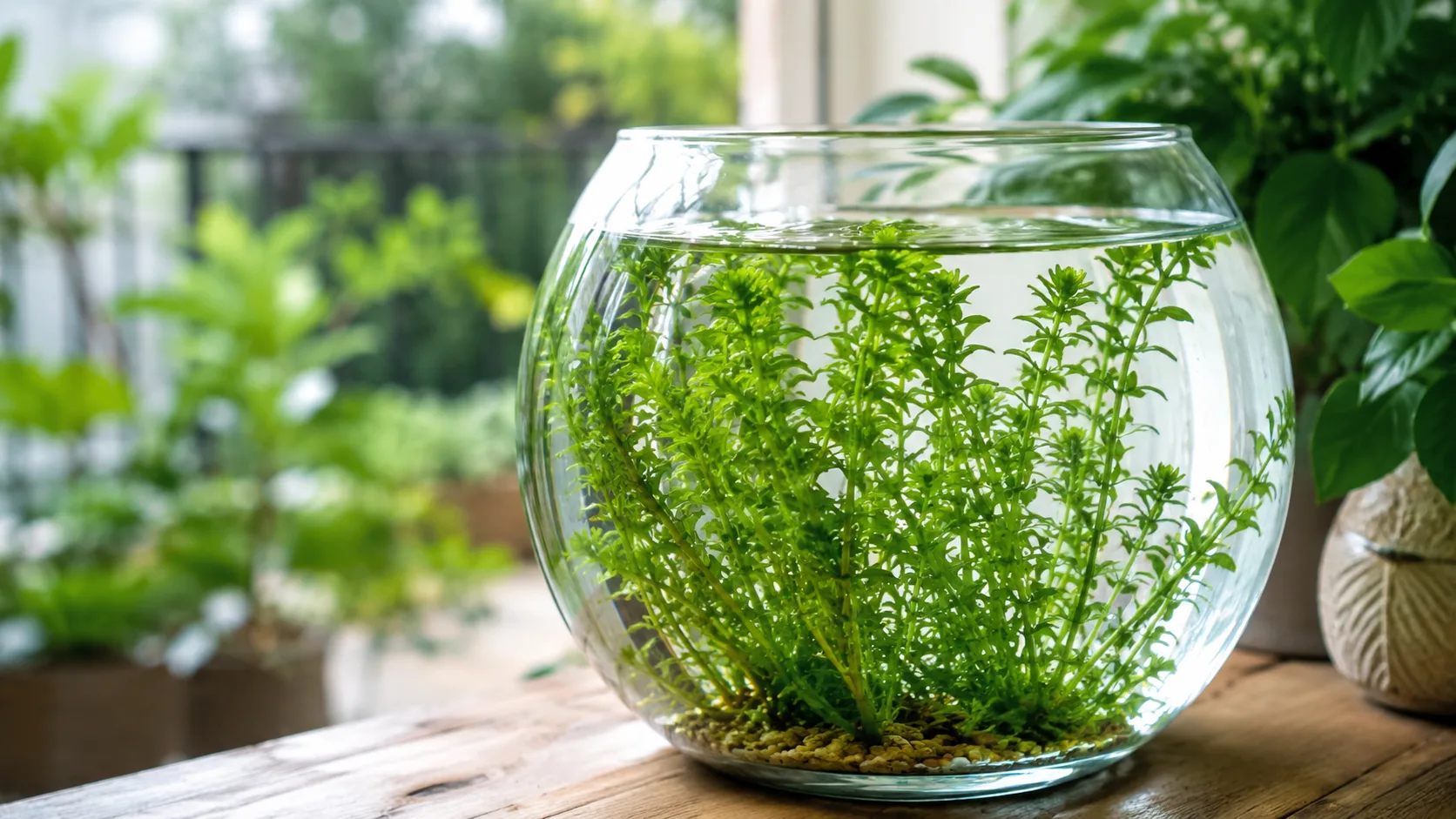
Anacharis Substrate & Thinning: Plant, Refresh, Dispose
Anacharis Substrate & Thinning: Plant, Refresh, Dispose
You searched for anacharis repotting and found advice about bigger pots and fresh soil. That logic belongs to houseplants, not to a submerged stem plant whose roots mostly hold it in place while the leaves drink from the water. Anacharis - correctly Egeria densa, often sold as Brazilian elodea or loosely as “elodea” - is a fast-growing column feeder in the family Hydrocharitaceae. The maintenance that actually replaces repotting is a monthly rhythm of planting or re-anchoring stems, thinning overgrown stands, light gravel refresh, and disposing of every cutting so fragments cannot reach local waterways. If you are new to the species, start with the Anacharis overview for tank basics; this page focuses on the refresh-and-replant workflow.
Taxonomy note: True Elodea species (such as Elodea canadensis) are different plants with similar aquarium care. What most U.S. shops label anacharis or Brazilian elodea is Egeria densa, a separate genus that is regulated as an invasive species in many states. The planting and disposal rules below apply specifically to Egeria densa.
Why Anacharis Does Not Get Repotted Like a Houseplant
Houseplant repotting solves root-bound nutrient uptake and exhausted potting mix. Anacharis does not work that way. Peer-reviewed work summarized by California water-quality authorities shows that E. densa can derive much of its nutrition from the water column, especially phosphorus, with sediment as a secondary source. In your tank that means the white roots gripping gravel are anchors, not the main feeding system. You can grow healthy anacharis floating in a bare-bottom breeding tank or weighted in a bunch - substrate feeds the plant far less than liquid nutrients and light do.
Column feeding and anchor roots
Anacharis produces roots from the stem base into substrate and additional roots from nodes along the stem in open water. Both root types help the plant stay put and supplement uptake, but neither demands rich aquasoil the way an Amazon sword or crypt does. Tropica lists Egeria densa as a low-light, low-CO₂ stem plant whose growth rate depends on available light and nutrition rather than substrate fertility. That biology is why swapping substrate “to feed the plant” is usually the wrong intervention.
What “repotting” means for stem plants
Translate repot into stem-plant terms and the job becomes clear: lift overgrown bunches, cut healthy tops above a node, replant those tops at the same depth, and discard yellowing lower sections. The “pot” is the same gravel or sand; you are refreshing the stand, not the medium. Tropica’s trimming guidance for stem plants describes exactly this cycle - cut the longest shoots above a bottom leaf, replant the off-cut, and let new shoots emerge from the trimmed stem. Substrate change enters the picture only when mulm, compaction, or a rescape demands it, not on a calendar.
A full aquasoil tear-out in an established planted tank is a different category of risk: disturbed sediment can release ammonia and uproot neighbors. For anacharis alone, managing the stems plus light surface vacuuming almost always beats a wholesale substrate swap.
Compare that to heavy root feeders such as Amazon swords (Echinodorus spp.), which genuinely benefit from periodic root-zone refresh and root tabs. Those plants draw most nutrition through buried roots; anacharis does the opposite. If your tank mixes both types, schedule substrate-heavy work around the swords and treat anacharis with thinning - not a shared “repot everything” day. Liquid dosing details live in the Anacharis fertilizer guide; light levels that drive the growth rate you are trimming back are covered in the Anacharis light guide.
Quick Substrate Reference (See Full Soil Guide)
Substrate still matters - as an anchoring system and stable bed for thin roots - even though anacharis does not need premium soil. The Anacharis soil guide compares grain sizes, sand caveats, and aquasoil trade-offs in full. On this refresh-focused page, use the summary below and follow the soil guide when you are choosing substrate for a new setup.
Fine gravel vs sand vs aquasoil - summary table
| Substrate | Grain / type | Best for anacharis anchoring | Notes |
|---|---|---|---|
| Fine gravel | 2–4 mm inert gravel | Default choice - grips stems, vacuums easily | Matches Tropica-style planting in commercial layouts; see soil guide |
| Sand | Fine pool-filter or aquarium sand | Works with deeper burial and weights | Compacts more than gravel; plant closer to 2 inches and hover-vacuum only |
| Aquasoil | Active nutrient substrates (ADA Amazonia, etc.) | Optional in mixed planted tanks | Tolerated but not required for a column feeder |
| Floating / bare bottom | None | Breeding tanks, turtle tubs, temporary grow-out | No refresh needed; thin floating mats instead |
Do not replant into ordinary potting soil or garden dirt - those break down underwater, foul water, and are irrelevant to submerged culture.
Planting and Anchoring Stems
Correct planting keeps anacharis rooted instead of floating to the surface within hours. The two steps that prevent most failures are stripping leaves from the buried section and keeping burial depth in the 1–2 inch range.
Stem prep and leaf stripping
Store bundles arrive with rubber bands or lead weights. Remove the band before planting - leaving it on traps moisture and causes the pinched section to rot. Separate stems, trim mushy ends, and strip leaves from the bottom 5 cm (about 2 inches) of each stem. Tropica instructs removing leaves from the lowest 5 cm before planting individual stems with space between them. Buried leaves decay in the anaerobic zone and rot travels up the thin stem into the anchor roots.
Depth, spacing, and weights
Push the bare section into substrate so 2.5–5 cm (1–2 inches) of stem is buried, with at least one node below the surface and the growing tip clearly above gravel. Space stems 3–5 cm (1–2 inches) apart in clusters of five to eight for a background wall. Stems that pop up usually need slightly deeper burial, finer gravel, or a temporary plant weight until white roots form - typically within one to two weeks under moderate light.
If you are replanting tops after a thinning session, use the same prep described in the Anacharis propagation guide. For ongoing cut timing and turtle-tank cleanup, see the Anacharis pruning guide - this page keeps only the signals and volume rules tied to refresh work.
Thinning Signals and Safe Volumes
Under good light and nutrition, anacharis can add several inches of length per week - Tropica notes rapid growth tied to light and nutrients, not a fixed calendar rate. Fast growth is why tanks feel “due for repotting” when the real issue is density, not root-bound substrate.
When to thin (signals list)
Four reliable signals mean it is time to thin this week:
- Stems reach the water surface and bend along the top glass.
- The canopy shades the substrate below into permanent dim light.
- Yellowing leaves stack on the lower half of multiple stems.
- Filter intakes or skimmers clog with floating fragments during routine maintenance.
Any one signal is a warning; two or more mean thin now. Remove roughly 25–30% of total mass per session, cutting just above a leaf node with sharp scissors. Sudden removal of most of the stand can swing nitrate, phosphate, and oxygen levels; gradual thinning protects parameters in heavily planted or heavily stocked tanks. Coordinate large thinning with a partial water change the same day - the Anacharis watering guide covers how water changes interact with debris removal.
Replanting Tops After Thinning
This is the closest anacharis comes to repotting. Save healthy upper sections, strip the bottom inch of leaves, and replant at the same 1–2 inch depth. Each top becomes an independent plant within one to two weeks when water quality and light are stable.
Why old bases fail
The rooted lower stem you pulled out almost never regrows into a bushy plant. Unlike some stem species that sprout vigorously from stumps, anacharis lower sections tend to stay bare and slowly decline. Beginners who leave old bases in gravel hoping for recovery usually remove ugly stems later anyway. Discard lower yellowed tissue; replant only firm green tops. In shallow tanks or bare-bottom setups, weighted bunches - four to six stems wrapped with a small lead weight - are a valid low-friction alternative to repeated gravel planting.
Refreshing Substrate in an Established Tank
Sometimes gravel itself needs attention: mulm under dense stands, surface crusting in turtle or goldfish tanks, or a rescape to finer gravel because sand compacted. This section is the page’s core “repotting equivalent” - refreshing the bed without tearing down the tank.
Decision guide - what to do this month:
| Situation | Action | Touch substrate? |
|---|---|---|
| Tall canopy, green lower stems, gravel looks clean | Thin and replant tops only | No |
| Surface debris, odor, mulm visible but stems healthy | Hover-vacuum one-third of floor per water change | Light - surface only |
| Sand compacting, crushed coral media, or rescape to new inert gravel | Partial reset in thirds over three weeks | Yes - targeted sections |
Light hover vacuuming
Standard planted-tank practice: hover the siphon 1–2 cm above the substrate, do not plunge it deep into the bed. Deep vacuuming strips beneficial bacteria, releases trapped gas from anaerobic pockets, and uproots shallow anchor roots. Rotate one-third to one-half of the substrate footprint per water change so nitrifying colonies stay intact. A turkey baster blasts debris from under dense stem clusters where a wide vacuum cannot fit without sucking up gravel.
Partial reset in thirds - week-by-week workflow
Full substrate replacement in a running tank is rarely worth the mini-cycle risk. Partial reset fits specific problems: switching compacted sand to 2–4 mm gravel, removing old pH-raising media, or cleaning a mulm-heavy front row under a wall of stems.
Worked example - 20-gallon tank, ~40 anacharis stems, mulm-heavy front third:
- Week 1: Thin 25% of mass first. Hover-vacuum the front third only. Remove the top inch of gravel in the front third with a cup, not a deep dig. Replace with rinsed fine gravel matching the soil guide spec. Replant five to eight healthy tops from the thinning session. Skip feeding day if you dose dry fertilizers.
- Week 2: Leave front alone to root. Hover-vacuum middle third; repeat shallow swap if that section was compacted. Do not disturb the front bed you just replanted.
- Week 3: Hover-vacuum back third. Final shallow swap if needed. By now front stems should show white root hairs at nodes.
Take the opportunity to divide overgrown bunches and plant only firm tops - the same prep as after major thinning. In turtle or goldfish tanks with heavy bioload, work smaller sections (one-quarter per week) and pair each session with a partial water change because waste loads spike faster when sediment is disturbed.
Parameter watch after disturbance
After any substrate work or heavy thinning, test ammonia and nitrite daily for three to five days in tanks under six months old or heavily stocked. Mulm release can produce a short ammonia blip even when you avoid a full mini-cycle. Persistent melting more than two weeks after replanting usually points to temperature, light, or water-quality stress rather than planting depth alone - stabilize conditions before trimming again.
Troubleshooting After Refresh
Stem rot at the base shows as black, mushy tissue where stem meets gravel. Causes include buried leaves, compacted sand, or stagnant flow trapping debris against the stem. Remove the affected stem, cut well above the rot line, replant the healthy top, and improve flow at the substrate line. If several stems rot together, lightly stir only the top gravel layer during a water change - never deep-vacuum the whole bed in one pass.
Melting after replanting - some older leaf drop in the first 7–14 days is normal acclimation. Persistent translucent melt beyond two weeks suggests ammonia, chloramine, or temperatures above the plant’s comfort zone. Extension guidance on Elodea densa notes the species prefers cool to moderate aquarium temperatures; prolonged warmth above roughly 25–28°C (77–82°F) can stress stems. Test water, partial change, and temporarily reduce photoperiod to 6–8 hours while roots establish.
Safe Disposal of Anacharis Trimmings
Disposal is not optional. Egeria densa is a regulated invasive species in multiple U.S. states. The Washington State Noxious Weed Control Board documents spread by vegetative fragments - any piece with nodes can establish in a waterway. Minnesota DNR prohibits releasing aquarium plants into public waters.
Home aquarium protocol:
- Bag all trimmings in a sealed plastic bag.
- Freeze the bag 24–72 hours to kill plant tissue.
- Place the unopened bag in household trash.
King County BMPs also allow drying plant material on land well away from water before compost or yard-waste disposal. Never flush trimmings, dump tank water into storm drains, or compost near ponds. Check your state natural-resources or agriculture department for local listings - search “Brazilian elodea” or Egeria densa on your state DNR or invasive-species site.
Monthly Maintenance Routine Checklist
Run this roughly every three to four weeks in a healthy tank, or every two weeks when growth is fast under bright light and regular fertilizer:
- Scan - walk the stand for the four thinning signals above; note whether gravel needs only surface cleaning or a deeper issue is developing.
- Thin - remove 25–30% of mass if two or more signals are present; bag trimmings immediately.
- Replant - strip and replant firm tops at 1–2 inch depth, or re-weight bunches in bare-bottom setups.
- Vacuum - hover one-third of the substrate during the scheduled water change; turkey-baster debris under dense clusters.
- Test - after any substrate disturbance, check ammonia and nitrite for three to five days in young or heavily stocked tanks.
- Dispose - freeze sealed bags 24–72 hours, then trash; never carry live fragments to ponds or storm drains.
Most keepers complete steps 1–4 and 6 in under thirty minutes once the routine is familiar.
Conclusion
Anacharis does not want a bigger pot - it wants a clear monthly routine you can finish in about thirty minutes: scan the stand for thinning signals, cut and replant healthy tops, hover-vacuum one section of gravel, and bag-freeze every cutting before trash day. Use fine 2–4 mm gravel or weighted bunches for anchoring, link out to the soil, pruning, and propagation guides for depth detail, and touch substrate deeply only when compaction or a rescape truly requires a partial reset in thirds. Dispose of every fragment responsibly - the invasive risk is real, and careful trash handling protects the waterways Anacharis / Elodea overview would otherwise invade.
When to use this page vs other Anacharis / Elodea guides
- Anacharis / Elodea overview - Start here for whole-plant context before deep-diving this topic.
- Anacharis / Elodea problems hub - Jump to symptom-specific fix guides when this care topic does not resolve the issue.
- Transplant Shock on Anacharis / Elodea - Escalate here when repotting adjustments are not enough.
- Root Rot on Anacharis / Elodea - Escalate here when repotting adjustments are not enough.