Anacharis Substrate: Best Aquarium Gravel and How to Plant
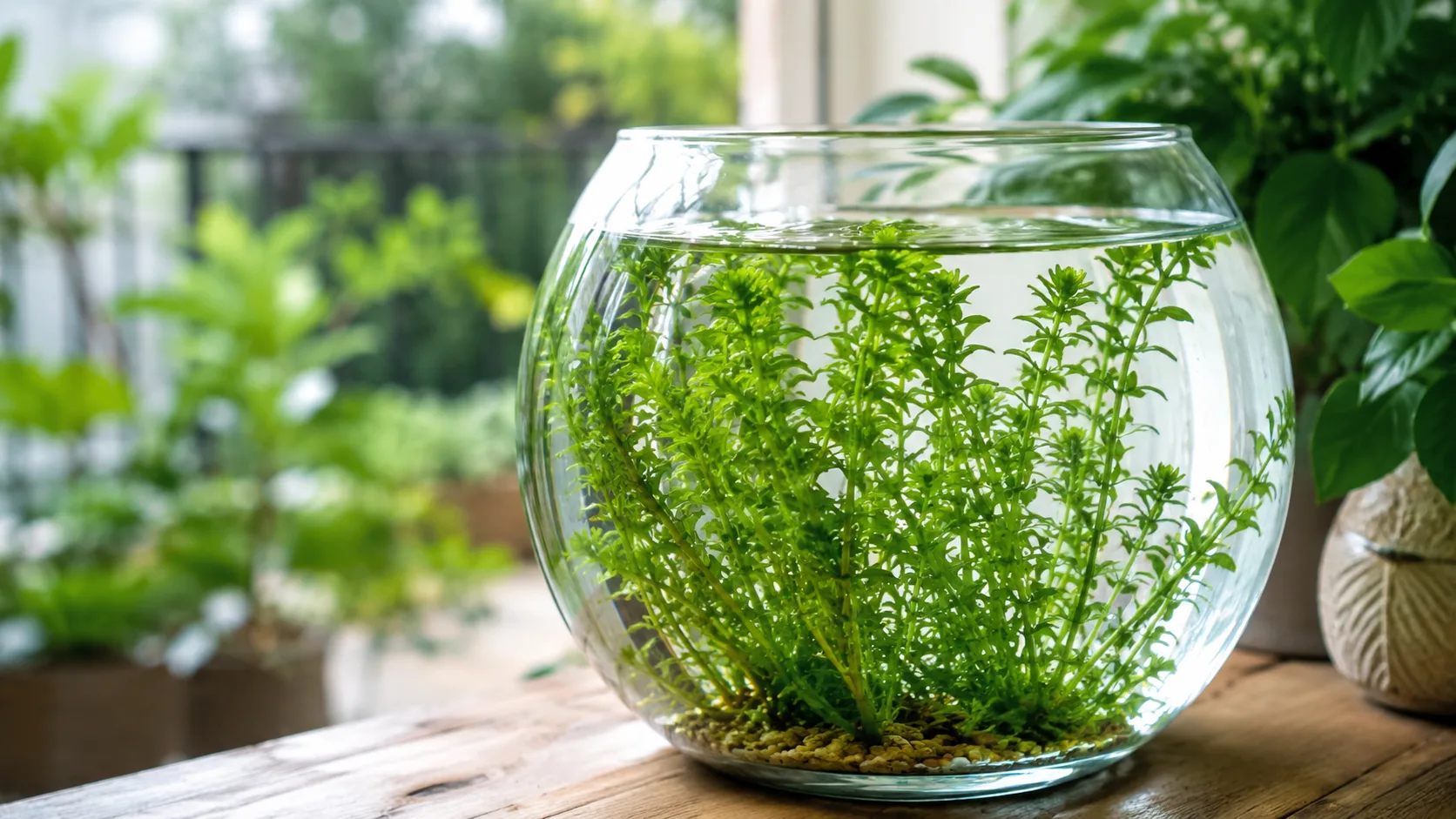
Anacharis Substrate: Best Aquarium Gravel and How to Plant It
Anacharis Substrate: Best Aquarium Gravel and How to Plant It
Anacharis is one of the easiest aquarium plants to grow, but the wrong substrate or sloppy planting will make it float, rot, or melt at the base within a week. The good news: choosing an anacharis substrate is genuinely simple once you understand how the plant feeds. This guide walks through the best gravel size, the right planting depth, the anchoring techniques that actually work, and the moments when skipping substrate and floating the plant is the smarter call.
Why anacharis substrate is a simpler decision than you think
Anacharis (Egeria densa) is a South American stem plant that’s been in the aquarium trade for over a century. It’s sold under half a dozen names - Brazilian waterweed, elodea, large-flowered waterweed, Anacharis elodea - and is sometimes confused with true Elodea, but the care principles are essentially the same. What makes the substrate decision easier than for most plants is that anacharis is overwhelmingly a water-column feeder, not a root feeder. That single biological fact collapses most of the choices a planted-tank hobbyist would normally agonize over.
What anacharis actually does with its roots
Anacharis develops two distinct types of white roots. The first set grows from the base of the stem down into the substrate and is largely structural - its main job is to anchor the plant. The second set grows from nodes along the stem itself, dangling in the water column, and these are the roots that do the heavy lifting on nutrient absorption. This dual-root system is well documented in hobby literature and matches what peer-reviewed work on related species has shown: stem plants often have a relatively small root biomass that nonetheless supports rapid growth.
In practice, this means you can grow healthy anacharis in a tank with no substrate at all, as long as the water column is reasonably clean and provides dissolved nutrients. Many cold-water and goldfish keepers rely on this fact to keep stems from being uprooted by digging fish.
The water-column feeder advantage
A 2002 study by Feijoó and colleagues, published in Limnetica, looked specifically at nutrient absorption by Egeria densa and concluded that the water column can be the main source of nutrients for the species, especially for phosphorus, which the plant absorbs rapidly from water. The Washington State Noxious Weed Control Board written findings on Egeria densa echo the same point, citing Yarrow et al. 2009: “Various studies show E. densa absorbs much of its nutrient requirements from the water.” The plant is flexible - it can also pull nutrients from the sediment - but it doesn’t need a rich substrate to thrive.
For substrate choice, that means an inert, well-graded fine gravel gives you nearly all the benefit of a premium aquasoil at a fraction of the cost. The remaining sections of this article will explain exactly which grain size, what depth, and what planting method get the most out of whichever substrate you choose.
Fine gravel vs sand vs aquasoil: choosing the right substrate
Anacharis tolerates a wide range of substrates, but they’re not all equal in practice. Here’s how the four common options stack up.
Fine gravel (2–4 mm): the default winner
Fine aquarium gravel in the 2–4 mm grain range is the substrate most experienced hobbyists reach for first. The grains are small enough to grip the slender base of an anacharis stem, large enough to avoid compacting around the roots, and inert enough that they won’t alter your water chemistry. Minnesota DNR notes that Brazilian elodea is commonly sold by the aquarium trade and must not be released into natural waterways.
Fine gravel also plays nicely with other plants. You can carpet with dwarf sagittaria or hairgrass on top of it, add a foreground of monte carlo, or keep things simple with a single-species background of anacharis. It cleans up well with a gravel vacuum and won’t trap anaerobic pockets the way deep sand can.
Pool-filter sand: workable with caveats
Sand is the second most common option. Pool-filter sand in the 0.4–0.8 mm range is a budget favorite and creates a clean, natural look. Anacharis can grow in sand, and many hobbyists report good results, but there are two real caveats. First, very fine sand compacts over time, which can limit oxygen flow around the roots. Second, sand doesn’t grip stems as firmly as gravel, so freshly planted anacharis tends to drift up more often in sand-only tanks.
If you do use sand, plant the stems slightly deeper (closer to 2 inches) and consider mixing in a thin top layer of fine gravel directly where the stems go. This is a common workaround that gets you the natural look of sand with the grip of gravel right where it matters.
Aquasoil (ADA Amazonia, Fluval Stratum): premium but not required
Active aquasoils like ADA Amazonia or Fluval Stratum are nutrient-rich, pH-buffering substrates designed for demanding plants. They will grow anacharis just fine, and stems planted in active soil sometimes develop slightly denser root systems. The catch is that the benefit is marginal for a water-column feeder - you’re paying for nutrients the plant barely uses. If you’re already running aquasoil for carpeting plants or heavy root feeders, anacharis will thrive in it. If you’re setting up a tank just for anacharis and a few easy companions, aquasoil is overkill.
Coarse gravel above 5 mm: skip it
Coarse gravel, pebble, and crushed lava rock substrates are popular in cichlid and African biotope tanks, but they’re a poor match for anacharis. Grains above 5 mm don’t grip the slender stem base, so newly planted stems pop up within hours. The gaps between large grains also expose bare roots, which can dry or break. If your tank already has coarse gravel, plant anacharis in a cluster with plant weights, or just float it.
Grain size: why 2–4 mm wins
If you remember one number from this guide, make it 2–4 mm. That’s the grain size that gives you the best balance of stem grip, root oxygenation, and ease of maintenance. Below 2 mm, grains pack too tightly and the substrate can become anaerobic in deep beds. Above 4 mm, gaps open up between grains and the stem base can’t find purchase.
When you’re shopping, look for products labeled “fine” or “small” aquarium gravel, and check the actual grain size in the product description. Some “fine” gravels run 3–6 mm, which is at the edge of acceptable for anacharis. If the bag doesn’t specify grain size, choose a different product. Pool-filter sand labeled 20-grade is around 0.4–0.8 mm and is a good companion if you want a sand base with a gravel top layer for stem grip.
Substrate depth: how much you actually need
Anacharis doesn’t need a deep substrate bed. A 1.5 to 2 inch (4–5 cm) layer is enough to anchor stems and let them develop modest root systems. Most planted-tank hobbyists run 2 to 3 inches of substrate as a default, and anacharis is perfectly happy in that range too. What you want to avoid is going below 1 inch - there isn’t enough material to hold a stem upright, and any burrowing fish (loaches, cichlids, goldfish) will uproot it instantly.
If you’re keeping anacharis with carpeting plants in front, the typical 2–3 inch substrate in the foreground will naturally extend to 2+ inches in the background where anacharis lives. There’s no need to create a sloped or terraced bed; a flat, even substrate is fine and easier to vacuum.
Preparing anacharis stems before planting
Most anacharis arrives from the shop in a bundle held together with a rubber band, sometimes with a lead weight at the base. The first step - and the one most beginners skip - is to remove the rubber band before planting. Planting the bundle with the band still in place traps moisture against the stem and causes the section below the band to die and rot, which then travels up the stem and kills the rest of the plant.
Once the band is off, separate the stems and inspect each one. Trim off any cracked, mushy, or browned sections with clean scissors. Then strip the leaves from the bottom 1 to 2 inches of each stem. Leaves buried in the substrate will decay in the anaerobic lower layer, and the rot can spread up the stem. Stripping them off gives you a clean bare section to bury. A quick rinse in dechlorinated water also helps wash off any hitchhiker snails, planaria, or micro-worms that can ride in on store-bought plants.
Planting depth: 1–2 inches, no more
The standard recommendation across aquarium hobby publications - and the one that matches what Tropica’s product guide describes - is to bury the bare lower section of each stem about 1 to 2 inches (2.5–5 cm) into the substrate. Less than an inch and the stem doesn’t have enough grip, so it floats. More than 2 inches and you risk burying stem nodes that need light and water flow to stay healthy.
A useful technique is to use aquascaping tweezers. Grab the bare end of the stem, push it straight down into the gravel until the leafy portion is just above the substrate surface, then release and gently press the gravel around the base. Tweezers give you control that fingers can’t, especially in deeper tanks, and they keep the stem from snapping.
If you’re planting many stems at once - and you should, since anacharis looks best in clusters of 5 to 8 - work in rows. Space each stem about 1 inch (2.5 cm) apart in the back of the tank. Crowding them closer leads to lower-leaf shading and the kind of melting that looks like a substrate problem but is actually a light problem.
Leave the growing tip above the substrate
This is a separate point because it’s the most common mistake beginners make, and it isn’t covered in most generic substrate guides. The growing tip - the top inch or two of leafy stem - must always stay above the substrate. Burying the tip buries the apical meristem, the actively growing point of the plant. Buried tips rot, and once rot sets in, it travels down the stem.
When you plant, the visible line between bare stem and leafy stem should sit roughly at the substrate surface, with a few leaves and the tip clearly above the gravel. If you’ve stripped more leaves than you needed to and the bare section is too long, trim the bare end rather than burying extra stem.
Spacing, orientation, and where to place anacharis in the tank
Anacharis is a background plant in nearly every aquascape, and for good reason. It grows fast, it gets tall (often 16–40 inches / 40–100 cm in good light, per invasive-species profiles), and it tends to arch across the surface once it hits the top of the tank. Planting it in the foreground blocks your view. Planting it in the midground creates a wall of green that hides anything behind it.
A practical layout: stagger the back row with the tallest stems in the rear corners, slightly shorter stems in the middle, and pull the front of the cluster forward by an inch or two so the planting forms a gentle curve rather than a flat line. Cluster 5 to 8 stems per “clump” with about 1 inch between stems inside the clump, and leave 3 to 4 inches between clumps. This gives each stem enough light to grow without the cluster collapsing into a tangled mat.
If you’re using anacharis in a breeding tank, dense clusters matter more than aesthetics. A wall of stems in the back third of the tank gives fry and shrimp an instant hideout and gives egg-scatterers somewhere to drop their spawn.
Fixing the floating-stem problem
Floating stems after planting is the single most common anacharis complaint, and it has a small set of reliable fixes. Try them in order:
- Replant deeper. Most floating stems were planted at less than 1 inch. Pull them up, strip any rotting lower leaves, and re-bury at the full 2 inches.
- Use a plant weight. Lead strips, ceramic rings, or purpose-made aquarium plant weights can be wrapped around the bare lower stem to hold it down until the roots take over. This is the most reliable fix.
- Wedge stems between hardscape. Rocks, driftwood, and ceramic décor can pin a stem in place without weights. Lean the bare end against the hardscape and press gravel around it.
- Switch to a finer substrate. If you’re using coarse gravel, that’s the underlying problem. Either replace it or use plant weights.
- Float the stem instead. Sometimes the cleanest fix is to admit the substrate isn’t going to hold the plant and to grow it as a floater. Floating anacharis grows faster than planted anacharis, so this is rarely a downgrade.
Sand: workable, with caveats
Sand deserves its own short section because it’s the most common alternative to gravel and the one that catches hobbyists off guard. Anacharis will grow in sand, including fine pool-filter sand, but you have to manage two real risks. Compaction is the first: very fine sand packs down over time, especially under the weight of a deep sand bed, and that limits oxygen reaching the roots. The plant can survive low-oxygen roots for a while, but growth slows and the lower stem may darken. Root tabs in sand can also create anaerobic gas pockets as they break down, which is another reason to dose the water column instead.
The second risk is stem grip. Sand particles shift around the base of a stem more easily than gravel, so freshly planted stems tend to drift. Plant 2 inches deep in sand, not 1, and use plant weights for the first week or two. After roots establish, the plant stays down on its own.
A useful hybrid layout is a sand foreground (for the natural look and for sand-sifting fish) with a strip of fine gravel in the back third (for stem plants like anacharis). This is a common aquascape pattern and works in both freshwater community tanks and goldfish setups.
Aquasoil vs gravel: a side-by-side comparison
| Factor | Fine gravel (2–4 mm) | Active aquasoil (Amazonia, Stratum) |
|---|---|---|
| Cost per pound | Low | High |
| pH buffering | None (inert) | Mildly acidic |
| Nutrient release | None | 6–12+ months |
| Stem grip | Excellent | Excellent |
| Root oxygenation | Good | Good if not compacted |
| Benefit to anacharis specifically | Sufficient | Marginal gain |
| Tank-mate friendliness | Universal | Best for soft-water plant setups |
| Replacement interval | Years | 1–3 years |
For a tank built around anacharis and other easy stem plants, fine gravel is the better value. For a high-tech planted tank with carpeting plants and heavy root feeders, aquasoil is already in play and anacharis will simply use it.
Should you use root tabs with anacharis?
Short answer: no, not for the anacharis itself. Anacharis is a water-column feeder, and the established guidance is that root tabs are for heavy root feeders like Amazon swords, Cryptocoryne, and Vallisneria. Multiple hobby publications list anacharis explicitly in the “doesn’t need root tabs” category. If you’re running a comprehensive liquid fertilizer (an all-in-one or a nitrogen-phosphorus-potassium plus micros dosing routine), the anacharis will absorb what it needs through its leaves and stem roots from the water column.
The one case where you might consider a root tab under an anacharis cluster is if the tank also has heavy root feeders nearby and you’re dosing them anyway. Even then, the tab is for the sword or the crypt, not for the anacharis.
Floating anacharis: when skipping substrate is the better move
Floating anacharis isn’t a compromise - in many setups, it’s the better choice. Floating stems grow faster because they have direct access to atmospheric CO2 and stronger light at the surface. They also create a natural dimming layer for shy fish and a top-water hide for fry. The Washington State Noxious Weed Control Board notes that Egeria densa “forms dense mats” at the surface in its invasive range, which is exactly the behavior many hobbyists want in a breeding or quarantine tank.
The substrate-free methods worth knowing:
- Pure floater. Drop stems on the surface and let them drift. They develop long, dangly water-column roots within a week.
- Weighted bunch. Wrap the base of a small bundle with a lead strip or ceramic weight and lay it on a bare-bottom tank. Roots grow down and across the bottom, but the bundle is easily moved for cleaning.
- Mesh basket or egg crate. Suspend stems in a plastic mesh above the substrate. This is common in shrimp tanks and breeding setups.
- Suction-cup holder. Glass-mounted plant holders let you position a “planted” cluster on the back wall of the tank without any substrate at all.
Floating anacharis is also the right call in quarantine and hospital tanks, where you don’t want to commit to a substrate for a temporary setup.
Common substrate mistakes that kill anacharis
A short list of errors that show up in nearly every “my anacharis melted” thread:
- Planting with the rubber band still on. The trapped section rots and the rot climbs the stem.
- Burying the growing tip. Buried apical growth rots within days. Keep the leafy tip above the substrate.
- Using coarse gravel above 5 mm. Stems can’t anchor and pop up immediately.
- Burying the leaves with the stem. Stripped leaves rot in the substrate. Always strip the lower 1–2 inches of leaves before planting.
- Compacting sand over the roots. Roots need some oxygen flow. Don’t press the sand down hard around the stem base.
- Adding root tabs to “fix” slow growth. Slow growth is almost always a light or CO2 issue, not a substrate issue. Anacharis is one of the least root-dependent aquarium plants.
- Planting in deep shade under floating plants. Substrate-planted anacharis needs light to feed itself. If the surface is choked with floaters, lower leaves yellow and drop.
Anacharis substrate in pond and outdoor setups
Outdoor ponds and tub gardens change the substrate equation. In a pond, anacharis often anchors itself in the muddy bottom and grows wild through summer. It can also be weighted in bunches and dropped into a pond where it will root into whatever sediment is present. Most pond keepers don’t bother with aquarium-grade gravel in a backyard pond - the plant is too vigorous to care.
If you’re growing anacharis in a patio container or a small tub, use 2 inches of rinsed pea gravel or smooth river gravel in the 3–6 mm range. Anything finer tends to cloud the water when fish or frogs disturb the bottom. The plant will root into the gravel in a couple of weeks and grow up to the surface.
One important caveat for outdoor use in parts of North America: Egeria densa is a regulated invasive species in several U.S. states and in parts of Australia and New Zealand. The Washington State Noxious Weed Control Board classifies it as a noxious weed, and several other states list it as well. Never dispose of anacharis by dumping pond or tank water into natural waterways. Bag it and trash it, or compost it in a sealed system away from storm drains.
Troubleshooting: yellowing, melting, and floating stems
Most anacharis problems look like substrate problems but aren’t. Here’s a quick diagnostic:
- Floating stems right after planting. Almost always planting depth was too shallow, or the substrate is too coarse. Replant at 2 inches deep or use a plant weight.
- Yellow lower leaves, green top. Light problem. The lower leaves are shaded by upper growth. Trim the top of the stems and the lower leaves will recover.
- Melting (clear, mushy leaves) within a week of planting. Usually a transition melt caused by a sudden change in water parameters (pH, hardness, temperature). Stable tanks rarely melt anacharis. The plant usually recovers if new growth is firm and green.
- Slow growth despite good light. Could be a CO2 limitation in a high-tech tank with no surface gas exchange. Floating anacharis often outgrows planted anacharis in the same tank for this reason.
- Browning at the base of an otherwise healthy stem. Rot from a buried leaf or from the rubber band still being in place. Trim below the rot and replant the healthy top.
- Stems uprooted by digging fish. Either switch to floating, use plant weights, or accept that you’ll be replanting regularly. Goldfish and large cichlids are the usual suspects.
Conclusion
Anacharis substrate choice is a problem only if you make it one. Pick fine aquarium gravel in the 2–4 mm grain size, lay it down 1.5 to 2 inches deep, strip the lower leaves from each stem, bury the bare end 1 to 2 inches while keeping the growing tip above the substrate, and space stems about an inch apart in clusters of five to eight. That’s the entire recipe. The plant does most of the work from there, feeding primarily from the water column, anchoring lightly in the gravel, and growing fast enough that small mistakes get outgrown in a week.
If you want a sand look, run sand in the foreground and a strip of fine gravel in the back. If you’re running aquasoil for other plants, anacharis will use it but won’t repay the cost. If your substrate is too coarse to grip the stems, skip the substrate entirely and float the plant - that’s often the fastest, most reliable setup. The substrate is a tool for anchoring, not a feeding source, and once you treat it that way, choosing and using an anacharis substrate becomes the easiest decision in the tank.
When to use this page vs other Anacharis / Elodea guides
- Anacharis / Elodea overview - Start here for whole-plant context before deep-diving this topic.
- Anacharis / Elodea problems hub - Jump to symptom-specific fix guides when this care topic does not resolve the issue.
- Root Rot on Anacharis / Elodea - Escalate here when soil adjustments are not enough.
Related Anacharis / Elodea guides
- Anacharis / Elodea overview
- Anacharis / Elodea watering
- Anacharis / Elodea light
- Anacharis / Elodea propagation
- Anacharis / Elodea fertilizer
- Anacharis / Elodea repotting
- Root Rot on Anacharis / Elodea
- Anacharis / Elodea problems
Related tool
Try the Soil Mix Calculator with anacharis pre-selected to estimate needs for your setup.