Root Rot on Anacharis / Elodea: Causes, Checks & Fixes
Quick answer
Root rot on Anacharis / Elodea usually means crown or anchor-point decay in anaerobic substrate, not classic houseplant root rot. First step: Pull mushy anchor sections, trim to firm stem, and float or replant in clean gravel with flow.
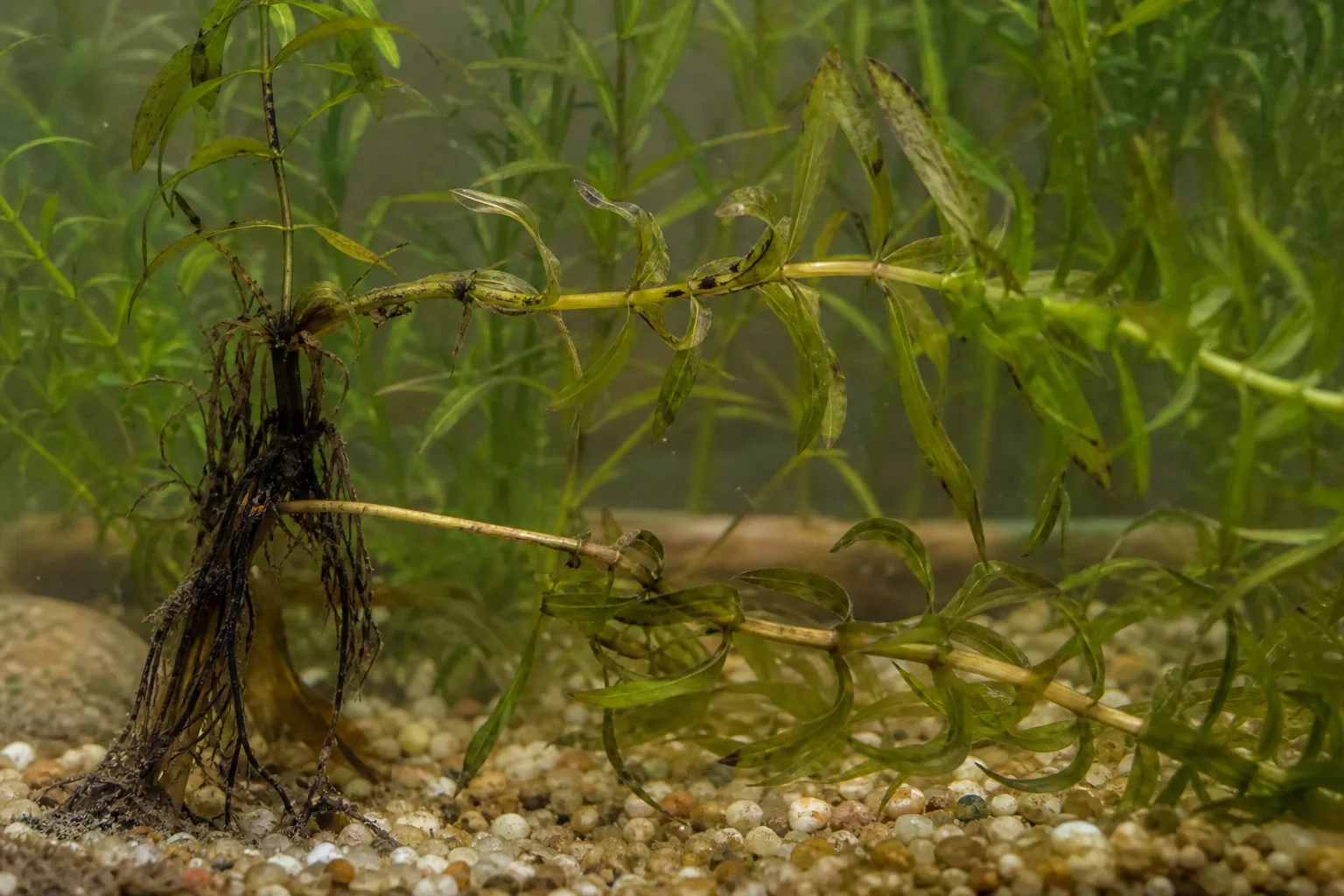
Root Rot on Anacharis / Elodea: Causes, Checks & Fixes
This guide covers root rot on Anacharis / Elodea. See also the general Root Rot guide, watering, and light pages for this plant.
Root Rot on Anacharis / Elodea: Causes, Checks & Fixes
Quick answer
Root rot on Anacharis (Egeria densa) is anchor-point decay in anaerobic substrate-not soggy houseplant potting mix. Black mush where the stem meets gravel, stems that detach with a slimy tug, and sour odor from the planting pocket are the hallmarks.
First step: pull mushy anchor sections, trim back to firm green stem, and float or replant shallowly in rinsed coarse gravel with moderate flow. Because Anacharis feeds primarily from the water column, firm stems can regrow white adventitious roots after anchor loss if you remove decay before it climbs the internodes.
This guide is for submerged aquarium and turtle-tank culture-not terrestrial houseplant pots. For species baselines, see the Anacharis overview. For substrate grain size and planting depth, see the Anacharis soil guide. For mush along buried internodes rather than at the anchor point, see stem rot. For cloudy foul water melting multiple stems tank-wide, see overwatering.
Why Anacharis “root rot” is not houseplant root rot
Terrestrial root-rot articles tell you to dry out soil and improve pot drainage. That advice will kill submerged Egeria densa. Anacharis is a fully submerged aquatic stem plant that grows as a fast vegetative spreader and absorbs most nutrients through leaves and stems-not through anchor roots the way a potted fern does.
On Anacharis, what hobbyists call “root rot” is almost always crown or anchor-point decay: the lowest section of stem and any white adventitious roots in gravel turn black, soft, and foul-smelling. The trigger is local-anaerobic pockets in substrate, planting too deep with buried leaves, or detritus rotting in a tight planting pocket-not excess water volume in a pot.
Key insight for recovery: Because column feeding sustains the plant, you can salvage firm stems by floating them until new white roots form at nodes, even when every anchor root is gone. Mushy stem tissue above the anchor cannot recover; firm tissue can.
What root rot looks like on Anacharis - anchor-point symptoms
Healthy planted Anacharis shows firm green stems with white or pale adventitious roots gripping gravel. Anchor rot shows a different pattern at the substrate line:
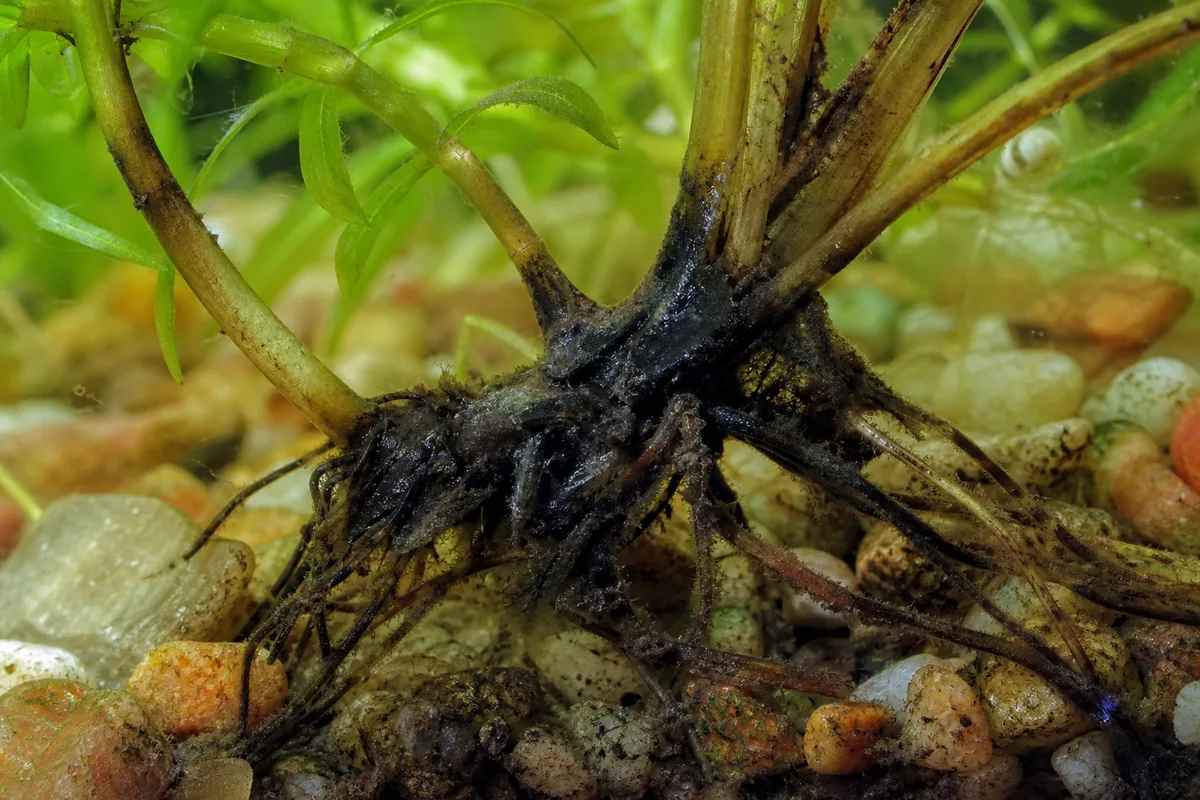
Root Rot symptoms on Anacharis / Elodea - compare with healthy tissue on the same plant.
| What you see | What it usually means |
|---|---|
| Black or brown mush at the gravel-stem junction | Anaerobic substrate or buried whorls rotting at anchor |
| Stem detaches with slimy texture when tugged | Anchor tissue failed; rot may climb if left in tank |
| Sour or rotten-egg odor when gravel is disturbed | Hydrogen sulfide from anaerobic bacteria in substrate |
| White roots turning brown, black, or gelatinous | Root zone oxygen failure-not normal gravel staining |
| Lower whorls slimy while tips stay green briefly | Early anchor rot; saveable if trimmed and floated promptly |
Compare newest tip growth first. Firm green tips with mush only at the base mean the cutting is saveable. Translucent mush climbing into firm internodes within 48–72 hours is urgent-trim higher and test water parameters.
Distinction from acclimation melt: New-purchase transition melt often happens in clear water with firm stems and only the lowest one or two whorls affected-no sour substrate odor. Persistent foul smell at the gravel line, black mush at the anchor, or detachment when lightly tugged points to anchor rot, not ordinary acclimation. See transplant shock for clear-water week-one melt.
Root rot vs stem rot vs overwatering vs damaged roots
Aquarium keepers often use houseplant problem labels for different underwater failures. On Egeria densa, each maps to a different mechanism and first fix:
| Symptom label | What it actually means | Key pattern | Where to go |
|---|---|---|---|
| Root rot (this page) | Anchor-point decay in anaerobic or debris-filled substrate | Black mush at gravel line; sour pocket odor; detaching base | This page |
| Stem rot | Decay along buried or constricted internodes | Mid-stem mush; rubber-band ring; buried whorls above anchor | Stem rot |
| Overwatering | Stale organic-heavy water, poor flow | Cloudy foul water; melt on multiple stems tank-wide | Overwatering |
| Damaged roots | Mechanical crush, failed rooting, or rough handling | Torn or absent roots after replanting; firm stem above | Damaged roots |
| Acclimation melt | Post-purchase transition in clear water | Lower whorl loss week one; no substrate odor | Transplant shock |
If mush is only at the substrate line with sour gravel odor and water is otherwise clear, stay on this page. If cloudy water and tank-wide melt accompany anchor failure, also read overwatering-organic overload and anaerobic pockets often overlap. If mush sits mid-stem with a band constriction mark, switch to stem rot.
Why Anacharis gets anchor-point rot
Anaerobic substrate and compaction
Fine sand below 1 mm compacts over time, restricting water flow and oxygen to the root zone. Anaerobic bacteria then produce hydrogen sulfide-a characteristic rotten-egg smell when you disturb the gravel. Coarse gravel in the 2–4 mm range allows better circulation around adventitious roots than compacted sand. Substrate deeper than about 7 cm without adequate grain size increases anaerobic risk in planted zones.
Planting too deep with buried leaves
Anacharis leaves decompose quickly when buried. Rot starts at the lowest submerged whorls and attacks the anchor before adventitious roots establish. Bury only the bare bottom 2.5–5 cm after stripping lower leaves-going deeper buries whorls and creates the anaerobic pocket that kills anchor tissue. Full planting guidance is on the Anacharis soil guide.
Detritus trapped in planting pockets
Melting whorls, fish waste, and uneaten food that collect where stems cluster fuel bacterial decay at the anchor. In turtle tubs and heavily fed community tanks, detritus buildup is one of the most common week-two triggers after an otherwise healthy start. Vacuum planting pockets during partial water changes and thin dense bunches before lower stems go soft.
New-tank ammonia and copper overlap
Anacharis absorbs dissolved nitrogen during cycling, but detectable ammonia still injures anchor tissue in new stocked tanks. Ammonia toxicity risk increases with pH and temperature (US EPA aquatic life criteria). Separately, copper-based medications and herbicides used for ich, algae, or invasive control dissolve Egeria densa tissue within 24–48 hours-anchor mush after dosing may be chemical injury, not substrate rot alone. See chemical damage when melt followed treatment and water is clear.
Turtle-tank bioload
Turtles uproot soft stems, crush whorls at the substrate line, and add waste that fuels decay on damaged anchor tissue. Undersized filtration lets organics accumulate against planted stems. Review feeding level and filter capacity on the Anacharis watering guide when anchor rot appears in turtle setups.
How to confirm the cause
Work through this order before stacking treatments:
- Anchor-point inspection - Pull one affected stem gently. Black mush, slimy detachment, or sour odor at the gravel line confirms anchor rot.
- Substrate smell and color - Disturb the planting pocket lightly. Rotten-egg odor or black patches in gravel point to anaerobic substrate; compost-like smell without stem mush may be normal breakdown.
- Planting depth check - Were lower whorls buried? Is gravel finer than 2 mm or deeper than 5–7 cm in the planting zone?
- Water clarity and tests - Cloudy foul water suggests organic overload (overwatering). Test ammonia in tanks under three weeks old or after large die-off.
- Recent medication or temperature changes - Copper dose within 48 hours or cold change water narrows cause toward chemical or shock injury.
- Newest tip growth - Firm green tips with anchor-only mush = saveable. Translucent climbing tips = urgent escalation.
Cause-to-first-fix matrix
| Likely cause | Best first check | First fix |
|---|---|---|
| Anaerobic gravel pocket | Sour odor when gravel disturbed; black substrate patches | Remove mushy stems; vacuum detritus; float firm tops; replant in rinsed 2–4 mm gravel |
| Planted too deep | Buried whorls visible when pulled; mush at lowest leaves | Trim to firm tissue; strip lower leaves; bury bare stem only 2.5–5 cm |
| Detritus in planting pocket | Mulm piled at stem bases; tight bunch | Thin stems to 3–5 cm spacing; vacuum pocket; trim decay |
| New-tank ammonia spike | Tank under 3 weeks; detectable ammonia | Remove dead tissue; 25–30% partial change; reduce stocking |
| Copper or medication dose | Treatment within last 48 hours | Quarantine firm tops in matched water; check labels |
| Acclimation melt (lookalike) | Clear water; firm stems; week-one post-purchase | Float and wait; see transplant shock |
First fix for Anacharis root rot
Pull mushy anchor sections, trim back to the last firm green node, and float firm stems in tank water until white roots form-then replant shallowly in rinsed coarse gravel or keep floating.
This single protocol addresses the most common driver-decayed anchor tissue in anaerobic substrate-without stacking unrelated treatments. During the first 24 hours:
- Remove every stem with black mush at the anchor; trim 1–2 cm above the last firm green whorl
- Strip the bottom 2.5–5 cm of leaves from salvage stems
- Float firm cuttings in the display tank or a matched quarantine tub with moderate light
- Vacuum detritus from the planting pocket; gently stir the top gravel layer if odor is present
- Do not dose fertilizer, medication, or liquid carbon while diagnosing
- Do not plant in fertilizer-rich potting soil-use inert aquarium gravel or floating culture only
Wait seven days before adding secondary treatments so you can judge whether new white roots and submerged tips are forming. Float-to-root technique is detailed on the Anacharis propagation guide.
Step-by-step recovery by scenario
Anaerobic substrate or detritus pocket
- Remove all stems with mushy anchors; bag trimmings for trash-never outdoor waterways.
- Vacuum detritus from the planting zone; lightly stir the top 1–2 cm of gravel to release trapped gas without deep-disturbing the whole bed.
- Rinse or replace the top gravel layer if black anaerobic patches persist.
- Float firm cuttings until white adventitious roots appear at nodes (typically five to ten days).
- Replant individually in rinsed 2–4 mm gravel, burying bare stems 2.5–5 cm and spacing 3–5 cm apart per the soil guide.
New-tank cycling ammonia spike
- Test ammonia before assuming substrate rot alone-anchor mush plus detectable ammonia in a stocked tank needs water correction.
- Remove all decaying plant tissue immediately; decaying leaves add ammonia load.
- Perform a 25–30% partial change with dechlorinated water matched to tank temperature (see the watering guide).
- Float salvage stems until parameters stabilize; replant only after roots reform and ammonia stays undetectable.
- Hold stocking light during the first three weeks; Anacharis helps scrub nitrogen but cannot survive sustained toxic levels.
Copper or medication exposure
- Identify active ingredients on recent ich, algae, or parasite treatments.
- Move firm stem tops to a separate tub of matched tank water if copper was dosed.
- Trim all translucent sections; do not return mush to the display tank.
- Compare timelines with chemical damage guidance before re-dosing.
- For turtle tanks on medication, confirm treatments are labeled safe for aquatic plants and chelonians-when in doubt, float plants in a separate matched tub during treatment.
When to float all stems vs salvage cuttings only
| Situation | Action |
|---|---|
| Anchor mush only; firm green stem above | Trim base; float until roots form; shallow replant |
| Multiple stems; sour gravel; clear water | Remove all from pocket; vacuum substrate; float all firm tops |
| Entire base translucent; mush climbing internodes | Save only the top 10–15 cm firm cutting per stem |
| Tank-wide melt with cloudy foul water | Address water quality first per overwatering; float salvage tops separately |
Recovery timeline
- Mild anaerobic pocket: odor often fades within 48–72 hours after detritus removal and stem float; new white roots commonly appear in five to ten days.
- Established-tank anchor rot: allow one to two weeks once gravel is cleaned and stems are replanted shallowly; lower whorls rarely re-green-judge by firm stems and new submerged tips.
- Acclimation melt overlap: new purchases in clear water commonly need seven to fourteen days for submerged whorls-do not confuse with foul-substrate emergency.
- Mushy translucence after copper or severe ammonia: save only firm cuttings; badly affected anchor tissue does not turn healthy again.
Black or slimy tissue does not recover cosmetically. Success means firm stems, clean new tips, visible white roots at nodes, and no spreading mush within seven to fourteen days.
What not to do
- Do not dose terrestrial pesticides or fungicides into aquarium water.
- Do not leave melting anchor tissue decaying in the gravel-it fuels the next anaerobic pocket.
- Do not add heavy fertilizer to foul substrate or cloudy water.
- Do not bury leafy whorls or plant deeper than 5 cm hoping stems will anchor faster.
- Do not deep-vacuum anaerobic gravel in one aggressive pass-stir gently and change water to dilute released gases.
- Do not plant in fertilizer-rich potting soil; use inert substrate or floating culture only.
- Do not release trimmings into local waterways-UC ANR documents Brazilian egeria as an established invasive when fragments escape.
How to prevent root rot next time
- Plant shallowly: strip lower leaves; bury bare stem 2.5–5 cm in 2–4 mm gravel; space stems 3–5 cm apart (soil guide).
- Vacuum planting pockets during weekly or biweekly partial changes; remove melt before it sinks.
- Prefer coarse gravel over compacted fine sand in high-bioload turtle tubs.
- Acclimate new stems by floating in tank water 24–48 hours before planting per the overview.
- Check medication labels for copper before dosing planted turtle or community tanks.
- Maintain moderate aquarium lighting on a stable 8–10 hour photoperiod-light supports recovery after anchor correction.
- Partial-change cadence: 25–30% every one to two weeks in established tanks; weekly in heavy bioload setups (see the watering guide).
- Never dump aquarium water or plants into natural waterways (UF/IFAS preventive guidance).
When to worry
Treat as urgent if:
- anchor mush spreads into firm internodes within 48–72 hours
- rotten-egg odor persists after detritus removal and a matched partial change
- detectable ammonia appears with fish in the tank alongside active anchor decay
- multiple stems detach at the base within days
- white roots on every planted stem turn black simultaneously after medication
Lower urgency: mild lower-whorl softness in clear water during the first week after purchase with firm tips and no substrate odor-trim, float briefly, and recheck at day 7 per transplant shock guidance.
When anchor failure is widespread, save healthy tops using the Anacharis propagation guide.
Root-rot urgency check
| Signal | Urgency | Why |
|---|---|---|
| Sour gravel odor + black mush at anchor | High | Active anaerobic decay; spread risk to firm tissue |
| Detachable slimy base; tips still green | Moderate–high | Saveable if trimmed and floated same day |
| Clear water; soft lowest whorl only; day 3 post-shipping | Low | Likely acclimation-float and recheck |
| Anchor rot + cloudy foul tank water | High | Substrate and water-quality failure-address both |
| Black roots after copper dose within 48 hr | High | Chemical injury-quarantine firm tops immediately |
Related Anacharis guides
- Anacharis overview - species basics and tank culture
- Anacharis soil - gravel grain, planting depth, sand vs gravel
- Anacharis watering - parameter targets and change routines
- Anacharis propagation - float-to-root and salvage cuttings
- Stem rot - internode decay from bands and deep planting
- Overwatering - stale organic-heavy water and tank-wide melt
- Damaged roots - mechanical crush and failed rooting
- Chemical damage - copper and liquid carbon injury
- Transplant shock - post-purchase acclimation melt