Chemical Damage on Anacharis (Aquarium Elodea): Causes
Quick answer
Anacharis chemical damage follows copper ich treatments, copper algicides, hydrogen-peroxide dips, or glutaraldehyde (Excel) overdoses-often with sudden translucent melt, not gradual yellowing. Stop the chemical, change 40–50% water, run activated carbon, and trim liquefied stems while firm nodes stay intact.
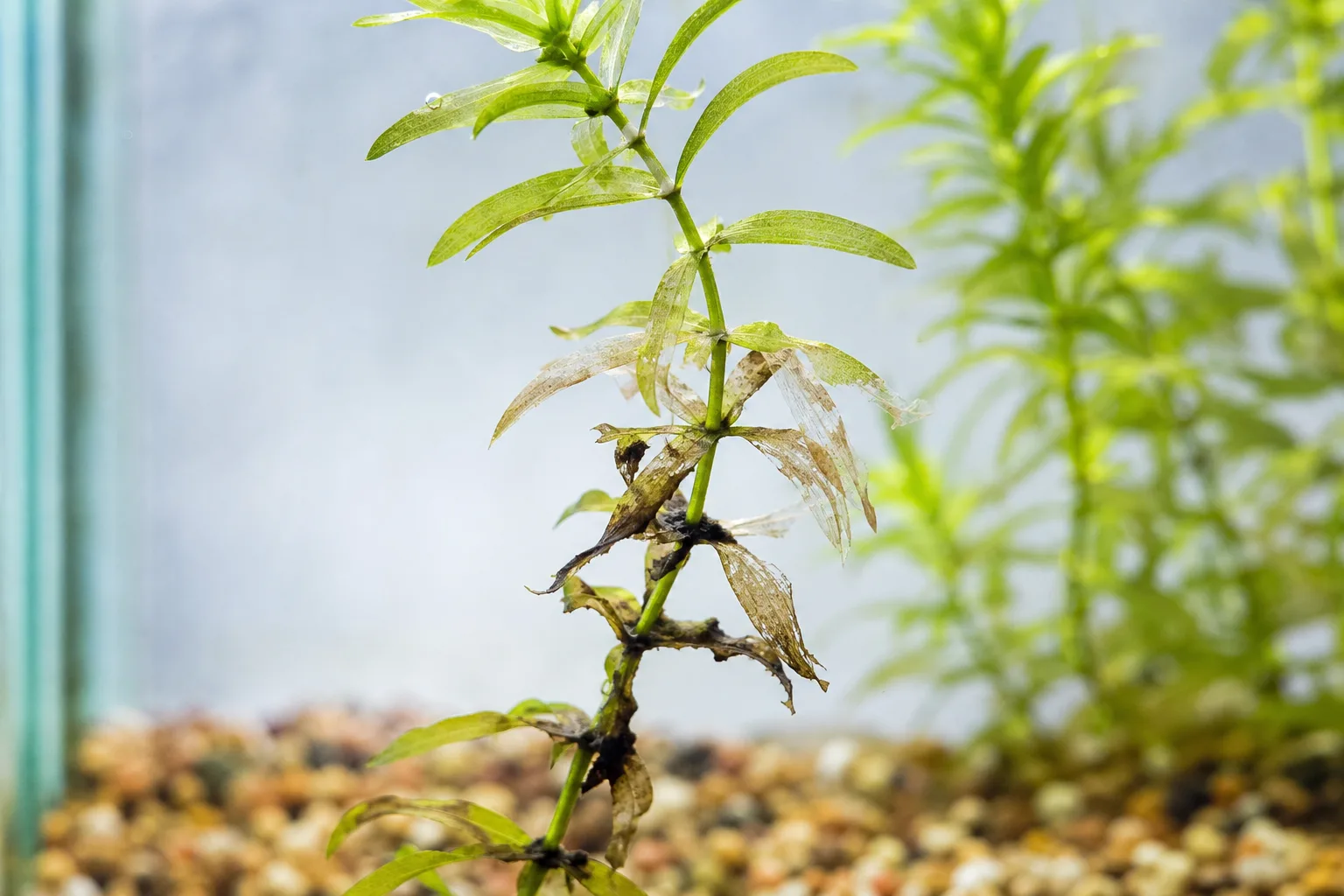
Chemical Damage on Anacharis / Elodea: Causes, Checks & Fixes
This guide covers chemical damage on Anacharis / Elodea. See also the general Chemical Damage guide, watering, and light pages for this plant.
Chemical Damage on Anacharis / Elodea: Causes, Checks & Fixes
Quick answer
Anacharis (Egeria densa) is one of the fastest aquarium oxygenators-and one of the first plants to collapse when the tank is medicated or overdosed. Chemical damage on Anacharis usually follows copper-based fish medications, copper algicides, hydrogen peroxide spot treatments, or glutaraldehyde (Seachem Excel) overdoses. Stems turn translucent and mushy within 24–72 hours because the plant has no soil buffer and thin leaves that absorb dissolved chemicals directly from the water column.
First fix: Stop all medications and algicides immediately. Perform a 40–50% water change with temperature-matched dechlorinated water. Run activated carbon in the filter for 48–72 hours. Remove liquefied stems with clean scissors, keeping any firm sections for replanting.
This guide covers submerged aquarium, turtle-tub, and indoor pond culture only. For copper warnings in everyday care, see the Anacharis overview. For melt without a medication timeline, see transparent leaves and brown leaves. Epiphytes like Java Fern melt more slowly-compare timing in chemical damage on Java Fern.
Why Anacharis gets chemical damage
Anacharis is a column-feeding stem plant with leaves only a few cell layers thick. Anything dissolved in tank water hits tissue fast-especially when stems float at the surface or sit in filter outflow where chemical concentration peaks.
Copper-based fish medications
Ich and parasite treatments with copper sulfate or chelated copper are toxic to submerged plants. Copper is registered for aquatic weed and algae control because it kills plant cells-UF/IFAS lists Brazilian waterweed among species controlled by copper-based aquatic herbicides. Anacharis often melts within days of therapeutic copper levels that fish tolerate.
Copper algicides and spot treatments
Copper algaecides act as contact cell toxicants on algae and damage higher plants they touch. Pouring algicide near Anacharis whorls-or dosing a planted display tank-liquefies stems from the contact point upward. Soft, low-alkalinity water keeps copper active longer, which increases plant and invertebrate risk.
Glutaraldehyde overdose (Excel, liquid carbon)
Liquid-carbon products are algaecides at high concentration. Double dosing, daily full-tank pours on a low-tech setup, or combining glutaraldehyde with other algicides causes tip melt and glassy translucent patches within 48 hours. Anacharis grows fast under moderate light, so hobbyists sometimes overdose Excel chasing algae-and melt outpaces regrowth.
Hydrogen peroxide dips and overdoses
Hobbyists spot-treat black beard algae with peroxide; direct application or tank-wide overdosing collapses Anacharis cell membranes. Peroxide-type treatments break down quickly but are chemically reactive on surface tissue-lethal when poured on submerged whorls or dosed tank-wide at high strength.
What chemical damage looks like on Anacharis
Sudden translucent melt along whorls or whole stem segments-not slow yellowing over weeks. Mushy, liquefied tissue that pinches away between fingers while upper nodes may still feel firm (early stage). Brown-black collapse spreading down the stem after a treatment day. In severe copper exposure, entire bunches turn to slime within 72 hours while a few firm cuttings may survive if removed promptly.
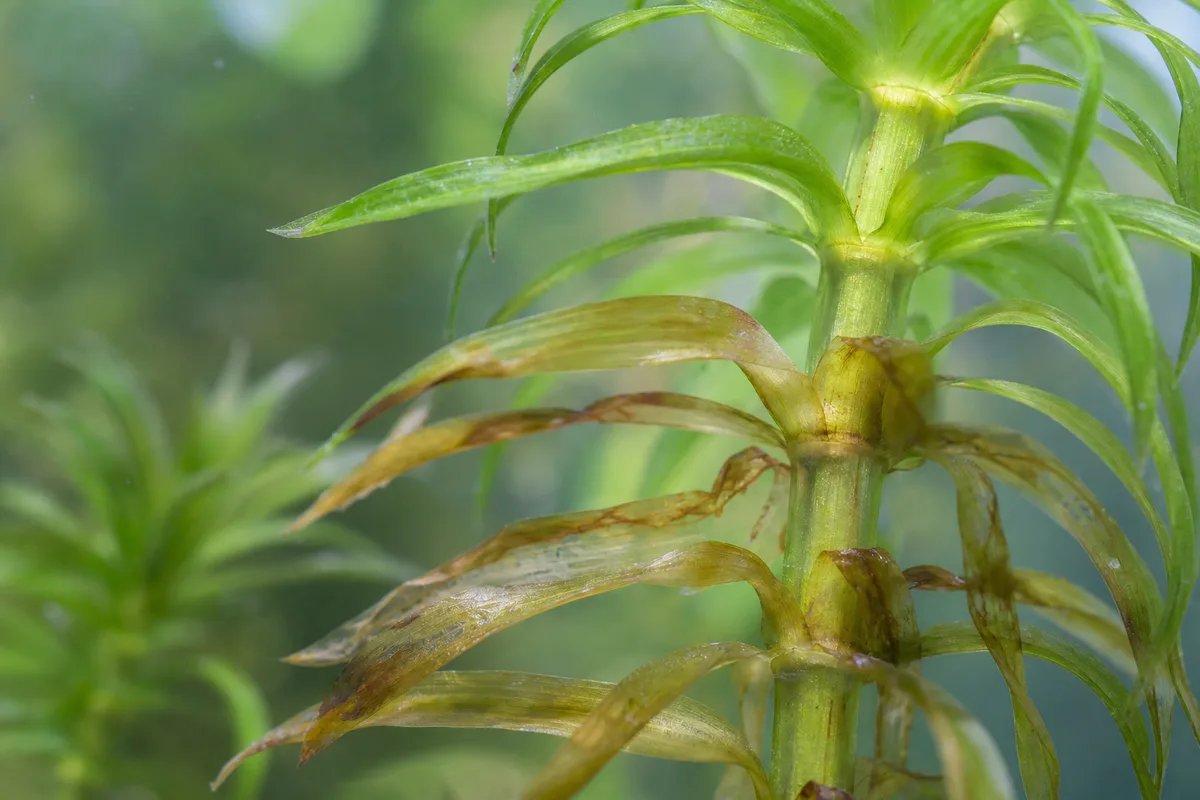
Chemical Damage symptoms on Anacharis / Elodea - compare with healthy tissue on the same plant.
Floating stems often melt first at the waterline where medication films concentrate. Planted stems in the filter outflow path show damage before background stems. Do not confuse normal lower-whorl shedding on overgrown stems with chemical melt-chemical damage follows a dosing event and spreads fast.
How to confirm the cause
Build a treatment timeline: did melt start within 72 hours of medicating, algicide, peroxide, or Excel?
- Product log - List ich cures, algae treatments, liquid carbon, peroxide dips, and any pond algicide transferred on hands or nets.
- Tankmate signals - Shrimp, snails, and sensitive fish often show stress before every stem melts when copper is present.
- Stem firmness - Firm nodes above mush suggest salvageable cuttings; soft stems from base to tip suggest total loss.
- Position in tank - Melt clustered at outflow, surface, or treatment zone points to chemical concentration, not random acclimation melt.
- Rule out lookalikes - New-purchase melt without any chemical on the timeline is usually transplant shock, not medication damage.
First fix for Anacharis
Stop all medications and algicides immediately. Perform a 40–50% water change with temperature-matched dechlorinated water. Run activated carbon in the filter for 48–72 hours to pull residual copper and organic aldehydes. Remove melting stems with clean scissors-discard liquefied tissue in the trash, not down a drain or outdoor waterway. Replant or float firm 4–8 inch cuttings with bottom leaves stripped.
If copper treatment must continue for fish, move Anacharis to a separate container with matched temperature and aeration until the display tank is cleared and carbon-polished. Do not redose Excel or peroxide while new melt is active.
Recovery timeline
Melt may continue one to two weeks after exposure ends-that is damaged tissue sloughing, not ongoing poisoning. Success is firm stem nodes and bright green new whorls at cut ends without continued glassiness. Because Anacharis is a fast vegetative grower, regrowth from healthy cuttings often appears within one to two weeks in clean, medication-free water. Expect two to four weeks before a background stand looks full again.
Maintain stable temperature (ideally 65–74°F / 18–24°C), moderate aquarium light, and regular partial water changes during recovery-do not compensate with heavy fertilizer on stressed stems.
What not to do
Do not double the next Excel dose to “burn algae” after melt starts. Do not treat a planted tank with copper ich medication while Anacharis remains attached. Do not pour full-strength peroxide directly on submerged whorls. Do not bury melting stems deeper in substrate hoping they recover-the buried portion is already rotting. Do not release trimmings or tank water into local ponds; Egeria densa is invasive and regulated in many states.
Lookalike symptoms
Acclimation melt after purchase lacks a chemical event on the timeline and often shows firm upper stems with soft lower whorls only. Nutrient deficiency yellowing develops over weeks on older leaves, not overnight after dosing. Cold damage follows a heater failure or outdoor tub chill, not ich treatment. Ammonia shock in cycling tanks browns stems alongside fish distress-test ammonia and nitrite before blaming medication alone. Heat stress above roughly 82°F (28°C) produces similar mush; confirm temperature before redosing chemicals-see heat stress on Anacharis.
| Symptom pattern | Timing | Stem texture | Likely cause |
|---|---|---|---|
| Translucent mush after ich dose | 24–72 hours post-treatment | Soft, liquefied | Copper medication |
| Glassy tips after Excel pour | 24–48 hours | Firm base, melting tips | Glutaraldehyde overdose |
| Localized melt at outflow | Same day as algicide | Contact zone only | Copper algicide / peroxide |
| Lower whorls only, no dosing | 1–2 weeks after purchase | Firm upper stem | Acclimation melt |
| Tank-wide mush, fish gasping | Hours after overdose | Collapsing stems | Peroxide or combined chemical shock |
How to prevent chemical damage next time
Quarantine new fish with non-copper treatments when possible, or relocate Anacharis to a medication-free tub during copper therapy. Use mechanical algae removal and conservative partial algae treatment rather than tank-wide copper in planted displays. Dose liquid carbon at label strength every other day maximum on low-tech tanks. Log every chemical added-Anacharis forgives missed fertilizer better than it forgives copper.
Before any fish treatment, read labels for copper content. In goldfish and turtle tanks where Anacharis is both filter and snack, keep backup stems growing in a separate tub so medication cycles do not wipe your only planting.
When to use this page vs other Anacharis / Elodea guides
- Anacharis / Elodea watering guide - Use for routine moisture checks before assuming chemical damage is the main issue.
- Anacharis / Elodea problems hub - Browse all 34 common issues on this species.