Brown Tips on Anacharis / Elodea: Causes, Checks & Fixes
Quick answer
Brown tips on Anacharis / Elodea usually mean lower whorls are shaded, heat-stressed, or chemically burned by copper or liquid carbon. First step: Trim browned whorls and open the canopy so light reaches the full stem.
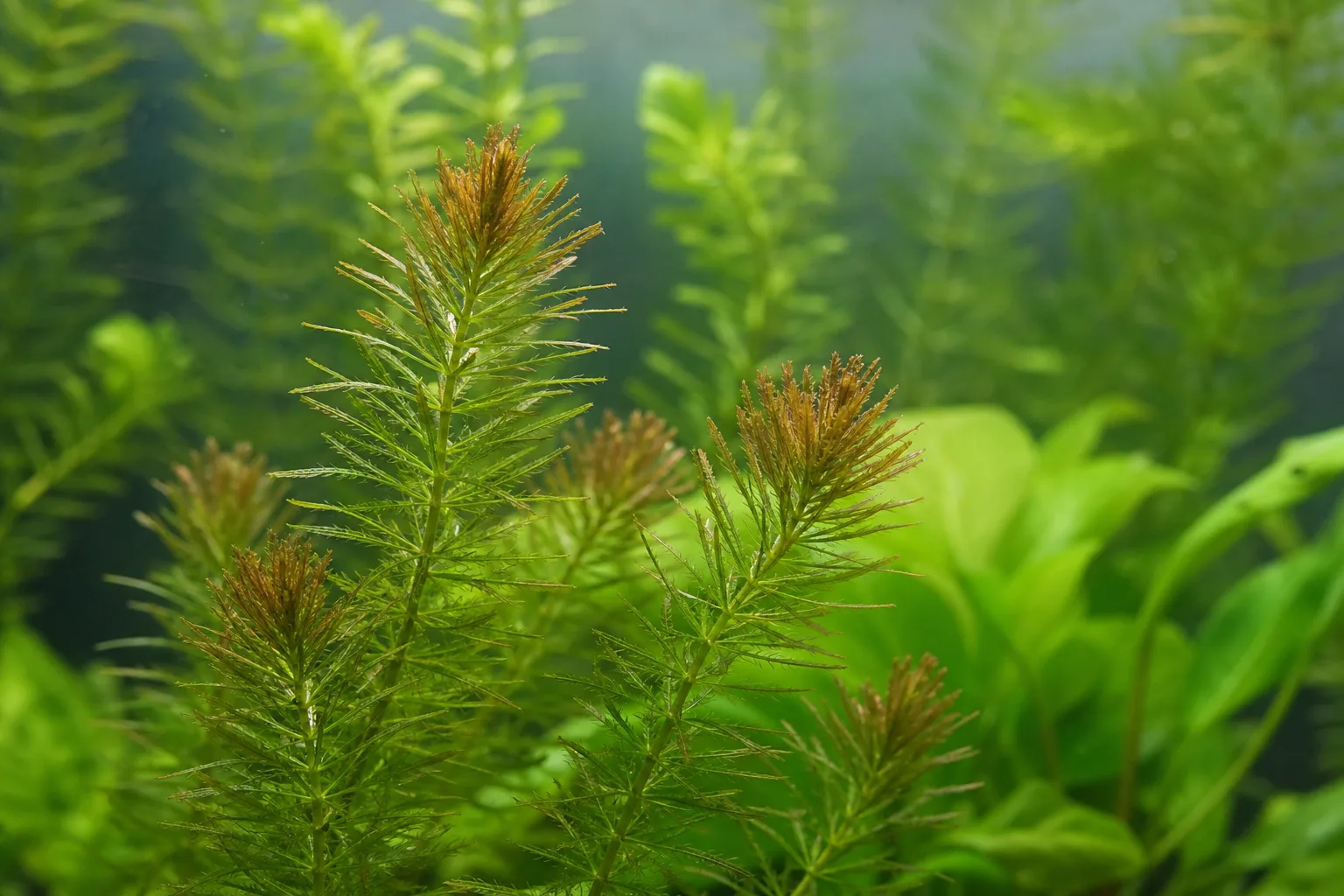
Brown Tips on Anacharis / Elodea: Causes, Checks & Fixes
This guide covers brown tips on Anacharis / Elodea. See also the general Brown Tips guide, watering, and light pages for this plant.
Brown Tips on Anacharis / Elodea: Causes, Checks & Fixes
Quick answer
Brown tips on Anacharis (Egeria densa) in a submerged tank usually trace to self-shading, heat near the surface, or copper and glutaraldehyde injury-not dry soil or missed watering. The classic pattern is crispy brown margins on lower or outer whorls while the stem stays green and newest tips still look healthy.
First fix: Trim browned whorls and thin dense top growth so light reaches the full stem. Make one targeted correction, then wait seven days before stacking fertilizer, replanting, or chemical treatments.
This guide is for submerged aquarium and turtle-tank culture-not terrestrial houseplant pots. Anacharis feeds from the water column, grows as a fast vegetative stem plant, and shows stress through whorl color, stem firmness, and new tip growth. For species baselines, see the Anacharis overview. For translucent mush after medication, see chemical damage. For tank-wide melt above 28°C, see heat stress.
Who this guide is for
Aquarium keepers seeing brown lower whorls on a background stand, turtle-tub owners with dense floating mats shading themselves, and anyone who bought emersed retail stems that browned after planting. If only tissue above the waterline is crispy while submerged whorls stay green, that is air-exposure damage-see underwatering on Anacharis, not brown tips on submerged culture.
What brown tips looks like on Anacharis
Expect this pattern on submerged stems:
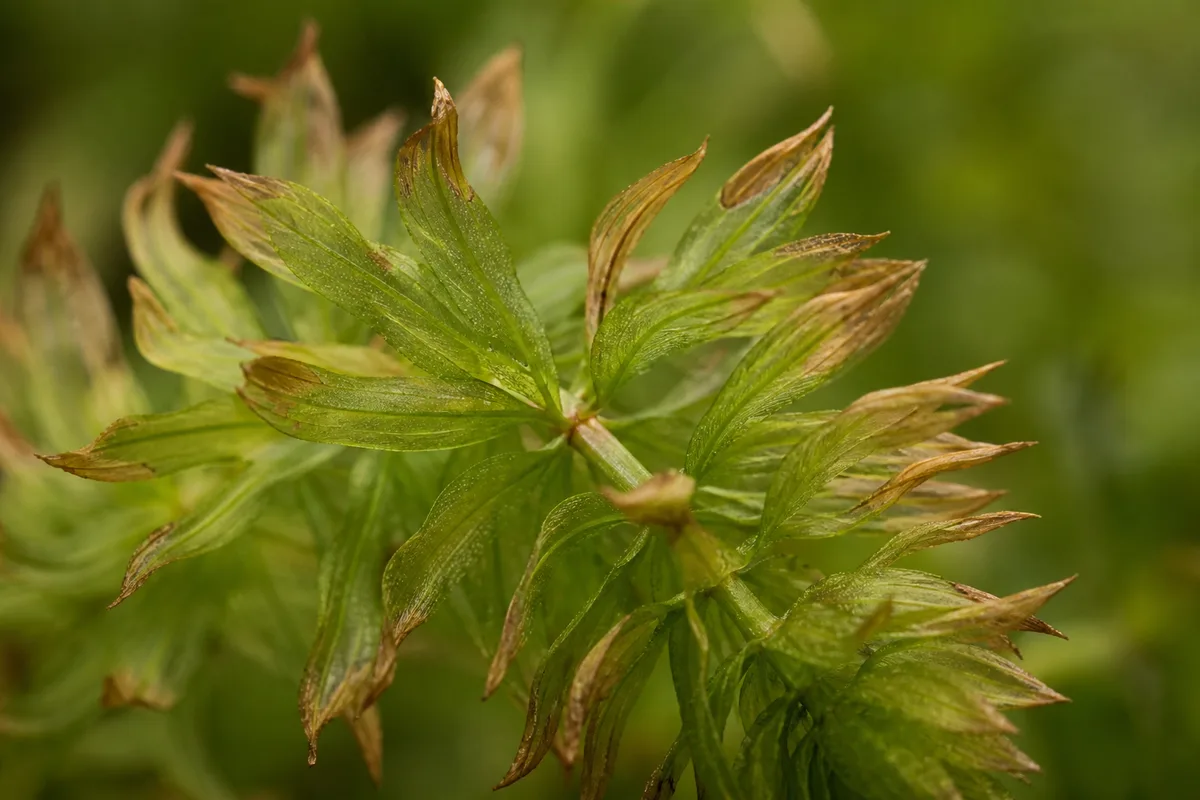
Brown Tips symptoms on Anacharis / Elodea - compare with healthy tissue on the same plant.
| What you see | What it usually means |
|---|---|
| Crispy brown margins on lower whorls; green stem; healthy tips | Self-shading from dense top growth |
| Brown-tan edges spreading up after a hot week or heater spike | Heat stress-often worse near the surface |
| Brown-black crisping 24–48 hours after ich meds or Excel | Copper or glutaraldehyde injury |
| Lower whorls brown in clear water week one after purchase | Acclimation melt from emersed farm culture |
| Pale yellow-brown tips in dim tanks with long bare internodes | Insufficient light at stem depth-see not enough light |
Key distinction: Cosmetic brown margins on firm tissue differ from translucent mush that pinches away-mush points to chemical damage or severe heat stress, not routine tip browning alone.
Compare newest tip growth first. Healthy firm tips mean the plant can recover even when lower whorls look bad.
Emersed retail tissue vs submerged whorl tips
Store-bought Anacharis is often grown emersed (leaves in air) at commercial nurseries. After planting submerged, the old emersed leaves brown and shed while new submerged whorls emerge from the stem-that is normal transition, not the same as chronic lower-whorl shading in an established tank. Emersed browning often affects outer leaves on the upper portion of a bunch right after planting; self-shading browning hits lower whorls on long established stems with a thick canopy above.
Why Anacharis gets brown tips
Self-shading from fast top growth
Anacharis grows toward light and branches near the surface. Dense upper whorls block PAR to lower sections on the same stem-lower leaves starve for light while tips stay green. Because Egeria densa is fully aquatic, the trigger is almost always water-column conditions, light at depth, temperature, or brief emersed handling-not soil moisture schedules.
In a typical 20–40 gallon display, unthinned stems often need a top trim every one to two weeks once the canopy reaches the waterline. Without that, lower whorls brown predictably even when total tank light looks adequate at the surface.
Heat near the surface
Anacharis is a cool-water grower with a comfort band around 65–74°F (18–23°C) and documented stress above 28°C (82°F) (Washington State Noxious Weed profile). Floating stems and top whorls sit in the warmest layer-especially under turtle basking lamps or unshaded summer rooms. Heat browning can look like tip burn before stems turn fully mushy. Confirm with a thermometer at mid-depth before blaming shade alone.
Copper and glutaraldehyde injury
Tip browning that appears within 24–48 hours of fish medication often follows copper exposure documented for Brazilian waterweed. Copper-based aquatic herbicides are registered precisely because they damage submerged plants including Egeria densa. Liquid-carbon products (glutaraldehyde, sold as Excel and similar) cause tip melt and glassy patches when overdosed-Anacharis is among the most sensitive common stem plants because leaves are only a few cell layers thick.
In turtle tanks and community aquariums, also review filtration strength, feeding level, and whether copper ich cures or algaecides were used recently. UGA Extension notes that fish medications toxic to aquatic plants can trigger oxygen-depleting die-off when plant biomass decays.
Acclimation melt from new purchases
New stems shedding lower whorls in clear water during the first 7–14 days is transition shock-not necessarily shading or heat. Anacharis adapts to stable parameters but hates swings; match temperature within 2°F when floating new bunches. See transplant shock when the timeline fits a recent purchase without medication or heat events.
How to confirm the cause
Work in this order:
- Newest tip growth color and firmness - Green firm tips suggest recoverable cosmetic browning; translucent climbing tips mean urgent action.
- Water clarity and test results - Test ammonia in tanks under three weeks old; foul odor with melt points to organic overload (overwatering), not shade alone.
- Light at affected stem depth - Hold a hand under the canopy; if lower whorls sit in shadow while tips are bright, self-shading is likely. Target 30–50 PAR at pale stems per the light guide.
- Temperature at mid-tank depth - Above 28°C (82°F) narrows to heat stress; stable 65–74°F with shade pattern points to canopy management.
- Recent medication or chemical dose - Ich cures, algicides, or Excel within 72 hours narrows to chemical injury.
- Purchase timeline - Week-one melt in clear water without dosing suggests acclimation.
UF/IFAS describes Egeria densa as a submerged aquatic plant-keep diagnosis inside that context.
Cause lookalike table
| Symptom pattern | Timing | Stem texture | Likely cause | Next guide |
|---|---|---|---|---|
| Brown lower whorls; green tips | Gradual over 1–2 weeks | Firm stem | Self-shading | This page |
| Browning after heat wave / heater fault | 2–5 days post-spike | Softening tips possible | Heat stress | Heat stress |
| Crisp brown after ich dose or Excel | 24–48 hours | Firm then mushy | Chemical injury | Chemical damage |
| Lower melt; clear water; new purchase | Days 3–14 | Firm upper stem | Acclimation melt | Transplant shock |
| Pale stretch; long internodes | Weeks in dim tank | Limp, thin stems | Low PAR | Not enough light |
| Brown tips + cloudy foul water | 48–72 hours | Translucent whorls | Organic overload | Overwatering |
First fix for Anacharis
Trim browned whorls and thin dense top growth. Cut stems back so light penetrates to the lower sections-often removing the top 30–50% of overgrown stands in one session. Float trimmed tops temporarily if the substrate stems are too shaded to recover at depth.
Make one targeted correction (trim/open light or stop a chemical or cool the tank), then wait seven days before stacking fertilizer, replanting, and chemical treatments.
If copper or glutaraldehyde was dosed, switch to the chemical damage first-fix protocol-partial water change and activated carbon-not more trimming alone.
Recovery timeline
Mild self-shading cases often stabilize within one to two weeks once light reaches lower whorls and water stays stable. Acclimation melt from new purchases commonly needs seven to fourteen days for new submerged whorls in clear water. Mushy translucence after copper or ammonia may require saving only firm cuttings.
What success looks like: firm green stems, clean new tips, and no spreading mush. Badly browned whorls rarely re-green-judge recovery by new growth, not old leaf color.
Editorial case note (composite)
A 20-gallon community tank showed lower-whorl browning on a three-week-old Anacharis stand while tips stayed bright green. The keeper had dosed liquid carbon at label strength every day for algae control. Timeline: brown margins appeared on lower whorls 48 hours after the third daily dose; tips remained firm. Action taken: stopped Excel, trimmed browned sections, floated cuttings under the LED for five days, 30% water change on day 2. Outcome: new submerged whorls on cut ends by day 10; lower sections on planted stems that were not trimmed stayed brown but did not spread. Lesson: cosmetic tip browning after glutaraldehyde can recover with stop-dose and trim; translucent melt would have needed the full chemical-damage protocol.
What not to do
- Do not dose terrestrial pesticides or fungicides into aquarium water.
- Do not leave melting tissue decaying in the tank-it fuels bacterial blooms and ammonia.
- Do not add heavy fertilizer to foul or stressed water.
- Do not plant in fertilizer-rich potting soil; use inert aquarium gravel or floating culture only.
- Do not keep dosing Excel or copper medication hoping browned tissue will recover in place.
- Do not release trimmings into local waterways-UC ANR documents Brazilian egeria as an established invasive when fragments escape.
How to prevent brown tips next time
- Trim regularly - Top growth every one to two weeks in fast tanks; thin floating mats before they shade themselves.
- Stable temperature - Target 65–74°F (18–23°C) when possible; shade outdoor tubs when water exceeds 28°C (82°F).
- Moderate aquarium lighting - 8–10 hours on a timer; aim for 30–50 PAR at the height of rooted stems, not just at the surface.
- Acclimate new stems - Float in tank water 24–48 hours before planting; match change water within 2°F.
- Check medication labels for copper before treating fish in planted or turtle tanks.
- Right-size filtration in turtle tubs-heavy feeding plus weak flow accelerates lower-whorl stress even when tips look fine briefly.
- Never dump plants or tank water into natural waterways (UF/IFAS preventive guidance).
When to worry
Treat as urgent if:
- multiple stems turn translucent within 24–72 hours
- water clouds with foul odor alongside active melt
- detectable ammonia appears with fish in the tank
- damage climbs into fresh tips instead of staying on older lower whorls
- temperature exceeds 32°C (90°F) with spreading mush
Lower urgency: slow cosmetic browning on lower whorls with healthy green tips-trim, open the canopy, and recheck at day 7.
When lower stems fail broadly, save healthy tops using the Anacharis propagation guide.
Practical checks
Urgency check
| Level | Pattern | Action |
|---|---|---|
| High | Ammonia detected, copper exposure, rapid mush, foul water | Partial change, stop chemicals, trim melt same day |
| Moderate | Post-shipping limpness; heat spike 28–30°C | Trim, cool gradually, float under light |
| Low | Lower-whorl browning only; firm green tips | Trim canopy; recheck in 7 days |
Best inspection order
Newest growth → affected whorls → water tests → light at stem depth → thermometer reading → recent chemical exposures.
Severity note
Brown tips is marked medium severity for Anacharis in the symptom matrix-a triage clue for prioritizing trim and light fixes, not a guarantee of plant loss. Translucent melt or ammonia always outrank cosmetic browning.
Related Anacharis guides
- Anacharis overview - species basics and tank culture
- Chemical damage - copper and liquid carbon melt
- Heat stress - temperature thresholds and cooling
- Not enough light - PAR targets and photoperiod
- Transplant shock - post-purchase acclimation melt
- Overwatering - foul water and organic overload
- Anacharis light - fixture placement and PAR bands
- Anacharis watering - temperature-matched changes
- Anacharis propagation - saving firm tops as cuttings