Underwatering on Anacharis / Elodea: Causes, Checks & Fixes
Quick answer
Underwatering on Anacharis means stems dried out of water from maintenance air exposure, open-tub evaporation, or stranded floating mats-not soil dry-down. First step: re-submerge firm stems at matched temperature and remove dry crispy tissue.
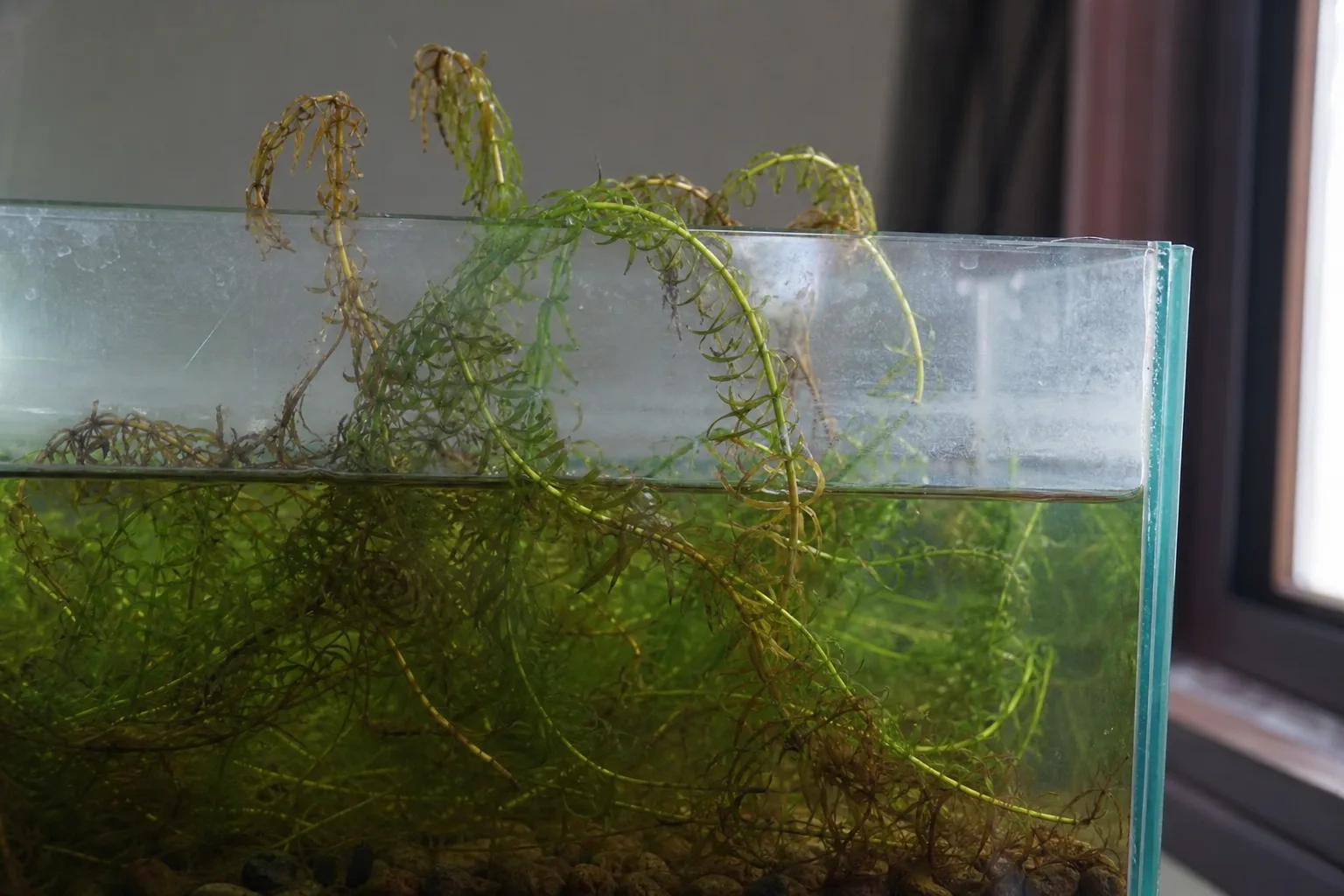
Underwatering on Anacharis / Elodea: Causes, Checks & Fixes
This guide covers underwatering on Anacharis / Elodea. See also the general Underwatering guide, watering, and light pages for this plant.
Underwatering on Anacharis / Elodea: Causes, Checks & Fixes
Quick answer
Underwatering on Anacharis (Egeria densa) is air-exposure desiccation, not dry potting soil. This obligate submerged species (UF/IFAS) feeds from the water column and lacks the waxy cuticle needed to hold moisture in room air - thin whorls desiccate quickly when exposed-thin whorls can crisp within hours when stranded above the waterline.
First fix: re-submerge firm stems at matched temperature and remove dry crispy tissue. Do not mist emersed whorls like a houseplant; submersion is the only reliable recovery path for desiccated tissue.
This guide covers submerged aquarium, turtle tub, and open propagation culture-not terrestrial pots. For everyday parameter targets, see the Anacharis watering guide. For species baselines, start with the Anacharis overview.
What underwatering looks like on Anacharis
The hallmark pattern is crispy, brown, or papery whorls on tissue that was out of water, while submerged sections on the same stem often stay green and firm. Compare these visible cues:
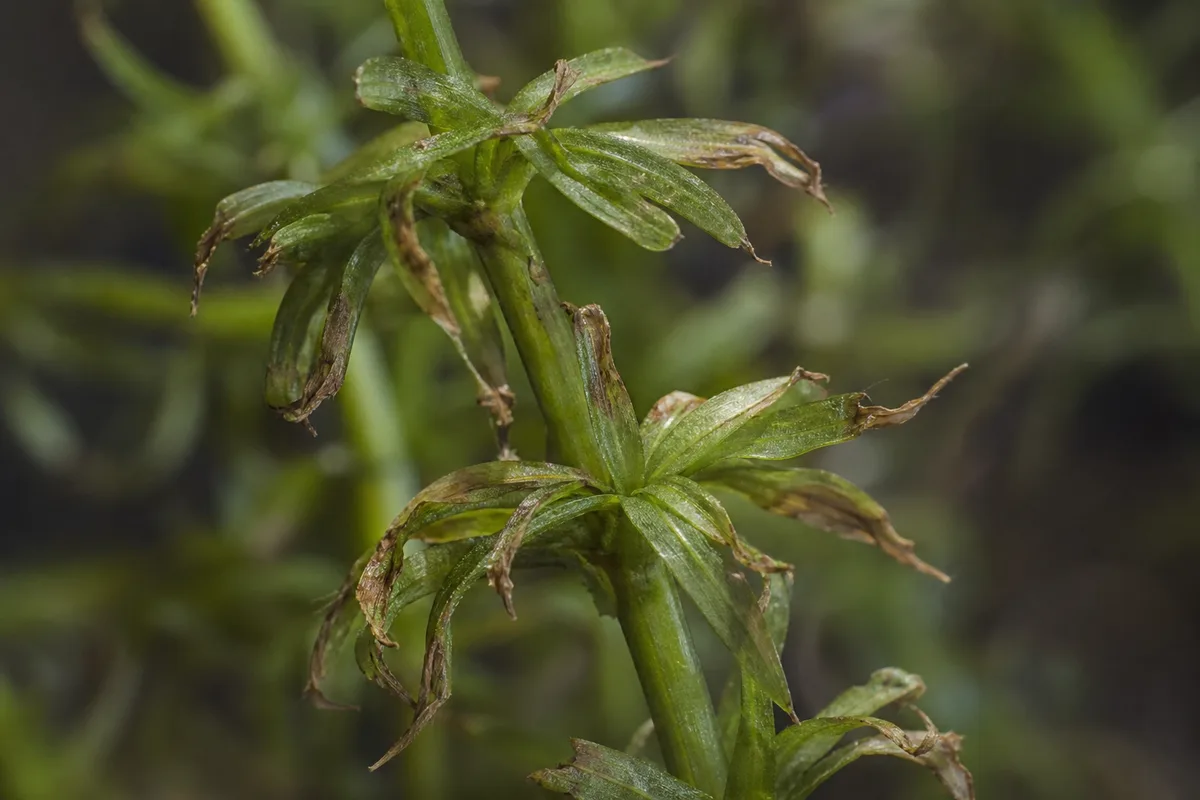
Underwatering symptoms on Anacharis / Elodea - compare with healthy tissue on the same plant.
| What you see | What it usually means |
|---|---|
| Crispy brown tips only at the waterline | Brief air exposure during cleaning or planting |
| Entire upper stem brown; lower whorls green | Stem floated or draped over equipment above water |
| Uniform crispiness on all exposed whorls | Hours out of water in dry indoor air |
| Translucent mush after re-submersion | Tissue was dead before submersion, or secondary decay started |
Healthy new tips at submerged nodes are your best recovery signal. If tips stay firm and green within a week of re-submersion, the stem can regrow even when upper whorls look ruined.
Underwatering vs wilting vs overwatering on Anacharis
Aquarium keepers often label different problems with houseplant watering terms. On Egeria densa, each maps to a different mechanism:
| Symptom label | What it actually means | Key pattern | Next page |
|---|---|---|---|
| Underwatering (this page) | Air exposure and desiccation | Crispy dry tissue on emersed sections; submerged whorls stay greener | This page |
| Wilting | Water instability, temperature shock, ammonia | Limp whorls while still submerged; may turn translucent | Wilting |
| Overwatering | Stale organic-heavy water, poor flow | Cloudy water, odor, melting despite full submersion | Overwatering |
| Water stress | Parameter shock from changes or transfers | Melt within 48–72 hours of a large change or tank move | Water stress |
If only tissue above the waterline is damaged and submerged sections look normal, stay on this page. If the whole stand is limp underwater with no recent air exposure, switch to wilting or water stress instead.
Why Anacharis gets underwatering
Setup and maintenance air exposure
Tank cleaning, rescapes, and photo sessions often leave stems draped over the glass rim or filter intake. Egeria densa is a fast vegetative stem plant with thin submerged leaves-it cannot regulate water loss in air the way amphibious aquarium plants do. Whorls left in typical room humidity (30–50%) desiccate much faster than most keepers expect.
Open-tub evaporation
Propagation tubs, quarantine containers, and turtle soaking tubs without tight lids lose water to evaporation. When the level drops even 2 to 3 inches, upper stems can sit above the surface for days before anyone tops off. Check tub level every 2 to 3 days in warm rooms.
Stranded floating mats
Loose floating bunches drift into corners, pile on heaters, or catch on turtle basking ramps. The submerged portion stays healthy while the stranded top dries out. This is one of the most common “underwatering” patterns in turtle setups.
Shipping and store emersed tissue
Farm-grown Anacharis is often cultivated emersed (wet but above standing water) and ships in bags. Lower sections may arrive limp or crispy from transit air exposure. This overlaps with transplant shock acclimation melt-distinguish dry crispy tissue (desiccation) from translucent mush (parameter or chemical stress).
Because Egeria densa is fully aquatic, the trigger is almost always exposure above the waterline, low tub level, or stranded floaters-not a watering schedule for soil.
How to confirm the cause
Work through this order before changing anything else:
- Map what was above water. Review the last 24–48 hours: tank cleaning, filter maintenance, turtle ramp placement, or tub top-off timing.
- Inspect newest submerged tips. Firm green tips mean the stem can recover; mushy or translucent tips after re-submersion point to decay or chemical injury instead.
- Compare emersed vs submerged tissue on the same stem. Dry crispiness only above the line confirms desiccation. Uniform underwater melt suggests wilting or overwatering.
- Check water level in open containers. Mark the tub rim and note whether evaporation could have exposed upper stems.
- Rule out recent copper or algaecides. Copper-based treatments injure submerged tissue too; if dosing preceded damage, see chemical damage and hold stems in a separate matched tub during treatment.
Cause-to-first-fix matrix
| Likely cause | Best first check | First fix |
|---|---|---|
| Maintenance air exposure | Which whorls were above water during cleaning? | Re-submerge; trim crispy tissue only |
| Open-tub low water level | Tub depth vs stem length | Top off to full submersion; trim dried tops |
| Stranded floater on equipment | Where did the mat catch? | Free stem; anchor or replant submerged section |
| Shipping emersed damage | Arrival condition vs tank melt timeline | Float 24–48 hours; trim dead tissue; plant firm nodes |
| Light starvation at depth (lookalike) | PAR at substrate; leggy stretch | See not enough light |
First fix to try
Re-submerge firm stems at matched temperature and remove dry crispy tissue.
This single action addresses the actual problem-lost hydration in air-without stacking unrelated interventions. During the first 24 hours:
- Match re-submersion water to tank temperature within 2°F (see the watering guide)
- Trim only tissue that is crispy, brown, or papery-leave firm green nodes
- Do not dose fertilizer, medication, or liquid carbon while diagnosing
- Do not plant in fertilizer-rich potting soil; use inert aquarium gravel or floating culture only
Wait seven days before adding secondary treatments so you can judge whether new submerged tips are forming.
Step-by-step recovery by scenario
Emersed desiccation after maintenance
- Fill a shallow tub with tank water at matched temperature.
- Lay stems fully submerged for 30 minutes to rehydrate cell walls.
- Trim crispy whorls back to the last firm green node.
- Replant or let float with all tissue below the surface.
- Check new tips at day 7-green growth means recovery is on track.
Open-tub evaporation
- Top off with dechlorinated water matched to tub temperature.
- Confirm every stem node sits at least 2 inches below the surface.
- Trim any whorls that stayed crispy above the old waterline.
- Set a 2-to-3-day top-off reminder until the tub has a lid or stable level.
Stranded floating mats (turtle and community tanks)
- Free stems from heaters, ramps, and filter intakes.
- Separate healthy submerged sections from dried tops.
- Anchor submerged portions in gravel or let them float freely in open water.
- For turtle tanks, position basking ramps so stems cannot drape across dry surfaces overnight.
Shipping emersed tissue overlap
- Float new stems in matched tank water for 24 to 48 hours before planting.
- Trim mushy or crispy sections after the float-keep firm nodes only.
- Plant with at least two whorls buried or anchored below the surface.
- If melt continues past day 7 with stable water tests, switch to transplant shock troubleshooting-not more air exposure fixes.
Recovery timeline
- Brief air exposure (under 2 hours): crispy tips may appear in 12–24 hours; new submerged growth often visible in 5–10 days after trim and re-submersion.
- Several hours out of water: upper whorls are usually dead; recovery depends on firm lower nodes and takes 7–14 days.
- Shipping acclimation: allow 7–14 days for new submerged whorls after a proper float period; some lower melt is normal transition stress.
- Mushy translucence after copper or ammonia: desiccation trim will not help-save only firm cuttings per the wilting guide.
Crispy desiccated tissue does not turn green again. Judge success by firm stems, clean new tips, and no spreading mush within seven to fourteen days.
What not to do
- Do not mist emersed whorls like a houseplant-a humidity tray does not replace submersion for Egeria densa.
- Do not dose terrestrial pesticides or fungicides into aquarium water.
- Do not leave melting or crispy tissue decaying in the tank.
- Do not add heavy fertilizer to foul water or during the first-week diagnosis window.
- Do not release trimmings into local waterways-UC ANR documents Brazilian egeria as an established invasive when fragments escape.
How to prevent underwatering next time
- Maintenance protocol: Keep a shallow tub of tank water on hand during cleaning; never leave stems draped over dry glass overnight.
- Open containers: Top off evaporation every 2 to 3 days or add a partial lid; mark a minimum water line on the tub.
- Turtle setups: Route stems away from basking ramps and heat lamps; check floaters after each feeding or basking session.
- New purchases: Float stems 24 to 48 hours before planting; match temperature per the watering guide.
- Lighting baseline: Moderate aquarium lighting on a stable 8–10 hour photoperiod supports recovery after re-submersion-see the Anacharis light guide.
- Medication safety: Check labels for copper before dosing; quarantine stems in matched water during treatment.
When to worry
Escalate quickly if:
- more than half the stand was out of water for several hours and stems feel soft after re-submersion
- water clouds with odor as decaying tissue breaks down
- damage spreads into firm submerged tips within 3–5 days despite stable parameters
- ammonia reads above 0 ppm in a stocked tank after large amounts of dead tissue were left in the water
Lower urgency: a few crispy tips after a short cleaning, with firm submerged growth and clear water.
When lower stems fail broadly, save healthy tops and use the Anacharis propagation guide.
Related Anacharis guides
- Anacharis overview - species baseline and culture context
- Anacharis watering - temperature, pH, and acclimation targets
- Wilting - limp submerged stems from instability
- Overwatering - stale water and organic overload
- Water stress - parameter shock after changes
- Transplant shock - post-purchase melt timeline
- Anacharis light - PAR targets when stretch masquerades as damage