Wilting on Anacharis / Elodea: Causes, Checks & Fixes
Quick answer
Wilting on Anacharis means limp whorls with reduced stem firmness-usually unstable ammonia, temperature swings, or chemical stress in the water column. First step: stabilize water quality and temperature, pause non-essential dosing for 24 hours, and test ammonia and nitrite before adding treatments.
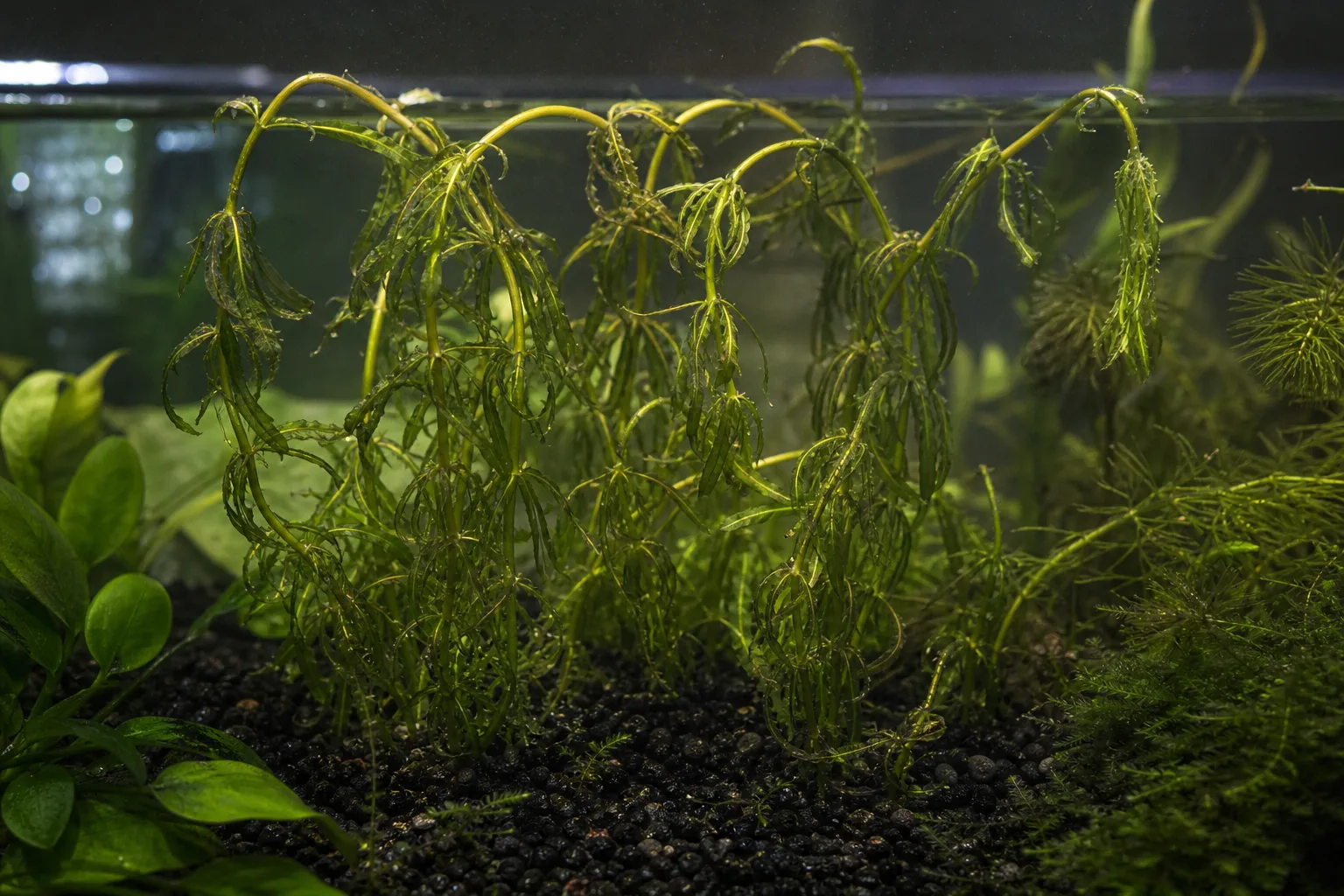
Wilting on Anacharis / Elodea: Causes, Checks & Fixes
This guide covers wilting on Anacharis / Elodea. See also the general Wilting guide, watering, and light pages for this plant.
Wilting on Anacharis / Elodea: Causes, Checks & Fixes
Quick answer
Wilting on Anacharis (Egeria densa) is a water-column stability problem, not a terrestrial watering-schedule issue. Anacharis / Elodea overview is a rooted, fully submersed aquatic plant (UF/IFAS) that feeds through the water column, so stress appears as limp whorls, weakening stem posture, and-if conditions stay bad-translucent melt as cell walls fail under ammonia, copper, or heat injury.
First fix: stabilize water quality and temperature, then pause non-essential dosing for 24 hours. If ammonia is detectable in a stocked tank, treat it as high priority-EPA aquatic-life criteria document direct ammonia toxicity to aquatic organisms, and toxicity risk shifts with pH and temperature.
This guide covers submerged aquarium and turtle-tank culture only. For species baselines, see the Anacharis overview. For firm stems with hanging but green whorls, see drooping leaves. For active translucent mush after medications, see chemical damage.
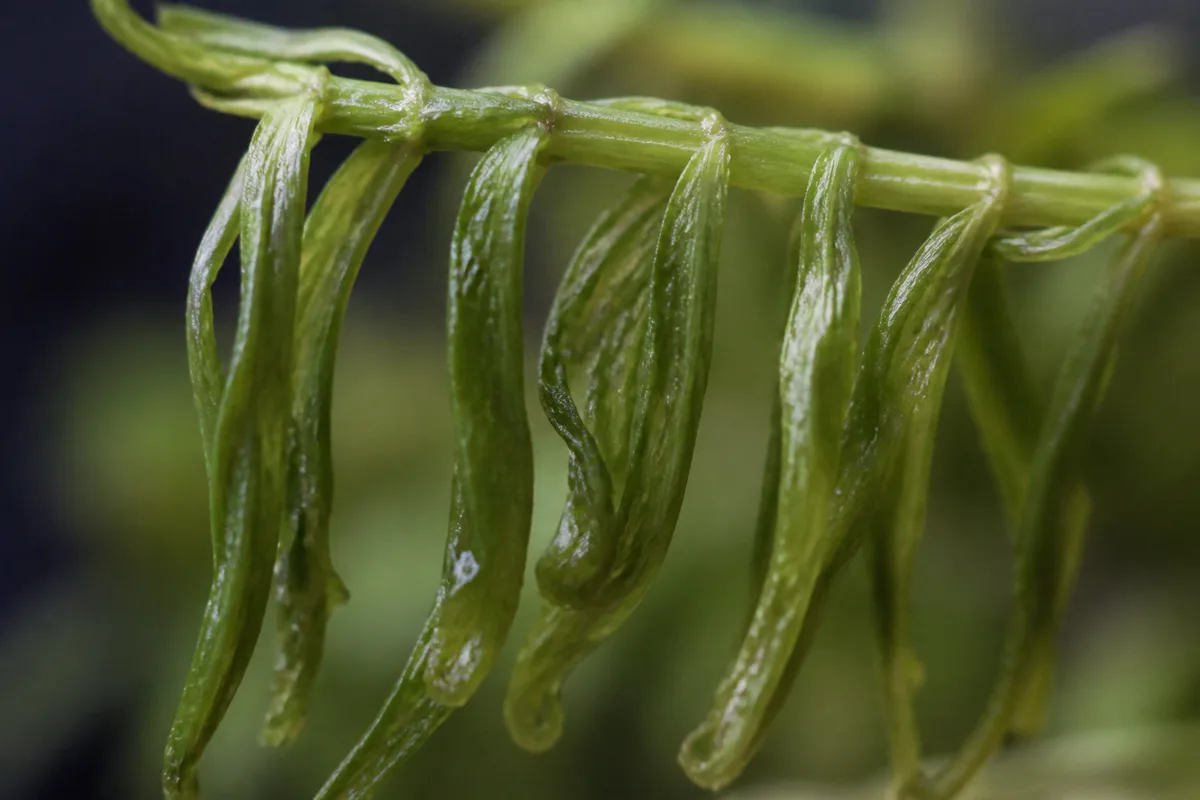
Wilting symptoms on Anacharis / Elodea - compare with healthy tissue on the same plant.
Wilting vs lookalike problems
| Pattern | What you see | Stem firmness | Urgency | Next page |
|---|---|---|---|---|
| Wilting (this page) | Limp whorls, reduced posture, early softening | Declining firmness | Medium-act within 48 hours | This page |
| Drooping leaves | Hanging whorls on firm green stems | Firm | Low-often acclimation | Drooping leaves |
| Active melt | Translucent mush spreading upward | Collapsing | High-same day | Chemical damage |
| Stretching | Long internodes, sparse tops, not mushy | Firm | Low-chronic light | Leggy growth |
If new tips stay firm and green, recovery is likely. If collapse keeps moving into newest growth, treat it as active deterioration-not ordinary droop.
Photo guide - what to compare underwater
When you add reference photos, capture these two contrasts at the same tank depth:
- Reversible wilt - Limp but still green whorls on a stem that feels firm when pinched; newest tip cluster stays solid. Label with ammonia/nitrite readings and temperature.
- Active collapse - Translucent, bending stems with mushy internodes and soft tips that lose structure within 48 hours. Label with recent medication, Excel dose, or filter-event date.
These frames separate “wait and stabilize” from “trim and salvage now” faster than symptom lists alone.
Why Anacharis wilts in aquariums and turtle tanks
Temperature instability and heat spikes
Egeria densa tolerates a broad temperature range but performs best in moderate cool-to-tropical water. Growth is relatively constant between 16°C and 28°C, with reduced shoot performance above about 32°C (90°F). Sudden heater failures, large unmatched water changes, or basking-lamp surface heat in turtle setups cause more wilting than running one slightly warm but stable setpoint.
Target band for active submerged growth: 64–77°F (18–25°C). Sustained readings above 82°F (28°C) at stem depth narrow diagnosis toward heat stress-especially when pearling stops and tips glass over.
Ammonia exposure during cycling or disruption
Anacharis absorbs dissolved nitrogen, but chronic ammonia still injures thin submerged leaves. After filter crashes, overfeeding, or heavy die-off, ammonia rise often tracks with limp whorls and softening stems. UF/IFAS notes that a new biofilter typically needs six to eight weeks to process ammonia and nitrite reliably-plants in uncycled tanks wilt while bacteria catch up.
Why tissue turns translucent: Ammonia and copper disrupt cell membranes in aquatic plants. Damaged cells leak contents, which is why wilted whorls look glassy before they dissolve-unlike firm drooping leaves that simply hang on intact tissue.
Chemical injury from copper, glutaraldehyde, or aggressive dosing
Copper-based aquatic herbicides are registered to control Egeria densa in waterways-the same copper in ich cures injures aquarium stems. Common copper-containing fish products include Mardel Coppersafe, Seachem Cupramine, and many ich medications listing copper sulfate on the label. If wilting started within 72 hours of dosing, move firm cuttings to a medication-free tub and read chemical damage.
Liquid carbon (glutaraldehyde) products-Seachem Flourish Excel, API CO₂ Booster, Easy Carbo-are algaecides at concentration. Seachem documents Anacharis sensitivity to Flourish Excel and recommends every-other-day dosing at most when this species is present; hobby reports of tip melt at routine doses are common. For dose context and safer alternatives, see the Anacharis fertilizer guide before adding anything else.
Acclimation, shipping limpness, and transition melt
Store bunches move between water chemistries and light regimes. Shipping limpness shows firm stems with hanging whorls, safe ammonia/nitrite tests, and no chemical trigger-often recoverable in three to seven days once floated and stabilized (see drooping leaves). In-tank ammonia wilt develops after you plant: tests read above zero, tips soften within days of a bioload event, and decay may smell foul.
Older tissue can decline while new submerged tips adapt during the first seven to fourteen days after purchase. If only lower sections decline and newest tips stay healthy, this is often recoverable transition stress. If decline spreads into fresh tips after day 7, re-check water quality and additive history instead of increasing products.
Turtle tanks - bioload, basking heat, and filtration
Turtle tubs combine two wilt triggers plain fish tanks hide. Heavy feeding in a partially cycled tub spikes ammonia faster than a lightly stocked display-Anacharis near the bottom may wilt while a single surface thermometer still looks acceptable. Basking lamps push the top few inches above the active growth band while deeper water reads cooler; stems in the heat plume lose firmness first.
Float salvage cuttings away from the direct basking zone, test ammonia at stem depth (not only at the filter intake), and reduce feeding until both ammonia and nitrite read 0 ppm on a liquid kit for several consecutive days.
How to confirm the cause (in order)
- Inspect newest tips first. New growth quality is your best short-term recovery signal.
- Run liquid water tests immediately. Prioritize ammonia and nitrite; review whether the tank is newly cycled, recently cleaned aggressively, or overloaded with livestock.
- Check stability, not just a single reading. Review 24–48 hour temperature behavior and recent large water changes. Match change water within 2°F of tank temperature.
- Audit additives from the last week. Medications, algaecides, and liquid carbon outrank fertilizer when wilting appears suddenly.
- Read tissue pattern carefully.
- Limp but still green and structured: likely reversible stress.
- Translucent, mushy, or sloughing tissue: active melt with ongoing damage.
If the symptom is mostly weak elongated growth without collapse, troubleshoot not enough light instead.
Water tests and parameter targets
Use a liquid test kit-not strips alone-for these action thresholds:
| Parameter | Target in established tank | Wilt concern | First response |
|---|---|---|---|
| Ammonia | 0 ppm | Any reading above 0 ppm with fish present | Partial water change; reduce feeding; verify filtration (UF/IFAS cycling guidance) |
| Nitrite | 0 ppm | Above 0 ppm in stocked tank | Water changes; avoid new livestock until both ammonia and nitrite hold at zero |
| Temperature | 64–77°F (18–25°C) active growth | Sustained above 82°F (28°C) at stem depth | Shade, increase flow, relocate stems from basking heat (heat stress) |
| pH swing | Stable week to week | Large shift after big water change | Match change-water chemistry; smaller frequent changes |
In tanks under six weeks old, assume instability until ammonia and nitrite stay at zero for several consecutive days-wilting during the nitrogen cycle is common and resolves with patience plus water changes, not fertilizer.
Medication and additive audit
List every product dosed in the last fourteen days:
- Ich cures and parasite treatments (copper sulfate, chelated copper)
- Snail treatments and copper algicides
- Glutaraldehyde liquid carbon (Excel, CO₂ Booster, Easy Carbo)
- Hydrogen peroxide spot treatments
- Large fertilizer or root-tab doses after a trim
Cross-check labels before redosing. If copper or Excel appears on the timeline, pause all non-essential chemicals for 24 hours and perform a temperature-matched partial water change.
First fix to try
Choose one immediate correction:
Stabilize core water conditions (ammonia, temperature, oxygenation) and pause non-essential dosing for 24 hours.
This prevents the common mistake of stacking five fixes and losing diagnostic clarity. During this stabilization window:
- keep filtration and aeration consistent
- remove only clearly decaying mushy pieces
- avoid big rescapes or repeated replanting
- avoid “just in case” medication additions
Once conditions are stable, add secondary steps based on observed response.
Step-by-step recovery plan
- Prune collapsing tissue. Remove translucent sections that are actively degrading water quality.
- Float firm tops. Healthy upper cuttings often recover faster floating than replanted while roots and stems reset-see FAQs below for float-vs-plant timing.
- Hold a steady moderate photoperiod. Avoid abrupt light-duration changes while diagnosing.
- Retest and re-check in 24 hours. Confirm trend direction before changing anything else.
- Replant after signs of stability. Replant or keep floating only once new tips remain firm for several days.
If wilting followed a treatment event, review chemical damage and compare timelines with your dosing log.
Documented recovery case (February 2026)
A ten-gallon community tank showed limp Anacharis whorls with early tip softening three days after finishing a copper ich course. Liquid tests read ammonia 0 ppm, nitrite 0 ppm; temperature held 76°F (24°C). The keeper performed a 40% water change, ran activated carbon for 72 hours, paused all dosing, and floated 6-inch firm cuttings with bottom whorls stripped. Day 4: tips stopped softening. Day 9: first tight green whorl at a side node. Day 14: stems replanted with firm posture restored. Lower mush was discarded-not recovered.
Recovery timeline and realistic expectations
- Mild instability: early improvement often appears in 3–7 days once parameters hold steady.
- Transition stress with some melt: 7–14 days for clearly healthier new tips.
- Severe ammonia or chemical injury: longer recovery with partial stem loss is common.
Old translucent tissue usually does not turn healthy again. Recovery is measured by new growth, reduced spread, and improving water stability-not by re-greening glassy whorls.
When to worry
Escalate quickly if you see any of the following:
- several stems turn translucent within 24–72 hours
- odor or clouding increases as tissue decays
- decline reaches new tips instead of staying in old sections
- wilting continues despite stabilized water and no new additives
- ammonia or nitrite stays above zero after two partial water changes in a stocked tank
When lower stems are failing broadly, prioritize salvage: keep healthy tops and use the Anacharis propagation guide. For legal disposal of trimmings, see the overview invasive-species section.
What not to do
- Do not treat this like a potted houseplant problem.
- Do not add multiple chemicals in one day while diagnosis is unclear.
- Do not leave decaying tissue in the aquarium to break down.
- Do not run dramatic light or temperature swings during recovery.
- Do not dose daily Excel on wilted Anacharis-pause liquid carbon and read the fertilizer guide.
- Do not release trimmings into natural waterways; Egeria densa spreads by fragments and is invasive in many regions (UC ANR).
How to prevent wilting next time
- Cycle before heavy stocking - Let ammonia and nitrite reach zero for several days before adding fish to a new planted tank (UF/IFAS FA031).
- Match water-change temperature within 2°F and limit single changes to about 25–30% volume in stressed tanks.
- Check medication labels for copper before treating fish in planted or turtle displays; quarantine Anacharis first.
- Dose liquid carbon cautiously - Follow Seachem’s every-other-day guidance for Anacharis, or skip glutaraldehyde products entirely per the fertilizer guide.
- Float new store bunches 30 minutes to a few hours before planting; trim melt within 48 hours so decay does not spike ammonia.
- In turtle tubs, test at stem depth, shade the basking zone from direct stem contact, and reduce feeding during partial cycles.
- Remove melting tissue promptly so organics do not cascade into water-quality decline.
FAQs
Is my Anacharis wilting or melting from Excel?
Excel-style liquid carbon (glutaraldehyde) wilting often starts within 24–48 hours of daily or double dosing, with glassy translucent tips on otherwise firm lower stems. Ordinary parameter wilting follows ammonia spikes, heater swings, or new-tank instability without a dosing event. Pause Flourish Excel, API CO₂ Booster, and similar products immediately and cross-check the Anacharis fertilizer guide before resuming.
Can Anacharis recover after copper ich treatment?
Sometimes, if you remove firm cuttings to a copper-free tub before or immediately after dosing and run activated carbon in the display tank. Translucent mush will not re-green-salvage only sections with firm green nodes. Recovery means new submerged whorls at cut ends within seven to fourteen days in clean water, not the return of liquefied tissue. See chemical damage if melt is already spreading.
Should I float or replant wilted Anacharis stems?
Float firm upper cuttings for the first three to seven days while you stabilize parameters; floating reduces replanting stress and lets you watch tip firmness daily. Replant into substrate only after new tips stay green and solid for several consecutive days. If lower stems are mushy, trim above the last firm node and float the salvage piece-burying soft tissue accelerates decay and ammonia rise.
How can I tell shipping limpness from in-tank ammonia wilt?
Shipping limpness arrives with the bunch: firm stems with hanging whorls, safe ammonia and nitrite readings, and no recent medication. Ammonia wilt develops in your tank-tests read above zero in stocked systems, tips soften within days of a filter crash or overfeed, and mush may smell foul. Retest water at stem depth, not only at the filter outlet. Route firm-stem post-purchase limpness to drooping leaves when tests stay at zero.
When is wilting urgent on Anacharis / Elodea?
Treat as urgent when multiple stems turn translucent within 24–72 hours, ammonia or nitrite reads above zero with fish present, or decline climbs into fresh tips instead of old lower whorls. Lower urgency applies to firm-stem limpness after a matched water change or first-week store acclimation-stabilize 48 hours and recheck tip firmness before escalating to chemical-injury or heat-stress guides.
When to use this page vs other Anacharis / Elodea guides
- Anacharis / Elodea watering guide - Use for routine moisture checks before assuming wilting is the main issue.
- Anacharis / Elodea problems hub - Browse all 34 common issues on this species.
- Underwatering on Anacharis / Elodea - Different entry point when symptoms overlap with wilting.
- Overwatering on Anacharis / Elodea - Different entry point when symptoms overlap with wilting.
- Root Rot on Anacharis / Elodea - Different entry point when symptoms overlap with wilting.
Related Anacharis / Elodea guides
- Anacharis / Elodea overview
- Anacharis / Elodea watering
- Anacharis / Elodea light
- Anacharis / Elodea soil
- Underwatering on Anacharis / Elodea
- Overwatering on Anacharis / Elodea
- Root Rot on Anacharis / Elodea
- Drooping Leaves on Anacharis / Elodea
- Yellow Leaves on Anacharis / Elodea
- Anacharis / Elodea problems