Drooping Leaves on Anacharis / Elodea: Causes, Checks &
Quick answer
Drooping leaves on Anacharis are limp submerged whorls on firm green stems-usually planting shock, a temperature-mismatched water change, or new-tank cycling stress. First step: hold stable parameters 48 hours, remove mushy whorls, and float stems while the tank settles.
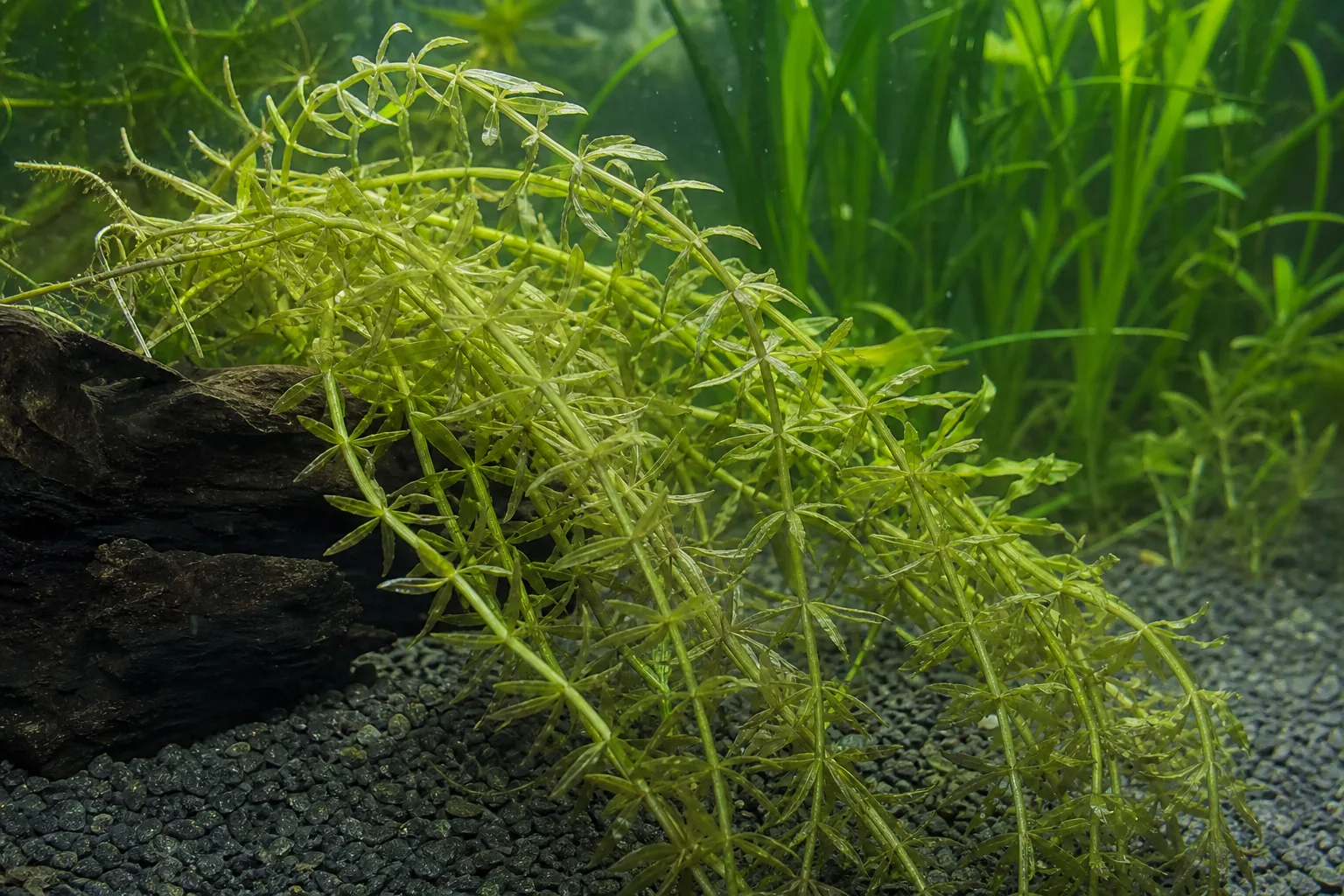
Drooping Leaves on Anacharis / Elodea: Causes, Checks & Fixes
This guide covers drooping leaves on Anacharis / Elodea. See also the general Drooping Leaves guide, watering, and light pages for this plant.
Drooping Leaves on Anacharis / Elodea: Causes, Checks & Fixes
Quick answer
Drooping leaves on Anacharis (Egeria densa) means submerged whorls hang downward while stems stay firm and green-aquarium transition stress, not dry soil or underwatering. This species is a fully submerged freshwater plant (UF/IFAS) that feeds from the water column, so limp foliage almost always traces to water quality, temperature, light depth, or brief handling-not a watering schedule.
First fix: Hold stable parameters for 48 hours, remove only mushy whorls, and float stems in tank water while conditions settle. Make one targeted correction, then wait seven days before stacking fertilizer, replanting, or chemical treatments.
This guide is for submerged aquarium and turtle-tank culture-not terrestrial houseplant pots. For species baselines, see the Anacharis overview. For limp stems with early translucence or active melt, see wilting on Anacharis. For melt right after purchase or replanting, see transplant shock.
Drooping vs wilting vs melting on Anacharis
Aquarium forums mix these terms. On Egeria densa, the tissue pattern tells you which page to use:
| Pattern | What you see | Stem condition | Most likely driver | Next page |
|---|---|---|---|---|
| Drooping leaves (this page) | Whorls hang downward; leaves still green | Firm, not mushy | Handling stress, mild acclimation, temperature-mismatched change | This page |
| Wilting | Limp posture through multiple whorls; early softening | Reduced firmness | Water instability, cycling ammonia, chemical injury | Wilting |
| Active melt | Translucent, mushy tissue spreading upward | Collapsing sections | Copper meds, glutaraldehyde, severe ammonia | Chemical damage |
| Yellowing | Chlorotic wash over days to weeks | Usually firm | Nitrogen shortage, chronic low light | Yellow leaves or not enough light |
| Large change shock | Lower whorls pale within 48–72 hours of a change | Firm at first | Unmatched temperature or pH in change water | Water stress |
Key distinction: Drooping on Anacharis is cosmetic limpness on structurally sound stems. Wilting means the stem itself is losing integrity. If new tips stay firm and green, you are likely in the drooping recovery zone-not full collapse.
What drooping leaves look like on Anacharis
Expect this pattern after a recent tank change, store purchase, or rough handling:
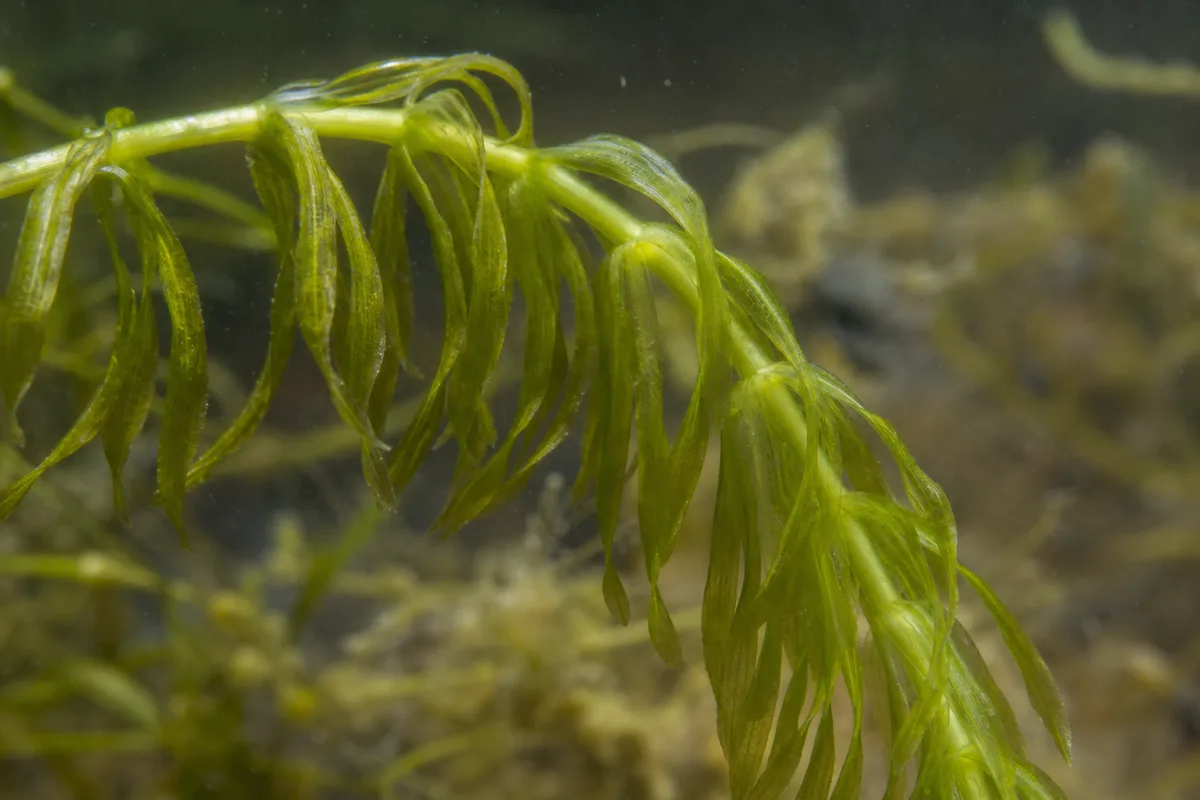
Drooping Leaves symptoms on Anacharis / Elodea - compare with healthy tissue on the same plant.
- Whorls angle downward along an otherwise green, firm stem
- Newest tips may still look healthy even when lower sections hang limp
- Leaves stay green or slightly pale-not yet translucent sheets
- Fine white roots may still be visible; stem nodes feel solid when pinched gently
- In turtle tanks, droop sometimes appears only on stems near basking-lamp heat while deeper sections stay upright
Compare newest tip growth first. Healthy tips mean the plant is adapting even when lower whorls look rough. If tips pale and soften within days, shift diagnosis toward wilting or water stress.
Why Anacharis gets drooping leaves
Planting and acclimation shock
Store Anacharis often moves from emersed farm trays or cold holding tubs into your heated aquarium. Lower whorls built for a different environment hang limp while the stem grows new submerged leaves. Egeria densa spreads vegetatively by stem fragments and adapts quickly-but the first seven to fourteen days commonly show transitional droop, not failure.
Temperature-mismatched water changes
Field tolerance for Brazilian waterweed is broad, but rapid temperature swings stress thin submerged leaves faster than a stable warm setpoint (USFWS ERSS). Pouring change water more than about 2°F colder or hotter than the tank, or moving stems from a cold bag into a tropical display, triggers drooping within hours. Turtle setups with basking-lamp heat spikes see the same pattern on stems near the surface.
New-tank cycling stress
Anacharis is often sold as a cycling plant because it absorbs dissolved nitrogen-but detectable ammonia still stresses tissue. During the first three weeks of a fishless or lightly stocked cycle, lower whorls may droop or pale while beneficial bacteria establish. Ammonia toxicity risk increases with pH and temperature (US EPA), so a drooping bunch in a new tank deserves a test before you assume normal acclimation.
Copper and medication exposure
Management references list copper among herbicides used to control Egeria densa in waterways (UF/IFAS chemical control background). Ich medications and some algaecides contain copper compounds that injure planted stems. If droop started within 24–48 hours of dosing, check active ingredients before floating or trimming-and read chemical damage if tissue turns translucent.
Insufficient light at stem depth
Anacharis grows as a fast vegetative stem plant. Lower whorls in deep or shaded tanks lose turgor and hang while top growth stays perky. This is gradual droop over weeks, not sudden limpness after a water change. If internodes stretch and tops look sparse, troubleshoot not enough light instead.
Turtle-tank bioload and filtration overload
In turtle tubs, heavy feeding and waste loading can cloud water and reduce oxygen at night when dense plant mats respire at night. Lower Anacharis whorls droop while stems remain firm-often alongside elevated organics rather than classic ammonia melt. Review filtration capacity and feeding level; match everyday water routines on the Anacharis watering guide.
How to confirm the cause
Work in this order:
- Newest tip growth - Firm green tips support a mild droop diagnosis; soft pale tips suggest escalation.
- Stem firmness - Pinch mid-stem. Solid = drooping leaves page. Mushy = wilting or melt.
- Water tests - Ammonia, nitrite, nitrate in new or recently disturbed tanks.
- Temperature log - Compare tank, bag, and change-bucket readings with a thermometer.
- Light at depth - Are lower whorls shaded by floaters, hardscape, or a turtle dock?
- Recent exposures - Medications, algaecides, liquid carbon, or large water changes in the last 72 hours.
Quick cause-to-first-fix matrix
| If you recently… | Likely cause | First fix |
|---|---|---|
| Bought or received shipped stems | Acclimation / emersed transition | Float 30 min–few hours; trim only mush; wait 7–14 days |
| Did a large or cold water change | Temperature or parameter shock | Match next change within 2°F; hold 48 hr stable; see water stress |
| Set up a new tank with fish | Cycling ammonia | Test ammonia; reduce feeding; trim decay; consider fishless cycle |
| Dosed ich meds or algaecide | Copper or chemical injury | Stop dosing; review labels; remove melting tissue |
| Noticed gradual lower-stem droop only | Low light at depth | Raise light or trim and replant tops; see light guide |
| Moved stems between tanks | Transfer shock without acclimation | Float and drip-acclimate; see transplant shock |
First fix to try
Hold stable parameters for 48 hours, remove only mushy whorls, and float stems in tank water.
This single action covers the most common drooping scenarios without stacking conflicting treatments:
- Keep filtration and aeration running normally
- Do not replant repeatedly during the stabilization window
- Do not dose fertilizer, liquid carbon, or medications “just in case”
- Trim translucent or detaching leaves; leave firm green drooping whorls in place
After 48 hours of stability, retest water if the tank is new or recently changed. Add secondary steps only when you can name the cause from the matrix above.
Step-by-step recovery by scenario
Post-shipping or new purchase (firm stems, limp lower whorls)
- Float the bunch in display tank water for 30 minutes to a few hours.
- Add small amounts of tank water to the bag every 10–15 minutes if bag chemistry differs.
- Plant shallowly with lower leaves stripped, or leave floating until new tips appear.
- Run moderate aquarium lighting on a consistent 8–10 hour photoperiod.
- Retest and inspect tips at day 7. Persistent mush past day 14 → review transplant shock.
Cycling-tank ammonia (new setup, detectable ammonia)
- Test ammonia, nitrite, and pH; note temperature.
- Remove decaying tissue so organics do not fuel further spikes.
- Reduce or pause feeding; avoid adding livestock until ammonia stays at 0 ppm.
- Float healthy stem tops if lower sections fail-they root easily from firm nodes.
- If ammonia stays elevated beyond two weeks with ongoing melt, treat as a cycle problem first, not a fertilizer problem.
Medication or copper exposure
- Identify active ingredients from anything dosed in the last week.
- Stop non-essential chemical additions immediately.
- Remove melting tissue; save firm upper cuttings.
- Compare timelines with chemical damage guidance before re-dosing.
- In turtle tanks, verify medication compatibility with both plants and reptiles before retreating-consult a vet for prescription products.
Temperature shock after water change
- Measure tank and tap (or RO) bucket temperatures side by side.
- Match the next partial change within 2°F before adding more volume.
- Float affected stems for several hours after the correction.
- Limit single changes to 25–30% of tank volume; details on the watering guide.
Recovery timeline
- Mild handling or acclimation droop: whorls often re-stiffen within 3–7 days once water and light stay stable.
- Post-purchase emersed transition: 7–14 days for clearly healthier new submerged tips is normal.
- Cycling-tank stress: improvement tracks ammonia falling to 0 ppm-often one to three weeks in new setups.
- Copper or severe ammonia injury: partial stem loss is common; save only firm cuttings.
Old drooping whorls may never look perfect again even after recovery. Judge success by firm stems, green new tips, and no upward spread of mush-not by lower leaves returning to their original angle.
What not to do
- Do not apply terrestrial pesticides, fungicides, or houseplant treatments to aquarium water.
- Do not leave melting tissue decaying in the tank-it fuels ammonia and fouls water.
- Do not add heavy fertilizer to cloudy or ammonia-elevated water.
- Do not plant in fertilizer-rich potting soil; use inert aquarium gravel or floating culture only.
- Do not release trimmings into local waterways-UC ANR documents Brazilian egeria as an established invasive when fragments escape.
How to prevent drooping leaves next time
- Acclimate new stems before planting; follow float-and-mix steps on the Anacharis overview.
- Match water-change temperature within 2°F and avoid oversized single changes.
- Keep moderate aquarium lighting on a stable photoperiod; do not swing from dim to bright overnight.
- Check medication labels for copper before dosing planted turtle or community tanks.
- Trim melt promptly and maintain clean dechlorinated water with regular partial changes.
- Never dump aquarium water or plants into natural waterways (UF/IFAS preventive guidance).
When to worry
Treat as urgent if:
- multiple stems turn translucent within 24–72 hours
- water clouds with foul odor alongside droop
- detectable ammonia appears with fish in the tank
- damage climbs into fresh tips instead of staying on older lower whorls
- droop persists after 48 hours of stable parameters and no new chemical exposures
Lower urgency: firm stems with limp lower whorls after shipping, a matched small water change, or the first week in a new tank-float, stabilize, and recheck tips at day 7.
Related Anacharis guides
- Anacharis overview - species basics and tank culture
- Anacharis watering - parameter targets and change routines
- Anacharis light - PAR bands and photoperiod
- Wilting - limp stems and early melt
- Transplant shock - post-purchase acclimation melt
- Water stress - large change and cycling shock
- Chemical damage - copper and liquid carbon injury
- Anacharis propagation - saving firm tops as cuttings