Yellow Leaves on Anacharis / Elodea: Causes, Checks & Fixes
Quick answer
Yellow leaves on Anacharis usually trace to nutrient gaps, self-shading, dirty water, or acclimation melt after a tank move. Yellow new tips point to iron shortage; uniform yellowing on older whorls first suggests nitrogen depletion. First step: trim melting tissue, test nitrate, improve water changes, and let light reach lower whorls.
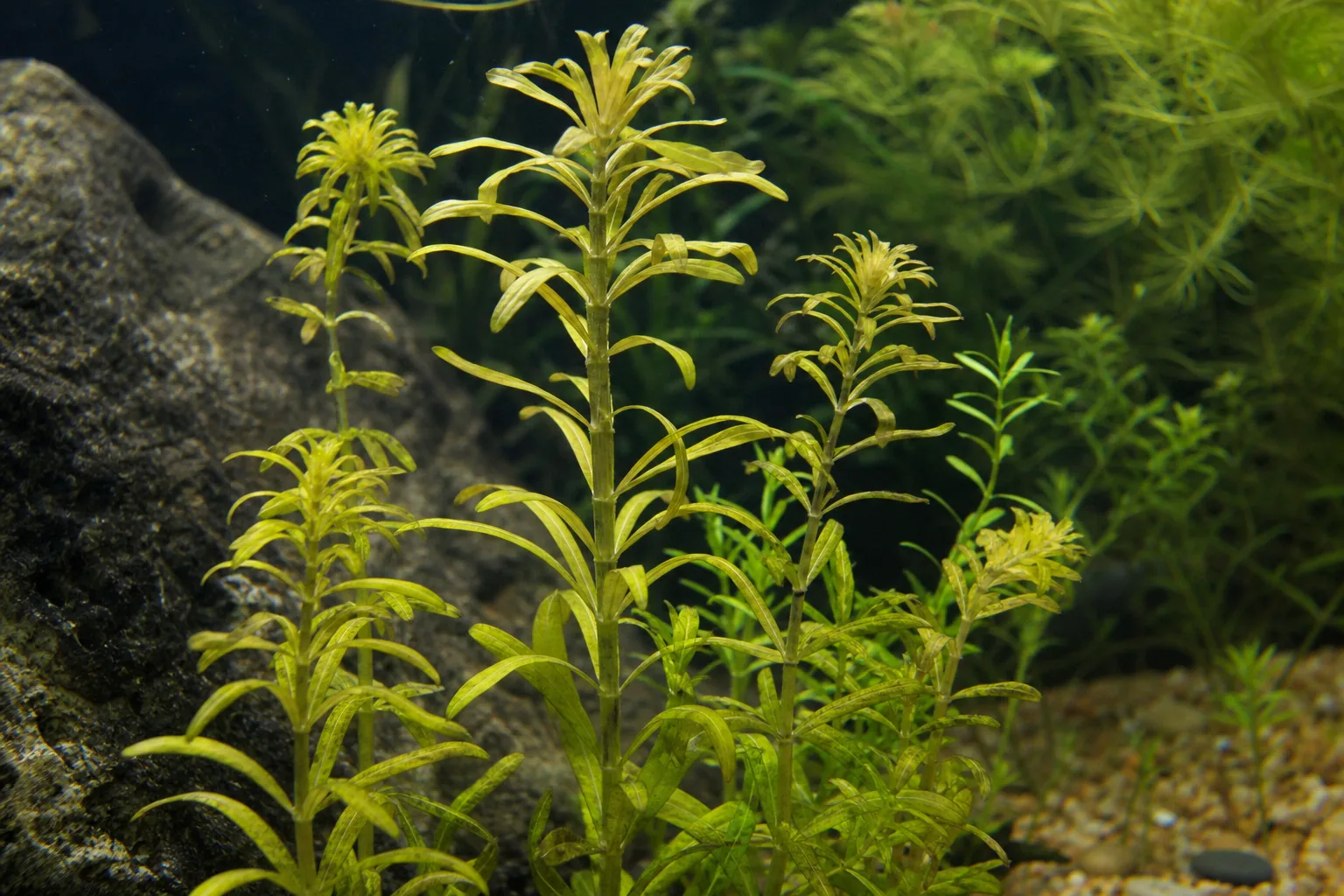
Yellow Leaves on Anacharis / Elodea: Causes, Checks & Fixes
This guide covers yellow leaves on Anacharis / Elodea. See also the general Yellow Leaves guide, watering, and light pages for this plant.
Yellow Leaves on Anacharis / Elodea: Causes, Checks & Fixes
Quick answer
Yellow leaves on Anacharis (Egeria densa) in aquarium or turtle-tank culture usually trace to nutrient gaps, self-shading, dirty water, or acclimation melt after a tank move-not soil moisture, pot drainage, or houseplant humidity.
Read the pattern before dosing: yellow new tips point to iron shortage; uniform yellowing on older whorls first suggests nitrogen depletion in lightly stocked tanks. Both show on a column-feeding submerged stem plant that absorbs nutrients from the water column, not from potting soil.
First step: trim melting tissue, test nitrate, improve water changes, and let light reach lower whorls. Make one targeted correction and wait seven days before stacking fertilizer, replanting, and chemical treatments.
This guide is for submerged aquarium and turtle-tank culture only. For nitrate testing and nitrogen dosing, see nitrogen deficiency. For pale new tips with green veins, see iron deficiency. For post-medication washout, see chemical damage. For baseline culture, see the Anacharis overview.
Scope: aquarium and turtle-tank culture
Anacharis grows as a fast vegetative stem plant with whorled leaves along hollow stems. Stress shows through whorl color, stem firmness, and new tip growth-not wilted terrestrial foliage or dry soil schedules.
In turtle tanks and heavily fed community aquariums, also review filtration strength, feeding level, and whether copper-based treatments were used recently. Brazilian waterweed is documented as sensitive to copper herbicides used in aquatic plant control.
Turtle-tank note: Yellowing in turtle tubs often tracks filtration gap plus waste load before nutrient deficiency-test ammonia and nitrite before assuming the plant needs fertilizer. UF/IFAS ammonia guidance notes that any ammonia in a cycled tank signals an out-of-balance system; turtle waste and uneaten food are common triggers.
What yellow leaves look like on Anacharis
Expect one of these patterns:
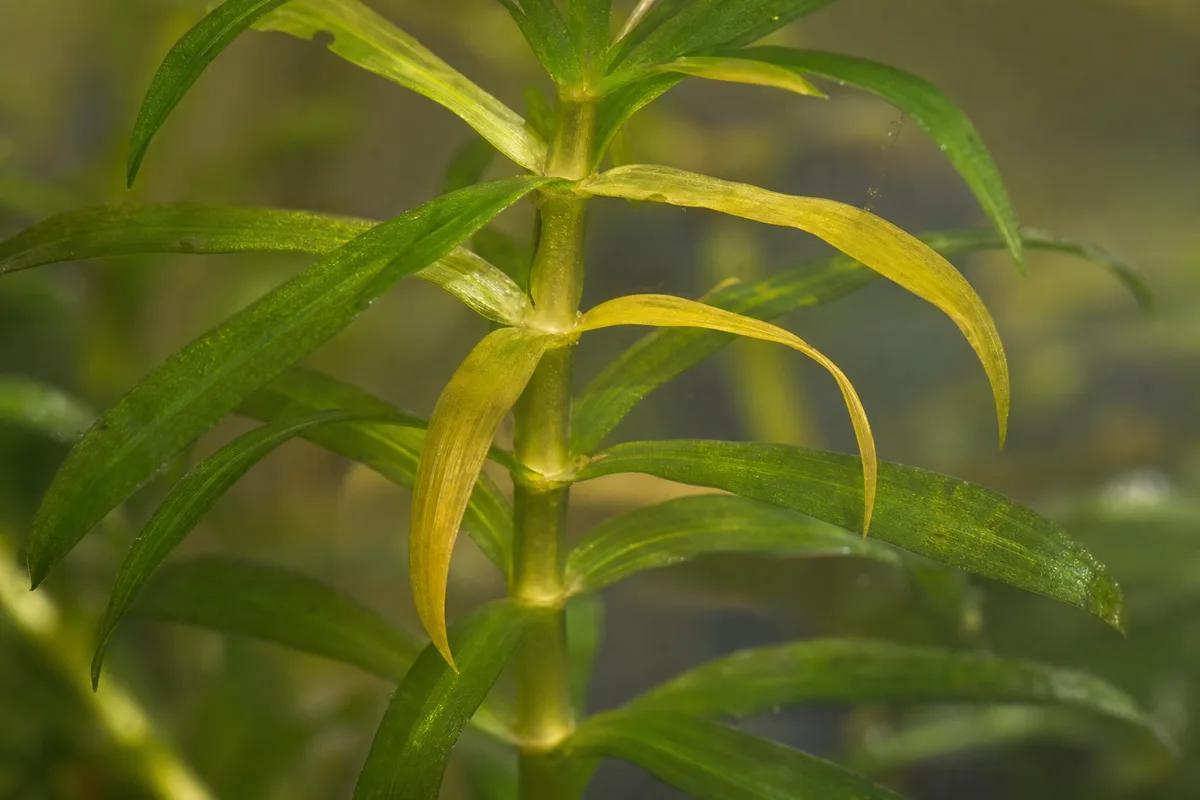
Yellow Leaves symptoms on Anacharis / Elodea - compare with healthy tissue on the same plant.
- Pale or chartreuse lower whorls while stems stay firm and new tips stay green - often nitrogen depletion or self-shading
- Yellow or white newest whorls with darker green veins - classic iron shortage on fast stem tips
- Translucent melt on many stems three to seven days after purchase - acclimation, not necessarily deficiency
- Bleached or limp tissue after ich or algae medication - chemical exposure; see chemical damage
- Uniform dull yellow on lower stems under a dense upper canopy - light not reaching depth; see not enough light
Compare newest tip growth first. Healthy green tips mean the plant is recovering even when lower whorls look bad. Mushy translucence with foul odor is melt or parameter shock-not cosmetic yellowing.
Why Anacharis gets yellow leaves
Iron shortage (yellow new tips)
Iron is immobile inside the plant-shortage shows on newest whorls first as pale, chartreuse, or white tissue, often with veins staying darker green. Fast-growing Anacharis at bright tips demands steady micronutrients from the water column. In shrimp-only or heavily planted tanks with large weekly water changes, iron can lag even when nitrate reads adequate.
High pH and hard water reduce iron availability to plants; chelated liquid iron in a comprehensive aquarium fertilizer is the usual fix once you confirm the tip pattern. Full dosing workflow: iron deficiency guide.
Nitrogen depletion (older whorls first)
Nitrogen is mobile-Egeria densa strips it from oldest lower whorls to fund new growth when dissolved nitrogen runs low. Yellowing often starts at leaf tips and moves inward; lower tissue may turn translucent. Common in shrimp-only nano tanks, new lightly stocked setups, and plant-heavy aquariums where fast growth outpaces fish waste.
Practical nitrate bands: In planted community tanks, aim for roughly 10–20 ppm nitrate as a maintenance target when bottom-up yellowing appears with firm green tips-zero to 5 ppm with the classic old-leaf pattern strongly suggests nitrogen shortage. Well-stocked community tanks with moderate fish bioload often supply enough nitrogen without extra macros. Full test-and-dose workflow: nitrogen deficiency guide.
Self-shading and light at stem depth
Anacharis forms dense background walls quickly. Upper whorls shade lower stems, slow photosynthesis, and leave bottom whorls chartreuse even when tank-wide parameters look fine. Floating culture or regular thinning lets light reach depth-see the Anacharis light guide for PAR bands and photoperiod.
Dirty water and acclimation melt
Organic debris, skipped partial changes, and new-tank instability stress column feeders. Store bundles grown emersed commonly shed lower whorls when first submerged-uniform limp yellow on many stems within the first week with stable ammonia often means transplant shock, not a call for heavy fertilizer on day three.
Copper medications and ammonia spikes
Copper-based ich treatments and some algaecides damage delicate submerged tissue. Ammonia from uncycled filters, overfeeding, or turtle waste melts stems tank-wide. UF/IFAS treats any detectable ammonia as urgent-damage tissue before yellowing spreads to firm sections. Stop exposure, large partial change, save unexposed cuttings.
Symptom lookalike comparison
| What you see | Likely cause | Stem feel | Tip color | First move |
|---|---|---|---|---|
| Oldest whorls yellow; tips green; nitrate 0–5 ppm | Nitrogen deficiency | Firm | Green | Test nitrate; dose comprehensive liquid with nitrogen |
| Newest whorls pale; veins dark green; nitrate OK | Iron deficiency | Firm | Pale/chartreuse | Chelated iron in comprehensive fertilizer |
| Many stems limp yellow 3–7 days after purchase | Acclimation melt | Firm to soft lower | Often recovering green | Trim melt; float tops; wait 7–14 days |
| Lower whorls dull under dense canopy | Self-shading / low light at depth | Firm | Green above shade zone | Thin stand; raise or extend light-light guide |
| Bleached tissue after medication | Chemical damage | Softening | Bleached white | Water changes; save unexposed tops |
| Rapid mush many stems; fish stress | Ammonia / foul water | Translucent | Collapsing | Test ammonia; 25–50% change; reduce feeding |
| Cloudy water; organics buildup | Overwatering pattern | Variable | Variable | Partial changes; filter service |
Progressive mush climbing into firm tissue within days is not slow cosmetic yellowing-treat as urgent parameter or chemical exposure.
How to confirm the cause
Work in this order:
- Newest tip growth color - Green firm tips mean recovery is possible; pale new whorls point to iron.
- Water clarity and tests - Ammonia, nitrite, and nitrate; any ammonia in a cycled tank is abnormal per UF/IFAS.
- Nitrate reading - Zero to 5 ppm with bottom-up yellowing suggests nitrogen; 10–20 ppm with pale tips suggests iron or light.
- Light at affected stem depth - Hold a hand under the canopy; shadowed lower whorls point to self-shading.
- Recent medication or temperature changes - Copper ich treatments and swings above 28 °C (82 °F) trigger melt in warm tropical tanks.
- Purchase timeline - New LFS bundle within two weeks points to melt before deficiency.
- Tank type - Turtle tub or shrimp-only? Test bioload and filtration before macros.
UF/IFAS plant directory describes Egeria densa as a submerged aquatic plant-keep every diagnostic step inside aquarium culture, not houseplant soil checks.
First fix for Anacharis
First action: trim melting tissue, test nitrate, and improve water quality in one pass.
- Remove yellow translucent whorls that are actively decaying-decaying tissue fuels ammonia.
- Dip a nitrate test strip or liquid kit; note ammonia and nitrite if the tank is new or heavily fed.
- Perform a 25–30% partial water change with dechlorinated water matched to tank temperature (see the watering guide).
- Thin dense stands or float stems so light reaches lower whorls.
- Wait seven days and watch new tip color before adding fertilizer or medication.
Secondary steps only after the wait, matched to confirmed cause:
- Nitrate zero to 5 ppm, bottom-up yellowing: Dose a comprehensive liquid aquarium fertilizer with nitrogen at half label strength once weekly-full workflow on nitrogen deficiency and fertilizer guide.
- Pale new tips, adequate nitrate: Add chelated iron via comprehensive fertilizer-see iron deficiency.
- Post-copper medication: Large water changes; discard exposed mush; see chemical damage.
- New purchase melt: Float firm tops; do not plant deep or dose heavily on day one-see transplant shock and propagation.
Make one targeted correction per week. Do not stack replanting, full-strength fertilizer, and fish medication on the same day.
Recovery timeline by cause
Acclimation melt (new purchase): Lower whorls may look bad for seven to fourteen days; success is firm stems and green new tips-not re-greening every yellow leaf. Cosmetic lower damage often persists until you trim it.
Nitrogen deficiency: After nitrate returns to the 10–20 ppm band, new whorls green up within one to two weeks; severely translucent lower leaves are usually trimmed rather than saved.
Iron deficiency: Pale new tips often improve within seven to ten days of consistent chelated iron dosing; already-yellow tip tissue may stay pale until replaced by new growth.
Self-shading: Thinning and light adjustment show brighter lower whorls on new growth within one to two weeks; shaded old leaves may stay chartreuse until trimmed.
Copper or ammonia damage: Firm cuttings saved immediately may root within five to ten days when floated; mushy stems rarely recover. Judge by new roots and tips, not lower whorl cosmetics.
Recovery vignette: A four-stem store bunch in a 10-gallon betta tank showed chartreuse lower whorls and green tips fourteen days after planting. Nitrate read 3 ppm. After trimming melt, a 30% water change, and one half-strength comprehensive fertilizer dose, new whorls at the tips were solid green by day ten-lower leaves were trimmed and never re-greened.
What not to do
Do not dose terrestrial pesticides or fungicides into aquarium water. Do not leave melting tissue decaying in the tank. Do not add heavy fertilizer to foul or ammonia-positive water. Do not plant in fertilizer-rich potting soil-use inert aquarium gravel or floating culture only. Do not assume yellow leaves need more light without checking nitrate and melt timing first.
How to prevent yellow leaves next time
Maintain clean dechlorinated water with regular partial changes, moderate aquarium lighting on a stable 8–10 hour photoperiod, and prompt removal of melt. Acclimate new stems by floating in tank water before planting. Match fertilizer to stocking on the fertilizer guide-shrimp-only tanks need weekly comprehensive liquid; well-stocked community tanks may need only traces. Check medication labels for copper. Thin dense walls before lower whorls shade out.
Never release trimmings into local waterways-UC ANR documents Brazilian egeria as an established invasive when fragments escape cultivation.
When to worry
Treat as urgent if multiple stems melt within days, water clouds with odor, ammonia or nitrite read above zero in a cycled tank, or damage climbs into firm tissue after copper exposure. Slow cosmetic decline on lower whorls with healthy green tips is lower urgency-trim, test nitrate, and monitor one week.
Yellow-leaf triage checks
When to act today vs. wait and trim
Act today: ammonia or nitrite detected, copper exposure, or mush spreading into firm tissue within forty-eight hours. Trim and test this week: bottom-up yellowing with firm green tips and nitrate below 5 ppm. Monitor 7–14 days: uniform new-tank melt after purchase with stable parameters and recovering tips.
Inspection order
Newest growth → affected whorls → nitrate/ammonia tests → light at stem depth → recent chemical exposures → tank bioload (turtle tubs).
Related Anacharis problems
- Anacharis overview - baseline light, water, planting, and propagation context
- Nitrogen deficiency - bottom-up yellowing, nitrate targets, dosing workflow
- Iron deficiency - pale new tips with dark veins
- Chemical damage - post-medication bleaching and melt
- Not enough light - leggy growth and dull color tank-wide
- Transplant shock - emersed-to-submerged melt after purchase
- Anacharis fertilizer · Anacharis light · Anacharis watering - everyday care parameters
FAQs
My new Anacharis melted after planting-is it dead?
Probably not. Store Anacharis is often grown emersed and sheds lower whorls when submerged-uniform translucent yellow on many stems within three to seven days of purchase is classic acclimation melt, not death. If stems stay firm and new green tips appear within seven to fourteen days, float the tops and wait. Mush climbing into firm tissue with foul water odor is a different emergency-see chemical damage or overwatering guides.
Can I save yellow Anacharis in a turtle tank without removing the turtle?
Yes for mild yellowing if stems stay firm. Turtle tubs often yellow from filtration gap and waste load before nutrient deficiency-test ammonia and nitrite first, increase partial water changes, and thin dense stands so light reaches lower whorls. Do not dose heavy fertilizer into cloudy foul water. If multiple stems turn mushy within days, save firm cuttings in a separate tub and address bioload before replanting.
How do I tell iron deficiency from nitrogen deficiency on Anacharis?
Location on the stem is the clue. Nitrogen is mobile-oldest lower whorls yellow first while new tips stay green. Iron is immobile-newest whorls turn pale or chartreuse with veins often staying darker green. Test nitrate: zero to 5 ppm with bottom-up yellowing points to nitrogen; adequate nitrate with pale new tips points to iron. See the dedicated nitrogen-deficiency and iron-deficiency guides for dosing workflows.
Will damaged Anacharis whorls turn green again?
Badly affected lower whorls rarely look perfect again. Mild nitrogen-starved leaves may partially re-green once nitrate returns, but translucent melt tissue should be trimmed. Recovery means firm stems, clean new growth at tips, and no spreading mush within seven to fourteen days. Judge success by new tips, not old yellow tissue.
When is yellowing urgent on Anacharis?
Act same-day if stems turn translucent with foul tank odor, ammonia or nitrite read above zero in a cycled tank, or damage spreads into firm tissue within forty-eight hours after copper medication. Slow cosmetic decline on lower whorls with healthy green tips is lower urgency-trim melt, test nitrate, and monitor one week before stacking fertilizer and replanting.
When to use this page vs other Anacharis / Elodea guides
- Anacharis / Elodea watering guide - Use for routine moisture checks before assuming yellow leaves is the main issue.
- Anacharis / Elodea problems hub - Browse all 34 common issues on this species.
- Overwatering on Anacharis / Elodea - Different entry point when symptoms overlap with yellow leaves.
- Underwatering on Anacharis / Elodea - Different entry point when symptoms overlap with yellow leaves.
- Not Enough Light on Anacharis / Elodea - Different entry point when symptoms overlap with yellow leaves.